What is the Vacuum Insulation Panel Market Size?
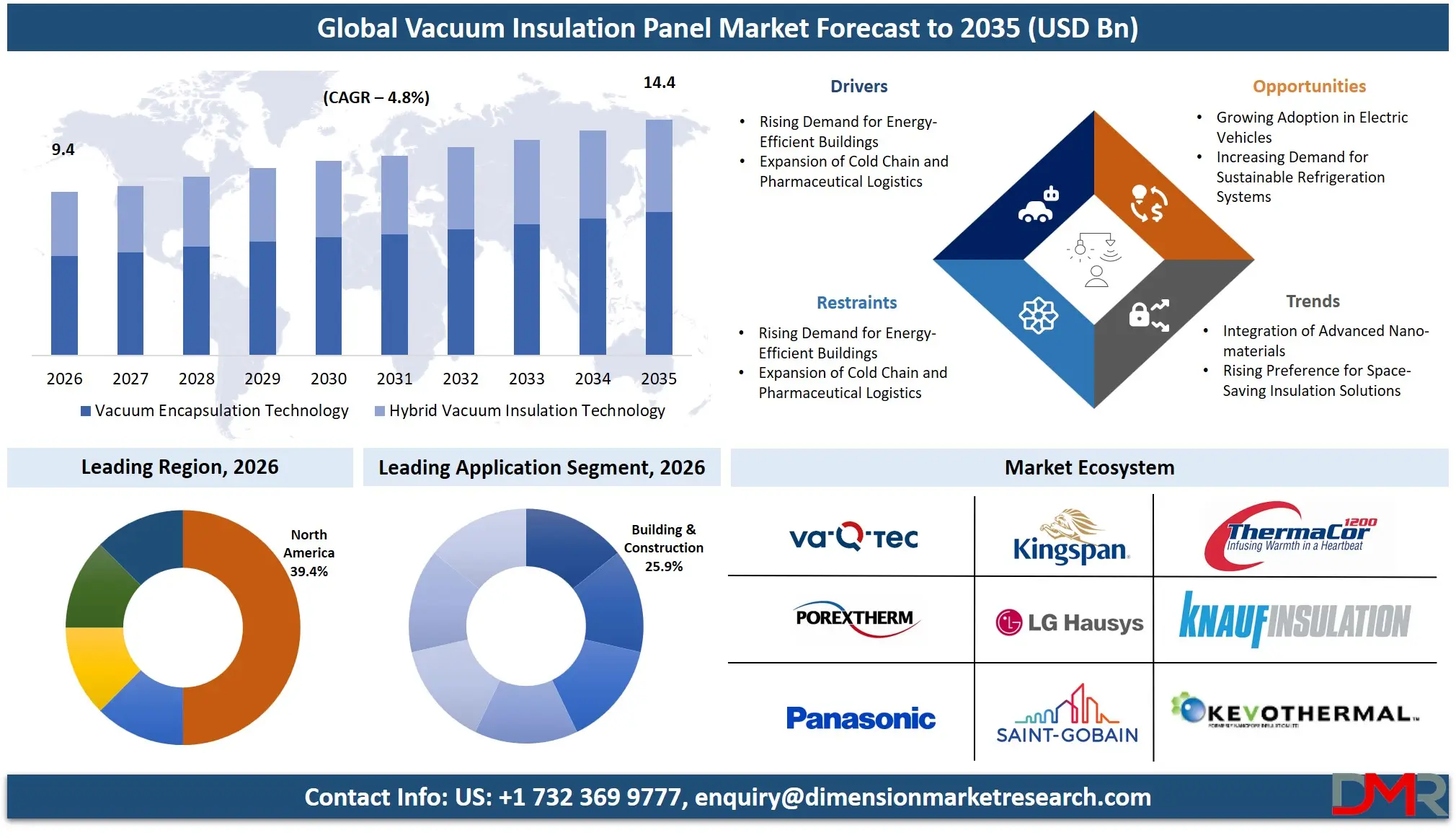
The Global Vacuum Insulation Panel Market is expected to reach a value of USD 9.4 billion in 2026, and it is further anticipated to reach USD 14.4 billion by 2035, growing at a CAGR of 4.8% during the forecast period.
ℹ
To learn more about this report –
Download Your Free Sample Report Here
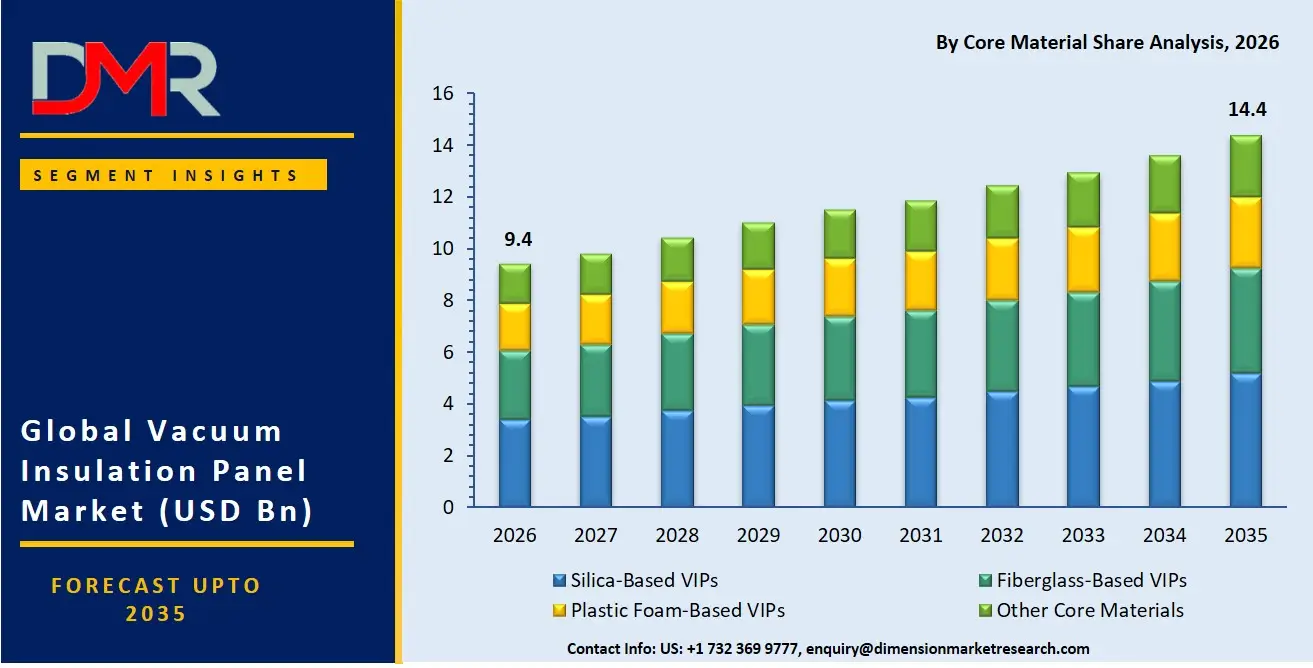
The vacuum insulation panel market is growing steadily with the rise in the emphasis of industries on energy efficiency, as they shift from traditional insulation materials towards advanced, slim materials. There are two types of vacuum insulation panels in the market flat and shaped, and they use core material such as silica, fiberglass, and plastic foams, which enable organizations to achieve great thermal efficiency in their confined spaces. There are growing needs for building code requirements, carbon footprint reduction in cold chain logistics, and better energy efficiency in appliances. Thus, there is a need for VIP solutions. Building and Construction industry and Appliances are among the most common adopters. Amongst them, VIPs based on silica are the most commonly used due to their high thermal efficiency and long lifespan.
ℹ
To learn more about this report –
Download Your Free Sample Report Here
The US Vacuum Insulation Panel Market
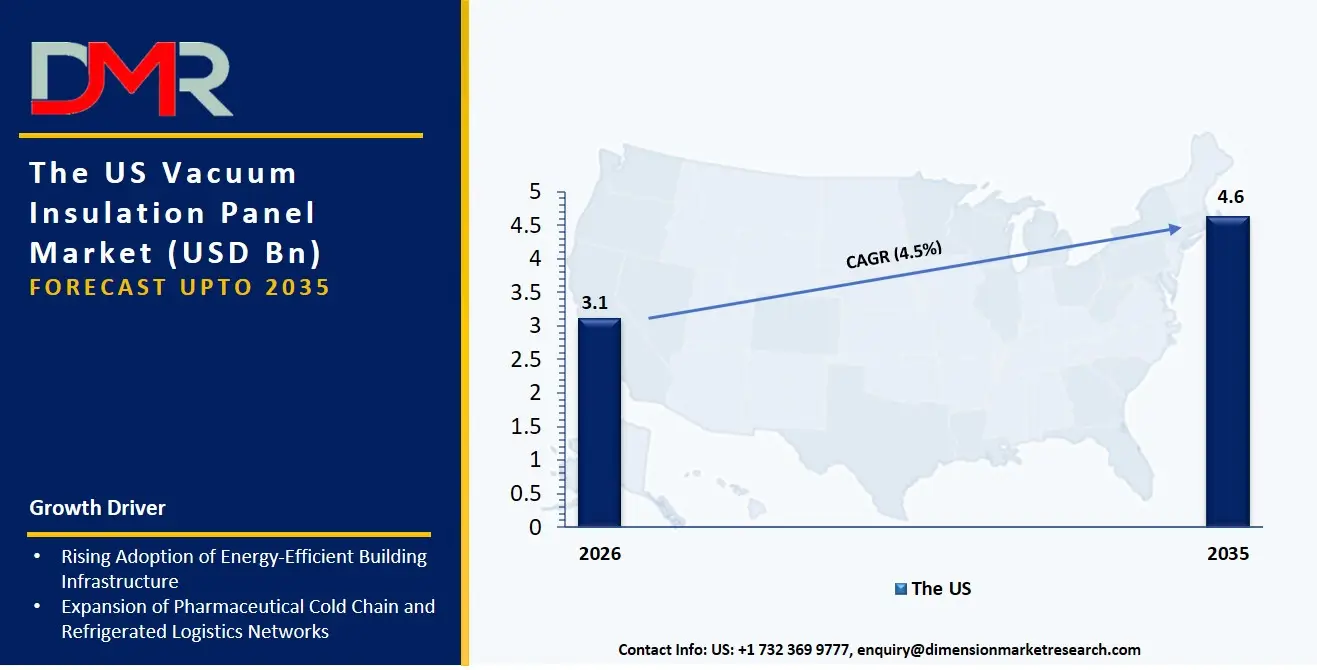
The US Vacuum Insulation Panel Market is projected to reach USD 3.1 billion in 2026 at a compound annual growth rate of 4.5% over its forecast period. The US continues to be the largest and most developed market because of the ongoing modernization of the commercial building envelope as well as the expansion of the cold storage system. As for the demand side of the market, it has mainly focused on the application of flat panels, where builders strive to meet the requirements of Passive Houses and net-zero energy consumption in homes and offices. In addition, the utilization of innovative cold chains is causing the same requirement of high performance from fumed silica VIPs for the purpose of ultra-low temperature maintenance.
ℹ
To learn more about this report –
Download Your Free Sample Report Here
The Europe Vacuum Insulation Panel Market
The Europe Vacuum Insulation Panel Market is estimated to be valued at a USD 2.5 billion in 2026 at a CAGR of 4.3% and is further anticipated to reach substantial value by 2035, owing to rigorous guidelines concerning energy efficiency. The directive laws such as the EU Energy Performance of Building Directive (EPBD) and the F-Gas Regulation play a vital role within the European market that encourages the use of silica- and fiberglass-based VIPs. The accelerated growth in special-shaped panel applications is also seen within the market since the appliance manufacturers in Germany and Italy are trying to find the right balance between attractive design and energy labeling requirements of the refrigerators and freezers. Moreover, initiatives like renovation wave programs have created demands for creating specific high-performance panels.
The Japan Vacuum Insulation Panel Market
The Japan Vacuum Insulation Panel Market is projected to hold USD 892.3 million in market value in 2026 at a CAGR of 4.6% in the forecasted period. It is anticipated that the Japan Vacuum Insulation Panel Market will show a significant rate of growth, which can be attributed to an unusual combination of motivation on the part of corporations and society to save energy due to the limitation of space and energy cost. Development and application of flat panels, along with their integration into high-end appliances, accounts for a substantial portion of the expenditure, as the companies change their old technology of polyurethane foam into hybrid insulation technology for their refrigerators and water heaters. However, there exists an urgent need to penetrate into the local market to cover the shortcomings of both insulation materials and construction, creating a new niche in special-shaped panels.
Key Takeaways
- Market Size & Forecast: The Global Vacuum Insulation Panel market is projected to reach USD 9.4 billion in 2026, expanding to USD 14.4 billion by 2035, due to the combination of two drivers such as rising global regulations on energy conservation and cold chain infrastructure modernization.
- Growth Rate & Outlook: According to forecasts, global market growth rate will be characterized by the CAGR of 4.8% because of the necessity to save energy during the construction of any buildings and increasing complexity in temperature control in transportation and distribution of pharmaceutical products.
- Primary Growth Drivers: The main factors include the growing adoption of thin-profile VIPs in replacement of less-efficient insulation, the requirement for optimal space use during constructions of buildings and appliances, and the need to work with sophisticated core materials that demand special knowledge.
- Key Market Trends: Some of the key trends are the increase in the number of industry-oriented VIPs (e.g. for electric car batteries, transport containers), application of advanced barrier films in order to increase life span of hybrid vacuum-insulated panels, and growing tendency towards using of eco-friendly materials.
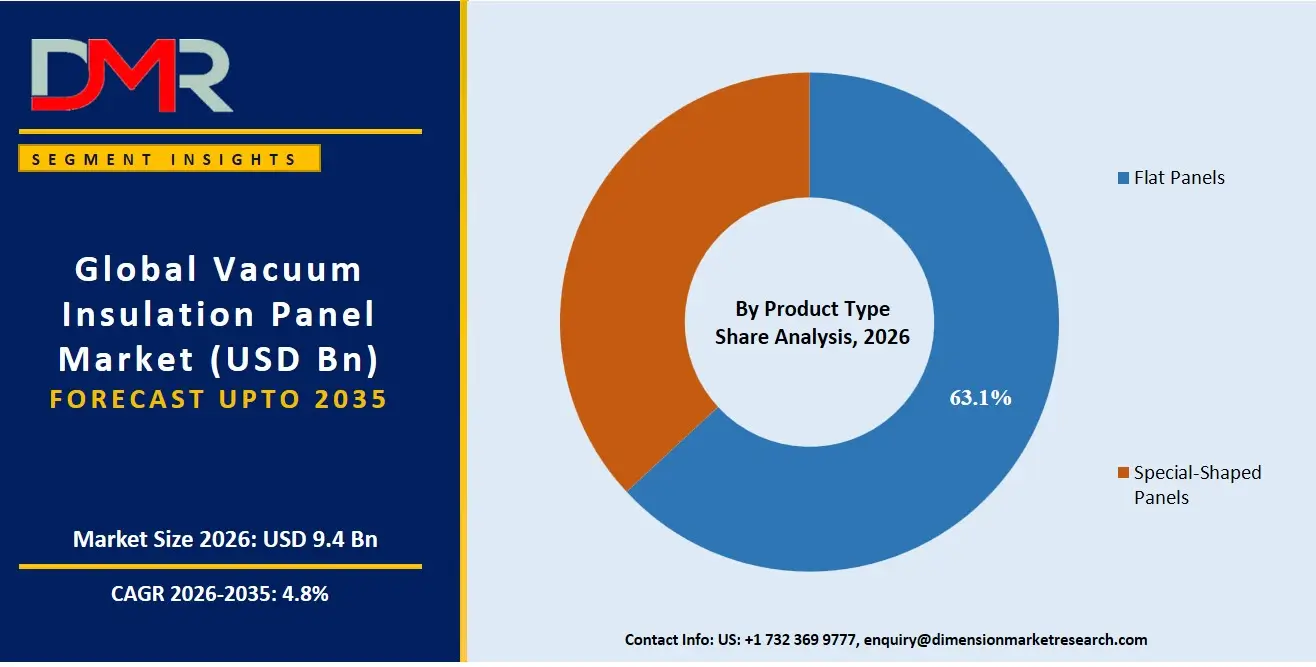
- By Product Type Analysis: Flat panels is projected to dominate the market owing to their flexibility and suitability for incorporation in traditional building envelope designs. Professional production of strong and high-yield fumed silica core is becoming necessary for offering consistent heat resistance throughout the product's life of more than 25+ years.
- By Application Analysis: Building & construction and cold chain & logistics industries are likely to become the most profitable verticals due to the strictness of energy codes. The fastest-growing industry in the market is that of Automotive & Transportation due to increased demand for VIPs in EV battery packs.
- Regional Leadership: North America is poised to dominate this market with 39.4% of the market share in 2026 owing to an established cold chain infrastructure and advanced materials used for building construction.
What is the Vacuum Insulation Panel?
Vacuum Insulation Panels are advanced insulating elements that come from the specialized manufacturing industry in order to provide the building, appliance, and logistics industries with highly porous core material enclosed in a thin and gas-impermeable layer. Vacuum Insulation Panels are distinctively different from conventional insulating materials such as batts of fiberglass or foam boards because they are linked to the way of maximizing thermal resistance by means of reducing the insulator's thickness. The former includes flat panels that can easily be embedded within walls or doors, while the latter refers to specially shaped panels used in the industry and in the automobile sector. Due to the fact that buildings consume considerable amounts of energy, there is a need for Vacuum Insulation Panels to meet certain requirements regarding the use of energy, increase usable area, and maintain stable temperatures.
Use Cases
- Energy Retrofit of Historic Building Facades: Contractors enlist architects who apply smooth silicon-based vacuum insulation panels on the inside surfaces of historical building facades, thus providing contemporary energy efficiency without changing the facade or reducing any indoor space.
- Last-Mile Pharmaceutical Cold Chain Transport: Freight companies implement fiberglass-based vacuum insulation panel and PCM-insulated packages that can carry mRNA vaccines at a precisely maintained -70°C temperature for more than 72 hours without dry ice usage to guarantee proper vaccine integrity.
- High-Efficiency Refrigerator Design: Home appliance producers employ novel-shaped and thin vacuum insulation panels made out of silicon dioxide to reduce refrigerator wall thickness while preserving energy class A+++ and expanding internal storage space by 25%.
- Electric Vehicle Battery Thermal Management: Car manufacturers use advanced fumed silicon dioxide-based vacuum insulation panels to shield electric car batteries from thermal damage by thermally isolating each individual battery cell.
How AI is Transforming the Vacuum Insulation Panel Market?
Material science will revolutionize the market by promoting the development of better products that offer improved efficiency and longevity. In terms of core material research and innovation, breakthroughs in the field of fumed silica and advanced fiberglass manufacturing promise to result in automatic attainment of lower thermal conductivity values, resulting in thinner panels and increased longevity of the products. On the other hand, metalized barriers and vacuum insulation technology developments make it easier to predict and increase the lifespan of panels, and integrate the products into harsh environments such as industrial machines and aircraft.
Sustainability and manufacturing processes are also revolving around material innovation. As far as raw materials are concerned, optimization of the manufacturing process and continued evaluation of next-generation core materials and barrier films through innovative methods will keep organizations aligned with sustainability regulations such as LEED and BREEAM. Hybrid VIP panels have been used to supplement building and appliance designs by modeling their performance and lifetime energy savings, making energy savings visible prior to investing in manufacturing process resources.
Market Dynamics
Key Drivers in the Global Vacuum Insulation Panel Market
Rising Demand for Energy-Efficient Buildings
The increasing focus at a global level on the use of less energy in homes and businesses has been creating a significant boost in the demand for vacuum insulation panels. The authorities around the world are introducing strict energy and green building codes which would promote the use of new technology in insulating materials. Vacuum insulation panels provide efficient insulation with a small size, making them very popular among new urban buildings and renovation constructions. Architects prefer the use of market to save cost and maximize space.
Expansion of Cold Chain and Pharmaceutical Logistics
Fast-paced developments within temperature-controlled logistics in relation to pharmaceuticals, biological substances, vaccines, and food products have resulted in a fast-paced increase in the usage of vacuum insulation panels across the globe. Vacuum Insulation Panels are known to offer extremely efficient thermal insulation, thus making it possible to ship or store delicate cargo in stable conditions. The rise in trade relations among countries related to pharmaceutical and biological substances has led to an increase in demand for insulated shipping boxes. In addition, trends related to food delivery services and frozen foods have also contributed to the growth in demand for vacuum insulation panels.
Restraints in the Global Vacuum Insulation Panel Market
High Manufacturing and Installation Costs
The rapid changes happening in the sphere of refrigerated logistics concerning pharmaceutical products, biological materials, vaccines, and food items have created a rapid rise in demand for vacuum insulation panels on a global scale. It is important to mention that vacuum insulation panels provide very high efficiency in terms of heat insulation. This helps in maintaining the cargo at stable temperatures during transportation and storage. The increasing interactions between nations concerning shipments of pharmaceuticals and biological materials have increased demand for insulated shipping containers. The trends in food delivery services and frozen food have also played an important role in this.
Limited Durability and Vacuum Degradation Risks
Vacuum-insulated panels are susceptible to being pricked or punctured, to edge damage, and to deterioration of the vacuum, which can cause a reduction in their effectiveness over time. Any damage done to the protective barrier of the panel can cause air intrusion, and therefore greatly impact its insulating capabilities. There are issues associated with its durability, especially when it comes to usage in industrial and transport industries. The cost of replacing or maintaining vacuum insulated panels can become costly if the panels get damaged during use. Lack of knowledge on how to handle the panels is another issue that needs to be addressed.
Growth Opportunities in the Global Vacuum Insulation Panel Market
Growing Adoption in Electric Vehicles
The fast-growing industry of electric vehicles provides ample opportunities for vacuum insulation panels manufacturing companies. Manufacturers of EVs need efficient thermal management systems that will optimize the performance of the batteries in such vehicles. The compactness and lightness of market make it possible to achieve high efficiency without increasing the weight. As low-emission vehicles become popular worldwide owing to incentives and increased emission requirements, it is expected that there will be a considerable rise in the production of electric vehicles in the coming years.
Increasing Demand for Sustainable Refrigeration Systems
There are many emerging applications for the use of vacuum insulation panels, driven by the increase in awareness of energy-efficient refrigeration and cold storage worldwide. This increased focus has encouraged more use of VIPs in refrigerators, freezers, vending machines, and cold storage warehouses, as they provide both energy savings and increased capacity. Rising environmental consciousness, along with increased regulation of appliance efficiency, means that manufacturers need to utilize new technologies, like vacuum insulation, to ensure that their products stay competitive. Furthermore, the continued development of cold chain infrastructure will further drive demand for VIPs.
Trends in the Global Vacuum Insulation Panel Market
Integration of Advanced Nanomaterials
The incorporation of new nanomaterials and enhanced core structures in VIPs is becoming common in the quest for better thermal insulation and longevity of products. The application of nanoporous silica and high-performance barrier films is enabling a reduction in heat transfer along with increasing the lifespan of the insulators. Such innovations have enabled the development of thinner and lighter VIPs for use in the construction, healthcare, and transportation sectors. There are substantial investments being made by companies to develop new generation VIPs that can operate under harsh environments.
Rising Preference for Space-Saving Insulation Solutions
There has been an increased inclination towards space-saving insulation technology among industries around the world due to which there has been a high demand for vacuum insulation panels. These VIPs offer greater thermal resistance compared to conventional insulation materials but occupy much less space than them. This particular development is of great significance when it comes to urban construction projects, household appliances, electric cars, and portable storage solutions used for medical purposes. Manufacturers are now emphasizing the usage of thin insulation solutions to manufacture improved models that take up little space.
Research Scope and Analysis
The market is primarily driven by the growing adoption of flat vacuum insulation panels, with silica-based and fumed silica materials leading due to superior thermal efficiency and durability. Vacuum encapsulation technology, direct sales channels, and strong demand from building and construction applications continue to accelerate market growth.
ℹ
To learn more about this report –
Download Your Free Sample Report Here
By Product Type Analysis
The flat panels category is projected to lead the product type market segment, driven by their extensive use in construction, refrigerators, and refrigerated logistics, where standardized sizes and ease of installation play a key role. They lead due to their higher insulation efficiency, compactness, and suitability for wall, roof, appliance, and cargo container installation. The manufacturing process favors the use of flat panels since it allows manufacturers to benefit from large-scale production, reduces installation costs, and optimizes costs more effectively than custom-designed vacuum insulation panels. Moreover, the increasing use of energy-saving buildings and refrigeration systems will add to their growing popularity.
By Core Material Analysis
Silica-based VIPs are expected to be predominant in the core material category since they offer the most balanced combination of heat conductivity, durability, flame retardancy, and longevity of performance. Fumed silica core materials have exceptionally low thermal conductivity and are widely used in various sectors such as buildings, refrigerators, drug transport, and insulation within the manufacturing industry. The stability of these materials in varying conditions allows for greater usage in energy-saving applications. Silica-based panels are chosen since they are effective throughout time without degrading. Regulatory policies promoting energy efficiency continue to boost their popularity in different sectors.
By Raw Material Analysis
Fumed silica is anticipated to dominate the raw material segment because of the outstanding low thermal conductivity and stability of insulation offered by it. The nanoporosity of the material makes sure there is little to no heat transmission through it. Hence, fumed silica helps produce very thin but highly efficient insulation panels. Fumed silica is a preferred choice for insulation due to the fact that it provides very good protection against fire and moisture. In addition, regulatory concerns about reducing energy use have pushed the use of this material even further.
By Technology Analysis
Vacuum encapsulation technology is expected to dominate the market that it acts as the basic operating principle of most vacuum insulation panels available in the market. The process entails the removal of gaseous molecules in the inner parts of the insulation panels, thus resulting in a significant reduction in heat transfer, which enhances its insulation quality. It is widely used in buildings, refrigerator units, pharmaceutical transportation, and vehicles, among other areas, where the need for energy efficiency is crucial. It is favored by manufacturers due to its reliability and ease of industrial production.
By Distribution Channel Analysis
Direct sales is anticipated to dominate the distribution channel segment due to the nature of the products which are vacuum insulation panels. These are very technical goods that require customizing according to the need of the particular project, consulting from engineers and integrating according to the needs of each project individually. The reason why the manufacturers would go for direct sales channels is to keep up good relationships with their customers who may be builders, appliance makers, automobile makers, and industrial clients. Direct sales channel helps in maintaining quality control, pricing control, and good technical advice during implementation of the projects.
By Application Analysis
The building & construction segment is anticpated to holds a major share of the market due to the use the insulation panels since they provide enhanced energy performance without increasing wall thickness or sacrificing any usable area. VIPs have been applied in the construction of residential, commercial, and industrial buildings to comply with ever-tightening building codes and green building criteria. Increasing urbanization and sustainable materials demand drive growth in the building industry. They have higher thermal performance than other insulation materials and, therefore, can be applied efficiently in urban areas. Increased focus on reducing carbon footprints and energy-efficient buildings will drive their use in the construction industry.
By End User Analysis
Construction companies is poised to dominate the end-user segment as these panels are extensively used by construction companies during the design and implementation of buildings. Sustainable construction practices and energy efficiency have led to the extensive usage of VIPs in today's architecture due to their advantages over conventional insulation materials. The construction industry uses vacuum insulation panels not only for compliance with regulations but also for creating as much space as possible in a building. Urbanization, smart city planning, and green building certification are the key trends boosting the demand for VIPs.
The Global Vacuum Insulation Panel Market Report is segmented on the basis of the following:
By Product Type
- Flat Panels
- Special-Shaped Panels
By Core Material
- Silica-Based VIPs
- Fiberglass-Based VIPs
- Plastic Foam-Based VIPs
- Other Core Materials
By Raw Material
- Fumed Silica
- Glass Fiber
- Polyurethane Foam
- Metalized Barrier Films
- Others
By Technology
- Vacuum Encapsulation Technology
- Hybrid Vacuum Insulation Technology
By Distribution Channel
- Direct Sales
- Distributors & Wholesalers
- Online Channels
By Application
- Building & Construction
- Residential Buildings
- Commercial Buildings
- Industrial Buildings
- Cold Chain & Logistics
- Refrigerated Transport
- Cold Storage Warehouses
- Insulated Packaging
- Appliances
- Refrigerators & Freezers
- Water Heaters
- Vending Machines
- Healthcare & Pharmaceuticals
- Vaccine Storage
- Medical Transport Containers
- Automotive & Transportation
- Electric Vehicles
- Passenger Vehicles
- Aerospace Applications
- Industrial Equipment
- Others
By End User
- Construction Companies
- Appliance Manufacturers
- Logistics & Cold Chain Providers
- Automotive Manufacturers
- Healthcare Organizations
- Industrial Manufacturers
Regional Analysis
Leading Region by Market Share
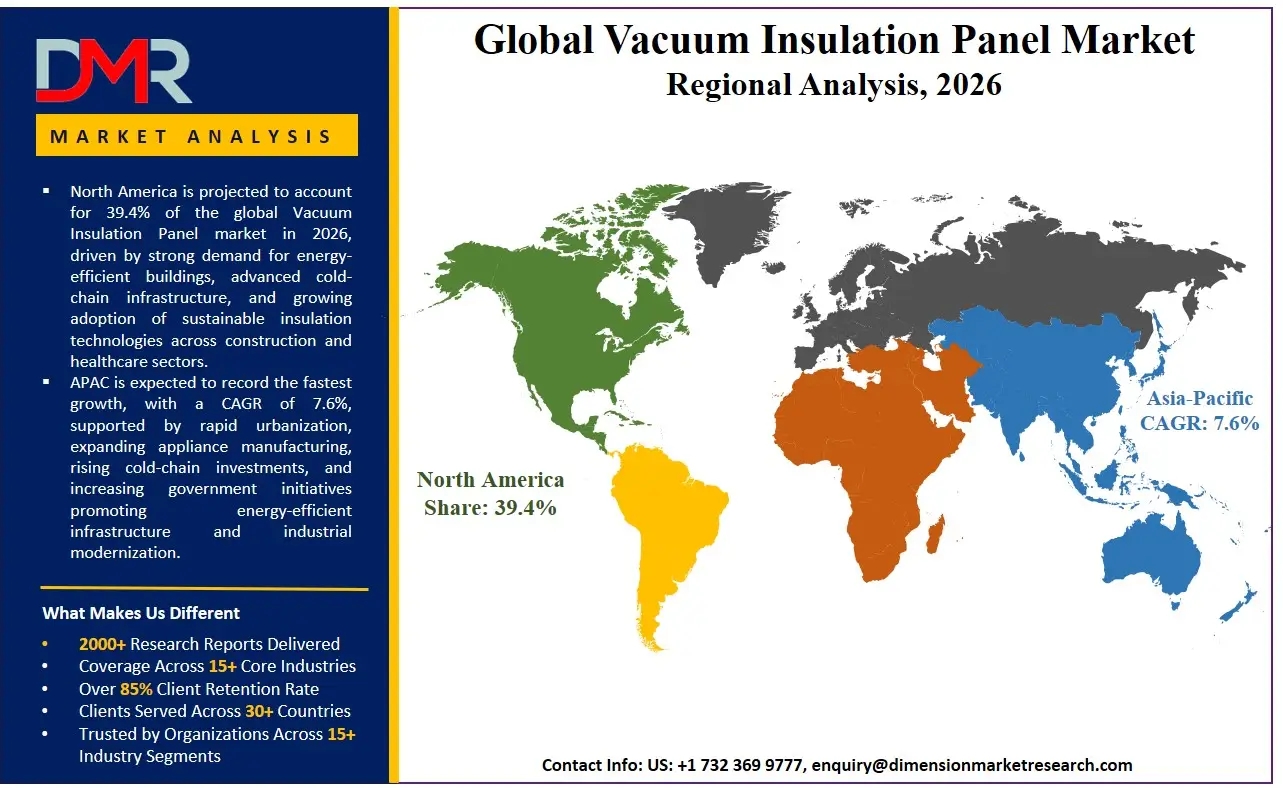
North America is poised to dominate the global vacuum insulation panel market as it is projected to hold 39.4% of the market share by the end of 2026. The United States, which dominates North America, has the highest share in the vacuum insulation panel market leads in the usage of the vacuum insulated panels due to the concentration of cold logistics chain networks as well as the rapid energy code adoption. There is a vibrant ecosystem of global suppliers of materials, building envelope consultancies, as well as technical experts in architecture and engineering. Investment in manufacturing, renewable energy and generally the decarbonization of buildings continues to drive demand for silica based flat panels for both construction and retrofit applications. Furthermore, the prevailing atmosphere of pharmaceuticals and food services keeps driving temperature controlled logistics investments that require sophisticated VIPs in order to deliver on time and in accordance with regulations.
ℹ
To learn more about this report –
Download Your Free Sample Report Here
Fastest-Growing Regional Market
It will be observed that Asia-Pacific will emerge as the fastest growing market for VIP due to the presence of wide-scale efforts led by the governments in nations such as China, Japan, South Korea, and India towards achieving sweeping goals of energy conservation. Due to fast economic growth, emergence of a middle-class population, and rapid growth in cold chain as well as appliances industry, the existing local players have been forced to move away from their inefficient insulation systems and there is an urgent need for advanced material specification to guide these major companies to achieve their goals of achieving high efficiency and compact envelope and product design. Rapid production of EV batteries is another factor, and it will become imperative to look for specific VIP solutions to cater for needs related to thermal runaway protection and range issues.
By Region
North America
Europe
- Germany
- The U.K.
- France
- Italy
- Russia
- Spain
- Benelux
- Nordic
- Rest of Europe
Asia-Pacific
- China
- Japan
- South Korea
- India
- ANZ
- ASEAN
- Rest of Asia-Pacific
Latin America
- Brazil
- Mexico
- Argentina
- Colombia
- Rest of Latin America
Middle East & Africa
- Saudi Arabia
- UAE
- South Africa
- Israel
- Egypt
- Rest of MEA
Competitive Landscape
The nature of competition in the global vacuum insulation panel market has taken on a highly dynamic character with a diverse range of material science giants, core material specialists, and panel integration specialists entering the fray. The key to competing in this environment will lie in forming deep alliances with appliance makers, building system suppliers, and cold chain logistics organizations since only they will provide the specification deals and the openings needed to enter the applications space. The trend towards consolidation within the industry is gaining momentum fast with the incumbent insulation firms buying out core material and laminate barrier specialists in order to remain competitive. Intellectual property rights related to proprietary fumed silica compounds, laminate technologies, and automated panel assembly lines are becoming increasingly important sources of competitive advantage.
Some of the prominent players in the Global Vacuum Insulation Panel Market are:
- Panasonic Holdings Corporation
- OCI Company Ltd.
- va-Q-tec AG
- Kingspan Group plc
- LG Hausys
- ThermoCor
- Porextherm Dämmstoffe GmbH
- Kevothermal LLC
- Knauf Insulation
- Saint-Gobain
- BASF SE
- Dow Inc.
- Morgan Advanced Materials
- Asahi Kasei Corporation
- Evonik Industries AG
- Thermal Visions Inc.
- NICHIAS Corporation
- Promat International
- Avery Dennison Corporation
- Microtherm Sentronic GmbH
- Other Key Players
Recent Developments
- January 2026: Evonik Industries AG has decided to expand the production capacity of fumed silica for the manufacturing of highly efficient vacuum insulation panels for cold chain logistics and automobile transportation uses.
- November 2025: va-Q-tec AG increased cooperation with LG Electronics Inc. in terms of integration of hybrid vacuum insulation technology into high-quality refrigerators and other efficient household appliances.
- October 2025: Kingspan Group plc acquired Porextherm Dämmstoffe GmbH to strengthen flat and special-shaped vacuum insulation panel solutions for prefabricated and energy-efficient construction projects.
Report Details
| Report Characteristics |
| Market Size (2026) |
USD 9.4 Bn |
| Forecast Value (2035) |
USD 14.4 Bn |
| CAGR (2026–2035) |
4.8% |
| The US Market Size (2026) |
USD 3.1 Bn |
| Historical Data |
2021 – 2025 |
| Forecast Data |
2027 – 2035 |
| Base Year |
2025 |
| Estimate Year |
2026 |
| Segments Covered |
By Product Type, By Core Material, By Raw Material, By Technology, By Distribution Channel, By Application, and By End User |
| Regional Coverage |
North America – The US and Canada; Europe – Germany, The UK, France, Russia, Spain, Italy, Benelux, Nordic, & Rest of Europe; Asia-Pacific – China, Japan, South Korea, India, ANZ, ASEAN, Rest of APAC; Latin America – Brazil, Mexico, Argentina, Colombia, Rest of Latin America; Middle East & Africa – Saudi Arabia, UAE, South Africa, Turkey, Egypt, Israel, & Rest of MEA |
Frequently Asked Questions
How big is the Global Vacuum Insulation Panel Market?
▾ The Global Vacuum Insulation Panel market is poised to be valued at USD 9.4 billion in 2026 and is projected to reach USD 14.4 billion by 2035, driven by the universal need for high-performance, thin-profile insulation in building, cold chain, and appliance applications.
What is the CAGR of the Global Vacuum Insulation Panel Market from 2026 to 2035?
▾ The market is expected to grow at a CAGR of 4.8% from 2026 to 2035, reflecting the accelerating stringency of building energy codes and the persistent demand for efficient cold chain logistics and high-end appliances.
What factors are driving the growth of the Global Vacuum Insulation Panel Market?
▾ Key drivers include the global push for net-zero buildings, the expansion of temperature-sensitive pharmaceutical supply chains, the space-saving advantages of thin-profile insulation, and the surge in demand for electric vehicle battery thermal management solutions.
Which region held the largest share of the Vacuum Insulation Panel Market in 2026?
▾ North America, specifically the United States, is projected to hold a 39.4% market share in 2026, driven by a mature cold chain infrastructure and aggressive building code enforcement leading to investment in advanced insulation.
Which region is expected to grow the fastest in the Vacuum Insulation Panel Market?
▾ The Asia-Pacific region is expected to grow the fastest, fueled by rapid urbanization, appliance manufacturing expansion in China and Japan, and the fast-paced construction of energy-efficient buildings.
What are the major trends in the Global Vacuum Insulation Panel Market?
▾ Major trends include the integration of sustainable and recyclable core materials, the development of hybrid vacuum insulation technology, the demand for digital product passports for performance validation, and the focus on application-specific solutions for EV batteries.
Who are the key players in the Global Vacuum Insulation Panel Market?
▾ Key players include material science leaders and specialized manufacturers like Panasonic, LG Hausys, Va-Q-tec, Kingspan Group, and Dow, alongside specialized fumed silica and barrier film suppliers serving the VIP ecosystem.
How is the Global Vacuum Insulation Panel Market segmented?
▾ The market is segmented by Product Type, Core Material, Raw Material, Technology, Distribution Channel, Application, and End User.