Market Snapshot
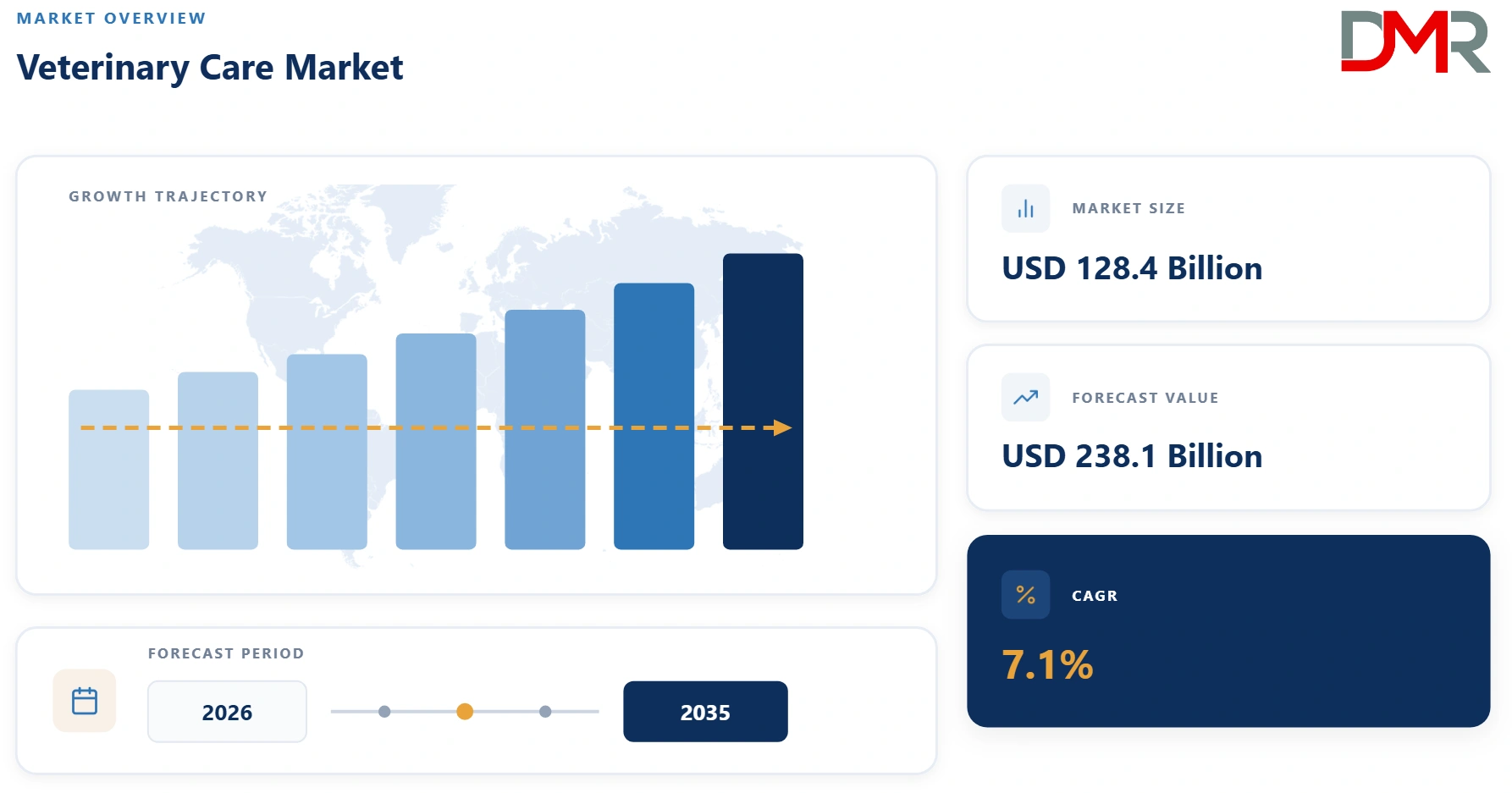
- Market Size (2026): USD 128.4 Bn
- Forecast Value (2035): USD 238.1 Bn
- CAGR (2026-2035): 7.1%
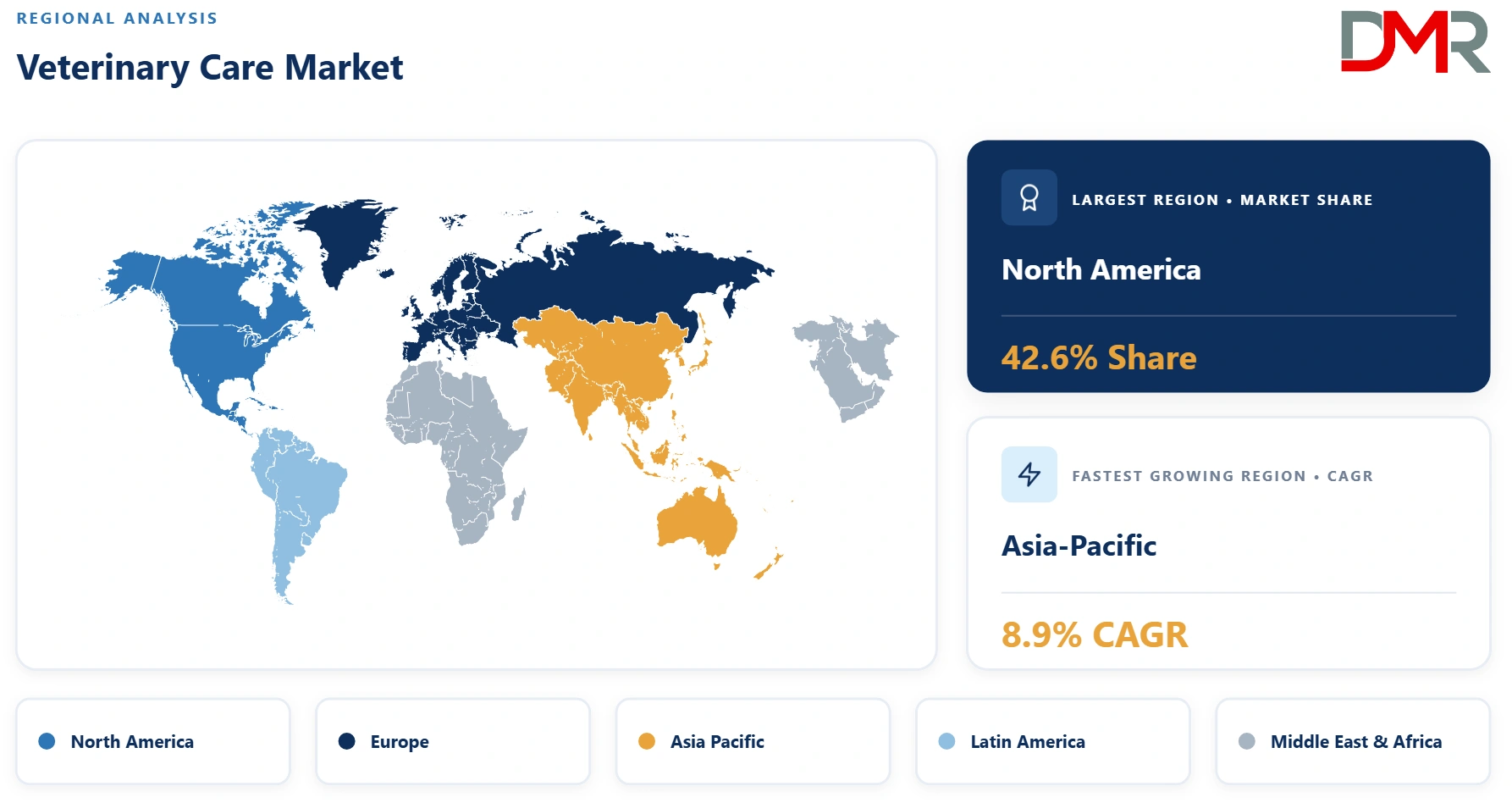
- Largest Region (2026): North America, approximately 42.6%
- Fastest-Growing Region: Asia-Pacific
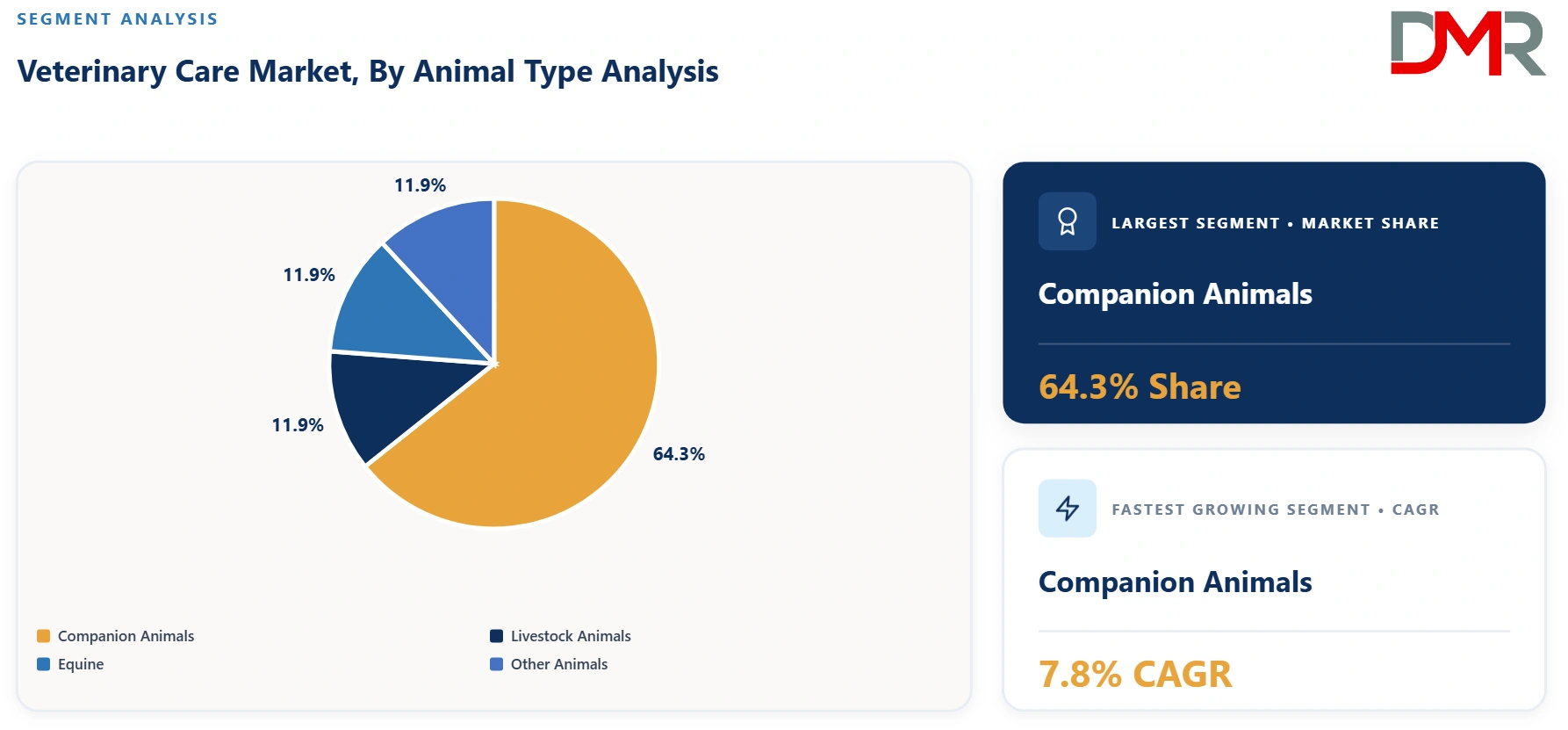
- Leading Animal Type (2026): Companion Animals, around 64.3%
- Leading Type of Care (2026): Medical & Surgical Care, close to 38.7%
- Key Players: Mars Veterinary Health, IVC Evidensia, National Veterinary Associates, and Others
What is Veterinary Care Market and its Market Size?
Global Veterinary Care Market size is estimated to reach USD 128.4 Bn in 2026 and is further anticipated to reach USD 238.1 Bn by 2035, at a CAGR of 7.1%.
ℹ
To learn more about this report –
Download Your Free Sample Report Here
Veterinary care includes preventive, diagnostic, medical, surgical, dental, emergency, specialty, and remote clinical services delivered to companion animals, livestock, equine populations, and other animals. The market covers first-opinion clinics, hospitals, referral centers, mobile practices, at-home providers, and tele-veterinary channels, while excluding the standalone sale of animal pharmaceuticals and feed unless these are directly associated with a clinical care episode.
Demand is increasingly shaped by the humanization of companion animals, higher willingness to spend on advanced treatment, longer pet lifespans, and the growing clinical burden of chronic diseases such as osteoarthritis, obesity, dermatologic disorders, cancer, renal disease, and cardiac conditions. In production animals, veterinary services remain essential for herd health, biosecurity, disease surveillance, reproductive management, and productivity.
Provider economics are moving toward larger multi-site networks, specialty referral hubs, subscription wellness plans, integrated diagnostics, and digital client engagement. Consolidation supports centralized procurement, clinical protocols, technology investment, and specialist recruitment, while independent practices continue to compete through local relationships, continuity of care, and flexible service models.
Over the forecast period, capacity expansion will depend on veterinary workforce availability, affordability of care, diagnostic productivity, and the ability of providers to use digital tools without weakening clinical oversight. Growth is expected to be strongest in specialty care, mobile services, telehealth-supported workflows, and fast-urbanizing Asia-Pacific markets.
Use Cases
- Preventive Companion Animal Care: Primary-care practices deliver vaccinations, parasite control, nutrition counseling, dental screening, annual examinations, and early diagnostic testing to reduce avoidable disease burden and build recurring client relationships through wellness plans.
- Emergency and Specialty Referral: Hospitals and referral centers manage trauma, oncology, cardiology, neurology, orthopedics, intensive care, and complex surgery using specialist teams, advanced imaging, laboratory diagnostics, and round-the-clock clinical infrastructure.
- Livestock Herd Health: Farm veterinarians support disease prevention, reproductive performance, vaccination programs, antimicrobial stewardship, biosecurity, and outbreak response, helping producers protect animal welfare, productivity, and food-chain continuity.
- Mobile and Remote Care: Mobile practices and tele-veterinary platforms extend triage, follow-up, chronic disease monitoring, behavior consultations, hospice support, and selected routine services to owners who face mobility, distance, or scheduling constraints.
Key Takeaways
- Market Size & Share: Global revenue is estimated at USD 128.4 Bn in 2026, with North America contributing approximately 42.6%.
- Animal Type Analysis: Companion Animals lead with about 64.3% share in 2026 and are projected to expand at a CAGR of 7.8%.
- Type of Care Analysis: Medical & Surgical Care is estimated to hold approximately 38.7% of 2026 revenue, while Specialty & Referral Care grows at 8.6%.
- Regional Analysis: Asia-Pacific is expected to record the fastest regional expansion at an estimated CAGR of 8.9% through 2035.
- Commercial Catalyst: Mobile and at-home veterinary services are projected to expand at approximately 9.4% CAGR as convenience-led care models gain adoption.
- Competitive Dynamics: Multi-site veterinary groups are increasing their share of urban and specialty-care capacity, while independent practices remain important in primary care and underserved communities.
How AI/Gen AI is Transforming the Veterinary Care Market?
AI is increasingly embedded in veterinary diagnostics, imaging, pathology, workflow management, and clinical documentation. Computer vision can support interpretation of cytology, hematology, radiographs, and microscopy, while predictive models can flag patients requiring closer monitoring. These tools are primarily designed to assist veterinary professionals by reducing repetitive interpretation tasks, accelerating turnaround times, and helping standardize clinical workflows.
Generative AI is also being applied to medical-note drafting, client communication, discharge instructions, coding support, appointment triage, and knowledge retrieval. The commercial opportunity is strongest where AI reduces administrative load and expands specialist access without replacing veterinarian judgment. Adoption will depend on validation, data governance, explainability, interoperability with practice-management systems, and clear accountability for clinical decisions.
- AI-assisted Diagnostics: Image analysis supports rapid screening of blood, urine, fecal, dermatology, cytology, and radiology samples.
- Clinical Documentation: Generative AI can convert consultation notes into structured records and draft client-facing summaries for veterinarian review.
- Predictive Patient Monitoring: Algorithms can identify risk patterns in longitudinal records and help prioritize follow-up for chronic or high-risk patients.
- Operational Optimization: AI can improve appointment scheduling, inventory planning, staffing forecasts, and referral routing across multi-site networks.
Key Drivers in the Global Veterinary Care Market
Rising Pet Ownership and Humanization of Companion Animals
Companion animals are increasingly treated as family members, supporting higher spending on preventive examinations, diagnostics, dental care, surgery, oncology, chronic disease management, and emergency treatment. Owners are also more willing to pursue advanced procedures that were historically concentrated in human medicine. This shift increases both visit frequency and revenue per clinical episode, particularly in urban markets with higher disposable income and strong pet insurance penetration. Longer animal lifespans further expand demand for recurring management of age-related conditions, creating sustained utilization across primary, specialty, and referral care settings.
Expansion of Advanced Diagnostics and Specialty Veterinary Medicine
Veterinary providers are investing in imaging, digital pathology, point-of-care testing, minimally invasive procedures, oncology, cardiology, orthopedics, and intensive care. Greater diagnostic precision enables earlier treatment and supports more complex clinical pathways, raising the addressable value of veterinary services. Multi-site groups can spread the cost of technology across referral networks, while independent clinics increasingly access external laboratories and teleconsultation specialists. As owners seek faster answers and higher standards of care, diagnostic and specialty capacity becomes a central competitive differentiator.
Restraints in the Global Veterinary Care Market
High Cost of Veterinary Treatment and Affordability Pressure
Advanced veterinary treatment can be expensive because of specialist labor, diagnostic equipment, pharmaceuticals, anesthesia, emergency staffing, and facility costs. In markets where pet insurance penetration is limited, owners often pay directly at the point of care, which can lead to delayed treatment, reduced adherence, or difficult clinical choices. Inflation in wages, rent, consumables, and medicines adds further pressure. Providers therefore face a balancing challenge between sustaining clinical quality and maintaining affordability, especially for emergency and specialty procedures.
Veterinary Workforce Shortages and Capacity Constraints
Many veterinary systems face shortages of veterinarians, nurses, technicians, and specialists, alongside burnout and uneven geographic distribution of professionals. Limited staffing can extend appointment wait times, constrain operating hours, and restrict the ability of clinics to expand advanced services. Specialty hospitals are particularly exposed because training pipelines are long and referral demand is concentrated. Providers are responding with workflow redesign, technician utilization, tele-triage, flexible scheduling, and automation, but workforce availability remains a structural constraint on market growth.
Growth Opportunities in the Global Veterinary Care Market
Mobile, At-Home, and Hybrid Veterinary Care Models
At-home veterinary services create opportunities to reach elderly pet owners, multi-pet households, anxious animals, and customers seeking greater convenience. Mobile providers can deliver wellness visits, vaccinations, diagnostics, palliative care, and selected procedures, while digital channels support triage and follow-up. Hybrid models also allow physical clinics to reserve capacity for higher-acuity cases. As routing software, portable diagnostics, and digital records improve, mobile care can become a scalable extension of established veterinary networks rather than a niche alternative.
Underpenetrated Urban Markets in Asia-Pacific and Latin America
Rising middle-class incomes, urban pet ownership, and growing awareness of preventive animal health are expanding the commercial base for organized veterinary services in emerging economies. Large cities are seeing greater demand for modern clinics, diagnostics, surgery, dental care, and specialty referrals. Providers that combine local pricing, standardized clinical protocols, digital booking, and hub-and-spoke referral models can capture demand while managing capital intensity. Partnerships with laboratories, insurers, pharmacies, and pet retailers can further improve customer acquisition and continuity of care.
Trends in the Global Veterinary Care Market
Consolidation and Multi-Site Veterinary Networks
Corporate and private-equity-backed veterinary groups continue to acquire or partner with clinics to build regional networks, specialty hubs, and shared-service platforms. Scale can improve procurement, recruiting, technology deployment, training, and referral coordination, but it also increases regulatory attention around pricing transparency and market concentration. Competitive differentiation is therefore shifting beyond clinic count toward clinical outcomes, staff retention, client trust, and access to specialist services. Independent practices are responding through buying groups, local brand positioning, and selective technology adoption.
Preventive Care Memberships and Digital Client Engagement
Veterinary providers are expanding wellness plans, recurring-payment models, online booking, automated reminders, remote follow-up, and app-based communication. These tools improve preventive-care adherence and make revenue more predictable while reducing administrative friction for clinics. Membership structures can bundle examinations, vaccinations, parasite prevention, and routine diagnostics, helping owners spread costs over time. Digital engagement also strengthens continuity between visits and supports targeted reminders based on age, species, breed, and medical history.
Research Scope and Analysis
The market is analyzed by Animal Type, Type of Care, Service Provider, and Mode of Delivery, with regional assessment across North America, Europe, Asia-Pacific, Latin America, and Middle East & Africa.
ℹ
To learn more about this report –
Download Your Free Sample Report Here
By Animal Type
Companion Animals is estimated to lead the animal type category with around 64.3% of revenue in 2026, supported by established clinical demand, recurring care requirements, and broad provider availability. Growth, however, is concentrated in Companion Animals, which is projected to expand at a CAGR of 7.8% between 2026 and 2035. Expansion is supported by changing owner expectations, improved access to diagnostics and specialist expertise, provider investment in new delivery models, and rising willingness to pay for higher-value veterinary services. Competitive positioning will depend on clinical capacity, convenience, affordability, digital integration, and the ability to maintain continuity of care across increasingly complex treatment pathways.
By Type of Care
Medical & Surgical Care is estimated to lead the type of care category with around 38.7% of revenue in 2026, supported by established clinical demand, recurring care requirements, and broad provider availability. Growth, however, is concentrated in Specialty & Referral Care, which is projected to expand at a CAGR of 8.6% between 2026 and 2035. Expansion is supported by changing owner expectations, improved access to diagnostics and specialist expertise, provider investment in new delivery models, and rising willingness to pay for higher-value veterinary services. Competitive positioning will depend on clinical capacity, convenience, affordability, digital integration, and the ability to maintain continuity of care across increasingly complex treatment pathways.
By Service Provider
Veterinary Clinics is estimated to lead the service provider category with around 46.8% of revenue in 2026, supported by established clinical demand, recurring care requirements, and broad provider availability. Growth, however, is concentrated in Mobile & At-Home Veterinary Services, which is projected to expand at a CAGR of 9.4% between 2026 and 2035. Expansion is supported by changing owner expectations, improved access to diagnostics and specialist expertise, provider investment in new delivery models, and rising willingness to pay for higher-value veterinary services. Competitive positioning will depend on clinical capacity, convenience, affordability, digital integration, and the ability to maintain continuity of care across increasingly complex treatment pathways.
By Mode of Delivery
In-clinic Care is estimated to lead the mode of delivery category with around 78.4% of revenue in 2026, supported by established clinical demand, recurring care requirements, and broad provider availability. Growth, however, is concentrated in Telehealth & Remote Consultation, which is projected to expand at a CAGR of 10.2% between 2026 and 2035. Expansion is supported by changing owner expectations, improved access to diagnostics and specialist expertise, provider investment in new delivery models, and rising willingness to pay for higher-value veterinary services. Competitive positioning will depend on clinical capacity, convenience, affordability, digital integration, and the ability to maintain continuity of care across increasingly complex treatment pathways.
The Global Veterinary Care Market Report is Segmented Based on the Following
By Animal Type
- Companion Animals
- Livestock Animals
- Equine
- Other Animals
By Type of Care
- Preventive & Wellness Care
- Medical & Surgical Care
- Emergency & Critical Care
- Dental Care
- Specialty & Referral Care
- Others
By Service Provider
- Veterinary Hospitals
- Veterinary Clinics
- Mobile & At-Home Veterinary Services
- Tele-veterinary Platforms
- Others
By Mode of Delivery
- In-clinic Care
- At-home Care
- Telehealth & Remote Consultation
- Others
Regional Analysis
Veterinary care demand is concentrated in developed pet-care economies, while faster growth is emerging in urbanizing markets where formal veterinary infrastructure, pet spending, and access to advanced diagnostics are expanding.
Region with the Largest Revenue Share
North America is estimated to account for approximately 42.6% of global veterinary care revenue in 2026. The region benefits from high companion-animal ownership, strong expenditure per pet, extensive hospital and clinic networks, advanced specialty and emergency infrastructure, and relatively broad adoption of pet insurance and wellness plans. The United States represents the majority of regional demand and supports a large ecosystem of corporate veterinary groups, independent practices, diagnostic laboratories, and specialty centers. Continued investment in oncology, imaging, dentistry, preventive care, and digital workflow tools supports revenue growth, although affordability and workforce shortages remain important operating challenges.
ℹ
To learn more about this report –
Download Your Free Sample Report Here
Region with the Highest CAGR
Asia-Pacific is projected to record the highest regional CAGR at approximately 8.9% from 2026 to 2035. Growth is supported by urban pet ownership, rising disposable incomes, expansion of organized veterinary clinics, and increasing awareness of vaccination, preventive care, diagnostics, and specialty treatment. China, India, Japan, South Korea, and Australia represent distinct demand pools, ranging from mature premium care to rapidly formalizing urban services. Investment opportunities are strongest in multi-site clinic networks, diagnostics, mobile care, and digitally enabled appointment and follow-up systems.
By Region
- North America: The US, Canada
- Europe: Germany, France, The UK, Italy, Spain, Rest of Europe
- Asia-Pacific: China, Japan, India, Australia, South Korea, Rest of APAC
- Latin America: Mexico, Brazil, Colombia, Argentina, Rest of LATAM
- Middle East & Africa: Saudi Arabia, The UAE, South Africa, Rest of MEA
Regulatory Landscape
Veterinary care is governed through national and sub-national rules covering professional licensing, facility standards, controlled medicines, prescription practices, animal welfare, telemedicine, diagnostic laboratories, medical records, and antimicrobial stewardship. Regulatory intensity is increasing around remote prescribing, ownership transparency, competition, and responsible antimicrobial use. Multi-site operators must therefore manage different practice acts and professional standards across jurisdictions. Compliance investment is becoming more important as providers integrate digital consultation, AI-assisted diagnostics, cloud records, and cross-border specialist support. Clear clinical accountability, informed consent, data security, and veterinarian oversight remain central requirements for technology-enabled service models.
Technology Analysis
Technology adoption is moving from isolated practice-management software toward integrated clinical ecosystems linking electronic records, diagnostics, imaging, laboratory results, inventory, payments, telehealth, and client communication. Point-of-care analyzers, digital cytology, AI-assisted imaging, portable ultrasound, cloud-based radiology, and automated documentation can shorten turnaround times and improve workflow productivity. The next phase of differentiation will depend on interoperability and the ability to convert data into actionable clinical support. Providers with larger networks can build shared data infrastructure and virtual specialist models, while smaller clinics increasingly access similar capabilities through subscription software and outsourced diagnostic services.
Competitive Landscape
The veterinary care market is fragmented at the clinic level but increasingly consolidated through multi-site networks and specialty hospital groups. Competition centers on clinical quality, veterinarian availability, location density, emergency access, specialty depth, client experience, pricing transparency, and digital convenience. Large operators benefit from centralized procurement, recruiting, technology investment, and internal referral networks, while independent clinics retain advantages in local relationships and owner continuity. Mergers and acquisitions remain an important route to scale, particularly in North America and Europe, although competition authorities are paying closer attention to concentration, pricing, and ownership disclosure.
Some of the Prominent Players in the Global Veterinary Care Market Are:
- Mars Veterinary Health
- IVC Evidensia
- National Veterinary Associates
- VetPartners
- CVS Group plc
- Greencross Vets
- PetVet Care Centers
- Southern Veterinary Partners
- AmeriVet Veterinary Partners
- VetCor
- Ethos Veterinary Health
- Thrive Pet Healthcare
- Community Veterinary Partners
- VetStrategy
- VetCare Canada
- Linnaeus Veterinary Limited
- AniCura
- VCA Animal Hospitals
- Banfield Pet Hospital
- BluePearl Pet Hospital
- MedVet
- VetPartners Australia and New Zealand
- Vetwest Animal Hospitals
- VetPartners UK
- Pets at Home Vets
- Vets4Pets
- Goddard Veterinary Group
- Independent Vetcare Australia
- Alliance Animal Health
- Heartland Veterinary Partners
- Mission Veterinary Partners
- Rarebreed Veterinary Partners
- Western Veterinary Partners
- Innovative Petcare
- VetnCare
- Petfolk
- Modern Animal
- Bond Vet
- Small Door Veterinary
- BetterVet
- Other Key Players
Recent Developments
- In July 2026, Zoetis announced an agreement to acquire VitalRADS, adding veterinary teleradiology, imaging services, cloud image storage, and AI-assisted reporting capabilities to its diagnostics ecosystem.
- In March 2026, Zoetis highlighted Vetscan OptiCell after it received a 2025 S&P Global Animal Health award, reinforcing adoption of AI-powered point-of-care hematology in veterinary clinics.
- In January 2026, Mars Veterinary Health published its 2025 Science Impact Report, highlighting more than 500 peer-reviewed publications and research initiatives across its global veterinary care network.
- In November 2025, Zoetis acquired Veterinary Pathology Group in the UK and Ireland to expand multi-specialty veterinary diagnostic laboratory capabilities.
- In June 2025, Zoetis launched AI Masses for Vetscan Imagyst, enabling in-clinic AI-supported screening of common lymph node and skin or subcutaneous lesions.
Report Details
| Report Characteristics |
| Market Size (2026) |
USD 128.4 Bn |
| Forecast Value (2035) |
USD 238.1 Bn |
| CAGR (2026–2035) |
7.1% |
| The US Market Size (2026) |
USD 50.8 Bn |
| Historical Data |
2021 – 2025 |
| Forecast Data |
2026 – 2035 |
| Base Year |
2025 |
| Segments Covered |
By Animal Type, By Type of Care, By Service Provider, By Mode of Delivery |
| Regional Coverage |
North America, Europe, Asia-Pacific, Latin America, Middle East & Africa |
Frequently Asked Questions
How big is the Global Veterinary Care Market?
▾ Global Veterinary Care Market size is estimated to reach USD 128.4 Bn in 2026 and is projected to reach USD 238.1 Bn by 2035, growing at a CAGR of 7.1%.
What is the growth rate of the Global Veterinary Care Market?
▾ The market is expanding at an estimated CAGR of 7.1% from 2026 to 2035, supported by rising companion-animal spending, specialty care utilization, preventive medicine, and expansion of organized veterinary networks.
Which region holds the largest share in the Global Veterinary Care Market?
▾ North America leads the market, holding approximately 42.6% of global revenue in 2026, supported by high pet-care expenditure, dense veterinary infrastructure, specialty hospitals, and broad use of diagnostics.
Who are the key players in the Global Veterinary Care Market?
▾ Prominent operating companies include Mars Veterinary Health, IVC Evidensia, National Veterinary Associates, and VetPartners, alongside numerous regional networks and independent veterinary practices.
Which segment is leading the Global Veterinary Care Market?
▾ The Companion Animals segment commands the highest share by animal type, accounting for roughly 64.3% in 2026 due to high visit frequency, preventive care adoption, and advanced treatment spending.
Which segment is expanding fastest in the Global Veterinary Care Market?
▾ Within mode of delivery, Telehealth & Remote Consultation is projected to record the highest growth, registering a CAGR of approximately 10.2% through 2035 as hybrid care models expand.
What are the major growth drivers in the Global Veterinary Care Market?
▾ Market expansion is primarily propelled by rising pet ownership and humanization, increasing use of advanced diagnostics and specialty medicine, longer companion-animal lifespans, and broader access to organized veterinary services.