What is the Virtual Primary Care Platform Market Size?
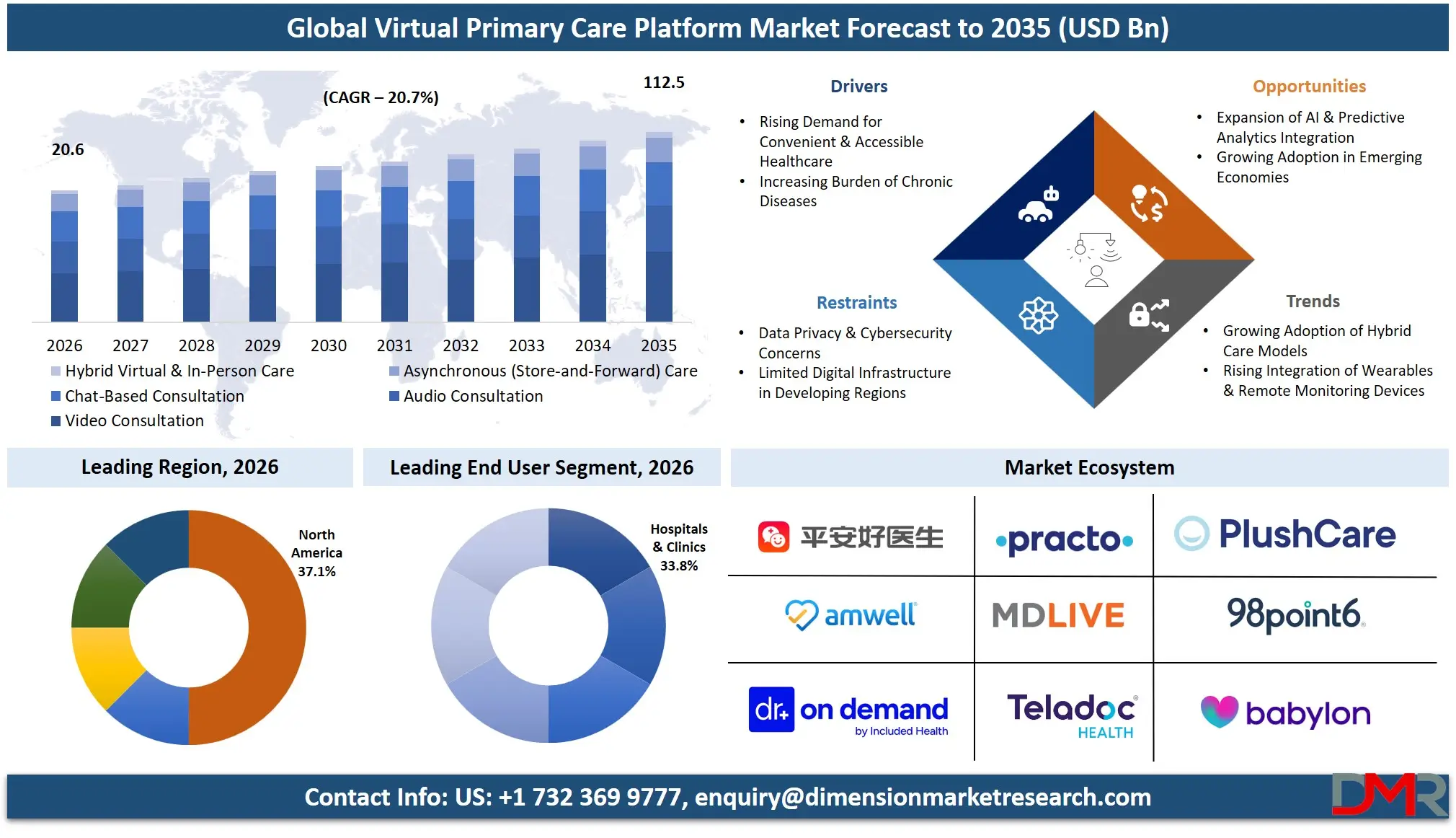
The Global Virtual Primary Care Platform Market is expected to reach a value of USD 20.6 billion in 2026, and it is further anticipated to reach USD 112.5 billion by 2035, growing at a CAGR of 20.7% during the forecast period.
ℹ
To learn more about this report –
Download Your Free Sample Report Here
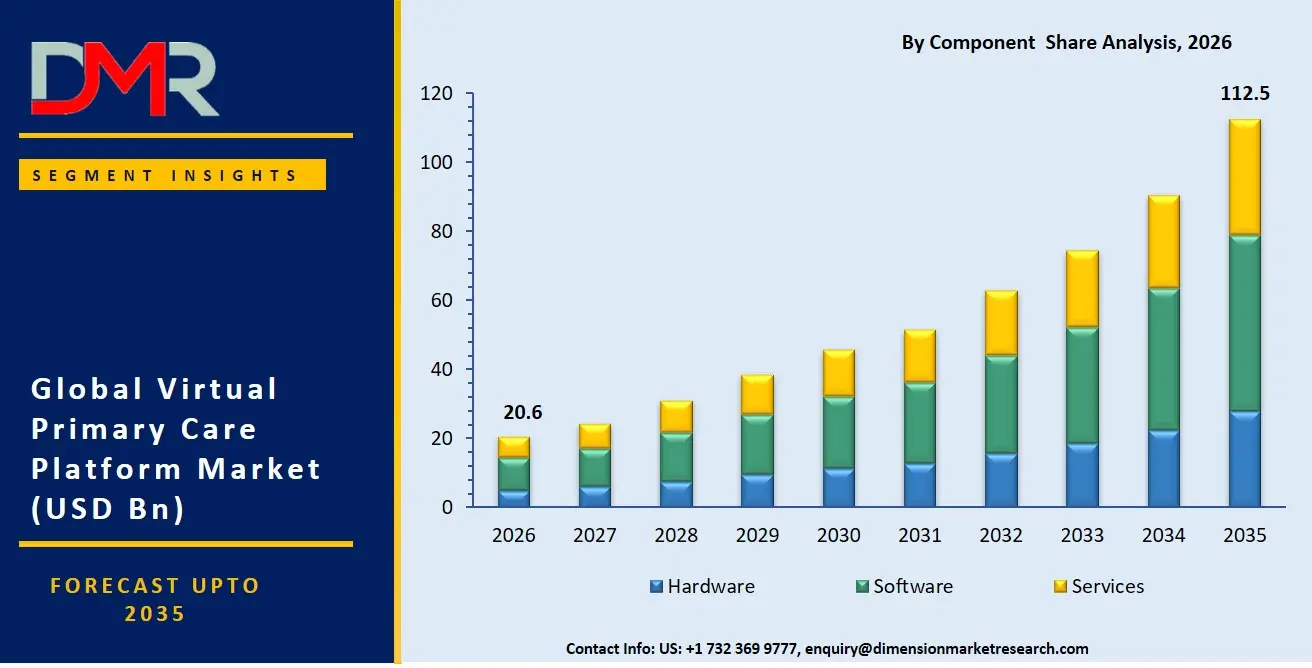
The market for virtual primary care platforms has seen tremendous growth, with the shift towards a more continuous delivery model as opposed to traditional episodic visits. The virtual primary care platform market comprises software, hardware (wearable devices, home monitoring devices), and services (technical support, deployment and integration).
ℹ
To learn more about this report –
Download Your Free Sample Report Here
The increasing trend towards decentralization of care provision, utilization of artificial intelligence (AI) for triaging patients, and employer provision of virtual health plans are some of the key factors making the need for virtual care platforms necessary. The end-users include patients, medical practitioners, and insurance companies, with video consultations and hybrid delivery models being the most common modes of service delivery due to their efficiency and efficacy. Chronic diseases, mental health care, and elderly patient care are among the important growth drivers in the market.
The US Virtual Primary Care Platform Market
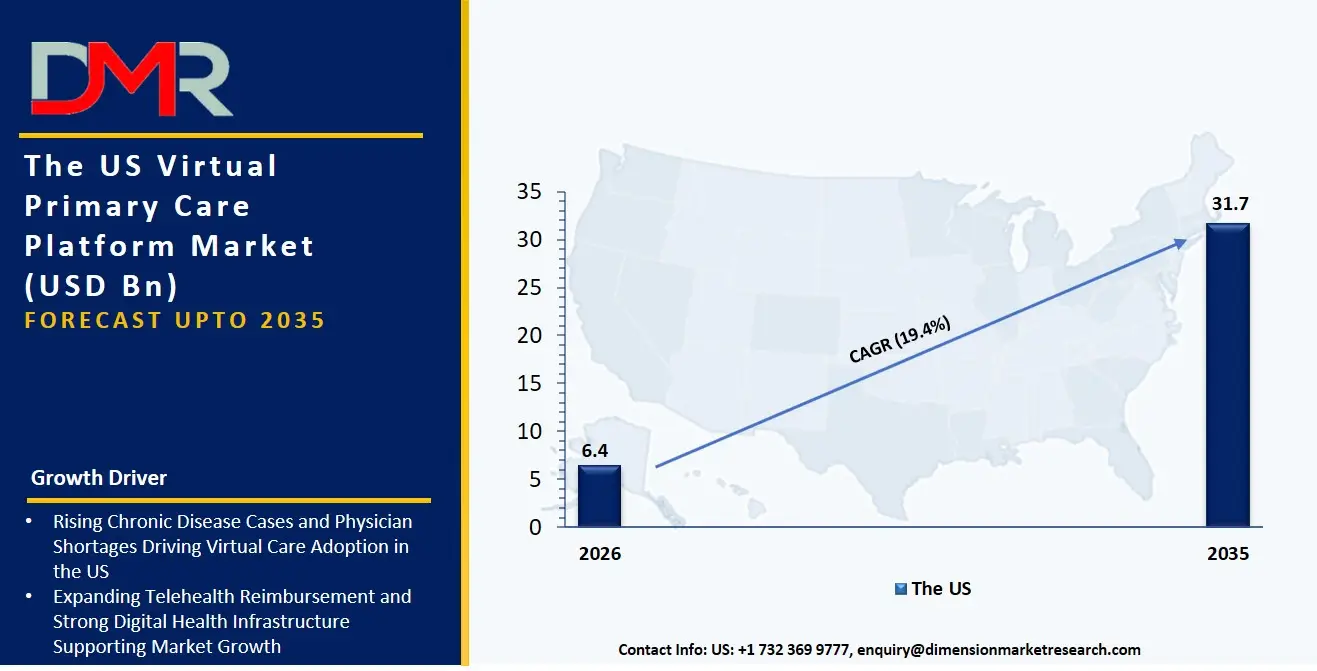
The US Virtual Primary Care Platform Market is projected to reach USD 6.4 billion in 2026 at a compound annual growth rate of 19.4% over its forecast period, culminating in a value of USD 31.7 billion by 2035. The US remains the biggest and most advanced market for virtual primary care platforms owing to the active deployment of value-based healthcare by health providers and the incorporation of remote patient monitoring (RPM) into health insurance provided by employers. The market has been characterized by a high uptake of AI-enabled virtual care platforms as organizations attempt to introduce automation of their triaging and decision-making processes. Additionally, the emergence of integrated care management platforms has resulted in a similar need for Integration & Deployment Services as a connection between virtual care and EHR/billing platforms.
ℹ
To learn more about this report –
Download Your Free Sample Report Here
The Europe Virtual Primary Care Platform Market
The Europe Virtual Primary Care Platform Market is estimated to be valued at USD 5.8 billion in 2026 and is further anticipated to reach USD 30.1 billion by 2035 at a CAGR of 20.0%. GDPR compliance and the soon-to-be-launched EHDS regulations have a profound effect on the European market. The requirement to have Technical Support Services along with asynchronous care tools is a direct consequence. Rapid adoption of Hybrid Virtual & In-Person Care models is being seen within the region, especially by countries such as Germany, France, and the United Kingdom who are trying to find an equilibrium between digitization and conventional GP care. Moreover, digital health projects initiated by governments in Europe are putting pressure on healthcare providers to provide specialized integration & deployment services.
The Japan Virtual Primary Care Platform Market
The Japan Virtual Primary Care Platform Market is projected to be valued at USD 2.1 billion in 2026. It is further expected to witness robust growth, holding USD 10.4 billion in 2035 at a CAGR of 19.4%. In this sense, the Japanese market represents something rather unique since there is a national focus on developing the digital health industry in reaction to the aging population, lack of workforce, and shortages of general practitioners. Chronic Care Virtual Primary Care Platforms and Mobile First Primary Care Applications dominate the spending in the region, as big players like health insurance providers and hospital organizations introduce remote monitoring capabilities for patients suffering from chronic illnesses such as hypertension and diabetes as well as the elderly population in general. Another area where there is a huge demand is the market for Integration & Deployment Services to connect legacy EMRs and virtual care solutions.
Key Takeaways
- Market Size & Forecast: The Global Virtual Primary Care Platform market is projected to reach USD 20.6 billion in 2026, expanding dramatically to USD 112.5 billion by 2035, fueled by the dual drivers of chronic disease prevalence and the mandatory digitization of primary care infrastructure.
- Growth Rate & Outlook: Global market growth is forecasted at a Compound Annual Growth Rate (CAGR) of 20.7%, driven by two major factors, such as the acute shortage of primary care doctors and increasing complexity of RPM data management.
- Primary Growth Drivers: Main drivers include the transformation of fee-for-service into value-based care programs, clinical service requirements for virtual patient management, and utilization of Artificial Intelligence-based triage tools needing dedicated software.
- Key Market Trends: Main trends in this market include the emergence of Employer-sponsored virtual care platforms, the application of AI-based algorithms in RPM integrated platforms for early warning signs, and adoption of subscription-based virtual primary care platforms.
- By Component Analysis: The software segment holds the largest market share in the Global Virtual Primary Care Platform Market owing to its importance in scheduling, EHR integration, analytics, billing, and patient engagement. Increased adoption of cloud-based SaaS platforms, AI-based solutions in healthcare, and cybersecurity improvements are expected to sustain its leading position.
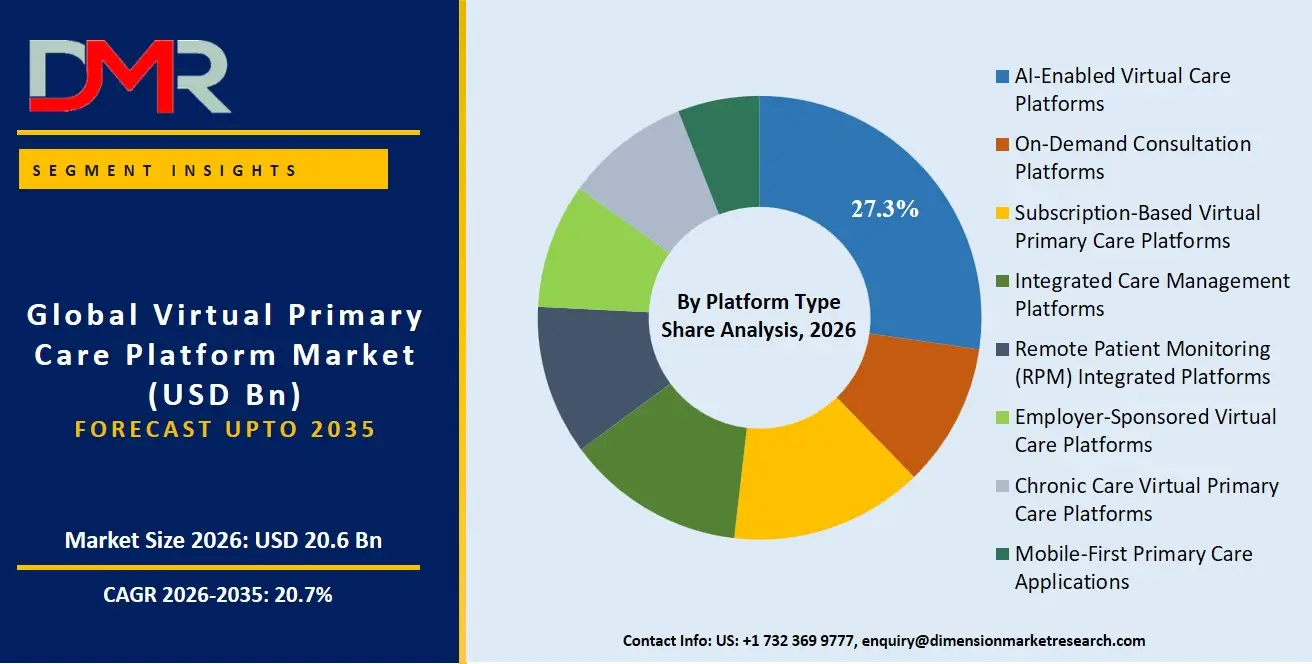
- By Platform Type Analysis: AI-enabled virtual care platforms have emerged as the market leader due to their efficiency in clinical care, automation, patient engagement, and predictive healthcare delivery. Higher adoption of intelligent triaging, generative AI technologies, and chronic disease care management is expected to drive future demand.
- Regional Leadership: North America is expected to be the market leader with a 37.1% market share in 2026 owing to its robust digital health ecosystem, supportive reimbursement policies for telemedicine services, and higher adoption of employer-sponsored virtual primary care platforms.
What is the Virtual Primary Care Platform?
Virtual Primary Care Platforms are the technology stack and specific clinical services required for consistent and convenient primary care service delivery outside clinics. As opposed to episodic telehealth applications, virtual primary care platforms are connected to the "how" of delivering longitudinal primary care service delivery. This is done through Software (such as symptom checkers, EHR integration), Hardware (for example, wearables, home monitoring tools), and Services (clinical services, IT services, integration, and deployment). Given that over 75% of primary care encounters can be delivered via virtual means, professional services and platform capabilities are required to ensure care continuity, patient engagement, and compliance.
Use Cases
- Chronic Disease Management in Primary Care: Health care systems implement Chronic Care Virtual Primary Care Platforms and Remote Patient Monitoring (RPM) Integrated Platforms to remotely monitor blood pressure and glucose and manage medications, thereby lowering the risk of re-hospitalization.
- Mental Health Integration in Employer Plans: Employers provide Employer-Sponsored Virtual Care Platforms that include Chat-Based Consultation and Asynchronous Care to provide on-demand mental health services for their workers, thus reducing absenteeism from work.
- Post-Discharge Follow-Up for Geriatric Patients: Hospitals utilize Integrated Care Management Platforms and Clinical Services for coordinating post-discharge virtual visits, medication reconciliation, and assessment of fall risks among elderly patients who have moved out of hospitals into home settings.
- Pediatric Virtual Care in Home Settings: Parents employ Mobile-First Primary Care Applications that offer Video Consultation and Asynchronous (Store-and-Forward) Care by sending photos of rashes and fever charts, allowing them to receive primary care treatment without visiting the emergency room.
How AI is Transforming the Virtual Primary Care Platform Market
In AI-Enabled Virtual Primary Care Platforms, AI-driven symptom checker applications have the ability to automatically triage patients into the correct care pathway, with little involvement from nurses and no waiting time. AI-driven RPM Integrated Platforms can help providers to improve chronic disease management by identifying anomalies in vital signs, deterioration risks, and recommending early intervention.
Clinical Services and governance initiatives are also being driven by AI. In Clinical Services, intelligent compliance monitoring agents are employed to continuously audit documentation from virtual visits and detect coding errors, thereby ensuring billing framework compliance. In addition, generative AI assistants assist in care management platforms by writing patient summaries and clinical notes, reducing provider workload.
Market Dynamics
Key Drivers in the Global Virtual Primary Care Platform Market
Rising Demand for Convenient & Accessible Healthcare
One of the most significant factors driving the demand for virtual primary care platforms is the rising demand for efficient and easy access to healthcare services. Patients today require healthcare services that save time in traveling, eliminate wait times, and allow quicker consultations with doctors from their homes. Virtual primary care platforms offer patients constant contact with their physicians, preventive medicine, chronic illness management, and pharmacy services through smartphones and other devices. Internet connectivity and increasing digital literacy rates fuel platform utilization worldwide. Healthcare institutions have also been enhancing telemedicine services in recent years to increase patient engagement, enhance organizational efficiency, and reach marginalized communities.
Increasing Burden of Chronic Diseases
The increase in the prevalence of chronic conditions like diabetes, hypertension, obesity, asthma, and cardiovascular disease is contributing to the growing need for virtual primary care systems. Chronic illness patients have to be constantly monitored, regularly visited, provided with medications, and continually offered medical care services, all of which are efficiently handled by virtual care systems. Healthcare institutions have become more inclined towards implementing digital primary care systems to cut down on the number of readmissions, promote adherence to treatment plans, and minimize overall medical expenses. The increasing aging population and inactive lifestyle choices also contribute to rising cases of chronic illnesses around the globe.
Restraints in the Global Virtual Primary Care Platform Market
Data Privacy & Cybersecurity Concerns
Privacy and security issues will continue to serve as some of the greatest barriers to the virtual primary care platform market. In virtual healthcare solutions, sensitive data about patients is stored, which includes their health data, medical prescriptions, payment information, and diagnostics results. There is an increasing reliance on cloud technology in healthcare settings, which makes them more susceptible to cyber attacks and data breaches. It is necessary for healthcare institutions to allocate significant resources to enhance their security protocols in order to adhere to healthcare regulations and maintain the confidence of their patients. This poses a challenge to smaller healthcare providers who cannot afford such cybersecurity measures.
Limited Digital Infrastructure in Developing Regions
The lack of advanced digital healthcare infrastructure in developing nations and rural parts of the world prevents the rise of virtual primary care models. There are still some developing nations that encounter difficulties with internet penetration, poor broadband connectivity, limited presence of smartphones, and inadequate healthcare IT infrastructure. The inability of some individuals, such as senior citizens, to navigate their devices effectively becomes another challenge that prevents them from accessing telehealthcare services. Besides, healthcare organizations in developing nations lack funding and knowledge on how to deploy virtual care solutions in the first place. Inconsistent regulations and inadequate financial incentives in certain nations prevent the widespread use of telehealthcare.
Growth Opportunities in the Global Virtual Primary Care Platform Market
Expansion of AI & Predictive Analytics Integration
The incorporation of artificial intelligence and predictive analytics opens up promising growth prospects for the virtual primary care platform market. Artificial intelligence applications offer superior clinical decision support, automated patient triage, accurate diagnostics, and more efficient administrative processes for healthcare institutions. Predictive analytics can help detect diseases at an early stage, plan treatments tailored to patients' needs, and manage chronic illnesses proactively. Healthcare facilities are increasingly adopting virtual care solutions enhanced by intelligent features to deliver better patient outcomes and minimize their operational expenses and doctors' burden. Generative AI, natural language processing, and conversational assistants in healthcare will contribute to improved patient interactions and access to care in the future.
Growing Adoption in Emerging Economies
Opportunities for virtual primary care platform companies are immense in emerging markets owing to the ongoing healthcare digitalization and rising need for accessible healthcare services. Countries in the Asia-Pacific, Latin American, and Middle Eastern regions are making significant investments in telehealth systems, digital healthcare policies, and internet coverage in order to improve healthcare accessibility to people living in underserved communities. Smartphone proliferation and enhanced mobile broadband services provide additional assistance in this regard. Virtual primary care platforms can assist in overcoming the challenges of shortage of physicians and underdeveloped healthcare facilities in remote locations, as well as reducing the cost of medical treatment for patients.
Trends in the Global Virtual Primary Care Platform Market
Growing Adoption of Hybrid Care Models
A trend that will soon dominate the market for virtual primary care platforms involves the provision of hybrid healthcare that combines virtual consultations with physical healthcare services. Healthcare organizations are increasingly incorporating telemedicine into their healthcare service delivery systems as a way of making healthcare services convenient while retaining the ability to do physical examinations where necessary. Hybrid healthcare helps in continuity of healthcare by providing follow-ups, monitoring chronic diseases, checking on medication, and offering preventative healthcare virtually. Patients like having the convenience of accessing healthcare in both virtual and physical formats. The trend will greatly transform healthcare in the future.
Rising Integration of Wearables & Remote Monitoring Devices
The rising incorporation of wearable technology and remote patient monitoring solutions is revolutionizing the market for virtual primary care platforms. Smartwatches, biosensors, remote glucose monitors, blood pressure monitors, and ECG enabled devices facilitate continuous and real-time health monitoring away from clinical environments. Such innovations enhance the management of chronic diseases, promote preventive care, and help in the early detection of health issues. Healthcare practitioners are adopting the use of remote patient data to develop customized health interventions and avoid unnecessary hospital admissions. The progress made in the field of IoT-based healthcare ecosystem and advanced analytics powered by artificial intelligence is reinforcing such capabilities. Consumer awareness regarding preventive care is on the rise.
Research Scope and Analysis
The global virtual primary care platform market is witnessing strong growth driven by rising adoption of AI-enabled healthcare software, video consultations, and chronic disease management solutions. Increasing digital healthcare integration across hospitals and clinics is further accelerating demand for advanced virtual care platforms worldwide.
ℹ
To learn more about this report –
Download Your Free Sample Report Here
By Component Analysis
Software is projected to lead the global virtual primary care platform market since software constitutes the core of virtual care delivery systems. Functions such as virtual appointment scheduling, EHR integration, AI-driven triaging, patient engagement, e-prescription management, billing, and analytics depend on software applications. Providers have an increasing preference for cloud-based software that enables interconnectivity and seamless communication. The widespread use of advanced AI, automation, and analytics in digital healthcare increases the demand for software. Furthermore, subscription-based models for software eliminate the cost associated with setting up infrastructural needs. Frequent updates and cybersecurity upgrades in software also play a significant role in the generation of revenue streams, thus enhancing the supremacy of the software market.
By Platform Type Analysis
AI-Enabled Virtual Care Platforms is expected to hold a significant share of the market because of their clinical efficiency, patient engagement, and improved healthcare access. The virtual platforms leverage artificial intelligence to assess symptoms, offer clinical decision-making assistance, automate clinical documentation, serve as virtual assistants, and conduct predictive analysis. This enables medical practitioners to streamline their workloads and enhance the quality of their clinical services. The increased shortage of physicians and the growing need for swift healthcare delivery are pushing more virtual primary care solutions to adopt AI technologies. Personalized virtual care solutions can be beneficial for managing chronic diseases and preventing potential illnesses. Additionally, healthcare institutions are spending more on intelligent triage systems and automation tools that help reduce operating costs and optimize their staff allocation.
By Delivery Mode Analysis
Video Consultation is the main revenue stream for the global virtual primary care platform market due to its similarity to conventional face-to-face meetings but with greater ease and convenience. People have a preference for video consultations for diagnosis, treatment discussions, follow-ups, and management of chronic diseases. The prevalence of smartphones, fast internet connectivity, and telemedicine apps has greatly driven the adoption rate. It enhances patient satisfaction and communication more than text messages or voice-only consultations. Post-pandemic, the medical system adopted video consultations as an essential healthcare delivery method, which contributed to its market dominance. Moreover, reimbursement for teleconsultations by insurance firms and the government has boosted their adoption rate.
By Application Analysis
The Chronic Disease Management sector is the largest within the market space owing to the rising prevalence of various chronic illnesses across the globe, including diabetes, hypertension, heart ailments, asthma, and obesity. Virtual primary care technology enables round-the-clock surveillance, medication compliance assistance, remote patient consultation, and tailored care plans that not only enhance health status but minimize the number of trips to hospitals and reduce healthcare expenditure. The aging population and rise in lifestyle-related ailments will drive continuous demand for remote chronic disease care services on a global basis. Combining remote patient monitoring technology with wearables improves the effectiveness of chronic disease care delivery by offering real-time patient health information. The adoption of virtual chronic disease management programs by healthcare professionals and insurers is motivated by the fact that it lowers readmissions and enhances preventive measures.
By End User Analysis
Hospitals & Clinics are anticipated to take the lead in the global virtual primary care platform market since these entities constitute the healthcare delivery framework that is implementing telehealth technology on a large scale. The growing need for improved access, reduced crowding at hospitals, better physician efficiency, and improved capability of offering specialty consultations drives the increasing utilization of virtual care platforms among hospitals. In addition, hospitals have the requisite resources for implementing integrated virtual healthcare environments in comparison with smaller medical institutions. The rising demand for cost-cutting and coordinated care delivery further spurs the growth of virtual care platforms within hospitals. Moreover, hospitals use these platforms for offering post-discharge services, prevention, and chronic disease management in an attempt to avoid hospital readmissions.
The Global Virtual Primary Care Platform Market Report is segmented on the basis of the following:
By Component
- Hardware
- Wearables
- Home Monitoring Devices
- Software
- Services
- Clinical Services
- Technical Support Services
- Integration & Deployment Services
By Platform Type
- AI-Enabled Virtual Care Platforms
- On-Demand Consultation Platforms
- Subscription-Based Virtual Primary Care Platforms
- Integrated Care Management Platforms
- Remote Patient Monitoring (RPM) Integrated Platforms
- Employer-Sponsored Virtual Care Platforms
- Chronic Care Virtual Primary Care Platforms
- Mobile-First Primary Care Applications
By Delivery Mode
- Video Consultation
- Audio Consultation
- Chat-Based Consultation
- Asynchronous (Store-and-Forward) Care
- Hybrid Virtual & In-Person Care
By Application
- Chronic Disease Management
- Acute Primary Care
- Preventive Care & Wellness
- Medication Management
- Mental & Behavioral Health Integration
- Pediatric Virtual Care
- Geriatric Care
- Post-Discharge Follow-Up Care
By End User
- Hospitals & Clinics
- Physician Practices
- Home-Care Settings
- Employers & Payers
- Government & Defense Facilities
- Patients
Regional Analysis
Leading Region by Market Share
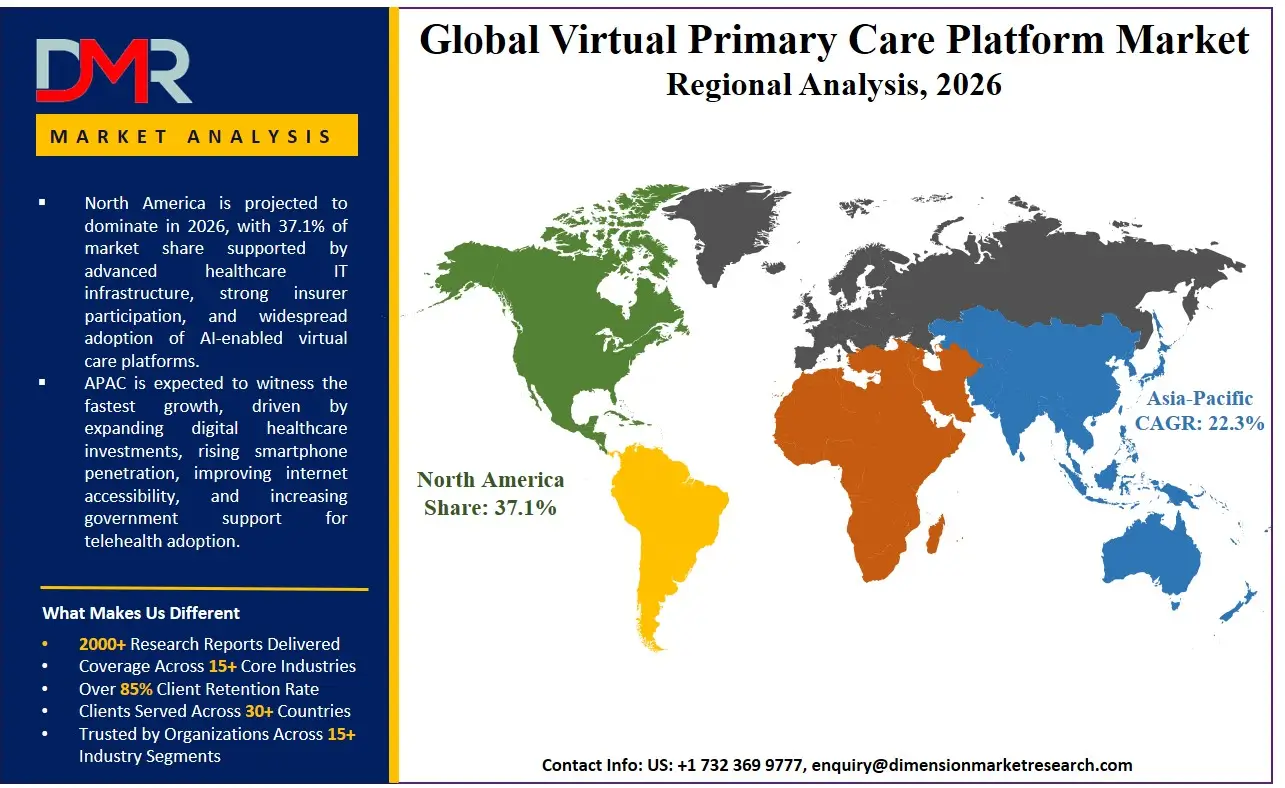
North America is projected to hold a significant share of the virtual primary care platform market, with 37.1% of the total market share by 2026. The driving factor behind North America's strong market share is mainly attributed to the United States due to favorable reimbursement policies by CMS and private insurance organizations that promote the adoption of telemedicine and digital health platforms. A high penetration rate of employer-sponsored healthcare plans and value-based care programs contribute to the growth in the market. Digital transformation in the healthcare industry includes remote patient monitoring, chronic disease management, and the creation of an ecosystem for digital health solutions.
ℹ
To learn more about this report –
Download Your Free Sample Report Here
Fastest-Growing Regional Market
The Asia-Pacific region is expected to become the fastest-growing market for virtual primary care platforms over the forecast period. The adoption of telemedicine and artificial intelligence healthcare platforms is being accelerated by the rapid digital transformation in the healthcare sector in countries like India, China, Japan, and other Southeast Asian countries. There is a lot of government support being provided for various initiatives to bring more digital technology in the healthcare sector because of their efforts to increase the availability of healthcare and overcome the physician shortage problem in underprivileged areas. The growing need for elderly care and monitoring has increased the demand for these platforms.
By Region
North America
Europe
- Germany
- The U.K.
- France
- Italy
- Russia
- Spain
- Benelux
- Nordic
- Rest of Europe
Asia-Pacific
- China
- Japan
- South Korea
- India
- ANZ
- ASEAN
- Rest of Asia-Pacific
Latin America
- Brazil
- Mexico
- Argentina
- Colombia
- Rest of Latin America
Middle East & Africa
- Saudi Arabia
- UAE
- South Africa
- Israel
- Egypt
- Rest of MEA
Competitive Landscape
The landscape of competition within the virtual primary care ecosystem at a global level has been very dynamic, featuring a mixed set of players such as multinationals within the telehealth space, divisions for digital health from established health systems, and consultancies within the platform space. The critical success factor in all cases would be the establishment of deep strategic partnerships with electronic health records vendors and payer networks. Market consolidation is occurring quickly through acquisitions by traditional healthcare IT firms of specialty firms within the virtual care and RPM space that have AI capabilities.
Some of the prominent players in the Global Virtual Primary Care Platform Market are:
- Teladoc Health
- Amwell
- MDLIVE
- Doctor On Demand
- PlushCare
- 98point6
- K Health
- Babylon Health
- Practo
- Doctor Anywhere
- Ping An Good Doctor
- Maven Clinic
- Pager
- SnapMD
- Caregility
- VSee
- SOC Telemed
- Virtuwell
- LiveHealth Online
- Sesame Care
- Other Key Players
Recent Developments
- January 2026: Teladoc Health announced a major expansion of its AI-Enabled Virtual Care Platforms to assist employer clients in integrating Remote Patient Monitoring (RPM) Integrated Platforms for chronic disease management, using new wearable integrations and Clinical Services.
- November 2025: Amwell strengthened its collaboration with Epic Systems and launched a dedicated Integration & Deployment Services practice aimed at helping hospital systems connect Asynchronous Care workflows directly into existing EHRs.
- October 2025: Included Health (Doctor On Demand) acquired a European virtual mental health platform to further its Employer-Sponsored Virtual Care Platforms and Mental & Behavioral Health Integration solutions for multinational employers.
Report Details
| Report Characteristics |
| Market Size (2026) |
USD 20.6 Bn |
| Forecast Value (2035) |
USD 112.5 Bn |
| CAGR (2026–2035) |
20.7% |
| The US Market Size (2026) |
USD 6.4 Bn |
| Historical Data |
2021 – 2025 |
| Forecast Data |
2027 – 2035 |
| Base Year |
2025 |
| Estimate Year |
2026 |
| Segments Covered |
By Component (Hardware, Software, and Services), By Platform Type, By Delivery Mode, By Application, and By End User |
| Regional Coverage |
North America – The US and Canada; Europe – Germany, The UK, France, Russia, Spain, Italy, Benelux, Nordic, & Rest of Europe; Asia-Pacific – China, Japan, South Korea, India, ANZ, ASEAN, Rest of APAC; Latin America – Brazil, Mexico, Argentina, Colombia, Rest of Latin America; Middle East & Africa – Saudi Arabia, UAE, South Africa, Turkey, Egypt, Israel, & Rest of MEA |
Frequently Asked Questions
How big is the Global Virtual Primary Care Platform Market?
▾ The Global Virtual Primary Care Platform market is poised to be valued at USD 20.6 billion in 2026 and is projected to reach USD 112.5 billion by 2035, driven by the universal need for accessible, continuous primary care and integration of RPM and AI-enabled software.
What is the CAGR of the Global Virtual Primary Care Platform Market from 2026 to 2035?
▾ The market is expected to grow at a CAGR of 20.7% from 2026 to 2035, reflecting accelerating adoption of virtual-first primary care models and persistent shortage of primary care physicians.
What factors are driving the growth of the Global Virtual Primary Care Platform Market?
▾ Key drivers include the global primary care physician shortage, the imperative to manage chronic diseases remotely, the complexity of multi-channel patient engagement (video, chat, asynchronous), and the surge in employer-sponsored virtual care benefits.
Which region held the largest share of the Virtual Primary Care Platform Market in 2026?
▾ North America, specifically the United States, held 37.1% of the market share in 2026, driven by value-based care reimbursement and high adoption of employer-sponsored and RPM-integrated virtual care platforms.
Which region is expected to grow the fastest in the Virtual Primary Care Platform Market?
▾ The Asia-Pacific region is expected to grow the fastest, fueled by aging populations, rapid digital health transformation in India and China, and severe primary care access gaps in rural areas requiring mobile-first and chat-based solutions.
What are the major trends in the Global Virtual Primary Care Platform Market?
▾ Major trends include the integration of generative AI into clinical triage, the rise of wearable-integrated RPM platforms, the shift toward employer-sponsored subscription models, and the focus on hybrid virtual/in-person care delivery.
Who are the key players in the Global Virtual Primary Care Platform Market?
▾ Key players include Teladoc Health, Amwell, Doctor On Demand (Included Health), MDLIVE, Babylon Health, K Health, 98point6, Carbon Health, TytoCare, and Current Health.
How is the Global Virtual Primary Care Platform Market segmented?
▾ The market is segmented by Component, Platform Type, Delivery Mode, Application, and End User.