Market Snapshot
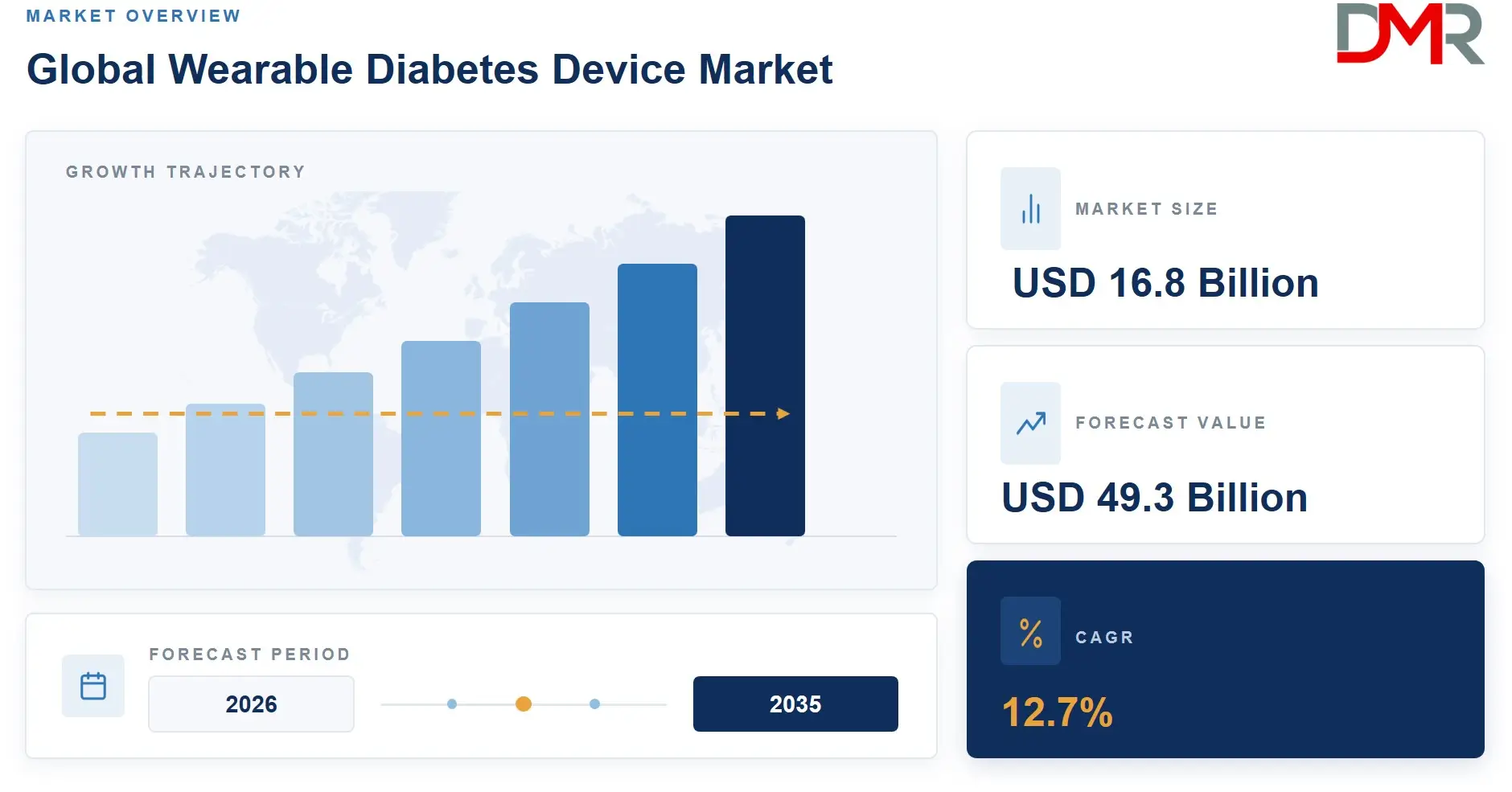
- Market Size (2026): USD 16.8 Bn
- Forecast Value (2035): USD 49.3 Bn
- CAGR (2026-2035): 12.7%
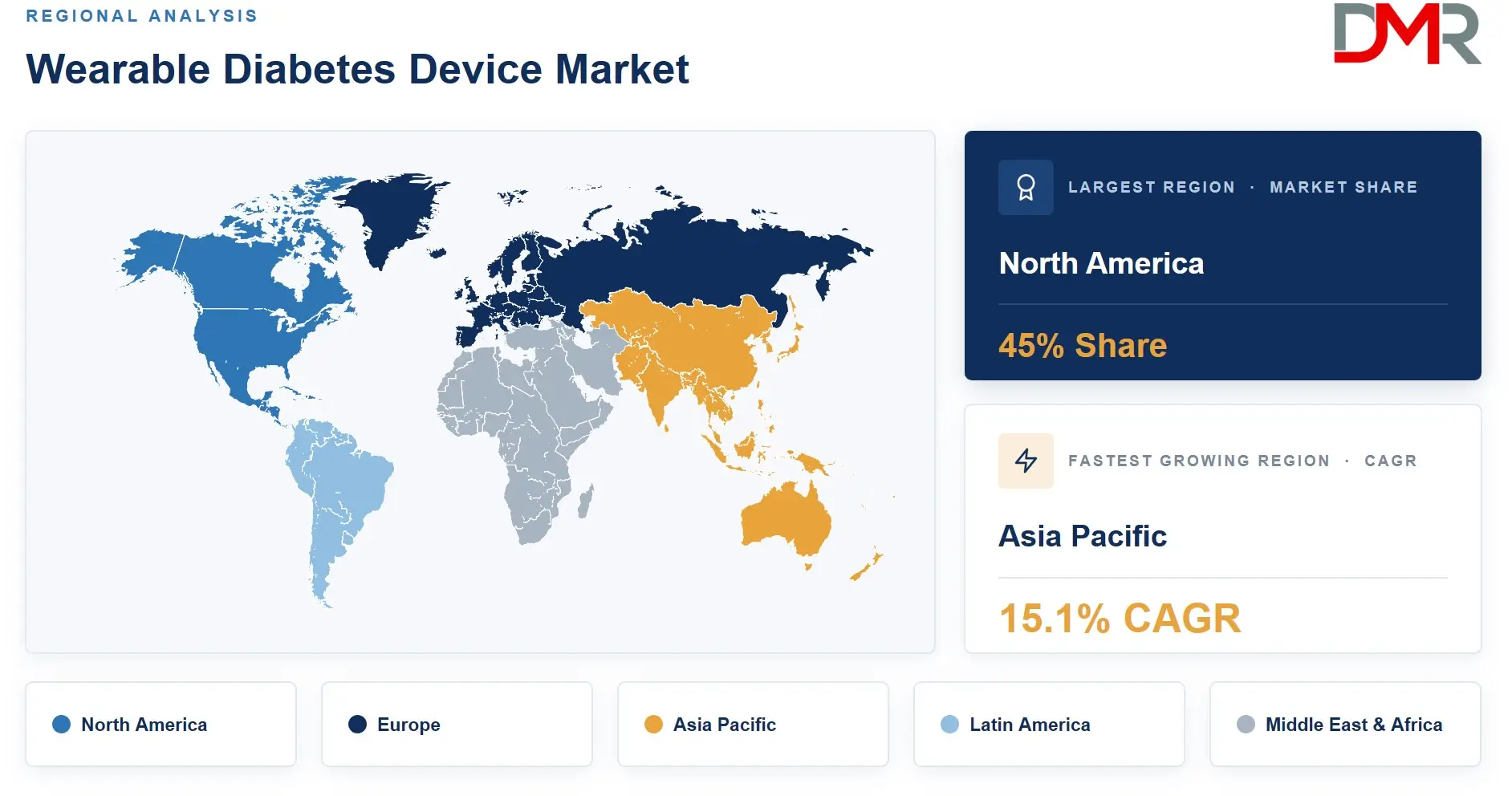
- Largest Region (2026): North America, approximately 45%
- Fastest-Growing Region: Asia-Pacific
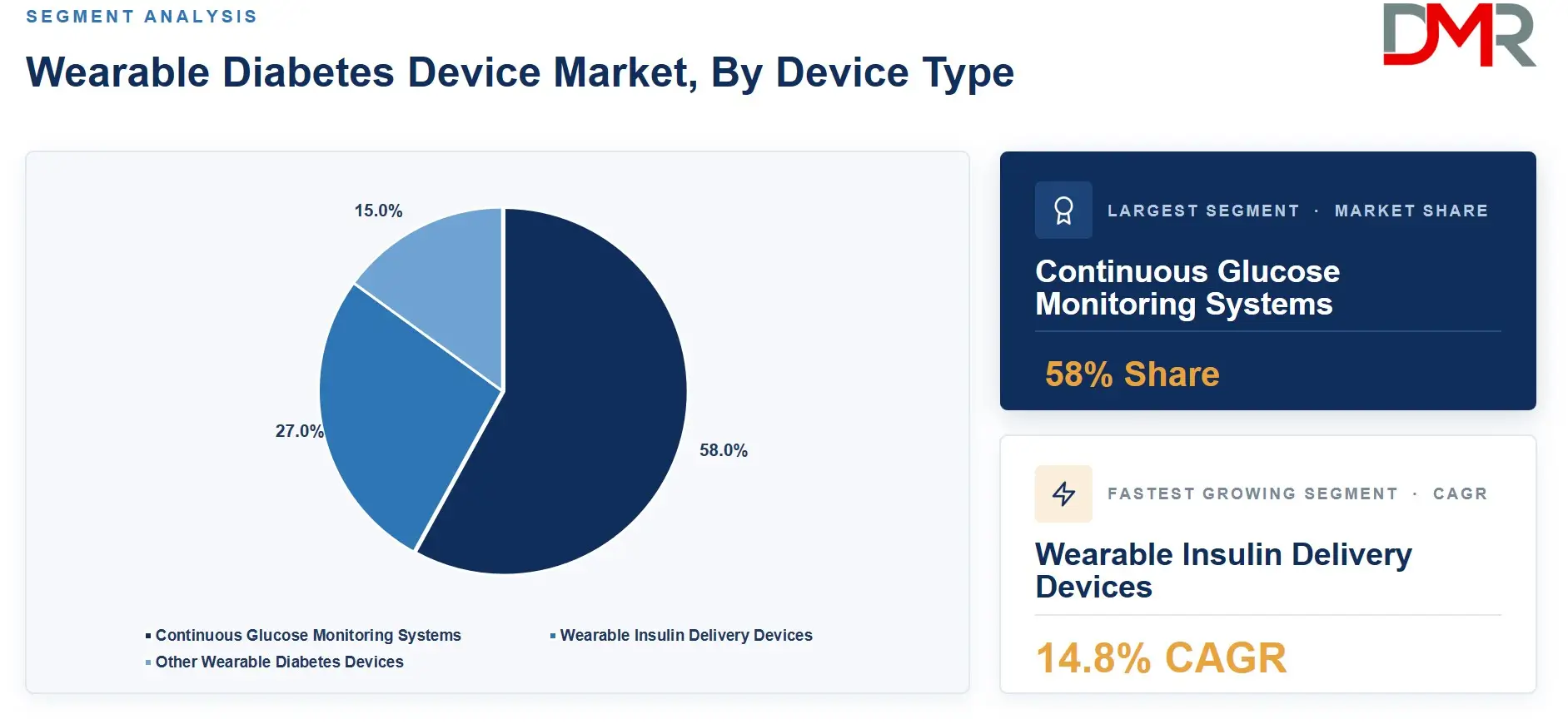
- Leading Device Type (2026): Continuous Glucose Monitoring Systems, around 58%
- Leading Wearable Format (2026): Skin Patches and Sensors, close to 61%
- Key Players: Abbott Laboratories, DexCom, Inc., Medtronic plc and others
What is Wearable Diabetes Device Market and its Market Size?
Global Wearable Diabetes Device Market size is estimated to reach USD 16.8 Bn in 2026 and is further anticipated to reach USD 49.3 Bn by 2035, at a CAGR of 12.7%.
ℹ
To learn more about this report –
Download Your Free Sample Report Here
Wearable diabetes devices are body-worn systems used to measure glucose continuously, deliver insulin, or connect sensing and dosing functions for day-to-day diabetes management. The commercial boundary includes continuous glucose monitoring sensors, transmitters and readers, patch pumps, wearable insulin pumps, and integrated components used in automated insulin delivery. Conventional fingerstick meters, non-wearable laboratory analyzers, oral medicines and standalone insulin pens sit outside the core scope.
Demand is moving from episodic glucose checks toward continuous data and increasingly toward closed-loop therapy. Small sensors placed on the upper arm or abdomen can transmit glucose values to phones, receivers, pumps and caregiver platforms, while wearable pumps can adjust insulin delivery with less manual intervention. This shifts value from one-time hardware toward recurring sensors, infusion consumables, software, algorithms and connected services.
Commercial adoption is strongest where reimbursement supports recurring consumables and clinicians are comfortable prescribing connected systems. Growth is also broadening beyond intensive insulin users as over-the-counter access, longer sensor wear, factory calibration, interoperability and simpler app interfaces reduce adoption friction. The competitive boundary is therefore widening from specialist diabetes technology companies toward diversified diagnostics, medtech and digital health suppliers.
Use Cases
- Continuous Glucose Tracking: People with insulin-treated diabetes use arm- or abdomen-worn sensors to observe glucose direction and rate of change throughout the day. Continuous visibility reduces dependence on isolated measurements and helps users respond earlier to meals, exercise, sleep-related changes and impending high or low glucose events.
- Automated Insulin Delivery: People with type 1 diabetes combine a wearable glucose sensor with a compatible pump and dosing algorithm. The system adjusts basal delivery and, in some configurations, correction dosing, reducing the number of manual decisions required while supporting more time within individualized glucose targets.
- Clinic-Guided Therapy Adjustment: Endocrinology practices review ambulatory glucose profiles generated by wearable sensors between visits. Clinicians can identify recurring overnight lows, post-meal excursions and adherence patterns, then modify insulin settings, meal strategies or treatment plans using a denser evidence base than periodic fingerstick logs provide.
- Non-Insulin Type 2 Monitoring: Adults managing type 2 diabetes without intensive insulin can use short- or medium-duration wearable sensors to understand how food, activity and medication relate to glucose patterns. This use case expands the addressable population beyond traditional pump users and supports behavior-oriented diabetes management.
Key Takeaways
- Market Size & Share: The US market is estimated at USD 6.3 Bn in 2026, reflecting concentrated reimbursement, specialist care access and early uptake of connected diabetes technology.
- Device Type Analysis: Wearable insulin delivery devices represent roughly 34% of 2026 revenue and remain a major recurring-consumables category alongside CGM.
- Regional Analysis: Europe is expected to account for approximately 27% of global revenue in 2026, supported by public reimbursement and expanding sensor access.
- Application Mix: Type 1 diabetes management is projected to hold close to 52% of 2026 demand because intensive insulin management creates the strongest need for continuous sensing and dosing automation.
- Care Setting: Homecare and self-management is set to represent nearly 72% of 2026 revenue as the core products are designed for continuous use outside clinical facilities.
- Growth Pocket: Non-insulin type 2 diabetes monitoring is forecast to expand at a CAGR of 17.2% through 2035 as access broadens beyond intensive insulin therapy.
How AI/Gen AI is Transforming the Wearable Diabetes Device Market?
Artificial intelligence is affecting wearable diabetes technology mainly through prediction, dosing support, signal quality and clinician workflow rather than through consumer-facing generative AI alone. Time-series models can combine glucose direction, insulin history, meal information and activity signals to estimate near-term risk and support automated insulin delivery. Pattern recognition also helps identify sensor artifacts, recurring hypoglycemia windows and behavior-linked excursions that would be difficult to detect from manual logs.
Generative AI has a narrower but growing role in translating device data into understandable summaries, preparing visit notes and supporting patient education under clinical governance. The more material near-term value remains in validated algorithms embedded in regulated workflows.
- Predictive Glucose Analytics: Machine-learning models estimate short-term glucose trajectories and flag elevated risk of hypo- or hyperglycemia.
- Adaptive Dosing: Control algorithms use continuous sensor input to adjust insulin delivery within automated insulin delivery systems.
- Signal Quality Management: Pattern detection can identify anomalous sensor behavior and reduce the effect of noisy or physiologically implausible readings.
- Clinical Data Summarization: LLM-based tools can organize glucose reports and device histories into clinician-readable summaries, subject to validation and privacy controls.
Key Drivers in the Global Wearable Diabetes Device Market
Demand is being pulled by a shift toward continuous, data-led diabetes management and by broader eligibility for wearable monitoring.
- Expansion of Continuous Monitoring Across Diabetes Populations: Continuous glucose monitoring is moving beyond its original concentration in type 1 diabetes and intensive insulin therapy. The non-insulin type 2 monitoring application is forecast to grow at 17.2% from 2026 to 2035 as simpler sensors, over-the-counter pathways in selected markets and greater clinician familiarity lower access barriers. Manufacturers gain a substantially larger potential user base, while payers and providers can use longitudinal data to support therapy adjustment and behavior change. The mechanism is important: each newly eligible user creates recurring sensor demand rather than a one-time device sale, strengthening revenue visibility across the industry.
- Integration of Sensing With Automated Insulin Delivery: Wearable insulin delivery devices account for around 34% of 2026 revenue, and their value rises when pumps are paired with interoperable CGM and dosing algorithms. Users increasingly compare systems on time in range, burden of meal entry, sensor wear, pump size and connectivity rather than on hardware alone. This encourages manufacturers to build ecosystems linking sensors, pumps, smartphones and cloud platforms. As automated insulin delivery becomes a standard option for more insulin users, replacement cycles and recurring consumables support sustained market growth while increasing the strategic importance of software compatibility and regulatory clearance.
Restraints in the Global Wearable Diabetes Device Market
Adoption remains constrained by affordability, recurring consumable costs and the clinical consequences of device or data failure.
- Recurring Cost and Uneven Reimbursement: North America is expected to hold approximately 45% of global revenue in 2026, partly because reimbursement and commercial coverage can support repeated sensor and pump consumable purchases. In lower-coverage markets, the same recurring model can restrict sustained use even when initial device access is available. Users may face copayments, replacement expenses, smartphone compatibility requirements and supply interruptions. This creates a gap between clinical interest and commercial conversion. Vendors must therefore balance sensor duration, manufacturing yield and channel economics against affordability, while payers increasingly require evidence that broader CGM use produces measurable improvements in outcomes or care efficiency.
- Reliability, Skin Tolerance and Data Dependence: Skin patches and sensors are projected to represent close to 61% of 2026 revenue, making adhesive performance, sensor accuracy and wear comfort central to user retention. Compression artifacts, premature sensor failure, skin irritation, connectivity loss and alarm fatigue can undermine confidence in continuous monitoring. The problem becomes more consequential when sensor data feed automated insulin delivery, because erroneous or missing information can affect therapy decisions. Manufacturers must invest in calibration methods, algorithm safeguards, human factors testing and post-market surveillance, which lengthens development cycles and raises the cost of competing in regulated wearable diabetes technology.
Growth Opportunities in the Global Wearable Diabetes Device Market
White space is opening in simpler access models, longer-wear sensors and underserved markets where diabetes technology penetration remains below clinical need.
- Broader Access for Type 2 Diabetes: Insulin-treated type 2 diabetes is expected to represent around 29% of application revenue in 2026, yet many users still rely on less frequent glucose measurements than intensive management can benefit from. Devices with simpler onboarding, fewer calibration steps, longer wear and pharmacy-oriented distribution can reduce the burden of adoption. The commercial opening extends to primary care, where scalable interpretation tools can help clinicians use CGM data without specialist workflows. Companies that design lower-friction products and evidence packages for type 2 populations can expand beyond the historically concentrated type 1 user base while preserving recurring sensor economics.
- Asia-Pacific Scale-Up Through Localized Devices and Channels: Asia-Pacific is the fastest-growing regional market, supported by a large diabetes population, improving specialty care access and expanding local medtech manufacturing. Local suppliers can compete on sensor cost, compact patch pumps, smartphone integration and distribution through hospitals, pharmacies and digital channels. Global companies, meanwhile, can use partnerships and localized reimbursement evidence to enter markets where premium imported systems remain unaffordable for many users. The opportunity is not only volume. Regional manufacturing, localized apps and lower-cost consumables can create product tiers that address different purchasing power levels without relying on a single premium device architecture.
Trends in the Global Wearable Diabetes Device Market
Product competition is shifting toward longer wear, smaller form factors, interoperability and less visible user interaction.
- Longer-Wear and Multi-Analyte Sensing: Continuous glucose monitoring systems are expected to hold around 58% of device-type revenue in 2026, and suppliers are using wear duration and sensing breadth to differentiate within that base. Longer sensor life reduces insertion frequency and can improve convenience, while emerging multi-analyte designs extend the wearable from glucose alone toward additional metabolic signals. The trend changes economics as well as usability: longer wear can lower packaging and replacement burden per day but requires stronger adhesive, stable sensor chemistry and dependable accuracy across the full period. Multi-analyte products also create new regulatory and clinical validation requirements before they can influence routine diabetes management.
- Interoperable and Phone-Centered Diabetes Ecosystems: Homecare and self-management is set to account for nearly 72% of end-user revenue in 2026, encouraging suppliers to make smartphones and connected apps the main interface for everyday use. Users increasingly expect remote data sharing, caregiver visibility, cloud reports and compatibility across sensors and insulin delivery systems. This favors standardized communication and interoperable device pathways, while also increasing cybersecurity and software-update obligations. Competition is therefore moving beyond sensor accuracy or pump mechanics toward ecosystem quality, app reliability, data portability and the ability to integrate with automated dosing without forcing users into unnecessarily complex workflows.
Research Scope and Analysis
Segment performance is assessed across device type, wearable format, application and end user. Each axis identifies where 2026 revenue is concentrated and where growth is moving through 2035, with emphasis on recurring consumables, treatment intensity, access models and the shift toward connected self-management.
ℹ
To learn more about this report –
Download Your Free Sample Report Here
By Device Type
Continuous glucose monitoring systems are projected to hold the largest device-type share in 2026, accounting for approximately 58% of revenue because sensors are replaced repeatedly and are increasingly used as the data layer for treatment decisions and automated insulin delivery. Their recurring use creates a larger annual revenue pool than many durable components. Growth, however, is concentrated in wearable insulin delivery devices, which are forecast to expand at a CAGR of 14.8% from 2026 to 2035. Tubeless pumps, smaller wearable systems and tighter integration with CGM are reducing the operational burden of intensive insulin therapy. Adoption also benefits from algorithm-assisted dosing and greater choice among pump form factors, although reimbursement and training remain important gates.
By Wearable Format
Skin patches and sensors are expected to account for close to 61% of wearable-format revenue in 2026, supported by the scale of CGM use and the recurring replacement cycle of adhesive sensors. Their small form factor and direct smartphone connectivity make them suitable for continuous self-management across a broad user base. The steeper trajectory sits with tubeless patch pumps, expanding at a CAGR of 15.6% between 2026 and 2035. These systems remove external tubing, reduce visible hardware and can simplify daily insulin delivery for users who prefer a body-worn pod. Growth is reinforced by integration with CGM and automated dosing, while cartridge capacity, wear comfort and cost continue to influence product selection.
By Application
Type 1 diabetes management is projected to hold the largest application share in 2026, representing around 52% of revenue because continuous glucose data and insulin automation address an intensive, lifelong treatment need. High testing frequency and dependence on insulin make wearable sensing and delivery particularly valuable in this population. Growth, however, is concentrated in non-insulin type 2 diabetes monitoring, forecast to expand at a CAGR of 17.2% from 2026 to 2035. Broader sensor access, pharmacy distribution and interest in food and activity response are bringing CGM into less intensive care pathways. The commercial challenge is demonstrating enough clinical and behavioral value to support sustained reimbursement or self-pay use after initial trial periods.
By End User
Homecare and self-management is expected to dominate end-user revenue in 2026 with a share of roughly 72%, reflecting the fact that CGM sensors and wearable insulin systems are designed for continuous daily use away from hospitals. Remote data sharing further extends clinical oversight without shifting the device back into a facility setting. Growth is faster in ambulatory care settings, which are forecast to expand at a CAGR of 14.3% through 2035 as diabetes clinics, primary care practices and outpatient programs use short-term CGM, device initiation and data review more systematically. This setting can act as an adoption bridge, helping users select devices and interpret early data before ongoing management moves primarily to the home.
The Global Wearable Diabetes Device Market Report is Segmented Based on the Following
By Device Type
- Continuous Glucose Monitoring Systems
- Wearable Insulin Delivery Devices
- Other Wearable Diabetes Devices
By Wearable Format
- Skin Patches and Sensors
- Tubeless Patch Pumps
- Wearable Pump Systems
- Others
By Application
- Type 1 Diabetes Management
- Insulin-Treated Type 2 Diabetes
- Non-Insulin Type 2 Diabetes Monitoring
- Others
By End User
- Homecare and Self-Management
- Hospitals and Diabetes Clinics
- Ambulatory Care Settings
- Others
Regional Analysis
Region with the Largest Revenue Share
North America is expected to remain the largest region in 2026, accounting for approximately 45% of global revenue. The region combines high CGM penetration, commercial and public reimbursement, a large installed base of insulin pump users and early access to newly cleared wearable systems. The US also concentrates several major developers and supports rapid commercialization through pharmacy, durable medical equipment and direct digital channels. Competition is increasingly shaped by sensor duration, automated insulin delivery compatibility and coverage for broader type 2 populations. High unit economics support innovation, although payer scrutiny and affordability remain important constraints on expansion beyond well-covered users.
ℹ
To learn more about this report –
Download Your Free Sample Report Here
Region with the Highest CAGR
Asia-Pacific is forecast to record the highest regional CAGR of 15.1% from 2026 to 2035. Expansion is supported by rising diabetes management expenditure, larger urban specialist networks, improving smartphone access and a growing base of regional sensor and pump manufacturers. China, Japan, South Korea and India present different reimbursement structures, but each offers pathways for greater wearable adoption as clinicians move toward continuous data and local suppliers reduce device cost. Regional scale also encourages manufacturing investment in sensors, electronics and disposable components. The principal brake is uneven affordability, which makes lower-cost product tiers and localized distribution essential for converting clinical need into sustained device use.
By Region
North America
Europe
- Germany
- France
- The UK
- Italy
- Spain
- Rest of Europe
Asia-Pacific
- China
- Japan
- India
- Australia
- South Korea
- Rest of APAC
Latin America
- Mexico
- Brazil
- Colombia
- Argentina
- Rest of LATAM
Middle East & Africa
- Saudi Arabia
- The UAE
- South Africa
- Rest of MEA
Regulatory Landscape
Wearable diabetes devices sit within regulated medical-device pathways because sensor accuracy, insulin dosing and software behavior can directly affect treatment. Authorities increasingly evaluate integrated CGM, automated insulin delivery, human factors, cybersecurity and software changes as connected systems rather than isolated hardware. Current shifts favor clearer interoperability and over-the-counter pathways for selected glucose monitors, widening access while preserving labeling and performance requirements. The commercial opening sits with products that can support broader indications or connect safely across ecosystems. The brake is evidence burden: longer wear, new analytes and dosing automation require validation, post-market surveillance and controlled software updates, which raise development cost and favor companies with mature quality systems.
Epidemiology
Demand is anchored in a large and expanding population requiring ongoing glucose management, but commercial opportunity depends more on treatment intensity and access than on diagnosis counts alone. Type 1 diabetes creates persistent demand for frequent sensing and insulin delivery, while type 2 diabetes offers the larger expansion pool as CGM moves into insulin-treated and selected non-insulin pathways. The fastest commercial opening is among users who can benefit from continuous feedback without adopting a full pump system. Risk remains in conversion: epidemiological need does not automatically become device revenue where reimbursement, clinician capacity or affordability is limited. As access widens, the market mix should gradually shift toward broader type 2 participation.
Competitive Landscape
Competition is concentrated around a small group of scaled CGM and insulin-delivery platforms, but specialists and regional manufacturers are increasing pressure on price, form factor and interoperability. Leading suppliers compete on sensor accuracy, wear duration, pump size, automated dosing, app experience, reimbursement access and manufacturing scale. Strategic activity increasingly centers on connecting CGM with multiple insulin-delivery systems, extending indications and reducing the number of user interactions required each day. Regional manufacturers are important in Asia-Pacific, where lower-cost sensors and pumps can address price-sensitive demand. Over time, differentiation is likely to depend less on a standalone device and more on the reliability of the complete sensing, dosing, software and data-sharing ecosystem.
Some of the Prominent Players in the Global Wearable Diabetes Device Market Are
- Abbott Laboratories
- DexCom, Inc.
- Medtronic plc
- Insulet Corporation
- Tandem Diabetes Care, Inc.
- Senseonics Holdings, Inc.
- Roche Diabetes Care
- Ypsomed Holding AG
- Embecta Corp.
- Ascensia Diabetes Care
- A. Menarini Diagnostics
- Nemaura Medical Inc.
- EOFlow Co., Ltd.
- SOOIL Development Co., Ltd.
- MicroTech Medical (Hangzhou) Co., Ltd.
- Sinocare Inc.
- Medtrum Technologies Inc.
- i-SENS, Inc.
- AgaMatrix, Inc.
- LifeScan, Inc.
- B. Braun Melsungen AG
- Terumo Corporation
- Nipro Corporation
- ARKRAY, Inc.
- F. Hoffmann-La Roche Ltd.
- Diabeloop SA
- CamDiab Ltd.
- Beta Bionics, Inc.
- Bigfoot Biomedical
- CeQur SA
- ViCentra B.V.
- PharmaSens AG
- AIDEX Biotech
- Hangzhou Sejoy Electronics & Instruments Co., Ltd.
- Shanghai MicroPort MedBot (Group) Co., Ltd.
- GlucoRx Ltd.
- GlucoMen
- Med Trust Handelsges.m.b.H.
- TaiDoc Technology Corporation
- GlySens Incorporated
- Other Key Players
Recent Developments
- In August 2026, the US FDA authorized Abbott's Libre Duo 10 Day system, combining continuous glucose and ketone sensing in one wearable. The move expands the functional scope of diabetes biosensing and creates a pathway for earlier warning of rising ketone risk alongside routine glucose management.
- In February 2026, the US FDA cleared updates covering Dexcom G7 and G7 15 Day continuous glucose monitoring systems. The clearance supports continued product iteration around longer-wear CGM and reinforces wear duration as an important competitive dimension in the US wearable diabetes device market.
- In April 2025, the US FDA cleared Dexcom G7 15 Day for adults with diabetes, extending sensor wear beyond the company's standard G7 configuration. Longer wear can reduce insertion frequency and strengthens competition around convenience, sensor economics and adherence.
- In April 2025, the US FDA approved Medtronic's Simplera Sync sensor for use with the MiniMed 780G system. The addition gives users another CGM option within Medtronic's automated insulin delivery platform and tightens competition between integrated pump and sensor ecosystems.
- In July 2024, the US FDA approved Medtronic's Simplera continuous glucose monitoring system for real-time glucose values and trends through a compatible smart device. The product added another compact wearable sensor option and expanded Medtronic's stand-alone CGM portfolio.
- In June 2024, the US FDA cleared Abbott's Libre Rio for adults with type 2 diabetes who do not use insulin. The over-the-counter pathway widened the addressable CGM population and signaled a shift toward simpler access for non-intensive diabetes management.
Report Details
| Report Characteristics |
| Market Size (2026) |
USD 16.8 Bn |
| Forecast Value (2035) |
USD 49.3 Bn |
| CAGR (2026-2035) |
12.7% |
| The US Market Size (2026) |
USD 6.3 Bn |
| Historical Data |
2021 - 2025 |
| Forecast Data |
2026 - 2035 |
| Base Year |
2025 |
| Segments Covered |
By Device Type, By Wearable Format, By Application and By End User |
| Regional Coverage |
North America - The US and Canada; Europe - Germany, France, The UK, Italy, Spain, Rest of Europe; Asia-Pacific - China, Japan, India, Australia, South Korea, Rest of APAC; Latin America - Mexico, Brazil, Colombia, Argentina, Rest of LATAM; Middle East & Africa - Saudi Arabia, The UAE, South Africa, Rest of MEA |
Frequently Asked Questions
How big is the Global Wearable Diabetes Device Market?
▾ Global demand is supported by continuous glucose monitoring, wearable insulin delivery and connected diabetes management. The market size is estimated to reach USD 16.8 Bn in 2026, with recurring sensor replacement and increasing automated insulin delivery adoption providing a substantial portion of annual revenue.
What is the growth rate of the Global Wearable Diabetes Device Market?
▾ The industry is forecast to expand at a CAGR of 12.7% from 2026 to 2035. Growth is being supported by wider CGM eligibility, longer sensor wear, tubeless pumps, automated insulin delivery and increasing use of continuous data in type 2 diabetes management.
Which region holds the largest share in the Global Wearable Diabetes Device Market?
▾ North America is projected to hold the largest regional position, with roughly 45% of global revenue in 2026. Reimbursement coverage, high technology adoption, established pump use and early commercialization of newly cleared CGM and automated insulin delivery systems support the region's lead.
Which device type holds the largest share?
▾ Continuous glucose monitoring systems are expected to lead device-type revenue in 2026 with a share of approximately 58%. Recurring sensor replacement, smartphone connectivity and growing use of CGM as the sensing layer for automated insulin delivery support this position.
Which application is growing fastest?
▾ Non-insulin type 2 diabetes monitoring is forecast to record the fastest application growth at a CAGR of 17.2% through 2035. Simpler access, pharmacy distribution and interest in continuous feedback on food, activity and medication are expanding CGM beyond intensive insulin therapy.
Who are the key players in the Global Wearable Diabetes Device Market?
▾ Key participants include Abbott Laboratories, DexCom, Inc., Medtronic plc, Insulet Corporation, Tandem Diabetes Care, Inc., Senseonics Holdings, Inc. and Ypsomed Holding AG. Competition centers on sensor wear, accuracy, pump form factor, automated dosing, interoperability, reimbursement access and connected software.
What factors will shape the Wearable Diabetes Device Market through 2035?
▾ The Wearable Diabetes Device Market will be shaped by broader CGM access, automated insulin delivery, longer-wear sensors, tubeless pumps, interoperability, reimbursement and the ability to lower recurring user cost. Regulatory evidence, cybersecurity, skin tolerance and reliable sensor performance will remain important constraints on commercialization.