Indoor Farming: Industrial Innovations & Leading Companies
Published on: November - 2025
Indoor Farming: A Complete IndustryFocused Guide for Industrial Innovation
Indoor farming is transforming the way industries approach food production, energy management, and sustainability. For energy and agri-tech companies, mastering Indoor Farming technologies is no longer optional; it is a strategic necessity. From vertical farms and hydroponics to aeroponics and fully automated, climate-controlled systems, indoor farming enables highdensity, year-round crop production while reducing water and energy consumption. This guide provides a comprehensive, industry-focused overview of indoor farming, highlighting technologies, economics, challenges, and leading companies shaping the global indoor agriculture landscape.
The Strategic Importance of Indoor Farming for Industrial Companies
For industrial and energy companies, indoor farming represents a fusion of technological innovation and sustainable resource management. By integrating indoor farming into operations, companies can optimize energy use, reduce water consumption, secure supply chains, and meet growing market demands for fresh, high-quality produce.
Indoor farming is not merely a trend; it is a solution to pressing global challenges such as urbanization, climate change, and supply chain vulnerabilities. Controlled environment agriculture (CEA) allows industrial-scale operators to produce crops consistently and predictably, independent of outdoor climate conditions. This predictability is crucial for industries that rely on stable input supply for food processing, pharmaceuticals, and hospitality sectors.
Drivers of Industrial Adoption of Indoor
Farming Energy and industrial companies are investing in indoor farming for several reasons. The first is resource efficiency. Indoor farming drastically reduces water consumption through recirculating systems, and when paired with renewable energy sources, it can significantly lower operational costs. The second driver is market responsiveness. Industries can produce high-value crops, such as leafy greens, herbs, and berries, close to urban centers, reducing transportation costs and improving freshness. Finally, regulatory and ESG pressures compel companies to reduce environmental impact and adopt innovative, sustainable practices.
Industrial Benefits of Indoor Farming For energy companies, indoor farming
represents a multi-faceted opportunity. By powering controlled environment farms with renewable energy, companies can create new revenue streams, such as supplying energy-efficient agricultural facilities. Industrial players also benefit from enhanced brand value through sustainability credentials and can leverage partnerships with technology providers for integrated solutions, including automation, AI monitoring, and climate control systems.
Leading Technologies in Indoor Farming for Industrial Applications
Vertical Farming
Vertical farming involves stacking multiple layers of crops in controlled environments. For industrial operators, this maximizes land use and enables large-scale production within urban or semi-urban settings. Advanced vertical farms incorporate LED lighting systems that optimize photosynthesis and AI-driven monitoring to regulate growth cycles. These farms produce high-value crops efficiently and consistently, meeting demand in retail, hospitality, and institutional supply chains.
Hydroponics
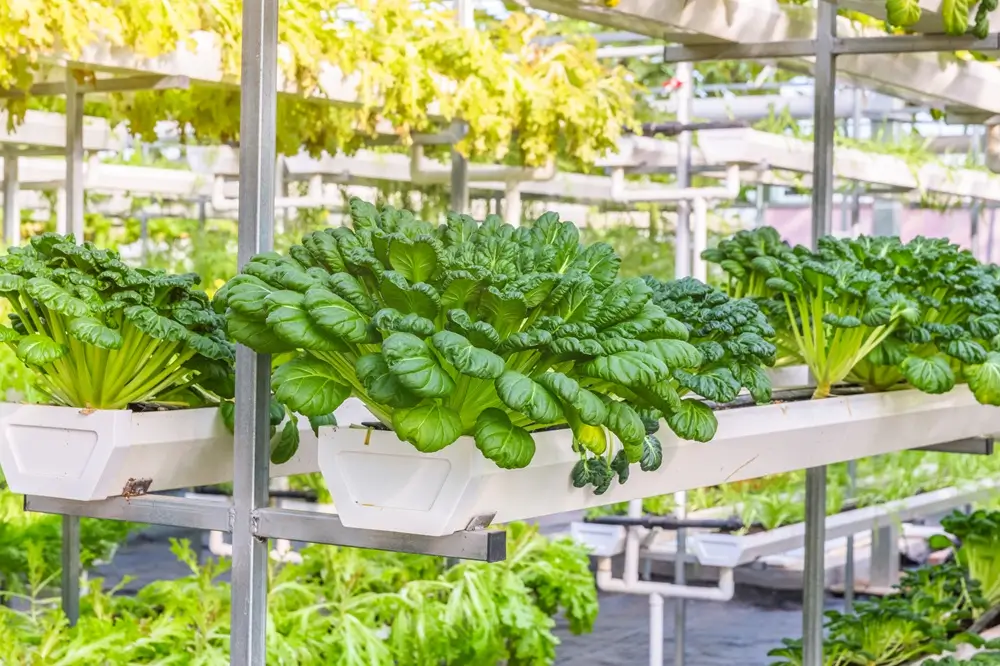
Hydroponic systems grow plants in nutrient-rich water without soil. Industrial-scale hydroponics offers precise control over growth conditions, leading to higher yields and faster crop cycles. For energy companies and industrial operators, integrating hydroponics with renewable energy systems ensures predictable energy demand and reduced operational costs. Hydroponics is particularly suitable for leafy greens, herbs, and fruit crops destined for urban markets.
Aeroponics
Aeroponics suspends plants in air while delivering nutrients through misting. This method allows maximum oxygenation of roots, leading to accelerated growth and minimized water usage. Industrial applications include medicinal plants, microgreens, and specialty vegetables. Energy-efficient aeroponic systems, when paired with solar or wind power, reduce the carbon footprint of production while maintaining high productivity.
Controlled Environment Agriculture (CEA)
CEA integrates climate control, lighting, irrigation, and CO₂ management for consistent, highquality crop output. For industrial-scale operations, CEA provides the flexibility to grow crops in regions where traditional agriculture is not viable. Companies can optimize operational schedules, manage energy consumption, and reduce waste while producing crops year-round.
LED and Artificial Lighting Systems
LED lighting systems are essential in indoor farming, providing energy-efficient solutions for plant growth. Industrial facilities often couple LEDs with automation and renewable energy sources, enabling precise light spectrum control to enhance yield and quality. The integration of smart lighting with AI systems allows predictive adjustments based on crop growth stage and environmental feedback.
Automation and AI in Indoor Farming
Industrial operators increasingly rely on automation and AI for managing indoor farms. Automated nutrient delivery, climate control, and robotics for seeding, harvesting, and packaging enhance efficiency, reduce labor costs, and improve consistency. AI-powered monitoring allows predictive maintenance, disease prevention, and optimized resource allocation, making large-scale indoor farming a viable industrial solution.
Economics of Indoor Farming for Industrial Operators
Indoor farming involves significant upfront investment, but the return on investment is substantial when systems are optimized for energy efficiency and crop yield. Industries benefit from consistent year-round production, reduced dependency on seasonal variations, and the ability to meet high-value crop demands. Companies integrating renewable energy and advanced automation reduce operational costs and enhance sustainability, attracting investment and strengthening market positioning.
Financial Incentives
Governments worldwide offer financial incentives to encourage industrial adoption of indoor farming. Grants, tax credits, and subsidies for energy-efficient greenhouses and vertical farms reduce capital barriers. Public-private partnerships facilitate technology transfer, research, and development, allowing industrial players to scale operations rapidly
Challenges in Industrial Indoor Farming
Despite its advantages, indoor farming faces challenges that companies must navigate. Energy consumption for lighting and climate control can be substantial, requiring careful integration with renewable sources. Maintaining nutrient balance, preventing disease, and ensuring proper system calibration demand technical expertise. Additionally, market adoption can be hindered by regulatory constraints, urban zoning restrictions, and consumer perceptions of controlledenvironment crops.
Leading Companies Driving Indoor Farming Innovation
Several companies are shaping the industrial indoor farming landscape with innovative solutions and scalable operations.
- AeroFarms, a US-based leader, has pioneered large-scale vertical farms using aeroponic technology, AI-controlled climate systems, and renewable energy integration. Their industrial farms produce hundreds of tons of leafy greens annually, demonstrating how indoor farming can meet urban food demand sustainably.
- Plenty, also in the United States, combines vertical farming with AI-driven monitoring, creating high-density urban farms. Their approach allows industrial operators to integrate energy-efficient lighting and optimize nutrient delivery, reducing water and energy usage significantly.
- Infarm, headquartered in Germany, focuses on modular, scalable indoor farms that can be installed in supermarkets, restaurants, and industrial zones. Infarm’s technology allows energy and agri-tech companies to deploy controlled-environment agriculture rapidly, supporting supply chains with fresh, locally produced crops.
- Spread Co., a Japanese company, has mastered fully automated indoor farming, leveraging robotics for seeding, harvesting, and packaging. Their industrial-scale operations demonstrate the feasibility of high-volume production with minimal human labor and optimized energy use.
- Bowery Farming, another US innovator, integrates vertical farms with smart lighting and AI monitoring. Bowery’s farms deliver consistent crop quality while reducing energy and water usage, making them attractive for industrial and urban applications.
- AeroFarms, Plenty, Infarm, Spread Co., and Bowery Farming exemplify how industrial operators can leverage technology, renewable energy, and automation to achieve scalable, efficient indoor farming systems. These companies serve as benchmarks for energy and industrial sectors seeking to enter or expand in the indoor farming market
Future Outlook for Indoor Farming in Industrial Operations
Industrial adoption of indoor farming is set to grow rapidly. Emerging technologies such as AI, robotics, and energy-efficient LED systems will reduce operational costs and increase scalability. Companies integrating indoor farming with renewable energy, smart grids, and automated nutrient systems will lead the next decade of industrial agriculture. As urbanization continues and demand for high-quality, locally grown produce rises, indoor farming offers industrial operators a competitive edge in sustainability, efficiency, and profitability.
Conclusion
Indoor farming represents a transformative opportunity for energy and industrial companies. By leveraging advanced technologies, automation, and renewable energy integration, industries can secure year-round production, reduce environmental impact, and meet growing market demand. Companies that adopt indoor farming today will define the future of sustainable industrial agriculture, achieving both operational efficiency and market leadership
← Back to News & Media