What is the AI in Drug Discovery Market Size?
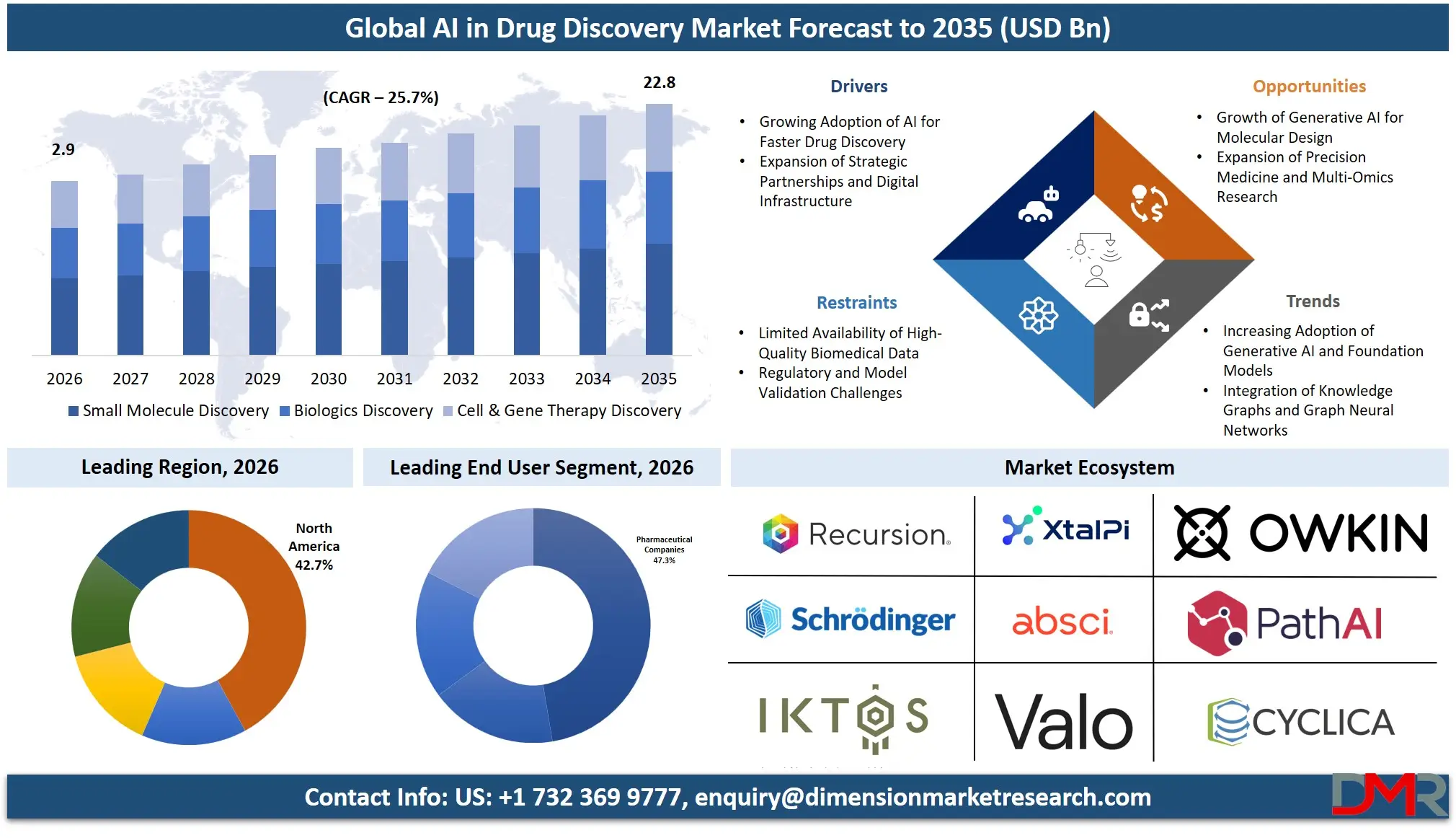
The AI in Drug Discovery Market size is expected to be USD 2.9 billion in 2026 and increase at a compound annual growth rate of 25.7% to USD 22.8 billion in 2035 due to increasing use of artificial intelligence for accelerated drug discovery.
ℹ
To learn more about this report –
Download Your Free Sample Report Here
There is steady growth in the AI in Drug Discovery Market due to the increased use of artificial intelligence in accelerating the process of drug discovery and designing molecules in pharmaceuticals and biotech companies. Artificial intelligence technologies such as machine learning, deep learning, graph neural networks, and generative AI have led to a shift from the conventional discovery process through predictive analysis and automated decision making. Investments in precision medicine, cloud computing, and joint efforts among tech companies and life sciences companies are driving the growth in the adoption of the market. Increasing adoption of research tools and availability of biomedical data are also fueling innovation in the field.
The US AI in Drug Discovery Market
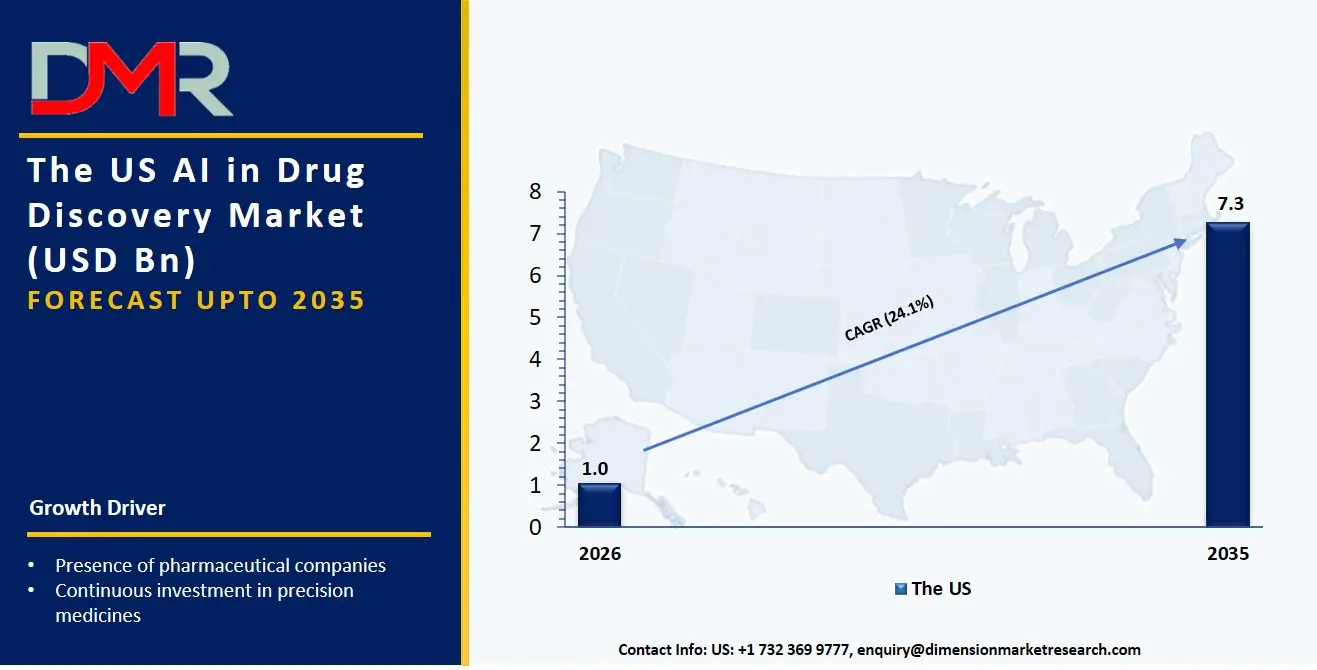
The US AI in Drug Discovery Market size is estimated to be USD 1.0 billion in 2026 and is expected to increase at a CAGR of 24.1% over the forecast period.
ℹ
To learn more about this report –
Download Your Free Sample Report Here
The US can be said to have the most advanced AI in drug discovery ecosystem owing to the presence of pharmaceutical companies, AI technology firms, venture capitalists, and leading research facilities of the world. The continuous investment in precision medicines, robust intellectual property regime, and conducive regulatory measures help in the adoption of AI in drug development process. Collaboration between biotech companies, cloud firms, and pharmaceutical producers is continuously fostering innovations, while significant investment by government institutions in research helps to commercialize products.
Europe AI in Drug Discovery Market
The Europe AI in Drug Discovery Market size is estimated to be USD 580 million in 2026 and is expected to increase at a CAGR of 25.3% over the forecast period.
Europe has been increasing its use of artificial intelligence in the field of drug discovery through a coordinated policy framework in digital health, biomedical research, and innovative activities that promote sustainability. The regulatory framework that encourages responsible innovation through AI, coupled with the European Green Deal's focus on resource-efficient innovation, promotes computational drug discovery techniques that minimize waste and development time. This has contributed significantly to improving Europe's competitive edge in advanced therapies.
Japan AI in Drug Discovery Market
The market size of Japan AI in Drug Discovery will be USD 145 million in 2026 and at a CAGR of 25.5% in the forecast period.
The AI-powered drug discovery market of Japan is improving owing to digital transformation projects backed by the Japanese government, pharmaceutical production capabilities of the nation, and increased computational biology investments. Increasing requirement for medicines that can cure aging diseases along with good cooperation between universities, healthcare providers, and pharmaceutical firms helps the market grow. The focus of Japan on precision medicine, robotics, and biomedical innovations offers a favorable environment for drug discovery with the help of AI.
Key Takeaways
- Market Size & Forecast: The AI in Drug Discovery Market size is projected to reach USD 2.9 billion in 2026 and is anticipated to have a value of USD 22.8 billion in 2035.
- Growth Rate & Outlook: The AI in Drug Discovery Market size is set to grow at a compound annual growth rate of 25.7% during the forecast period of 2026 to 2035.
- Primary Growth Drivers: Some of the major growth drivers in the market are Increasing Use of Artificial Intelligence for Accelerated Drug Discovery and more.
- Key Market Trends: Some of the major trends in the market are Increasing Use of Generative AI and Foundation Models and more.
- By Molecule Type: Small Molecule Discovery segment is anticipated to get the majority share of the AI in Drug Discovery Market in 2026.
- By End User Type: Pharmaceutical Companies are expected to get the largest revenue share in 2026 in the AI in Drug Discovery Market.
- By Therapeutic Area Type: Oncology is expected to get the largest revenue share in 2026 in the AI in Drug Discovery Market.
- Regional Leadership: North America is set to lead the AI in Drug Discovery Market with an estimated 42.7% share in 2026.
What is the AI in Drug Discovery?
Drug Discovery AI pertains to the utilization of artificial intelligence techniques such as machine learning, deep learning, natural language processing, generative AI, and knowledge graph analytics for target identification, compound screening, lead optimization, toxicity prediction, biomedical data analysis, and preclinical drug discovery. With their use, it is possible to automate complicated computations, detect new biological connections, and make more accurate predictions, which enhances the effectiveness of research and development. It has gained importance because drug companies strive to find more efficient ways of making novel drugs while minimizing failures in drug discovery process.
Use Cases
- Identification and Validation of Targets: AI studies genomic, proteomic, and biomedical datasets to identify biological targets involved in disease pathogenesis. Machine-learning approaches select most promising proteins and genes and decrease target validation time, which allows researchers to concentrate their laboratory resources on the most promising candidates.
- Virtual Screening and Lead Optimization: Artificial Intelligence uses computational methods and modeling to rapidly screen millions of chemical compounds and to predict hit rate, structure optimization, binding affinity, and pharmacokinetics before even starting laboratory studies.
- Drug Repositioning: AI selects novel applications of approved or withdrawn drugs using clinical, molecular, and real-life databases. This process greatly decreases drug development time and cuts costs of the research process.
- Prediction of Toxicity and Drug Safety Profile: Artificial Intelligence predicts toxicity and pharmacological behavior of drugs during the very early stage of drug development. Detection of any safety issues at this stage avoids later failures and helps to choose candidates for further development.
How AI Is Transforming the AI in Drug Discovery Market
Artificial intelligence has been pivotal in transforming the field of modern drug discovery by increasing efficiency in target identification, virtual screening, molecular optimization, toxicity prediction, and biomarker discovery. Highly advanced AI algorithms are capable of analyzing large biomedical datasets within hours, thus cutting down on research time while increasing the level of predictive power of analysis. The above-mentioned abilities enable pharmaceutical companies to reduce research costs, increase the quality of candidates, and optimize resource utilization during early-stage research.
AI technology is also able to facilitate the collaboration between computational scientists and laboratory researchers by combining multiple omics data, scientific literature, clinical data, and patient data. Generative AI, graph neural networks, and large language models keep expanding the scope of possibilities in designing innovative therapeutics and identifying novel disease pathways and precision medicine initiatives.
Market Dynamic
Driving Factors in the AI in Drug Discovery Market
Increasing Use of Artificial Intelligence for Accelerated Drug Discovery
Artificial intelligence is increasingly used by pharmaceutical companies in order to decrease the amount of time needed for drug discovery process that was previously taking too much time. Machine learning systems quickly analyze data about living organism and find potential target areas, predict how molecules interact, and choose those compounds which have to be studied in labs later on. This allows lowering research expenses and increasing the success of candidates at the same time.
Restraints in the AI in Drug Discovery Market
Restriction in Access to High-Quality Biomedical Datasets
Although there have been significant advancements in technology, the performance of AI is significantly hindered by the lack of availability of high-quality and consistent biomedical datasets. Most of the pharmaceutical companies find it difficult to work with fragmented datasets, varying experimentation methods, and proprietary data from research. This leads to inaccuracy in the predictions made by the models.
Opportunities in the AI in Drug Discovery Market
Development of Generative AI for Molecular Design
Generative AI has created a wide range of opportunities by developing novel molecules that have enhanced pharmacological properties. Generative AI foundation models can design chemically valid molecules, assess their biological effects, and refine their properties prior to experimental synthesis. With improvements in computational technology, generative AI is projected to spur innovation in oncology, neuroscience, orphan drugs, and precision medicine, among others.
Trends in the AI in Drug Discovery Market
Increasing Use of Generative AI and Foundation Models
The use of generative AI is changing the way research is carried out in the pharmaceutical industry, as it makes use of automation for molecule creation, protein structure prediction, analysis of scientific literature, and development of hypotheses. The large foundation models that have been created using extensive data from the biomedical field improve predictions and speed up discoveries.
Research Scope and Analysis
AI In Drug Discovery Market analysis has been done on various parameters like technology, drug discovery phase, molecule type, end-user, and therapeutic area for adoption and growth prospects of the market. This study covers all aspects of demand scenario, technological advances, investments, competitive trends, geographical performance, and innovations within the pharma value chain to offer a complete picture of the dynamics of the market.
ℹ
To learn more about this report –
Download Your Free Sample Report Here
By Technology Analysis
Machine Learning (ML) will account for 34.8% of the AI in Drug Discovery Market share in 2026. The technology will dominate as it will be extensively used in target identification, compound screening, lead optimization, predictive toxicology, and biomarker discovery. ML algorithms will be used in pharmaceutical R&D because of the ability of processing huge amount of biological information, finding complex patterns in molecules, generating accurate models, reducing costs of experiments and laboratory work and minimizing costs. Also, the ability of machine learning to integrate into bioinformatics workflow and cloud platforms makes the technology very attractive in pharmaceuticals and biotech. Meanwhile, the fastest growth rate in the market will belong to generative AI technologies, driven by the prospects of use of these technologies for molecular design de novo, protein engineering, and optimization of synthetic pathways. Due to developments of transformer architecture, language models, and diffusion-based molecular generation, the capabilities of generative artificial intelligence in drug design have become increasingly powerful. Further investments of pharmaceutical companies, collaboration between pharmaceuticals and AI developers and access to computational resources will facilitate adoption of generative AI solutions.
By Drug Discovery Stage Analysis
Considering the drug discovery stage, the Target Identification & Validation segment is forecasted to account for the maximum share of 31.6% in 2026 due to an increasing deployment of AI technology to discover the genes, proteins, biomarkers, and biological pathways linked with disease prior to the start of experimental testing. The reason behind the priority of pharmaceutical companies to focus on this phase is that identification of good quality therapeutic targets at an early stage helps in enhancing the success rate and lowering the risk of expensive clinical failures. With machine learning algorithms, graph neural networks, and multi-omics data analysis techniques, researchers have become able to assess the biological interactions in huge genomic and proteomic databases. On the contrary, the Drug Repurposing segment is estimated to be the fastest-growing one since it is capable of accelerating the development process and cutting down the research costs with the help of discovering new therapeutic use cases of approved drugs.
By Molecule Type Analysis
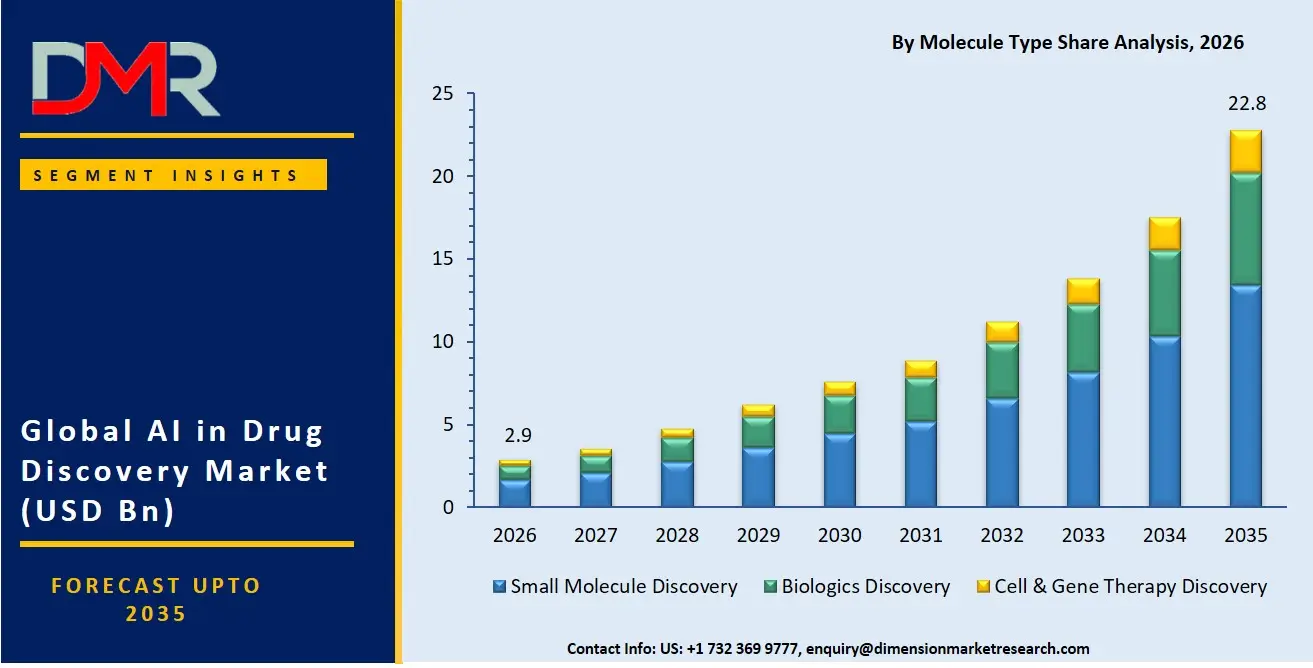
In the molecule segments, Small Molecule Discovery is predicted to have the largest market share with a predicted market share of 58.9% in 2026 since small molecules have been the basis for research in the pharmaceutical industry and constitute most of the drugs that have been commercialized in the market.
ℹ
To learn more about this report –
Download Your Free Sample Report Here
AI systems have greatly enhanced virtual screening, molecular docking, QSAR modeling, pharmacokinetics prediction, and optimization of leads for small molecules. Big investments are being made in computational chemistry systems, which are able to screen millions of molecules without having to synthesize them in the lab, hence lowering costs and time required in the process. Nonetheless, Cell & Gene Therapy Discovery is set to grow at the fastest rate during the forecast period due to advances in precision medicine and next-generation medicines. AI technology is increasingly being used in optimizing the target genes, vector design, cellular production, and patient selection. At the same time, biologics discovery continues growing through antibody design and protein engineering using AI technology.
By End User Analysis
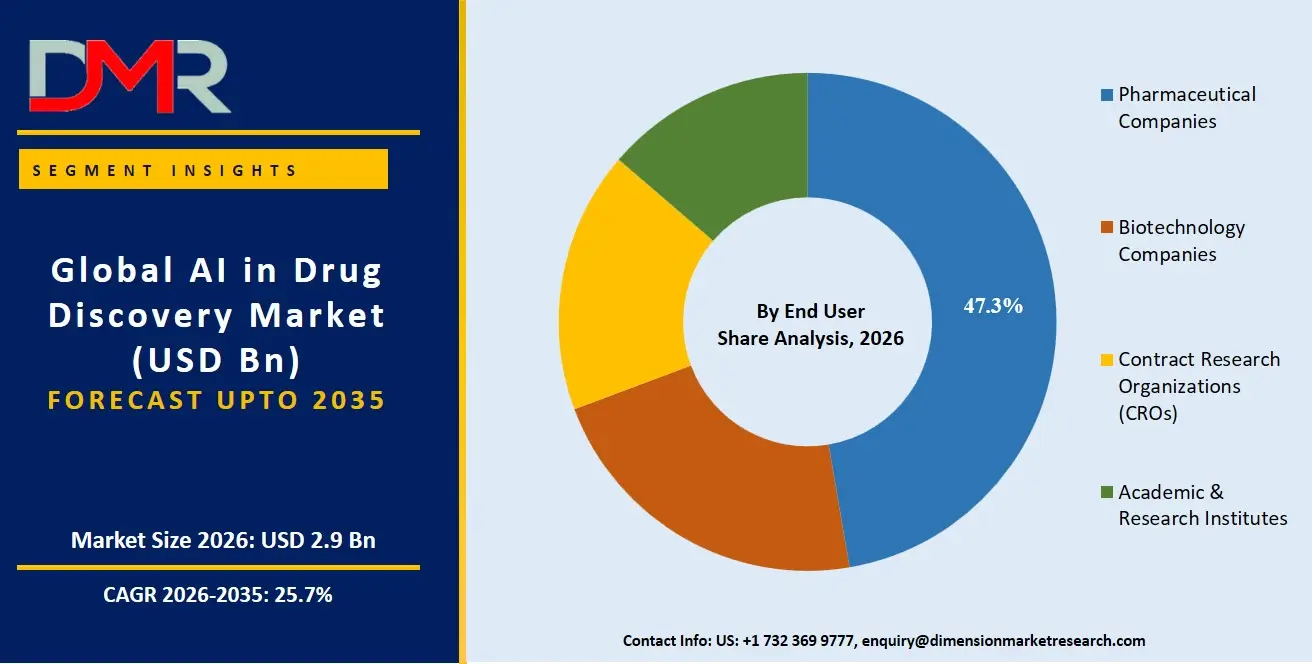
Amongst end users, Pharmaceutical Companies have been estimated to be the dominant players in the market, accounting for a market share of 47.3% in 2026. This dominance has been credited to the large research and development spending, increased adoption of AI throughout the drug discovery process, and the necessity to increase productivity as well as keep the rising development costs under control. Large pharmaceutical companies have vast amounts of proprietary data, sophisticated computational tools, and diverse research teams, enabling them to adopt AI at a large scale. These companies are actively utilizing machine learning, deep learning, and generative AI to identify the targets, optimize the lead compounds, predict toxicity, and make better selections of candidates. Moreover, strategic collaborations with AI providers as well as cloud computing companies boost innovation capabilities of these companies. Biotechnology Companies are forecasted to witness the highest growth rate in the coming years owing to their ability to adapt to new AI platforms quickly, focus on precision medicines, and venture capital investments. Most often than not, these companies specialize in some therapeutic area and use AI technologies to innovate with fewer resources. CROs are also increasingly adopting AI in order to offer computational services.
By Therapeutic Area Analysis
Depending on therapeutic application, Oncology will have the highest market share of 36.4% by 2026 owing to the huge prevalence of cancer across the world and need for innovation in targeted therapies. Numerous applications have been developed using AI in Oncology which includes identification of biomarkers of cancer, discovery of novel therapeutic targets, optimization of immunotherapies, prediction of response to drugs, among others. Availability of huge genomic and transcriptomic databases of cancers is making further development and implementation of AI in oncology research faster and more efficient. The high commercial value of oncology has led to continuous funding from pharmaceutical companies for developing treatments in this therapeutic category. On the other hand, Rare Diseases will emerge as the fastest growing segment in the market owing to capability of AI technologies to unravel novel disease mechanisms, identify new indications of available treatments and perform analysis of small data sets. Other therapeutic areas where adoption of AI technologies will increase include neurology, cardiovascular diseases, infectious diseases, immunology, autoimmune diseases, and metabolic disorders.
The AI in Drug Discovery Market Report is segmented on the basis of the following:
By Technology
- Machine Learning (ML)
- Deep Learning
- Natural Language Processing (NLP)
- Generative AI
- Knowledge Graphs & Graph Neural Networks (GNNs)
By Drug Discovery Stage
- Target Identification & Validation
- Hit Identification & Virtual Screening
- Lead Optimization
- Preclinical Candidate Selection
- Drug Repurposing
By Molecule Type
- Small Molecule Discovery
- Biologics Discovery
- Cell & Gene Therapy Discovery
By End User
- Pharmaceutical Companies
- Biotechnology Companies
- Contract Research Organizations (CROs)
- Academic & Research Institutes
By Therapeutic Area
- Oncology
- Neurology
- Cardiovascular Diseases
- Infectious Diseases
- Immunology & Autoimmune Diseases
- Metabolic Disorders
- Rare Diseases
- Others
Regional Analysis
Leading Region in the AI in Drug Discovery Market
ℹ
To learn more about this report –
Download Your Free Sample Report Here
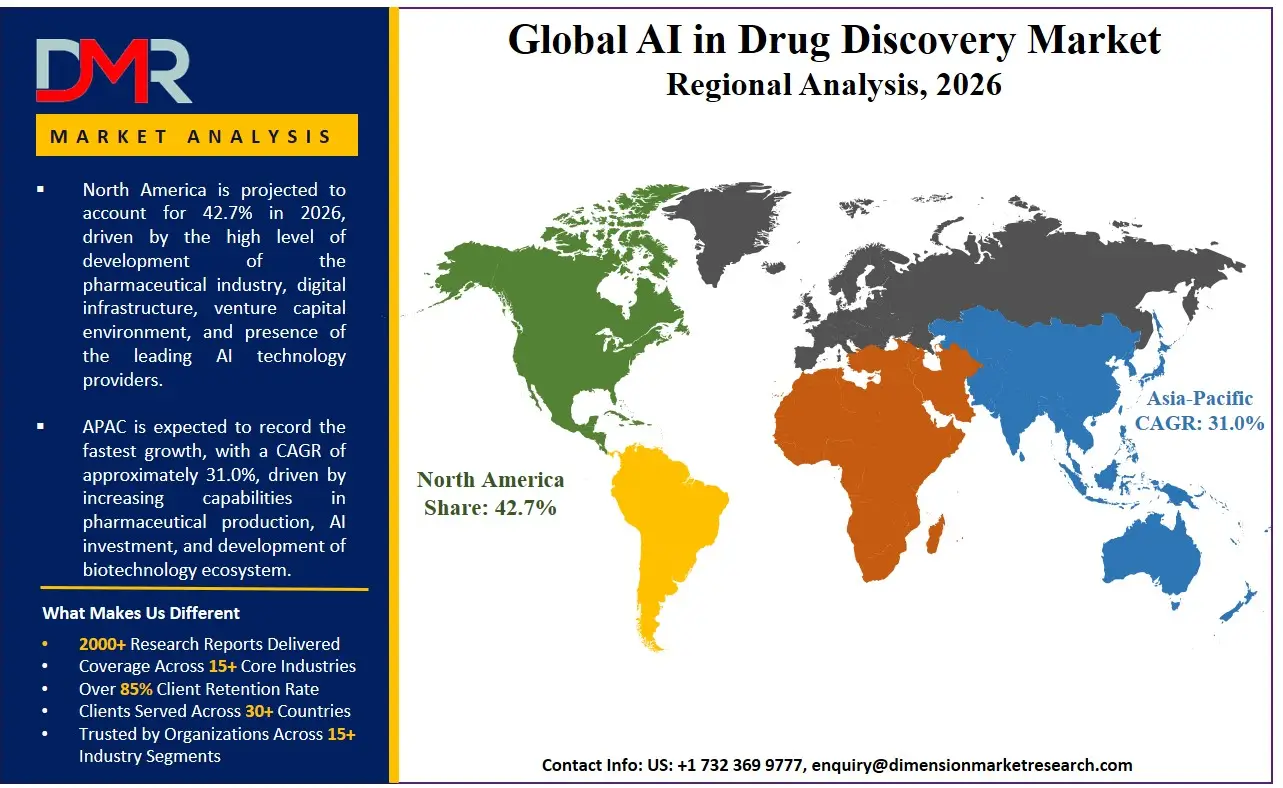
North America is predicted to be the dominant regional market by occupying about 42.7% of the Global AI in Drug Discovery Market by 2026. This region will benefit from the high level of development of the pharmaceutical industry, digital infrastructure, venture capital environment, and presence of the leading AI technology providers. Continuous investments into biomedical research, precision medicine programs, cloud computing, and computational biology will facilitate the process of AI adoption during all stages of drug discovery. Collaborative innovation ecosystem due to the presence of world-famous pharmaceutical companies, biotech pioneers, research institutions, and contract research organizations will provide additional support for the market growth. Funding from governments for biomedical research, patent protection, and acceptance of AI-enabled research are also important market drivers. Apart from that, high availability of biomedical data, increased usage of HPC, and cooperation between technology companies and life sciences companies will help preserve the dominant position of North America.
Fastest Growing Region in the AI in Drug Discovery Market
Asia-Pacific is estimated to witness the fastest growth during the forecast period due to increasing capabilities in pharmaceutical production, AI investment, and development of biotechnology ecosystem. China, Japan, South Korea, India, Singapore and other countries are improving their life sciences industries by implementing various initiatives such as digitization of the industry backed by governments, AI policies and increased funds for biomedical research. Rising healthcare spend, growing number of chronic diseases, advancing genomics research, and enhanced cloud computing capabilities are prompting organizations to use AI drug discovery platforms. This region also enjoys an advantage of having a large patient base, enhanced clinical research capabilities, and greater cooperation between local biotechnology firms and foreign pharmaceutical companies. With increasing talent pool, computing infrastructure, and research data in Asia-Pacific, the region is expected to be one of the key centers for next-gen drug discovery and pharmaceutical innovations.
By Region
North America
Europe
- Germany
- The U.K.
- France
- Italy
- Russia
- Spain
- Benelux
- Nordic
- Rest of Europe
Asia-Pacific
- China
- Japan
- South Korea
- India
- ANZ
- ASEAN
- Rest of Asia-Pacific
Latin America
- Brazil
- Mexico
- Argentina
- Colombia
- Rest of Latin America
Middle East & Africa
- Saudi Arabia
- UAE
- South Africa
- Israel
- Egypt
- Rest of MEA
Competitive Landscape
Intense competition exists within the AI in Drug Discovery Market due to consistent technological innovation, collaborative efforts, and high research and development expenditures. Companies within the market compete by refining AI algorithms, improving computing abilities, utilizing multi-omics data, and achieving enhanced prediction accuracy throughout the drug discovery process. Collaborations among pharmaceutical companies, biotech companies, cloud service providers, and AI technology providers have emerged as a significant form of competition for commercialization purposes. Entry into the market is quite challenging because of the requirements for unique biomedical data, skilled AI personnel, advanced computing power, and regulatory compliance. Companies are striving to gain a competitive edge through platform expansion, licensing, acquisitions, and research collaborations amid the rising demand for more efficient drug discovery processes.
Some of the prominent players in the global AI in Drug Discovery are:
- Schrödinger
- Recursion Pharmaceuticals
- Insilico Medicine
- Exscientia
- BenevolentAI
- Atomwise
- XtalPi
- Generate:Biomedicines
- Isomorphic Labs
- Relay Therapeutics
- Iktos
- Valo Health
- Owkin
- PathAI
- Genesis Therapeutics
- Absci
- Arctoris
- Standigm
- Cyclica
- DeepCure
- Other Key Players
Recent Developments
- In June 2026, At the BIO 2026 International Convention, Insilico Medicine and SK Biopharmaceuticals have entered into an agreement of collaboration to create AI-powered drugs for CNS disorders that affect the immune system. Insilico will make use of its Pharma.AI platform along with the drug discovery capabilities of its preclinical drugs to design and develop new drug candidates, whereas SK Biopharmaceuticals will handle the clinical development and commercialization part.
- In June 2026, The Chai Discovery company has entered into a licensing agreement with Pfizer whereby Chai's AI technology will be incorporated into Pfizer's drug discovery processes. Under this partnership, Pfizer will get first-hand access to Chai's Chai-3 model and a dedicated AI model designed using Pfizer's internal data. The purpose of integrating the two companies' technologies is to hasten the process of early-stage drug discovery as well as enhancing biomolecule design.
- In June 2026, Bayer and Iambic Therapeutics have announced a new collaboration for drug discovery, where they plan to develop new small molecule drugs. The collaboration will use Iambic's proprietary artificial intelligence technology, which comprises Enchant and NeuralPLexer. Through the use of artificial intelligence to optimize molecules and research expertise of Bayer, the goal is to enhance hit and lead discovery and build a strong pipeline at Bayer.
Report Details
| Report Characteristics |
| Market Size (2026) |
USD 2.9 Bn |
| Forecast Value (2035) |
USD 22.8 Bn |
| CAGR (2026–2035) |
25.7% |
| Historical Period |
2021 – 2025 |
| Forecast Period |
2027 – 2035 |
| Base Year |
2025 |
| Estimate Year |
2026 |
| Segments Covered |
By Technology, By Drug Discovery Stage, By Molecule Type, By End User, By Therapeutic Area |
| Regional Coverage |
North America – The US and Canada; Europe – Germany, The UK, France, Russia, Spain, Italy, Benelux, Nordic, & Rest of Europe; Asia-Pacific – China, Japan, South Korea, India, ANZ, ASEAN, Rest of APAC; Latin America – Brazil, Mexico, Argentina, Colombia, Rest of Latin America; Middle East & Africa – Saudi Arabia, UAE, South Africa, Turkey, Egypt, Israel, & Rest of MEA |
Frequently Asked Questions
How big is the AI in Drug Discovery Market?
▾ The AI in Drug Discovery Market size is expected to reach USD 2.9 billion by 2026 and is projected to reach USD 22.8 billion by the end of 2035.
What is the CAGR of the AI in Drug Discovery Market from 2026 to 2035?
▾ The market is growing at a CAGR of 25.7 percent over the forecasted period.
What factors are driving the growth of the AI in Drug Discovery Market?
▾ Increasing Use of Artificial Intelligence for Accelerated Drug Discovery, and more are the factors driving the growth of the AI in Drug Discovery Market.
What are the major trends in the AI in Drug Discovery Market?
▾ Increasing Use of Generative AI and Foundation Models, and more are some of the major trends in the market.
Who are the key players in the AI in Drug Discovery Market?
▾ Some of the key players in the AI in Drug Discovery Market include Valo, PathAI, Absci and more.
How is the AI in Drug Discovery Market segmented?
▾ The AI in Drug Discovery Market is segmented by technology, drug discovery stage, molecule type, end user, therapeutic area.
Which region held the largest share of the AI in Drug Discovery Market in 2026?
▾ North America is set to lead the AI in Drug Discovery Market with an estimated 42.7% share in 2026.
Which region is expected to grow the fastest in the AI in Drug Discovery Market?
▾ Asia Pacific is the fastest-growing region in the AI in Drug Discovery Market during the forecast period.