Americas Gastrointestinal Drugs Market Snapshot
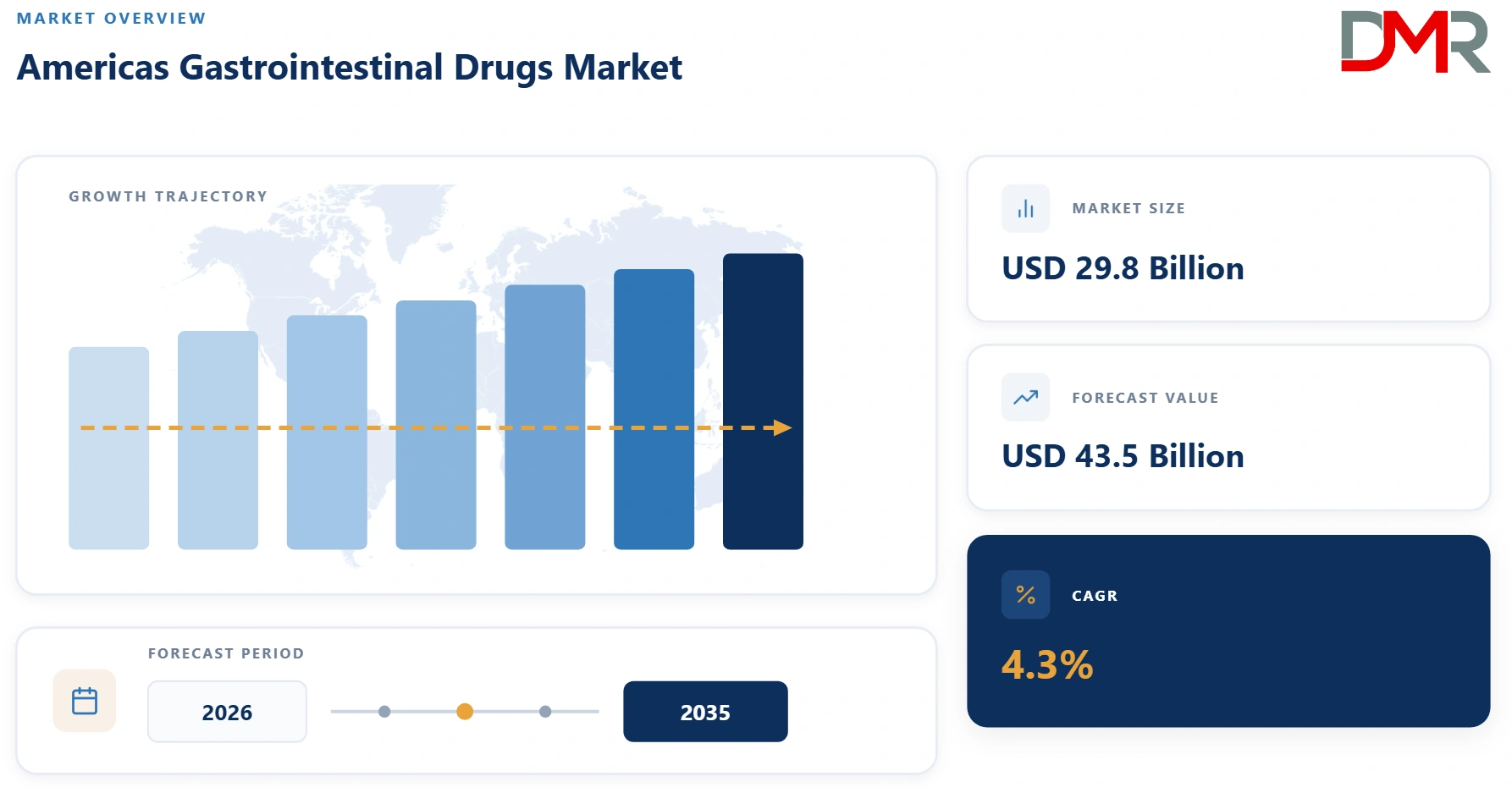
- Market Size in 2026: USD 29.8 billion
- Market Size in 2035: USD 43.5 billion
- CAGR, 2026–2035: 4.3%
- Leading Indication Segment, 2026: Acid-Related Disorders, 39.0%
- Leading Drug Class Segment, 2026: Acid-Suppressing Drugs, 34.0%
- Leading Route of Administration, 2026: Oral, 79.0%
- Fastest-Growing Major Segment: Parenteral Route, 6.8% CAGR
- Leading Region, 2026: North America, 86.0%
What is the Americas Gastrointestinal Drugs and its Market Size?
The Americas market is estimated at USD 29.8 billion in 2026 and is projected to reach approximately USD 43.5 billion by 2035, representing a 4.3% CAGR.
ℹ
To learn more about this report –
Download Your Free Sample Report Here
The Americas gastrointestinal drugs market encompasses pharmaceutical products used to prevent, manage and treat disorders affecting the gastrointestinal tract, including gastroesophageal reflux disease (GERD), peptic ulcer disease, dyspepsia, irritable bowel syndrome (IBS), constipation, diarrhea, Crohn’s disease, ulcerative colitis, nausea and vomiting, and other gastrointestinal conditions. The market includes prescription medicines, OTC products, biologics, small molecules and selected advanced therapies distributed through hospital, retail and online channels.
Use Cases
- Acid reflux management: Proton-pump inhibitors, H2 blockers and antacids control acid exposure and relieve GERD-related symptoms.
- IBD management: Biologics, immunomodulators and targeted small molecules reduce inflammation and maintain remission in Crohn’s disease and ulcerative colitis.
- Bowel-motility treatment: Laxatives, secretagogues and prokinetics address constipation and impaired gastrointestinal motility.
- Diarrhea management: Antidiarrheal medicines reduce stool frequency and help manage acute or chronic diarrhea.
- Nausea and vomiting control: Antiemetics and gastroprokinetic medicines manage treatment-related, postoperative and disease-associated nausea.
- Dyspepsia and ulcer treatment: Acid suppression and mucosal-protective therapies manage upper-GI discomfort and ulcer-related symptoms.
Key Takeaways
- Market size: The Americas gastrointestinal drugs market is estimated at USD 29.8 billion in 2026, reaching approximately USD 43.5 billion by 2035.
- Growth: The market is expected to expand at approximately 4.3% CAGR during 2026–2035.
- Growth drivers: Rising chronic GI disease prevalence, aging populations, greater diagnosis, specialty-drug adoption and improved treatment access are central growth catalysts.
- Segment dominance: Acid-related disorders and acid-suppressing drugs remain the largest categories because of their high prevalence and broad treatment population.
- Fastest growth: Parenteral therapies are expected to grow fastest as biologics and advanced targeted treatments expand within IBD.
- Regional leadership: North Americas represents approximately 86% of 2026 market revenue, while Latin Americas is expected to record faster underlying volume growth.
How AI/Gen AI is Transforming the Americas Gastrointestinal Drugs Market?
Artificial intelligence is increasingly influencing gastrointestinal drug development, clinical-trial design, patient identification and treatment optimization. Pharmaceutical companies are applying AI to analyze electronic health records, clinical-trial datasets, medical imaging, molecular data and real-world evidence to identify patient subgroups and potential therapeutic targets. AI-assisted discovery can accelerate candidate screening and improve trial recruitment for heterogeneous diseases such as Crohn’s disease and ulcerative colitis.
The technology can reduce development costs by improving patient selection, identifying biomarkers and predicting treatment response. In commercial settings, AI-supported analytics can improve demand forecasting, pharmacovigilance and adherence monitoring. Digital tools can also help physicians identify patients requiring treatment escalation.
Key Drivers in the Americas Gastrointestinal Drugs Market
Increasing Burden of Chronic Gastrointestinal Disorders
The expanding prevalence and diagnosis of chronic gastrointestinal disorders is a fundamental demand driver. GERD, functional bowel disorders, constipation and diarrhea generate large treatment populations, while IBD creates sustained demand for higher-value prescription therapies. Lifestyle changes, dietary patterns, obesity, population aging and improved diagnostic capabilities contribute to the expanding treated population. The commercial opportunity is particularly significant in North America, where specialist access and reimbursement facilitate diagnosis and long-term treatment. In Latin America, healthcare-system modernization and growing pharmaceutical access are increasing treatment penetration from a lower base.
Expansion of Biologics and Targeted IBD Therapies
IBD is becoming an increasingly important source of pharmaceutical value because treatment is shifting from conventional anti-inflammatory medicines toward biologics and targeted small molecules. Anti-TNF therapies, IL-12/23 and IL-23 inhibitors, JAK inhibitors and other advanced therapies offer physicians additional mechanisms for patients with moderate-to-severe disease. Recent regulatory activity illustrates this shift: the U.S. FDA approved Johnson & Johnson’s TREMFYA (guselkumab) for adults with moderately to severely active Crohn’s disease in March 2025, expanding the company’s IBD franchise.
Restraints in the Americas Gastrointestinal Drugs Market
High Cost and Reimbursement Pressure for Specialty Therapies
Specialty gastrointestinal drugs, particularly biologics and targeted immunotherapies, can carry substantially higher treatment costs than traditional small-molecule or OTC therapies. Payers are therefore increasingly focused on comparative effectiveness, step therapy, prior authorization and outcomes-based evidence. Biosimilar competition may reduce prices for established biologics, while healthcare systems in Latin Americas can face budget limitations that restrict access to expensive advanced therapies. Manufacturers must demonstrate meaningful improvements in remission, safety, quality of life and healthcare utilization to defend premium pricing.
Generic Competition and Mature OTC Categories
Several large gastrointestinal categories, particularly acid suppression, antacids and conventional laxatives, are mature and highly exposed to generic and private-label competition. Loss of exclusivity can rapidly erode branded revenue, while consumers frequently switch between brands based on price and availability. OTC products also face retailer bargaining power and promotional pressure. Consequently, manufacturers must balance innovation with lifecycle management, reformulation and brand differentiation.
Growth Opportunities in the Americas Gastrointestinal Drugs Market
Precision Medicine and Next-Generation IBD Therapies
IBD represents one of the strongest value-creation opportunities in the Americas. Treatment is moving toward earlier intervention, mechanism-specific selection and objective measures of disease control. New IL-23 inhibitors, JAK inhibitors and other targeted therapies can address patients who fail or lose response to established biologics. Pharmaceutical companies can differentiate through superior efficacy, rapid onset, durable remission, convenient dosing and self-administration. Johnson & Johnson’s expansion of TREMFYA into Crohn’s disease illustrates how manufacturers are broadening targeted immunology platforms into GI indications.
Latin American Market Expansion and Digital Distribution
Latin Americas provides a significant long-term opportunity because pharmaceutical penetration remains below North American levels while healthcare infrastructure, diagnosis and access are improving. Brazil, Mexico, Argentina and Colombia offer the largest addressable patient pools. Online pharmacies, electronic prescriptions, patient-support programs and specialty distribution can expand access beyond traditional urban pharmacy networks. Manufacturers that offer affordable formulations, local partnerships and differentiated access programs can capture growth without depending exclusively on premium pricing.
Trends in the Americas Gastrointestinal Drugs Market
Shift Toward Targeted and Immune-Mediated Therapies
The GI pharmaceutical market is gradually shifting from broad symptomatic treatment toward targeted disease modification. IBD is particularly important because newer biologics and targeted small molecules compete on remission, mucosal healing, safety and convenience. Regulatory activity confirms the trend, including multiple 2025 approvals and indication expansions involving Crohn’s disease, ulcerative colitis and pediatric gastrointestinal conditions.
Increasing Convenience and Home-Based Treatment
Self-administration, oral targeted therapies and less frequent dosing are becoming important competitive differentiators. Patients and providers increasingly value treatments that reduce infusion-center visits and improve treatment flexibility. The 2025 U.S. approval of subcutaneous induction for TREMFYA in ulcerative colitis demonstrates the industry's movement toward more convenient treatment models.
Research Scope and Analysis
The Americas gastrointestinal drugs market is analyzed by indication, drug class, route of administration and prescription status, with distribution channel used as an additional commercial dimension. The assessment covers prescription and OTC therapies across North Americas and Latin America.
ℹ
To learn more about this report –
Download Your Free Sample Report Here
By Indication Analysis
Acid-Related Disorders represent the dominant indication category in 2026, accounting for an estimated 39.0% of Americas gastrointestinal drug revenue. GERD is the principal contributor because of its high prevalence, chronic treatment requirements and broad availability of prescription and OTC acid-suppressing medicines. Inflammatory Bowel Disease is estimated to be the second-largest category at approximately 28.0%, supported by high-value biologics and targeted therapies for Crohn’s disease and ulcerative colitis. Bowel Disorders account for approximately 18.0%, driven by IBS, constipation and diarrhea. IBD is the fastest-growing indication, with an estimated 6.9% CAGR, as biologic penetration increases and treatment moves toward earlier, more aggressive disease control. Nausea and vomiting disorders account for approximately 9.0%, while other GI disorders contribute roughly 6.0%. The long-term mix is expected to shift toward IBD as advanced therapies capture a greater proportion of pharmaceutical spending.
By Drug Class Analysis
Acid-Suppressing Drugs are estimated to lead the market in 2026 with approximately 34.0% share, reflecting the enormous treated population for GERD, dyspepsia and acid-related disorders. Proton-pump inhibitors remain commercially important because of their established efficacy, physician familiarity and extensive generic availability. Anti-inflammatory and immunomodulatory drugs represent the second-largest category at approximately 27.0% and are expected to be the fastest-growing major drug class at around 7.2% CAGR, reflecting expanding use of biologics and targeted therapies for IBD. Laxatives and antidiarrheals hold approximately 18.0%, benefiting from persistent constipation and diarrhea treatment demand. Antiemetics and gastroprokinetics represent about 10.0%, antacids approximately 7.0%, and other GI drugs around 4.0%. The drug-class mix demonstrates the coexistence of high-volume mature medicines and high-value specialty therapies.
By Route of Administration Analysis
Oral administration dominates the market with an estimated 79.0% share in 2026, supported by the convenience, low administration cost and extensive availability of tablets, capsules, liquids and other oral formulations. Oral products dominate acid suppression, laxatives, antidiarrheals and many antiemetic therapies. Parenteral administration is the second-largest route at approximately 17.0% and is expected to be the fastest-growing route at approximately 6.8% CAGR, primarily because an increasing share of advanced IBD therapies are administered subcutaneously or intravenously. Rectal formulations account for approximately 4.0% and remain relevant for selected constipation, inflammatory and localized GI conditions. Over the forecast period, parenteral share is expected to increase as biologics become more widely used, although oral products will remain dominant because of their much broader addressable patient population.
By Prescription Status Analysis
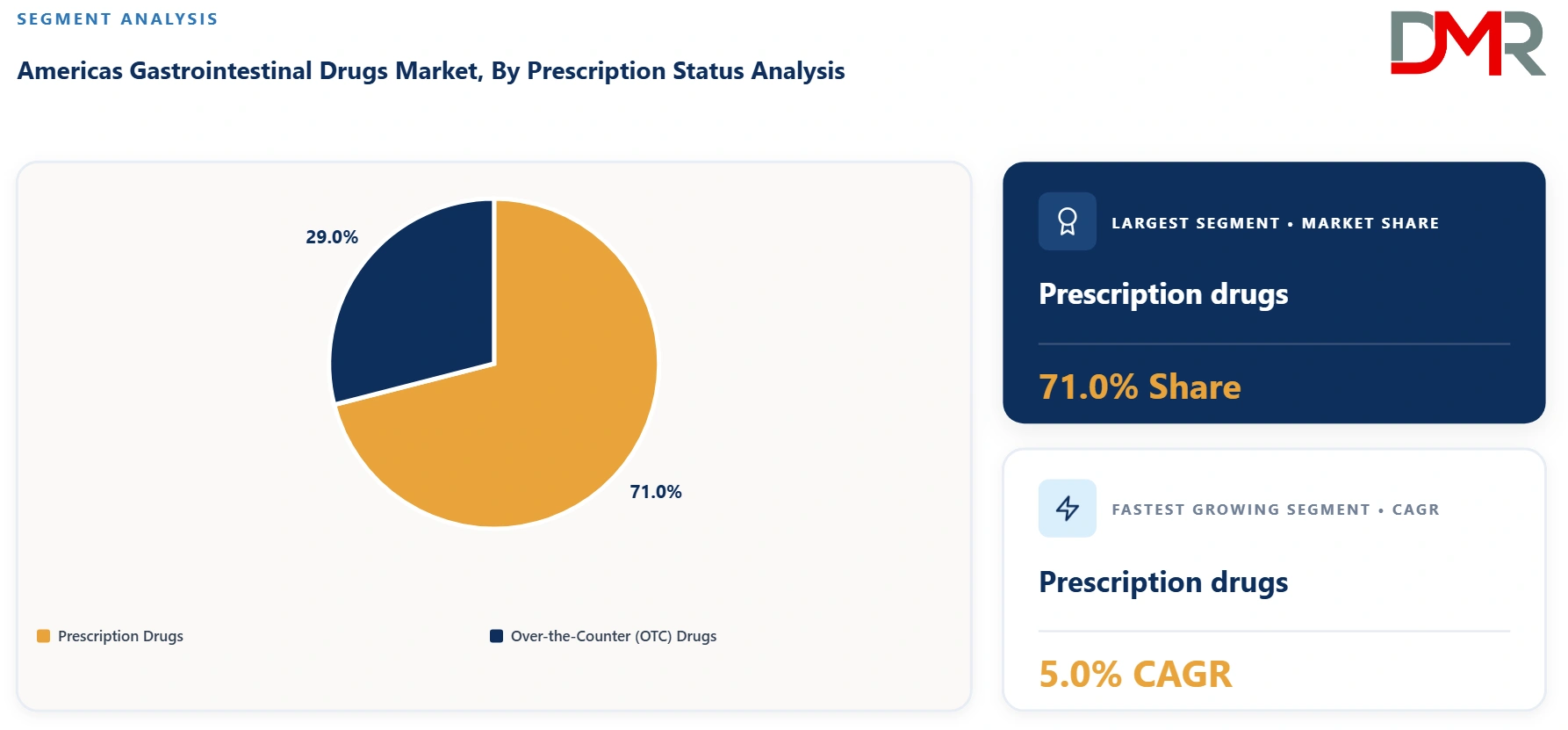
Prescription drugs account for an estimated 71.0% of 2026 market value, reflecting the high revenue contribution of biologics, targeted therapies, prescription acid suppressants and advanced IBD medicines. Prescription products are particularly dominant in North Americas because of specialist care, insurance reimbursement and extensive pharmaceutical innovation. OTC drugs account for approximately 29.0%, supported by antacids, selected acid-reducing products, laxatives and antidiarrheals. Prescription therapies are expected to grow faster, at approximately 5.0% CAGR, because specialty drugs command substantially higher revenue per treated patient and are benefiting from innovation in IBD. OTC growth is expected to remain comparatively moderate at roughly 2.7%, constrained by generic competition and mature therapeutic categories. The distinction is important commercially because OTC demand is volume-driven, while prescription growth increasingly depends on clinical innovation and treatment escalation.
By Distribution Channel Analysis
Retail Pharmacies are estimated to be the dominant distribution channel in the Americas Gastrointestinal Drugs Market, accounting for approximately 43.0% of market revenue in 2026. Their leadership is supported by widespread geographic coverage, convenient patient access and strong sales of OTC products such as antacids, laxatives, antidiarrheals and acid-suppressing medicines. Retail pharmacies also distribute a substantial volume of prescription GI drugs. Hospital & Institutional Pharmacies represent the second-largest channel, with an estimated 35.0% share in 2026, driven by inpatient treatment, specialist care and the increasing use of high-value biologics and parenteral therapies for severe gastrointestinal disorders, particularly IBD. Online Pharmacies account for approximately 22.0% but are expected to be the fastest-growing channel, registering an estimated 8.0% CAGR through 2035. Growth is supported by digital prescription platforms, home delivery, recurring-refill models, improved consumer acceptance of e-pharmacy services and greater demand for convenient access to chronic GI medications
The Americas Gastrointestinal Drugs Market Report is segmented on the basis of the following:
By Indication
- Acid-Related Disorders
- Gastroesophageal Reflux Disease (GERD)
- Peptic Ulcer Disease
- Dyspepsia
- Bowel Disorders
- Irritable Bowel Syndrome (IBS)
- Constipation
- Diarrhea
- Inflammatory Bowel Disease (IBD)
- Crohn’s Disease
- Ulcerative Colitis
- Nausea & Vomiting Disorders
- Other Gastrointestinal Disorders
By Drug Class
- Acid-Suppressing Drugs
- Antacids
- Laxatives & Antidiarrheals
- Antiemetics & Gastroprokinetics
- Anti-inflammatory & Immunomodulatory Drugs
- Other Gastrointestinal Drugs
By Route of Administration
By Prescription Status
- Prescription Drugs
- Over-the-Counter (OTC) Drugs
By Distribution Channel
- Hospital & Institutional Pharmacies
- Retail Pharmacies
- Online Pharmacies
Regional Analysis
North Americas is expected to remain the dominant regional market, accounting for approximately 86.0% of Americas gastrointestinal drug revenue in 2026. The United States represents the largest national market because of its high healthcare expenditure, extensive specialist network, strong pharmaceutical industry and high utilization of branded and specialty medicines. Canada contributes a smaller but well-developed market with public reimbursement and increasing use of advanced therapies. Latin Americas represents approximately 14.0% of 2026 revenue but is expected to grow faster. Brazil is the leading Latin American market, followed by Mexico, Argentina and Colombia. South and Central American GI drug revenue has been estimated to grow at 6.8% CAGR throughout forecast period.
Regulatory Landscape
Regulation is a major determinant of competitive success in the Americas gastrointestinal drugs market because clinical differentiation, approval timing, labeling and reimbursement evidence directly affect product uptake. The U.S. FDA remains the region's most influential regulator, while Health Canada and Latin American authorities govern national markets. In 2025, FDA approvals included important gastrointestinal developments such as pediatric IBS-C use for Linzess and multiple GI-related indication expansions. Regulatory competition is increasingly centered on objective endpoints such as endoscopic response and remission in IBD. The key risks are clinical-trial failure, safety signals, manufacturing deficiencies and increasingly demanding payer evidence requirements. Conversely, expedited regulatory pathways, pediatric extensions and successful supplemental indications provide significant lifecycle-management opportunities.
Pricing Analysis
Pricing dynamics differ sharply between the United States, Canada and Latin America. The U.S. supports significantly higher pharmaceutical prices but also applies substantial payer pressure through formularies, rebates, prior authorization and specialty-pharmacy management. Biologics and targeted IBD drugs command the highest prices and therefore generate substantial revenue growth despite smaller patient populations. Generic acid-suppressing drugs, antacids and conventional laxatives face intense price competition. In Latin America, affordability and government procurement have greater influence, with public-sector tenders and local reimbursement often determining access. Biosimilar adoption represents both a risk and an opportunity: it can reduce prices for established biologics while expanding treatment access and freeing payer budgets for newer therapies. Successful manufacturers will increasingly need differentiated clinical evidence alongside flexible pricing and patient-access strategies.
By Region
North America
Latin America
- Mexico
- Brazil
- Argentina
- Colombia
- Rest of Latin America
Competitive Landscape
The Americas gastrointestinal drugs market is moderately consolidated at the specialty-pharmaceutical level but highly fragmented across OTC and generic categories. Leading participants compete through clinical innovation, indication expansion, lifecycle management, strategic partnerships, geographic expansion and targeted acquisitions. Key competitive differentiators include clinical efficacy, remission durability, safety, dosing convenience, administration route, reimbursement access and manufacturing scale. The specialty segment is increasingly shaped by competition among biologic and targeted therapies for Crohn’s disease and ulcerative colitis, while mature acid-related and bowel-disorder categories are primarily differentiated by price, brand recognition and consumer accessibility. Major participants include AbbVie, Johnson & Johnson, Takeda Pharmaceutical, Sanofi, AstraZeneca, Bausch Health, Pfizer and other multinational and regional pharmaceutical companies.
Some of the prominent players in the Americas Gastrointestinal Drugs Market are:
- AbbVie
- Takeda Pharmaceutical
- AstraZeneca
- Johnson & Johnson
- Bausch Health Companies
- Pfizer
- Sanofi
- GSK
- Bayer
- Abbott Laboratories
- Eli Lilly and Company
- Novartis
- Boehringer Ingelheim
- Merck & Co.
- Bristol Myers Squibb
- Eisai
- Organon
- Gilead Sciences
- Celltrion
- Amgen
- UCB
- Otsuka Pharmaceutical
- Daiichi Sankyo
- Ferring Pharmaceuticals
- Ironwood Pharmaceuticals
- Salix Pharmaceuticals
- Sebela Pharmaceuticals
- Cosmo Pharmaceuticals
- Tillotts Pharma
- Mitsubishi Tanabe Pharma
- Astellas Pharma
- Regeneron Pharmaceuticals
- Arena Pharmaceuticals
- Intercept Pharmaceuticals
- Ironwood Pharmaceuticals
- Ardelyx
- Vanda Pharmaceuticals
- Evoke Pharma
- Zealand Pharma
- Protagonist Therapeutics
- Other Key Players
Recent Developments
- October 2025 — Johnson & Johnson: New 96-week clinical data showed durable Crohn’s disease remission with TREMFYA, reinforcing the competitive positioning of IL-23 inhibition and supporting longer-term treatment differentiation.
- September 2025 — Johnson & Johnson: The FDA approved a subcutaneous induction regimen of TREMFYA for adults with moderately to severely active ulcerative colitis, increasing treatment flexibility and supporting self-administration.
- July 2025 — Johnson & Johnson: Health Canada authorized TREMFYA for adult Crohn’s disease, strengthening the company's North American IBD presence and expanding access to both intravenous and subcutaneous induction approaches.
- July 2025 — AstraZeneca: The company received U.S. Priority Review and Breakthrough Therapy Designation for an Imfinzi-based perioperative treatment approach in resectable early-stage gastric and gastroesophageal-junction cancers.
- May 2025 — Johnson & Johnson: The European Commission approved TREMFYA for moderately to severely active Crohn’s disease, extending the product's geographic and disease-area opportunity following European ulcerative-colitis authorization.
- March 2025 — Johnson & Johnson: The company announced U.S. FDA approval of TREMFYA (guselkumab) for moderately to severely active Crohn’s disease, expanding its IL-23 franchise and adding another advanced targeted treatment option.
Report Details
| Report Characteristics |
| Market Size (2026) |
USD 29.8 Bn |
| Forecast Value (2035) |
USD 43.5 Bn |
| CAGR (2026–2035) |
4.3% |
| Historical Data |
2021 – 2025 |
| Forecast Data |
2026 – 2035 |
| Base Year |
2025 |
| Segments Covered |
By Indication, By Drug Class, By Route Of Administration, By Prescription Status, By Distribution Channel |
| Regional Coverage |
North America – The US and Canada; Latin America – Mexico, Brazil, Colombia, Argentina, Rest of LATAM |
Frequently Asked Questions
What is the size of the Americas Gastrointestinal Drugs Market in 2026?
▾ The Americas Gastrointestinal Drugs Market is estimated at approximately USD 29.8 billion in 2026, covering prescription, OTC, generic, branded, and specialty gastrointestinal medicines.
What will the Americas Gastrointestinal Drugs Market be worth by 2035?
▾ The Americas Gastrointestinal Drugs Market is projected to reach approximately USD 43.5 billion by 2035, driven by increasing disease prevalence and pharmaceutical innovation.
What is the CAGR of the Americas Gastrointestinal Drugs Market from 2026 to 2035?
▾ The Americas Gastrointestinal Drugs Market is expected to expand at approximately 4.3% CAGR from 2026 to 2035, supported by growing demand for advanced GI therapies.
What are the key growth drivers of the Americas Gastrointestinal Drugs Market?
▾ The Americas Gastrointestinal Drugs Market is driven by rising gastrointestinal disease prevalence, aging populations, improved diagnosis, specialty-drug adoption, and expanding access to healthcare.
Which segment dominates the Americas Gastrointestinal Drugs Market?
▾ Acid-related disorders dominate the Americas Gastrointestinal Drugs Market by indication, while acid-suppressing drugs lead by drug class due to their broad patient population.
Which region leads the Americas Gastrointestinal Drugs Market?
▾ North Americas leads the Americas Gastrointestinal Drugs Market, accounting for approximately 86% of market revenue in 2026, while Latin Americas is expected to grow faster.