Americas Interventional Radiology Market Snapshot
- Americas Interventional Radiology Market Size in 2026: USD 8.6 Billion
- Americas Interventional Radiology Market Size in 2035: USD 16.8 Billion
- Americas CAGR from 2026 to 2035: 7.7%
- Interventional Radiology Devices is the leading product type segment in 2026: 64.3%
- Oncology is the leading application segment in 2026: 32.6%
- Hospitals is the leading end user segment in 2026: 68.4%
- North America is the leading region segment in 2026: 76.8%
What is the Americas Interventional Radiology Market and its Market Size?
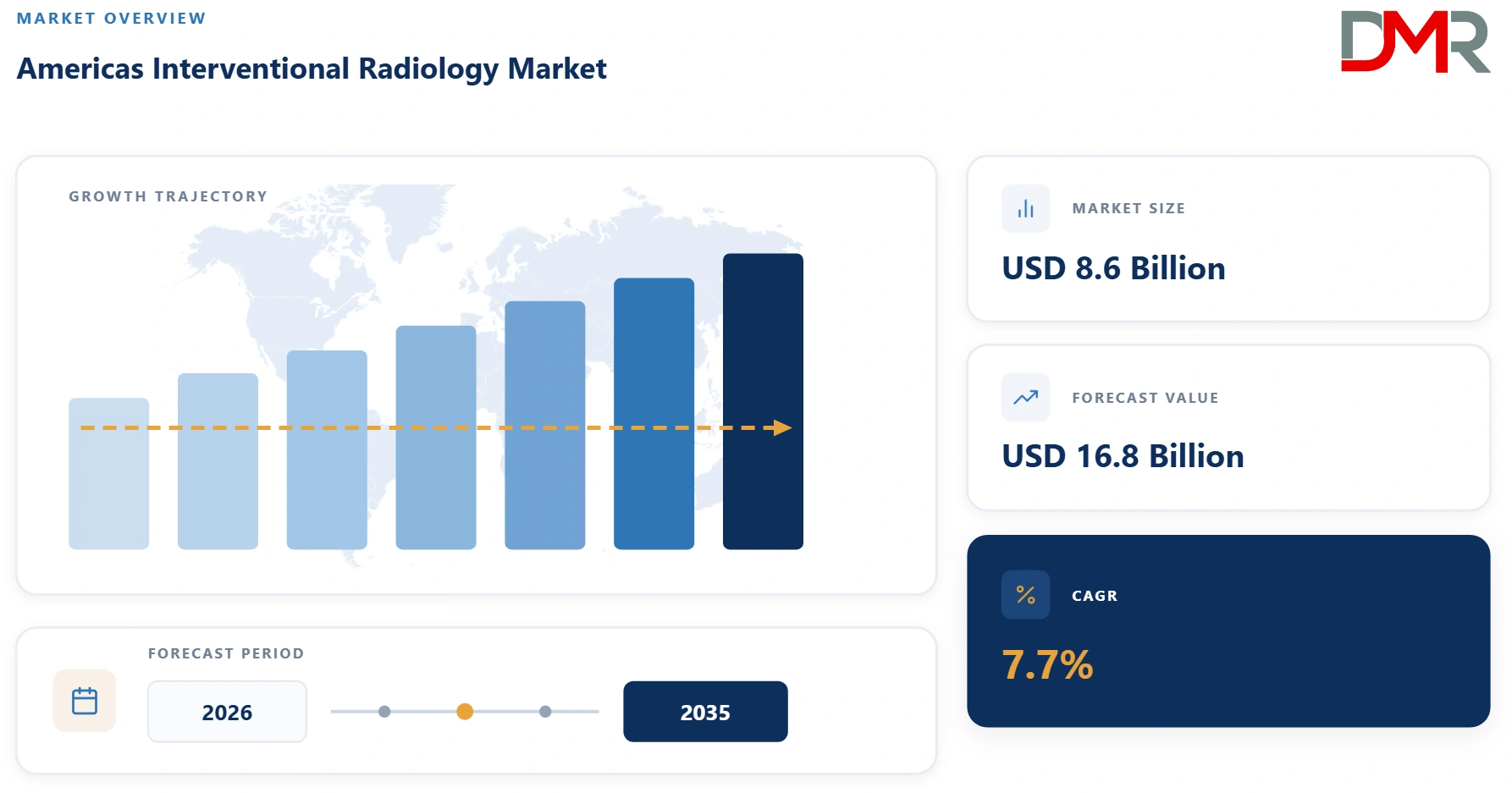
The Americas Interventional Radiology Market is projected to be valued at USD 8.64 Billion in 2026 and is projected to reach USD 16.82 Billion by 2035, expanding at a CAGR of 7.7% during the forecast period.
ℹ
To learn more about this report –
Download Your Free Sample Report Here
Growth is being propelled by the region's rapidly aging population driving sustained growth in cardiovascular disease, cancer, and peripheral vascular disease incidence requiring minimally invasive treatment approaches, continued clinical and hospital preference for image-guided interventional procedures offering reduced recovery time and complication risk relative to traditional open surgery, and sustained hospital investment in advanced imaging and interventional device technology across both mature North American healthcare systems and rapidly developing Latin American markets. The maturing of advanced embolization, ablation, and vascular intervention technologies supporting an expanding range of oncology, cardiology, and neurology treatment applications, growing outpatient and ambulatory surgical center capacity for interventional radiology procedures reducing costs relative to traditional inpatient hospital delivery, and continued expansion of Latin American hospital infrastructure and interventional radiology training capacity across Brazil, Mexico, Colombia, and Argentina are reshaping the market from a largely North American, hospital-based specialty into an increasingly Americas-wide, technologically advanced, and partially outpatient-delivered clinical field. Investment is accelerating as device manufacturers and healthcare providers expand interventional radiology capability across the region's varied and growing healthcare markets.
Use Cases
- Transarterial Chemoembolization and Radioembolization for Liver Cancer Treatment: Interventional radiologists across major U.S., Canadian, and Latin American cancer centers perform image-guided transarterial chemoembolization and radioembolization procedures to treat primary and metastatic liver cancer, offering a minimally invasive alternative to surgical resection for appropriately selected patients.
- Peripheral Vascular Intervention for Peripheral Artery Disease: Hospitals and specialty vascular clinics across the Americas perform angioplasty and stenting procedures to treat peripheral artery disease, addressing the region's substantial and growing burden of vascular disease associated with diabetes and cardiovascular risk factors.
- Uterine Fibroid Embolization as a Minimally Invasive Alternative to Hysterectomy: Interventional radiologists perform uterine fibroid embolization procedures offering women a minimally invasive treatment alternative to surgical hysterectomy, reflecting the broader clinical shift toward image-guided interventional approaches for gynecological conditions.
- Percutaneous Tumor Ablation for Kidney, Lung, and Liver Tumors: Cancer treatment centers across North America and increasingly Latin America use percutaneous thermal ablation techniques, including radiofrequency and microwave ablation, to treat kidney, lung, and liver tumors in patients who are poor surgical candidates or seeking less invasive treatment options.
Key Takeaways
- Market Size: The Americas Interventional Radiology Market is anticipated to be valued at USD 8.64 Billion in 2026 and is forecast to reach USD 16.82 Billion by 2035, expanding at a CAGR of 7.7%.
- Growth Outlook: Market expansion is sustained by the region's aging population driving cardiovascular and oncology disease burden growth, continued clinical shift toward minimally invasive image-guided treatment approaches, and expanding interventional radiology infrastructure investment across both North America and Latin America.
- Primary Growth Drivers: Rapidly aging populations driving cardiovascular disease and cancer incidence growth, continued clinical preference for minimally invasive interventional approaches over open surgery, expanding ambulatory surgical center capacity for interventional procedures, and growing Latin American hospital infrastructure and training investment are accelerating market growth.
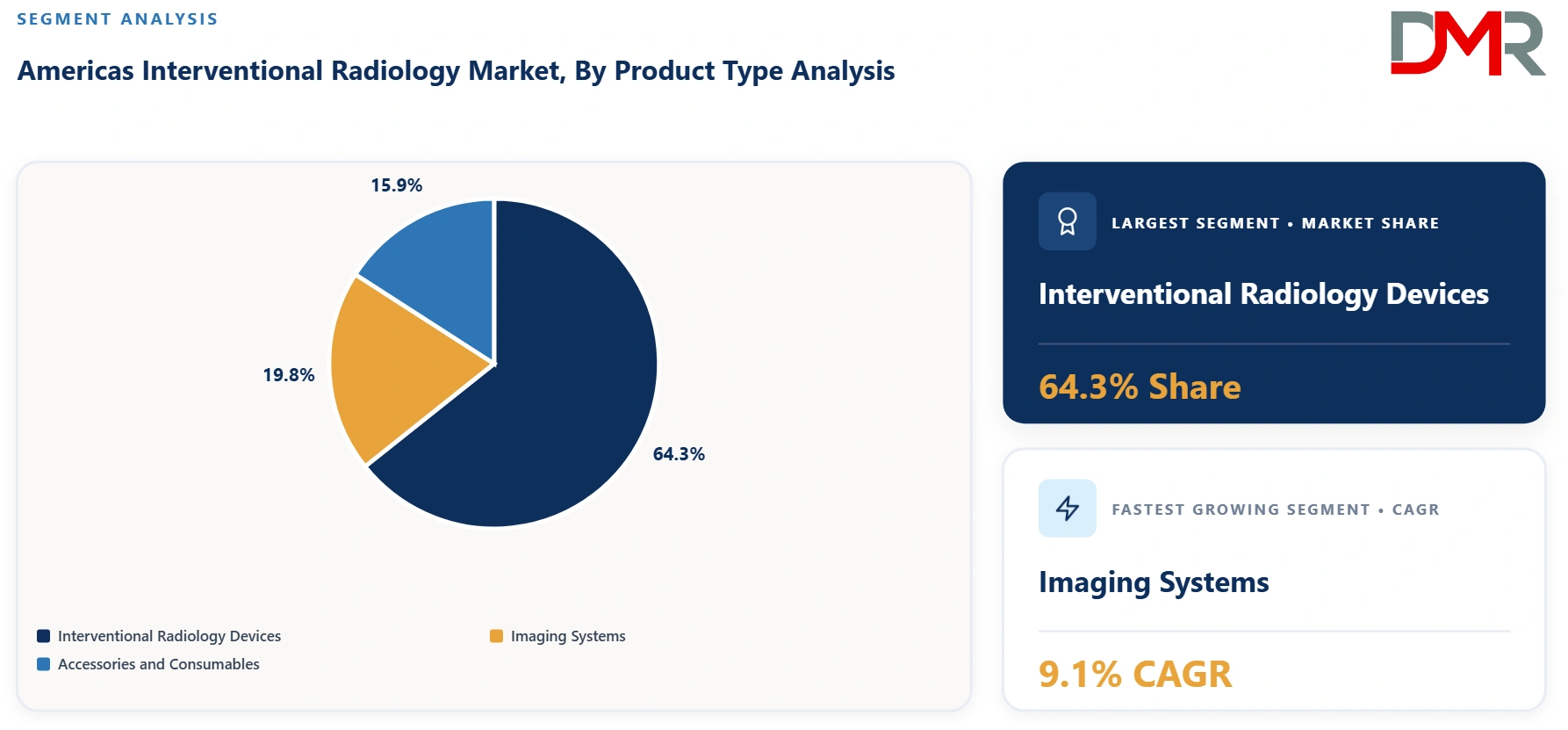
- By Product Type Analysis: Interventional Radiology Devices is projected to lead the product type segment with a 64.3% share in 2026, reflecting the central role of catheters, stents, and embolization devices across the breadth of interventional procedures. Imaging Systems is the fastest-growing product type segment at 9.1% CAGR, driven by continued hospital investment in advanced image-guidance technology.
- By Application Analysis: Oncology is expected to dominate with a 32.6% share in 2026, reflecting expanding use of embolization and ablation techniques across an increasing range of cancer treatment applications. Neurology is the fastest-growing application segment at 9.8% CAGR, driven by growing use of interventional techniques for stroke treatment and neurovascular conditions.
- By End User Analysis: Hospitals are projected to dominate with a 68.4% share in 2026, reflecting the complex, procedure-based nature of most interventional radiology treatment categories. Ambulatory Surgical Centers is the fastest-growing end user segment at 10.4% CAGR, driven by continued shift of appropriate interventional procedures toward efficient outpatient delivery settings.
Key Drivers in the Americas Interventional Radiology Market
Rapidly Aging Populations Driving Cardiovascular Disease and Cancer Incidence Growth
The United States and Canada, alongside a gradually aging Latin American population base, continue to experience substantial growth in age-related cardiovascular disease, cancer, and peripheral vascular disease incidence, conditions for which interventional radiology techniques increasingly represent standard or preferred treatment approaches. This demographic-driven disease burden growth creates a structural, durable demand foundation for interventional radiology devices and procedures across the Americas, as aging populations generally require greater rates of vascular and oncological intervention than younger population segments.
Continued Clinical Preference for Minimally Invasive Image-Guided Treatment Approaches
Healthcare providers and patients across the Americas increasingly favor minimally invasive, image-guided interventional radiology approaches over traditional open surgical treatment for an expanding range of vascular, oncological, and other conditions, reflecting the generally reduced recovery time, lower complication risk, and improved patient experience associated with interventional techniques. This sustained clinical and patient preference shift continues to expand the addressable range of conditions treated through interventional radiology, supporting sustained device and procedure volume growth across the region's diverse healthcare systems.
Restraints in the Americas Interventional Radiology Market
Interventional Radiologist Workforce and Training Capacity Constraints
Limited interventional radiologist workforce capacity, particularly across Latin American healthcare systems and rural or underserved regions of North America, represents a meaningful restraint on the Americas Interventional Radiology Market. The specialized, multi-year training required to develop interventional radiology clinical expertise creates a persistent supply constraint on the availability of qualified specialists capable of performing increasingly complex interventional procedures, potentially limiting the pace at which growing clinical demand can be met, particularly in markets with less developed medical training infrastructure.
Growth Opportunities in the Americas Interventional Radiology Market
Interventional Radiology Training Capacity Expansion Across Latin America
Growing recognition of interventional radiology workforce constraints across Latin America presents a substantial opportunity for medical device companies, hospital systems, and educational institutions to invest in expanded interventional radiology training programs and fellowship capacity across Brazil, Mexico, Colombia, Argentina, and other regional markets. Companies and institutions capable of supporting this workforce development can build long-term clinical relationships and market access advantages as trained interventional radiologists graduate and establish practice within the region.
Ambulatory Surgical Center Expansion for Cost-Effective Interventional Procedure Delivery
Growing hospital and payer interest in shifting appropriate interventional radiology procedures toward efficient, lower-cost ambulatory surgical center settings presents a substantial opportunity for device manufacturers and healthcare providers to develop specialized ambulatory interventional radiology capability. Companies and providers capable of adapting interventional radiology device and procedure workflows for safe, effective ambulatory delivery can capture growing procedure volume as this care delivery shift continues across North American healthcare systems.
Trends in the Americas Interventional Radiology Market
Continued Expansion of Interventional Techniques into New Clinical Application Areas
Interventional radiology continues to expand into new clinical application areas beyond its traditional vascular and oncological treatment base, including growing use in musculoskeletal pain management, gastroenterology, and urology applications. This continued clinical scope expansion reflects both ongoing technology innovation supporting new interventional approaches and growing physician and patient recognition of interventional radiology's minimally invasive treatment advantages across an expanding range of medical conditions.
Growing Latin American Hospital Infrastructure and Device Market Development
Brazil, Mexico, Colombia, and Argentina continue to see growing hospital infrastructure investment and private healthcare sector development supporting expanded interventional radiology capability, reflecting both rising healthcare expenditure across the region's largest economies and growing multinational device manufacturer market development investment targeting these expanding Latin American healthcare markets.
Research Scope and Analysis
The Americas Interventional Radiology Market is segmented by product type, application, end user, and region, covering interventional devices, imaging systems, accessories, cardiology, oncology, neurology, and other clinical applications, and North American and Latin American country markets.
ℹ
To learn more about this report –
Download Your Free Sample Report Here
By Product Type Analysis
Interventional Radiology Devices is projected to dominate the Americas Interventional Radiology Market with approximately 64.3% share in 2026, reflecting the central and essential role of catheters, guidewires, stents, and embolization devices across the full breadth of interventional radiology procedure categories. Imaging Systems is expected to register the highest CAGR of 9.1% during 2026-2035, driven by continued hospital investment in advanced fluoroscopy, ultrasound, and CT/MRI-guided imaging technology supporting increasingly precise interventional procedure guidance.
By Application Analysis
Oncology is anticipated to dominate the Americas Interventional Radiology Market by application, accounting for approximately 32.6% share in 2026, reflecting expanding use of embolization, ablation, and other interventional techniques across an increasing range of cancer treatment applications spanning liver, kidney, lung, and other tumor types. Neurology is projected to register the highest CAGR of 9.8% between 2026 and 2035, driven by growing use of interventional techniques for acute stroke treatment and broader neurovascular condition management.
By End User Analysis
Hospitals are projected to lead the Americas Interventional Radiology Market with an estimated 68.4% share in 2026, reflecting the complex, procedure-based nature of most interventional radiology treatment categories requiring comprehensive hospital-based clinical and imaging infrastructure. Ambulatory Surgical Centers are expected to register the fastest CAGR of 10.4% through 2035, driven by continued shift of appropriate interventional procedures toward efficient, lower-cost outpatient delivery settings across North American healthcare systems.
The Americas Interventional Radiology Market Report is segmented based on the following:
By Product Type
- Interventional Radiology Devices
- Angioplasty Balloons
- Stents
- Catheters
- Guidewires
- Embolization Devices
- Inferior Vena Cava (IVC) Filters
- Others
- Imaging Systems
- Fluoroscopy Systems
- Ultrasound Imaging Systems
- CT and MRI-Guided Systems
- Accessories and Consumables
By Application
- Cardiology
- Oncology
- Neurology
- Gastroenterology
- Urology
- Musculoskeletal
- Others
By End User
- Hospitals
- Ambulatory Surgical Centers
- Specialty Clinics
- Others
By Region Analysis
North America, comprising the United States and Canada, is projected to lead the Americas Interventional Radiology Market with highest share in 2026, reflecting the substantial scale of its hospital systems, healthcare expenditure, and established interventional radiology clinical infrastructure and workforce relative to Latin America. Latin America, comprising Mexico, Brazil, Colombia, Argentina, and the Rest of LATAM, is expected to register the fastest CAGR of 10.6% through 2035, driven by continued hospital infrastructure investment, growing private healthcare sector development, and expanding interventional radiology training capacity across the region's leading economies.
By Region
- North America
- Latin America
- Mexico
- Brazil
- Colombia
- Argentina
- Rest of LATAM
Technology Analysis
Technology development is central to the trajectory of the Americas Interventional Radiology Market as companies invest in advanced robotic-assisted interventional platforms improving procedural precision, next-generation embolic and ablation technology expanding treatable tumor size and location ranges, and AI-enhanced image guidance software supporting more accurate real-time procedural navigation. Growing use of fusion imaging technology combining multiple imaging modalities is improving procedural planning and execution precision across complex interventional cases. Opportunities are expanding for companies developing training simulation technology supporting interventional radiology workforce development across Latin America, as well as device designs specifically adapted for cost-effective deployment across developing Latin American healthcare infrastructure. However, ensuring appropriate technology transfer and training support accompanies device market expansion into markets with more limited existing interventional radiology infrastructure remains an important consideration for manufacturers.
Investment and White Space Analysis
Investment opportunities in the Americas Interventional Radiology Market are expanding alongside the region's aging population and associated disease burden growth, continued clinical shift toward minimally invasive treatment approaches, and expanding healthcare infrastructure investment across both North America and Latin America. Significant white space exists in interventional radiology training capacity expansion across Latin America, ambulatory surgical center-adapted device and procedure development, and continued clinical application expansion into musculoskeletal, gastroenterology, and urology treatment areas. Companies with strong clinical training support capability, established relationships with major hospital systems across both North and Latin America, and device portfolios adapted for diverse care delivery settings are positioned to capture premium, longer-duration growth opportunities. However, interventional radiologist workforce constraints, particularly across Latin America, can limit the pace at which growing device and procedure demand can be clinically addressed.
Competitive Landscape
The Americas Interventional Radiology Market is moderately consolidated and increasingly competitive, comprising large diversified global medical device companies with substantial Americas operations, specialized interventional radiology device manufacturers, and regional Latin American medical device distributors and manufacturers. Competition centers on device technology innovation and clinical outcomes data, established relationships with major North American hospital systems and group purchasing organizations, physician training and clinical support capability, and Latin American market distribution and regulatory expertise. Large diversified global companies benefit from substantial research and development resources and broad interventional device portfolios, while specialized manufacturers compete through deep technical expertise in specific interventional procedure categories. Companies increasingly differentiate through clinical training support and Latin American market development capability rather than device technology alone.
Some of the prominent players in the Americas Interventional Radiology Market are:
- Boston Scientific Corporation
- Medtronic plc
- Abbott Laboratories
- GE HealthCare
- Siemens Healthineers AG
- Philips
- Canon Medical Systems Corporation
- FUJIFILM Holdings Corporation
- Stryker Corporation
- Terumo Corporation
- Becton, Dickinson and Company (BD)
- AngioDynamics, Inc.
- Penumbra, Inc.
- Cook Medical
- Merit Medical Systems, Inc.
- Cordis Corporation
- Johnson & Johnson
- Bayer AG
- Carestream Health
- Ziehm Imaging
- Hologic, Inc.
- B. Braun Melsungen AG
- Argon Medical Devices, Inc.
- Teleflex Incorporated
- Biotronik SE & Co. KG
- Edwards Lifesciences Corporation
- Integer Holdings Corporation
- Merit Endotek
- Guerbet SA
- Bracco Imaging S.p.A.
- Varian Medical Systems
- Sirtex Medical
- Merit Medical Endotek
- Artivion, Inc.
- Inari Medical, Inc.
- Imperative Care, Inc.
- Balt USA, LLC
- Acandis GmbH
- IMBiotechnologies Ltd.
- Other Key Players
Recent Developments
- January 2026: Boston Scientific agreed to acquire Penumbra for approximately USD 14.5 billion enterprise value, expanding its presence in mechanical thrombectomy, peripheral vascular intervention, stroke treatment, and neurovascular technologies.
- March 2025: Stryker launched the Artix Thrombectomy System, combining aspiration and mechanical clot-removal capabilities for peripheral arterial thrombus management, strengthening its portfolio of minimally invasive vascular intervention technologies.
- February 2025: Teleflex agreed to acquire BIOTRONIK’s Vascular Intervention business for EUR 760 million, expanding its coronary and peripheral intervention portfolio and strengthening its position within catheter-based vascular procedures.
Report Details
| Report Characteristics |
| Market Size (2026) |
USD 8.6 Bn |
| Forecast Value (2035) |
USD 16.8 Bn |
| CAGR (2026–2035) |
7.7% |
| Historical Data |
2021 – 2025 |
| Forecast Data |
2026 – 2035 |
| Base Year |
2025 |
| Segments Covered |
By Product Type, By Application, and By End User |
| Country Coverage |
North America (United States, Canada); Latin America (Mexico, Brazil, Colombia, Argentina, Rest of LATAM) |
Frequently Asked Questions
How big is the Americas Interventional Radiology Market?
▾ The Americas Interventional Radiology Market is poised to be valued at USD 8.64 Billion in 2026 and is projected to reach USD 16.82 Billion by 2035, reflecting the region's aging population and continued clinical shift toward minimally invasive interventional treatment approaches.
What is the CAGR of the Americas Interventional Radiology Market from 2026 to 2035?
▾ The market is projected to expand at a compound annual growth rate (CAGR) of 7.7% between 2026 and 2035, supported by demographic-driven disease burden growth, continued minimally invasive treatment adoption, and expanding Latin American healthcare infrastructure investment.
What factors are driving the growth of the Americas Interventional Radiology Market?
▾ Growth is driven by rapidly aging populations driving cardiovascular disease and cancer incidence growth, continued clinical preference for minimally invasive interventional approaches over open surgery, expanding ambulatory surgical center capacity for interventional procedures, and growing Latin American hospital infrastructure and training investment.
What are the major trends in the Americas Interventional Radiology Market?
▾ Major trends include continued expansion of interventional techniques into new clinical application areas, growing Latin American hospital infrastructure and device market development, and rising adoption of advanced imaging and robotic-assisted interventional technology.
Who are the key players in the Americas Interventional Radiology Market?
▾ Key market participants include Boston Scientific Corporation, Medtronic, Becton, Dickinson and Company (BD), Terumo Corporation, and Cook Medical, among other global and regional interventional radiology device manufacturers.
How is the Americas Interventional Radiology Market segmented?
▾ The market is segmented by product type, application, end user, and region, with North America comprising the United States and Canada, and Latin America comprising Mexico, Brazil, Colombia, Argentina, and the Rest of LATAM.