Market Snapshot
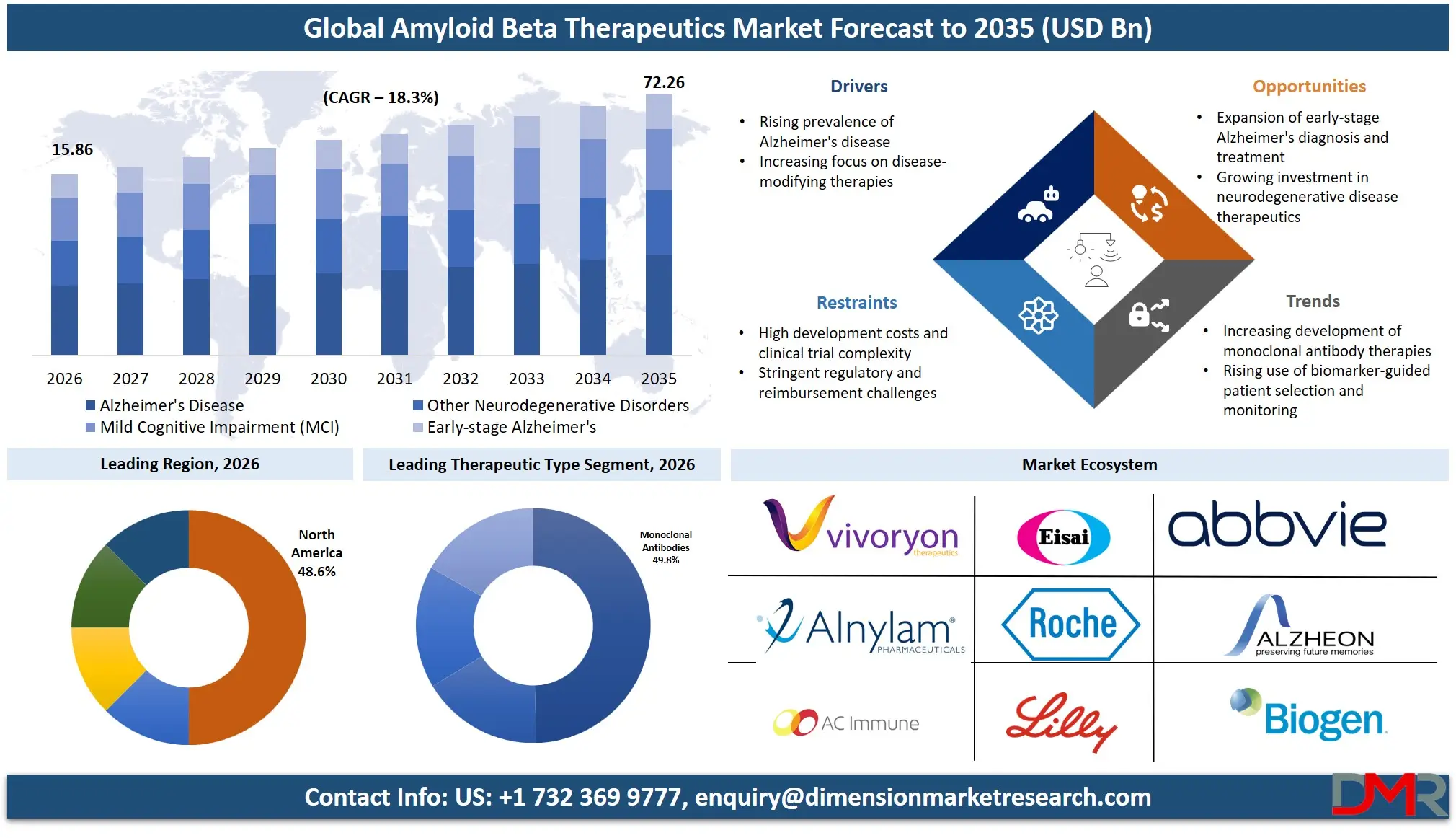
- The market size is USD 13.4 Billion in 2025, reached USD 15.86 Billion in 2026, and is projected to hit USD 72.26 Billion by 2035 at a CAGR of 18.30%.
- Monoclonal Antibodies held the leading therapeutic type position with a 49.8% revenue share in 2026.
- Alzheimer's Disease accounted for 64.8% of the indication segment in 2026.
- Amyloid Plaque Clearance led the mechanism of action segment with a 43.5% share in 2026.
- North America dominated regional revenue with a 48.6% share in 2026.
- Eisai and Biogen reported combined global LEQEMBI sales of JPY 41.1 Billion in the first half of fiscal year 2025.
Market Overview
The Amyloid Beta Therapeutics Market covers therapeutic agents and delivery infrastructure designed to target amyloid beta proteins in the brain, with primary application in Alzheimer's disease and adjacent neurodegenerative conditions. The market includes monoclonal antibodies, small molecule therapies, combination therapies, and vaccines, alongside infusion services, imaging support, and biomarker screening platforms that support clinical administration. General neurological drugs without amyloid-specific mechanisms and broad dementia care services not tied to amyloid pathology fall outside Amyloid Beta Therapeutics Market's scope.
ℹ
To learn more about this report –
Download Your Free Sample Report Here
The commercial foundation of Amyloid Beta Therapeutics Market shifted materially after the FDA approved Kisunla in July 2024 and confirmed ongoing maintenance clearance for Leqembi. These back-to-back approvals converted years of clinical promise into active revenue streams. CMS registry-based reimbursement architecture now supports broad public payer access for FDA-approved monoclonal antibodies, removing the most persistent access barrier this category faced. As reported by Eisai on May 21, 2026, the United States generated a social impact valuation of approximately 53 billion yen for the company in fiscal year 2024, with a projected rise to approximately 80 billion yen in fiscal year 2025, reflecting how quickly U.S. reimbursement infrastructure is converting approvals into measurable clinical and economic output.
The 2025 FDA clearance of the first non-invasive blood-based biomarker test to help rule out amyloid pathology accelerates patient qualification beyond what specialist centers alone can deliver. Primary care clinics can now screen potential candidates before specialist referral, pulling eligible patients into treatment pipelines faster than infusion infrastructure can currently absorb. Vendors positioned at this upstream screening layer capture value before the therapeutic decision is made, creating a commercial entry point that did not exist three years ago.
Market Size and Forecast
The Global Amyloid Beta Therapeutics Market size is estimated at USD 15.86 Billion in 2026 from USD 13.4 Billion in 2025, and is projected to reach USD 72.26 Billion by 2035, exhibiting a CAGR of 18.30% during the forecast period.
Amyloid Beta Therapeutics Market moved from near-zero commercial revenue before 2023 to a multi-billion dollar active treatment segment within two fiscal years. Eisai recorded total global LEQEMBI revenue of JPY 44.3 Billion for the full fiscal year 2024, establishing the commercial baseline, per Eisai's May 1, 2025 reporting. Q4 fiscal year 2024 global LEQEMBI revenue reached JPY 14.7 Billion alone, reflecting accelerating uptake in the final quarter as CMS reimbursement coverage expanded to new clinical sites. Approximately 23,000 patients globally received LEQEMBI treatment during fiscal year 2024, per Eisai's May 21, 2026 data, marking the initial commercial penetration wave. Each successive quarter added new infusion centers, newly qualified patients, and new payer coverage agreements. That operational build-out compounds directly into the 2035 projection.
Biogen confirmed Q4 2025 global LEQEMBI in-market sales of approximately $134 million, a 54% year-over-year increase, per its February 2026 SEC filing, confirming that quarterly revenue acceleration is structural rather than episodic. The forecast assumes continued infusion suite and biomarker screening network scaling, sustained CMS registry-based reimbursement, and partial regulatory success for next-generation candidates including trontinemab and sabirnetug. A material upside exists if subcutaneous self-administration achieves FDA approval. Removing the intravenous infusion constraint would allow patient volume scaling at a rate that current facility-dependent infrastructure cannot match.
Therapeutic Type Analysis
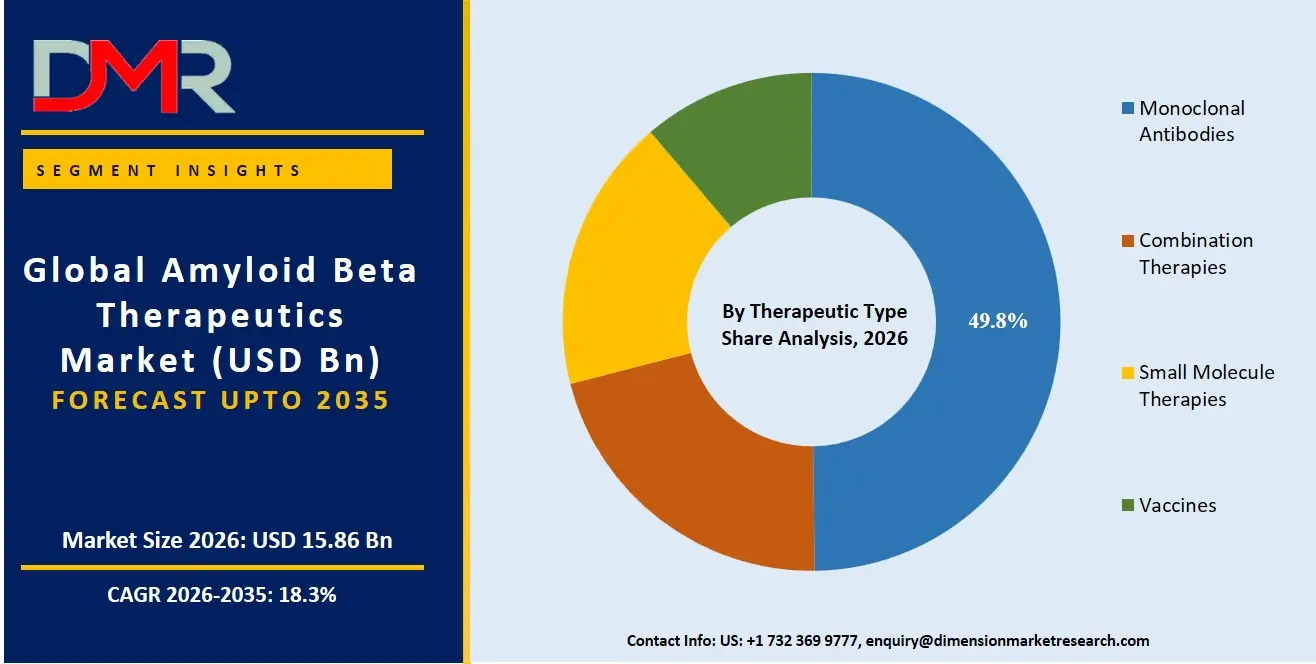
Monoclonal Antibodies led the therapeutic type segment with a 49.8% share in 2026.
ℹ
To learn more about this report –
Download Your Free Sample Report Here
Monoclonal Antibodies hold a 49.8% therapeutic type share for a structurally simple reason. LEQEMBI and Kisunla are the only therapeutics in Amyloid Beta Therapeutics Market with FDA approval, active commercial distribution, and CMS reimbursement. No other therapeutic class in Amyloid Beta Therapeutics Market has cleared those three hurdles simultaneously. That commercial infrastructure advantage, built through years of regulatory navigation and payer negotiation, is not something competing classes can replicate quickly.
Combination Therapies are gaining clinical interest as developers pair monoclonal antibodies with non-invasive brain stimulation protocols, targeting neurodegeneration across more than one biological pathway at once. Small Molecule Therapies offer oral administration advantages but have not produced an approved agent with comparable efficacy data to the antibody standard. Vaccines carry the most speculative risk profile, with no approved product and the longest development timelines of any class. SciNeuro Pharmaceuticals closed a $53 million financing round in December 2025 to advance its multi-pillar neurodegenerative programs, confirming that capital is still flowing into alternative mechanisms even as the monoclonal antibody segment dominates current revenue. For investors, the distinction matters, Combination Therapies target differentiation from approved standards, while Small Molecules and Vaccines carry binary clinical risk that antibody developers no longer face.
Indication Analysis
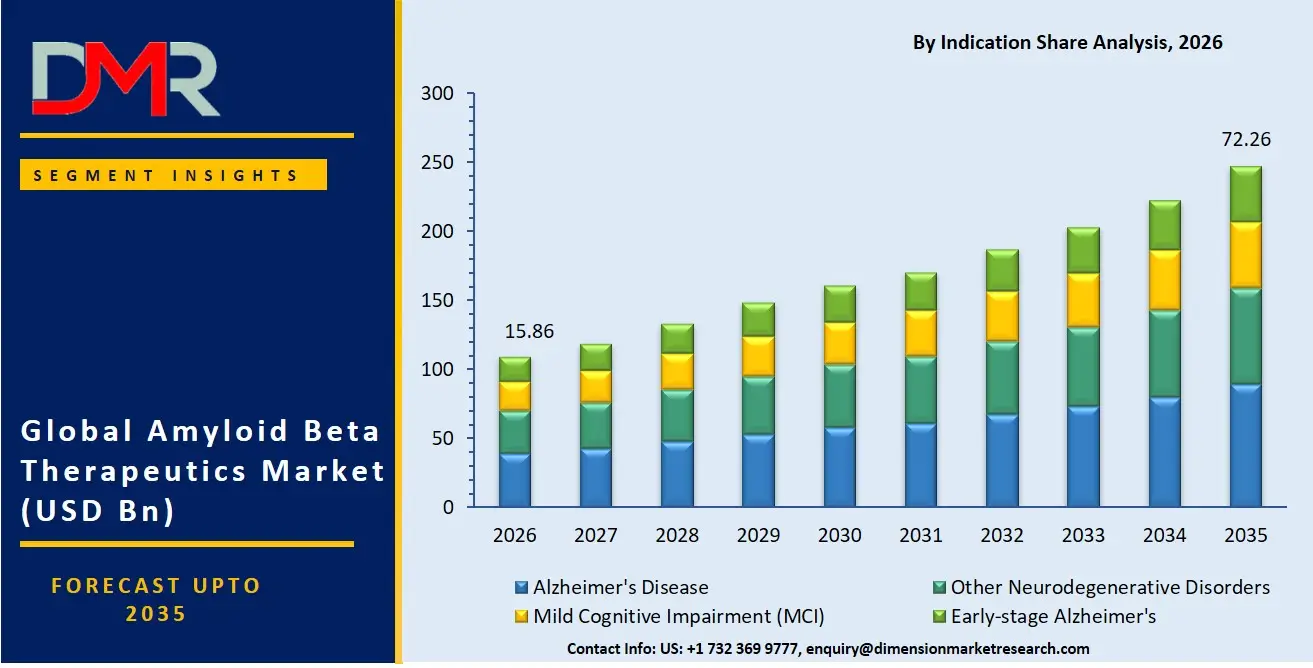
A 64.8% share made Alzheimer's Disease the clear leader across indication categories in 2026.
ℹ
To learn more about this report –
Download Your Free Sample Report Here
Alzheimer's Disease holds a 64.8% indication share because every FDA-approved and commercially distributed amyloid beta therapeutic targets this specific disease. The CMS reimbursement architecture, the biomarker screening diagnostic infrastructure, and the infusion network capacity were all constructed around Alzheimer's Disease patients. That concentrated infrastructure investment creates a self-reinforcing commercial advantage. Any new indication entering Amyloid Beta Therapeutics Market must build its own access pathway from scratch while competing for the same specialist and payer attention.
Mild Cognitive Impairment and Early-stage Alzheimer's are the fastest-shifting sub-segments as diagnostic tools improve access at earlier disease stages. Acumen Pharmaceuticals specifically enrolled patients with mild cognitive impairment or mild dementia in its Phase 1 sabirnetug trial, aligning with the early intervention window where disease-modifying effects are most measurable. As blood-based biomarker assays move into primary care, the eligible patient pool for these earlier indications will expand faster than the diagnosed Alzheimer's segment alone. Other Neurodegenerative Disorders remain underdeveloped relative to market size, creating a gap for developers willing to generate amyloid-specific indication data beyond Alzheimer's.
Mechanism of Action Analysis
Amyloid Plaque Clearance accounted for 43.5% of mechanism of action demand in 2026, the highest of any category.
Amyloid Plaque Clearance holds a 43.5% mechanism share driven by the commercial success of lecanemab and donanemab, both of which operate through direct plaque removal. Regulatory precedent, clinical trial design standards, and physician familiarity cluster around this mechanism, giving it a durable structural lead over alternatives. No competing mechanism has yet produced a commercially approved product, which means the infrastructure, training, and monitoring protocols built around plaque clearance set the benchmark against which all challengers are measured.
Neuroprotection Enhancement, Amyloid Production Inhibition, Neuroinflammation Reduction, and Synaptic Protection collectively represent the remaining segment share. Their growing pipeline presence reflects the industry's recognition that plaque clearance alone does not halt cognitive decline in all patients. Blarcamesine, evaluated by Anavex in active Phase II/III trials, targets endogenous cellular cleanup mechanisms rather than direct plaque removal. Developers combining clearance with synaptic protection are positioning for patient populations where single-mechanism approaches have shown partial outcomes. The next competitive wave will not be a better plaque-clearing antibody. It will be a dual-mechanism agent that addresses what approved monoclonal antibodies leave unresolved.
Key Market Segments
By Therapeutic Type
- Monoclonal Antibodies
- Combination Therapies
- Small Molecule Therapies
- Vaccines
By Indication
- Alzheimer's Disease
- Other Neurodegenerative Disorders
- Mild Cognitive Impairment (MCI)
- Early-stage Alzheimer's
By Mechanism of Action
- Amyloid Plaque Clearance
- Neuroprotection Enhancement
- Amyloid Production Inhibition
- Neuroinflammation Reduction
- Synaptic Protection
By Delivery Infrastructure
- Infusion Services
- Imaging Support
- Biomarker Screening
Regional Analysis
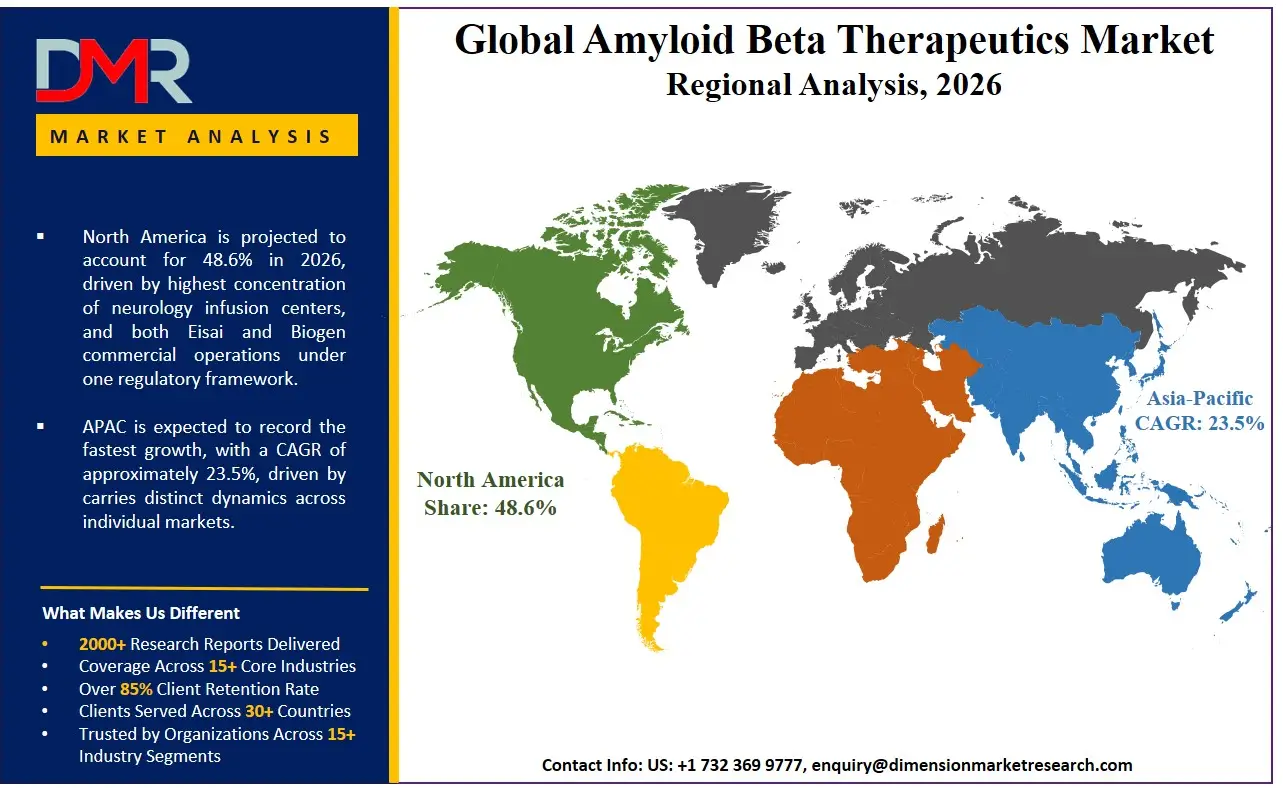
North America held a 48.6% share in 2026, valued at USD 6.51 Billion.
ℹ
To learn more about this report –
Download Your Free Sample Report Here
North America's lead is structural. The United States hosts the CMS registry-based reimbursement architecture, the highest concentration of neurology infusion centers, and both Eisai and Biogen commercial operations under one regulatory framework. As reported by Biogen on February 12, 2025, North America accounted for approximately $50 million of its $87 million in global LEQEMBI in-market sales during Q4 2024, confirming the region generates well over half of actual product revenue despite holding less than half of projected global market share. That gap signals how far other regions still need to travel on reimbursement infrastructure before their approval activity translates into comparable revenue.
Europe is the most consequential emerging geography. The EMA's CHMP issued a positive opinion for lecanemab on November 15, 2024, opening the path to European commercial distribution for the first time. Asia Pacific carries distinct dynamics across individual markets. South Korea launched commercial LEQEMBI distribution on November 28, 2024, Hong Kong granted approval on July 1, 2024, and China's regulators accepted Eisai's subcutaneous BLA on January 6, 2026, per Eisai's April 2026 reporting. Latin America entered when Mexico approved LEQEMBI on December 5, 2024. Asia Pacific holds the highest volume growth potential given its elderly population scale, but regulatory and reimbursement timelines vary enough across individual markets to require country-specific commercial strategies rather than a regional approach.
Key Regions and Countries
North America
Europe
- Germany
- France
- The UK
- Spain
- Italy
- Rest of Europe
Asia Pacific
- China
- Japan
- South Korea
- India
- Australia
- Rest of APAC
Latin America
- Brazil
- Mexico
- Rest of Latin America
Middle East & Africa
- GCC
- South Africa
- Rest of MEA
Market Dynamics
Dual Approvals and Payer Coverage Unlock Commercial Scale
The FDA's approval of Kisunla in July 2024 and its maintenance clearance for Leqembi created two commercially viable monoclonal antibodies operating simultaneously in the U.S. market. Competing approved agents accelerate formulary negotiations, broaden prescriber familiarity, and build shared diagnostic and infusion infrastructure that both drugs depend on. CMS registry-based coverage solved the reimbursement barrier that delayed earlier Aduhelm uptake. Eisai and Biogen reported JPY 41.1 Billion in combined global LEQEMBI sales in the first half of fiscal year 2025 alone, per company disclosures, confirming that payer access is operationally functional rather than theoretical.
Eisai projected LEQEMBI administration to approximately 35,000 patients globally in fiscal year 2025 as capacity scales, per its May 21, 2026 reporting. A market where the reimbursement pathway is confirmed and two approved products compete is structurally different from a market where a single agent waits for coverage decisions. Each new clinical site added to the infusion network expands capacity for both approved agents simultaneously, creating compounding infrastructure returns that single-product markets cannot generate.
ARIA Monitoring and Diagnostic Friction Constrain Patient Throughput
FDA prescribing mandates require enhanced MRI monitoring for ARIA during the first 14 weeks of lecanemab treatment. Patients experiencing ARIA must show radiographic stabilization before physicians can consider resuming infusions. Patients with cerebral amyloid angiopathy risk factors face a severe risk of intracerebral hemorrhages greater than 1 cm. These requirements consume specialist time, MRI capacity, and neurologist oversight at a scale that current outpatient infrastructure was not built to handle.
The 2026 FDA Class II recall imposed on high-volume Lumipulse plasma biomarker lots due to elevated false-positive rates added a separate diagnostic friction layer. False positives pull ineligible patients into expensive monitoring pathways and erode clinician confidence in blood-based screening. Genetic testing to identify ApoE epsilon 4 homozygotes, who face significantly higher ARIA risk, adds another pre-treatment step that extends time-to-treatment and increases specialist burden per patient. Companies that solve the ARIA monitoring workflow operationally, rather than waiting for clinical guidance updates, hold a durable competitive advantage over those managing it reactively.
Subcutaneous Delivery and Next-Generation Clearance Create Two Parallel Revenue Lanes
Eisai submitted its Biologics License Application for a subcutaneous weekly auto-injector on November 1, 2024, targeting a May 2026 PDUFA date. A self-administered subcutaneous option shifts infusion burden from clinical facilities to patients and eliminates the facility bottleneck entirely. Roche's trontinemab Phase Ib/IIa data showed amyloid clearance below the 24 centiloid threshold in 91% of participants after 28 weeks, per Roche's July 28, 2025 reporting. No approved agent has matched that clearance rate combined with an ARIA-E rate below 5% in published clinical data.
Roche's Phase 3 TRONTIER trials will measure outcomes on the Clinical Dementia Rating Sum of Boxes scale over 18 months. If trontinemab replicates its Phase Ib/IIa profile at scale, it repositions the competitive dynamics of the entire monoclonal antibody segment. For the broader market, these two parallel developments, one in delivery format and one in clinical efficacy, mean that the commercial landscape in 2028 may look structurally different from 2025 regardless of how current revenue trajectories extrapolate.
Market Trends
Decentralized Screening and Home Delivery Reshape the Treatment Pathway
The market is shifting from hospital-anchored intravenous infusion toward a model where subcutaneous maintenance doses are self-administered at home and initial screening happens at primary care clinics. Roche's TRAVELLER pre-screening study paired a brief clinical assessment with the Elecsys pTau217 plasma test across 604 participants, confirming its ability to rule out amyloid pathology without invasive CSF testing, per Roche's published data. Eisai set a 2025 corporate objective to standardize blood-based biomarkers as the definitive diagnostic qualification tool, signaling that the industry's commercial leader is actively pulling the patient identification step upstream into general practice. Developers who build primary care diagnostic partnerships and home-based monitoring infrastructure before the subcutaneous standard is fully established will control patient access networks that later entrants cannot easily displace.
Market Competition Overview
The Amyloid Beta Therapeutics market operates in a transitional structure, consolidated at the commercial product level, fragmented at the clinical pipeline level. Two approved monoclonal antibodies dominate current revenue, creating a duopoly in active commercial sales while a broad pipeline of next-generation candidates competes for the next approval cycle. Top commercial players built their advantage through FDA approval sequences, CMS reimbursement navigation, and infusion network partnerships, not through price competition. Prothena recorded full year 2024 research and development expenses of $222.5 million, driven largely by its neurodegenerative pipeline including PRX012, per its February 20, 2025 filing. AbbVie's $1.4 billion acquisition of Aliada Therapeutics in December 2024, absorbing the MODEL blood-brain barrier platform and Phase 1 Alzheimer's asset ALIA-1758, confirms that large pharmaceutical companies are buying pipeline access rather than building it organically.
Novartis committed a $165 million upfront payment to SciNeuro in January 2026 for next-generation amyloid beta antibodies, with up to $1.5 billion in future milestone payouts, per disclosed deal terms. The competitive battleground is shifting from clinical proof-of-concept to delivery efficiency, safety profile differentiation, and subcutaneous administration convenience. Any player that secures subcutaneous approval before competitors does not simply add a label update. That player restructures the entire infusion-dependent commercial model that current market leaders have built their distribution networks around, creating a reset in formulary positioning that payers will actively exploit through preferred-product negotiations.
Company Profiles
Eisai Co., Ltd. holds the most advanced commercial position in Amyloid Beta Therapeutics Market. The company reported JPY 44.3 billion in global LEQEMBI revenue for full fiscal year 2024 and scaled active treatment to approximately 23,000 patients globally, per its May 2026 disclosures. Eisai's strategy centers on moving treatment out of infusion suites and into home settings through subcutaneous administration. China's regulatory acceptance of the subcutaneous BLA in January 2026 shows this strategy advancing on multiple regulatory tracks simultaneously. SciNeuro and Novartis entering a global licensing agreement in January 2026 with a $165 million upfront payment confirms the competitive pressure Eisai faces in the next-generation antibody pipeline, but Eisai's subcutaneous filing head start provides a meaningful first-mover window.
Roche Holding AG is the most credible challenger to the current monoclonal antibody standard. Trontinemab's Phase Ib/IIa data recorded ARIA-E in fewer than 5% of participants (4 of 149) across the 1.8 and 3.6 mg/kg dose cohorts, per Roche's July 28, 2025 reporting, a safety profile that directly targets the ARIA monitoring burden limiting current treatment uptake. Roche advanced trontinemab into Phase 3 TRONTIER trials and simultaneously launched the TRAVELLER pre-screening study to broaden patient identification through plasma-based testing. Roche's position is strategically coherent because controlling both the diagnostic qualification tool and the therapeutic candidate creates a closed referral loop that pure therapeutic developers cannot replicate without separate diagnostic infrastructure investment.
Key Players
- Eisai Co., Ltd.
- Alnylam Pharmaceuticals, Inc.
- Vivoryon Therapeutics
- Eli Lilly and Company
- Biogen Inc.
- Roche Holding AG
- AbbVie Inc.
- AC Immune SA
- Alzheon Inc.
Supply Chain and Value Chain Analysis
The value chain runs from upstream biologics manufacturing and biomarker diagnostic development through clinical trial execution, regulatory approval, payer negotiation, and finally to the infusion center or home-based delivery point where the patient receives treatment. Maximum value concentration sits at two nodes, the approved biologic product and the diagnostic screening infrastructure that qualifies patients for treatment. Roche's investment in the Elecsys pTau217 plasma test reflects a deliberate strategy to control the patient qualification gateway, not just the therapeutic product. A company that owns both the diagnostic and the therapeutic creates a closed referral loop that competitors cannot replicate without years of parallel infrastructure investment.
The most significant supply chain bottleneck is infusion suite capacity. Each LEQEMBI patient requires an approximately one-hour intravenous infusion every two weeks for 18 months, consuming clinical scheduling, nursing staff, and MRI monitoring resources per FDA mandate. As patient volumes scale from 23,000 toward 35,000 and beyond, infusion infrastructure becomes the hard ceiling on revenue growth for intravenous-only products. The subcutaneous pathway eliminates this bottleneck at the delivery end but creates a new upstream requirement, validated auto-injector manufacturing at commercial scale. Eisai's subcutaneous BLA filing signals that the company assessed this manufacturing transition as achievable. For competitors, the window to build equivalent subcutaneous manufacturing capability before Eisai sets the commercial standard is narrowing with each passing regulatory quarter.
Regulatory Landscape
The FDA's Full Approval of LEQEMBI in January 2025 formalized intravenous infusion once every two weeks for 18 months as the clinical dosing benchmark against which all future amyloid beta therapeutics will be measured. FDA postmarketing requirements extend compliance obligations years beyond the approval date. A final report on an in vitro diagnostic for ApoE e4 alleles was due by July 2025. An interim report on the ARIA risk outcome algorithm is mandated by May 2027. These obligations create an ongoing specialist and operational burden for commercial teams that smaller organizations may struggle to sustain alongside active pipeline development. Translarna revenues at PTC Therapeutics declined from $321.1 million in 2024 to $235.3 million in 2025, per the February 2026 SEC filing, as a reference point for what evolving international regulatory frameworks can do to established therapy revenues when conditions shift.
Outside the United States, the EMA CHMP issued a positive opinion for lecanemab on November 15, 2024, moving Europe toward its first approved amyloid beta therapeutic. Japan activated a domestic ApoE genetic testing registry on November 20, 2024, building patient identification infrastructure before commercial rollout. South Korea launched commercial LEQEMBI distribution on November 28, 2024. Mexico granted approval on December 5, 2024. China accepted Eisai's subcutaneous BLA on January 6, 2026. The regulatory map is filling in rapidly, but approvals alone do not generate revenue. Commercial conversion rates from approval to active treated patients vary significantly across these geographies based on local reimbursement depth, neurologist density, and infusion center availability.
Investment and White Space Analysis
Investment is concentrating at two points: subcutaneous delivery reformulation and blood-brain barrier-crossing antibody technologies. Korsana Biosciences emerged from stealth in February 2026 with $175 million in total funding, including a $150 million Series A, to advance KRSA-028, a blood-brain barrier-shuttling anti-amyloid antibody. Acumen Pharmaceuticals held a cash and marketable securities position of $296.6 million as of March 31, 2024, per its May 14, 2024 disclosure, supporting sabirnetug trial advancement including a subcutaneous formulation study. The pattern across these capital allocations is consistent, investors are betting that the first-generation intravenous infusion model has a limited commercial lifespan and that whoever controls the next delivery format controls the next revenue cycle.
The clearest white space sits in biomarker-guided primary care screening and home-based monitoring infrastructure. No scaled commercial infrastructure currently exists to convert primary care biomarker screening into specialist referrals and treatment enrollment at volume. Latin America and Middle East and Africa represent geographic white space where regulatory approvals are beginning to arrive, as seen with Mexico's December 2024 LEQEMBI approval, but commercial distribution networks, trained neurologists, and infusion capacity remain underdeveloped relative to diagnosed patient populations. Specialty clinic and home-based care providers who build distribution and monitoring partnerships now will control preferred patient access channels before the subcutaneous standard is fully established.
Recent Developments
- February 18, 2026: Korsana Biosciences. Funding and Stealth Emergence. The company emerged from stealth with $175 million in total funding, including a $25 million seed round and a $150 million Series A, to advance its blood-brain barrier-shuttling anti-amyloid antibody KRSA-028 toward clinical translation.
- January 6, 2026: Eisai Co., Ltd. Regulatory Acceptance. China's regulatory authorities formally accepted Eisai's Biologics License Application for the subcutaneous autoinjector formulation of LEQEMBI, advancing parallel regulatory progress across major markets.
- December 4, 2025: SciNeuro Pharmaceuticals. Financing Round. The company closed a $53 million financing round to advance its multi-pillar neurodegenerative disease programs into clinical translation ahead of its Novartis licensing agreement.
- June 25, 2025: Eli Lilly. FDA Label Expansion. The FDA granted label expansion approval for the Amyvid imaging agent, broadening its authorized clinical use in amyloid beta diagnostic imaging.
- May 2026: Preclinical Research. Research Milestone. Preclinical studies confirmed successful brain amyloid plaque clearance in mice via liver-targeted APOE3 Christchurch gene therapy delivery, establishing a new mechanistic proof-of-concept for non-antibody amyloid clearance strategies.
Report Details
| Report Characteristics |
| Market Value (2025) |
USD 13.4 Billion |
| Market Value (2026) |
USD 15.86 Billion |
| Forecast Revenue (2035) |
USD 72.26 Billion |
| CAGR (2026–2035) |
18.30% |
| Base Year for Estimation |
2025 |
| Historic Period |
2020 – 2024 |
| Forecast Period |
2026 – 2035 |
| Report Coverage |
Revenue Forecast, Market Dynamics, Competitive Landscape, Recent Developments |
| Segments Covered |
By Therapeutic Type (Monoclonal Antibodies, Combination Therapies, Small Molecule Therapies, Vaccines), By Indication (Alzheimer's Disease, Other Neurodegenerative Disorders, Mild Cognitive Impairment, Early-stage Alzheimer's), By Mechanism of Action (Amyloid Plaque Clearance, Neuroprotection Enhancement, Amyloid Production Inhibition, Neuroinflammation Reduction, Synaptic Protection), By Delivery Infrastructure (Infusion Services, Imaging Support, Biomarker Screening) |
| Regional Analysis |
North America – US and Canada; Europe – Germany, France, The UK, Spain, Italy, and Rest of Europe; Asia Pacific – China, Japan, South Korea, India, Australia, and Rest of APAC; Latin America – Brazil, Mexico, and Rest of Latin America; Middle East & Africa – GCC, South Africa, and Rest of MEA |
| Competitive Landscape |
Eisai Co. Ltd., Alnylam Pharmaceuticals Inc., Vivoryon Therapeutics, Eli Lilly and Company, Biogen Inc., Roche Holding AG, AbbVie Inc., AC Immune SA, Alzheon Inc. |
| Customization Scope |
Customization for segments and region or country level will be provided. Additional customization can be done based on requirements. |
| Purchase Options |
Three license options: Single User License, Multi-User License (Up to 5 Users), Corporate Use License (Unlimited Users and Printable PDF). |
Frequently Asked Questions
What is the biggest investment opportunity in Amyloid Beta Therapeutics Market?
▾ Subcutaneous delivery reformulation and blood-brain barrier-crossing antibody technologies represent the clearest near-term investment targets. Korsana Biosciences raised $175 million for a BBB-shuttling antibody and Novartis committed a $165 million upfront payment to SciNeuro for next-generation amyloid antibodies. Whoever controls the post-intravenous delivery format controls the next commercial revenue cycle in this category.
Who are the top companies in Amyloid Beta Therapeutics Market?
▾ Eisai Co., Ltd. and Biogen Inc. jointly commercialize LEQEMBI, the market's highest-revenue product, with combined global sales of JPY 41.1 Billion in the first half of fiscal year 2025. Eli Lilly markets Kisunla as the second FDA-approved commercial agent. Roche is the most advanced pipeline challenger, with trontinemab in Phase 3 TRONTIER trials targeting a differentiated safety and clearance profile.
Which segment is growing fastest in Amyloid Beta Therapeutics Market and why?
▾ Early-stage Alzheimer's and Mild Cognitive Impairment are the fastest-shifting indication sub-segments because blood-based biomarker assays now enable patient identification at primary care clinics rather than specialist centers. Roche's Elecsys pTau217 plasma test study across 604 participants confirmed its ability to rule out amyloid pathology non-invasively, pulling a much larger eligible population into the treatment funnel earlier in disease course.
Which region is growing fastest in Amyloid Beta Therapeutics Market and why?
▾ Asia Pacific carries the highest volume growth potential given its elderly population scale and accelerating regulatory activity. South Korea launched commercial LEQEMBI distribution in November 2024, Hong Kong approved it in July 2024, and China accepted Eisai's subcutaneous BLA in January 2026. Japan activated a domestic ApoE genetic testing registry in November 2024 to build the patient identification infrastructure required for broad commercial rollout.
What is the biggest challenge holding Amyloid Beta Therapeutics Market back?
▾ Infusion suite capacity and ARIA monitoring requirements are the binding operational constraints. FDA mandates require enhanced MRI surveillance during the first 14 weeks of lecanemab treatment, and physicians must confirm radiographic stabilization before resuming infusions after any ARIA event. The 2026 FDA Class II recall of high-volume Lumipulse plasma biomarker lots due to elevated false-positive rates added further diagnostic friction, eroding clinician confidence in the screening workflow that feeds patients into treatment.