Market Snapshot
- Global Autoimmune Neurological Disorders Market size reached USD 8.71 Billion in 2025 and is projected to reach USD 19.88 Billion by 2035 at a CAGR of 8.6%.
- By Disease Type, Multiple Sclerosis led with a 38.28% revenue share in 2025.
- By Drug Class, Monoclonal Antibodies held the largest share at 30.1% in 2025.
- By Route of Administration, Oral delivery commanded a 36.14% revenue share in 2025.
- By End-Use, Hospitals accounted for 42.28% of demand in 2025.
- North America dominated regionally with a 44.5% revenue share in 2025.
Market Overview
The autoimmune neurological disorders market covers therapeutics, diagnostics, and monitoring solutions targeting conditions in which the immune system attacks the nervous system. Multiple sclerosis, myasthenia gravis, NMOSD, autoimmune encephalitis, Guillain-Barré syndrome, and CIDP are the primary disease categories. Cosmetic neurology and non-immune-mediated neurological conditions fall outside the scope of Autoimmune Neurological Disorders Market .
As reported by PubMed and Neuroepidemiology, the mean global myasthenia gravis prevalence stands at 173.3 cases per million people, with mean incidence of 15.7 new cases per million person-years. Prevalence at that scale anchors commercial forecasting for a growing pipeline of biologic therapies, each targeting a distinct mechanistic pathway. The market sits within the broader rare-disease biologics space, where payers increasingly link reimbursement to demonstrated clinical outcomes rather than list price.
Biomarker science is reshaping the commercial structure of Autoimmune Neurological Disorders Market at pace. Expanded neural-specific autoantibody panels moved diagnosis from exclusion-based protocols toward confirmed biomarker identification, shortening the time from symptom onset to treatment initiation. Physicians who can confirm an autoimmune etiology early allocate biologic budgets faster, pulling commercial demand forward across the entire product lifecycle.
Market Size and Forecast
ℹ
To learn more about this report –
Download Your Free Sample Report Here
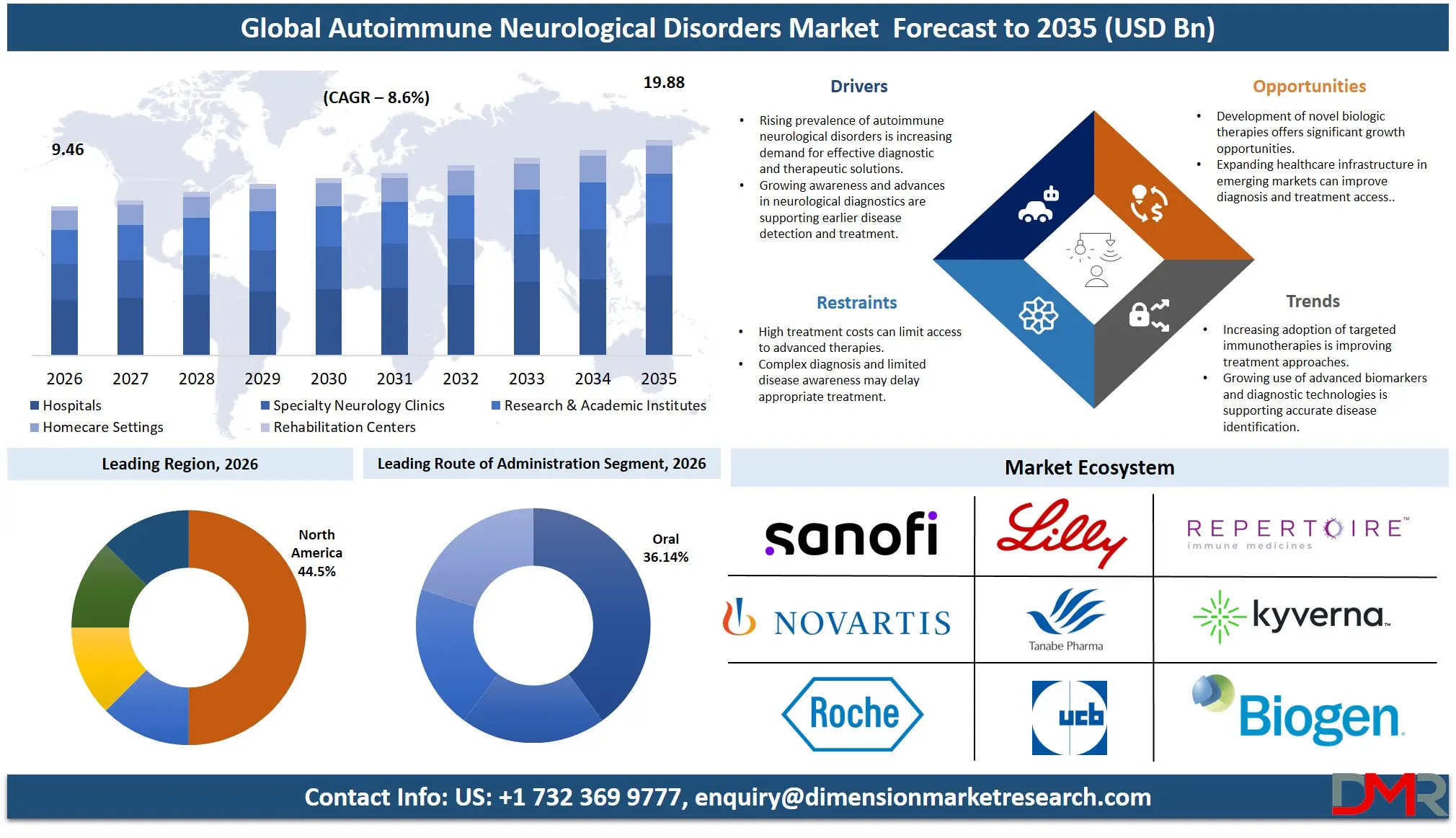
The Global Autoimmune Neurological Disorders Market size is estimated at USD 9.46 Billion in 2026 from USD 8.71 Billion in 2025, and is projected to reach USD 19.88 Billion by 2035, exhibiting a CAGR of 8.6% during the forecast period.
Myasthenia gravis prevalence across the seven major markets reached approximately 300,000 diagnosed cases, anchoring a USD 6 billion treatment base with high biologic penetration, as per market intelligence data. Mean incidence of 15.7 new cases per million person-years, as published by PubMed and Neuroepidemiology, confirms that annual patient additions into diagnosed pools sustain demand growth independent of pricing cycles. Both figures support a forecast assumption that diagnosis-to-treatment conversion rates continue improving as confirmatory autoantibody testing expands globally.
In August 2025, Regeneron Pharmaceuticals announced positive Phase III NIMBLE trial results for cemdisiran in generalized myasthenia gravis, with plans to file a U.S. regulatory submission in Q1 2026. Pipeline approvals of this scale reset commercial baselines by adding new biologic revenue streams before older treatments face biosimilar displacement. Downside risk exists if biosimilar erosion in the multiple sclerosis segment accelerates faster than high-value biologic launches offset lost revenues across the broader portfolio.
Disease Type Analysis
Multiple Sclerosis led the Disease Type segment with a 38.28% share in 2026.
Multiple Sclerosis holds the largest revenue share because of a decades-old infrastructure of approved disease-modifying therapies, established prescribing protocols, and deep payer coverage. Commercial scale at 38.28% reflects cumulative investment rather than a growth story. The disease segment now faces biosimilar competition and pricing pressure that analysts forecast will erode its share over the next five to seven years, compressing margins for established players dependent on MS revenues.
Myasthenia Gravis emerged as the fastest-growing disease category in 2025 on the back of multiple high-value biologic approvals targeting both AChR-positive and MuSK-positive populations. NMOSD, autoimmune encephalitis, and CIDP remain smaller revenue contributors but carry high per-patient treatment costs. GBS and CIDP together represent a meaningful secondary demand pool for IVIG and plasma exchange, where clinical management still relies on less-targeted therapies.
Drug Class Analysis
With a 30.1% share in 2026, Monoclonal Antibodies outpaced all other Drug Class categories.
Monoclonal antibodies secured the lead position in drug class because FDA approvals of FcRn inhibitors and complement C5 blockers created an entirely new targeted-biologic treatment paradigm. Mechanism-specific agents displaced legacy immunosuppressants in severe MG and NMOSD. The 30.1% share understates the trajectory: every new Phase III approval filed between 2025 and 2027 in this indication space adds to the monoclonal antibody revenue pool rather than to generic or small-molecule categories. Only 11% of UPLIZNA-treated NMOSD patients experienced an attack during the pivotal study compared with 42% of placebo patients, as reported by Amgen, demonstrating the clinical bar that older drug classes cannot match.
Regeneron's cemdisiran-pozelimab combination achieved nearly 99% inhibition of complement activity in generalized myasthenia gravis patients during the 2025 Phase III study, according to Regeneron investor data. Immunomodulators and immunosuppressants retain share in lower-acuity patients where biologic cost-effectiveness is not yet established. Corticosteroids, plasma exchange, and IVIG function primarily as bridge therapies and acute-phase management tools rather than long-term revenue drivers.
Route of Administration Analysis
ℹ
To learn more about this report –
Download Your Free Sample Report Here
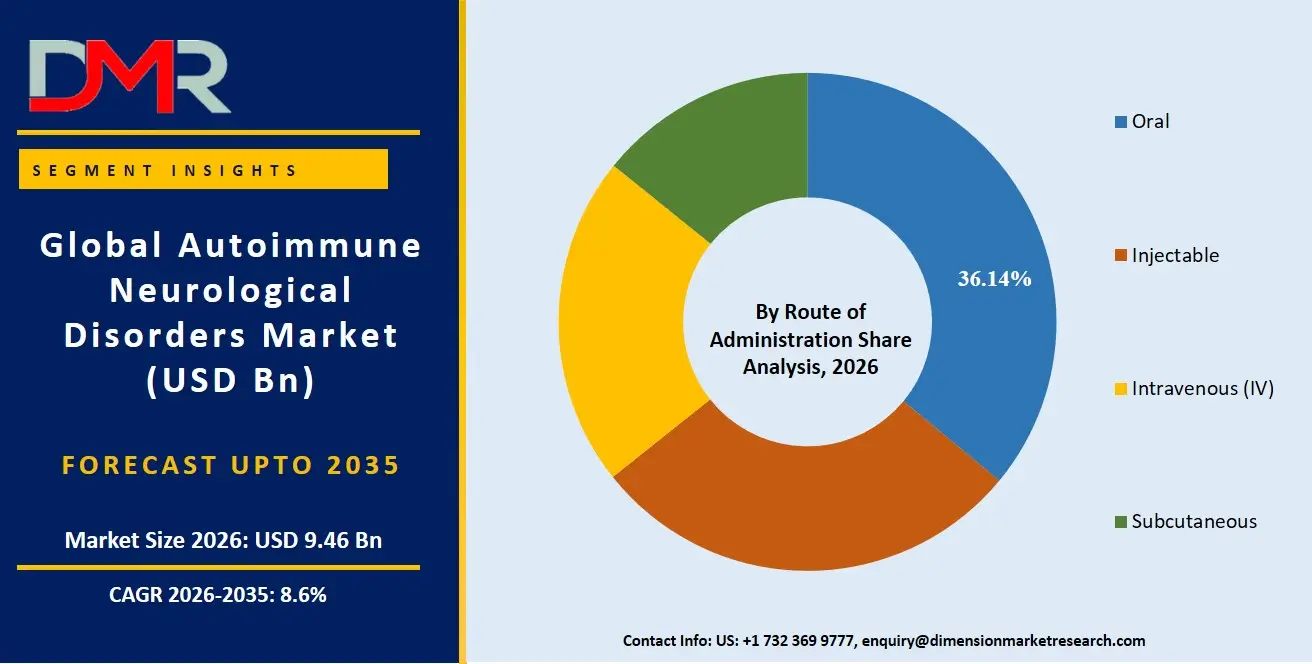
Oral administration accounted for 36.14% of Route of Administration demand in 2026, the highest of any category.
Oral route dominance reflects patient and prescriber preference for convenience over administration complexity, a structural bias that shapes commercial strategy across all therapeutic areas. The 36.14% share is disproportionately tied to MS oral agents, where years of commercial investment in compliance packaging and titration support reinforced the modality. As MS revenues decline under biosimilar pressure, oral route share may compress unless new oral agents win approvals in MG or NMOSD.
Injectable and subcutaneous routes are gaining commercial ground as FDA approvals for at-home self-administration expand. Intravenous administration retains a strong position in acute inpatient settings. The shift toward subcutaneous self-injection reflects a payer and patient preference for outpatient care that reduces infusion center overhead costs, a dynamic that benefits manufacturers capable of developing prefilled syringe formats for approved biologic agents.
End-Use Analysis
ℹ
To learn more about this report –
Download Your Free Sample Report Here
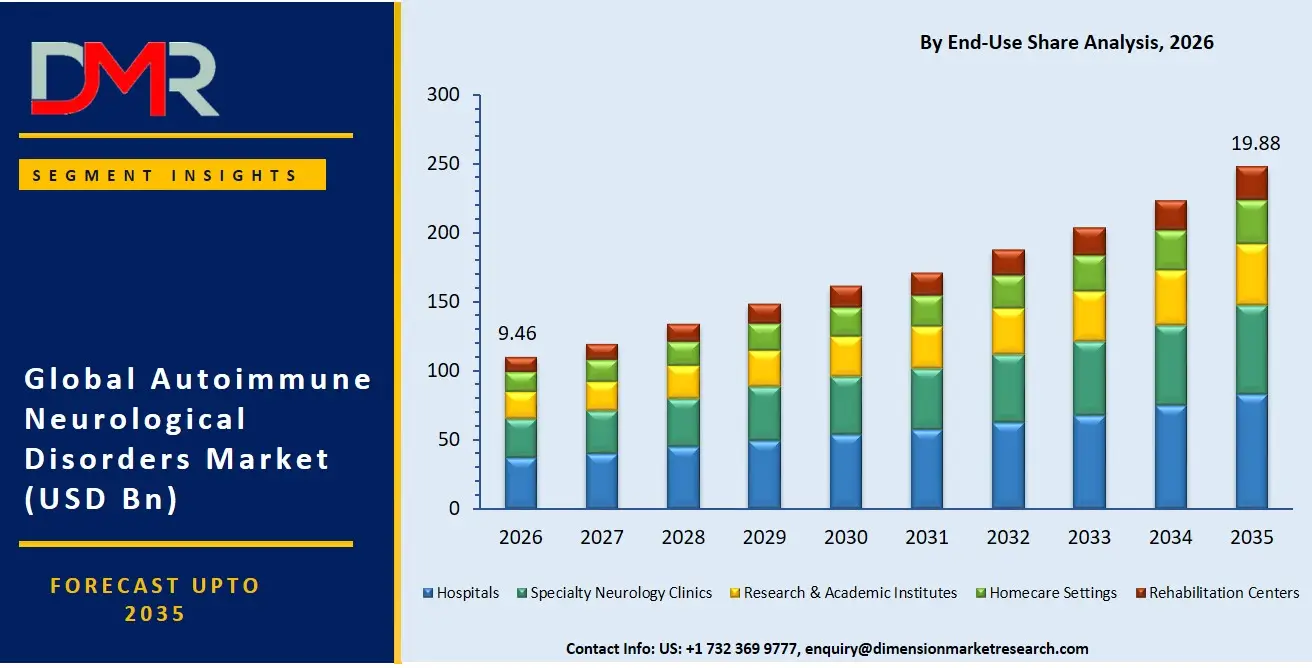
Hospitals captured 42.28% of the End-Use segment in 2026, ahead of all rivals.
Hospitals dominate end-use for a precise structural reason: complex autoimmune neurological diagnoses require multidisciplinary assessment, neuroimaging, and lumbar puncture protocols that outpatient settings cannot support. The 42.28% hospital share reflects where patients first enter the care pathway, not where they necessarily receive long-term treatment. Biologic infusions administered in hospital outpatient departments add revenue to the hospital channel even after diagnosis is confirmed.
Specialty neurology clinics represent the fastest-growing end-use category as chronic biologic management migrates away from acute hospital settings. Homecare settings are expanding as FDA approval enables at-home self-injection for agents such as VYVGART Hytrulo. Research and academic institutes drive early-phase commercial adoption by enrolling patients in registries that produce real-world evidence supporting payer submissions.
Key Market Segments
By Disease Type
- Multiple Sclerosis
- Neuromyelitis Optica Spectrum Disorder (NMOSD)
- Myasthenia Gravis
- Autoimmune Encephalitis
- Guillain-Barré Syndrome (GBS)
- Chronic Inflammatory Demyelinating Polyneuropathy (CIDP)
By Drug Class
- Monoclonal Antibodies
- Immunomodulators
- Immunosuppressants
- Corticosteroids
- Plasma Exchange (PLEX)
- Intravenous Immunoglobulin (IVIG)
- B-cell Depleting Therapies
- Other Targeted Therapies
By Route of Administration
- Oral
- Injectable
- Intravenous (IV)
- Subcutaneous
By End-Use
- Hospitals
- Specialty Neurology Clinics
- Research & Academic Institutes
- Homecare Settings
- Rehabilitation Centers
Regional Analysis
ℹ
To learn more about this report –
Download Your Free Sample Report Here
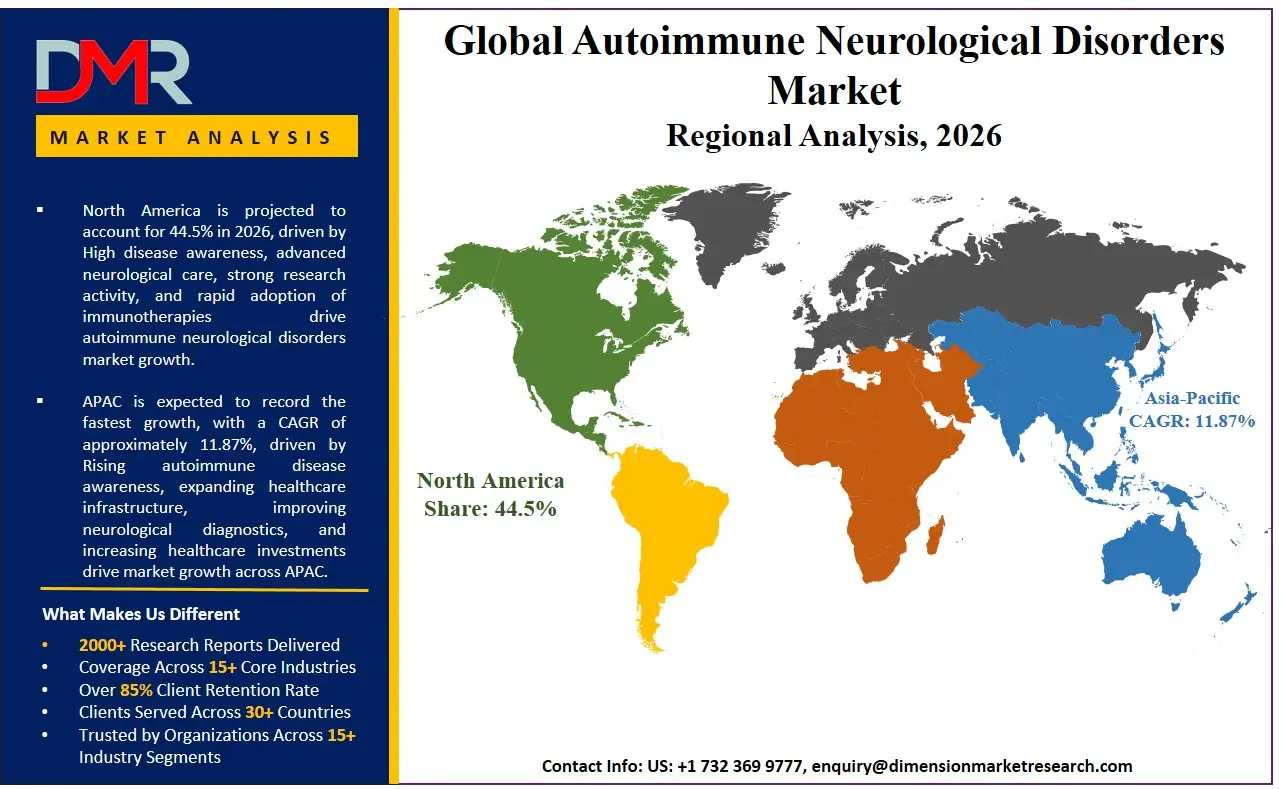
North America led all regions with a 44.5% revenue share in 2026, equivalent to USD 3.88 Billion.
North America's lead position reflects a convergence of factors that no other region has yet replicated: the largest concentration of FDA-approved targeted biologics, the highest biologic penetration rates across MG and NMOSD, and payer frameworks that support premium pricing for mechanism-specific therapies. The US market alone reached USD 2.4 Billion in 2025, growing at a CAGR of 7.22% through 2035, as reported by market intelligence data. Physician density in academic neurology centers and the depth of patient advocacy networks further accelerate diagnosis-to-treatment conversion in ways that structurally advantage US commercial timelines over other markets.
Asia-Pacific represents the fastest-growing regional opportunity as healthcare infrastructure investment unlocks previously underserved diagnostic and therapeutic demand pools. Europe holds a substantial share buoyed by universal healthcare coverage and active EMA review pipelines, though pricing negotiations compress margins relative to the US. Latin America and the Middle East & Africa remain early-stage markets where diagnostic infrastructure gaps limit near-term biologic adoption, but healthcare-infrastructure buildout programs signal medium-term demand acceleration for manufacturers with local distribution networks.
Key Regions and Countries
North America
Europe
- Germany
- France
- The UK
- Spain
- Italy
- Rest of Europe
Asia Pacific
- China
- Japan
- South Korea
- India
- Australia
- Rest of APAC
Latin America
- Brazil
- Mexico
- Rest of Latin America
Middle East & Africa
- GCC
- South Africa
- Rest of MEA
Market Dynamics
Biomarker-Confirmed Diagnosis Accelerating Biologic Adoption
Expanded neural-specific autoantibody panels shifted diagnosis from exclusion-based methods toward confirmed biomarker identification, compressing the timeline between symptom onset and treatment initiation. Johnson & Johnson received U.S. FDA approval in April 2025 for IMAAVY (nipocalimab) for antibody-positive generalized myasthenia gravis patients aged 12 years and older, becoming the first FcRn blocker approved for both AChR-positive and MuSK-positive populations. A drug class that addresses both antibody populations removes a historic prescribing barrier, expanding the addressable patient pool at launch.
According to the National Institute of Neurological Disorders and Stroke, approximately 15%–20% of myasthenia gravis patients experience at least one myasthenic crisis during their lifetime, a clinical reality that justifies early biologic intervention for at-risk patients. Amgen's Phase III MINT trial reported that 72.3% of AChR-positive gMG patients receiving UPLIZNA achieved at least a 3-point MG-ADL improvement compared with 45.2% on placebo. A 4.2-point MG-ADL improvement versus 2.2 points on placebo at Week 26, per Amgen's Phase III MINT data, provides clinical evidence that shifts prescribing guidelines toward earlier biologic initiation for eligible patients.
Biosimilar Erosion Compressing MS Revenue Streams
Multiple sclerosis, the largest disease category at 38.28% revenue share, entered a forecasted revenue decline as biosimilar competition intensified and payers redirected budget toward clinically superior but lower-cost alternatives. Up to 50% of myasthenic crisis patients cannot identify a triggering factor, according to NINDS data, complicating disease management protocols and limiting the ability of risk-stratification tools to prevent costly acute interventions. Manufacturers whose revenue bases concentrate in MS small molecules face structural margin compression without a countervailing pipeline in high-value emerging indications.
Multi-step confirmatory validation requirements for novel autoantibody biomarkers delayed clinical adoption beyond research laboratory settings. Regulators demanded robust analytical validation before confirmatory tests entered standard-of-care pathways, slowing the rate at which new disease categories could generate commercial volume. Both factors together cap near-term revenue growth for companies without an approved biologic in MG, NMOSD, or CIDP.
Genomic Profiling and Emerging Geographies Expanding the Addressable Base
Genomic and proteomic profiling enabled personalized immunomodulation protocols tailored to individual autoantibody signatures, creating a new layer of commercial differentiation for manufacturers capable of pairing diagnostic tools with therapeutic selection algorithms. Neurological biomarkers investment is on pace to reach USD 9.19 Billion by 2030 at a 10.7% CAGR, as per market intelligence data, signaling that the diagnostics foundation underpinning precision neurology will continue to deepen. Manufacturers who co-develop companion diagnostics will capture a structurally defensible position in formulary access and prescribing guidelines.
In April 2026, Roche reported that ENSPRYNG reduced the risk of relapse by 68% in Phase III patients with myelin oligodendrocyte glycoprotein antibody-associated disease (MOGAD), with the METEOROID trial achieving statistical significance at p=0.0025. MOGAD had previously lacked an approved targeted therapy, making this the first confirmed biologic entry point for a condition that had been managed off-label. Asia-Pacific, Latin America, and the Middle East healthcare-infrastructure buildout programs opened underserved diagnostic and therapeutic demand pools that represent multi-year volume growth for manufacturers with regional distribution infrastructure.
Market Trends
Mechanism-Specific Biologics and Digital Monitoring Reshape Standard of Care
Severe-relapse management migrated from plasma exchange and legacy immunosuppressants toward mechanism-specific monoclonal antibodies across MG, NMOSD, and CIDP. Digital remote-monitoring tools closed the relapse-detection gap for chronic conditions with no curative endpoint, enabling earlier clinical intervention. A 2024 survey published on arXiv found that 27 of 34 multiple sclerosis respondents preferred non-invasive or minimally invasive brain-computer interfaces over caregiver assistance, pointing toward patient appetite for autonomous disease management tools. The diagnostics segment accelerated to a 7.93% CAGR, confirming a structural pivot toward rapid confirmatory autoimmune testing that supports faster biologic prescribing cycles.
Market Competition Overview
The autoimmune neurological disorders market is moderately consolidated at the therapy level but fragmented across disease sub-categories. A small number of large-cap biopharmaceutical companies hold the majority of approved targeted biologics in MG and NMOSD, while mid-size and emerging biotechs compete for approvals in less-addressed conditions such as autoimmune encephalitis and CIDP. More than 760 healthcare providers had prescribed UPLIZNA for autoimmune neurological disorders as reported in 2025, according to Amgen data, indicating that clinical adoption of newer CD19-targeted B-cell therapies moved faster than typical rare-disease launch curves. UPLIZNA was supported by more than 3,290 patient-years of clinical and real-world experience as of 2025, a data asset that strengthens payer negotiations and guideline inclusion for the manufacturer.
Competitive pressure is intensifying from two directions simultaneously. Established players defend MS revenue while investing in MG and NMOSD pipelines. New entrants with single-indication platforms, particularly in complement inhibition and FcRn blockade, challenge franchise players on mechanism novelty and clinical differentiation. Academic-biotech-patient-advocacy co-development partnerships reduced pipeline risk in rare autoimmune neurology, lowering the capital barrier for smaller companies to reach Phase III with validated assets, which in turn increases the number of potential acquirers and merger targets circulating in the sector.
Company Profiles
Biogen Inc. built its autoimmune neurology franchise primarily through multiple sclerosis, where its portfolio spans oral, injectable, and infused modalities across a range of disease-modifying mechanisms. The MS concentration that once secured Biogen's market position now creates vulnerability as biosimilar erosion compresses revenue and the company competes for prescriber attention in MG and NMOSD against newer entrants with mechanism-specific biologics. Biogen's long-standing neurologist relationships and regulatory expertise represent durable competitive assets, but the company must convert pipeline investments in adjacent indications into approved products to sustain its share of specialty neurology spend.
Amgen repositioned itself as a meaningful autoimmune neurology competitor through UPLIZNA, a CD19-targeted B-cell depleting therapy. Amgen reported that approximately 95% of patients who started UPLIZNA remained on treatment based on 2,034 U.S. patients enrolled in Amgen By Your Side during 2025. In April 2025, Amgen obtained FDA approval for UPLIZNA in IgG4-related disease, expanding its B-cell depletion platform beyond NMOSD into a broader autoimmune indication set. Product net sales data for argenx, a key competitor in the FcRn class, reached USD 4.15 Billion in 2025, up from USD 2.19 billion in 2024 as reported by argenx, reflecting the commercial velocity achievable in targeted MG biologics and setting a revenue benchmark that established players must match or surpass.
Key Players
- Biogen Inc.
- Kyverna Therapeutics
- Repertoire Immune Medicines
- F. Hoffmann-La Roche Ltd.
- Novartis AG
- Sanofi S.A.
- Eli Lilly and Company
- UCB Pharma
- Mitsubishi Tanabe Pharma Corporation
- Merck KGaA
- Teva Pharmaceutical Industries Ltd.
- AstraZeneca PLC
- Bristol-Myers Squibb
- ImmunoGen, Inc.
- Alexion Pharmaceuticals, Inc.
- AbbVie Inc.
- Pfizer
- Johnson & Johnson
Report Scope
Report Details
| Report Characteristics |
| Market Value (2025) |
USD 8.71 Billion |
| Market Value (2026) |
USD 9.46 Billion |
| Forecast Revenue (2035) |
USD 19.88 Billion |
| CAGR (2026–2035) |
8.6% |
| Historical Data |
2020 – 2024 |
| Forecast Data |
2026 – 2035 |
| Base Year |
2025 |
| Estimate Year |
2026 |
| Report Coverage |
Revenue Forecast, Market Dynamics, Competitive Landscape, Recent Developments |
| Segments Covered |
By Disease Type (Multiple Sclerosis, NMOSD, Myasthenia Gravis, Autoimmune Encephalitis, GBS, CIDP); By Drug Class (Monoclonal Antibodies, Immunomodulators, Immunosuppressants, Corticosteroids, PLEX, IVIG, B-cell Depleting Therapies, Other Targeted Therapies); By Route of Administration (Oral, Injectable, Intravenous, Subcutaneous); By End-Use (Hospitals, Specialty Neurology Clinics, Research & Academic Institutes, Homecare Settings, Rehabilitation Centers) |
| Regional Coverage |
North America – US, Canada; Europe – Germany, France, UK, Spain, Italy, Rest of Europe; Asia-Pacific – China, Japan, South Korea, India, Australia, Rest of APAC; Latin America – Brazil, Mexico, Rest of Latin America; Middle East & Africa – GCC, South Africa, Rest of MEA |
| Prominent Players |
Biogen Inc., Kyverna Therapeutics, Repertoire Immune Medicines, F. Hoffmann-La Roche Ltd., Novartis AG, Sanofi S.A., Eli Lilly and Company, UCB Pharma, Mitsubishi Tanabe Pharma Corporation, Merck KGaA, Teva Pharmaceutical Industries Ltd., AstraZeneca PLC, Bristol-Myers Squibb, ImmunoGen Inc., Alexion Pharmaceuticals Inc., AbbVie Inc., Pfizer, Johnson & Johnson, and Other Key Players |
| Customization Scope |
Customization for segments and region or country level will be provided. Additional customization can be done based on requirements. |
| Purchase Options |
Three license options: Single User License, Multi-User License (Up to 5 Users), and Corporate Use License (Unlimited Users and Printable PDF) |
Frequently Asked Questions
What is the biggest investment opportunity in Autoimmune Neurological Disorders Market ?
▾ Genomic and proteomic profiling enabling personalized immunomodulation protocols represents the highest-value investment axis, particularly for platforms pairing companion diagnostics with mechanism-specific biologics. The neurological biomarkers segment is on track to reach USD 9.19 Billion by 2030, creating a structural foundation for premium-priced, biomarker-guided therapeutic selection. Manufacturers and investors who secure positions in both the diagnostic and therapeutic layers before standards of care solidify will hold defensible formulary access positions.
Who are the top companies in Autoimmune Neurological Disorders Market ?
▾ Biogen Inc., Amgen, F. Hoffmann-La Roche Ltd., AstraZeneca PLC, Johnson & Johnson, Novartis AG, Sanofi S.A., UCB Pharma, and AbbVie Inc. are among the leading players competing across disease categories and drug classes. Argenx, while not listed as a primary key player, demonstrated the commercial velocity achievable in this space with product net sales reaching USD 4.15 Billion in 2025. Emerging competitors including Kyverna Therapeutics and Repertoire Immune Medicines are advancing next-generation cell and immune-repertoire platforms targeting the same autoimmune neurology patient populations.
Which segment is growing fastest in Autoimmune Neurological Disorders Market and why?
▾ Myasthenia Gravis within the Disease Type segment and Monoclonal Antibodies within the Drug Class segment are growing fastest, driven by a wave of FDA approvals between 2024 and 2026 that introduced FcRn blockers, complement inhibitors, and CD19-targeted B-cell therapies for both AChR-positive and MuSK-positive patient populations. Clinical trial data shows that 72.3% of AChR-positive gMG patients on UPLIZNA achieved meaningful symptom improvement versus 45.2% on placebo, setting a clinical performance bar that accelerates prescriber adoption. Each new approval expands the biologic-eligible patient pool and creates cross-label prescribing momentum for manufacturers with multi-indication biologics.
Which region is growing fastest in Autoimmune Neurological Disorders Market and why?
▾ Asia-Pacific is the fastest-growing region because healthcare-infrastructure buildout programs across China, India, and Southeast Asia are opening diagnostic and therapeutic demand pools that have historically been underserved. North America holds a dominant 44.5% revenue share, but the absolute growth opportunity in Asia-Pacific is larger given the combination of rising neurologist density, expanding payer coverage for biologics, and a large undiagnosed patient population entering confirmatory diagnostic pathways for the first time. Manufacturers who establish commercial infrastructure and reimbursement frameworks in Asia-Pacific now will benefit from compounding volume growth as diagnosis rates converge toward developed-market levels.
What is the biggest challenge holding Autoimmune Neurological Disorders Market back?
▾ Multi-step confirmatory validation requirements for novel autoantibody biomarkers are the single largest structural restraint, delaying clinical adoption of new diagnostic tools beyond specialized research laboratories. Up to 50% of myasthenic crisis patients cannot identify a triggering factor, illustrating the disease management gap that persists even in well-resourced clinical settings. Without faster diagnostic confirmation pathways, manufacturers cannot convert symptomatic patients into biologic-treated patients at the pace that commercial forecasts assume, creating a systematic risk to revenue projections across the entire pipeline.