Market Snapshot
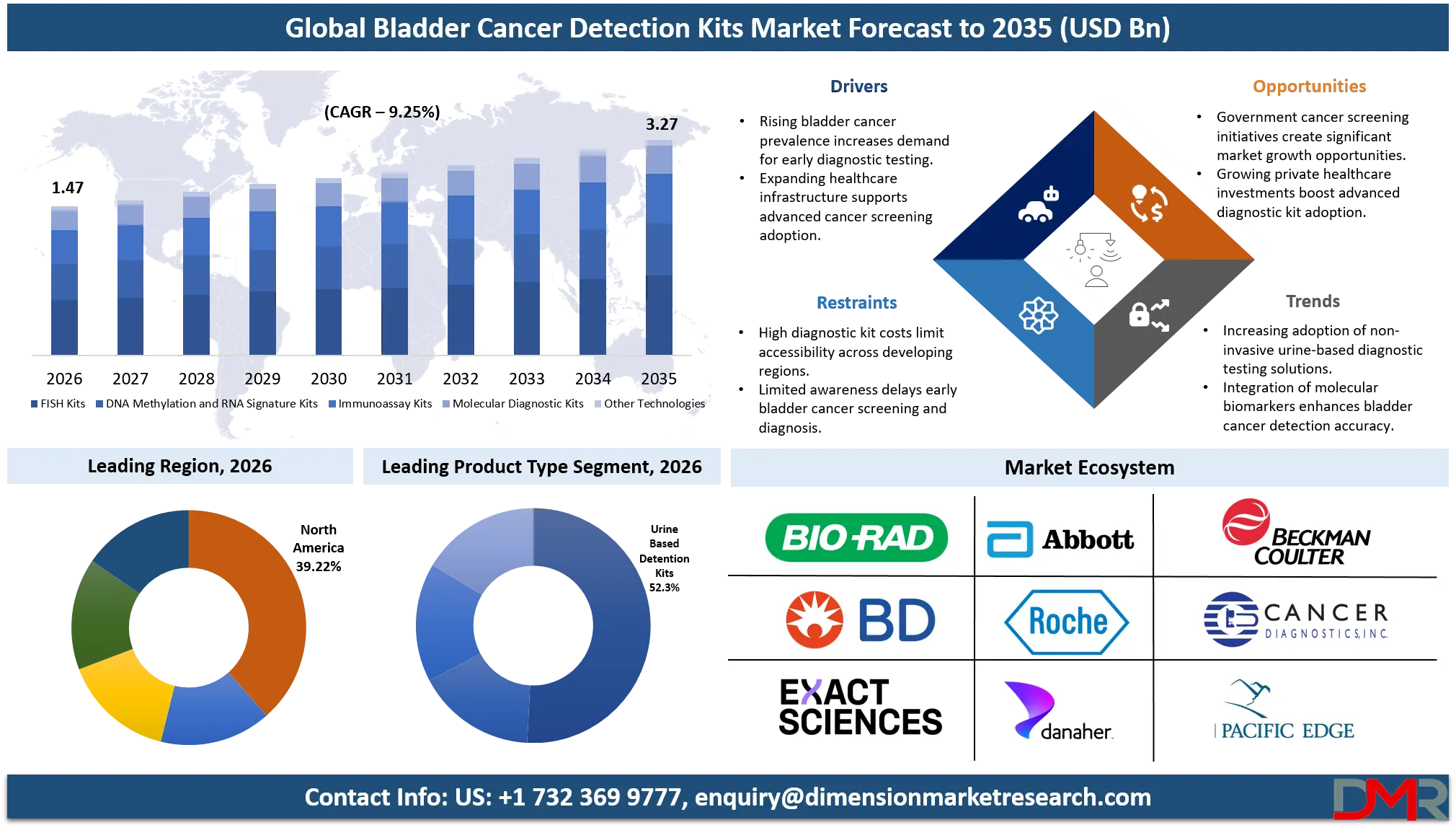
- The Global Bladder Cancer Detection Kits Market was valued at USD 1.35 Billion in 2025 and is projected to reach USD 3.27 Billion by 2035, growing at a CAGR of 9.25%.
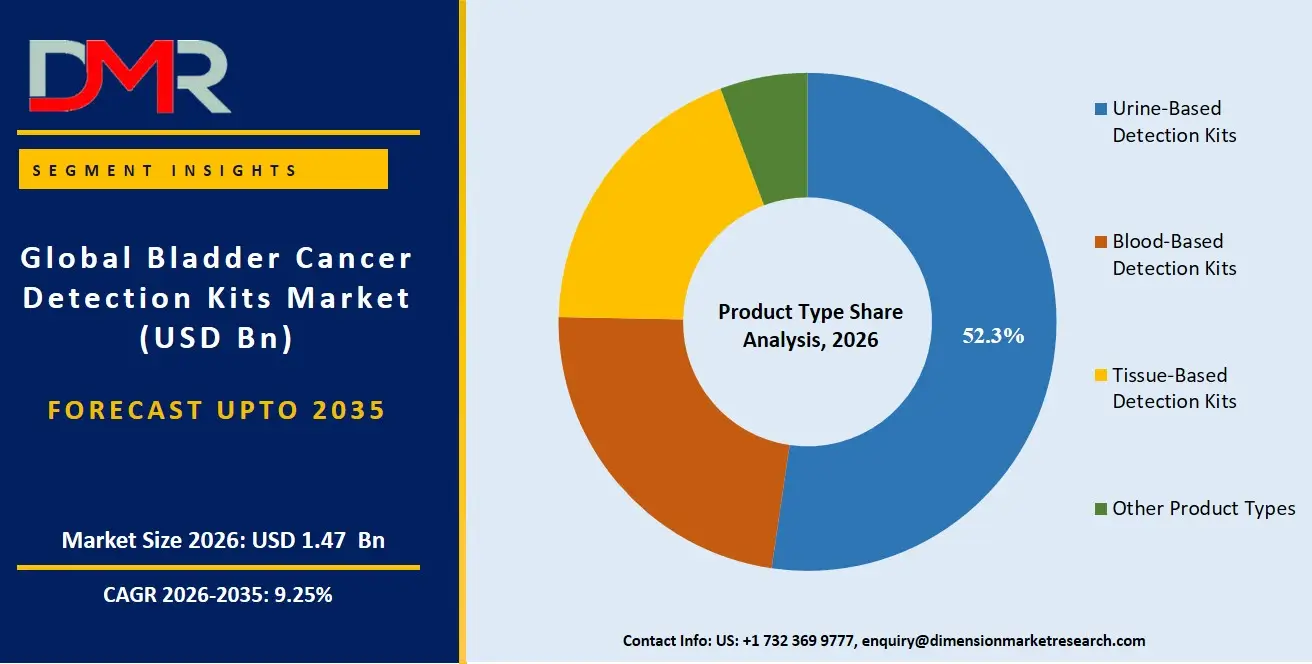
- Urine-Based Detection Kits led the Product Type segment with a 52.31% share in 2026, reflecting the clinical preference for non-invasive sample collection.
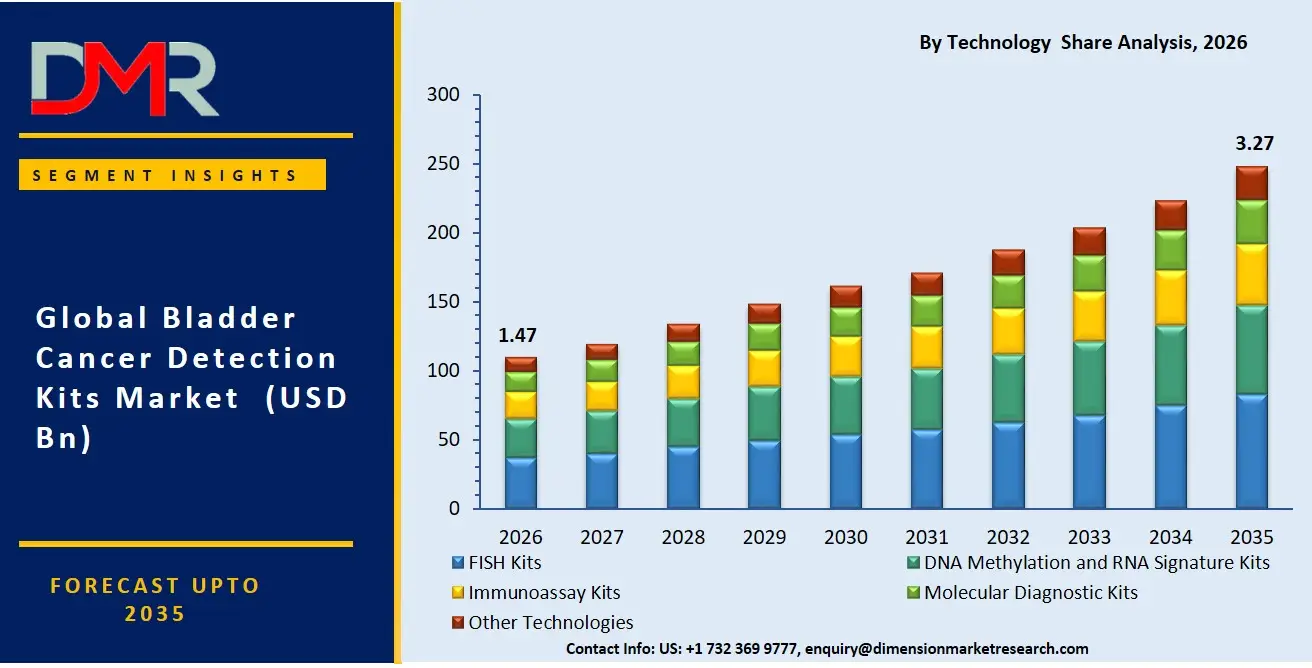
- FISH Kits held the dominant Technology segment position with a 32.24% share in 2026, anchoring the installed-base advantage in cytogenetic detection.
- Hospitals and Urology Clinics commanded the End User segment at 45.52% share in 2026, driven by procedural volume and surveillance protocol integration.
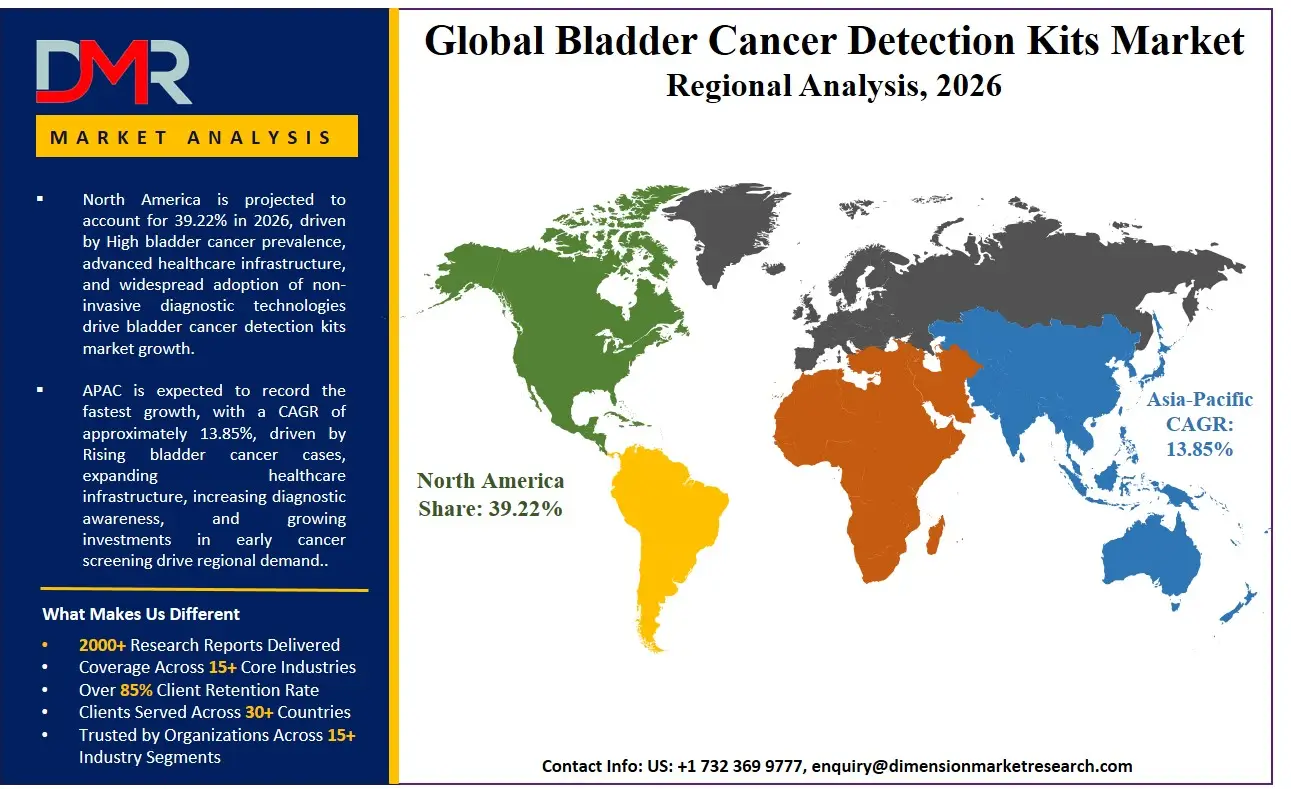
- North America led all regions with a 39.22% share in 2026, supported by FDA-cleared biomarker portfolios and established reimbursement infrastructure.
- Asia-Pacific is the fastest-growing region, with urban health system expansion and rising bladder cancer incidence pulling forward procurement timelines.
Market Overview
Bladder cancer detection kits encompass in-vitro diagnostic products designed to identify biomarkers of urothelial malignancy in urine, blood, and tissue specimens. The category spans lateral flow immunoassays, FISH probes, DNA methylation panels, and RNA expression kits. Products used purely for staging or surgical guidance fall outside Bladder Cancer Detection Kits Market definition. Kits validated only for research use without clinical clearance are also excluded.
ℹ
To learn more about this report –
Download Your Free Sample Report Here
Bladder cancer detection sits within the broader oncology diagnostics ecosystem, where pressure to reduce unnecessary cystoscopies has redirected hospital procurement budgets toward molecular urine tests. A clinical trial published in 2025 confirmed that the BLOOM at-home urine diagnostic system achieved approximately 90% overall accuracy on unprocessed urine samples across 105 participants, without centrifugation or laboratory preprocessing. That result validated the commercial viability of decentralized urine-based detection outside hospital settings.
Tempus AI executed the national launch of its FDA-approved xT CDx genomic profiling test in January 2025, extending precision oncology infrastructure across solid tumors including bladder cancer. Platform convergence between genomic profiling and dedicated bladder biomarker kits is compressing the product boundary between oncology diagnostics and disease-specific detection panels. Vendors that position kit portfolios alongside companion diagnostic agreements now carry a structural procurement advantage over single-assay suppliers.
Market Size and Forecast
The Global Bladder Cancer Detection Kits Market size is estimated at USD 1.47 Billion in 2026 from USD 1.35 Billion in 2025, and is projected to reach USD 3.27 Billion by 2035, exhibiting a CAGR of 9.25% during the forecast period.
Clinical validation data published through 2025 and 2026 anchors the forecast. A 2025 clinical evaluation reported that the BLOOM at-home urine kit delivered 88.8% sensitivity in a 105-participant trial, a benchmark that signals the detection category is moving beyond incremental improvement into clinically meaningful performance thresholds. A 2026 network meta-analysis confirmed that novel urinary assays now achieve pooled sensitivity up to 90% and pooled specificity up to 92% across evaluated tests, giving hospital procurement committees objective performance data to justify switching from cystoscopy-dependent workflows.
Photocure acquired Vesica Health in June 2026 for approximately USD 30.5 million, consolidating the AssureMDx urine-based detection test into a specialist bladder cancer diagnostics portfolio. Portfolio consolidation of this type historically accelerates commercial uptake by pairing established distribution channels with newly validated assays. The forecast assumes continued reimbursement expansion in North America and progressive technology adoption across Asia-Pacific urban health networks.
Product Type Analysis
Urine-Based Detection Kits accounted for 52.31% of product type demand in 2026, the highest of any category.
Urine-based kits lead because they align with the single most acute clinical pain point in bladder cancer management: repeat surveillance without patient discomfort. Patients with non-muscle-invasive bladder cancer require cystoscopic checks every three to six months for years. Urine-based alternatives that carry credible sensitivity data remove a significant compliance barrier and reduce procedural cost per surveillance cycle.
ℹ
To learn more about this report –
Download Your Free Sample Report Here
A 2025 multicenter study confirmed that a urinary DNA methylation test achieved 78.1% sensitivity and 88.8% specificity across all bladder cancer stages in a 219-patient hematuria cohort. Blood-based detection kits occupy a secondary position, gaining traction through liquid biopsy platforms validated for multi-cancer screening. Tissue-based kits serve a narrower procedural niche tied to biopsy confirmation workflows, and their growth depends on surgical volume rather than screening expansion. The reagents-and-kits segment commands 72% of urothelial diagnostics revenue overall, confirming that consumable volume, not capital equipment, drives recurring manufacturer revenue in this category.
Technology Analysis
With a 32.24% share in 2026, FISH Kits outpaced all other technology categories.
FISH kits retain dominance because UroVysion, the category's FDA-cleared anchor product, holds established reimbursement codes and decades of clinical familiarity among urologists. Laboratory investment in fluorescence microscopy infrastructure creates switching costs that protect incumbent market share even as newer molecular platforms post stronger sensitivity numbers.
ℹ
To learn more about this report –
Download Your Free Sample Report Here
DNA Methylation and RNA Signature Kits represent the fastest-growing technology sub-segment, driven by multicenter clinical data showing sensitivity and specificity outcomes that surpass single-marker immunoassay benchmarks. Immunoassay Kits using ELISA formats are posting the sharpest short-term growth rate within the immunoassay category, as lower equipment requirements make them accessible to mid-tier diagnostic laboratories. Molecular Diagnostic Kits targeting multi-gene mRNA expression panels are gaining adoption among cancer research institutes running surveillance cohort studies. Vendors that can offer both FISH and molecular panel formats within a unified ordering system carry a meaningful procurement advantage with high-volume hospital systems.
End User Analysis
Hospitals and Urology Clinics captured 45.52% of end user demand in 2026, ahead of all rivals.
Hospitals and urology clinics anchor demand because bladder cancer surveillance protocols are written and executed within clinical settings where cystoscopy and urine testing occur in the same visit. Kit adoption in this segment correlates directly with urology department volume and the availability of in-house molecular pathology capacity.
Diagnostic Laboratories represent the second-largest end user group, serving as the processing hub for physician-ordered urine biomarker tests that patients submit outside of hospital settings. Cancer Research Institutes drive adoption of next-generation panels including DNA methylation assays and multi-gene RNA panels, generating clinical validation data that subsequently informs hospital formulary decisions. Point-of-care quantitative platforms designed for in-office urine testing are beginning to compress the distinction between hospital-based and laboratory-based testing, a shift that could restructure end user share distribution within the forecast window.
Key Market Segments
By Product Type
- Urine-Based Detection Kits
- Blood-Based Detection Kits
- Tissue-Based Detection Kits
- Other Product Types
By Technology
- FISH Kits
- DNA Methylation and RNA Signature Kits
- Immunoassay Kits
- Molecular Diagnostic Kits
- Other Technologies
By End User
- Hospitals and Urology Clinics
- Diagnostic Laboratories
- Cancer Research Institutes
- Other End Users
Regional Analysis
North America led all regions with a 39.22% share in 2026, generating the largest revenue pool in the global bladder cancer detection kits market.
North America's lead reflects the convergence of three structural advantages: an FDA-cleared biomarker portfolio that includes NMP22, UroVysion, and BTA; established CPT reimbursement codes that reduce hospital procurement risk; and a urology care network dense enough to generate high per-patient test volume. The U.S. urology specialty drives the majority of regional demand through surveillance protocol adherence in non-muscle-invasive bladder cancer patient populations.
ℹ
To learn more about this report –
Download Your Free Sample Report Here
A 2025 comparative study showed the urinary DNA methylation assay delivered 78.1% sensitivity for all bladder cancer stages, versus 44.1% for NMP22 and 32.3% for urine cytology. Europe holds the second-largest regional share, with NHS adoption of emerging assays like Nonacus's Galeas test signaling that reimbursement gatekeepers outside North America are beginning to approve novel molecular formats. Asia-Pacific is the fastest-growing region, with urban health system investment in China, Japan, South Korea, and India generating procurement opportunities that North American and European vendors have not yet fully penetrated. Latin America and the Middle East and Africa remain early-stage markets where reference laboratory infrastructure is the primary bottleneck to volume growth.
Key Regions and Countries
North America
Europe
- Germany
- France
- The UK
- Spain
- Italy
- Rest of Europe
Asia Pacific
- China
- Japan
- South Korea
- India
- Australia
- Rest of APAC
Latin America
- Brazil
- Mexico
- Rest of Latin America
Middle East & Africa
- GCC
- South Africa
- Rest of MEA
Market Dynamics
Surveillance Mandates and Non-Invasive Genomic Tests Drive Repeat-Use Volume
Non-muscle-invasive bladder cancer recurs in 50 to 70 percent of patients within five years, making lifelong surveillance a clinical requirement rather than an optional pathway. Each recurrence check represents a discrete kit consumption event. Vendors supplying validated urine-based surveillance kits capture a contractually embedded, high-frequency revenue stream that does not depend on new patient acquisition.
Existing commercial urine kits showed only 20% sensitivity in 2025 benchmark testing, while the BLOOM at-home system achieved 88.8% sensitivity in the same evaluation, a 68.8 percentage point improvement. A urinary DNA methylation test demonstrated 89.2% sensitivity and 87.8% specificity for high-grade or invasive bladder cancer in a 2025 multicenter study across 219 cases. DiaCarta's Oncuria portfolio received Medicare coverage effective January 1, 2024, establishing reimbursement precedent that de-risks hospital adoption and directly expands the addressable billable volume for urine-based detection kits.
The DNA methylation assay's 89.2% sensitivity for high-grade or invasive disease exceeded NMP22's 51.5% and urine cytology's 39.7% by 37.7 and 49.5 percentage points respectively. Performance gaps of this magnitude give procurement committees a quantifiable clinical case for upgrading from legacy single-marker tests to next-generation molecular panels.
Reimbursement Exclusions and PPV Shortfalls Limit Standalone Adoption
Payers in the U.S. have designated NMP22, BTA, and UroVysion FISH as "not medically necessary" for screening asymptomatic patients, confining reimbursable use to symptomatic hematuria workup and post-treatment surveillance. That restriction caps addressable volume by excluding the screening population, which represents the largest untapped patient cohort in bladder cancer diagnostics.
The urinary DNA methylation assay posted a positive predictive value of 61.3% for high-grade or invasive bladder cancer in the 2025 hematuria cohort. A PPV below 65% means that roughly 4 in 10 positive results do not reflect true cancer presence, a false-positive rate that clinicians cite when defending the continued use of cystoscopy as a confirmatory step. Until next-generation assays improve PPV into the 75 to 85 percent range, standalone diagnostic adoption without cystoscopy backup will remain limited.
Point-of-Care Platforms and Multi-Omics Panels Open the Early-Detection Tier
Quantitative point-of-care platforms like UBC Rapid enable in-office urine testing without sample shipment to central reference laboratories. For urology practices in secondary cities and emerging markets, removing the logistical dependency on centralized processing compresses turnaround time from days to minutes and creates a new procurement segment outside the hospital laboratory network.
The urinary DNA methylation assay achieved a negative predictive value of 97.6% for high-grade or invasive bladder cancer in the 2025 hematuria study, meaning fewer than 3 in 100 negative results were false negatives. Bladder CARE™ achieved 96.0% sensitivity and 88.0% specificity for upper tract urothelial carcinoma in urine samples, and 89.0% sensitivity for carcinoma in situ. Veracyte's March 2025 clinical data presentation on its whole-genome sequencing MRD platform for muscle-invasive bladder cancer demonstrated that genomic monitoring can extend the clinical utility of detection kits beyond initial diagnosis into treatment response tracking, opening a post-surgical surveillance revenue segment for vendors with validated molecular platforms.
Market Trends
AI Integration and Multi-Gene Panels Accelerate Displacement of Legacy Single-Marker Tests
ELISA-based immunoassay kits are posting the fastest short-cycle growth while FISH retains the largest installed-base share. Machine-learning interpretation of multiplex urine panels is compressing analysis time and reducing inter-laboratory variability, a capability Nonagen's ten-protein Oncuria assay has demonstrated commercially. The BLOOM diagnostic system reached an AUC of 0.93 for all bladder cancer patients and 0.92 for early-stage patients in 2025 clinical testing. Nonacus expanded NHS adoption of its Galeas bladder cancer test in June 2026 following a 92% diagnostic accuracy demonstration in clinical evaluation. Early movers who secure NHS or equivalent public system contracts before multi-omics panels reach guideline-level endorsement will lock in recurring consumable revenue ahead of the next consolidation wave.
Market Competition Overview
The bladder cancer detection kits market is moderately consolidated at the revenue tier but fragmented at the innovation tier. Large diagnostics majors hold dominant distribution and reimbursement infrastructure, while a cohort of 10 to 20 specialized molecular diagnostics companies competes on clinical performance data, companion diagnostic partnerships, and regulatory breakthrough designations. Share concentration is highest in the FISH and immunoassay categories, where FDA-cleared incumbents benefit from established CPT coding and hospital formulary inertia.
A 2025 review confirmed that novel urinary assays can achieve pooled sensitivity up to 90% and pooled specificity up to 92%, narrowing the performance gap that previously justified incumbent dominance. Consolidation is accelerating through acquisition activity, as established players buy validated assay portfolios rather than build next-generation platforms internally. Vendors that have secured reimbursement codes, companion diagnostic designations, or multi-hospital procurement contracts hold a structural advantage that clinical performance data alone cannot displace in the short term.
Company Profiles
Exact Sciences Corporation has repositioned from a colorectal cancer screening specialist into a multi-cancer early detection platform operator. The September 2025 launch of its Cancerguard multi-cancer early detection blood test extended its commercial footprint into oncology screening markets that include bladder cancer, leveraging the Cologuard distribution infrastructure and payer relationships built over a decade. The strategic logic is volume: a multi-cancer test generates higher reimbursement yield per patient encounter than a disease-specific kit, while the same commercial team drives both product lines.
F. Hoffmann-La Roche Ltd competes across the full diagnostics value chain, from reagent supply to instrument platforms to data interpretation software. Pangea Laboratory's Bladder CARE™ assay demonstrated 93.5% sensitivity and 92.6% specificity for bladder cancer detection in performance studies that supported its FDA Breakthrough Device Designation. Roche's scale in clinical laboratory instrumentation and reagent supply positions it to integrate epigenetic assay formats into existing laboratory workflows without displacing capital equipment already on site.
Key Players
- Abbott
- Beckman Coulter, Inc.
- Becton, Dickinson and Company
- Bio-Rad Laboratories, Inc.
- Cancer Diagnostics, Inc.
- Cxbladder / Pacific Edge Limited
- Danaher Corporation
- Exact Sciences Corporation
- F. Hoffmann-La Roche Ltd
- Hologic, Inc.
- NanoString Technologies, Inc.
- Nonagen Bioscience, Inc.
- Photocure ASA
- Qiagen N.V.
- Siemens Healthineers AG
- Sysmex Corporation
- Thermo Fisher Scientific Inc.
Regulatory Landscape
FDA-cleared biomarkers including NMP22, UroVysion FISH, and BTA anchor the U.S. regulatory baseline, providing reimbursement precedent that shapes hospital procurement decisions. The FDA Breakthrough Device Designation granted to Pangea Laboratory's Bladder CARE™ assay signals regulatory openness to novel epigenetic formats that demonstrate superior clinical performance. In Europe, CE-IVD certification governs market access, and NHS England's adoption of the Galeas urine test under the 2026 expansion signals that national health systems are moving from pilot to scaled procurement for non-invasive molecular assays.
Payer policy diverges from regulatory clearance in ways that constrain commercial volume. FDA clearance of NMP22 and BTA did not prevent U.S. payers from designating these tests as not medically necessary for asymptomatic screening populations. Vendors launching next-generation assays must pursue reimbursement codes and payer coverage determinations as a parallel track to regulatory clearance, or risk holding a cleared product that hospital systems cannot bill for, which stalls formulary adoption regardless of clinical performance.
Investment and White Space Analysis
Investment is currently concentrating in DNA methylation panels, multi-cancer blood tests, and companion diagnostic co-development agreements. Pacific Edge's May 2026 capital raise of up to NZ$24 million reflects investor appetite for platforms with reimbursement pathways under active development. The Cxbladder portfolio's clinical evidence base makes it a commercially credible candidate for expanded payer coverage in markets outside the U.S., and the capital raise is structured to fund exactly that expansion. White space exists most clearly in the point-of-care urine testing segment, where decentralized in-office platforms have clinical validation but limited reimbursement code support.
Asia-Pacific presents the largest volume white space in the forecast period. Urban health systems in China, India, and South Korea are scaling oncology diagnostics infrastructure, but bladder cancer detection kit penetration remains low relative to incidence rates. A vendor that secures early formulary placement in Tier-1 hospital networks in Shanghai, Seoul, or Mumbai before multi-national competitors complete distribution agreements will build a volume advantage that compounds through the recurring surveillance consumption model.
Report Details
| Report Characteristics |
| Market Value (2025) |
USD 1.35 Billion |
| Market Value (2026) |
USD 1.47 Billion |
| Forecast Revenue (2035) |
USD 3.27 Billion |
| CAGR (2026–2035) |
9.25% |
| Base Year for Estimation |
2025 |
| Historic Period |
2020 – 2024 |
| Forecast Period |
2026 – 2035 |
| Report Coverage |
Revenue Forecast, Market Dynamics, Competitive Landscape, Recent Developments |
| Segments Covered |
By Product Type (Urine-Based Detection Kits, Blood-Based Detection Kits, Tissue-Based Detection Kits, Other Product Types), By Technology (FISH Kits, DNA Methylation and RNA Signature Kits, Immunoassay Kits, Molecular Diagnostic Kits, Other Technologies), By End User (Hospitals and Urology Clinics, Diagnostic Laboratories, Cancer Research Institutes, Other End Users) |
| Regional Analysis |
North America – US, Canada; Europe – Germany, France, UK, Spain, Italy, Rest of Europe; Asia Pacific – China, Japan, South Korea, India, Australia, Rest of APAC; Latin America – Brazil, Mexico, Rest of Latin America; Middle East & Africa – GCC, South Africa, Rest of MEA |
| Competitive Landscape |
Abbott, Beckman Coulter, Inc., Becton, Dickinson and Company, Bio-Rad Laboratories, Inc., Cancer Diagnostics, Inc., Cxbladder / Pacific Edge Limited, Danaher Corporation, Exact Sciences Corporation, F. Hoffmann-La Roche Ltd, Hologic, Inc., NanoString Technologies, Inc., Nonagen Bioscience, Inc., Photocure ASA, Qiagen N.V., Siemens Healthineers AG, Sysmex Corporation, Thermo Fisher Scientific Inc. |
| Customization Scope |
Customization for segments and region or country level will be provided. Additional customization can be done based on requirements. |
| Purchase Options |
We have three licenses to opt for: Single User License (Limited to 1 User), Multi-User License (Up to 5 Users), and Corporate Use License (Unlimited Users and Printable PDF). |
Frequently Asked Questions
What is the biggest investment opportunity in Bladder Cancer Detection Kits Market ?
▾ The clearest investment opportunity lies in DNA methylation panels and multi-omics urine assays targeting early-stage detection ahead of symptomatic presentation. Asia-Pacific urban health systems represent the highest-volume white space, with growing procurement budgets and low current penetration relative to bladder cancer incidence rates. Vendors that pair clinical validation data with active reimbursement code applications will convert first-mover position into durable recurring revenue.
Who are the top companies in Bladder Cancer Detection Kits Market ?
▾ The leading companies include Abbott, F. Hoffmann-La Roche Ltd, Becton, Dickinson and Company, Exact Sciences Corporation, Siemens Healthineers AG, Danaher Corporation, Qiagen N.V., Thermo Fisher Scientific Inc., Beckman Coulter, Inc., and Photocure ASA. Cxbladder / Pacific Edge Limited and Nonagen Bioscience, Inc. anchor the specialist molecular diagnostics cohort. Consolidation through acquisitions such as Photocure's purchase of Vesica Health is concentrating commercial reach among a narrowing group of portfolio operators.
Which segment is growing fastest opportunity in Bladder Cancer Detection Kits Market and why?
▾ DNA Methylation and RNA Signature Kits within the Technology segment are growing fastest, driven by multicenter clinical data showing sensitivity and specificity outcomes that decisively outperform legacy single-marker immunoassay benchmarks. A 2025 multicenter study confirmed 89.2% sensitivity for high-grade or invasive bladder cancer, a performance level that gives hospital procurement committees a quantifiable clinical case for switching from FISH-dependent workflows. Urine-based formats within this category benefit further from the clinical push to reduce cystoscopy frequency in surveillance populations.
Which region is growing fastest opportunity in Bladder Cancer Detection Kits Market and why?
▾ Asia-Pacific is the fastest-growing region, driven by urban health system investment in China, India, South Korea, and Japan that is scaling oncology diagnostics infrastructure faster than current kit penetration rates reflect. Rising bladder cancer incidence in high-density urban populations is pulling forward institutional procurement decisions that analysts had forecast for later in the decade. North American and European vendors that establish distribution partnerships or direct hospital contracts in the region before 2028 will capture compounding surveillance-cycle volume.
What is the biggest challenge holding Bladder Cancer Detection Kits Market back?
▾ Payer exclusions for asymptomatic screening represent the binding constraint on volume growth. U.S. payers designating NMP22, BTA, and UroVysion FISH as not medically necessary for screening cuts off the largest potential patient cohort from reimbursable testing. A positive predictive value of 61.3% for the leading urinary DNA methylation assay in 2025 reinforces clinical hesitation about eliminating cystoscopy as a confirmatory step, keeping the standalone diagnostic adoption rate below the level needed to fully replace invasive surveillance workflows.