Global Chronic Kidney Disease Market Snapshot
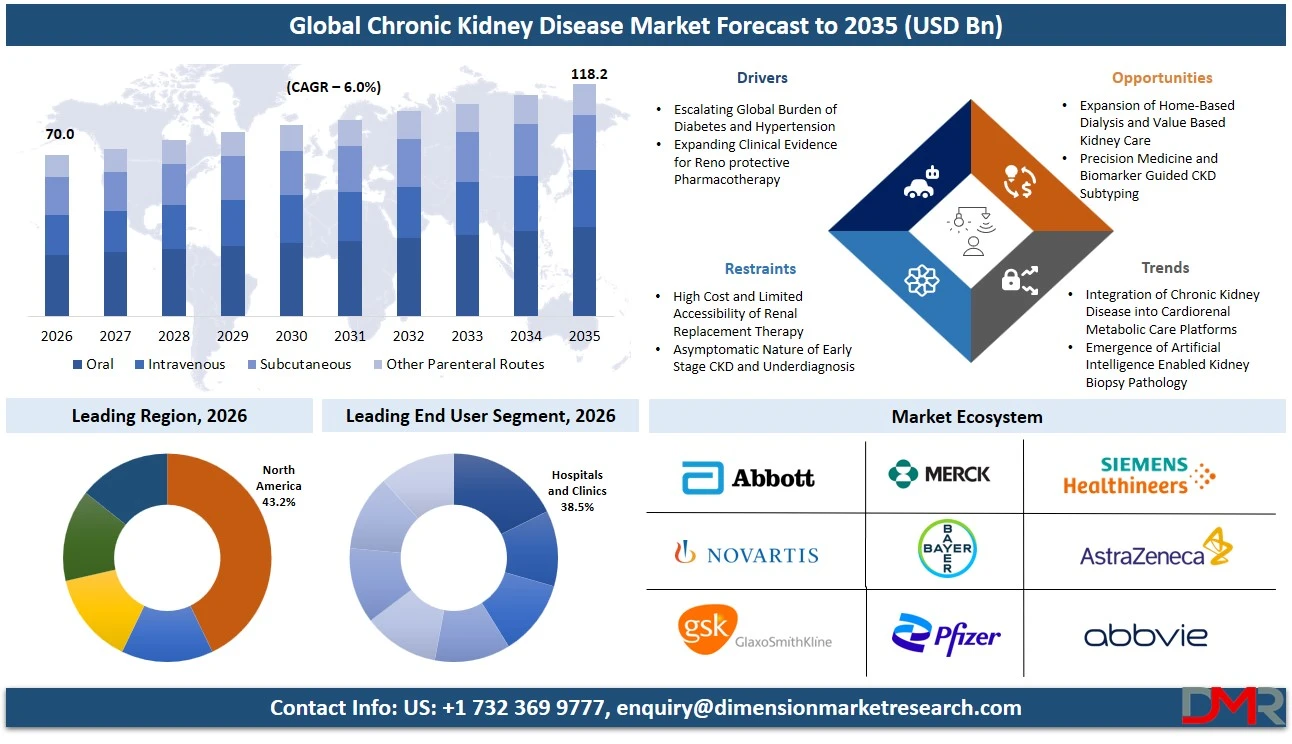
- Global Chronic Kidney Disease Market Size in 2026: USD 70.0 Billion
- Global Chronic Kidney Disease Market Size in 2035: USD 118.2 Billion
- Global CAGR from 2026 to 2035: 6.0%
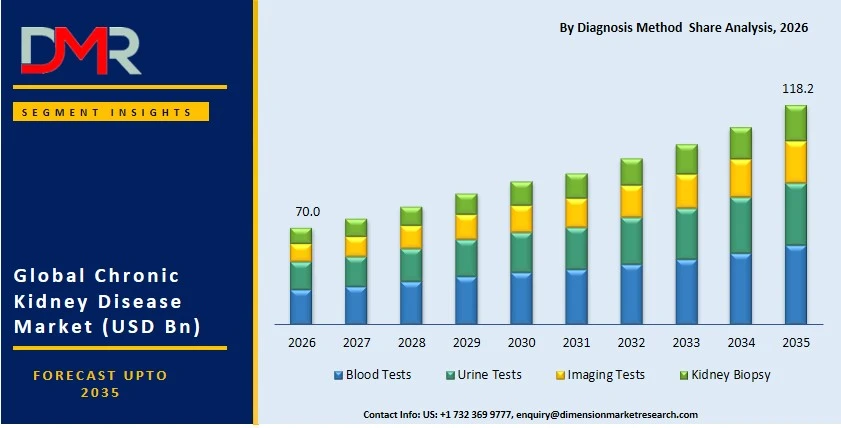
- Blood Tests is the leading diagnosis method segment in 2026: 43.8%
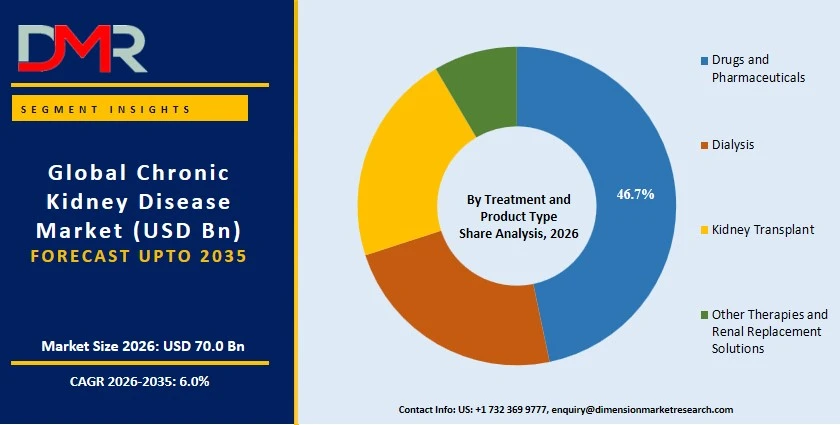
- Drugs and Pharmaceuticals is the leading treatment and product type segment in 2026: 46.7%
- Angiotensin II Receptor Blockers is the leading drug class segment in 2026: 21.4%
- Stage 3 Chronic Kidney Disease is the leading CKD stage segment in 2026: 34.6%
- Oral Route is the leading route of administration segment in 2026: 57.2%
- Diabetes-Related Chronic Kidney Disease is the leading indication segment in 2026: 41.9%
- Hospitals and Clinics is the leading end user segment in 2026: 38.5%
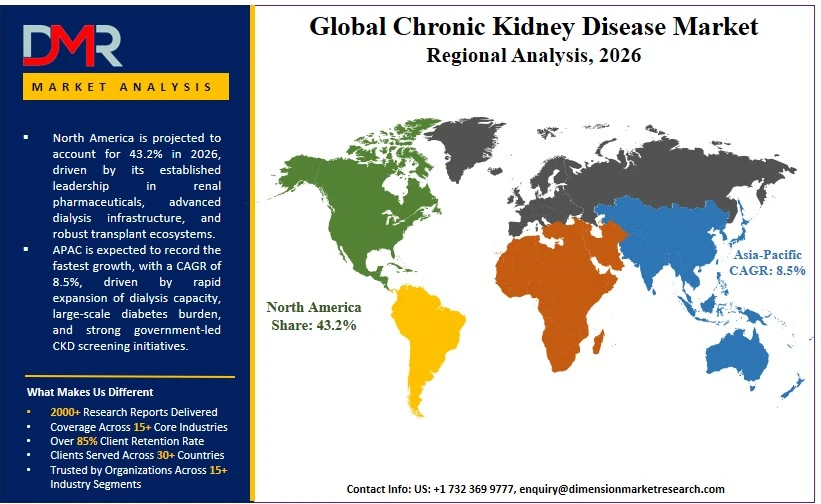
- North America is the leading region in 2026: 43.2%
What is the Global Chronic Kidney Disease Market and its Market Size?
The Global Chronic Kidney Disease Market is projected to be valued at USD 70.0 billion in 2026 and is projected to reach USD 118.2 billion by 2035, expanding at a CAGR of 6.0% during the forecast period.
ℹ
To learn more about this report –
Download Your Free Sample Report Here
Growth is being propelled by the surging global prevalence of type 2 diabetes and hypertension the two primary drivers of nephron damage coupled with an aging demographic structure predisposed to renal senescence. The adoption of SGLT2 inhibitors with proven renoprotective outcomes, rising clinical implementation of UACR-based screening in high-risk populations, and expanding reimbursement frameworks for home dialysis modalities are reshaping care paradigms. Investment is accelerating as health systems pivot from reactive ESKD management toward proactive, biomarker-driven early intervention and AI-enhanced renal function trajectory prediction to bend the cost curve of kidney failure.
Use Cases
- Early Diabetic Kidney Disease Detection and Risk Stratification: Primary care and endocrinology practices deploy blood tests (eGFR) and urine albumin-to-creatinine ratio (UACR) testing to identify patients with type 2 diabetes at high risk of progressive nephropathy.
- Optimized Dialysis Management with Remote Monitoring: Dialysis centers and home-based peritoneal dialysis programs utilize connected cyclers and cloud-based platforms that continuously transmit ultrafiltration volumes, dwell times, and effluent clarity to nephrology care teams.
- Kidney Transplant Immunosuppression Adherence and Rejection Surveillance: Transplant centers employ therapeutic drug monitoring of calcineurin inhibitors and mTOR inhibitors, alongside donor-derived cell-free DNA assays, to detect subclinical rejection before creatinine rise.
- Cardiorenal Protection in Heart Failure and CKD Overlap: Cardiologists and nephrologists co-manage patients with concomitant heart failure with reduced ejection fraction and CKD Stage 3-4 by initiating guideline-directed medical therapy that includes both ARBs and SGLT2 inhibitors.
Key Takeaways
- Market Size: The Global Chronic Kidney Disease Market is anticipated to be valued at USD 70.0 billion in 2026 and is forecast to reach USD 118.2 billion by 2035, expanding at a CAGR of 6.0%.
- Growth Outlook: Market expansion is sustained by the inexorable rise in diabetes and hypertension prevalence, the global acceptance of renoprotective pharmacotherapy, the push toward home-based renal replacement therapies, and the integration of digital health tools for remote monitoring and early nephrology engagement.
- Primary Growth Drivers: A mounting ESKD population necessitating dialysis and transplantation, breakthrough clinical trial evidence for novel drug classes slowing CKD progression, regulatory incentives for innovative kidney disease diagnostics, and shifting payment models toward value-based kidney care are accelerating investment across the renal healthcare continuum.
- By Diagnosis Method Analysis: Blood Tests is projected to lead the diagnosis segment with a dominant 43.8% share in 2026, driven by the universality and cost-effectiveness of serum creatinine and eGFR as frontline screening tools in at-risk populations, alongside guideline-mandated UACR for diabetic kidney disease.
- By Treatment and Product Type Analysis: Drugs and Pharmaceuticals is expected to dominate with a 46.7% share in 2026, supported by expanding prescriptions of RAAS inhibitors, SGLT2 inhibitors, and non-steroidal MRAs that form the pharmacological backbone of renoprotection across CKD stages.
- By Drug Class Analysis: Angiotensin II Receptor Blockers is anticipated to hold a 21.4% share in 2026, reflecting their entrenched role in proteinuric CKD management, while SGLT2 inhibitors are projected to exhibit the highest CAGR at 14.8% due to landmark cardiovascular and renal outcome trials.
- By Chronic Kidney Disease Stage Analysis: Stage 3 CKD is poised to lead with a 34.6% share in 2026, representing the largest prevalent population with moderate renal impairment where aggressive risk factor modification and novel pharmacotherapy can meaningfully alter the trajectory toward kidney failure.
- By Route of Administration Analysis: Oral is expected to command a 57.2% share in 2026, underpinned by the dominance of oral antihypertensives, hypoglycemic agents with renal benefits, and phosphate binders, with subcutaneous therapies achieving the fastest growth at 9.1% CAGR.
- By Indication and CKD Type Analysis: Diabetes-Related Chronic Kidney Disease is projected to account for 41.9% of the market in 2026, fueled by the diabetic pandemic and strong evidence for SGLT2 inhibitor-mediated renal protection, while Polycystic Kidney Disease is the fastest-expanding indication at 8.7% CAGR driven by targeted therapies like tolvaptan.
- By End User Analysis: Hospitals and Clinics is expected to lead with a 38.5% share in 2026 as the central hub for acute kidney injury management, transplant surgery, and in-center hemodialysis, while Home Care and Home-Based Dialysis Settings is the fastest-growing end-user segment at 10.3% CAGR due to patient preference, pandemic-era shifts, and favorable reimbursement for home modalities.
How AI/Gen AI is Transforming the Chronic Kidney Disease Market?
Artificial intelligence and digital health technologies are fundamentally reshaping CKD care by enabling earlier detection, personalized risk prediction, and remote disease management. Machine learning algorithms trained on large-scale electronic health records and laboratory datasets dynamically estimate individual patient trajectories of eGFR decline and predict the 2-year risk of progression to kidney failure with high discrimination. These predictive models are being embedded into clinical workflow tools that flag primary care patients with silent CKD and prompt guideline-concordant testing, closing critical gaps in early nephrology referral. AI-powered image analysis of kidney ultrasound and CT scans quantifies renal parenchymal volume and cortical thickness as surrogates of nephron mass, supplementing functional biomarkers for a more comprehensive staging assessment.
The most transformative frontier lies in the deployment of home-based remote monitoring ecosystems for dialysis and post-transplant care. Connected hemodialysis machines and peritoneal dialysis cyclers stream real-time treatment data to cloud-based dashboards monitored by nephrology care teams, while natural language processing algorithms analyze patient-reported symptoms and unstructured clinical notes for early signs of peritonitis or fluid overload. Wearable biosensors that track potassium and creatinine trends non-invasively are advancing from clinical trials to market, offering the promise of continuous biochemical surveillance without phlebotomy. Generative AI assistants are being piloted to generate individualized dietary plans for potassium and phosphorus restriction, responding to a patient's lab values and cultural food preferences via conversational interfaces.
Key Drivers in the Global Chronic Kidney Disease Market
Escalating Global Burden of Diabetes and Hypertension
Type 2 diabetes and hypertension remain the dominant etiological forces behind CKD, together accounting for over two-thirds of incident ESKD cases worldwide. The unabated rise in obesity, sedentary lifestyles, and aging populations is expanding the pool of individuals with diabetic nephropathy and hypertensive nephrosclerosis. As the global prevalence of diabetes surpasses 700 million, the downstream demand for CKD diagnostics, renoprotective pharmacotherapy, and renal replacement therapy intensifies commensurately. National screening programs targeting at-risk diabetic and hypertensive populations with annual UACR and eGFR testing are increasingly mandated by clinical guidelines, directly fueling the utilization of blood and urine tests and early nephroprotective drug initiation, the twin pillars of market growth.
Expanding Clinical Evidence for Renoprotective Pharmacotherapy
Landmark cardiovascular and renal outcome trials over the past decade have repositioned SGLT2 inhibitors, non-steroidal mineralocorticoid receptor antagonists (e.g., finerenone), and GLP-1 receptor agonists as cornerstone therapies that slow CKD progression independent of glycemic control. The robust renal composite endpoint benefits demonstrated in CREDENCE, DAPA-CKD, FIDELIO-DKD, and FLOW trials have triggered major updates to KDIGO clinical practice guidelines, expanding the eligible treatment population to include non-diabetic CKD and earlier disease stages. This evidence-driven therapeutic paradigm shift is generating sustained, high-volume demand for these drug classes, elevating the pharmaceutical segment's market dominance and propelling double-digit growth for SGLT2 inhibitors and novel MRAs.
Restraints in the Global Chronic Kidney Disease Market
High Cost and Limited Accessibility of Renal Replacement Therapy
Despite being life-sustaining, dialysis and kidney transplantation impose catastrophic financial burdens on patients and health systems, particularly in low- and middle-income countries where out-of-pocket expenditure drives families into poverty. In-center hemodialysis requires substantial infrastructure, water purification systems, and trained personnel, limiting its reach in rural and underserved regions. Even in high-income nations, dialysis costs per patient-year frequently exceed USD 90,000, creating unsustainable pressure on public and private payers. This economic toxicity restricts market volume growth for the dialysis segment, diverts resources from earlier-stage interventions, and perpetuates inequitable access to standard-of-care renal replacement therapy a persistent restraint on the overall CKD market's capacity to match clinical need with treated prevalence.
Growth Opportunities in the Global Chronic Kidney Disease Market
Expansion of Home-Based Dialysis and Value-Based Kidney Care
The global shift toward home dialysis modalities peritoneal dialysis and home hemodialysis represents a high-growth opportunity for device manufacturers, remote monitoring platform developers, and service providers. Health systems are incentivizing home therapies through value-based payment models (e.g., the U.S. ESRD Treatment Choices model) that reward reduced hospitalizations and improved quality-of-life metrics. This creates a fertile market for user-friendly cyclers, connected health IT solutions, and patient training services. Companies that integrate AI-driven remote surveillance, predictive analytics for peritonitis risk, and telehealth support into a cohesive home kidney care ecosystem can capture a disproportionate share of the rapidly growing home-based dialysis end-user segment.
Precision Medicine and Biomarker-Guided CKD Subtyping
Emerging molecular biomarkers including plasma TNFR1, TNFR2, KIM-1, and urinary proteomic panels are enabling precise risk stratification beyond eGFR and albuminuria. This paves the way for a precision nephrology market where therapies are matched to specific CKD endotypes (e.g., inflammatory vs. fibrotic pathways) rather than generic disease stages. Diagnostic companies that develop and commercialize validated, reimbursable multi-marker panels capable of predicting individual progression risk and drug responsiveness will unlock a premium-priced testing market. Concurrently, pharmaceutical firms are pursuing label expansions for targeted biologics and small molecules in genetically defined CKD subsets, such as APOL1-mediated focal segmental glomerulosclerosis, creating high-value niche markets.
Trends in the Global Chronic Kidney Disease Market
Integration of Chronic Kidney Disease into Cardiorenal Metabolic Care Platforms
A defining trend is the dissolution of silos between nephrology, cardiology, and endocrinology, driven by the shared pathobiology of cardiovascular-kidney-metabolic (CKM) syndrome. Clinical practice is consolidating around holistic risk management that simultaneously addresses kidney function, heart failure risk, and glycemic control. This convergence is expanding the use of drugs with multi-organ benefits (SGLT2 inhibitors, GLP-1 receptor agonists, finerenone) and fostering the development of integrated care platforms that track cardiac, renal, and metabolic parameters on a single dashboard. The market implications include broader prescribing across specialties, increased diagnostic monitoring frequency, and the rise of CKM-focused digital therapeutic applications.
Emergence of Artificial Intelligence-Enabled Kidney Biopsy Pathology
Digital pathology augmented by deep learning algorithms is transforming the interpretation of kidney biopsy samples. AI models trained on annotated whole-slide images can now quantify glomerulosclerosis, interstitial fibrosis and tubular atrophy (IFTA), and arteriolar hyalinosis with pathologist-level accuracy. This trend is commercializing as cloud-based AI pathology services that nephropathology labs adopt to standardize reporting, reduce interobserver variability, and enrich clinical trial enrollment with histologically well-characterized patients. The increasing use of AI pathology in drug development for CKD particularly for glomerulonephritis and diabetic nephropathy trials requiring consistent histological endpoints is creating a new adjacency market at the intersection of diagnostics and pharmaceuticals.
Research Scope and Analysis
The Global Chronic Kidney Disease Market is segmented by diagnosis method, treatment type, drug class, disease stage, route of administration, indication, and end user. Diagnosis includes blood, urine, imaging, and biopsy tests. Treatment covers pharmaceuticals, dialysis, transplantation, and renal solutions. End users include hospitals, clinics, dialysis centers, laboratories, home care, and research institutes.
ℹ
To learn more about this report –
Download Your Free Sample Report Here
By Diagnosis Method Analysis
Blood Tests dominate the Global Chronic Kidney Disease Market, accounting for an estimated 43.8% share in 2026. Serum creatinine and estimated glomerular filtration rate testing are central to routine CKD screening, diagnosis, staging, and therapy monitoring across hospitals, diagnostic laboratories, and outpatient clinics.
ℹ
To learn more about this report –
Download Your Free Sample Report Here
Their low cost, widespread availability, reimbursement coverage, and inclusion in standard metabolic panels sustain high test volumes globally. Urine Tests are anticipated to register the highest CAGR of 8.9% during 2026–2035. Increasing emphasis on early albuminuria detection, diabetes monitoring, hypertension management, and point of care urine albumin to creatinine ratio testing is accelerating adoption, particularly in preventive and primary care settings.
By Treatment and Product Type Analysis
Drugs and Pharmaceuticals represent the dominant treatment and product type segment, with an estimated 46.7% market share in 2026. This leadership reflects recurring demand for antihypertensive medicines, SGLT2 inhibitors, anemia therapies, phosphate binders, potassium management products, and supportive medicines across all CKD stages. Pharmaceutical treatment is generally initiated long before renal replacement therapy, creating a large and recurring patient base. Kidney Transplant is projected to record the highest CAGR of 9.6% from 2026 to 2035. Growth is supported by rising transplant infrastructure, improved donor matching, expanded living donor programs, higher survival outcomes, and sustained use of immunosuppressive medicines and post transplant monitoring services.
By Drug Class Analysis
Angiotensin II Receptor Blockers hold the largest share within the drug class segment, estimated at 21.4% in 2026. ARBs are extensively prescribed for CKD patients with hypertension and proteinuria because they help control blood pressure and reduce progression associated with renal damage. Broad generic availability and long established clinician familiarity further support their market presence. Sodium Glucose Cotransporter 2 Inhibitors are expected to achieve the highest CAGR of 14.8% during 2026–2035. Their expanding use is driven by strong clinical evidence in diabetes related CKD, cardiovascular risk reduction, and renal protection, alongside guideline adoption and approvals that extend use beyond conventional glucose control.
By Chronic Kidney Disease Stage Analysis
Stage 3 CKD dominates the market by disease stage, accounting for an estimated 34.6% share in 2026. Patients in this stage frequently require regular laboratory monitoring, drug therapy, specialist consultations, dietary management, and intervention to delay progression. The large diagnosed patient pool and comparatively long duration of care make Stage 3 a major source of healthcare expenditure. Stage 5 CKD is expected to grow at the highest CAGR of 8.4% from 2026 to 2035. Rising diabetes and hypertension prevalence, aging populations, delayed diagnosis in developing countries, and increasing access to dialysis and transplantation are expanding demand for advanced renal replacement and intensive disease management services.
By Route of Administration Analysis
Oral administration leads the route of administration segment, holding an estimated 57.2% share in 2026. Oral products are widely used for blood pressure control, diabetes related renal protection, mineral and electrolyte management, anemia support, and other long term CKD therapies. Convenience, lower administration burden, strong patient acceptance, and suitability for home based treatment contribute to the segment's leadership. Subcutaneous administration is projected to register the highest CAGR of 9.1% during 2026–2035. Growth is supported by increasing use of injectable erythropoiesis stimulating agents, biologics, and self administered therapies that can reduce hospital visits while enabling more personalized anemia and advanced CKD management.
By Indication and CKD Type Analysis
Diabetes Related Chronic Kidney Disease is the largest indication segment, representing an estimated 41.9% share in 2026. Type 2 diabetes accounts for the majority of this demand due to its high global prevalence, growing obesity rates, longer patient survival, and strong association with progressive kidney damage. These patients require continuous screening, glucose control, blood pressure treatment, renal protective medicines, and advanced care when disease progresses. Polycystic Kidney Disease is anticipated to record the highest CAGR of 8.7% from 2026 to 2035. Greater genetic testing availability, higher disease awareness, improved specialist referral, and the introduction of targeted disease modifying therapies are supporting faster segment expansion.
By End User Analysis
Hospitals and Clinics dominate the end user segment, accounting for an estimated 38.5% share in 2026. They provide integrated CKD diagnosis, specialist consultation, imaging, biopsy procedures, inpatient care, dialysis access, transplant coordination, and management of disease complications. Their established infrastructure and ability to treat complex Stage 4 and Stage 5 patients sustain their leading position. Home Care and Home Based Dialysis Settings are expected to grow at the highest CAGR of 10.3% during 2026–2035. Adoption is rising as healthcare systems prioritize patient convenience, lower facility burden, remote monitoring, home hemodialysis, peritoneal dialysis, and decentralized chronic disease management models.
The Global Chronic Kidney Disease Market Report is segmented on the basis of the following:
By Diagnosis Method
- Blood Tests
- Serum Creatinine Test
- Estimated Glomerular Filtration Rate Test
- Blood Urea Nitrogen Test
- Electrolyte Tests
- Urine Tests
- Urinalysis
- Twenty Four Hour Urine Collection
- Proteinuria Tests
- Urine Albumin to Creatinine Ratio Test
- Imaging Tests
- Ultrasound
- Computed Tomography Scan
- Magnetic Resonance Imaging
- X Ray
- Kidney Biopsy
- Percutaneous Biopsy
- Open Biopsy
- Laparoscopic Biopsy
By Treatment and Product Type
- Drugs and Pharmaceuticals
- Dialysis
- Hemodialysis
- Peritoneal Dialysis
- Kidney Transplant
- Transplant Surgery
- Immunosuppressive Therapy
- Post Transplant Care
- Other Therapies and Renal Replacement Solutions
- Supportive Care
- Emerging Renal Therapies
By Drug Class
- Angiotensin Converting Enzyme Inhibitors
- Angiotensin II Receptor Blockers
- Sodium Glucose Cotransporter 2 Inhibitors
- Calcium Channel Blockers
- Beta Blockers
- Diuretics
- Erythropoiesis Stimulating Agents
- Other Drug Classes
By Chronic Kidney Disease Stage
- Stage 1
- Stage 2
- Stage 3
- Stage 4
- Stage 5
By Route of Administration
- Oral
- Intravenous
- Subcutaneous
- Other Parenteral Routes
By Indication and CKD Type
- Diabetes Related Chronic Kidney Disease
- Type 1 Diabetes Related CKD
- Type 2 Diabetes Related CKD
- Hypertension Related Chronic Kidney Disease
- Polycystic Kidney Disease
- Glomerulonephritis
- Autoimmune Disease Related CKD
- Other Etiologies
By End User
- Hospitals and Clinics
- Specialty and Nephrology Clinics
- Dialysis Centers
- Ambulatory Surgery Centers
- Diagnostic Laboratories
- Home Care and Home Based Dialysis Settings
- Research and Academic Institutes
- Other End Users
Regional Analysis
North America is the Leading Region in the Global Chronic Kidney Disease Market
North America is poised to lead the Global CKD Market with an estimated 43.2% revenue share in 2026. The region's dominance is anchored by a high prevalence of diabetes and hypertension-driven CKD, a mature and well-reimbursed dialysis infrastructure dominated by large dialysis organizations, and the world's highest per-capita expenditure on renal pharmaceuticals.
ℹ
To learn more about this report –
Download Your Free Sample Report Here
The United States, in particular, is characterized by early and broad adoption of innovative drug classes like SGLT2 inhibitors and non-steroidal MRAs, robust commercial and public insurance coverage for home dialysis modalities, and a dynamic transplant ecosystem supported by federal policy reforms.
Asia Pacific is the Fastest-Growing Region in the Global Chronic Kidney Disease Market
Asia Pacific is projected to register the fastest CAGR of 8.5% through 2035, driven by the region's enormous and rapidly expanding population of individuals with diabetes and hypertension particularly in China and India, which together account for nearly one-third of the global diabetic population. Economic development is enabling massive investments in dialysis infrastructure, with both public and private providers rapidly expanding hemodialysis capacity to meet previously unmet ESKD demand. Additionally, governments are implementing national CKD screening programs (e.g., Japan's specific health checkups, China's county-level CKD prevention initiatives) that are boosting diagnosis rates and pharmacotherapy initiation.
The Europe Chronic Kidney Disease Market
Europe represents the one of the largest regional market, characterized by universal healthcare coverage models that provide comprehensive dialysis and transplant access, though with significant cross-national variation in home dialysis penetration and transplant rates. Germany holds the largest European market share, driven by its large nephrology specialist workforce, high dialysis capacity, and broad reimbursement for innovative pharmaceuticals. The European Kidney Health Alliance's advocacy for early detection and the growing adoption of KDIGO guidelines are gradually improving CKD awareness and diagnosis rates. Stringent regulatory frameworks from the EMA ensure a steady flow of evidence-based, high-quality therapies to the market, though health technology assessment-driven pricing and reimbursement negotiations can moderate revenue growth.
Latin America Chronic Kidney Disease Market
The Latin America CKD Market is expanding as a dual burden of diabetic nephropathy and a high prevalence of CKD of unknown etiology (CKDu) in agricultural communities particularly in Central America drives ESKD incidence upward. Brazil and Mexico are the primary national markets, with Brazil's public health system (SUS) funding the largest dialysis population in the region. Mexico's high diabetes prevalence and growing private dialysis center investment fuel market expansion. Access barriers, including out-of-pocket costs for immunosuppressants in some nations and geographic maldistribution of dialysis units, temper growth potential, but international dialysis provider expansions and philanthropic initiatives for peritoneal dialysis in remote areas are steadily broadening the addressable market.
Middle East and Africa Chronic Kidney Disease Market
The Middle East and Africa CKD Market is developing against a backdrop of soaring diabetes prevalence in Gulf Cooperation Council (GCC) countries and a substantial infectious disease-related CKD burden in sub-Saharan Africa (HIV-associated nephropathy, schistosomiasis). Saudi Arabia and the United Arab Emirates are the most attractive markets, with high government healthcare spending, expansive dialysis infrastructure, and active deceased and living donor transplant programs driven by national kidney foundations. South Africa leads the sub-Saharan African market with its well-established private nephrology sector and public-sector dialysis capacity. The region is experiencing accelerating demand for generic antihypertensives, home dialysis solutions suitable for water-scarce environments, and point-of-care diagnostic tools to bridge nephrologist shortages.
Major Countries Analysis
The US Chronic Kidney Disease Market
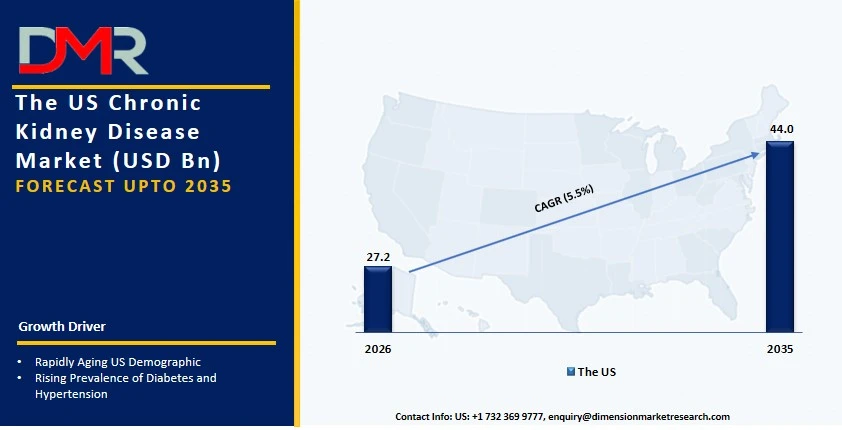
The United States CKD Market is projected to be valued at USD 27.2 billion in 2026 and is expected to reach USD 44.0 billion by 2035, registering a CAGR of approximately 5.5% from 2026 to 2035. This robust trajectory reflects the U.S.'s position as the highest-value single-country kidney disease market globally, underpinned by an estimated 37 million adults with CKD and over 800,000 individuals living with ESKD.
ℹ
To learn more about this report –
Download Your Free Sample Report Here
Growth is fueled by the transformative impact of the Advancing American Kidney Health initiative, which has restructured payment incentives to favor home dialysis and preemptive transplantation, and by the rapid formulary adoption of SGLT2 inhibitors for CKD. The Centers for Medicare & Medicaid Services' ESRD Treatment Choices model and the Kidney Care Choices model are accelerating the shift toward value-based, integrated kidney care, opening new opportunities for diagnostic and digital health companies that can demonstrate cost savings and outcome improvement.
Japan Chronic Kidney Disease Market
Japan possesses the world's third-highest prevalence of treated ESKD, a consequence of its super-aged society and high diabetes and hypertension burden, sustained by a near-universal in-center hemodialysis infrastructure. The market is distinguished by sophisticated nephrology care, high utilization of peritoneal dialysis relative to other Asian nations, and early regulatory approval of novel renal therapeutics. The Japanese Society of Nephrology's influential clinical practice guidelines and the national Specific Health Checkup program, which mandates annual eGFR and urinalysis screening for individuals aged 40-74, create a uniquely diagnosis-intensive environment that supports pharmaceutical and diagnostic volume.
Saudi Arabia Chronic Kidney Disease Market
Market expansion is directly tied to the Kingdom's high prevalence of diabetes (approaching 19% of the adult population), obesity, and hypertension, which together drive a rapid increase in CKD and ESKD incidence. The Saudi Center for Organ Transplantation oversees a growing transplant program supported by a national deceased-donor registry, while the Ministry of Health funds extensive dialysis services for citizens. Vision 2030's healthcare transformation agenda, which emphasizes public-private partnerships and digital health, is opening significant opportunities for international dialysis providers, home peritoneal dialysis technology vendors, and AI-driven diagnostic platforms. The government's commitment to expanding kidney care infrastructure in new "giga-project" cities and across underserved regions ensures sustained, double-digit volume growth for renal replacement therapies and associated pharmaceuticals.
Regulatory Landscape
The regulatory landscape for CKD therapeutics and devices is shaped by agencies that balance accelerated access for serious conditions with rigorous evidence requirements. In the United States, the FDA's Center for Drug Evaluation and Research has demonstrated receptivity to novel renal endpoints, granting Breakthrough Therapy Designation to multiple SGLT2 inhibitors and non-steroidal MRAs based on proteinuria reduction and eGFR slope as surrogate markers. The 2021 acceptance of a 30-40% eGFR decline as a validated surrogate endpoint for CKD progression trials has shortened clinical development timelines. For dialysis equipment and home cyclers, the FDA's 510(k) clearance pathway facilitates market entry, while the Center for Medicare & Medicaid Innovation's ESRD payment models create regulatory-driven market incentives for home modalities.
Epidemiology Analysis
The Chronic Kidney Disease Epidemiology section assesses historical and forecast CKD burden across the markets covered in the study. It evaluates prevalent cases, diagnosed patients, and treated populations, including pharmacotherapy, dialysis, and kidney transplantation.
Key Findings from CKD Epidemiological Analysis
- The United States had an estimated 37 million adults living with CKD. However, the statement that it represented 14% of cases across analyzed markets cannot be verified without defining the exact country basket and methodology.
- The latest comprehensive Global Burden of Disease estimates report that China had 152 million CKD cases and India had 138 million cases in 2023, the highest national patient pools globally. The earlier figures of 132 million and 115 million relate to older 2017 estimates.
- Globally, an estimated 788 million adults aged 20 years and older had CKD in 2023. Therefore, the 850 million figure should be presented as a broader kidney-disease estimate or a legacy estimate, rather than a confirmed 2025 CKD total.
- Japan has a substantial CKD burden, with approximately 13 million people estimated to have CKD. It also has one of the world's highest treated kidney-failure prevalence rates, at 2,696 cases per million population.
- Globally, approximately 4.6 million people were receiving kidney replacement therapy, including dialysis or transplantation. The earlier claim of 5.5 million patients in 2025 and a doubling by 2035 should be removed unless supported by a specific forecast model.
By Region
North America
Europe
- Germany
- The U.K.
- France
- Italy
- Russia
- Spain
- Rest of Europe
Asia-Pacific
- China
- Japan
- India
- Australia
- South Korea
- Rest of Asia-Pacific
Latin America
- Mexico
- Brazil
- Argentina
- Colombia
- Rest of LATAM
Middle East & Africa
- Saudi Arabia
- The UAE
- South Africa
- Rest of MEA
Competitive Landscape
The Global CKD Market features a diverse competitive landscape spanning multinational pharmaceutical giants, dialysis equipment and service conglomerates, transplant diagnostics firms, and emerging digital health innovators. Fresenius Medical Care and DaVita Inc. dominate the dialysis services market through extensive networks of outpatient hemodialysis centers and a growing portfolio of home dialysis technologies. Baxter International and B. Braun are leading manufacturers of peritoneal dialysis solutions and hemodialysis machines, competing on automated cycler connectivity and remote patient management platforms. In the pharmaceutical arena, AstraZeneca's Farxiga (dapagliflozin) and Boehringer Ingelheim/Lilly's Jardiance (empagliflozin) lead the SGLT2 inhibitor space, while Bayer's Kerendia (finerenone) has opened a new front in non-steroidal MRAs. Janssen's Invokana (canagliflozin) retains a niche. RAAS blockade remains a generic-dominated market, with entrenched positions for losartan, valsartan, and irbesartan.
Some of the prominent players in the Global Chronic Kidney Disease Market are:
- Fresenius Medical Care
- DaVita Inc.
- Baxter International Inc.
- B. Braun SE
- Nipro Corporation
- Medtronic plc
- Asahi Kasei Corporation
- Toray Industries Inc.
- Kawasumi Laboratories Inc.
- Diaverum AB
- Nikkiso Co. Ltd.
- Vifor Pharma AG
- AstraZeneca plc
- Bayer AG
- Novartis AG
- Johnson & Johnson
- Amgen Inc.
- GlaxoSmithKline plc
- Sanofi S.A.
- Boehringer Ingelheim International GmbH
- Eli Lilly and Company
- Merck & Co. Inc.
- AbbVie Inc.
- Pfizer Inc.
- Roche Holding AG
- Otsuka Pharmaceutical Co. Ltd.
- Kissei Pharmaceutical Co. Ltd.
- Kyowa Kirin Co. Ltd.
- Astellas Pharma Inc.
- Takeda Pharmaceutical Company Limited
- Reata Pharmaceuticals Inc.
- Ardelyx Inc.
- Akebia Therapeutics Inc.
- Rockwell Medical Inc.
- Travere Therapeutics Inc.
- Calliditas Therapeutics AB
- Vertex Pharmaceuticals Incorporated
- Siemens Healthineers AG
- Abbott Laboratories
- Sysmex Corporation
- Other Key Players
Recent Developments
- July 2026: Vera Therapeutics received U.S. FDA accelerated approval for Trutakna, or atacicept, for the treatment of IgA nephropathy. The therapy targets BAFF and APRIL pathways and demonstrated a significant reduction in proteinuria in clinical studies.
- April 2026: AstraZeneca announced positive Phase III interim results for Ultomiris, or ravulizumab, in IgA nephropathy. The study achieved a statistically significant reduction in proteinuria at Week 34, supporting AstraZeneca's planned accelerated approval submissions.
- April 2026: Travere Therapeutics received FDA approval for Filspari, or sparsentan, for the treatment of focal segmental glomerulosclerosis. The approval expanded the drug's kidney disease portfolio beyond its existing IgA nephropathy indication.
- October 2025: Novartis reported positive Phase III findings for Fabhalta, or iptacopan, in patients with IgA nephropathy. The therapy demonstrated a meaningful reduction in proteinuria and showed potential to slow disease progression.
Report Details
| Report Characteristics |
| Market Size (2026) |
USD 70.0 Bn |
| Forecast Value (2035) |
USD 118.2 Bn |
| CAGR (2026–2035) |
6.0% |
| The US Market Size (2026) |
USD 27.2 Bn |
| Historical Data |
2021 – 2025 |
| Forecast Data |
2027 – 2035 |
| Base Year |
2025 |
| Estimate Year |
2026 |
| Segments Covered |
By Diagnosis Method, By Treatment and Product Type, By Drug Class, By CKD Stage, By Route of Administration, By Indication and CKD Type, By End User |
| Regional Coverage |
North America – The U.S. and Canada; Europe – Germany, The U.K., France, Italy, Russia, Spain, and Rest of Europe; Asia Pacific – China, Japan, India, Australia, South Korea, and Rest of Asia Pacific; Latin America – Mexico, Brazil, Argentina, Colombia, and Rest of Latin America; Middle East and Africa – Saudi Arabia, The UAE, South Africa, and Rest of MEA |
Frequently Asked Questions
How big is the Global Chronic Kidney Disease Market?
▾ The Global Chronic Kidney Disease Market is valued at USD 70.0 billion in 2026 and is projected to reach USD 118.2 billion by 2035, reflecting strong global demand for diagnostics, pharmacotherapy, dialysis, and transplant services.
What is the CAGR of the Global CKD Market from 2026 to 2035?
▾ The market is projected to expand at a compound annual growth rate (CAGR) of 6.0% between 2026 and 2035, supported by sustained investment in renoprotective drug classes, expanding dialysis access, and increasing diagnosis rates.
What factors are driving the growth of the Global CKD Market?
▾ Growth is driven by the escalating prevalence of diabetes and hypertension, landmark clinical trials expanding the eligible population for SGLT2 inhibitors and novel MRAs, aging populations, government initiatives promoting home dialysis, and the integration of AI-enabled early detection and monitoring tools.
What are the major trends in the Global CKD Market?
▾ Major trends include the convergence of cardiorenal metabolic care, the shift to home-based peritoneal and hemodialysis with remote monitoring, AI-driven kidney biopsy pathology, precision medicine in glomerular diseases, and the use of eGFR slope as a surrogate endpoint accelerating drug approvals.
Which region held the largest share of the Global CKD Market in 2026?
▾ North America is expected to lead the global market with a 43.2% share in 2026, supported by high disease awareness, early adoption of novel therapeutics, a well-funded dialysis ecosystem, and value-based care policy experimentation.
Which region is expected to grow the fastest in the Global CKD Market?
▾ Asia Pacific is expected to record the fastest growth at an 8.5% CAGR through 2035, driven by its massive diabetic and hypertensive population, rapid expansion of dialysis infrastructure, and government-led screening programs.
Who are the key players in the Global CKD Market?
▾ Key market participants include Fresenius Medical Care, Baxter International, DaVita, AstraZeneca, Boehringer Ingelheim, Janssen, Bayer, Novo Nordisk, Otsuka Pharmaceutical, Amgen, Natera, and CareDx, among other pharmaceutical, dialysis, diagnostic, and digital health firms.
How is the Global CKD Market segmented?
▾ The market is segmented by diagnosis method, treatment and product type, drug class, CKD stage, route of administration, indication and CKD type, and end user, with regional analysis covering North America, Europe, Asia Pacific, Latin America, and the Middle East and Africa.