Market Snapshot
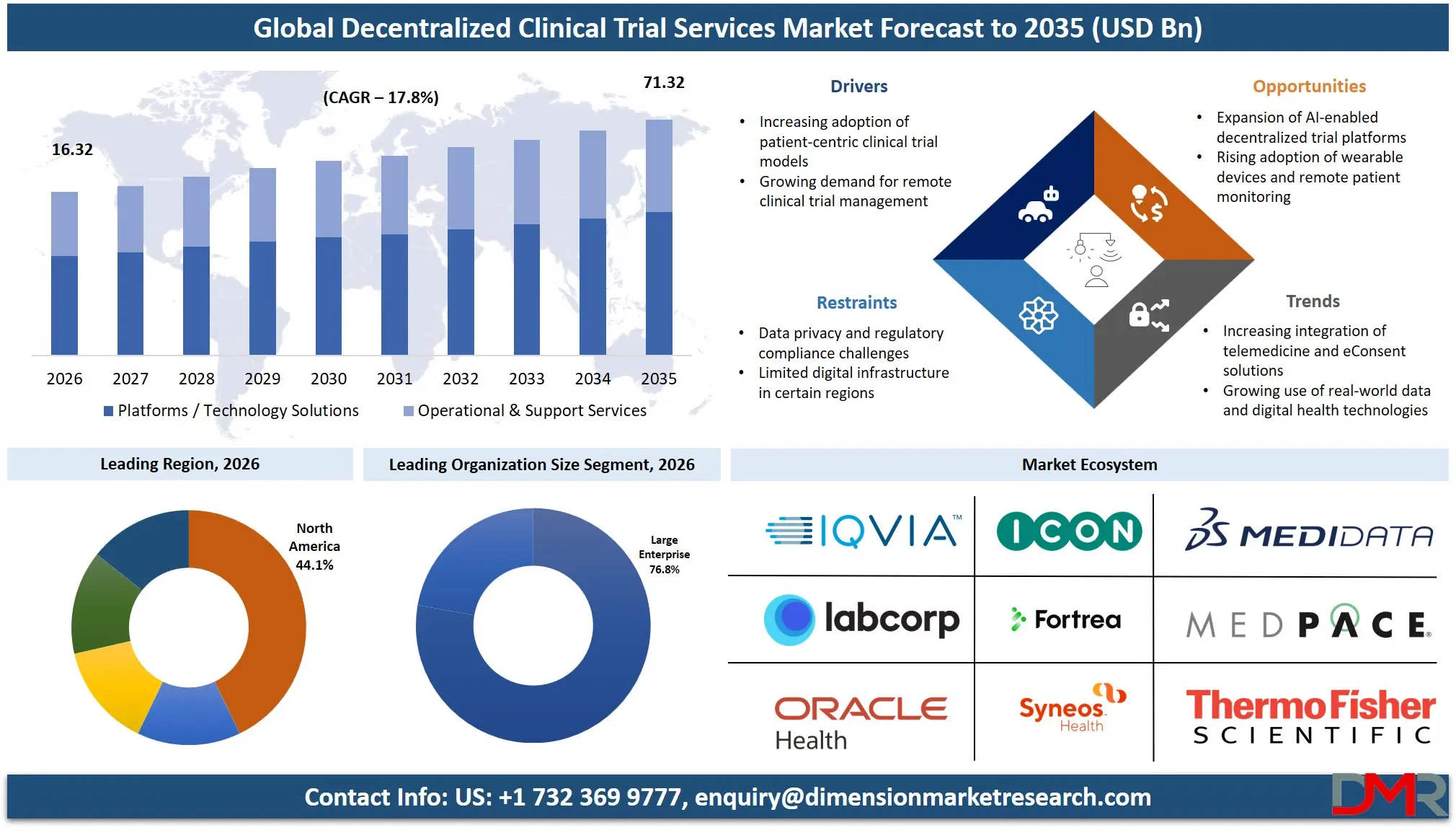
- The Decentralized Clinical Trial (DCT) Services market size is USD 13.86 Billion in 2025, reached USD 16.32 billion in 2026, and is projected to hit USD 71.32 Billion by 2035 at a CAGR of 17.8%.
- Interventional trials held the dominant study design position with a 67.21% revenue share in 2026.
- Oncology led all therapeutic areas with a 36.8% revenue share in 2026.
- Late-stage (Phase III) trials accounted for 46.8% of revenue by study phase.
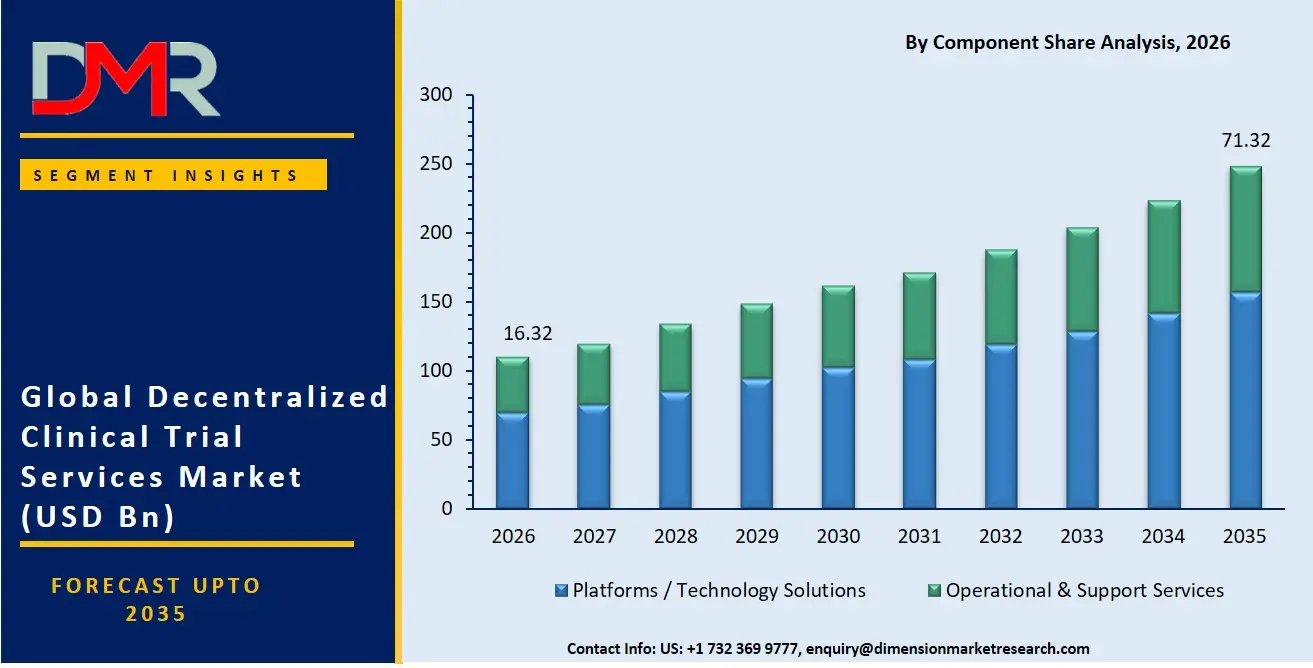
- Platforms and Technology Solutions dominated the component segment with a 71.8% revenue share.
- Hybrid trial execution held a 61.8% share, making it the leading execution model.
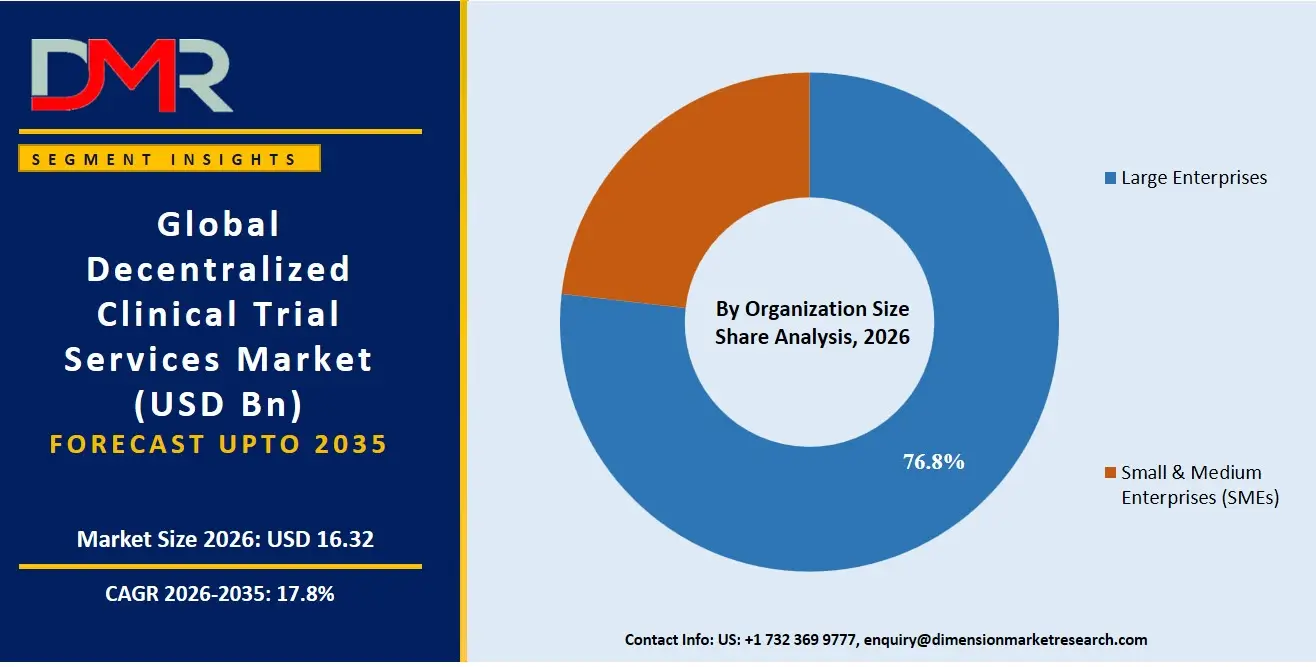
- Large Enterprises accounted for 76.8% of revenue by organization size.
- North America led all regions with a 44.1% revenue share in 2026.
Market Overview
The Global Decentralized Clinical Trial (DCT) Services Market covers the full spectrum of technology platforms, operational services, and participant engagement tools that enable clinical trials to run outside traditional investigator sites. A 2026 systematic analysis published in PMC confirms that 95% of decentralized trials registered on ClinicalTrials.gov by end of 2023 incorporated at least one digital technology. Sponsors are no longer piloting remote methods as experiments. They are embedding decentralized elements as standard operating procedure across their trial portfolios.
ℹ
To learn more about this report –
Download Your Free Sample Report Here
The market sits at the intersection of contract research, digital health, and enterprise software. Telemedicine platforms, wearable data collection, electronic data capture systems, mobile health applications, and remote site management services all fall within scope. Standalone CRO services that carry no decentralized or remote delivery components fall outside it. The market was valued at USD 13.86 Billion in 2025 and reached USD 16.32 Billion in 2026.
AI remains a peripheral capability rather than a core architecture inside most active DCT programs. Fewer than 2% of trials in the 1,370-study dataset as of the 2024 data extraction explicitly mentioned AI or machine-learning tools, per PMC12810901. That figure represents a near-term commercial gap. Vendors that build AI monitoring and protocol automation into compliance-documented platforms before enterprise procurement cycles consolidate will hold a structural pricing advantage over late entrants.
Market Size and Forecast
The Global Decentralized Clinical Trial Services Market size is estimated at USD 16.32 Billion in 2026 from USD 13.86 Billion in 2025, and is projected to reach USD 71.32 Billion by 2035, exhibiting a CAGR of 17.8% during the forecast period.
Two structural pillars underpin the forecast. The first is regulatory codification. The FDA's 2024 Final DCT Guidance formally embedded in-home visits, mobile research sites, and telehealth data capture into a compliant framework. Sponsors no longer negotiate DCT acceptability with regulators on a trial-by-trial basis. As reported by PMC12810901, 43% of the 1,014 evaluated DCTs used study designs that directly compared decentralized and centralized trial elements, signaling that head-to-head validation of remote methods was already underway before the guidance landed. That comparative evidence base accelerates sponsor confidence in committing to decentralized protocols at scale.
The second pillar is outsourcing consolidation. Large CROs are integrating AI-driven analytics and real-world evidence tools into bundled DCT service offerings, compressing the fragmented vendor landscape and accelerating enterprise contract volumes. The downside risk centers on integration cost. Wearable, ePRO, and telemedicine system fragmentation forces costly Clinical Trial Management System reconciliation. Mid-tier biotech sponsors absorbing those costs independently face budget constraints that can extend vendor sales cycles and slow protocol adoption timelines.
Study Design Analysis
Interventional trials led the By Study Design segment with a 67.21% share in 2026.
Interventional designs dominate because they require the most intensive participant touchpoints. Remote monitoring, telehealth visits, and direct-to-patient drug delivery reduce the site visit burden that makes interventional trials expensive and slow to recruit. As per PMC12810901, 44.7% of interventional DCTs used non-health digital tools such as telehealth visits and online questionnaires, compared with only 23.0% of observational DCTs. Interventional sponsors have a stronger financial incentive to replace on-site contact with remote alternatives at every protocol stage.
Observational and expanded access trials hold the remaining share. Observational designs show 74.3% digital health tool adoption versus 50.0% for interventional DCTs, per PMC12810901. That inversion reflects the passive nature of observational data collection: no intervention means fewer compliance constraints on remote tools. Expanded access trials carry smaller absolute volume but strategic value for sponsors building real-world safety dossiers outside formal trial structures.
Technology Analysis
With a dominant position in 2026, Telemedicine Platforms outpaced all other technology categories as the foundational communication layer for remote trial execution.
Telemedicine platforms occupy the irreplaceable middle layer between sponsor protocols and remote participants. No other technology category provides the synchronous, GCP-documentable audio-video infrastructure that regulators require for investigator-participant contact. Sponsors and CROs treat telemedicine as a compliance prerequisite, not a discretionary upgrade. Research by PMC12810901 shows that 52.7% of DCTs integrated digital health tools including connected devices and apps. That figure confirms stack-building behavior: most sponsors combine telemedicine with supporting layers rather than relying on any single technology.
Wearable devices, mobile health applications, and electronic data capture systems operate as complementary layers. Non-health digital tools such as email and videoconferencing appeared in 44.7% of interventional DCTs, per PMC12810901. Vendors that offer integrated platform suites with pre-built connectors across these categories hold a clear advantage over point-solution sellers in enterprise procurement. Bundle pricing also raises switching costs, which compounds the platform-layer moat over time.
Therapeutic Area Analysis
Oncology accounted for 36.8% of By Therapeutic Area demand in 2026, the highest of any category.
Cancer trials drive DCT adoption because the recruitment problem is most acute in oncology. Patients face high treatment burden, geographic constraints to specialist centers, and physical limitations that make frequent site visits both costly and clinically risky. Sponsors targeting oncology populations carry the strongest financial justification for remote models. Figures from PMC12810901 show that behavioral interventions dominated interventional DCT designs at 47%, while drugs represented only 3% and procedures 2%. Oncology drug trials therefore represent an underpenetrated sub-segment where DCT model adoption lags behind the therapeutic area's overall share weight.
Cardiovascular, neurological and psychiatric, infectious disease, respiratory, metabolic and endocrine, and rare disease trials collectively hold the remaining share. Rare disease is the highest-priority adjacency. Patient populations are geographically dispersed by definition, which makes decentralized enrollment a structural necessity rather than an operational convenience. Neurological and psychiatric trials carry high dropout risk tied to travel burden. DCT tools reduce that attrition by eliminating routine site visits for data collection that can be captured remotely.
Study Phase Analysis
A 46.8% share made Late-stage (Phase III) the clear leader across By Study Phase categories in 2026.
Phase III dominance follows directly from trial economics. These programs carry the largest participant volumes, the longest durations, and the highest per-protocol costs. A sponsor facing a failed Phase III recruitment timeline faces the greatest financial loss of any trial stage. Remote participant access and direct-to-patient delivery reduce that recruitment risk more than any protocol redesign. The budget justification for a DCT platform investment is the hardest to challenge at the Phase III scale.
Phase I and Phase II trials account for smaller shares but offer onboarding opportunities for platform vendors. Post-approval real-world evidence trials at Phase IV are the fastest-emerging adjacency as regulators push sponsors toward continuous post-market safety monitoring. Distributed patient populations in real-world care settings are a natural fit for remote data collection. Phase IV sponsors entering DCT programs early also build institutional familiarity with platforms, which positions them to expand to earlier-phase programs over time.
By Component Analysis
Platforms and Technology Solutions captured 71.8% of the By Component segment in 2026, ahead of all rivals.
ℹ
To learn more about this report –
Download Your Free Sample Report Here
Platform vendors create and retain value through switching costs embedded at the compliance documentation layer. Once a sponsor builds trial operations around a platform's data architecture, migrating mid-study is prohibitively expensive. Regulatory audit trails, integration records, and validation packages are all platform-specific artifacts. Competitors cannot replicate these without full re-validation, which few sponsors will accept mid-protocol.
Operational and support services hold the remaining share. Logistics management, patient recruitment support, and remote site coordination fall in this category. Platform automation is compressing margins in this segment. Services firms that specialize in high-complexity programs where automation cannot fully replace human judgment, such as oncology or rare disease protocols, will defend their position better than generalist service providers facing commoditization pressure.
By Trial Execution Model Analysis
Hybrid execution accounted for 61.8% of By Trial Execution Model segment demand in 2026, the highest of any category.
Hybrid models have displaced fully virtual designs as the commercial standard because they satisfy two competing sponsor demands. Remote elements reduce participant burden and expand geographic reach. Selective on-site visits preserve the safety monitoring and imaging assessments that complex endpoints require. Regulators accept this architecture without protocol-specific negotiation under the FDA's 2024 framework. That combination of operational flexibility and regulatory acceptability makes hybrid the default design for sponsors who have moved past the pilot stage.
Fully decentralized is the highest-growth sub-segment, starting from a smaller base but accelerating as platform vendors improve compliance documentation for fully remote protocols. Site-centric with digital enablement represents the entry design for sponsors beginning their DCT transition. These sponsors add remote tools incrementally rather than redesigning protocols entirely, which makes them the most accessible target for vendors offering modular, low-integration solutions priced below full enterprise contracts.
By Organization Size Analysis
Large Enterprises held a 76.8% revenue share in the By Organization Size segment in 2026.
ℹ
To learn more about this report –
Download Your Free Sample Report Here
Large pharma and top-tier CROs have the IT infrastructure, compliance teams, and vendor management capacity to implement multi-vendor DCT stacks. Their dominance reflects the capital overhead required to run decentralized trials at scale. Enterprise contracts also carry multi-year durations and cross-program scope, which concentrate revenue at a small number of accounts.
Small and medium enterprises account for the remaining share but represent a disproportionate growth opportunity. SME-focused biotech sponsors run an increasing share of early-stage and rare disease trials. Platform vendors that offer pre-validated, low-integration DCT modules priced for smaller budgets can capture this segment before large CROs absorb SME demand into bundled enterprise contracts.
Participant Engagement Analysis
Remote Monitoring led the By Participant Engagement segment with the dominant position in 2026.
Continuous passive data capture through connected devices has become the primary mechanism for maintaining participant contact without requiring site visits. Data published by PMC12810901 shows that DCT registrations increased 154% between 2019 and 2020, with remote data collection driving the bulk of that operational shift. Sponsors who adopted remote monitoring during the pandemic acceleration built compliance workflows that proved durable beyond COVID-era necessity.
Patient-centric approaches, digital surveys, and virtual site visits cover the remaining engagement methods. Virtual site visits serve a compliance function: they preserve the investigator-participant relationship that GCP requires without the cost of physical travel. Digital surveys capture patient-reported outcomes at higher frequency than paper-based methods. Higher PRO frequency improves data quality for endpoints that depend on participant self-reporting, which strengthens the evidentiary case for remote engagement tools with regulators.
Key Market Segments
By Study Design
- Interventional Trials
- Observational Trials
- Expanded Access Trials
By Technology
- Telemedicine Platforms
- Wearable Devices
- Mobile Health Applications
- Electronic Data Capture (EDC) Systems
By Therapeutic Area
- Oncology
- Cardiovascular Disorders
- Neurological & Psychiatric Conditions
- Infectious Diseases
- Respiratory Disorders
- Metabolic & Endocrine Disorders
- Rare Diseases
By Study Phase
- Early (Phase I)
- Mid (Phase II)
- Late-stage (Phase III)
- Post-approval / Real-world Evidence (Phase IV)
By Participant Engagement
- Remote Monitoring
- Patient-Centric Approaches
- Digital Surveys
- Virtual Site Visits
By Component
- Platforms / Technology Solutions
- Operational & Support Services
By Trial Execution Model
- Hybrid
- Fully Decentralized
- Site-Centric with Digital Enablement
By Organization Size
- Large Enterprises
- Small & Medium Enterprises (SMEs)
Regional Analysis
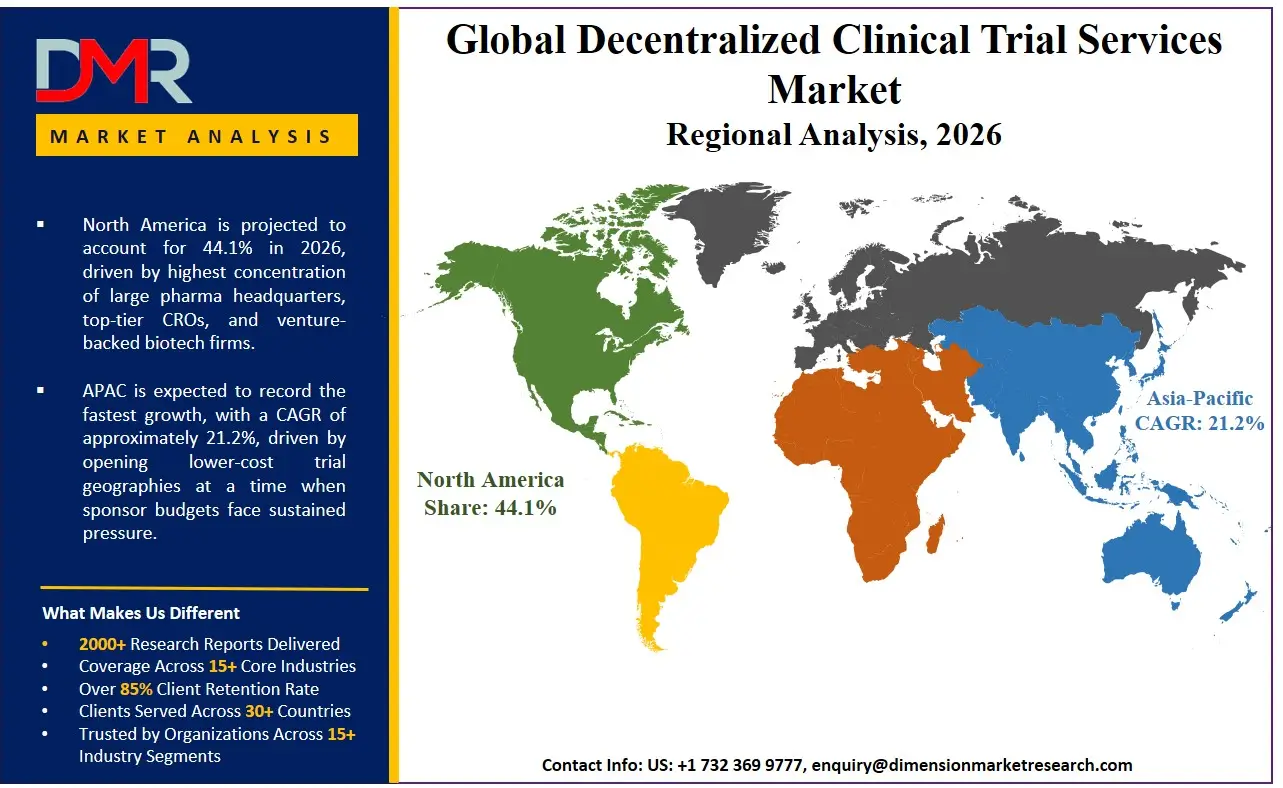
North America held a dominant position with a 44.1% revenue share in 2026, representing the largest single-region revenue pool in the global DCT services market.
ℹ
To learn more about this report –
Download Your Free Sample Report Here
The FDA's 2024 Final DCT Guidance gave U.S.-based sponsors the clearest regulatory framework globally for deploying remote trial methods. Combined with the highest concentration of large pharma headquarters, top-tier CROs, and venture-backed biotech firms, North America produces the highest per-trial DCT spending of any region. Figures from PMC12810901 show that 58% of the 1,370 analyzed trials involved the U.S., with 77 involving Canada, 69 the UK, and 66 France. That geographic concentration of trial activity maps directly onto DCT service revenue concentration.
Asia-Pacific is the fastest-growing region, opening lower-cost trial geographies at a time when sponsor budgets face sustained pressure. Europe holds a stable position supported by EMA guidance convergence with FDA frameworks. Latin America and the Middle East and Africa remain early-stage markets where participant diversity mandates and cost pressure are beginning to pull sponsors toward decentralized designs. A vendor entering APAC now with localized NMPA compliance documentation faces substantially less competition than one entering North America against established CRO incumbents.
Key Regions and Countries
North America
Europe
- Germany
- France
- The UK
- Spain
- Italy
- Rest of Europe
Asia Pacific
- China
- Japan
- South Korea
- India
- Australia
- Rest of APAC
Latin America
- Brazil
- Mexico
- Rest of Latin America
Middle East & Africa
- GCC
- South Africa
- Rest of MEA
Market Dynamics
Regulatory Codification Removes Compliance Ambiguity for Sponsors
The FDA's 2024 Final DCT Guidance is the single most consequential regulatory event in Decentralized Clinical Trial Services Market's recent history. It codified in-home visits, mobile research sites, and telehealth data capture as compliant methods within the existing GCP framework. Sponsors who previously avoided decentralized designs due to regulatory uncertainty now have a clear, published framework. The compliance risk premium attached to decentralized protocols has been reduced substantially, and the practical effect is faster protocol approval timelines for sponsors who commit to remote elements upfront.
Mean enrollment across 880 DCTs that reported participant counts was 538 participants with a median of 85, as reported by PMC12810901. That wide variance between mean and median signals that a small number of large-scale DCTs are pulling the average enrollment figure up sharply. As regulatory acceptance grows, those large-scale programs will become more common, expanding the total addressable spend per enterprise contract. Vendors positioned in large-program infrastructure stand to capture disproportionate revenue as this shift plays out.
System Fragmentation Adds Recurring Compliance Cost
The FDA confirmed that regulatory requirements remain identical for decentralized and site-based trials. Sponsors cannot treat DCT designs as a lower-compliance path. Wearable, ePRO, and telemedicine system fragmentation forces costly Clinical Trial Management System reconciliation across multiple data streams. Each vendor in a DCT stack uses different data formats, APIs, and compliance documentation. Integrating these into a unified CTMS requires custom engineering that must be re-validated with every protocol change, every new device, and every regulatory update.
Smaller biotech firms without dedicated DCT operations teams carry this burden most acutely. For a mid-tier sponsor running two to three concurrent trials, multi-vendor CTMS reconciliation can consume a material share of the total trial budget. The cost barrier offsets recruitment efficiency gains and slows the ROI calculation that would otherwise justify DCT adoption at earlier trial phases.
Asia-Pacific and Underserved Populations Open High-Return Entry Points
Asia-Pacific is the fastest-growing region against a North America-concentrated revenue base of 44.1%. Walgreens received USD 25 million in Project NextGen funding from BARDA in July 2024 to conduct a decentralized trial, demonstrating that government funding is now flowing directly into DCT infrastructure as a public health priority. That funding signal validates the model for sponsors in adjacent markets who were watching for institutional endorsement before committing budgets to decentralized designs.
Among single-country DCTs, 93% were run in high-income countries, with only 20 conducted in lower-middle or low-income countries, as per PMC12810901. That gap defines the white space. Vendors willing to build regional partnerships and localize compliance documentation for NMPA and other Asian regulatory frameworks face a substantially underpenetrated opportunity. Diversity mandate requirements tightening across FDA and EMA frameworks add a regulatory tailwind that makes underrepresented population enrollment not just a growth opportunity but an increasing compliance requirement for global sponsors.
Market Trends
Hybrid Architecture and AI Automation Redefine the Default Trial Model
Hybrid execution commands a 61.8% share of the execution model segment, and the market is migrating further toward this architecture. Fully virtual models are giving way to blended designs that combine remote activity with selective on-site visits for complex endpoints. Fewer than 2% of DCTs in the 1,370-study dataset explicitly mentioned AI or machine-learning tools as of the 2024 data extraction, as confirmed by PMC12810901. That near-zero baseline is the opportunity. Vendors embedding AI-powered protocol automation and risk-based validation into hybrid platforms now face minimal direct competition from other AI-native DCT products and will be difficult to displace once sponsors build institutional processes around their tools.
Market Competition Overview
The market is moderately consolidated at the top tier. A small group of large CROs and platform vendors captures the majority of enterprise contract value. The competitive dynamic has shifted from price to capability depth. DCT services are becoming table stakes for any CRO competing for Phase II and Phase III mandates from large pharma. Findings from PMC12810901 show that 74% of DCT activity was evaluation-oriented rather than routine service delivery, which confirms that the market is still producing differentiated, complex trial designs rather than commoditized repeat protocols. Vendors that cannot offer integrated telemedicine, wearable data management, and remote monitoring within a single compliance-documented stack are losing RFP eligibility rather than simply losing on price.
Smaller specialist firms face a consolidation squeeze. Large CROs are acquiring or partnering with point-solution vendors to expand their integrated offering. Firms that hold defensible positions in high-complexity sub-segments such as oncology or rare disease DCT protocols have the strongest case for remaining independent through the current consolidation wave. White space for standalone vendors narrows as bundled enterprise contracts absorb more of the total addressable spend.
Company Profiles
IQVIA Holdings Inc. has built the broadest integrated DCT infrastructure of any firm in Decentralized Clinical Trial Services Market. The June 2024 launch of One Home for Sites unified site-facing systems into a single sign-on dashboard. The September 2025 launch of the AI-enabled Clinical Trial Financial Suite embedded budgeting, contracting, and payment workflows into one platform. The March 2026 launch of IQVIA.ai on NVIDIA infrastructure extended this into agentic AI for trial operations. Each of these moves deepens switching costs for existing clients and raises the integration bar for competitors attempting to win IQVIA accounts on capability grounds.
Parexel International Corporation has pursued a partnership and acquisition strategy to expand its DCT technology footprint. The April 2025 extension of its Medidata partnership strengthened data management integration across decentralized protocols. The April 2026 acquisition of Vitrana added patient safety technology capabilities. The May 2026 launch of ParexelAI signals a direct move into AI-accelerated clinical development. Parexel's risk is that its technology layer remains partly dependent on third-party platforms rather than fully proprietary infrastructure, which limits margin control as AI capabilities become the primary differentiator in DCT service procurement.
Key Players
- IQVIA Holdings Inc.
- Medidata Solutions, Inc.
- Parexel International Corporation
- Fortrea Holdings Inc.
- ICON plc
- Thermo Fisher Scientific Inc.
- Labcorp
- Oracle Corporation
- Medpace Holdings, Inc.
- Syneos Health
- Signant Health
- Veeva Systems Inc.
- Science 37, Inc.
- Medable, Inc.
- Castor Research Inc.
- Florence Healthcare, Inc.
- Clinical Ink, Inc.
- THREAD Research, Inc.
- ObvioHealth, Inc.
- Huma
- ProPharma
- Allucent
- AstraZeneca (Evinova)
- Clinical Research IO
- OpenClinica
- Sano Genetics
- ClinOne
- Reify Health
Supply Chain and Value Chain Analysis
The DCT services value chain runs from technology infrastructure providers through platform vendors and CROs to sponsors and ultimately trial participants. Maximum value creation sits at the platform layer. Companies that own the compliance-documented data infrastructure collect recurring subscription and usage fees across the full trial lifecycle. Logistics providers that support direct-to-patient investigational product delivery capture value at the physical supply chain layer. Cold chain integrity, customs clearance across borders, and last-mile delivery tracking must meet GCP standards in markets where third-party logistics infrastructure is inconsistent. That requirement creates a structural bottleneck that limits how quickly sponsors can extend decentralized designs into new geographies.
The biggest systemic risk in the value chain is data interoperability. Wearable device manufacturers, EDC system vendors, and telemedicine platforms each produce data in proprietary formats. The integration cost falls on CROs and sponsors rather than on device or platform vendors, concentrating value at the top of the stack while distributing operational risk downward. Vendors that solve the interoperability problem through open API standards or pre-built connectors hold a disproportionate share of negotiating power in enterprise procurement decisions.
Regulatory Landscape
The FDA's 2024 Final DCT Guidance is the foundational regulatory event shaping Decentralized Clinical Trial Services Market. It codified in-home visits, mobile research sites, and telehealth data capture as compliant methods within the existing GCP framework. The FDA confirmed that regulatory requirements remain identical for decentralized and site-based trials, which means regulatory acceptability improved without reducing the validation burden. Sponsors cannot treat DCT designs as a lower-compliance path. For buyers, this means clearer protocol design rules. For vendors, it means compliance documentation quality is now a direct competitive differentiator.
The convergence of EMA, NIH, and China NMPA guidance alongside the FDA framework establishes multi-region alignment for cross-border decentralized protocols. Walgreens and the U.S. government formed the D-COHRe initiative in August 2024, a partnership worth up to USD 100 million over five years to conduct decentralized studies. Government funding at that scale signals that health agencies treat DCT infrastructure as a public health priority, not merely a commercial convenience. For commercial sponsors, that institutional endorsement reduces the internal political risk of committing to decentralized protocol designs.
Investment and White Space Analysis
Investment is currently concentrated in platform integration and AI-enabled trial management. IQVIA's March 2026 IQVIA.ai launch and Parexel's May 2026 ParexelAI launch both reflect capital flowing toward AI-layer development within existing DCT platforms. Cloud-based CTMS platforms purpose-built for hybrid trial infrastructure carry a 15.3% CAGR within the broader trial-management stack, making them the highest-return near-term investment target for vendors building hybrid-optimized infrastructure.
The clearest white space sits at the intersection of oncology and fully decentralized protocols. Oncology holds a 36.8% therapeutic area share, yet DCT element adoption in cancer trials remains early and underpenetrated. A second white space is underrepresented-population enrollment via local community health centers and provider networks. Diversity mandate requirements are tightening across FDA and EMA frameworks. Vendors that build enrollment infrastructure for community health settings can capture regulatory tailwinds while entering a geography largely ignored by the current top-tier CRO competitive set.
Recent Developments
- April 2026, Worldwide Clinical Trials became the first CRO to implement Medidata Plus, embedding Medidata AI capabilities across the full clinical trial lifecycle.
- March 2025, ICON plc partnered with Mural Health Technologies to implement the Mural Link participant management and payments platform across its DCT programs.
- January 2025, ICON plc expanded its AI tool portfolio, adding iSubmit, FORWARD+, Study Startup Site Contracts, and the OMR AI Navigation Assistant to its clinical operations stack.
- November 2025, Caidya invested in additional Medidata solutions including the CTMS and Clinical Data Studio to strengthen its decentralized trial data management infrastructure.
- September 2025, Science 37 announced a strategic partnership with Catalent to support its Direct-to-Patient Clinical Trial Site model with direct-to-home investigational product delivery.
- August 2024, Medable unveiled Medable Studio, an all-in-one tool for setting up, translating, validating, and deploying eCOA Plus into clinical trials.
- June 2024, Labcorp launched Labcorp Global Trial Connect, a laboratory service designed to increase the speed of clinical trial delivery across global sites.
- February 2024, Syneos Health launched a decentralized clinical trial site network to support delivery of high-quality DCTs and digital health technology solutions.
Report Details
| Report Characteristics |
| Market Value (2025) |
USD 13.86 Billion |
| Market Value (2026) |
USD 16.32 Billion |
| Forecast Revenue (2035) |
USD 71.32 Billion |
| CAGR (2026–2035) |
17.8% |
| Base Year for Estimation |
2025 |
| Historic Period |
2020 – 2024 |
| Forecast Period |
2026 – 2035 |
| Report Coverage |
Revenue Forecast, Market Dynamics, Competitive Landscape, Recent Developments |
| Segments Covered |
By Study Design (Interventional Trials, Observational Trials, Expanded Access Trials), By Technology (Telemedicine Platforms, Wearable Devices, Mobile Health Applications, EDC Systems), By Therapeutic Area (Oncology, Cardiovascular Disorders, Neurological & Psychiatric Conditions, Infectious Diseases, Respiratory Disorders, Metabolic & Endocrine Disorders, Rare Diseases), By Study Phase (Phase I, Phase II, Phase III, Phase IV), By Participant Engagement (Remote Monitoring, Patient-Centric Approaches, Digital Surveys, Virtual Site Visits), By Component (Platforms/Technology Solutions, Operational & Support Services), By Trial Execution Model (Hybrid, Fully Decentralized, Site-Centric with Digital Enablement), By Organization Size (Large Enterprises, SMEs) |
| Regional Analysis |
North America – US and Canada; Europe – Germany, France, The UK, Spain, Italy, and Rest of Europe; Asia Pacific – China, Japan, South Korea, India, Australia, and Rest of APAC; Latin America – Brazil, Mexico, and Rest of Latin America; Middle East & Africa – GCC, South Africa, and Rest of MEA |
| Competitive Landscape |
IQVIA Holdings Inc., Medidata Solutions Inc., Parexel International Corporation, Fortrea Holdings Inc., ICON plc, Thermo Fisher Scientific Inc., Labcorp, Oracle Corporation, Medpace Holdings Inc., Syneos Health, Signant Health, Veeva Systems Inc., Science 37 Inc., Medable Inc., Castor Research Inc., Florence Healthcare Inc., Clinical Ink Inc., THREAD Research Inc., ObvioHealth Inc., Huma, ProPharma, Allucent, AstraZeneca (Evinova), Clinical Research IO, OpenClinica, Sano Genetics, ClinOne, Reify Health |
| Customization Scope |
Customization for segments and region or country level will be provided. Additional customization can be done based on requirements. |
| Purchase Options |
Three license options: Single User License, Multi-User License (Up to 5 Users), and Corporate Use License (Unlimited Users and Printable PDF). |
Frequently Asked Questions
What is the biggest investment opportunity in Decentralized Clinical Trial Services Market?
▾ Cloud-based CTMS platforms built for hybrid trial models carry a 15.3% CAGR within the broader trial-management stack, the highest near-term return within the DCT infrastructure layer. Fully decentralized oncology protocols represent the most underpenetrated white space, given that oncology holds a 36.8% therapeutic area share while DCT element adoption in cancer trials remains early.
Who are the top companies in Decentralized Clinical Trial Services Market?
▾ The leading players include IQVIA Holdings Inc., Parexel International Corporation, ICON plc, Medidata Solutions Inc., and Veeva Systems Inc. IQVIA holds the broadest integrated DCT platform position, built through the 2024 One Home for Sites launch, the 2025 Clinical Trial Financial Suite, and the March 2026 IQVIA.ai platform on NVIDIA infrastructure.
Which segment is growing fastest in Decentralized Clinical Trial Services Market and why?
▾ The fully decentralized trial execution sub-segment is the highest-growth category, though hybrid execution commands the current dominant share at 61.8%. Within components, Platforms and Technology Solutions hold a 71.8% share and face the strongest forward demand as sponsors consolidate fragmented DCT vendor stacks into integrated platform contracts.
Which region is growing fastest in Decentralized Clinical Trial Services Market and why?
▾ Asia-Pacific is the fastest-growing region, expanding against a North America revenue base of 44.1%. The region offers lower-cost trial geographies at a time when sponsor budgets face pressure, and only 20 single-country DCTs were conducted in lower-middle and low-income countries as of the 2024 data extraction, confirming that APAC's structural capacity remains substantially underused.
What is the biggest challenge holding Decentralized Clinical Trial Services Market back?
▾ System fragmentation across wearable, ePRO, and telemedicine tools forces costly CTMS integration that sponsors absorb directly. The FDA's confirmation that regulatory requirements remain identical for decentralized and site-based trials means this integration burden carries full GCP validation requirements, making it a recurring cost rather than a one-time implementation expense.