Egypt Medical Device Market Snapshot
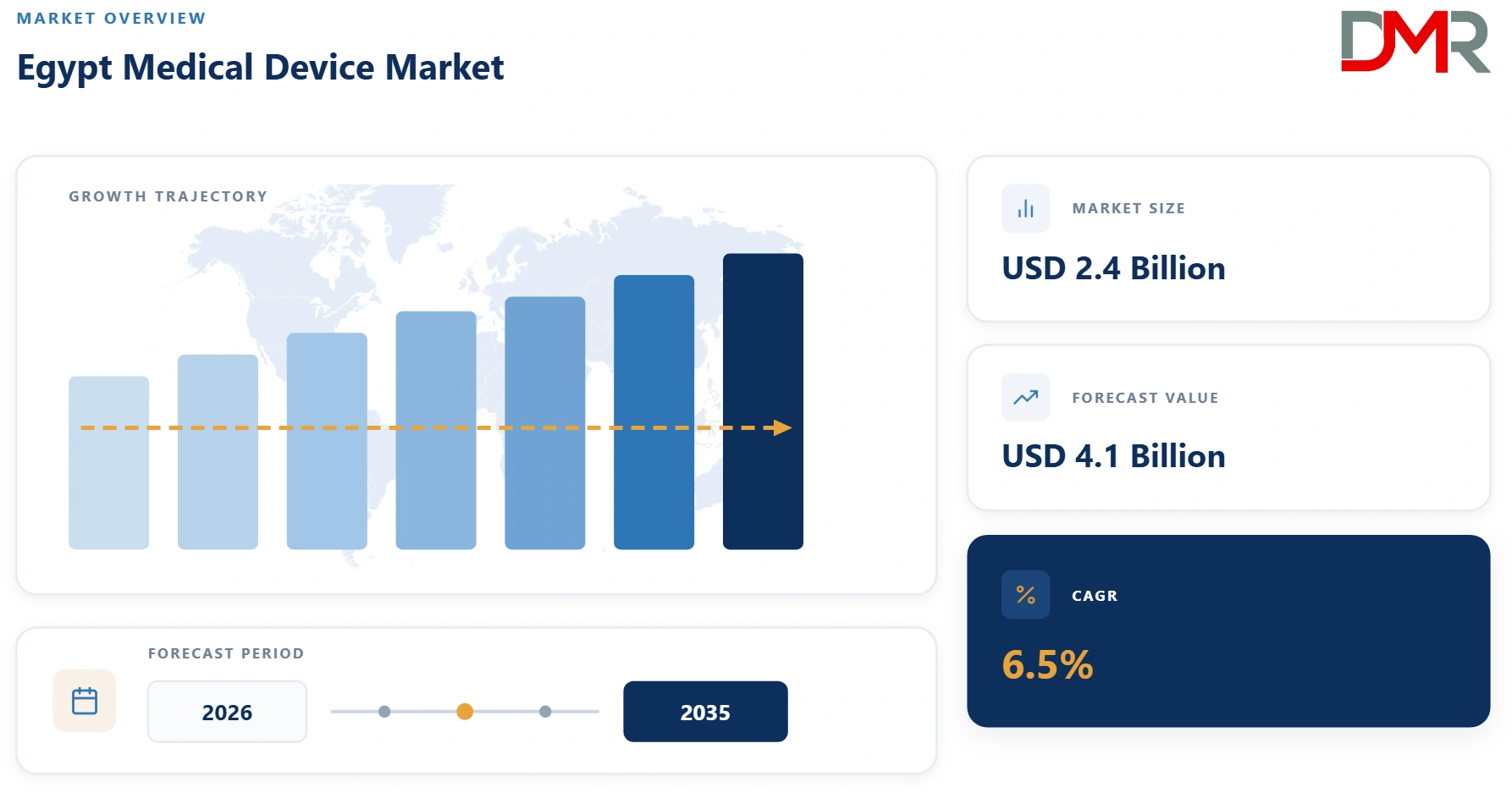
- Market Size in 2026: USD 2.4 billion
- Market Size in 2035: USD 4.1 billion
- CAGR, 2026–2035: 6.5%
- Leading Product Type, 2026: Diagnostic Imaging Devices, 24.0%
- Leading Application, 2026: Cardiology, 22.0%
- Leading End Use, 2026: Hospitals, 56.0%
- Fastest-Growing Technology Segment: Connected & Digital Health Devices, 9.8% CAGR
What is the Egypt Medical Device and its Market Size?
The Egypt medical device market is estimated at USD 2.4 billion in 2026 and is projected to reach approximately USD 4.1 billion by 2035, representing a 6.5% CAGR during 2026–2035.
ℹ
To learn more about this report –
Download Your Free Sample Report Here
The Egypt medical device market comprises the sale, distribution, installation, maintenance, and servicing of medical equipment and devices used for diagnosis, monitoring, treatment, surgery, rehabilitation, and patient care. It encompasses diagnostic imaging systems, in-vitro diagnostic equipment, cardiovascular and orthopedic devices, patient-monitoring systems, surgical instruments, wearables, and digitally connected healthcare devices. The market serves public and private hospitals, diagnostic centers, clinics, ambulatory surgical centers, home healthcare providers, and other healthcare institutions. Egypt's market is characterized by substantial reliance on imported equipment, a growing domestic healthcare sector, expanding private healthcare capacity, and increasing adoption of digital and connected medical technologies.
Use Cases
- Diagnostic imaging: CT, MRI, ultrasound, and X-ray systems support disease detection, screening, treatment planning, and clinical diagnosis.
- Cardiovascular care: Monitoring, interventional, and implantable devices support diagnosis and treatment of cardiovascular conditions.
- Diabetes management: Glucose-monitoring systems and related devices facilitate continuous disease management and remote patient monitoring.
- Surgical procedures: Surgical instruments and specialized equipment enable minimally invasive and conventional procedures across hospitals and surgical centers.
- Patient monitoring: Connected monitors track vital signs in intensive care, emergency departments, wards, and home-care environments.
- Laboratory diagnostics: In-vitro diagnostic systems enable automated testing for infectious diseases, oncology, metabolic disorders, and routine clinical assessments.
Key Takeaways
- Market Size: Egypt's medical device market is estimated at USD 2.4 billion in 2026, reaching USD 4.1 billion by 2035.
- Growth Rate: The market is expected to expand at approximately 6.5% CAGR during 2026–2035.
- Key Growth Drivers: Healthcare infrastructure modernization, chronic disease prevalence, private-sector expansion, diagnostic demand, and digitalization.
- Segment Dominance: Diagnostic imaging devices represent the largest product category, while hospitals remain the dominant end-use setting.
- Fastest Growth: Connected and digital health devices are projected to expand at approximately 9.8% CAGR, benefiting from remote monitoring and healthcare digitization.
How AI, IoT and Cloud Technologies Are Transforming Egypt's Medical Device Market?
AI, IoT, cloud connectivity, and digital health technologies are increasingly being incorporated into Egypt's medical-device ecosystem. AI-assisted imaging can support radiologists in detecting abnormalities, while connected patient monitors transmit clinical data across hospital networks. Cloud platforms enable centralized storage, remote access, analytics, and integration between diagnostic equipment and electronic health systems.
These technologies can improve diagnostic consistency, reduce manual workloads, enable predictive maintenance, optimize equipment utilization, and facilitate remote patient monitoring. For hospitals operating under resource constraints, automation and centralized analytics can improve staff productivity and potentially reduce avoidable operating costs.
Key Drivers in the Egypt Medical Device Market
Healthcare Infrastructure Modernization
Egypt's healthcare infrastructure is undergoing gradual modernization across public hospitals, private healthcare networks, specialty facilities, and diagnostic centers. Replacement of aging equipment and development of new facilities create recurring demand for imaging, laboratory, monitoring, surgical, and cardiovascular devices. Public-sector procurement remains important because government healthcare institutions represent a substantial portion of national healthcare capacity. At the same time, private providers are investing in higher-quality diagnostic and treatment capabilities to differentiate their services and attract patients.
Rising Chronic Disease and Diagnostic Demand
Egypt faces a substantial burden of chronic and noncommunicable diseases, including cardiovascular disease, diabetes, cancer, and renal conditions. These diseases require repeated diagnostic testing, monitoring, imaging, and long-term treatment, creating recurring demand for medical devices rather than one-time equipment purchases. Population growth and urbanization additionally increase healthcare utilization. The increasing emphasis on early diagnosis is particularly supportive of imaging and in-vitro diagnostics.
Restraints in the Egypt Medical Device Market
Import Dependence, Currency Volatility and High Equipment Costs
Egypt's medical-device market remains significantly dependent on imported products, particularly sophisticated imaging systems, implants, advanced monitoring equipment, and specialized laboratory technologies. This creates exposure to foreign-exchange movements, international freight costs, tariffs, and supplier pricing. Currency depreciation can increase the local-currency cost of imported equipment and consumables, forcing hospitals to postpone purchases or select lower-cost alternatives.
Healthcare Budget Constraints and Procurement Complexity
Budget limitations across parts of the public healthcare system can delay procurement of sophisticated medical equipment. Government tenders can involve lengthy qualification, approval, financing, and purchasing procedures, while hospitals may have limited flexibility to make rapid capital investments. Medical-device suppliers also face challenges associated with regulatory compliance, product registration, after-sales service, and availability of trained technical personnel. A shortage of specialized biomedical-engineering capabilities can increase equipment downtime and maintenance costs.
Growth Opportunities in the Egypt Medical Device Market
Connected Healthcare and Remote Patient Monitoring
Connected medical devices represent a significant white-space opportunity as healthcare providers increasingly seek continuous patient monitoring outside traditional hospital environments. Wearable devices, connected glucose monitors, home blood-pressure systems, remote cardiac monitoring, and cloud-connected patient monitors can support chronic disease management and reduce unnecessary hospital visits. Egypt's large population creates substantial potential for scalable digital healthcare models, particularly where specialist access is uneven. Device manufacturers that combine affordable hardware with cloud analytics, mobile applications, and clinical decision-support capabilities can address both healthcare-provider and consumer demand.
Local Manufacturing and Regional Healthcare Supply
Increasing healthcare demand creates an opportunity to develop local medical-device manufacturing and assembly capabilities. Localization can reduce exposure to foreign-exchange fluctuations, improve supply-chain resilience, shorten delivery times, and potentially lower costs for selected product categories. Opportunities are particularly relevant for consumables, basic diagnostic equipment, patient-monitoring accessories, surgical instruments, and selected hospital equipment. Egypt's geographic position also provides a potential platform for supplying medical products to neighboring African and Middle Eastern markets.
Trends in the Egypt Medical Device Market
Shift Toward Digital and Connected Medical Devices
Egypt's medical-device industry is gradually moving from standalone hardware toward connected systems that integrate sensors, software, analytics, and hospital information platforms. Connected monitoring, cloud-based data management, AI-assisted diagnostics, and mobile healthcare applications are gaining strategic importance. The trend is particularly relevant for chronic disease management and remote care, where continuous data can supplement periodic hospital visits.
Greater Demand for Cost-Efficient and Minimally Invasive Care
Healthcare providers are increasingly focused on improving clinical outcomes while managing constrained budgets. This is supporting interest in minimally invasive procedures, automated diagnostics, efficient laboratory platforms, and devices that reduce hospital length of stay. Manufacturers that demonstrate lower total cost of ownership, energy efficiency, maintenance support, and improved utilization can gain an advantage.
Research Scope and Analysis
The Egypt medical device market is analyzed by Product Type, Application, End Use, and Technology. The assessment considers equipment demand, healthcare-provider purchasing patterns, technological adoption, chronic-disease requirements, infrastructure development, and the evolving role of digital healthcare.
ℹ
To learn more about this report –
Download Your Free Sample Report Here
By Product Type Analysis
Diagnostic Imaging Devices are estimated to be the dominant product category in 2026, accounting for approximately 24.0% of market revenue, supported by widespread use of X-ray and ultrasound and continued investment in CT and MRI capacity. Imaging equipment benefits from demand across oncology, cardiology, orthopedics, emergency care, and general diagnostics, making it a foundational hospital investment. In Vitro Diagnostics, with an estimated 19.0% share, represent the second-largest category, supported by high testing volumes for infectious, metabolic, hematological, and chronic diseases. Connected and advanced patient-monitoring solutions, within the broader technology landscape, are expected to generate the fastest product-level growth where linked monitoring systems expand beyond intensive-care environments. Surgical instruments, cardiovascular devices, orthopedic devices, and patient-monitoring equipment remain important contributors, with cardiovascular and monitoring technologies benefiting from Egypt's chronic-disease burden. Growth will increasingly favor devices offering automation, interoperability, lower operating costs, and improved clinical productivity.
By Application Analysis
Cardiology is expected to lead the application landscape in 2026, representing approximately 22.0% of market demand, reflecting the significant burden of cardiovascular disease and continuing investment in cardiovascular diagnostics, monitoring, intervention, and surgery. Oncology is estimated to be the second-largest application at approximately 18.0%, supported by increasing cancer screening, imaging, pathology, treatment planning, and monitoring requirements. Diabetes management is projected to be the fastest-growing application, with an estimated 8.9% CAGR, driven by increasing use of glucose-monitoring technologies, connected devices, and home-based disease management. Orthopedics also represents an important demand center because of population aging, trauma, and elective procedures, while neurology is benefiting from greater diagnostic awareness and improved access to specialized imaging and monitoring. Over time, digital monitoring is expected to blur the traditional boundaries between hospital-based applications and home healthcare.
By End Use Analysis
Hospitals dominate Egypt's medical-device market, accounting for an estimated 56.0% share in 2026, because they operate the widest range of diagnostic, surgical, intensive-care, imaging, and monitoring equipment. Public and private hospitals are therefore central to capital-equipment procurement and replacement cycles. Diagnostic and imaging centers represent the second-largest end-use category, estimated at approximately 17.0%, supported by increasing demand for outpatient diagnostics and private-sector imaging services. Home healthcare is expected to be the fastest-growing end-use segment, with an estimated 10.2% CAGR, driven by connected monitoring, aging populations, chronic disease management, and pressure to reduce hospital utilization. Ambulatory surgical centers should also expand as healthcare systems seek shorter stays and lower procedural costs. Clinics remain important for primary and specialty care, particularly for basic diagnostic and monitoring equipment.
By Technology Analysis
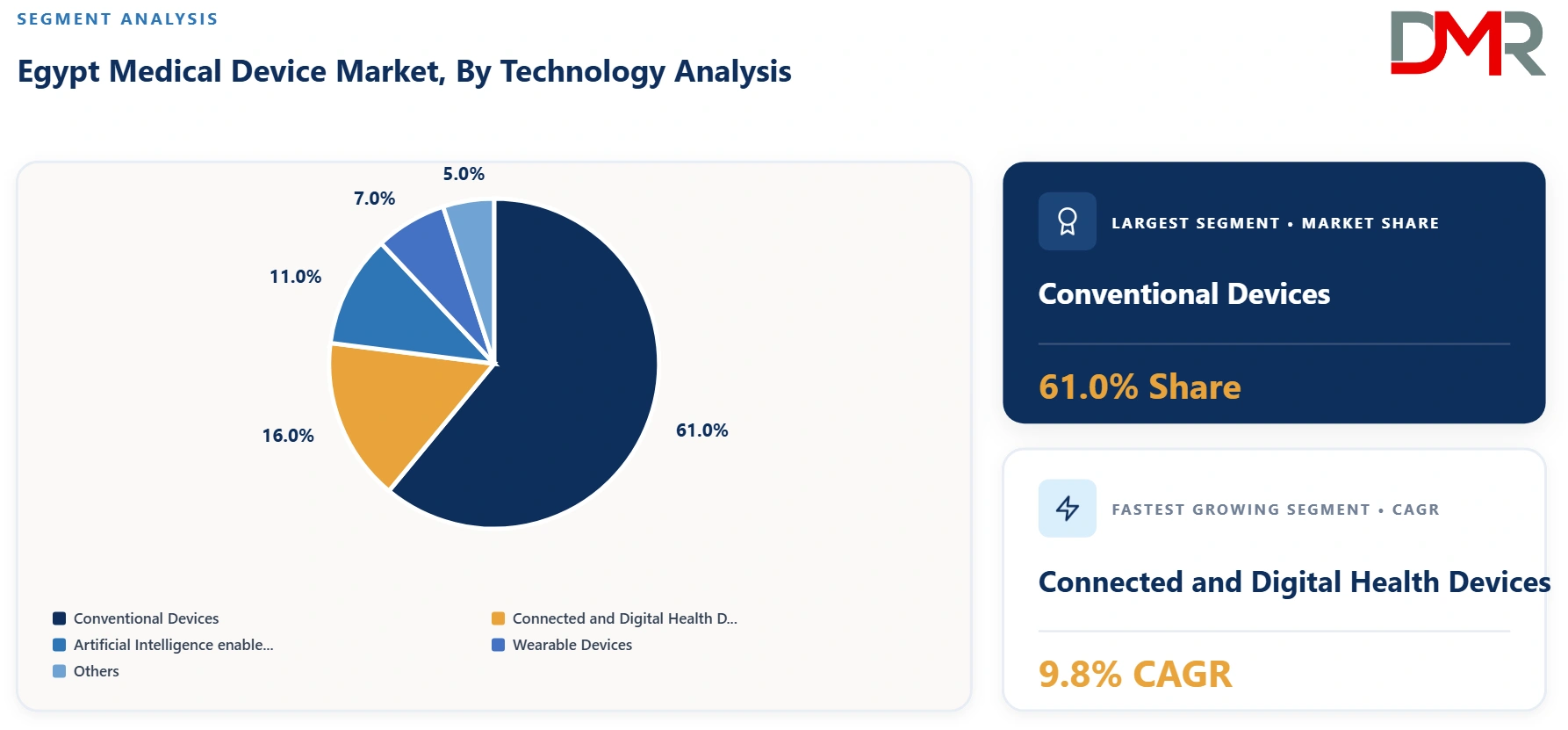
Conventional Devices remain the largest technology category in 2026, accounting for approximately 61.0% of the market because most Egyptian healthcare facilities continue to depend on established diagnostic, surgical, monitoring, and laboratory equipment. Connected and Digital Health Devices represent the second-largest technology category at approximately 16.0%, supported by expanding healthcare digitalization and remote-monitoring initiatives. They are also expected to be the fastest-growing segment, at approximately 9.8% CAGR through 2035, as providers seek real-time data, remote patient management, and improved workflow efficiency. AI-enabled diagnostic systems are growing from a smaller base but offer significant long-term potential in radiology and pathology. Wearable devices are also expanding as consumers and providers increasingly adopt continuous monitoring. However, cybersecurity, interoperability, reimbursement, infrastructure, and clinician acceptance will determine the speed at which digitally enabled technologies become mainstream.
By Distribution Channel Analysis
Direct Tenders and Public Procurement are estimated to be the dominant distribution channel in the Egypt Medical Device Market in 2026, accounting for approximately 42.0% of total market revenue, supported by the substantial role of public hospitals, government healthcare institutions, and centralized procurement programs in medical-equipment purchasing. This channel is particularly important for high-value equipment such as diagnostic imaging systems, patient-monitoring equipment, surgical systems, and laboratory platforms. Third-Party Distributors represent the second-largest channel, with an estimated 31.0% share, benefiting from their regulatory expertise, established healthcare relationships, warehousing capabilities, and after-sales service networks. Online Channels are expected to be the fastest-growing distribution segment, with an estimated 11.5% CAGR through 2035, driven by increasing digital procurement, availability of lower-value medical devices, home-monitoring equipment, and healthcare accessories. Retail pharmacies remain relevant for consumer-oriented devices such as glucose meters, blood-pressure monitors, and selected home-care products, while direct sales by manufacturers are increasingly important for sophisticated systems requiring installation, training, and ongoing technical support.
The Egypt Medical Device Market Report is segmented on the basis of the following:
By Product Type
- Diagnostic Imaging Devices
- In Vitro Diagnostics
- Cardiovascular Devices
- Orthopedic Devices
- Patient Monitoring Devices
- Surgical Instruments
- Others
By Application
- Cardiology
- Orthopedics
- Oncology
- Neurology
- Diabetes Management
- Others
By End Use
- Hospitals
- Diagnostic and Imaging Centers
- Ambulatory Surgical Centers
- Home Healthcare
- Clinics
- Others
By Technology
- Conventional Devices
- Connected and Digital Health Devices
- Artificial Intelligence enabled Diagnostic Systems
- Wearable Devices
- Others
By Distribution Channel
- Direct Tenders and Public Procurement
- Third Party Distributors
- Retail Pharmacies
- Online Channels
- Others
Regulatory Landscape
Egypt's medical-device industry is influenced by national registration, quality, importation, procurement, and healthcare regulations, creating both compliance requirements and barriers to entry. Regulatory modernization can improve transparency and accelerate access to innovative technologies, while complex registration procedures may lengthen product-launch timelines. International manufacturers must also account for documentation, local representation, product classification, quality systems, and post-market requirements. Regulatory convergence with international standards would support multinational participation and improve confidence in locally manufactured devices. The key risk is that regulatory complexity and changing requirements can increase administrative costs. Companies with established local regulatory expertise, distribution networks, and after-sales capabilities are therefore positioned to compete more effectively.
Investment and White Space Analysis
Investment opportunities are strongest in diagnostic imaging, laboratory automation, connected patient monitoring, home healthcare, and affordable medical consumables. Private healthcare expansion creates demand for high-performance equipment, while public-sector modernization supports large-scale procurement opportunities. The greatest white space exists where advanced technology can be offered at a lower total cost of ownership. Connected chronic-disease management is particularly attractive because it can combine device sales with recurring software and monitoring revenues. Local assembly and manufacturing also offer strategic potential by reducing import exposure. Major risks include currency volatility, limited capital budgets, procurement delays, reimbursement constraints, and shortages of specialized technical personnel. Strategic partnerships with hospitals, distributors, telecom operators, and local manufacturers can reduce market-entry risk.
Competitive Landscape
The Egypt medical-device market is moderately fragmented, combining multinational medical-technology companies, regional suppliers, specialized distributors, local manufacturers, and lower-cost Asian suppliers. Multinational companies generally compete through technological differentiation, clinical evidence, brand reputation, training, financing, and after-sales service, while regional and local players often compete on price, distribution reach, customization, and responsiveness. Partnerships with distributors and healthcare providers remain important because imported equipment requires regulatory, logistics, installation, and maintenance support. Competitive differentiation increasingly depends on total cost of ownership rather than initial purchase price. Companies are also pursuing digital integration, AI-enabled products, local partnerships, portfolio expansion, and geographic penetration beyond Cairo and other major urban centers.
Some of the prominent players in the Egypt Medical Device Market are:
- Siemens Healthineers
- GE HealthCare
- Philips Healthcare
- Medtronic
- Abbott Laboratories
- Stryker
- Johnson & Johnson
- B. Braun
- Boston Scientific
- Roche Diagnostics
- BD (Becton, Dickinson and Company)
- Fresenius Medical Care
- Olympus
- Zimmer Biomet
- Terumo
- Cardinal Health
- Thermo Fisher Scientific
- Hologic
- Canon Medical Systems
- Mindray
- Fujifilm Healthcare
- BioMérieux
- Carestream Health
- Allengers Medical Systems
- Edwards Lifesciences
- Baxter
- Abbott Medical Devices
- Smith+Nephew
- Cook Medical
- Karl Storz
- Getinge
- Draeger
- ResMed
- Edwards Lifesciences
- Nipro
- Olympus Surgical Technologies
- Konica Minolta Healthcare
- Nihon Kohden
- Masimo
- Hologic Diagnostics
- Other Key Players
Recent Developments
- In August 2026, competition increasingly shifted toward value-based propositions, with suppliers emphasizing financing, lifecycle maintenance, training, energy efficiency, and lower total cost of ownership alongside equipment specifications.
- In July 2026, healthcare technology companies expanded partnerships involving digital health, hospital information systems, and connected devices, supporting broader integration of medical equipment with digital clinical workflows.
- In May 2026, medical-technology suppliers increasingly emphasized connected patient-monitoring portfolios, reflecting the growing importance of remote monitoring, centralized clinical data, and chronic-disease management.
- In March 2026, regional healthcare providers accelerated investment in advanced diagnostic and hospital infrastructure, creating opportunities for international equipment suppliers while increasing demand for local technical-service and maintenance capabilities.
- In January 2026, major global device manufacturers continued expanding AI-enabled imaging and clinical workflow capabilities, increasing competitive pressure on Egyptian suppliers to provide software-enabled diagnostic systems rather than standalone imaging hardware.
Report Details
| Report Characteristics |
| Market Size (2026) |
USD 2.4 Bn |
| Forecast Value (2035) |
USD 4.1 Bn |
| CAGR (2026–2035) |
6.5% |
| Historical Data |
2021 – 2025 |
| Forecast Data |
2026 – 2035 |
| Base Year |
2025 |
| Segments Covered |
By Product Type, By Application, By End Use, By Technology, By Distribution Channel |
| Country Coverage |
Egypt |
Frequently Asked Questions
What is the projected size of the Egypt Medical Device Market in 2035?
▾ The Egypt Medical Device Market is estimated to reach approximately USD 4.1 billion by 2035, compared with USD 2.4 billion in 2026.
What CAGR is expected for the Egypt Medical Device Market?
▾ The Egypt Medical Device Market is projected to expand at approximately 6.5% CAGR from 2026 to 2035, supported by healthcare infrastructure development and technology adoption.
What are the key factors driving the Egypt Medical Device Market?
▾ The Egypt Medical Device Market is driven by healthcare modernization, chronic disease prevalence, private healthcare expansion, rising diagnostic demand, and increasing digitalization.
Which product segment leads the Egypt Medical Device Market?
▾ Diagnostic Imaging Devices lead the Egypt Medical Device Market in 2026, accounting for approximately 24.0% of total market revenue.
Which technology segment is growing fastest in the Egypt Medical Device Market?
▾ Connected and Digital Health Devices are expected to be the fastest-growing technology segment in the Egypt Medical Device Market, recording approximately 9.8% CAGR through 2035.
Who are the major players in the Egypt Medical Device Market?
▾ The Egypt Medical Device Market includes multinational medical-technology companies, regional manufacturers, local suppliers, specialized distributors, and value-oriented international equipment providers.
What are the major trends shaping the Egypt Medical Device Market?
▾ Major trends in the Egypt Medical Device Market include AI-enabled diagnostics, connected devices, remote patient monitoring, minimally invasive procedures, laboratory automation, and cost-efficient healthcare technologies.
How is the Egypt Medical Device Market segmented?
▾ The Egypt Medical Device Market is segmented by Product Type, Application, End Use, Technology, and Distribution Channel, providing a comprehensive assessment of market demand.