Market Overview
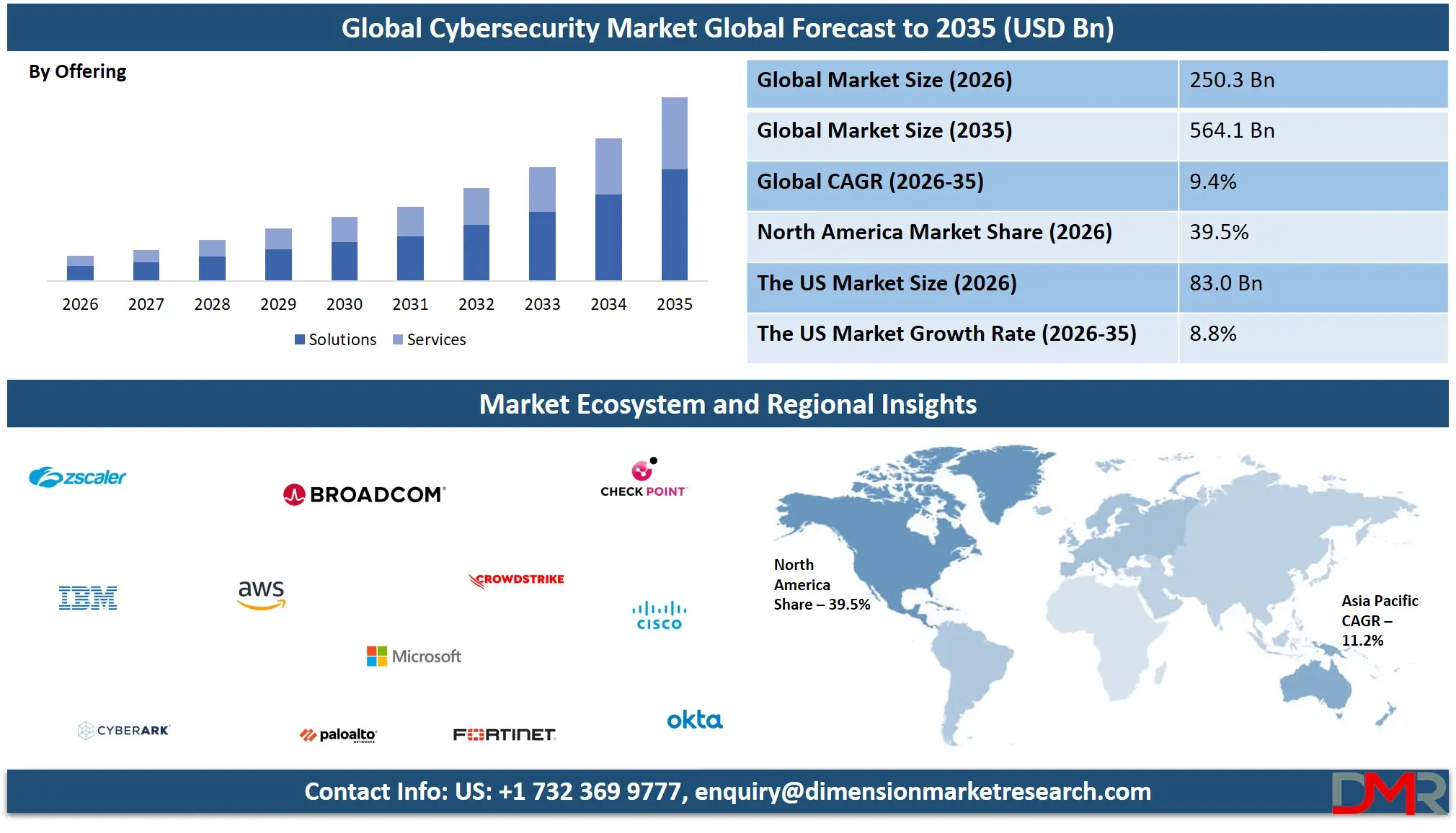
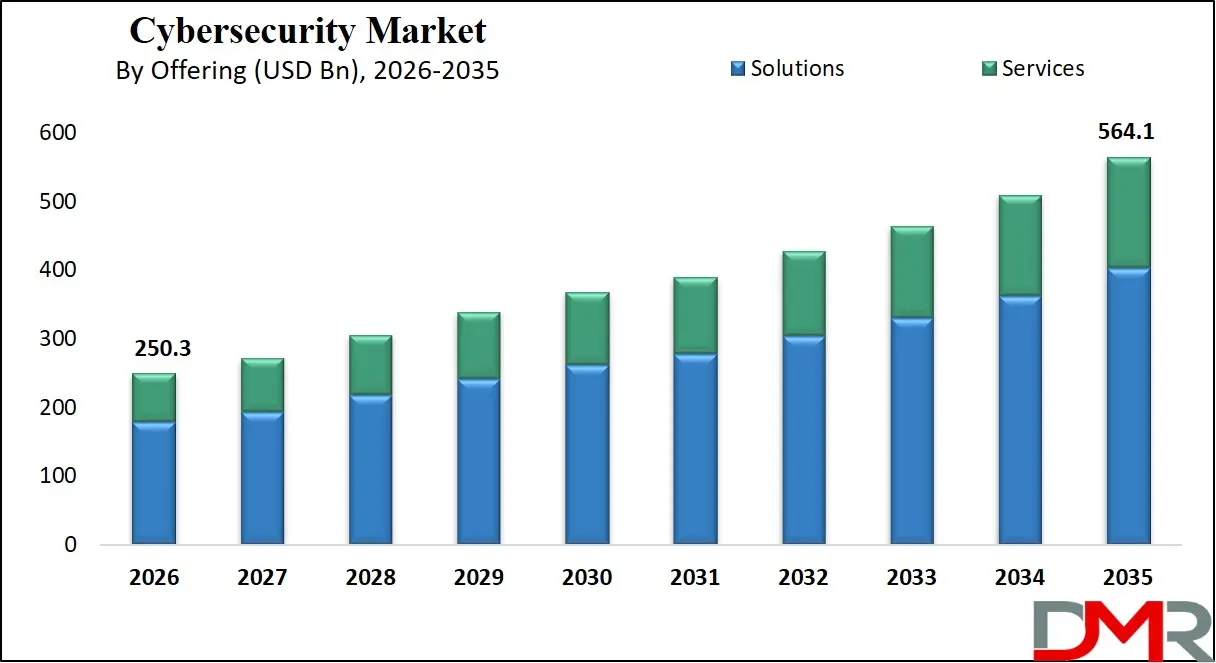
The Global Cybersecurity Market size is projected to reach USD 250.3 billion in 2026 and grow at a compound annual growth rate of 9.4% to reach a value of USD 564.1 billion in 2035.
ℹ
To learn more about this report –
Download Your Free Sample Report Here
Cybersecurity is the practice of protecting people, systems, and data from cyber threats. It involves applying various technologies, processes, and policies to achieve this protection. It is one of the important aspects in the risk management process, especially in the management of cyber risks.
These cyber risks include ransomware, malware, phishing, data breach, specialized cyber-attacks using artificial intelligence, among many others. As the number of these cyber risks increases, the investments in the mitigation of these risks also increase, thus the job opportunities in this field as the demand for cybersecurity experts increases.
ℹ
To learn more about this report –
Download Your Free Sample Report Here
The US Cybersecurity Market
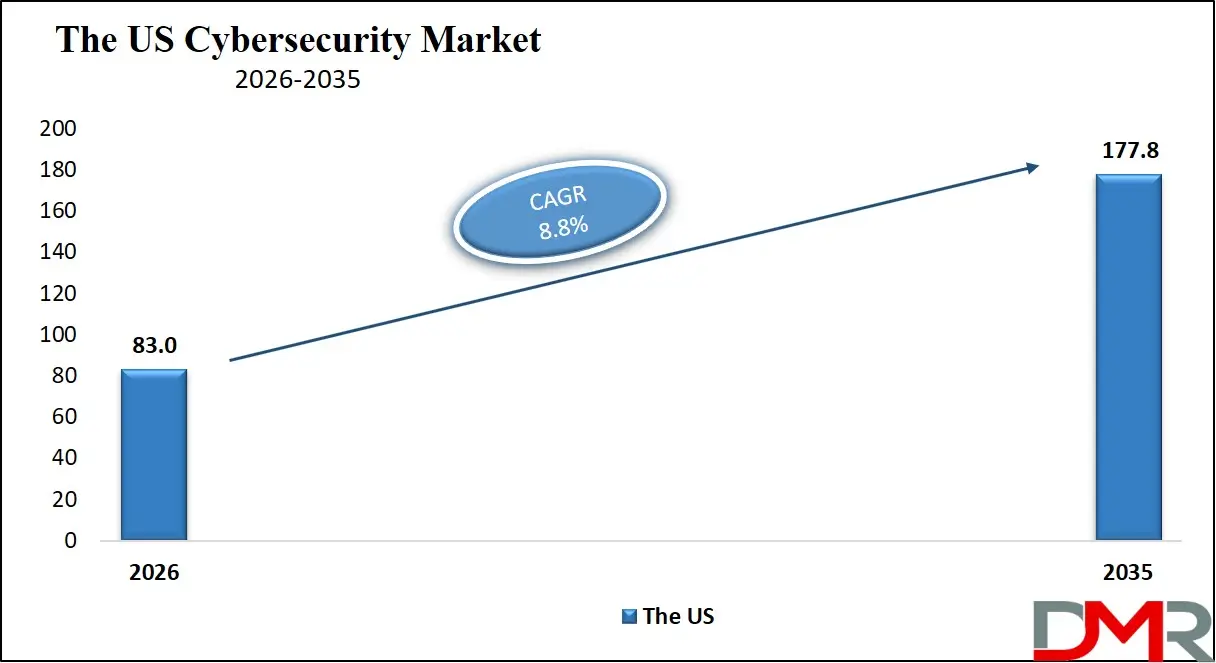
The US Cybersecurity Market size is projected to reach USD 83.0 billion in 2026 at a compound annual growth rate of 8.8% over its forecast period.
ℹ
To learn more about this report –
Download Your Free Sample Report Here
The US cybersecurity market is driven by the increase in cyber-attacks, strict data protection laws, and a growing trend of digital transformation in the region. The adoption of technologies like cloud computing, IoT, and AI is also contributing to the growth of the US cybersecurity market, which is a significant opportunity for growth in this region.
Europe Cybersecurity Market
Europe Cybersecurity Market size is projected to reach USD 62.6 billion in 2026 at a compound annual growth rate of 8.7% over its forecast period.
The Europe cybersecurity market is fueled by stringent data protection regulations, rising cyberattacks, and digital transformation in the region. The use of cloud technology and remote work arrangements has fueled the need for security solutions. The market has growth opportunities in data protection solutions, zero-trust security solutions, and artificial intelligence-based threat intelligence solutions.
Japan Cybersecurity Market
Japan Cybersecurity Market size is projected to reach USD 12.5 billion in 2026 at a compound annual growth rate of 8.9% over its forecast period.
The Japan cybersecurity market is also influenced by several factors such as an increase in cybersecurity threats, an increase in digitalization, and government initiatives to improve data and infrastructure security. The increase in IoT-based technologies may give a boost to the cybersecurity market. The opportunities in the Japan cybersecurity market are based on AI-based cybersecurity solutions, cloud-based cybersecurity solutions, and industrial cybersecurity solutions, where companies are looking to improve the security of advanced manufacturing systems.
Cybersecurity Market: Key Takeaways & Other Influencing Factors
- Market Growth: The Cybersecurity Market size is expected to grow by USD 292.6 billion, at a CAGR of 9.4%, during the forecasted period of 2027 to 2035.
- By Offering: The solutions segment is anticipated to get the majority share of the Cybersecurity market in 2026.
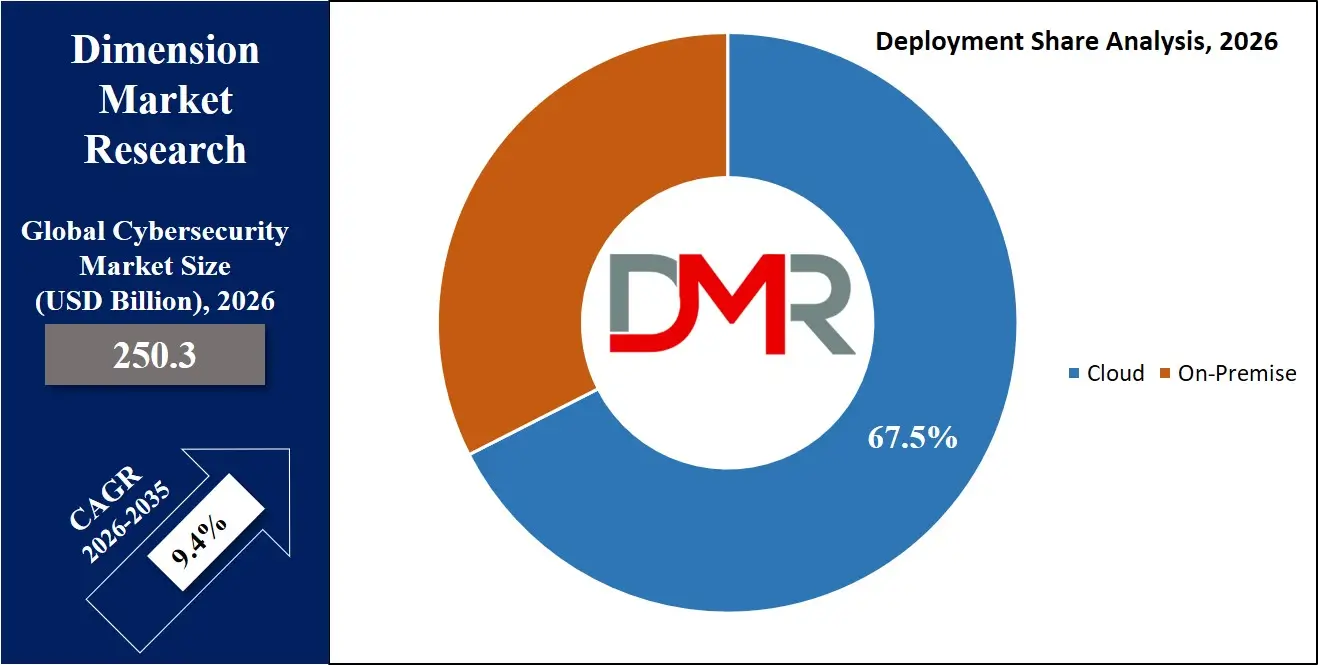
- By Deployment: The cloud segment is expected to get the largest revenue share in 2026 in the Cybersecurity market.
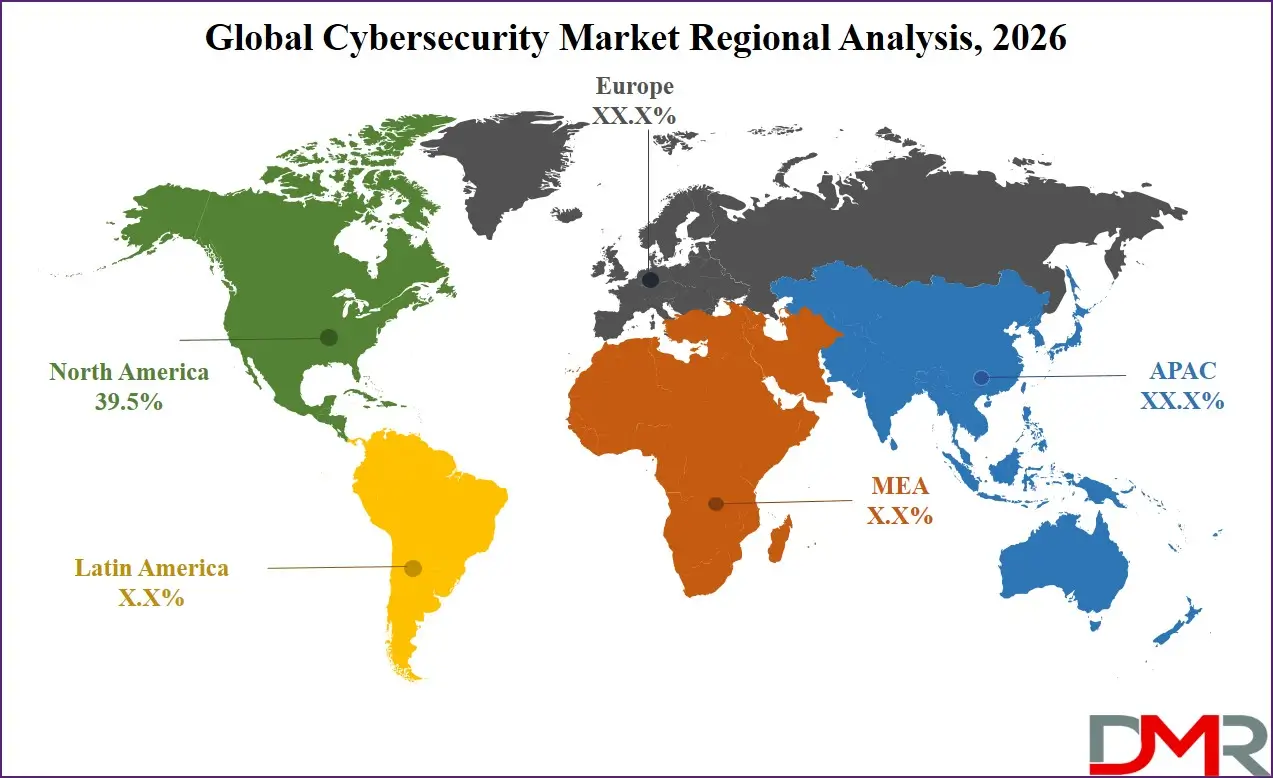
- Regional Insight: North America is expected to hold a 39.5% share of revenue in the global Cybersecurity market in 2026.
- Use Cases: Some of the use cases of Cybersecurity include network security, cloud security, and more.
- CrowdStrike Global Threat Report: As per CrowdStrike:
- 27 sec is the fastest eCrime breakout time on record
- 89% increase in attacks by AI-enabled adversaries
- 42% increase in zero-day vulnerabilities exploited before public disclosure
- 40% of vulnerabilities exploited by China-nexus threat actors targeted edge devices
- 266% increase in cloud-conscious intrusions by state-nexus threat actors
Cybersecurity Market: Use Cases
- Network Security: Network security is used to protect enterprise networks from unauthorized access and cyber-attacks. In network security, firewalls, intrusion detection systems, monitoring systems, secure communication, and data transfer are used.
- Cloud Security: Cloud security is used to protect data, applications, and services in the cloud computing environment. Cloud security uses various mechanisms such as encryption, identity management, access control systems, etc. Cloud security is used to attain digital transformation.
- Endpoint Security: Endpoint security is used to protect devices such as laptops, mobile phones, servers, etc., from various security threats. In endpoint security, various mechanisms such as antivirus systems, endpoint detection response systems, etc., are used to protect devices from various security threats such as unauthorized access, malware, ransomware, etc.
- Data Protection and Privacy: Data protection and privacy are used to protect data from unauthorized access. Data protection and privacy use various mechanisms such as encryption, data loss prevention, data backup, etc., to protect data from unauthorized access. Data protection and privacy also help in data privacy laws.
Market Dynamic
Driving Factors in the Cybersecurity Market
Increase in Cyber Threats and Attacks
One of the major reasons for the higher adoption of cybersecurity solutions is the rise in cyber-attacks, like ransomware and AI-based cyber-attacks, which are forcing businesses all over the world to opt for the best cybersecurity solutions.
Increased Rate of Digital Transformation and Cloud Adoption
The growth in the adoption rate of digital technologies, like cloud computing and IoT, is one of the major reasons for the increased adoption of cybersecurity solutions. As the number of businesses going remote is on the rise, the rise in cyber-attacks on such online businesses is also on the rise.
Restraints in the Cybersecurity Market
High Implementation Costs and Complexity
The high costs of implementing and maintaining advanced cybersecurity solutions have emerged as one of the major restraint factors for many firms. For small and medium-scale enterprises, budget constraints and the lack of skilled professionals have been major issues. The added complexity in managing multiple security solutions can, in turn, hinder the implementation of robust cybersecurity solutions.
Shortage of Skilled Cybersecurity Professionals
The scarcity of skilled cybersecurity professionals across the globe has emerged as one of the major restraint factors in the market. The lack of skilled professionals in managing complex security infrastructures has created challenges in implementing robust cybersecurity solutions. This has made it difficult for firms to implement robust cybersecurity solutions.
Opportunities in the Cybersecurity Market
Growth of AI-Driven Security Solutions
The use of artificial intelligence and machine learning in security solutions has huge growth potential. Real-time threat detection, predictive analytics, and response mechanisms can be integrated into security solutions. Cyber threats are becoming more complex, hence the need for security solutions that can efficiently address these threats through the use of artificial intelligence.
Expansion of Managed Security Services
The need for managed security services has huge growth potential in the security market. Many organizations have started adopting managed security services due to the need to reduce costs and address skill gaps. The use of managed security services has helped organizations concentrate on other business functions.
Trends in the Cybersecurity Market
Adoption of Zero Trust Architecture
One of the significant trends in the evolving cybersecurity environment is the adoption of zero trust architecture. Zero trust architecture is based on the principle that no user and no device can be trusted. In this context, zero trust architecture is being adopted by different organizations for different purposes.
Rise of Cloud Native Security Solutions
Another significant trend in the evolving cybersecurity environment is the rise of cloud native security solutions. Due to the rise of cloud security solutions, the traditional security environment is becoming less significant. Here, cloud native security solutions are becoming significant in providing different security solutions to different organizations.
Impact of Artificial Intelligence in Cybersecurity Market
Artificial intelligence is changing the landscape of cybersecurity through faster and more accurate threat detection, analysis, and response systems. It can identify unusual patterns and zero-day attacks, which may not be easily identified using other techniques.
It can also reduce human errors and increase efficiency in handling large amounts of security data. However, there is a risk of attacks from cybercriminals who are using artificial intelligence to design new attacks, which requires the development of major defense strategies.
Impact of Iran War on Cybersecurity Market
The Iran war has had a significant effect on the cybersecurity market because of the rise of cyber warfare and the high level of threats globally. As a result of the war, there is an increase in state-sponsored attacks on infrastructure and organizations. As a result, there is a need to strengthen the security posture, and this has led to the adoption of high-end security solutions. During the war, there is also an increase in cyber espionage and disruption techniques.
Research Scope and Analysis
By Offering Analysis
The solutions segment is anticipated to dominate the global cybersecurity market in 2026. It is predicted to hold a share of 71.3% due to rising cyber threats, data breaches, digital transformation, and compliance. Moreover, the services segment is predicted to witness significant growth in the coming years, considering the need for expertise, cost considerations, skill shortages, and monitoring services globally.
By Deployment Analysis
The market share of cloud as a deployment is estimated to be 67.5% in 2026, driven by the increase in cloud adoption, expansion of remote work, requirement for scalable infrastructure, and increase in cyber risks, which are boosting demand in organizations worldwide.
ℹ
To learn more about this report –
Download Your Free Sample Report Here
Further, the on-premises segment is witnessing a steady growth rate due to strict control over data, regulatory compliance, integration of existing systems, and security issues associated with cloud environments.
By Organization Size Analysis
The large enterprises are expected to hold 68.2% of the market share in the year 2026, as it assists in managing "High volume of sensitive data, complex IT infrastructure, strict compliance requirements, and rising cyber-attack risks." Furthermore, the SMEs are also expanding rapidly due to the increase in the number of cyberattacks, digitalization, lack of in-house expertise, and data protection awareness.
By End User Analysis
In 2026, the BFSI segment is set to dominate as an end user for the cybersecurity market with a 20.2% share due to the high volume of financial transactions, regulatory compliance, the rise of digital banking, and the growth of cyber fraud risks, which are propelling the demand for cybersecurity in the BFSI segment. The healthcare segment is also growing rapidly due to the rise in patient data breaches, the growth in the adoption of digital health records, the high demand for data privacy, and the growth in cyberattacks, which are propelling the demand for cybersecurity in the healthcare segment.
The Cybersecurity Market Report is segmented based on the following:
By Offering
- Solutions
- Application Security
- Cloud Security
- Data Security
- Identity and Access Management
- Infrastructure Protection
- Integrated Risk Management
- Network Security Equipment
- Consumer Security
- Other Solutions
- Services
- Professional Services
- Managed Services
By Deployment
By Organization Size
By End User
- BFSI
- Healthcare
- Construction
- Government & Defense
- IT and Telecommunication
- Retail
- Energy and Utilities
- Manufacturing
- Other End Users
Regional Analysis
Leading Region in the Cybersecurity Market
The region of North America is predicted to have the highest market share of 39.5% in the year 2026. This is due to the fact that there is a higher number of cyberattacks in the region, stringent regulations, and the fact that the region has already started adopting advanced technology.
ℹ
To learn more about this report –
Download Your Free Sample Report Here
The region has a higher number of companies, a higher rate of adoption of cloud technology, and a higher dependence on digital technology, hence the need for cybersecurity in the region. In addition, there is a higher level of investment in AI-based security solutions in the region.
Fastest Growing Region in the Cybersecurity Market
The Asia Pacific region is showing the fastest growth in the market due to the rapid digitalization of the region, the growth of internet and mobile usage, and the rise of cyber threats in the region. All these factors are contributing to the growth of the market in the region. In addition, there is growth in the expansion of cloud services, IoT, smart technology, and data protection.
By Region
North America
Europe
- Germany
- The U.K.
- France
- Italy
- Russia
- Spain
- Benelux
- Nordic
- Rest of Europe
Asia-Pacific
- China
- Japan
- South Korea
- India
- ANZ
- ASEAN
- Rest of Asia-Pacific
Latin America
- Brazil
- Mexico
- Argentina
- Colombia
- Rest of Latin America
Middle East & Africa
- Saudi Arabia
- UAE
- South Africa
- Israel
- Egypt
- Rest of MEA
Competitive Landscape
The cybersecurity market is a highly competitive one, with many global players and emerging companies offering a variety of solutions and services. The major players compete in terms of innovation in technology, quality of services, and specialization. Partnerships, acquisitions, and innovation in product portfolios make the market highly dynamic and ever-changing.
Some of the prominent players in the global Cybersecurity are:
- Microsoft
- Palo Alto Networks
- CrowdStrike
- Fortinet
- Cisco
- Check Point Software Technologies
- IBM
- Broadcom
- Amazon Web Services
- Google
- Zscaler
- Cloudflare
- Okta
- CyberArk
- Trend Micro
- Sophos
- Gen Digital
- SentinelOne
- Akamai Technologies
- Proofpoint
- Other Key Players
Recent Developments
- In February 2026, Savex Technologies, a technology solution provider, has partnered with Liongard, which will enable its platform to provide visibility, automation, and security to IT environments in India. Liongard helps in continuous discovery, tracking of configuration changes, and security vulnerabilities. Liongard offers a combination of automation and cybersecurity intelligence, which enables IT teams and managed service providers to change their approach from a reactive to a proactive risk and risk management strategy.
- In December 2025, the Cybersecurity and Infrastructure Security Agency (CISA) introduced the "Industry Engagement Platform" (IEP) to facilitate structured two-way communication with companies that are working on new security solutions. The IEP allows CISA to better understand new solutions in the tech space, while giving the industry a clear understanding of how to effectively work with the agency.
- In September 2025, Data intelligence for cybersecurity is a solution developed by Databricks to fight existing cyber threats based on AI technology in a precise, governed, and flexible manner. The solution integrates existing infrastructure, unifies data, and utilizes the open partner ecosystem to enable detection of security threats earlier, understand them fully, and respond to them quickly. Agent bricks are also provided for AI-based analysis and safe-governed actions.
Report Details
| Report Characteristics |
| Market Size (2026) |
USD 250.3 Bn |
| Forecast Value (2035) |
USD 564.1 Bn |
| CAGR (2026–2035) |
9.4% |
| The US Market Size (2026) |
USD 83.0 Bn |
| Historical Data |
2021 – 2025 |
| Forecast Data |
2027 – 2035 |
| Base Year |
2025 |
| Estimate Year |
2026 |
| Report Coverage |
Market Revenue Estimation, Market Dynamics, Competitive Landscape, Growth Factors and etc. |
| Segments Covered |
By Offering (Solutions and Services), By Deployment (Cloud and On-Premise), By Organization Size (SMEs and Large Enterprises), By End User (BFSI, Healthcare, Construction, Government & Defense, IT and Telecommunication, Retail, Energy and Utilities, Manufacturing, and Other End Users) |
| Regional Coverage |
North America – The US and Canada; Europe – Germany, The UK, France, Russia, Spain, Italy, Benelux, Nordic, & Rest of Europe; Asia-Pacific – China, Japan, South Korea, India, ANZ, ASEAN, Rest of APAC; Latin America – Brazil, Mexico, Argentina, Colombia, Rest of Latin America; Middle East & Africa – Saudi Arabia, UAE, South Africa, Turkey, Egypt, Israel, & Rest of MEA |
| Prominent Players |
Microsoft, Palo Alto Networks, CrowdStrike, Fortinet, Cisco, Check Point Software Technologies, IBM, Broadcom, Amazon Web Services, Google, Zscaler, Cloudflare, Okta, CyberArk, Trend Micro, Sophos, Gen Digital, SentinelOne, Akamai Technologies, Proofpoint, and Other Key Players |
| Purchase Options |
We have three licenses to opt for: Single User License (Limited to 1 user), Multi-User License (Up to 5 Users) and Corporate Use License (Unlimited User) along with free report customization equivalent to 0 analyst working days, 3 analysts working days and 5 analysts working days respectively. |
Frequently Asked Questions
How big is the Global Cybersecurity Market?
▾ The Global Cybersecurity Market size is expected to reach USD 250.3 billion by 2026 and is projected to reach USD 564.1 billion by the end of 2035.
Which region accounted for the largest Global Cybersecurity Market?
▾ North America is expected to have the largest market share in the Global Cybersecurity Market, with a share of about 39.5% in 2026.
How big is the Cybersecurity Market in the US?
▾ The US Cybersecurity market is expected to reach USD 83.0 billion by 2026.
Who are the key players in the Cybersecurity Market?
▾ Some of the major key players in the Global Cybersecurity Market include IBM, Google, Microsoft, and others.
What is the growth rate in the Global Cybersecurity Market?
▾ The market is growing at a CAGR of 9.4 percent over the forecasted period.