Market Snapshot
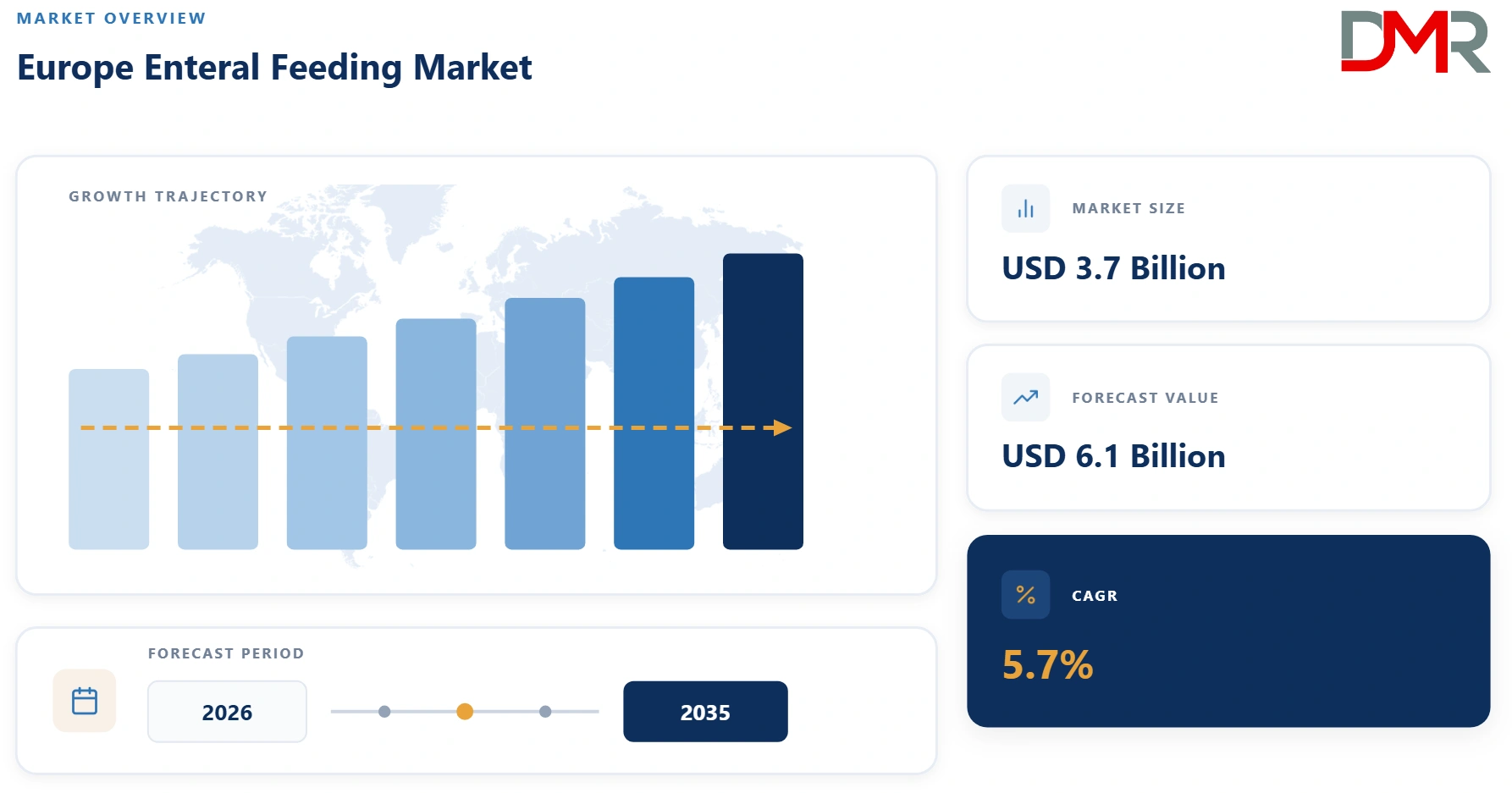
- Market Size (2026): USD 3.7 Bn
- Forecast Value (2035): USD 6.1 Bn
- CAGR (2026-2035): 5.7%
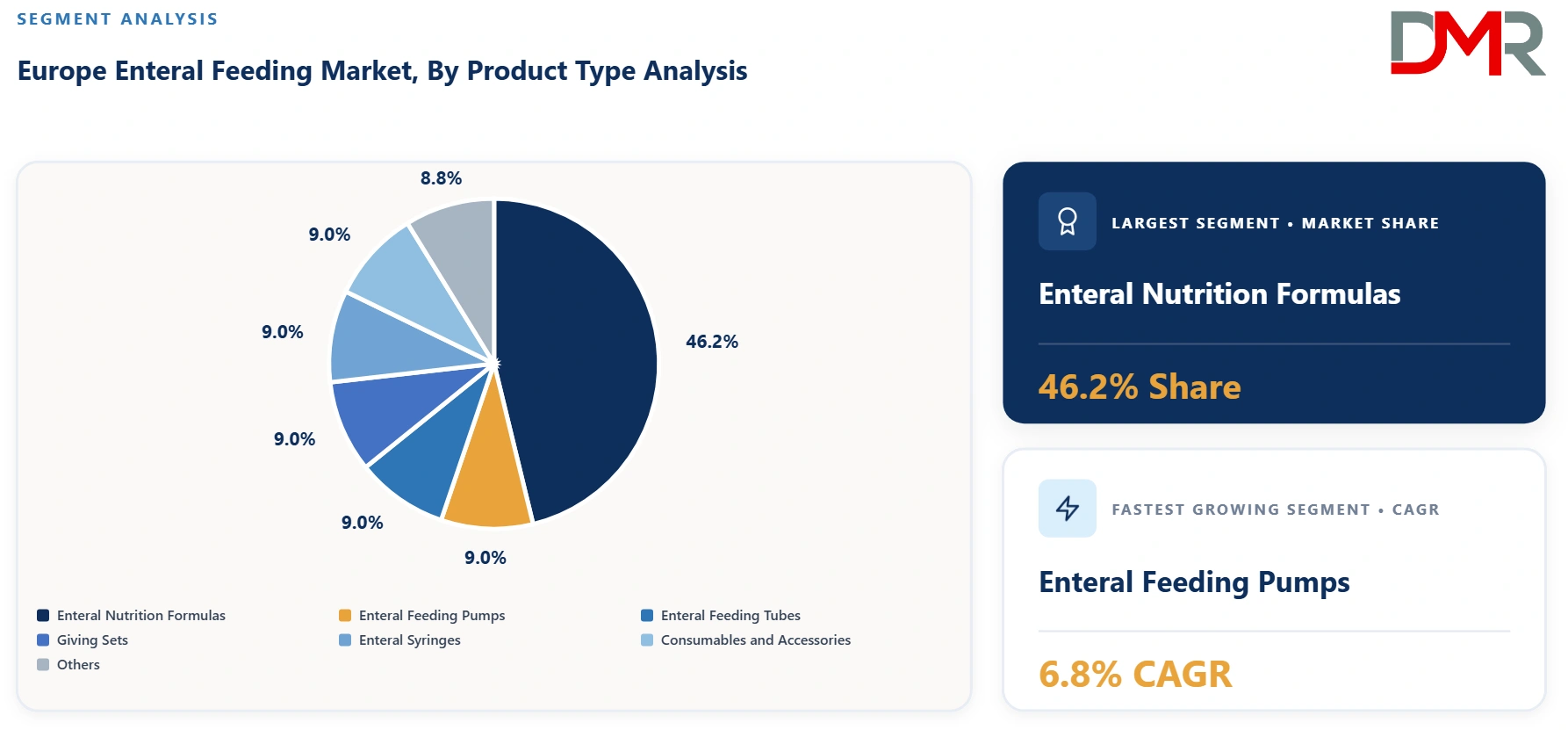
- Leading Product Type (2026): Enteral Nutrition Formulas, around 46.2%
- Leading End User (2026): Hospitals, close to 55.4%
- Key Players: Nestle Health Science, Danone S.A., Fresenius Kabi AG, and Others
What is Europe Enteral Feeding Market and its Market Size?
The Europe Enteral Feeding Market size is estimated to reach USD 3.7 Bn in 2026 and is further anticipated to reach USD 6.1 Bn by 2035, at a CAGR of 5.7%.
ℹ
To learn more about this report –
Download Your Free Sample Report Here
Enteral feeding comprises the delivery of nutritionally complete or supplementary formula directly into the gastrointestinal tract when oral intake is unsafe, inadequate, or impossible. The market covers standard and disease-specific formulas, feeding pumps, nasogastric and nasoenteric tubes, gastrostomy and jejunostomy devices, low-profile buttons, giving sets, syringes, connectors, and related consumables. It excludes parenteral nutrition delivered intravenously and ordinary foods not formulated or supplied for supervised enteral nutrition.
Across Europe, enteral feeding is used in intensive care, oncology, neurology, gastrointestinal medicine, surgery, pediatrics, rehabilitation, and long-term care. Patients with dysphagia after stroke, head and neck cancer, neurodegenerative disease, severe gastrointestinal disorders, trauma, prematurity, or disease-related malnutrition may require short-term or long-term support. Purchasing decisions reflect nutritional composition, feeding-route compatibility, pump accuracy, connector safety, tube durability, tolerability, infection-control requirements, and the ability to support discharge into community care.
The commercial structure combines large medical nutrition manufacturers with device suppliers, specialist tube and pump developers, distributors, homecare providers, and contract manufacturers. Formulas generate recurring volume, while pumps may be purchased, rented, or placed under service agreements tied to disposables. Public procurement and reimbursement shape access, and country differences in hospital funding, homecare coverage, clinical guidelines, and regulatory transition affect adoption speed.
Market growth is supported by population aging, higher survival with cancer and neurological disease, wider malnutrition screening, and healthcare strategies that shorten hospital stays. At the same time, suppliers must address aspiration risk, tube displacement, clogging, gastrointestinal intolerance, caregiver training, formula wastage, connector compatibility, and administrative complexity. Products that improve safety and simplify home management are gaining strategic importance.
Use Cases
- Critical Care Nutrition: Intensive care teams use controlled enteral feeding to initiate nutrition when patients cannot consume adequate food orally, supporting energy and protein delivery while clinicians monitor tolerance, fluid balance, aspiration risk, and metabolic response.
- Oncology Support: Cancer centers use nasogastric or gastrostomy feeding and disease-appropriate formulas for patients affected by dysphagia, treatment-related mucositis, gastrointestinal complications, or severe weight loss, helping maintain nutritional status during therapy.
- Neurological and Dysphagia Care: Stroke, Parkinson's disease, motor neuron disease, dementia, and other neurological conditions can impair swallowing. Enteral systems provide a controlled route for nutrition, hydration, and selected medicines while reducing dependence on unsafe oral intake.
- Home Enteral Nutrition: Community teams supply portable pumps, tubes, giving sets, formulas, and caregiver education to clinically stable patients, allowing long-term nutritional support outside hospitals and reducing avoidable inpatient days.
Key Takeaways
- Market Size: European revenue is estimated at USD 3.7 Bn in 2026 and is forecast to reach USD 6.1 Bn by 2035.
- Product Type Analysis: Enteral Nutrition Formulas are expected to lead with approximately 46.2% of 2026 revenue.
- Route Analysis: Gastric administration is estimated to account for nearly 70.8% of demand in 2026.
- Application Analysis: Oncology is projected to lead with around 27.6%, while Neurological Disorders expand at 6.6% CAGR.
- End-user Analysis: Hospitals lead with close to 55.4%, while Home Care Settings grow fastest at 7.2% CAGR.
- Country Analysis: Germany contributes about 24.6% of 2026 revenue, while the United Kingdom records the highest projected CAGR of 6.8%.
How AI/Gen AI is Transforming the Europe Enteral Feeding Market?
Artificial intelligence is entering enteral nutrition through connected pump management, clinical decision support, and risk prediction. Algorithms can combine weight, laboratory values, diagnosis, intake, tolerance, and feeding interruptions to flag patients at risk of underfeeding or refeeding complications. Smart pump platforms can analyze delivery history, identify repeated occlusion or interruption patterns, and help hospital teams compare prescribed volume with actual administration. In homecare, remote data can support earlier troubleshooting and prioritize nurse follow-up.
Generative AI is being assessed for documentation, caregiver education, and workflow assistance rather than unsupervised treatment decisions. It can organize feeding records, draft nutrition summaries for clinician review, translate device instructions, and answer routine support questions using approved content. Adoption depends on clinical validation, protection of health data, traceable recommendations, and clear human oversight. European suppliers must also align AI-enabled functions with medical device software requirements, cybersecurity controls, and emerging AI governance obligations.
- Nutrition-risk Screening: Models identify patients requiring dietitian assessment by analyzing clinical, laboratory, and intake data.
- Delivery Variance Detection: Connected platforms compare prescribed and delivered feed volumes and highlight repeated interruptions.
- Predictive Maintenance: Pump telemetry can indicate battery, occlusion, or mechanical issues before device failure disrupts therapy.
- Caregiver Assistance: Controlled generative tools provide multilingual setup guidance and organize patient-reported tolerance information for review.
Key Drivers in the Europe Enteral Feeding Market
Growing Burden of Disease-related Malnutrition and Dysphagia
Disease-related malnutrition remains common among hospitalized older adults and patients receiving oncology, neurological, gastrointestinal, and critical care. Stroke, dementia, Parkinson's disease, head and neck cancer, and severe illness can make swallowing unsafe or reduce oral intake below nutritional requirements. European hospitals are strengthening screening and referral pathways because undernutrition is associated with delayed recovery, complications, and longer stays. Enteral feeding provides a clinically established route when the gastrointestinal tract remains functional. Demand therefore expands with aging populations, improving survival from complex disease, and wider recognition that structured nutrition support is part of treatment rather than an optional ancillary service.
Expansion of Home Enteral Nutrition and Community Care
Health systems are transferring clinically stable patients from hospitals to home and community services to reduce inpatient pressure and support quality of life. Portable pumps, low-profile gastrostomy devices, standardized connectors, and ready-to-use formulas make long-term feeding more manageable outside acute facilities. Homecare growth generates recurring demand for giving sets, syringes, tubes, accessories, and scheduled formula deliveries. It also creates service opportunities in training, logistics, pump maintenance, and remote support. Adoption depends on reimbursement, caregiver capacity, coordinated discharge planning, and rapid access to replacement products, making integrated supply and support networks an important competitive advantage.
Restraints in the Europe Enteral Feeding Market
Clinical Complications and High Caregiver Burden
Enteral feeding can involve aspiration, tube displacement, occlusion, leakage, infection, skin irritation, gastrointestinal intolerance, and medication-administration errors. Safe therapy requires appropriate tube selection, placement verification, hygiene, flushing, pump programming, and monitoring of nutritional response. In home settings, patients and caregivers may find these responsibilities demanding, particularly when support is fragmented or instructions differ across providers. Complications can lead to emergency visits, device replacement, feed wastage, or therapy discontinuation. Suppliers must invest in human-factor design, clear labeling, training materials, helplines, and compatibility controls, which add cost and operational complexity.
Fragmented Reimbursement and Procurement Pressure
Coverage for formulas, devices, consumables, home delivery, and dietetic support varies across European countries and sometimes across regional payers. Tender systems can emphasize unit price even when products differ in pump reliability, connector safety, patient tolerance, or service quality. Budget pressure may limit access to premium disease-specific formulas, digitally connected pumps, or low-profile devices. Manufacturers also face compliance costs associated with medical device regulation, foods for special medical purposes, post-market surveillance, language requirements, and country-specific reimbursement evidence. These factors lengthen commercialization timelines and can disadvantage smaller suppliers without established distribution and regulatory infrastructure.
Growth Opportunities in the Europe Enteral Feeding Market
Connected Pumps and Integrated Homecare Services
Connected enteral pumps can provide delivery history, alarm patterns, device status, and adherence information to authorized clinical or service teams. When combined with home delivery, nurse support, and digital education, these systems can reduce missed feeds and improve troubleshooting. European providers seeking to expand virtual wards and community care offer a clear route for enterprise contracts. Suppliers can differentiate through intuitive interfaces, long battery life, secure connectivity, remote configuration controls, and interoperability with nutrition records. Commercial models may combine pump placement with recurring disposables and service subscriptions, creating predictable revenue while supporting continuity from hospital discharge to long-term home use.
Demand for Disease-specific, Peptide-based, and Real-food Formulas
Patients and clinicians are seeking formulas tailored to diabetes, renal disease, cancer, malabsorption, gastrointestinal intolerance, and high protein requirements. Peptide-based products can support individuals with impaired digestion, while formulas made with familiar food ingredients and plant proteins address preferences for recognizable ingredients and feeding variety. This creates opportunities for premium formulations supported by clinical evidence and improved packaging. Manufacturers can also develop modular products that allow more individualized protein, fiber, and energy delivery. Success depends on demonstrated tolerance, nutritional adequacy, pump compatibility, reimbursement positioning, and education that helps clinicians select products for defined patient needs.
Trends in the Europe Enteral Feeding Market
Standardization Around ENFit-compatible Systems
European providers continue to consolidate enteral workflows around ISO 80369-3 compliant ENFit connectors designed to reduce misconnections with unrelated medical lines. Standardization influences procurement of tubes, syringes, giving sets, medication accessories, and pumps. Hospitals are auditing legacy components, staff practices, and transition gaps to improve compatibility across wards and discharge pathways. Suppliers are responding with broader closed-system portfolios, clearer color coding, and accessories designed for low-dose accuracy. The trend supports established vendors capable of supplying complete ecosystems, although providers must manage residual compatibility issues, cleaning procedures, medication delivery, and inventory conversion.
Shift Toward Portable and Patient-centered Feeding Systems
Product development is emphasizing smaller pumps, quieter operation, longer battery life, backpack compatibility, low-profile buttons, and simplified loading of giving sets. These features are important for children, active adults, and long-term home users who want greater mobility and discretion. Manufacturers are also improving anti-free-flow controls, alarm clarity, water resistance, and user guidance. Formula packaging is moving toward ready-to-hang and direct-connect formats that reduce preparation steps and contamination risk. Patient-centered design increasingly considers the full routine, including sleep, travel, school, work, tube-site care, medication delivery, waste disposal, and emergency replacement.
Research Scope and Analysis
The report assesses product type route of administration age group application and end user while identifying the leading revenue category and the highest growth category across each axis for the 2026 to 2035 forecast period.
ℹ
To learn more about this report –
Download Your Free Sample Report Here
By Product Type
Enteral Nutrition Formulas are estimated to lead product demand with around 46.2% of 2026 revenue. Their position reflects daily recurring consumption, broad use across hospitals and homes, and availability of standard, high-protein, fiber-containing, peptide-based, and disease-specific options. Growth, however, is concentrated in Enteral Feeding Pumps, which are forecast to expand at a CAGR of 6.8% between 2026 and 2035. Expansion is supported by portable systems, improved flow accuracy, anti-free-flow controls, and rising home use. Pump placements also stimulate recurring demand for compatible giving sets and accessories, making platform economics attractive to integrated suppliers.
By Route of Administration
Gastric administration is expected to account for approximately 70.8% of 2026 revenue because nasogastric and gastrostomy routes are widely used when the stomach can receive and process feed safely. The route is familiar to clinicians and supports a broad range of bolus, gravity, and pump-assisted protocols. Growth, however, is concentrated in Post-pyloric administration, projected to expand at a CAGR of 6.4% from 2026 to 2035. Jejunal and gastrojejunal approaches are used when gastric feeding is poorly tolerated or aspiration risk is elevated. Growth will be supported by critical care, gastrointestinal surgery, severe reflux, and complex pediatric nutrition.
By Age Group
Adults are estimated to lead with nearly 82.6% of 2026 revenue, reflecting the large population affected by cancer, stroke, neurological disease, critical illness, and age-related swallowing disorders. Adult demand also includes long-term home feeding and care-home use. Growth, however, is concentrated in Pediatrics, expected to register a CAGR of 6.5% through 2035. Pediatric adoption is supported by improved survival among premature infants and children with congenital, neurological, metabolic, or gastrointestinal conditions. Growth favors low-dose accuracy, neonatal-specific connectors, small-bore tubes, low-profile buttons, and formulas tailored to growth, allergy, malabsorption, and feeding tolerance.
By Application
Oncology is projected to lead applications with around 27.6% of revenue in 2026. Head and neck cancers, gastrointestinal malignancies, treatment-related mucositis, altered taste, and severe weight loss create substantial need for temporary or long-term nutrition support. Growth, however, is concentrated in Neurological Disorders, forecast to expand at a CAGR of 6.6% between 2026 and 2035. Stroke, Parkinson's disease, motor neuron disease, multiple sclerosis, and advanced dementia can impair swallowing and increase aspiration risk. Earlier assessment, improving survival, and structured community pathways will increase demand for gastrostomy devices, portable pumps, formulas, and caregiver support.
By End User
Hospitals are estimated to hold close to 55.4% of 2026 revenue because intensive care, surgery, oncology, neurology, and acute gastrointestinal treatment require supervised initiation and monitoring. Hospitals also perform tube placement and coordinate discharge plans. Growth, however, is concentrated in Home Care Settings, projected to advance at a CAGR of 7.2% from 2026 to 2035. Shorter hospital stays, portable equipment, home delivery, and patient preference support this shift. Suppliers that combine formulas, devices, scheduled consumables, training, and responsive technical assistance are best positioned to serve this expanding channel.
The Europe Enteral Feeding Market Report is Segmented Based on the Following
By Product Type
- Enteral Nutrition Formulas
- Enteral Feeding Pumps
- Enteral Feeding Tubes
- Giving Sets
- Enteral Syringes
- Consumables and Accessories
- Others
By Route of Administration
- Gastric
- Post-pyloric
- Others
By Age Group
By Application
- Oncology
- Neurological Disorders
- Critical Care
- Gastrointestinal Disorders
- Diabetes
- Other Applications
By End User
- Hospitals
- Home Care Settings
- Long-term Care Facilities
- Ambulatory and Specialty Care
- Others
Regulatory Landscape
The market is governed by separate but overlapping rules for medical devices and foods for special medical purposes. Pumps, tubes, giving sets, connectors, and syringes must meet applicable European medical device requirements, including classification, conformity assessment, clinical evaluation, vigilance, traceability, and post-market surveillance. Formula manufacturers must comply with EU food law and composition, labeling, notification, and medical-supervision requirements for foods for special medical purposes. ENFit-compatible components align with ISO 80369-3 safety principles. The United Kingdom operates a distinct post-Brexit pathway, requiring separate market-access planning. Suppliers must manage authorized representation, multilingual instructions, cybersecurity for connected pumps, and evidence supporting nutritional or clinical claims.
Clinical Trials Analysis
Clinical research evaluates formula tolerance, protein and energy delivery, glycemic response, gastrointestinal outcomes, body weight, treatment interruptions, and quality of life across oncology, critical care, neurology, pediatrics, and home nutrition. Device studies assess pump accuracy, usability, alarm performance, tube complications, connector safety, and placement techniques. Trials increasingly compare high-protein, peptide-based, fiber-enriched, plant-based, and real-food formulations in defined patient populations. Commercial value depends on evidence that products improve meaningful outcomes or reduce resource use rather than only meeting compositional specifications. Sponsors must account for heterogeneous diagnoses, feeding routes, concurrent treatments, and ethical challenges in recruiting critically ill or vulnerable participants.
Competitive Landscape
The European market is moderately concentrated among major medical nutrition groups and diversified device suppliers, with smaller specialists competing in tubes, buttons, pumps, connectors, and homecare support. Formula companies benefit from clinical evidence, hospital formularies, dietitian relationships, and recurring replenishment. Device suppliers compete on pump accuracy, portability, alarm management, tube comfort, connector compatibility, and breadth of disposables. Public tenders favor scale and service coverage, while homecare contracts require dependable delivery, training, and technical support. Partnerships between formula manufacturers, device companies, distributors, and community providers are common. Acquisition activity is strengthening whole-food and specialized formula portfolios, while regulatory costs and procurement consolidation create barriers for smaller entrants.
Some of the Prominent Players in the Europe Enteral Feeding Market Are:
- Nestle Health Science
- Danone S.A. (Nutricia)
- Fresenius Kabi AG
- Abbott Laboratories
- B. Braun SE
- Cardinal Health, Inc.
- Avanos Medical, Inc.
- Becton, Dickinson and Company
- Boston Scientific Corporation
- Cook Medical LLC
- Vygon S.A.
- Moog Inc.
- Applied Medical Technology, Inc.
- Amsino International, Inc.
- Medela AG
- Convatec Group Plc
- Baxter International Inc.
- Medtronic plc
- Nipro Corporation
- Terumo Corporation
- QMD
- GBUK Group Ltd.
- Medicina Ltd.
- HMC Group
- Farla Medical Ltd.
- Sterimed Group
- Primed Halberstadt Medizintechnik GmbH
- Angiplast Pvt. Ltd.
- Fidmi Medical Ltd.
- Kangaroo Medical Products
- Medline Industries, LP
- ICU Medical, Inc.
- Reckitt Benckiser Group plc
- Kate Farms, Inc.
- Hormel Health Labs
- Ajinomoto Cambrooke, Inc.
- Otsuka Pharmaceutical Co., Ltd.
- Meiji Holdings Co., Ltd.
- Victus, Inc.
- Functional Formularies LLC
- Other Key Players
Recent Developments
- In March 2026, Nestle Health Science introduced a complete nutritional solution designed for children, extending its specialized medical nutrition portfolio for patients requiring supervised nutritional support.
- In 2025, Fresenius Kabi expanded the availability of Fresubin Plant Based, strengthening plant-based options within its enteral and oral clinical nutrition portfolio.
- In March 2025, a multidisciplinary ENFit quality-improvement initiative reported full compliance with ENFit enteral device management after standardizing products and clinical practices.
- In November 2024, Applied Medical Technology completed a digital resource redesign and announced continued mobile-support improvements for users of its enteral device portfolio.
- In May 2024, Danone completed the acquisition of Functional Formularies, expanding its whole-food tube-feeding capabilities and broader medical nutrition portfolio.
Report Details
| Report Characteristics |
| Market Size (2026) |
USD 3.7 Bn |
| Forecast Value (2035) |
USD 6.1 Bn |
| CAGR (2026–2035) |
5.7% |
| Historical Data |
2021 – 2025 |
| Forecast Data |
2026 – 2035 |
| Base Year |
2025 |
| Segments Covered |
By Product Type, By Route of Administration, By Age Group, By Application, By End User |
| Geographic Coverage |
Germany, France, United Kingdom, Italy, Spain, Rest of Europe |
Frequently Asked Questions
How big is the Europe Enteral Feeding Market?
▾ The Europe Enteral Feeding Market is estimated to reach USD 3.7 Bn in 2026 and is projected to reach USD 6.1 Bn by 2035, expanding at a CAGR of 5.7%.
What is the growth rate of the Europe Enteral Feeding Market?
▾ The market is expected to expand at a CAGR of 5.7% from 2026 to 2035, supported by population aging, disease-related malnutrition, home enteral nutrition, and growing demand for portable feeding systems.
Which country holds the largest share in the Europe Enteral Feeding Market?
▾ Germany is estimated to lead the European market with approximately 24.6% of 2026 revenue, supported by its large hospital system, aging population, clinical nutrition infrastructure, and established homecare services.
Who are the key players in the Europe Enteral Feeding Market?
▾ Prominent participants include Nestle Health Science, Danone S.A., Fresenius Kabi AG, and Abbott Laboratories, alongside device specialists supplying pumps, tubes, connectors, syringes, and homecare systems.
Which segment is leading the Europe Enteral Feeding Market?
▾ Enteral Nutrition Formulas lead the product category with an estimated 46.2% share in 2026 because they generate recurring demand across hospitals, long-term care, oncology, critical care, and home nutrition.
Which segment is expanding fastest in the Europe Enteral Feeding Market?
▾ Home Care Settings are projected to record the highest end-user growth at a CAGR of 7.2% through 2035, supported by shorter hospital stays, portable pumps, home delivery, and community support services.
What are the major growth drivers in the Europe Enteral Feeding Market?
▾ Growth is primarily driven by the rising prevalence of disease-related malnutrition and dysphagia, aging populations, improved survival with complex diseases, and continued expansion of home and community-based enteral nutrition programs.