Europe Medical Devices Market Snapshot
- European Medical Devices Market Size in 2026: USD 157.7 Billion
- European Medical Devices Market Size in 2035: USD 244.4 Billion
- European CAGR from 2026 to 2035: 5.0%
- Diagnostic Devices is the leading product type segment in 2026: 34.8%
- Class II Medical Devices is the leading device class segment in 2026: 43.6%
- Conventional Medical Devices is the leading technology segment in 2026: 45.2%
- Cardiology is the leading application segment in 2026: 20.8%
- Hospitals is the leading end-user segment in 2026: 49.1%
What is the Europe Medical Devices and its Market Size?
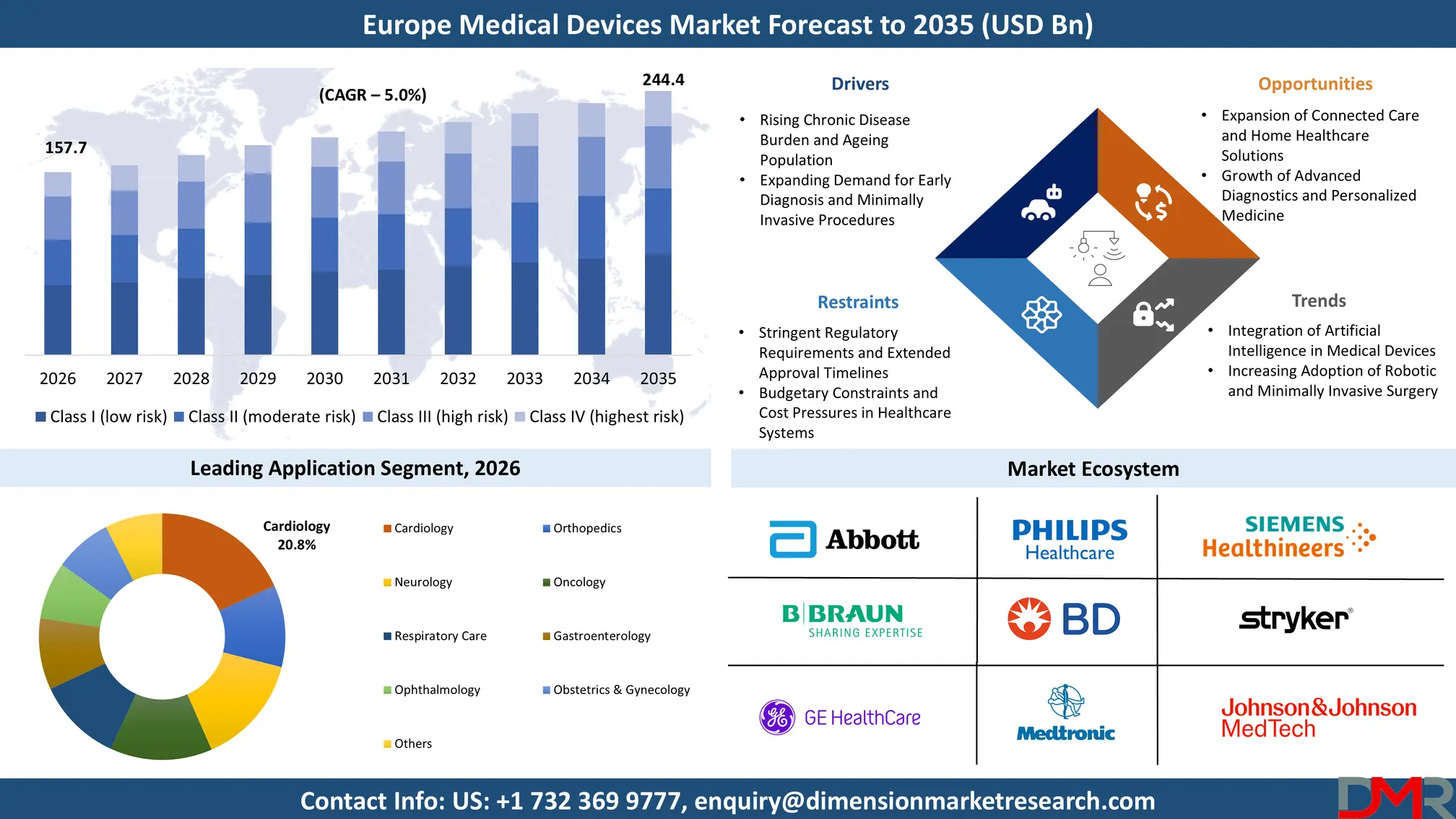
The European Medical Devices Market is projected to be valued at USD 157.7 billion in 2026 and is forecast to reach USD 244.4 billion by 2035, expanding at a CAGR of 5.0% during the forecast period. Market expansion is underpinned by the continent's aging demographic profile, the increasing prevalence of chronic non-communicable diseases, and the rigorous clinical demand for advanced diagnostic and therapeutic technologies within universal healthcare systems.
ℹ
To learn more about this report –
Download Your Free Sample Report Here
The transition to the EU Medical Device Regulation (MDR) 2017/745, while imposing stringent compliance costs, is fundamentally reshaping the market toward higher quality, safety, and clinical evidence standards. Growth is further propelled by the digitization of healthcare infrastructure, the adoption of value-based procurement models, and substantial investment in AI-enhanced imaging, minimally invasive robotic surgery, and remote patient monitoring ecosystems across Western and Central European health systems.
Use Cases
- Early Diabetic Kidney Disease Detection and Risk Stratification in Primary Care: European general practitioners and diabetologists utilise in-vitro diagnostic devices (clinical chemistry analysers for serum creatinine, eGFR, and UACR immunoassays) and ultrasound systems to screen high-risk type 2 diabetes populations, identifying progressive nephropathy before irreversible scarring occurs, aligning with ESC/EASD cardiorenal guidelines.
- Optimised Home Renal Replacement Therapy with Remote Patient Monitoring: Home-based peritoneal dialysis programmes across France, the UK, and the Nordics deploy connected automated cyclers and cloud-based remote monitoring platforms. These patient monitoring devices continuously transmit ultrafiltration volumes, dwell times, and effluent clarity to nephrology care teams, enabling proactive intervention and reducing peritonitis hospitalisation rates.
- AI-Powered Kidney Biopsy Histopathology and Transplant Surveillance: University hospitals in Germany and the Netherlands integrate AI-enabled medical devices into digital pathology workflows. Deep learning software quantifies glomerulosclerosis, interstitial fibrosis, and tubular atrophy (IFTA) with high concordance, while donor-derived cell-free DNA assays and molecular diagnostics detect subclinical kidney transplant rejection before a rise in serum creatinine.
- Cardiorenal Protection and Vascular Access Management: Interdisciplinary heart-kidney clinics co-managing heart failure with reduced ejection fraction and CKD Stage 3-4 utilise cardiovascular devices such as implantable loop recorders and bioimpedance-guided fluid management systems to achieve euvolaemia and decongestion, supported by Class III drug-eluting vascular access devices that reduce restenosis in arteriovenous fistulas.
Key Takeaways
- Market Size: The European Medical Devices Market is anticipated to be valued at USD 157.7 billion in 2026 and is forecast to reach USD 244.4 billion by 2035, expanding at a CAGR of 5.0%.
- Growth Outlook: Market expansion is sustained by the continent's demographic shift toward an aging population, the escalating burden of chronic diseases, and the systemic push toward digital health and outpatient care models, which drive demand for advanced diagnostic, therapeutic, and monitoring technologies.
- Primary Growth Drivers: The strict implementation of the EU MDR, technological convergence of AI/ML with medical imaging, a surge in demand for home-based care and remote patient monitoring, and the expansion of minimally invasive and robotic surgery are key forces accelerating investment and innovation.
- By Product Type Analysis: Diagnostic Devices is projected to lead with a 34.8% share in 2026, driven by high-volume utilization of CT, MRI, and ultrasound in screening and disease staging, while Patient Monitoring Devices is expected to exhibit the highest CAGR of 9.2% due to the proliferation of remote cardiac and neurological monitoring solutions.
- By Device Class Analysis: Class II Medical Devices is expected to dominate with a 43.6% share in 2026, reflecting the massive market for imaging systems, non-invasive monitoring tools, and powered surgical instruments; Class III Medical Devices is anticipated to grow the fastest at a 9.4% CAGR, fueled by next-generation active implantables and AI-diagnostic software classified as high-risk under MDR.
- By Technology Analysis: Conventional Medical Devices is poised to hold a 45.2% share in 2026, forming the capital-intensive backbone of hospital infrastructure, whereas AI-Enabled Medical Devices is projected to achieve the highest CAGR of 12.1%, transforming diagnostic radiology, pathology, and surgical planning workflows.
- By Application Analysis: Cardiology is forecast to command a 20.8% share in 2026, underpinned by the pervasive prevalence of heart failure, arrhythmias, and coronary artery disease, while Oncology is expected to register the highest CAGR of 9.8%, driven by AI-integrated imaging and molecular diagnostics for precision cancer care.
- By End-User Analysis: Hospitals is projected to be the leading segment with a 49.1% share in 2026, as the central hub for high-acuity interventional procedures and complex imaging; Home Healthcare Settings is the fastest-growing segment at a 10.6% CAGR, accelerated by telemonitoring, smart wearables, and the shift of post-operative care and chronic disease management to the domestic environment.
How AI/Gen AI is Transforming the Medical Devices Market?
Artificial intelligence is fundamentally redefining the European medical device landscape by moving from purely assistive tools to autonomous diagnostic and predictive systems, a shift closely scrutinized under the EU MDR's new classification rules. Generative AI is accelerating this transformation by creating synthetic medical images to train diagnostic algorithms on rare pathologies, anonymizing patient data for multi-center research, and generating structured radiology reports from unstructured findings, significantly reducing clinician burnout. AI-enabled software as a medical device (SaMD) is rapidly gaining CE-mark certification for triage and notification, particularly in stroke imaging where algorithms automatically detect large vessel occlusions on CT angiography and alert interventional neuroradiology teams, shortening time-to-treatment.
Key Drivers in the Europe Medical Devices Market
Rising Chronic Disease Burden and Ageing Population
Europe's growing elderly population and rising prevalence of cardiovascular disorders, diabetes, cancer, respiratory diseases, and orthopedic conditions are major drivers of medical device demand. Older adults require frequent diagnostic assessment, surgical intervention, continuous patient monitoring, mobility support, and long-term disease management. This increases the adoption of imaging equipment, cardiac devices, orthopedic implants, diabetes care devices, respiratory systems, and home monitoring solutions. Healthcare providers are also emphasizing early diagnosis and preventive care to improve clinical outcomes and manage treatment costs. As life expectancy increases across major European countries, the need for technologically advanced, safe, and effective medical devices is expected to remain strong.
Expanding Demand for Early Diagnosis and Minimally Invasive Procedures
The increasing focus on early disease detection and minimally invasive treatment is accelerating medical device adoption across Europe. Hospitals and diagnostic centers are investing in advanced imaging systems, in vitro diagnostic devices, endoscopic equipment, robotic assisted surgical systems, and patient monitoring technologies to support faster and more accurate clinical decisions. Minimally invasive procedures can reduce hospital stays, lower recovery time, and improve patient comfort, making them increasingly preferred by both healthcare providers and patients. Growing awareness of preventive healthcare further supports regular screening for cancer, cardiovascular disorders, and metabolic diseases. This clinical shift is strengthening demand for sophisticated diagnostic and surgical devices throughout the European healthcare landscape.
Restraints in the Europe Medical Devices Market
Stringent Regulatory Requirements and Extended Approval Timelines
Europe's medical device market is regulated by strict safety, clinical evaluation, quality, and post market surveillance requirements. Compliance with the Medical Device Regulation creates significant documentation, testing, certification, and monitoring obligations for manufacturers. Smaller companies may face particular challenges due to the financial and operational resources needed to obtain and maintain regulatory approval. Delays in notified body assessments can also postpone product launches and limit the availability of innovative devices in certain markets. Manufacturers must continuously update technical files, clinical evidence, risk management processes, and labeling practices. These requirements improve patient safety but can increase development costs, lengthen commercialization timelines, and create barriers for new entrants.
Budgetary Constraints and Cost Pressures in Healthcare Systems
European healthcare systems face persistent financial pressure due to rising treatment demand, workforce shortages, and expanding public healthcare expenditure. Hospitals and procurement bodies often prioritize cost efficiency, leading to price negotiations, competitive tendering, and delayed replacement of expensive medical equipment. This can limit the adoption of premium imaging systems, robotic platforms, and other capital intensive devices, particularly among smaller hospitals and regional healthcare facilities. Reimbursement uncertainty can further affect demand for innovative technologies, especially when their clinical and economic value is not clearly demonstrated. Medical device manufacturers must therefore balance innovation with affordability, evidence generation, maintenance support, and value based purchasing requirements to secure broader market adoption.
Growth Opportunities in the Europe Medical Devices Market
Expansion of Connected Care and Home Healthcare Solutions
The growing transition toward decentralized healthcare creates substantial opportunities for connected, wearable, portable, and home use medical devices in Europe. Remote patient monitoring systems can help healthcare providers track vital signs, cardiac conditions, glucose levels, respiratory health, and recovery progress outside traditional care facilities. These technologies support earlier intervention, reduce unnecessary hospital visits, and improve long-term management of chronic diseases. Demand is particularly strong among ageing populations and patients requiring continuous care after discharge. Manufacturers can expand their presence by developing secure, user friendly, and interoperable devices that integrate with hospital information systems and digital health platforms. Home healthcare solutions also offer an opportunity to reduce capacity pressure on European hospitals.
Growth of Advanced Diagnostics and Personalized Medicine
Personalized medicine is creating new demand for medical devices that support precise diagnosis, treatment selection, and therapy monitoring. Molecular diagnostic platforms, genetic testing tools, advanced imaging systems, digital pathology solutions, and AI-supported clinical software can help clinicians identify diseases earlier and tailor care to individual patient characteristics. Europe's strong research ecosystem and focus on cancer care, rare diseases, and chronic disease management support this opportunity. Medical device companies can collaborate with hospitals, laboratories, research institutes, and pharmaceutical organizations to develop integrated diagnostic solutions. Products that demonstrate improved clinical outcomes, faster decision-making, and cost effectiveness are well positioned to gain adoption across specialized European healthcare settings.
Trends in the Europe Medical Devices Market
Integration of Artificial Intelligence in Medical Devices
Artificial intelligence is becoming an important trend in Europe's medical device sector, particularly in diagnostic imaging, clinical decision support, patient monitoring, and workflow management. AI enabled software can assist healthcare professionals by identifying abnormalities in scans, prioritizing high risk cases, analyzing large clinical datasets, and supporting more consistent diagnostic interpretation. The technology can also improve operational efficiency by reducing manual workloads and helping hospitals allocate resources more effectively. Growing investments in digital healthcare infrastructure are encouraging the adoption of AI integrated imaging platforms, monitoring systems, and diagnostic tools. However, successful commercialization depends on strong clinical validation, transparent algorithms, cybersecurity safeguards, data protection, and compliance with European regulatory requirements.
Increasing Adoption of Robotic and Minimally Invasive Surgery
Robotic assisted surgery and minimally invasive medical devices are gaining momentum across Europe as hospitals seek to improve surgical precision, reduce complications, and support faster patient recovery. Robotic platforms are increasingly used in urology, gynecology, general surgery, orthopedics, and cardiology, while advanced endoscopic and laparoscopic devices continue to expand procedure options. These technologies can enable smaller incisions, reduced blood loss, shorter hospital stays, and enhanced visualization for surgeons. Demand is supported by growing surgical volumes, an ageing population, and the need to optimize hospital efficiency. Training requirements, equipment costs, and reimbursement conditions remain important considerations, but technological advancement is expected to strengthen adoption over the forecast period.
Research Scope and Analysis
The Europe Medical Devices Market is segmented by product type into diagnostic, therapeutic, surgical, patient monitoring devices, and medical consumables. It is analysed by device class, technology, application, and end user. Product coverage includes imaging, IVD, cardiovascular, orthopedic, respiratory, diabetes care, endoscopic, and consumable solutions across hospitals, clinics, diagnostic centers, ASCs, home healthcare, and research institutes.
ℹ
To learn more about this report –
Download Your Free Sample Report Here
By Product Type Analysis
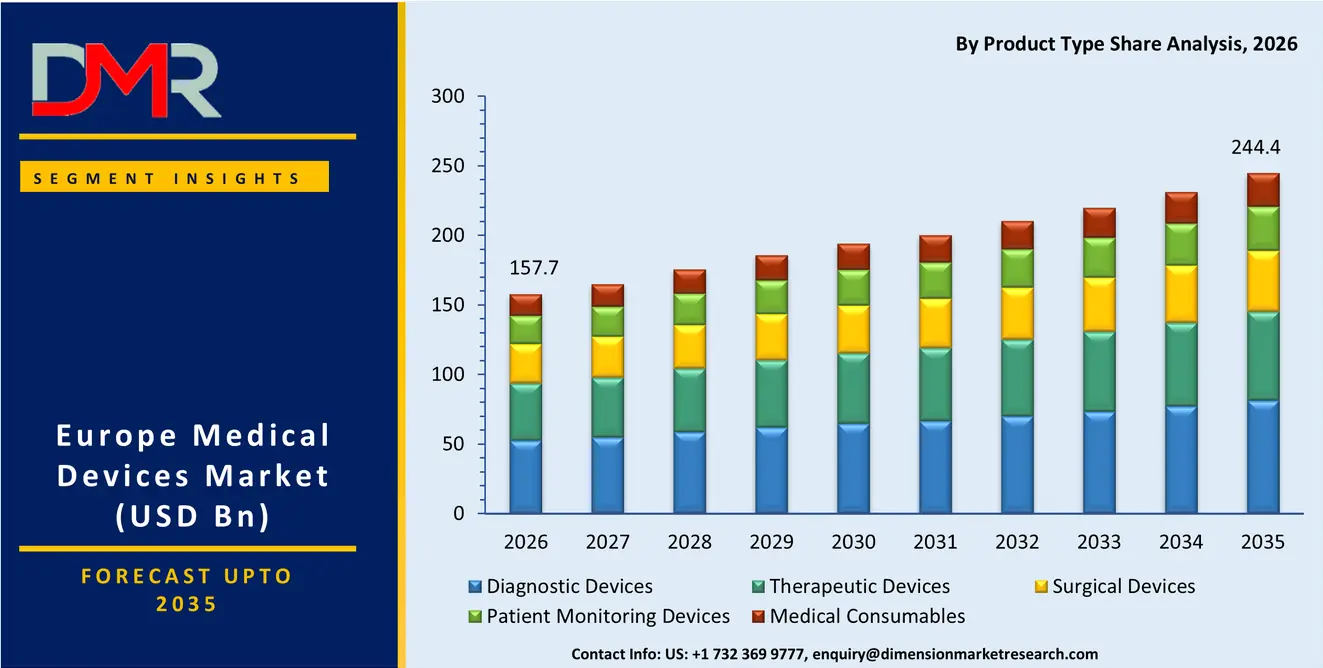
Diagnostic Devices are expected to dominate the Europe Medical Devices Market, accounting for 34.8% market share in 2026. Their leadership is supported by the widespread use of imaging systems, in vitro diagnostics, and screening equipment across hospitals, diagnostic laboratories, and specialty care settings. Within this category, Imaging Devices represent the largest product area, driven by sustained demand for X ray systems, MRI systems, CT scanners, ultrasound equipment, and nuclear imaging solutions. Meanwhile, Patient Monitoring Devices are projected to record the highest growth rate, at a 9.2% CAGR during 2026–2035.
ℹ
To learn more about this report –
Download Your Free Sample Report Here
By Device Class Analysis
Class II Medical Devices are anticipated to hold the largest share of the Europe Medical Devices Market, representing 43.6% in 2026. These moderate risk devices cover a broad range of commonly used products, including infusion pumps, diagnostic imaging equipment, monitoring systems, surgical instruments, and orthopedic devices. Their high volume of use across hospitals, ambulatory centers, diagnostic facilities, and clinics supports their dominant position. Class III Medical Devices are forecast to expand at the highest rate, with a 9.4% CAGR during 2026–2035. This growth is linked to increasing demand for implantable, life sustaining, and advanced therapeutic equipment used in complex clinical procedures.
By Technology Analysis
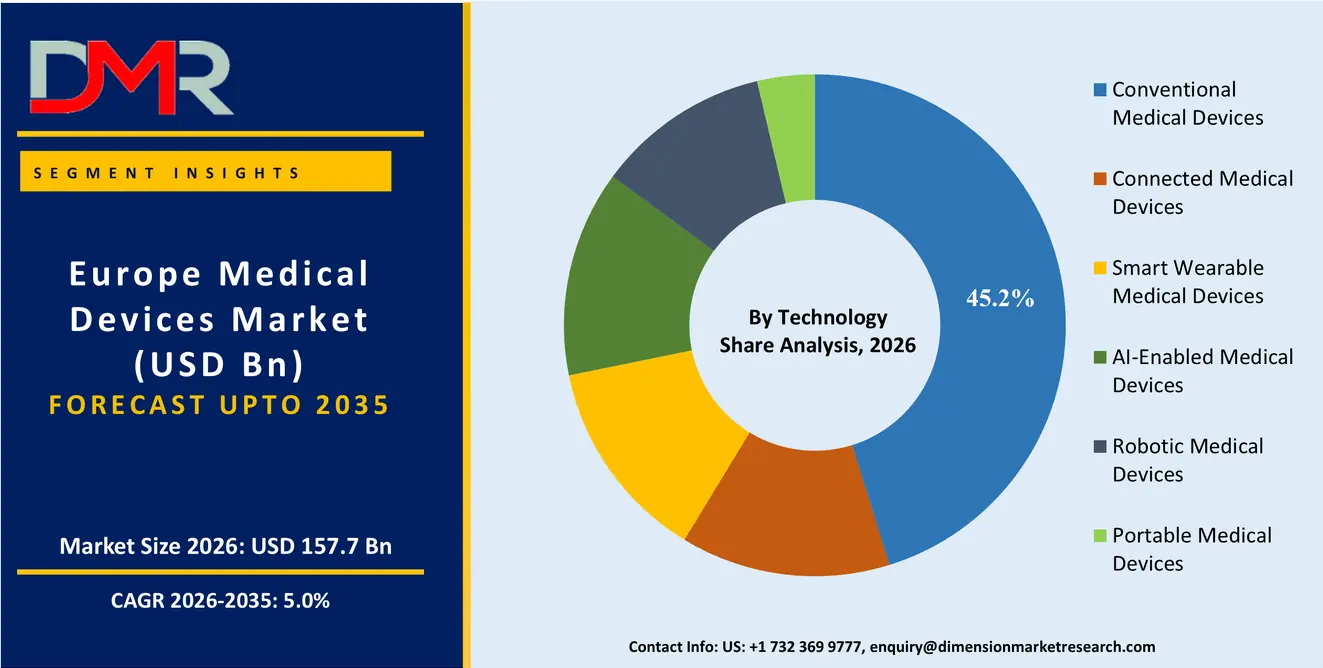
Conventional Medical Devices are projected to remain the dominant technology segment, with a 45.2% market share in 2026. Their extensive installed base, broad clinical acceptance, relatively accessible pricing, and routine use in hospitals and clinics sustain their leading position. This segment includes standard diagnostic, therapeutic, surgical, and consumable medical devices that remain essential to daily patient care. However, AI Enabled Medical Devices are expected to register the highest CAGR of 12.1% during 2026–2035. Their growth is being driven by the integration of artificial intelligence into imaging interpretation, clinical decision support, patient monitoring, workflow automation, and predictive diagnostics.
By Application Analysis
Cardiology is expected to dominate the Europe Medical Devices Market by application, capturing 20.8% of market revenue in 2026. The segment benefits from the high prevalence of cardiovascular diseases, an ageing population, and significant demand for cardiac monitoring devices, stents, pacemakers, defibrillators, catheterization systems, and imaging technologies. Europe's established cardiac care infrastructure and focus on early diagnosis further strengthen segment demand. Oncology is projected to witness the fastest growth, expanding at a 9.8% CAGR during 2026–2035. Technological innovation is further accelerating oncology device adoption across the region.
By End User Analysis
Hospitals are anticipated to hold the largest share of the Europe Medical Devices Market, accounting for 49.1% in 2026. Their dominance reflects high patient inflow, the availability of advanced diagnostic and surgical infrastructure, and their broad use of medical devices across emergency care, inpatient treatment, intensive care, and specialist departments. Hospitals also make significant investments in imaging systems, robotic surgery platforms, patient monitoring equipment, and therapeutic devices. Home Healthcare Settings are expected to grow at the fastest pace, at a 10.6% CAGR during 2026–2035.
The Europe Medical Devices Market Report is segmented based on the following:
By Product Type
- Diagnostic Devices
- Imaging Devices
- X-ray Systems
- Magnetic Resonance Imaging (MRI) Systems
- Computed Tomography (CT) Scanners
- Ultrasound Systems
- Nuclear Imaging Systems
- Others
- In-Vitro Diagnostic (IVD) Devices
- Clinical Chemistry
- Immunoassay
- Molecular Diagnostics
- Hematology
- Microbiology
- Others
- Therapeutic Devices
- Cardiovascular Devices
- Orthopedic Devices
- Respiratory Devices
- Diabetes Care Devices
- Wound Care Devices
- Ophthalmic Devices
- Others
- Surgical Devices
- General Surgical Instruments
- Electrosurgical Devices
- Endoscopic Devices
- Robotic-Assisted Surgical Systems
- Minimally Invasive Surgical Devices
- Others
- Patient Monitoring Devices
- Vital Signs Monitoring
- Cardiac Monitoring
- Neurological Monitoring
- Fetal & Neonatal Monitoring
- Others
- Medical Consumables
- Syringes & Needles
- Catheters
- Bandages & Dressings
- Disposable Gloves
- Others
By Device Class
- Class I (low risk)
- Class II (moderate risk)
- Class III (high risk)
- Class IV (highest risk)
By Technology
- Conventional Medical Devices
- Connected Medical Devices
- Smart Wearable Medical Devices
- AI-Enabled Medical Devices
- Robotic Medical Devices
- Portable Medical Devices
By Application
- Cardiology
- Orthopedics
- Neurology
- Oncology
- Respiratory Care
- Gastroenterology
- Ophthalmology
- Obstetrics & Gynecology
- Others
By End User
- Hospitals
- Ambulatory Surgical Centers (ASCs)
- Diagnostic Centers
- Specialty Clinics
- Home Healthcare Settings
- Academic & Research Institutes
- Others
Regional Analysis
Europe represents one of the world's most sophisticated and highly regulated medical device markets, characterised by a strong hospital infrastructure, universal healthcare coverage, and a diverse mix of local champions and multinational giants. Germany holds the largest market share, driven by its highly fragmented but well-funded hospital landscape, a dense network of practicing specialists, and a rapid assessment pathway for innovative implantables and digital health applications (DiGA). France possesses a strong centralised procurement ecosystem, a high volume of surgical procedures, and a rapidly digitising healthcare system that is a receptive environment for AI-enabled diagnostic imaging. The United Kingdom (NHS) and the Nordics (Denmark, Sweden) are agile, value-based early adopters of connected and home-care devices, demonstrating high per-capita utilization of remote monitoring technologies.
Regulatory Landscape
Europe's medical-device regulatory landscape is being reshaped by the Medical Device Regulation, which strengthens clinical evidence, post-market surveillance, traceability, and quality-management requirements. The framework improves patient confidence and supports higher standards, but it raises certification costs, documentation workloads, and approval timelines, particularly for smaller manufacturers. Opportunities exist for firms offering regulatory consulting, clinical-data services, digital compliance platforms, and locally supported market-entry strategies. Manufacturers with robust evidence-generation capabilities can strengthen competitive positioning and gain hospital trust. However, limited notified-body capacity, differing national reimbursement pathways, and continuing compliance updates may delay innovation.
Investment and White Space Analysis
Europe's medical devices market offers substantial white-space opportunities in home healthcare, remote monitoring, AI-supported diagnostics, and affordable solutions for under-resourced healthcare settings. Investment is increasingly directed toward connected devices that support chronic disease management, early intervention, and reduced hospital dependency. Emerging opportunities include interoperable monitoring platforms, portable imaging systems, smart surgical tools, and specialized devices for elderly care. Companies can also target unmet needs in rural healthcare access, post-operative monitoring, and personalized diagnostics. However, investors must consider regulatory complexity, reimbursement uncertainty, long commercialization cycles, and procurement pressures. Overall, white-space investment can create scalable growth by addressing clinical gaps while improving efficiency, patient access, and healthcare system capacity.
By Region
Europe
- Germany
- France
- The U.K.
- Italy
- Portugal
- Spain
- Rest of Europe
Competitive Landscape
The European Medical Devices Market features a competitive landscape marked by the dominance of global conglomerates and the deep-seated presence of agile, specialized mid-tier companies, all navigating the rigorous EU MDR framework. Siemens Healthineers AG (Germany) and Royal Philips (Netherlands) act as regional anchors, leveraging their extensive European installed base in imaging and patient monitoring to pioneer AI-driven enterprise solutions. Medtronic plc maintains a commanding presence across cardiology, minimally invasive surgery, and diabetes, while Abbott Laboratories competes intensely on cardiac rhythm management, electrophysiology, and structural heart devices. Johnson & Johnson MedTech retains leadership in advanced orthopaedic joint reconstruction and robotic-assisted surgery. The market is witnessing significant disruption from software-driven companies in the AI-enabled SaMD space, which are achieving rapid adoption of their CE-marked imaging and monitoring algorithms.
Some of the prominent players in the Europe Medical Devices Market are:
- Siemens Healthineers AG
- Philips Healthcare
- Medtronic plc
- GE HealthCare
- Johnson & Johnson MedTech
- Abbott Laboratories
- Boston Scientific Corporation
- Becton, Dickinson and Company
- Stryker Corporation
- Baxter International Inc.
- Fresenius Medical Care AG
- Fresenius Kabi AG
- Smith and Nephew plc
- B. Braun SE
- Drägerwerk AG
- Carl Zeiss Meditec AG
- Zimmer Biomet Holdings Inc.
- Terumo Corporation
- Olympus Corporation
- Getinge AB
- Edwards Lifesciences Corporation
- Intuitive Surgical Inc.
- Hologic Inc.
- Alcon Inc.
- Mölnlycke Health Care AB
- Coloplast A S
- Demant A S
- Sonova Holding AG
- Straumann Holding AG
- Elekta AB
- Smiths Medical
- Nipro Corporation
- Fisher and Paykel Healthcare Corporation Limited
- Canon Medical Systems Corporation
- Mindray Medical International Limited
- Merit Medical Systems Inc.
- Conmed Corporation
- ResMed Inc.
- LivaNova PLC
- Haemonetics Corporation
- Other Key Players
Recent Developments
- June 2026: The European Union made the first four EUDAMED modules mandatory under the Medical Device Regulation (MDR), including Actor Registration, UDI/Device Registration, Notified Bodies & Certificates, and Market Surveillance, significantly enhancing transparency, traceability, and regulatory oversight across the European medical devices market.
- April 2026: Medtronic received CE Mark for its Stealth AXiS™ Surgical System, an integrated platform combining surgical planning, navigation, and robotics for spine and cranial procedures. The approval expands access to advanced image-guided surgery across Europe under the EU MDR framework.
- January 2025: Medtronic obtained CE Mark approval for BrainSense™ Adaptive Deep Brain Stimulation (aDBS) and BrainSense™ Electrode Identifier, introducing Europe's first commercially available closed-loop deep brain stimulation technology for people with Parkinson's disease.
- December 2025: The European Commission proposed a targeted revision of the Medical Device Regulation (MDR) and In Vitro Diagnostic Medical Device Regulation (IVDR) to simplify compliance requirements, accelerate certification processes, strengthen innovation, and improve the availability of medical devices across the European Union.
Report Details
| Report Characteristics |
| Market Size (2026) |
USD 157.7 Bn |
| Forecast Value (2035) |
USD 244.4 Bn |
| CAGR (2026–2035) |
5.0% |
| Historical Data |
2021 – 2025 |
| Forecast Data |
2027 – 2035 |
| Base Year |
2025 |
| Estimate Year |
2026 |
| Segments Covered |
By Product Type, By Device Class, By Technology, By Application, and By End User |
| Regional Coverage |
Europe – Germany, France, The UK, Italy, Portugal, Spain, Rest of Europe |
Frequently Asked Questions
How big is the European Medical Devices Market?
▾ The European Medical Devices Market is valued at USD 157.7 billion in 2026 and is projected to reach USD 244.4 billion by 2035, reflecting robust demand for advanced diagnostic, therapeutic, and monitoring technologies across the region's sophisticated healthcare systems.
What is the CAGR of the European Medical Devices Market from 2026 to 2035?
▾ The market is projected to expand at a compound annual growth rate (CAGR) of 5.0% between 2026 and 2035, supported by an aging population, the transition to MDR, and the digitization of healthcare delivery.
What factors are driving the growth of the European Medical Devices Market?
▾ Growth is driven by the continent’s aging demographic profile, the rising prevalence of chronic cardiovascular and oncological diseases, the shift toward home-based and minimally invasive care, and the integration of AI-enabled diagnostic and surgical platforms.
What are the major trends in the European Medical Devices Market?
▾ Major trends include the rapid proliferation of AI-enabled SaMD for imaging, the convergence of diagnostic and therapeutic radioligands in oncology, the shift to decentralized point-of-care molecular testing, and the acceleration of robotic-assisted surgery into standard practice.
Who are the key players in the European Medical Devices Market?
▾ Key market participants include global conglomerates like Siemens Healthineers, Royal Philips, Medtronic, Abbott, and Johnson & Johnson, alongside strong regional champions such as Fresenius Medical Care, Coloplast, and Getinge.
How is the European Medical Devices Market segmented?
▾ The market is segmented by product type, device class, technology, application, and end user, with regional analysis covering Germany, France, the United Kingdom, Italy, Spain, and other major European healthcare economies.