What is the Flavors and Fragrances Market Size?
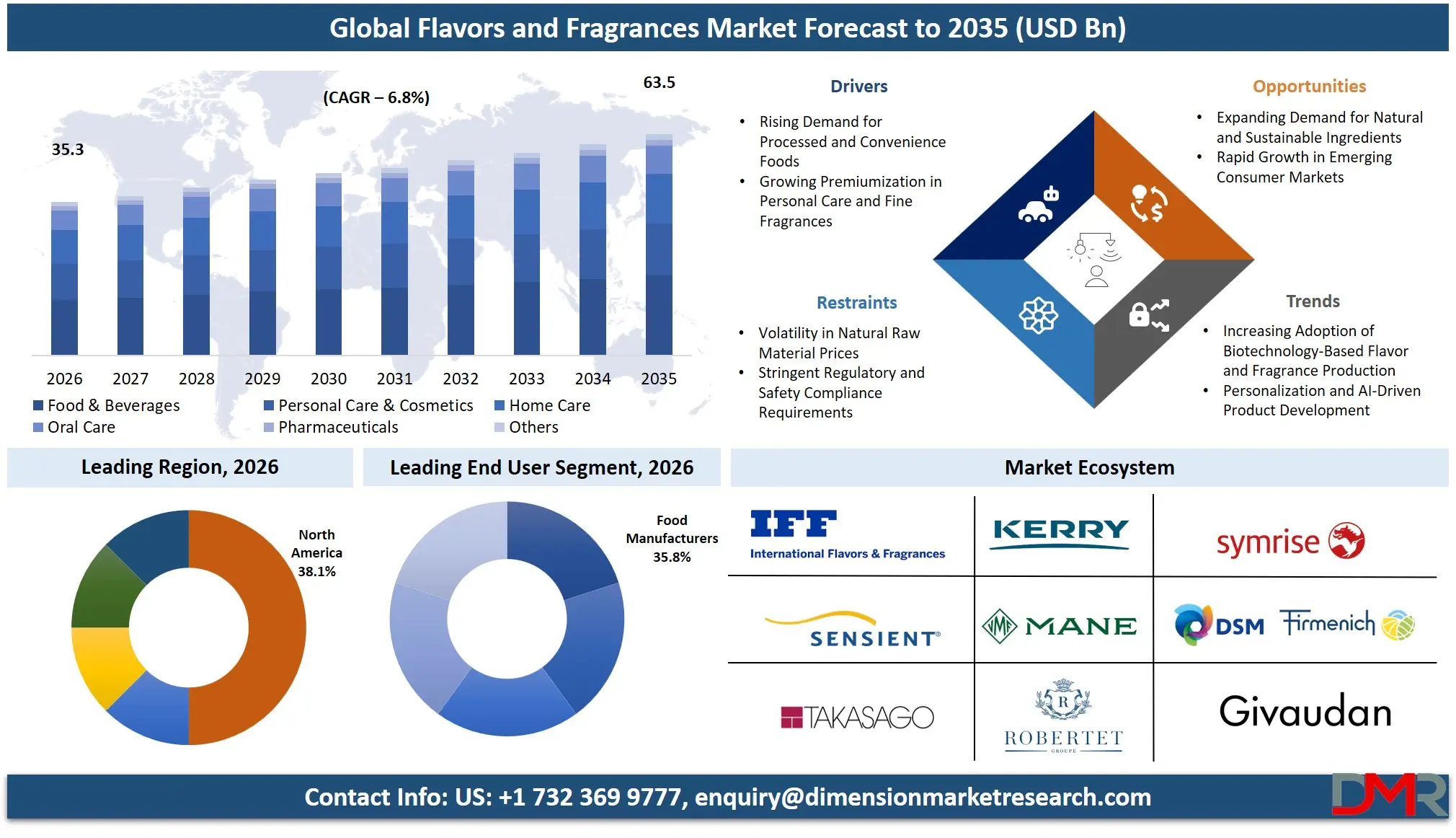
The Global Flavors and Fragrances Market is expected to reach a value of USD 35.3 billion in 2026, and it is further anticipated to reach USD 63.5 billion by 2035, growing at a CAGR of 6.8% during the forecast period.
ℹ
To learn more about this report –
Download Your Free Sample Report Here
The flavors and fragrances market has been experiencing sustained expansion as consumers increasingly prioritize sensory experiences across food, beverages, personal care, and household products. The market encompasses a diverse portfolio of aroma chemicals, essential oils, natural extracts, and synthetic compounds that impart distinctive taste and olfactory characteristics to end-use formulations. The escalating consumer preference for clean-label and naturally derived ingredients is fundamentally reshaping product development strategies, driving manufacturers to invest substantially in novel extraction technologies and biotechnology-derived aroma compounds. Simultaneously, the rapid urbanization and expanding middle-class demographics in emerging economies are propelling demand for packaged and processed food products, premium personal care items, and sophisticated home care solutions, all of which rely extensively on flavor and fragrance formulations to differentiate brands in increasingly crowded marketplaces.
The US Flavors and Fragrances Market
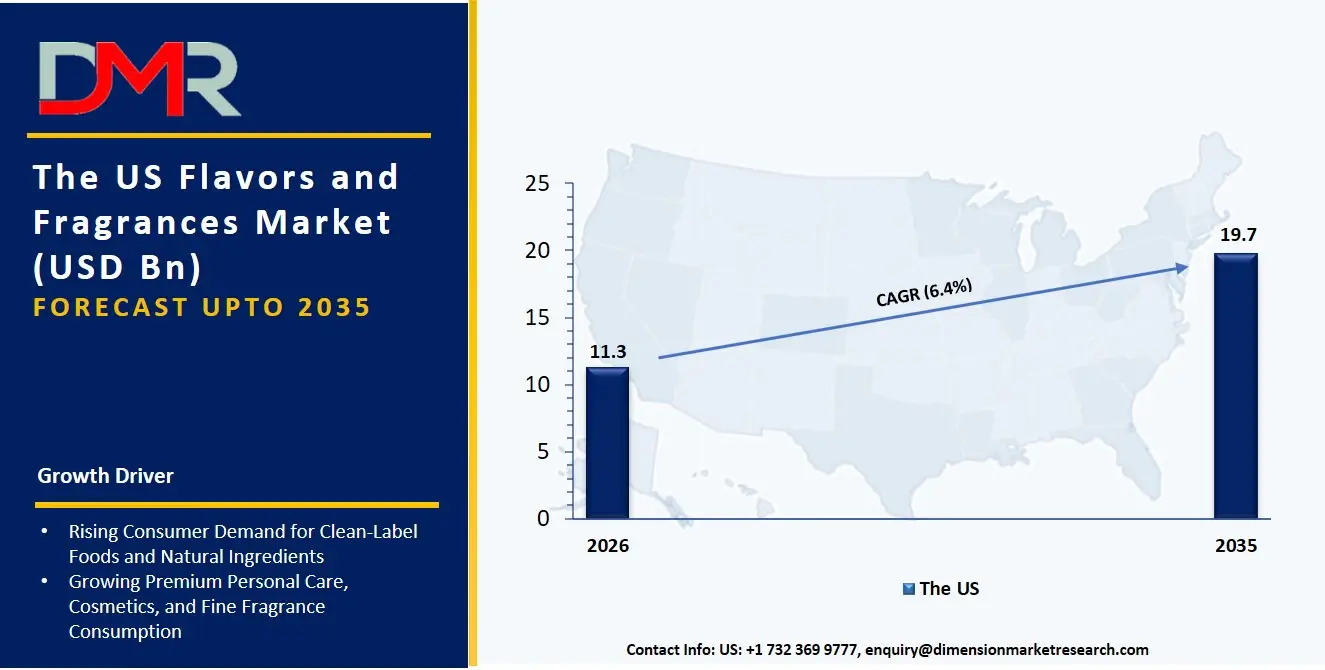
The US Flavors and Fragrances Market is projected to reach USD 11.3 billion in 2026 at a compound annual growth rate of 6.4% over its forecast period, culminating in a value of USD 19.7 billion by 2035.
ℹ
To learn more about this report –
Download Your Free Sample Report Here
The United States remains the single largest national market for flavors and fragrances, underpinned by a mature consumer goods sector, relentless innovation in functional foods and nutraceuticals, and a sophisticated personal care industry that continuously demands novel sensory profiles. The market has been characterized by robust demand for natural and organic flavor systems, driven by consumer aversion to artificial additives and a regulatory environment that increasingly favors clean-label declarations. The plant-based food revolution has created substantial opportunities for flavor houses to develop masking agents that neutralize off-notes inherent in alternative proteins, while simultaneously building authentic meat, dairy, and seafood flavor profiles from botanical precursors.
The Europe Flavors and Fragrances Market
The Europe Flavors and Fragrances Market is estimated to be valued at USD 10.7 billion in 2026 and is further anticipated to reach USD 18.5 billion by 2035 at a CAGR of 6.3%. The European market operates within the most stringent regulatory framework globally, with the European Chemicals Agency (ECHA) and European Food Safety Authority (EFSA) exercising rigorous oversight on both new and existing aroma chemicals. This regulatory intensity has paradoxically fostered innovation, as manufacturers have been compelled to pioneer advanced biotechnology platforms and green chemistry approaches that yield safe, sustainable, and compliant ingredients. The region's deeply ingrained culinary heritage and gastronomic culture create a sophisticated consumer base that demands authentic, region-specific flavor profiles, placing a premium on origin-verified natural extracts and traditional processing methods.
The Japan Flavors and Fragrances Market
The Japan Flavors and Fragrances Market is projected to be valued at USD 3.6 billion in 2026. It is further expected to witness steady growth, holding USD 5.8 billion in 2035 at a CAGR of 5.5%. The Japanese market distinguishes itself through an unparalleled appreciation for subtlety, seasonality, and sensory refinement that permeates both traditional and contemporary product categories. The concept of "kosei" (individuality) drives continuous demand for unique and differentiated flavor and fragrance experiences across food, beverage, and personal care applications. Japan's rapidly aging demographic profile has catalyzed innovation in functional flavors that enhance the palatability of nutritional supplements and texture-modified foods designed for elderly consumers with compromised taste perception and swallowing difficulties.
Key Takeaways
- Market Size & Forecast: The Global Flavors and Fragrances market is projected to reach USD 35.3 billion in 2026, expanding steadily to USD 63.5 billion by 2035, fueled by the twin engines of clean-label consumer demand and rapid innovation in biotechnology-derived aroma compounds.
- Growth Rate & Outlook: Global market growth is expected at a CAGR of 6.8%, driven by the accelerating shift toward natural and nature-identical ingredients, the expansion of middle-class populations in Asia-Pacific and Latin America, and the intensifying need for product differentiation in mature consumer goods categories.
- Primary Growth Drivers: Key forces include the pervasive consumer rejection of artificial additives, the explosive growth of plant-based and alternative protein foods requiring sophisticated flavor masking and building solutions, and the premium fragrance market's expansion into emerging economies with rising disposable incomes.
- Key Market Trends: Major trends include the rapid commercialization of biotechnology-derived flavor and fragrance molecules, the integration of artificial intelligence in sensory science and new molecule discovery, the emergence of upcycled ingredients from food industry byproducts, and the growing importance of traceability and ethical sourcing credentials in brand positioning.
- By Ingredient Source Analysis: Natural ingredients are commanding premium pricing and driving the majority of research investment, though synthetic chemistry remains indispensable for consistency and scalability. Biotechnology-derived molecules are emerging as the critical bridge, offering natural-identical compounds through sustainable fermentation processes that decouple production from agricultural volatility.
- By Application Analysis: Food & Beverages represents the dominant application segment, accounting for the largest volume consumption, while Personal Care & Cosmetics delivers superior value realization through high-concentration fine fragrance and prestige skincare applications. Home Care is experiencing accelerated growth as consumers extend wellness and sensory expectations to domestic environments.
- Regional Leadership: North America is poised to dominate this market with 38.1% of the market share in 2026 due to its well-developed technological ecosystem, robust consumer goods manufacturing base, and leadership in biotechnology innovation that positions the region at the forefront of industry evolution.
What is the Flavors and Fragrances?
Flavors and fragrances are specialized chemical compounds and natural extracts that impart specific taste and smell characteristics to consumer products, serving as critical sensory differentiators that influence purchasing decisions and brand loyalty across food, beverage, personal care, cosmetic, and household product categories. The industry operates through a sophisticated value chain that begins with raw material sourcing from agricultural, petrochemical, and fermentation pathways, proceeds through extraction, distillation, and synthesis processes, and culminates in the creative art of formulation where individual aroma chemicals are blended into complex, harmonious compositions that deliver consistent sensory experiences.
Unlike commodity chemicals, flavor and fragrance compounds function at extraordinarily low concentrations while commanding significant value, with a single molecule capable of transforming the entire sensory profile of a product at parts-per-million or even parts-per-billion inclusion rates. This unique characteristic demands exceptional precision in manufacturing, rigorous quality control protocols, and deep scientific understanding of how individual compounds interact with human olfactory and gustatory receptors.
Use Cases
- Plant-Based Meat Flavor Authenticity: Food manufacturers employ sophisticated natural flavor systems combining yeast extracts, maillard reaction products, and botanical isolates to replicate the complex savory notes of beef, chicken, and pork in plant-based alternatives. Flavor houses utilize advanced analytical techniques to identify the key aroma-active compounds in cooked meat, then reconstruct these profiles using vegetarian-compatible precursors, delivering authentic taste experiences that drive consumer adoption of alternative proteins.
- Functional Beverage Palatability Enhancement: Nutraceutical and functional beverage companies leverage flavor masking technologies to neutralize the bitterness of vitamins, minerals, botanical extracts, and protein hydrolysates while maintaining clean-label declarations. Encapsulation technologies that provide controlled release of flavor compounds during consumption have become essential tools in creating palatable wellness beverages that encourage regular consumption and brand loyalty.
- Luxury Fine Fragrance Creation: Prestige perfume houses collaborate with fragrance manufacturers to develop proprietary captive molecules—unique aroma chemicals not available to competitors—that provide distinctive olfactory signatures. These exclusive compounds, often produced through sophisticated synthetic chemistry or biotechnology platforms, form the cornerstone of blockbuster fragrance launches and command significant premiums in the luxury market.
- Sustainable Home Care Fragrance Systems: Household product manufacturers are transitioning to biodegradable fragrance encapsulates and naturally derived aroma chemicals that deliver long-lasting freshness while meeting consumer expectations for environmental responsibility. Advanced delivery systems provide fragrance bloom during product use and sustained release on fabric surfaces, creating sensory experiences that reinforce brand quality perceptions.
How AI is Transforming the Flavors and Fragrances Market?
Artificial intelligence (AI) is transforming the flavors and fragrances market by accelerating ingredient discovery, formulation development, and consumer trend analysis. AI-powered platforms analyze vast datasets from consumer preferences, sensory evaluations, social media trends, and purchasing behavior to predict emerging flavor and fragrance demands with greater accuracy. Manufacturers use machine learning algorithms to optimize formulations, identify novel ingredient combinations, and reduce product development timelines while lowering research costs. AI also supports precision fermentation and biotechnology by identifying efficient production pathways for sustainable aroma compounds. Additionally, digital scent modeling and predictive analytics enable personalized fragrance creation and region-specific flavor customization. By improving innovation speed, reducing formulation failures, enhancing supply chain forecasting, and supporting sustainable product development, AI is becoming a key competitive advantage across the global flavors and fragrances industry.
Market Dynamics
Key Drivers in the Global Flavors and Fragrances Market
Rising Demand for Processed and Convenience Foods
The increasing consumption of processed foods, ready-to-eat meals, functional beverages, dairy products, and confectionery is a major driver for the global flavors and fragrances market. Urbanization, changing lifestyles, and busy work schedules have encouraged consumers to seek convenient food options without compromising taste and quality. Food manufacturers are therefore investing heavily in innovative flavor formulations that enhance sensory appeal while meeting clean-label and reduced-sugar requirements. Expanding food processing industries across emerging economies, coupled with growing disposable incomes and premium food consumption, continue to accelerate demand for customized flavor solutions, supporting sustained market expansion across global food and beverage sectors.
Growing Premiumization in Personal Care and Fine Fragrances
The expanding global personal care and cosmetics industry is significantly driving fragrance demand. Consumers increasingly prefer premium perfumes, skincare, haircare, and home care products that deliver unique and long-lasting sensory experiences. Luxury brands are introducing sophisticated fragrance compositions using natural extracts, essential oils, and biotechnology-derived ingredients to differentiate their offerings. Rising disposable incomes, growing beauty consciousness, and increasing spending on premium wellness products have further strengthened market growth. Continuous product innovation, celebrity-endorsed fragrance launches, and the rapid expansion of e-commerce channels are enabling fragrance manufacturers to reach broader consumer segments while enhancing brand loyalty and global market penetration.
Restraints in the Global Flavors and Fragrances Market
Volatility in Natural Raw Material Prices
The availability and pricing of natural raw materials remain significant challenges for flavor and fragrance manufacturers. Essential oils, spices, flowers, fruits, herbs, and aromatic plants are highly dependent on climatic conditions, agricultural productivity, and geopolitical developments. Crop failures, droughts, floods, and supply chain disruptions often result in fluctuating prices and inconsistent supply. These uncertainties increase production costs and reduce profit margins, particularly for companies relying heavily on natural ingredients. Manufacturers must also invest in alternative sourcing strategies and inventory management, making cost optimization increasingly difficult while maintaining product quality and regulatory compliance across international markets.
Stringent Regulatory and Safety Compliance Requirements
The flavors and fragrances industry operates under complex regulatory frameworks governing ingredient safety, labeling, environmental impact, and consumer health. Compliance with food safety authorities and cosmetic regulations requires extensive toxicological testing, documentation, and product reformulation whenever standards evolve. Restrictions on synthetic chemicals, allergens, and volatile organic compounds further increase research and compliance costs. Companies introducing new ingredients often face lengthy approval timelines before commercialization. Small and medium-sized manufacturers are particularly affected by these regulatory burdens, which can delay innovation, increase operational expenses, and create barriers to entering highly regulated international markets.
Growth Opportunities in the Global Flavors and Fragrances Market
Expanding Demand for Natural and Sustainable Ingredients
Growing consumer preference for clean-label, organic, vegan, and environmentally responsible products presents substantial opportunities for flavor and fragrance manufacturers. Companies are investing in botanical extracts, fermentation technologies, biotechnology-derived aroma molecules, and sustainable sourcing practices to satisfy evolving market expectations. Ethical ingredient procurement, carbon reduction initiatives, and biodegradable formulations are becoming competitive advantages across food, beverage, and personal care industries. As multinational brands strengthen sustainability commitments and transparency throughout their supply chains, suppliers capable of delivering high-quality natural ingredients with reliable traceability are expected to capture significant long-term market growth and premium pricing opportunities.
Rapid Growth in Emerging Consumer Markets
Emerging economies across Asia Pacific, Latin America, the Middle East, and Africa present strong expansion opportunities due to rising urbanization, growing middle-class populations, and increasing disposable incomes. Consumers in these regions are purchasing more packaged foods, premium beverages, cosmetics, household products, and luxury fragrances. International manufacturers are establishing local production facilities and research centers to develop products tailored to regional taste and fragrance preferences. Expanding organized retail, digital commerce platforms, and modern distribution networks further improve market accessibility, allowing flavor and fragrance companies to broaden their customer base while achieving sustained long-term revenue growth.
Trends in the Global Flavors and Fragrances Market
Increasing Adoption of Biotechnology-Based Flavor and Fragrance Production
Biotechnology is transforming the production of flavors and fragrances by enabling sustainable, efficient, and high-purity ingredient manufacturing. Precision fermentation, enzyme technology, and microbial biosynthesis allow companies to produce aroma compounds with reduced environmental impact while minimizing dependence on agricultural raw materials. These technologies improve consistency, scalability, and supply chain resilience while supporting clean-label product development. Manufacturers are increasingly investing in biotechnology research to develop innovative natural-identical ingredients that meet regulatory requirements and consumer expectations. This trend is expected to reshape production strategies while improving sustainability, product quality, and long-term cost efficiency across the industry.
Personalization and AI-Driven Product Development
Artificial intelligence, consumer data analytics, and digital formulation platforms are increasingly influencing flavor and fragrance innovation. Companies utilize AI to analyze consumer preferences, regional taste patterns, purchasing behavior, and emerging sensory trends, enabling faster development of customized formulations. Personalized perfumes, functional beverages, and tailored food products are gaining popularity among consumers seeking unique experiences. Digital fragrance design tools and predictive flavor modeling reduce development time while improving formulation accuracy and market responsiveness. This technology-driven approach enables manufacturers to accelerate innovation, enhance customer engagement, and strengthen competitive positioning within the evolving global flavors and fragrances market.
Research Scope and Analysis
The global flavors and fragrances market is segmented by product type (flavors and fragrances), ingredient source (natural, synthetic, biotechnology-derived), flavor type, fragrance type, application (food & beverages, personal care, home care, oral care, pharmaceuticals), distribution channel (direct sales, distributors, online), and end user (food, beverage, cosmetics, household, and pharmaceutical manufacturers).
ℹ
To learn more about this report –
Download Your Free Sample Report Here
By Product Type Analysis
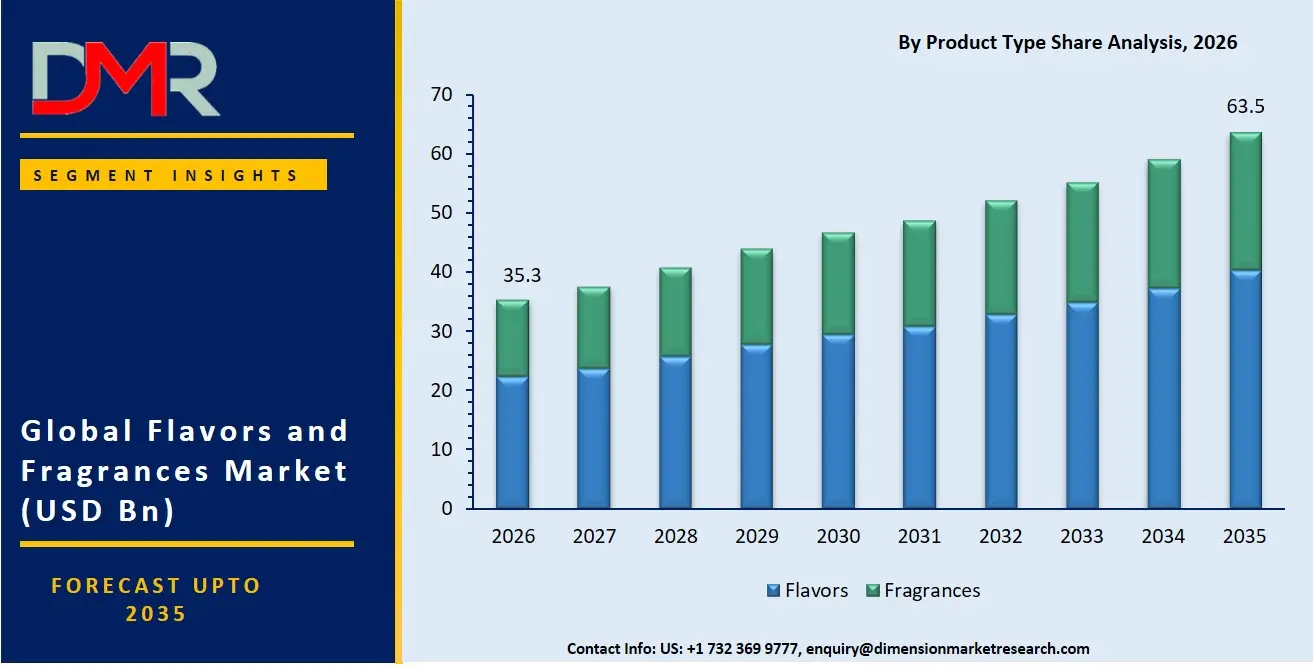
Flavors are poised to dominate the global flavors and fragrances market because they serve as essential ingredients across the rapidly expanding food and beverage industry. Rising consumer demand for processed foods, ready-to-eat meals, functional beverages, confectionery, dairy products, and plant-based alternatives has significantly increased the consumption of flavor solutions.
ℹ
To learn more about this report –
Download Your Free Sample Report Here
Manufacturers continuously develop customized flavor profiles to meet changing regional preferences and clean-label expectations. Natural and nature-identical flavor innovations further strengthen adoption as consumers seek healthier and authentic taste experiences. Compared with fragrances, flavors generate higher volume demand due to their widespread use in everyday food products, making this segment the largest contributor to overall market revenue.
By Ingredient Source Analysis
Natural ingredients is expected to dominate this segment as consumers increasingly prefer clean-label, organic, and minimally processed products across food, beverages, cosmetics, and personal care applications. Regulatory support for natural formulations and growing awareness regarding synthetic additives have encouraged manufacturers to invest heavily in botanical extracts, essential oils, herbs, spices, fruits, and naturally derived aroma compounds. Premium food brands and luxury fragrance manufacturers also emphasize naturally sourced ingredients to enhance product value and sustainability credentials. Advances in extraction technologies and biotechnology have improved the commercial viability of natural ingredients, enabling broader adoption while meeting consumer expectations for transparency, authenticity, environmental responsibility, and product safety.
By Flavor Type Analysis
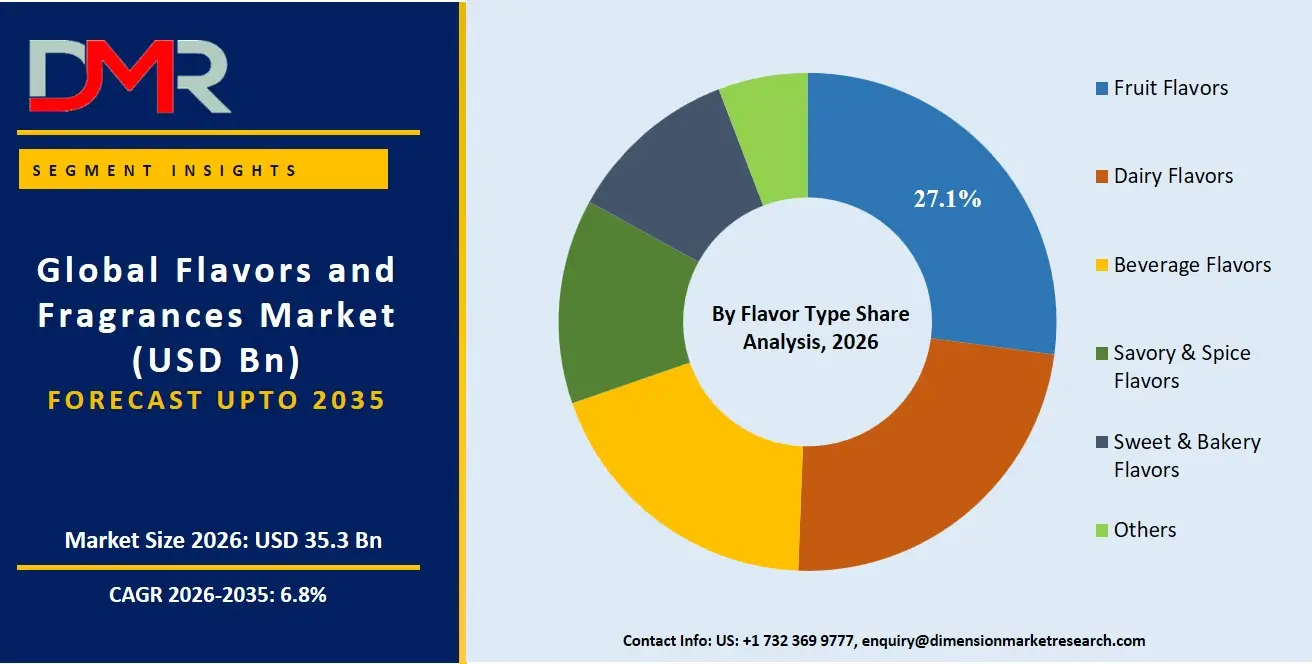
Fruit flavors are projected to hold the leading position because they offer broad consumer acceptance across beverages, confectionery, dairy products, bakery, snacks, and nutritional supplements. Citrus, berry, tropical, and orchard fruit profiles remain highly versatile and align with growing demand for refreshing, natural, and health-oriented products. Beverage manufacturers frequently introduce fruit-based innovations in juices, flavored water, energy drinks, and functional beverages to attract consumers. Continuous product launches featuring exotic and regional fruit combinations further support market expansion. Additionally, fruit flavors are widely compatible with sugar reduction strategies and plant-based formulations, strengthening their dominance across multiple food categories and diverse geographic markets.
By Fragrance Type Analysis
Floral fragrances is poised to dominate the fragrance type segment due to their timeless appeal and extensive use across perfumes, skincare, haircare, household products, and premium cosmetics. Notes such as rose, jasmine, lavender, and lily remain popular among consumers worldwide because they provide elegance, freshness, and versatility. Luxury perfume manufacturers consistently incorporate floral accords into flagship collections, while personal care brands utilize floral fragrances to enhance product differentiation and consumer preference. Continuous innovation through blending floral notes with fruity, woody, or oriental compositions further expands their applications. Their universal acceptance across genders, cultures, and product categories reinforces long-term market leadership.
By Application Analysis
Food and beverages is expected to represent the dominant application segment due to the extensive use of flavors in enhancing taste, aroma, and overall consumer appeal. Growing consumption of convenience foods, functional beverages, dairy products, confectionery, bakery items, snacks, and plant-based foods has accelerated demand for advanced flavor solutions. Food manufacturers continuously introduce innovative products with regional taste preferences, reduced sugar formulations, and clean-label ingredients to attract consumers. Regulatory approvals, technological advancements in flavor development, and rising disposable incomes further support market growth. The industry's enormous production scale makes food and beverages the largest application area globally.
By Distribution Channel Analysis
Direct Sales (B2B) is projected to dominate distribution because flavors and fragrances are primarily customized industrial ingredients supplied directly to food manufacturers, beverage producers, cosmetic companies, and household product manufacturers. Large multinational suppliers maintain long-term partnerships with major consumer goods companies, enabling collaborative product development, quality assurance, technical support, and regulatory compliance. Direct procurement also ensures consistent supply, formulation confidentiality, and faster innovation cycles. Since flavor and fragrance products require specialized application expertise and customer-specific formulations, manufacturers generally prefer direct commercial relationships rather than conventional retail channels, making B2B distribution the leading route across global markets.
By End User Analysis
Food manufacturers is poised to dominate the end-user segment because they represent the largest consumers of flavor ingredients across bakery, dairy, confectionery, processed foods, snacks, sauces, frozen meals, and nutritional products. Continuous product innovation, premiumization, and evolving consumer preferences for healthier, flavorful foods have increased demand for customized flavor solutions. Manufacturers rely on flavor companies to develop differentiated taste profiles while supporting sugar reduction, sodium reduction, and clean-label initiatives. The enormous global scale of packaged food production, combined with rising urbanization and convenience food consumption, ensures food manufacturers remain the primary end users driving overall market demand.
The Global Flavors and Fragrances Market Report is segmented on the basis of the following:
By Product Type
- Flavors
- Natural Flavors
- Nature-Identical Flavors
- Artificial Flavors
- Fragrances
- Fine Fragrances
- Consumer Fragrances
- Industrial Fragrances
By Ingredient Source
- Natural
- Synthetic
- Biotechnology-Derived
By Flavor Type
- Fruit Flavors
- Dairy Flavors
- Beverage Flavors
- Savory & Spice Flavors
- Sweet & Bakery Flavors
- Others
By Fragrance Type
- Floral
- Fruity
- Woody
- Oriental
- Fresh/Citrus
- Others
By Application
- Food & Beverages
- Bakery & Confectionery
- Dairy Products
- Beverages
- Snacks & Savory Foods
- Frozen & Processed Foods
- Personal Care & Cosmetics
- Perfumes
- Skin Care
- Hair Care
- Color Cosmetics
- Home Care
- Detergents
- Air Fresheners
- Surface Cleaners
- Oral Care
- Pharmaceuticals
- Others
By Distribution Channel
- Direct Sales (B2B)
- Distributors & Traders
- Online Channels
By End User
- Food Manufacturers
- Beverage Manufacturers
- Cosmetic & Personal Care Companies
- Household Product Manufacturers
- Pharmaceutical Companies
Regional Analysis
Leading Region by Market Share
ℹ
To learn more about this report –
Download Your Free Sample Report Here
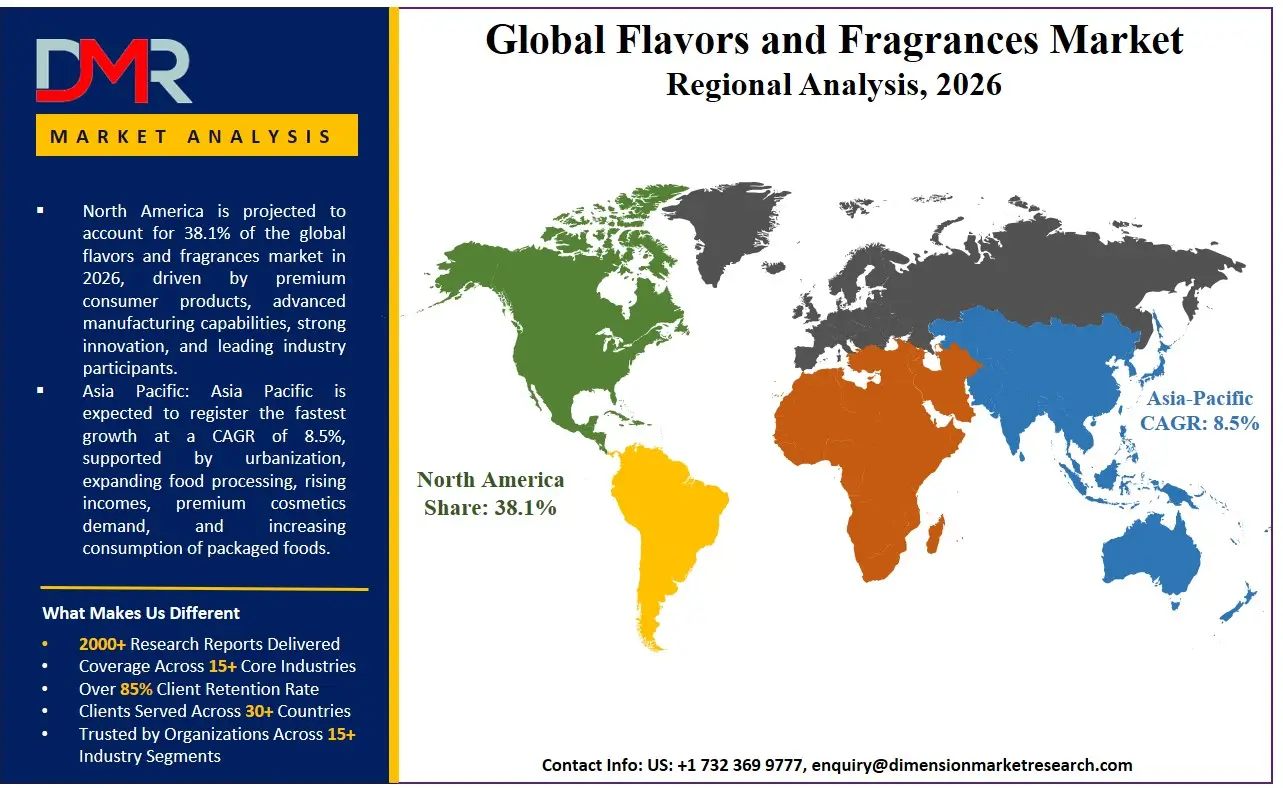
North America is poised to dominate the global flavors and fragrances market, projected to hold 38.1% of the market share by the end of 2026. The United States, which anchors North America's market leadership, benefits from an unparalleled concentration of consumer goods multinationals, sophisticated research infrastructure, and robust venture capital investment in biotechnology-driven ingredient innovation. The region's advanced regulatory framework provides clear commercialization pathways while maintaining consumer confidence through rigorous safety standards enforced by the Food and Drug Administration and the Flavor and Extract Manufacturers Association's GRAS evaluation program. The mature premium fragrance market continues to deliver strong value growth, augmented by the emergence of celebrity, influencer, and direct-to-consumer fragrance brands that compress product development timelines and demand rapid formulation capabilities from fragrance suppliers.
The United States market is further distinguished by its leadership in functional foods and nutraceuticals, categories that consume substantial volumes of flavor masking and enhancement compounds to improve the palatability of protein-fortified, sugar-reduced, and vitamin-enriched formulations.
Fastest-Growing Regional Market
Asia-Pacific is expected to be the most rapidly expanding flavors and fragrances market, driven by the unprecedented scale of urbanization, middle-class formation, and consumer goods market development across China, India, Southeast Asia, and the broader region. The sheer magnitude of population movement from rural to urban environments is fundamentally restructuring consumption patterns, introducing hundreds of millions of new consumers to packaged foods, branded personal care products, and modern household cleaning solutions all categories that require significant flavor and fragrance inputs. China's domestic flavor and fragrance industry has matured substantially, with local manufacturers investing in advanced R&D capabilities and international partnerships that are narrowing the historical technology gap with Western competitors. India represents a particularly compelling growth opportunity due to its favorable demographics, rapid economic growth, and deeply ingrained cultural appreciation for both culinary spices and personal fragrance.
By Region
North America
Europe
- Germany
- The U.K.
- France
- Italy
- Russia
- Spain
- Benelux
- Nordic
- Rest of Europe
Asia-Pacific
- China
- Japan
- South Korea
- India
- ANZ
- ASEAN
- Rest of Asia-Pacific
Latin America
- Brazil
- Mexico
- Argentina
- Colombia
- Rest of Latin America
Middle East & Africa
- Saudi Arabia
- UAE
- South Africa
- Israel
- Egypt
- Rest of MEA
Competitive Landscape
The competitive environment of the global flavors and fragrances industry is characterized by a tiered structure dominated by a small group of multinational integrated manufacturers that maintain comprehensive portfolios spanning natural extracts, synthetic aroma chemicals, and proprietary captive molecules. These market leaders including Givaudan, International Flavors & Fragrances (IFF), Firmenich, and Symrise leverage substantial R&D budgets, extensive patent estates, and global creative centers staffed by master perfumers and flavorists to maintain competitive advantages in innovation and customer intimacy. The industry has witnessed significant consolidation activity, with mergers and acquisitions enabling the integration of complementary capabilities in biotechnology, natural ingredients, and digital tools while expanding geographic presence and customer access.
Some of the prominent players in the Global Flavors and Fragrances Market are:
- Givaudan
- dsm-firmenich
- International Flavors & Fragrances (IFF)
- Symrise AG
- Takasago International Corporation
- Mane SA
- Robertet Group
- Sensient Technologies Corporation
- Kerry Group plc
- T. Hasegawa Co., Ltd.
- Bell Flavors & Fragrances
- Huabao International Holdings Limited
- Kalsec Inc.
- Frutarom Industries Ltd.
- McCormick Flavor Solutions
- Aromatech SAS
- Synergy Flavors
- Keva Flavours Pvt. Ltd.
- Treatt plc
- Axxence Aromatic GmbH
- Other Key Players
Recent Developments
- June 2026: Givaudan announced an agreement to acquire a majority stake in Eurofragance, a Spain-based fragrance company. The acquisition strengthens Givaudan's global fragrance portfolio, expands its presence in regional markets, and supports its long-term 2030 growth strategy focused on innovation and customer proximity.
- March 2026: International Flavors & Fragrances (IFF) expanded its Latin American operations by transforming its Argentina facility into its first regional fermentation-based enzyme production hub and opening a new household care application laboratory in Brazil to strengthen innovation and manufacturing capabilities.
- February 2026: Givaudan announced a CHF 55 million investment to establish Campus 52 in Grasse, France, a new center of excellence dedicated to natural fragrance ingredients. The facility will integrate agronomy, innovation, operations, and perfumery to enhance sustainable sourcing and advanced extraction technologies.
Report Details
| Report Characteristics |
| Market Size (2026) |
USD 35.3 Bn |
| Forecast Value (2035) |
USD 63.5 Bn |
| CAGR (2026–2035) |
6.8% |
| The US Market Size (2026) |
USD 11.3 Bn |
| Historical Data |
2021 – 2025 |
| Forecast Data |
2027 – 2035 |
| Base Year |
2025 |
| Estimate Year |
2026 |
| Segments Covered |
By Product Type, By Ingredient Source, By Flavor Type, By Fragrance Type, By Application, By Distribution Channel, By End User |
| Regional Coverage |
North America – The US and Canada; Europe – Germany, The UK, France, Russia, Spain, Italy, Benelux, Nordic, & Rest of Europe; Asia-Pacific – China, Japan, South Korea, India, ANZ, ASEAN, Rest of APAC; Latin America – Brazil, Mexico, Argentina, Colombia, Rest of Latin America; Middle East & Africa – Saudi Arabia, UAE, South Africa, Turkey, Egypt, Israel, & Rest of MEA |
Frequently Asked Questions
How big is the Global Flavors and Fragrances Market?
▾ The Global Flavors and Fragrances market is poised to be valued at USD 35.3 billion in 2026 and is projected to reach USD 63.5 billion by 2035, driven by the universal consumer demand for sensory experiences and the accelerating shift toward natural and sustainable ingredients across food, beverage, personal care, and home care applications.
What is the CAGR of the Global Flavors and Fragrances Market from 2026 to 2035?
▾ The market is expected to grow at a CAGR of 6.8% from 2026 to 2035, reflecting sustained consumer goods premiumization, the expansion of processed food consumption in emerging economies, and the intensifying innovation activity in biotechnology-derived aroma compounds.
What factors are driving the growth of the Global Flavors and Fragrances Market?
▾ Key drivers include the clean-label consumer revolution demanding natural and recognizable ingredients, the explosive growth of plant-based foods requiring sophisticated flavor solutions, rapid urbanization and middle-class expansion in Asia-Pacific and Latin America, and the emergence of functional fragrances positioned within the wellness and self-care megatrend.
Which region held the largest share of the Flavors and Fragrances Market in 2026?
▾ North America, specifically the United States, held 38.1% of market share in 2026, driven by a mature consumer goods manufacturing base, leadership in biotechnology and precision fermentation capabilities, and robust demand for premium fragrances and functional flavor systems.
Which region is expected to grow the fastest in the Flavors and Fragrances Market?
▾ The Asia-Pacific region is expected to grow the fastest, fueled by unprecedented urbanization, expanding middle-class populations, and the rapid modernization of packaged food and personal care product consumption across China, India, and Southeast Asian markets.
What are the major trends in the Global Flavors and Fragrances Market?
▾ Major trends include the integration of artificial intelligence in molecule discovery and sensory prediction, the rapid commercialization of biotechnology-derived natural ingredients, the emergence of upcycled ingredients from food processing byproducts, and the growing importance of supply chain transparency and ethical sourcing credentials.
Who are the key players in the Global Flavors and Fragrances Market?
▾ Key players include integrated multinational manufacturers such as Givaudan, International Flavors & Fragrances (IFF), Firmenich, Symrise, and Takasago, alongside regional champions, specialized natural ingredient producers, and emerging biotechnology platform companies.
How is the Global Flavors and Fragrances Market segmented?
▾ The market is segmented by Product Type, Ingredient Source, Flavor Type, Fragrance Type, Application, Distribution Channel, and End User.