France Radiopharmaceuticals Market Snapshot
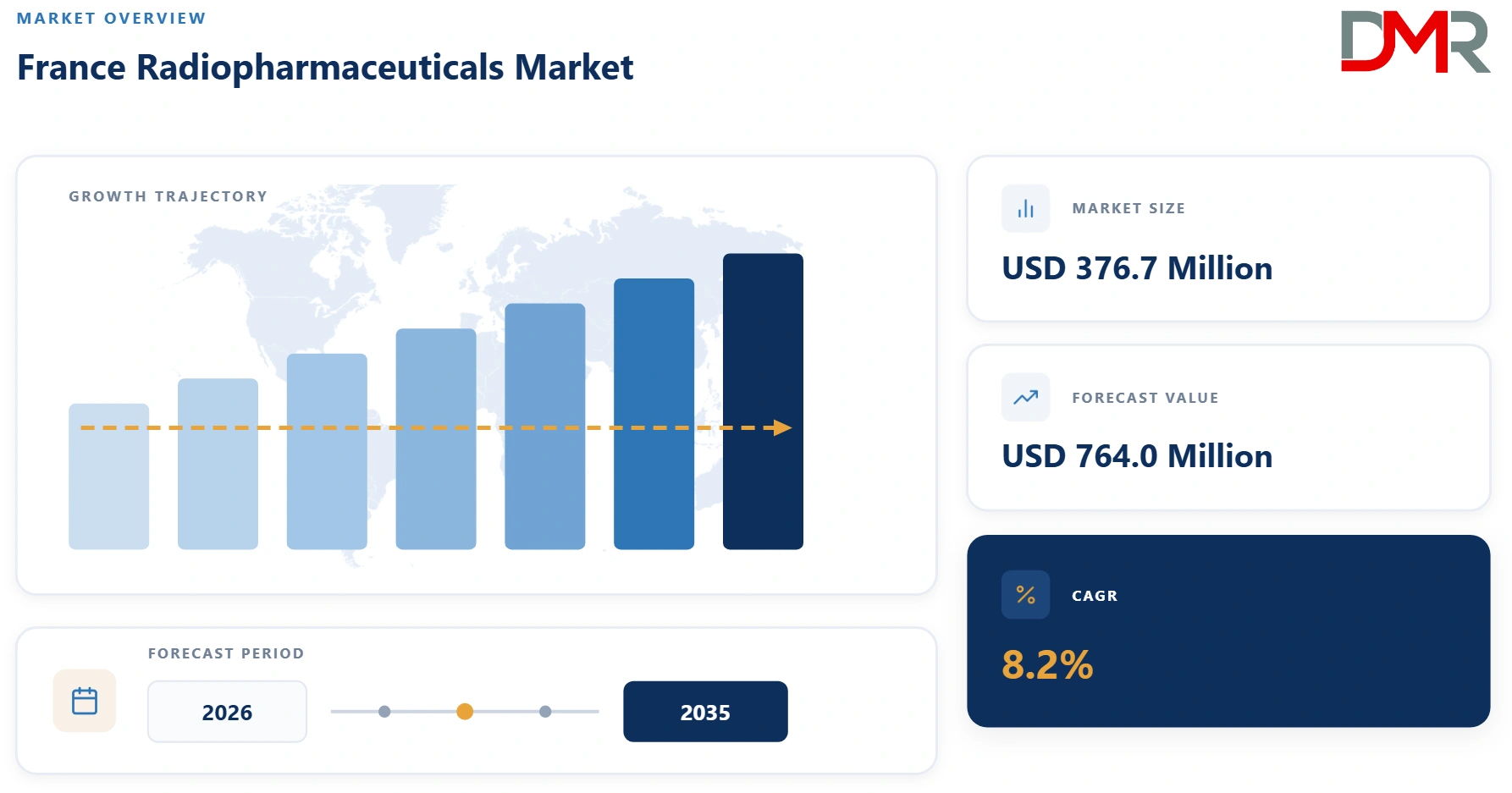
- France Radiopharmaceuticals Market Size in 2026: USD 376.7 Million
- France Radiopharmaceuticals Market Size in 2035: USD 764.0 Million
- France CAGR from 2026 to 2035: 8.2%
- Fluorine-18 Derivatives is the leading Radioisotope segment in 2026: 34.5%
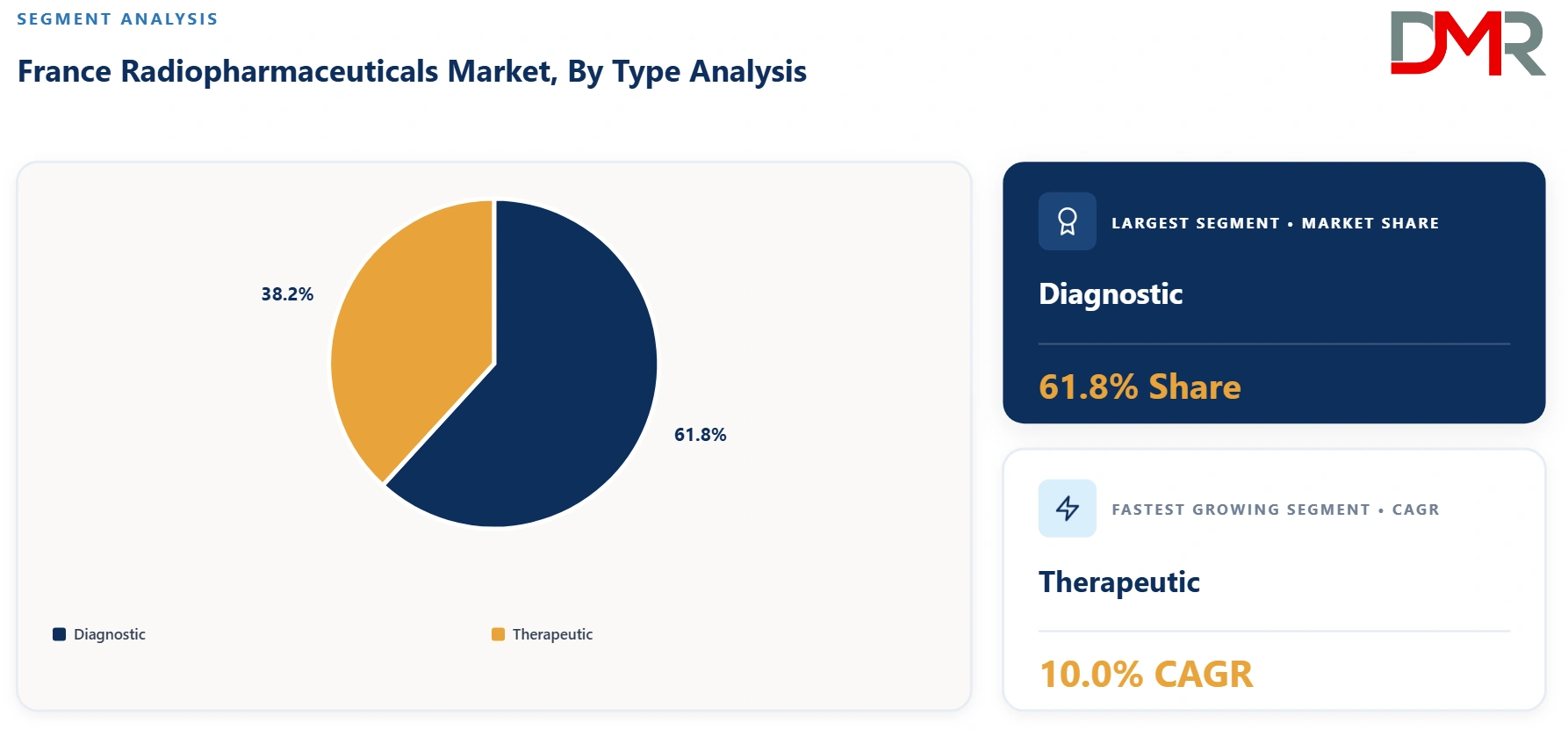
- Diagnostic Radiopharmaceuticals is the leading Type segment in 2026: 61.8%
- Cyclotrons is the leading Source segment in 2026: 47.6%
- Oncology is the leading Application segment in 2026: 46.2%
- Hospitals is the leading End User segment in 2026: 63.5%
What is the France Radiopharmaceuticals Market and its Market Size?
The France Radiopharmaceuticals Market is projected to reach USD 376.7 million in 2026 and grow at a compound annual growth rate of 8.2% from there until 2035 to reach a value of USD 764.0 million.
ℹ
To learn more about this report –
Download Your Free Sample Report Here
Radiopharmaceuticals are radioactive medicinal products used to diagnose diseases through PET and SPECT imaging or deliver targeted radiation for treatment. The French market includes diagnostic tracers, therapeutic radionuclides, radioisotope production, generators, preparation kits, and related distribution services. Growth is supported by France’s established nuclear medicine infrastructure, rising cancer incidence, broader availability of PSMA imaging, expansion of theranostics, increasing neurological imaging, and investment in domestic isotope and radioligand production.
Use Cases
- Cancer Diagnosis and Staging: Radiopharmaceuticals support PET and SPECT imaging for detecting primary tumors, determining disease stage, identifying metastases, assessing recurrence, and selecting patients for targeted treatment. Fluorine-18 FDG remains widely used, while gallium-68 and fluorine-18 PSMA tracers are improving prostate cancer assessment. These procedures help French clinicians develop individualized treatment strategies and monitor therapeutic response across oncology care pathways.
- Targeted Radionuclide Therapy: Therapeutic radiopharmaceuticals deliver radiation directly to tumor-associated receptors while limiting exposure to surrounding healthy tissue. Lutetium-177 therapies are used for selected prostate cancers and neuroendocrine tumors, while lead-212 and actinium-based candidates are advancing through development. The approach supports precision oncology by combining molecular targeting, dosimetry, patient selection, and treatment monitoring within integrated theranostic care programs.
- Cardiac Function Assessment: Technetium-99m-based agents are used in myocardial perfusion imaging to evaluate blood flow, identify ischemia, assess ventricular function, and support coronary artery disease management. Nuclear cardiology remains important for patients unable to undergo other diagnostic procedures or requiring functional information. Continued improvements in SPECT CT systems, reconstruction software, lower-dose protocols, and radiotracer availability support more efficient cardiovascular assessment across French hospitals.
- Neurological Disease Imaging: PET radiopharmaceuticals help evaluate cerebral metabolism, amyloid deposits, dopamine pathways, and other biomarkers associated with Alzheimer’s disease, Parkinson’s disease, epilepsy, and brain tumors. France’s aging population and expanding availability of disease-modifying neurological therapies increase demand for biomarker-supported diagnosis. Research institutions also use novel tracers to study neuroinflammation, protein accumulation, treatment response, and early-stage neurodegenerative disease progression.
Key Takeaways
- Market Size: The France Radiopharmaceuticals Market is anticipated to be valued at USD 376.7 million in 2026 and is forecast to reach USD 764.0 million by 2035, expanding at a CAGR of 8.2%.
- Growth Outlook: Market expansion is supported by increasing PET and SPECT procedures, rising oncology demand, broader adoption of theranostics, new radiopharmaceutical approvals, expanding isotope production, hospital infrastructure modernization, clinical research, and improved integration of molecular imaging into diagnosis, staging, treatment selection, dosimetry, and therapeutic monitoring.
- Primary Growth Drivers: France’s cancer burden, aging population, growing prostate cancer imaging requirements, adoption of lutetium-177 treatments, neurological disease assessment, investment in cyclotrons and radiopharmacies, and development of domestic lead-212 production are accelerating demand. France recorded approximately 433,000 new cancer cases in 2023, demonstrating the substantial diagnostic and therapeutic need.
- By Radioisotope Analysis: Fluorine-18 Derivatives is projected to lead the radioisotope segment with a 34.5% share in 2026, supported by extensive use of fluorine-18 FDG and specialized PET tracers. Lutetium-177 is expected to record the highest CAGR of approximately 10.4%, driven by radioligand therapies for prostate cancer and neuroendocrine tumors.
- By Type Analysis: Diagnostic Radiopharmaceuticals is anticipated to dominate with a 61.8% share in 2026 due to established PET and SPECT procedure volumes. Therapeutic Radiopharmaceuticals is projected to register the highest CAGR of approximately 10.0%, supported by targeted radionuclide therapy, expanding clinical indications, and greater adoption of theranostic treatment pathways.
- By Source Analysis: Cyclotrons are expected to lead with a 47.6% share in 2026, reflecting France’s established PET radiopharmacy and isotope production network. Generators are projected to register the highest CAGR of approximately 9.7%, supported by decentralized access to gallium-68, technetium-99m, and emerging therapeutic isotopes without requiring an onsite reactor or cyclotron.
- By Application Analysis: Oncology is projected to dominate with a 46.2% share in 2026 due to increasing use in tumor detection, staging, recurrence assessment, therapy selection, and targeted treatment. Neurology is anticipated to record the highest CAGR of approximately 9.5%, supported by increasing dementia prevalence and demand for amyloid, dopamine, and metabolic brain imaging.
- By End User Analysis: Hospitals are expected to lead with a 63.5% share in 2026, supported by their nuclear medicine departments, specialized personnel, imaging systems, therapy rooms, and multidisciplinary oncology programs. Cancer Research Institutes are projected to record the highest CAGR of approximately 9.3%, driven by clinical trials, tracer development, dosimetry studies, and targeted radionuclide therapy research.
How AI and Generative AI are Transforming the France Radiopharmaceuticals Market?
Artificial intelligence is improving PET and SPECT reconstruction, lesion detection, organ segmentation, image quantification, dosimetry, and treatment response assessment. AI-based tools can produce clearer images from lower administered activities, potentially reducing radiation exposure and shortening acquisition times. Predictive models support patient selection for radioligand therapy and optimize personalized dose planning. Generative AI can assist research teams in analyzing literature, designing tracer candidates, preparing regulatory documentation, and identifying clinical trial populations. Adoption nevertheless requires validated algorithms, representative datasets, clinical oversight, cybersecurity, and compliance with European medical device and AI regulations.
Key Drivers in the France Radiopharmaceuticals Market
Increasing Cancer Burden and Precision Oncology Adoption
France recorded approximately 433,000 new cancer cases in 2023, with the total number having doubled since 1990. This expanding clinical burden is increasing demand for accurate tumor detection, staging, recurrence assessment, treatment selection, and response monitoring. PET imaging with fluorine-18 and gallium-68 tracers is increasingly incorporated into prostate, breast, lung, lymphoma, and neuroendocrine tumor pathways. Meanwhile, lutetium-177 radioligand therapies are strengthening the connection between molecular diagnosis and targeted treatment. Wider recognition of tumor-specific biomarkers and multidisciplinary cancer care is encouraging hospitals to expand nuclear medicine capacity and establish structured theranostic programs.
Established Nuclear Medicine Infrastructure and Domestic Investment
France has an established network of nuclear medicine units, cyclotrons, radiopharmacies, hospitals, and specialist cancer centers capable of supporting radioactive medicine production and administration. The country conducted approximately 1.54 million nuclear medicine procedures in 2020, including around 500,000 PET procedures, demonstrating a substantial installed clinical base. Domestic investment is expanding therapeutic capacity further. Curium announced an investment exceeding €32 million for a lutetium-177 PSMA production line in Saclay, while Orano Med is developing industrial infrastructure for lead-212. These investments improve production resilience, reduce delivery distances, and support European access to short-lived diagnostic and therapeutic radioisotopes.
Restraints in the France Radiopharmaceuticals Market
Complex Production, Logistics, and Isotope Supply Requirements
Radiopharmaceutical supply chains are constrained by radioactive decay, specialized manufacturing requirements, limited production windows, and strict transport conditions. Fluorine-18 products require rapid delivery from regional cyclotrons, while reactor-derived isotopes remain exposed to maintenance interruptions and reliance on a limited number of European production facilities. Therapeutic isotopes require coordinated production, patient scheduling, quality testing, and hospital administration. Any disruption can cause dose cancellation and lost product because radioactive medicines cannot be stored conventionally. Expanding generator capacity, alternative isotope production methods, regional radiopharmacy networks, and domestic manufacturing can reduce exposure, but these measures require significant capital and regulatory coordination.
High Infrastructure Costs and Specialist Workforce Limitations
Nuclear medicine facilities require shielded rooms, hot cells, dose calibrators, contamination monitoring, waste management systems, imaging equipment, qualified pharmacists, medical physicists, radiochemists, technologists, and trained physicians. Establishing targeted radionuclide therapy programs adds inpatient or controlled treatment spaces, personalized dosimetry, radiation protection procedures, and long-term patient monitoring. These requirements create high entry barriers and can concentrate advanced services in major urban hospitals and specialist cancer centers. Workforce shortages may delay service expansion, while procurement and reimbursement processes can slow the adoption of new tracers and therapies despite regulatory authorization and demonstrated clinical value.
Growth Opportunities in the France Radiopharmaceuticals Market
Expansion of Theranostics and Targeted Alpha Therapy
Theranostics offers substantial growth potential by using related molecules for tumor imaging, patient selection, targeted treatment, and response monitoring. France can build on established gallium-68 and lutetium-177 capabilities to expand treatment for prostate cancer and neuroendocrine tumors while exploring additional cancer targets. Targeted alpha therapies based on lead-212, actinium-225, and other high-energy emitters could address small tumors and treatment-resistant disease. Orano Med’s investment in lead-212 production and therapeutic manufacturing provides France with an opportunity to become a European development and production center for next-generation alpha radiopharmaceuticals, although successful commercialization depends on clinical evidence, scalable production, and reimbursement.
New PET Tracers for Oncology and Neurology
The commercialization of disease-specific PET agents creates opportunities beyond conventional fluorine-18 FDG imaging. PSMA tracers can improve prostate cancer localization, while fibroblast activation protein, estrogen receptor, amino acid, hypoxia, and immune-response tracers may support broader precision oncology applications. Neurology presents additional potential through amyloid, tau, dopamine, and neuroinflammation imaging for Alzheimer’s disease, Parkinson’s disease, and related disorders. Telix received French authorization for Illuccix, a gallium-68 PSMA imaging agent, in April 2025. Continued approvals, reimbursement decisions, and clinical guideline inclusion could expand tracer utilization across French hospitals and imaging centers.
Trends in the France Radiopharmaceuticals Market
Shift from Diagnostic Imaging Toward Integrated Radioligand Therapy
Diagnostic radiopharmaceuticals continue to generate the largest market share, but investment and pipeline activity are shifting toward therapeutic products. Lutetium-177 has established the commercial potential of receptor-targeted treatment, while lead-212 and actinium-225 programs are attracting pharmaceutical partnerships and manufacturing investment. French institutions are increasingly combining diagnostic imaging, molecular tumor profiling, dosimetry, treatment administration, and follow-up within integrated theranostic programs. This transition raises revenue per patient but also creates requirements for therapy rooms, isotope availability, radiation safety, waste management, specialist training, and coordination between nuclear medicine physicians, oncologists, radiopharmacists, medical physicists, and regulators.
Decentralized Production and Regional Radiopharmacy Networks
Short isotope half-lives are encouraging producers to establish manufacturing capacity closer to hospitals and imaging centers. France’s regional cyclotron and PET radiopharmacy network supports same-day production and delivery of fluorine-18 tracers, while gallium-68 generators provide more decentralized access for PSMA and neuroendocrine tumor imaging. Companies are expanding manufacturing coverage through acquisitions and regional partnerships to improve reliability and reduce transportation risks. Generator-produced isotopes and compact cyclotron technologies are expected to improve access outside major metropolitan areas. Digital production scheduling, dose tracking, route optimization, and predictive maintenance are also improving capacity utilization and reducing avoidable radioactive product losses.
Research Scope and Analysis
The France radiopharmaceuticals market covers Fluorine 18 derivatives, Technetium 99, Lutetium 177, Gallium 68, Zirconium 89, carbon based tracers, diagnostic and therapeutic products, cyclotrons, nuclear reactors, generators, oncology, cardiology, neurology, endocrinology, hospitals, medical imaging centers, cancer research institutes, market demand, clinical adoption, production capacity, regulation, competition, investment, technology, pricing, innovation, forecasts across France through 2035.
ℹ
To learn more about this report –
Download Your Free Sample Report Here
By Radioisotope Analysis
Fluorine-18 Derivatives are projected to hold the highest market share of 34.5% in 2026, supported by the established use of FDG and an expanding range of oncology and neurology PET tracers. Lutetium-177 is expected to record the highest CAGR of approximately 10.4%. Growth is driven by targeted treatments for prostate cancer and neuroendocrine tumors, manufacturing investment, expanding indications, and increasing hospital readiness for radioligand therapy.
By Type Analysis
Diagnostic Radiopharmaceuticals are expected to dominate the market with a 61.8% share in 2026, reflecting high PET and SPECT examination volumes and established clinical use across oncology, cardiology, and neurology. Therapeutic Radiopharmaceuticals are anticipated to record the highest CAGR of approximately 10.0%. Adoption is supported by theranostic pathways, lutetium-177 therapies, targeted alpha therapy pipelines, personalized dosimetry, and expanding oncology applications.
By Source Analysis
Cyclotrons are projected to lead the source segment with a 47.6% share in 2026, supported by regional PET radiopharmacies and strong demand for fluorine-18 products. Generators are expected to register the highest CAGR of approximately 9.7%. Growth is supported by decentralized gallium-68 and technetium-99m availability, easier hospital integration, reduced dependence on nearby cyclotrons, and development of generators for additional diagnostic and therapeutic isotopes.
By Application Analysis
Oncology is expected to account for the highest market share of 46.2% in 2026, driven by cancer detection, staging, recurrence assessment, patient selection, and targeted radionuclide therapy. Neurology is projected to record the highest CAGR of approximately 9.5%. Rising dementia prevalence, new disease-modifying treatments, amyloid and tau imaging, dopamine pathway assessment, and research into neuroinflammation are expanding demand for specialized neurological radiotracers.
By End User Analysis
Hospitals are projected to dominate the end-user segment with a 63.5% share in 2026 due to their integrated imaging systems, specialist staff, therapy rooms, radiopharmacies, and oncology programs. Cancer Research Institutes are expected to register the highest CAGR of approximately 9.3%. Growth is supported by tracer development, investigator-led clinical trials, targeted therapy research, biomarker validation, dosimetry studies, and partnerships with radiopharmaceutical manufacturers.
The France Radiopharmaceuticals Market Report is Segmented Based on the Following:
By Radioisotope
- Fluorine-18 Derivatives
- Technetium-99
- Lutetium-177
- Gallium-68
- Zirconium-89
- 11C-choline
- 14C-urea
- Other Radioisotopes
By Type
- Diagnostic Radiopharmaceuticals
- Therapeutic Radiopharmaceuticals
By Source
- Cyclotrons
- Nuclear Reactors
- Generators
By Application
- Oncology
- Cardiology
- Neurology
- Endocrinology
- Other Applications
By End User
- Hospitals
- Medical Imaging Centers
- Cancer Research Institutes
- Other End Users
Regulatory Landscape
Radiopharmaceuticals in France are regulated as medicinal products through national and European frameworks. The National Agency for the Safety of Medicines and Health Products oversees marketing authorizations, manufacturing, pharmacovigilance, and product safety, while radioactive activities require radiation protection compliance under the French nuclear safety framework. Producers must follow Good Manufacturing Practice, control radionuclidic and chemical purity, validate sterile production, and maintain traceable distribution. Hospitals require authorization, qualified personnel, controlled facilities, patient dosimetry, waste procedures, and exposure monitoring. The EU Clinical Trials Regulation and medical device rules affect combination development. Regulation protects patients but increases development costs, approval timelines, documentation requirements, and barriers for smaller suppliers.
Technology Analysis
France’s radiopharmaceutical technology landscape is moving toward digital PET CT, SPECT CT, total-body imaging, automated radiosynthesis, generator-based isotope production, and individualized dosimetry. Advanced reconstruction algorithms improve image quality and enable lower administered activity, while digital detectors increase sensitivity and acquisition efficiency. PSMA, somatostatin receptor, amyloid, tau, and emerging FAPI tracers are broadening molecular imaging applications. Therapeutic innovation is centered on lutetium-177, lead-212, and actinium-225 platforms. Automated hot cells, cassette-based synthesis, AI-assisted segmentation, and integrated dose tracking can improve safety and repeatability. However, capital requirements, validation needs, interoperability limitations, isotope shortages, and specialist training may slow deployment outside major centers.
Competitive Landscape
The France Radiopharmaceuticals Market combines established nuclear medicine suppliers, global pharmaceutical companies, isotope producers, imaging technology companies, specialist radiopharmacies, and emerging radioligand developers. Curium has a substantial domestic manufacturing and PET radiopharmacy presence, while Novartis participates through diagnostic and therapeutic radioligand products. Orano Med is developing lead-212 targeted alpha therapies and French production infrastructure. Competition focuses on isotope access, manufacturing proximity, product approvals, clinical evidence, reimbursement, hospital relationships, reliable delivery, and proprietary targeting molecules. Partnerships between pharmaceutical, nuclear technology, biotechnology, and research organizations are becoming increasingly important.
Some of the Prominent Players in the France Radiopharmaceuticals Market Are
- Curium Pharma
- Novartis AG
- Advanced Accelerator Applications
- Orano Med
- Telix Pharmaceuticals Limited
- GE HealthCare
- Siemens Healthineers AG
- Bayer AG
- Bracco Imaging S.p.A.
- Blue Earth Diagnostics
- Lantheus Holdings Inc.
- Eckert & Ziegler SE
- ITM Isotope Technologies Munich SE
- IBA Radiopharma Solutions
- IBA Group
- Nucleis SA
- Roche Holding AG
- Sanofi S.A.
- Molecular Partners AG
- NorthStar Medical Radioisotopes LLC
- SHINE Technologies LLC
- Niowave Inc.
- ARTBIO Inc.
- RayzeBio Inc.
- Fusion Pharmaceuticals Inc.
- POINT Biopharma Global Inc.
- Perspective Therapeutics Inc.
- RadioMedix Inc.
- Jubilant Radiopharma
- Cardinal Health Inc.
- BWXT Medical Ltd.
- Nordion Canada Inc.
- NRG PALLAS
- Monrol Nuclear Products
- Rotem Industries Ltd.
- Isotopia Molecular Imaging Ltd.
- SOFIE Biosciences Inc.
- Life Molecular Imaging Limited
- Clarity Pharmaceuticals Ltd.
- AdAcAp
- Other Key Players
Recent Developments
- June 2026: Curium announced an investment exceeding €32 million in Saclay, France, to establish a European production line for lutetium-177 PSMA-I&T. The project will expand French radioligand therapy manufacturing and create 20 specialized jobs.
- April 2025: Telix Pharmaceuticals received marketing authorization from ANSM for Illuccix, its gallium-68 PSMA PET imaging agent, enabling French hospitals and clinics to use the product for detecting PSMA-positive prostate cancer lesions.
- April 2025: Curium completed the acquisition of Nucleis, a specialist in Good Manufacturing Practice production and distribution of PET radiopharmaceuticals, strengthening its European development, manufacturing, and radiopharmacy network.
- January 2025: Orano Med and Molecular Partners expanded their partnership to develop up to ten lead-212 Radio-DARPin targeted alpha therapy programs, combining proprietary targeting proteins with Orano Med’s lead-212 production and development platform.
Report Details
| Report Characteristics |
| Market Size (2026) |
USD 376.7 Million |
| Forecast Value (2035) |
USD 764.0 Million |
| CAGR (2026–2035) |
8.2% |
| Historical Data |
2021 – 2025 |
| Forecast Data |
2026 – 2035 |
| Base Year |
2025 |
| Segments Covered |
By Radioisotope, By Type, By Source, By Application, By End User |
Frequently Asked Questions
How big is the France Radiopharmaceuticals Market?
▾ The France Radiopharmaceuticals Market is projected to be valued at USD 376.7 million in 2026 and reach USD 764.0 million by 2035.
What is the CAGR of the France Radiopharmaceuticals Market from 2026 to 2035?
▾ The France Radiopharmaceuticals Market is expected to expand at a compound annual growth rate of 8.2% from 2026 to 2035.
What factors are driving the growth of the France Radiopharmaceuticals Market?
▾ Growth is driven by rising cancer incidence, increasing PET and SPECT procedures, broader adoption of PSMA imaging, expansion of radioligand therapy, domestic isotope production, hospital investment, and development of neurological radiotracers.
What are the major trends in the France Radiopharmaceuticals Market?
▾ Major trends include increasing theranostic adoption, expansion of lutetium-177 therapy, development of lead-212 targeted alpha treatments, decentralized isotope production, disease-specific PET tracers, personalized dosimetry, and AI-supported image analysis.
Who are the key players in the France Radiopharmaceuticals Market?
▾ Key players include Curium Pharma, Novartis, Advanced Accelerator Applications, Orano Med, Telix Pharmaceuticals, GE HealthCare, Siemens Healthineers, Bayer, Bracco Imaging, Eckert & Ziegler, ITM, and IBA Radiopharma Solutions.
How is the France Radiopharmaceuticals Market segmented?
▾ The market is segmented by radioisotope, type, source, application, and end user. Major categories include Fluorine-18 Derivatives, Diagnostic Radiopharmaceuticals, Cyclotrons, Oncology, Hospitals, and Medical Imaging Centers.