GCC In Vitro Diagnostic Market Snapshot
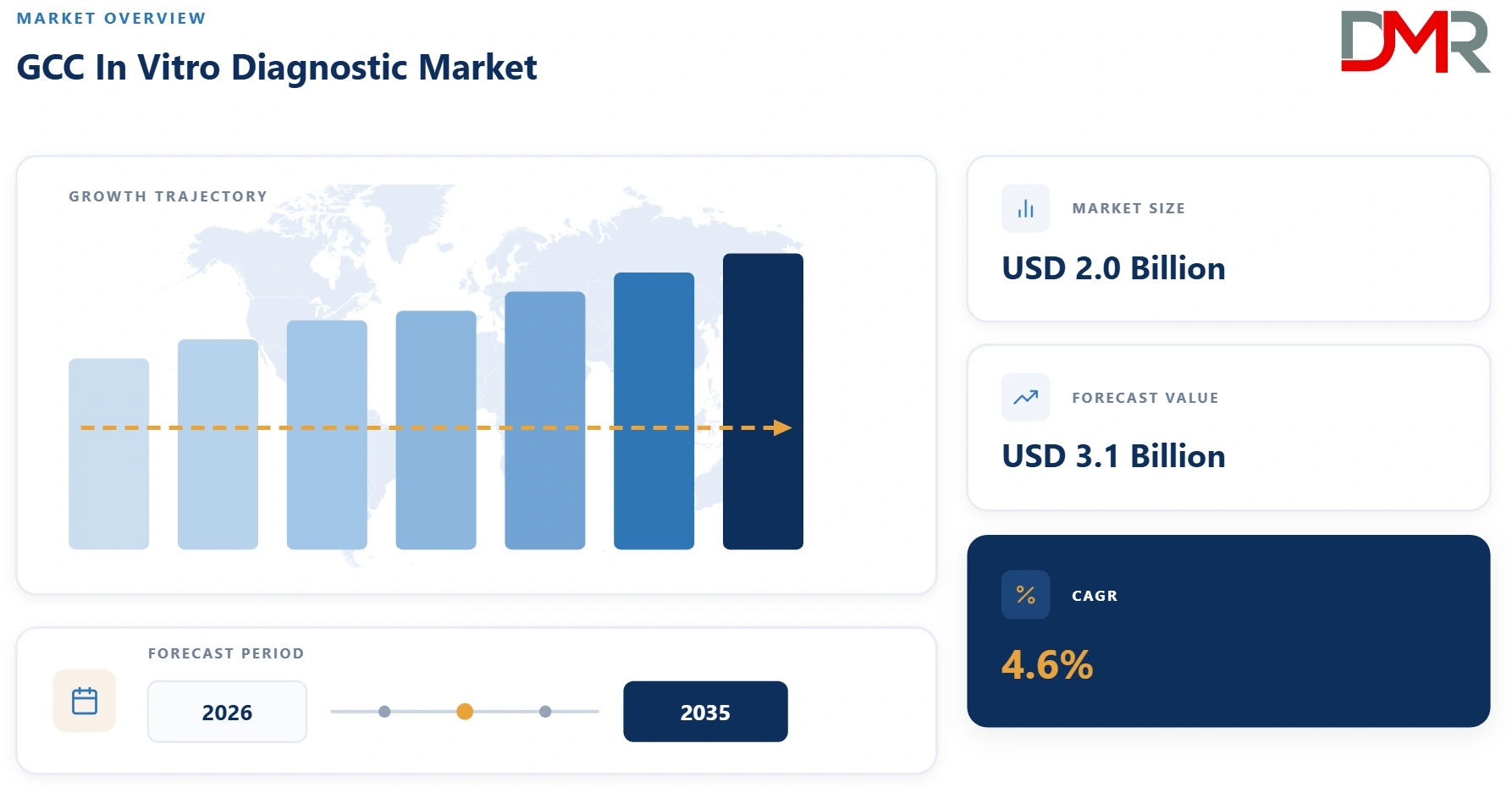
- GCC In Vitro Diagnostic Market Size in 2026: USD 2.0 Billion
- GCC In Vitro Diagnostic Market Size in 2035: USD 3.1 Billion
- GCC CAGR from 2026 to 2035: 4.6%
- Reagents is the leading product segment in 2026: 57.0%
- Molecular Diagnostics is the leading technology segment in 2026: 23.0%
- Infectious Disease is the leading application segment in 2026: 29.0%
- Hospitals is the leading end user segment in 2026: 52.0%
- Laboratories is the leading test location segment in 2026: 61.0%
What is the GCC In Vitro Diagnostic Market and its Market Size?
The GCC In Vitro Diagnostic (IVD) Market is projected to be valued at USD 2.0 Billion in 2026 and is projected to reach USD 3.1 Billion by 2035, expanding at a CAGR of 4.6% during the forecast period.
ℹ
To learn more about this report –
Download Your Free Sample Report Here
The market covers diagnostic testing performed on samples drawn from the human body blood, urine, tissue, and other specimens used to detect infectious and chronic diseases, monitor therapy response, and guide clinical decision-making across Saudi Arabia, the UAE, Qatar, Kuwait, Oman, and Bahrain. Growth is being propelled by the region's high and rising burden of chronic disease particularly diabetes and cardiovascular conditions sustained government investment in hospital and laboratory infrastructure under national health transformation programs (Saudi Vision 2030, UAE's healthcare strategy), a growing base of accredited private laboratory chains and hospital networks, and increasing adoption of molecular diagnostics and point-of-care testing platforms. Saudi Arabia and the UAE together account for the large majority of regional demand, reflecting their population size, healthcare spending, and concentration of tertiary care and reference laboratory capacity. The market is transitioning from a largely import-dependent, hospital-lab-centric structure toward one incorporating a growing standalone diagnostics chain segment, expanding home-care and point-of-care testing, and rising interest in localized reagent and kit manufacturing as part of broader healthcare self-sufficiency agendas across the region.
Use Cases
- Chronic Disease Screening and Monitoring in High-Prevalence Populations: Hospitals and laboratories across Saudi Arabia and the UAE deploy clinical chemistry and immunoassay-based IVD platforms for population-level diabetes, cardiovascular, and nephrology screening and ongoing patient monitoring, reflecting the region's elevated chronic disease burden.
- Infectious Disease Testing Across Hospital and Reference Laboratory Networks: Public and private hospital networks and centralized reference laboratories rely on molecular diagnostics and microbiology testing for infectious disease detection, including routine pathogen panels and outbreak-response testing capacity built up since the COVID-19 pandemic.
- Point-of-Care and Home-Care Testing Expansion: Growing adoption of point-of-care glucose monitoring, rapid infectious disease tests, and coagulation testing in clinics, pharmacies, and home-care settings supports earlier diagnosis and reduces dependence on centralized laboratory turnaround times.
- Oncology Biomarker and Companion Diagnostic Testing: Tertiary hospitals and specialty laboratories increasingly use molecular diagnostics and immunoassay-based biomarker testing to support oncology treatment selection and monitoring, as regional cancer treatment infrastructure expands.
Key Takeaways
- Market Size: The GCC In Vitro Diagnostic Market is anticipated to be valued at USD 2.0 Billion in 2026 and is forecast to reach USD 3.1 Billion by 2035, expanding at a CAGR of 4.6%.
- Growth Outlook: Market expansion is sustained by rising chronic and infectious disease burden, continued government healthcare infrastructure investment, and growing private laboratory and diagnostics chain capacity across the region.
- Primary Growth Drivers: High regional prevalence of diabetes and cardiovascular disease, national healthcare transformation programs, expanding hospital and standalone diagnostics infrastructure, and rising adoption of molecular diagnostics and point-of-care technology.
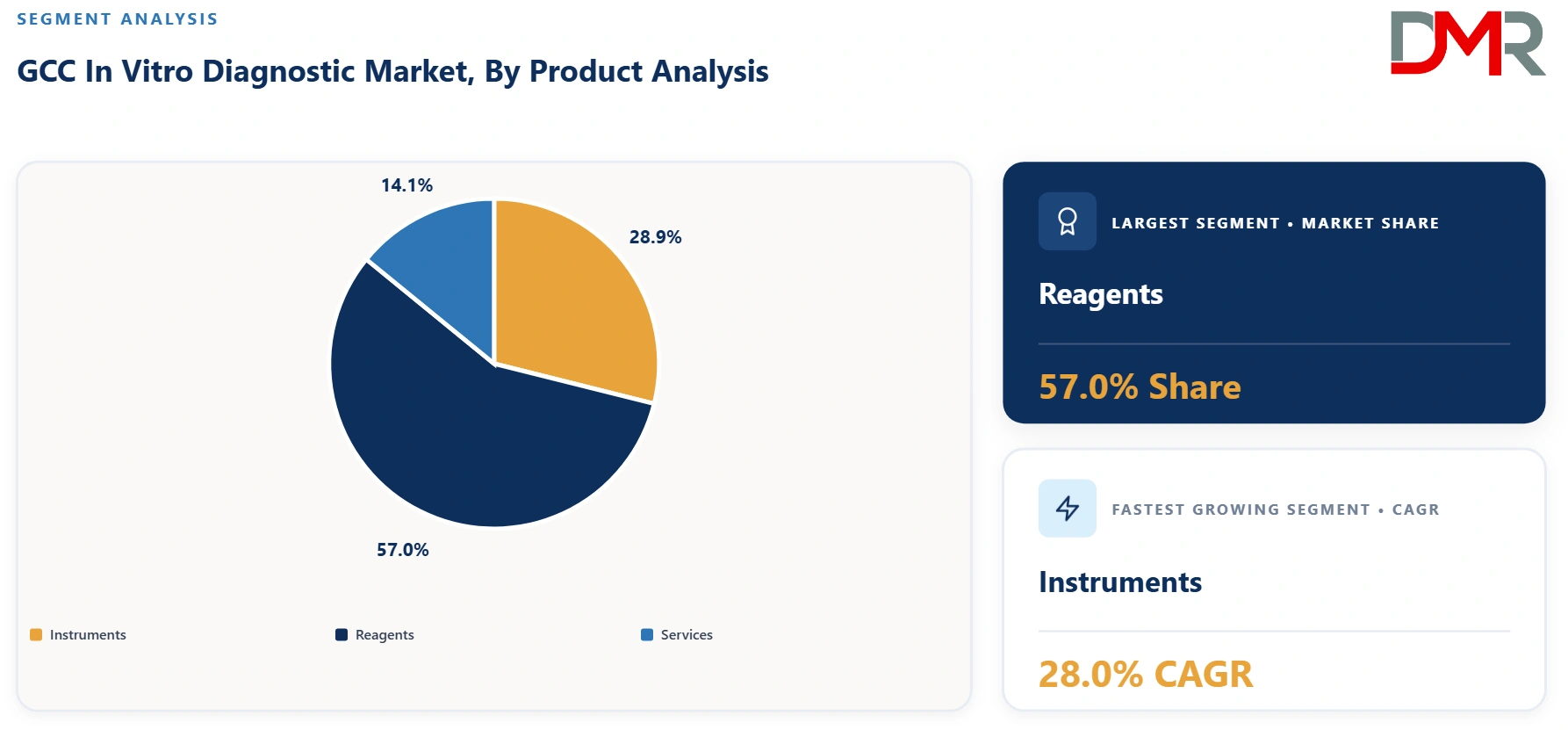
- By Product Analysis: Reagents is projected to lead the product segment with a 57.0% share in 2026, reflecting recurring consumable demand tied to testing volumes. Instruments accounts for 28.0% share, while Services holds a 15.0% share, supported by expanding outsourced and reference laboratory testing.
- By Technology Analysis: Molecular Diagnostics is projected to lead the technology segment with a 23.0% share in 2026, closely followed by Immunoassay at 22.0% and Clinical Chemistry at 19.0%, reflecting their combined central role in infectious disease and chronic disease testing.
- By Application Analysis: Infectious Disease is expected to dominate with a 29.0% share in 2026, reflecting the region's testing infrastructure build-out, while Diabetes follows with a 20.0% share given the region's high diabetes prevalence.
- By End User Analysis: Hospitals are projected to dominate with a 52.0% share in 2026, followed by Laboratories at 31.0% and Home Care at 7.0%, reflecting the concentration of testing volumes in hospital-based settings alongside a growing standalone laboratory segment.
- By Test Location Analysis: Laboratories account for the largest share of test location at 61.0% in 2026, followed by Point of Care at 24.0%, Home Care at 8.0%, and Others at 7.0%.
- By Country Analysis: Saudi Arabia is projected to dominate with a 49.0% share in 2026, followed by the UAE at 27.0%, Qatar at 8.0%, Kuwait at 7.0%, Oman at 6.0%, and Bahrain at 3.0%.
Key Drivers in the GCC In Vitro Diagnostic Market
Rising Burden of Chronic and Lifestyle-Related Disease
The GCC region continues to experience a significant burden of chronic and lifestyle-related diseases, particularly diabetes, cardiovascular disorders, obesity, and metabolic conditions. High prevalence of these diseases is creating sustained demand for diagnostic testing across hospitals, clinics, laboratories, and primary healthcare facilities. Clinical chemistry, immunoassay, hematology, and point-of-care diagnostics are increasingly used for disease screening, early diagnosis, treatment monitoring, and long-term patient management. Population growth, urbanization, sedentary lifestyles, and an aging population are further supporting testing volumes. The increasing emphasis on preventive healthcare and regular health screening is also encouraging greater utilization of diagnostic services, strengthening the overall demand for in vitro diagnostic products across GCC healthcare systems.
National Healthcare Transformation and Infrastructure Investment
Government-led healthcare transformation initiatives are significantly supporting the expansion of the GCC in vitro diagnostic market. Saudi Arabia's Vision 2030 is driving modernization, privatization, digitalization, and capacity expansion across the healthcare sector, while the UAE continues to invest heavily in hospitals, laboratories, and advanced diagnostic infrastructure. New healthcare facilities and the modernization of existing hospitals are increasing demand for IVD instruments, reagents, consumables, and diagnostic services. Investments in centralized laboratories, specialized medical centers, and integrated healthcare networks are also improving testing capacity. In addition, public-sector healthcare spending and private-sector participation are encouraging technology adoption, automation, and advanced diagnostic capabilities, creating favorable conditions for sustained IVD market development throughout the GCC region.
Restraints in the GCC In Vitro Diagnostic Market
Import Dependence and Regulatory Fragmentation Across GCC Member States
The GCC in vitro diagnostic market remains highly dependent on imported diagnostic instruments, reagents, kits, and consumables supplied by multinational manufacturers. This dependence exposes healthcare providers and distributors to international supply chain disruptions, logistics challenges, currency fluctuations, and changes in global manufacturing costs. Although GCC countries have undertaken efforts toward regulatory harmonization, differences in product registration, documentation, approval requirements, and compliance procedures can remain across individual member states. These variations increase regulatory complexity and may extend product launch timelines for manufacturers seeking regional expansion. Smaller distributors can also face higher compliance and inventory costs. Consequently, import dependence combined with regulatory variation remains a key constraint affecting market accessibility, operating efficiency, and overall cost structures.
Growth Opportunities in the GCC In Vitro Diagnostic Market
Expansion of Point-of-Care and Home-Care Testing Infrastructure
The growing demand for rapid, convenient, and accessible diagnostic testing presents significant opportunities for point-of-care and home-care IVD solutions across the GCC. Healthcare providers are increasingly seeking faster turnaround times to support timely diagnosis and treatment decisions, particularly in emergency care, primary healthcare, and outpatient settings. Point-of-care testing can reduce dependence on centralized laboratories for selected diagnostic applications while improving operational efficiency. Home-care testing also has potential to expand in areas such as diabetes monitoring, infectious disease screening, pregnancy testing, and coagulation monitoring. Rising healthcare awareness, digital health adoption, and increasing chronic disease prevalence are expected to encourage decentralized testing. Manufacturers offering user-friendly, connected, and reliable diagnostic platforms can therefore capture emerging demand across the region.
Localization of Reagent and Kit Manufacturing
Localization of diagnostic manufacturing represents a significant growth opportunity as GCC governments increasingly emphasize healthcare self-sufficiency and domestic production capabilities. Saudi Arabia and the UAE are particularly focused on strengthening local pharmaceutical, medical device, and diagnostic supply chains to reduce reliance on imports. Establishing regional manufacturing, assembly, packaging, or reagent production facilities can help international and local IVD companies improve supply chain resilience while reducing exposure to international logistics disruptions. Local production may also support faster product availability and greater alignment with government procurement requirements and local-content initiatives. Strategic partnerships between global diagnostic manufacturers and regional healthcare or industrial companies could accelerate technology transfer and manufacturing development, creating new opportunities for investment and long-term market expansion.
Trends in the GCC In Vitro Diagnostic Market
Growing Adoption of Molecular Diagnostics Platforms
Molecular diagnostics is becoming increasingly important within the GCC IVD market as hospitals and laboratories expand their capabilities for advanced infectious disease, oncology, and genetic testing. Diagnostic infrastructure developed during the COVID-19 pandemic created greater familiarity with molecular platforms, laboratory automation, and nucleic-acid-based testing. This installed capacity is now supporting broader applications, including respiratory pathogen panels, antimicrobial resistance testing, sexually transmitted infection diagnostics, and molecular oncology assays. Hospitals and centralized laboratories are increasingly investing in automated molecular systems that can provide accurate and rapid results. Continued improvements in multiplex testing, workflow automation, and assay availability are expected to support further adoption. The growing focus on precision medicine and early disease detection will also strengthen demand for molecular diagnostic technologies.
Expansion of Standalone Diagnostics Chains and Reference Laboratories
Standalone diagnostic chains and centralized reference laboratories are becoming increasingly prominent across the GCC healthcare landscape. These facilities enable healthcare providers to consolidate testing volumes, improve laboratory utilization, and achieve greater economies of scale compared with smaller decentralized facilities. Diagnostic chains are also expanding patient access by offering broader test menus, specialized testing, and convenient collection locations. Reference laboratories are increasingly supporting hospitals and clinics through outsourced testing, particularly for complex, specialized, and high-volume diagnostic procedures. The expansion of private healthcare networks and growing demand for cost-efficient diagnostic services are further supporting this trend. As healthcare systems increasingly focus on efficiency and specialized testing capabilities, standalone laboratories and reference centers are expected to play a larger role in GCC diagnostic delivery.
Research Scope and Analysis
The GCC In Vitro Diagnostic Market analysis covers the major product categories, technologies, applications, end users, and testing locations shaping the regional diagnostic landscape. The study includes instruments, reagents, consumables, and diagnostic services used across hospitals, laboratories, home-care settings, and decentralized testing environments. Technology analysis encompasses molecular diagnostics, immunoassay, microbiology, hematology, clinical chemistry, and coagulation. Applications evaluated include infectious diseases, diabetes, oncology, cardiovascular conditions, and other major diagnostic areas.
ℹ
To learn more about this report –
Download Your Free Sample Report Here
By Product Analysis
Reagents are projected to dominate the GCC In Vitro Diagnostic Market, accounting for approximately 57.0% share in 2026. Their leading position is primarily supported by recurring consumption associated with routine and specialized diagnostic testing, as reagents must be continuously replenished according to laboratory testing volumes. Instruments are expected to account for approximately 28.0%, supported by investments in new hospitals, diagnostic laboratories, laboratory automation, and modernization of existing healthcare infrastructure. Services are projected to hold approximately 15.0%, reflecting increasing demand for outsourced testing, reference laboratory services, and specialized diagnostics. Overall, recurring reagent consumption combined with expanding testing volumes and healthcare infrastructure is expected to maintain the strong position of the reagents segment within the GCC IVD market.
By Technology Analysis
Molecular Diagnostics is projected to lead the GCC In Vitro Diagnostic Market by technology, accounting for approximately 23.0% share in 2026. Its leading position is supported by increasing adoption in infectious disease testing, oncology diagnostics, pathogen identification, and other advanced applications. Immunoassay follows closely with an estimated 22.0% share, supported by widespread use in infectious disease screening, hormone testing, autoimmune diagnostics, and chronic disease monitoring. Clinical Chemistry is expected to account for approximately 19.0%, reflecting its importance in routine biochemical testing and management of diabetes, kidney disease, liver disorders, and metabolic conditions. Together, these technologies represent major components of regional diagnostic activity, supported by expanding laboratory capacity and increasing demand for accurate and efficient testing.
By Application Analysis
Infectious Disease is projected to remain the leading application segment in the GCC In Vitro Diagnostic Market, accounting for approximately 29.0% share in 2026. The segment continues to benefit from sustained diagnostic requirements across hospitals, clinics, laboratories, and centralized testing networks. Demand for infectious disease diagnostics is supported by routine screening, outbreak surveillance, travel-related testing, and continued investment in laboratory preparedness. Diabetes is expected to follow with approximately 20.0% share, reflecting the exceptionally high prevalence of diabetes and associated metabolic disorders across GCC countries. Regular glucose monitoring, disease screening, and long-term patient management contribute significantly to testing volumes. Other applications, including oncology, cardiovascular disease, and autoimmune disorders, are also expected to contribute to overall market expansion.
By End User Analysis
Hospitals are projected to remain the largest end-user segment in the GCC In Vitro Diagnostic Market, accounting for approximately 52.0% share in 2026. Their leading position reflects the concentration of diagnostic infrastructure, specialized laboratories, and high patient volumes within hospital networks. Hospitals require a broad range of IVD products for emergency testing, routine diagnosis, disease monitoring, and specialized procedures. Laboratories are expected to account for approximately 31.0%, supported by the continued expansion of standalone diagnostic chains and centralized reference laboratories. Home Care is projected to hold approximately 7.0%, reflecting growing adoption of self-testing and decentralized monitoring solutions. Increasing healthcare expenditure, infrastructure development, and demand for specialized diagnostics are expected to support growth across all major end-user categories.
By Test Location Analysis
Laboratories are expected to remain the dominant test location in the GCC In Vitro Diagnostic Market, accounting for approximately 61.0% share in 2026. Their leading position is driven by the concentration of complex, specialized, and high-throughput diagnostic procedures within centralized and hospital-based laboratory facilities. Point of Care is projected to represent approximately 24.0%, supported by increasing demand for rapid diagnostic results in emergency departments, clinics, primary healthcare facilities, and other decentralized settings. Home Care is expected to account for approximately 8.0%, reflecting gradual adoption of self-testing and patient-led monitoring. Other testing locations are projected to hold approximately 7.0%. Overall, laboratory-based testing will remain dominant, while decentralized testing channels are expected to expand steadily.
The GCC In Vitro Diagnostic Market Report is segmented based on the following:
By Product
- Instruments
- Reagents
- Services
By Technology
- Molecular Diagnostics
- Immunoassay
- Microbiology
- Hematology
- Clinical Chemistry
- Coagulation
- Others
By Application
- Infectious Disease
- Diabetes
- Oncology
- Nephrology
- Cardiology
- Drug Testing
- Autoimmune Disease
- Others
By End User
- Laboratories
- Hospitals
- Home Care
- Others
By Test Location
- Point of Care
- Home Care
- Others
Country Analysis
The GCC region represents a concentrated but rapidly maturing IVD market, anchored by Saudi Arabia and the UAE, which together account for the substantial majority of regional testing volume and healthcare infrastructure investment. Saudi Arabia holds the leading position in the market with a 49.0% share in 2026, supported by an aging population, expanding healthcare sector, and the establishment of standalone centers, independent diagnostics chains, and academic institutes across the country. The UAE follows with a 27.0% share, driven by its dense private hospital network, strong medical tourism sector, and continued investment in advanced diagnostic infrastructure in Dubai and Abu Dhabi. Qatar (8.0%), Kuwait (7.0%), Oman (6.0%), and Bahrain (3.0%) represent smaller but growing markets, supported by ongoing hospital capacity expansion and rising private healthcare investment.
By Country
- Saudi Arabia
- UAE
- Qatar
- Kuwait
- Oman
- Bahrain
Technology Analysis
Technology development in the GCC IVD market is increasingly centered on automation and integration of laboratory testing platforms, adoption of multiplex molecular diagnostics panels capable of detecting multiple pathogens in a single test, and growing use of digital connectivity linking point-of-care devices to centralized laboratory information systems. Investment in advanced immunoassay and molecular diagnostics platforms is supporting expanding oncology biomarker and infectious disease testing capability. Opportunities are growing for providers offering integrated digital health platforms connecting point-of-care and home-care testing data to hospital and laboratory information systems, though achieving consistent data interoperability and quality standards across the region's varied public and private healthcare IT infrastructure remains an ongoing operational challenge.
Investment and White Space Analysis
Investment opportunities in the GCC In Vitro Diagnostic Market are expanding alongside sustained chronic and infectious disease testing demand, continued government healthcare infrastructure investment, and rising interest in regional manufacturing localization. Meaningful white space exists in point-of-care and home-care testing infrastructure, local reagent and kit manufacturing capacity, and digital health platforms connecting decentralized testing to centralized care networks. Providers with strong regulatory relationships across GCC member states, established distribution networks, and capability spanning instruments, reagents, and services are positioned to capture larger, longer-duration hospital and laboratory network contracts. However, import dependence, currency exposure, and country-by-country regulatory registration requirements can constrain margins and complicate multi-country market entry for smaller or newer providers.
Competitive Landscape
The GCC In Vitro Diagnostic Market is moderately consolidated, comprising large global IVD manufacturers with established regional distribution presence, regional distributors and laboratory service providers, and a growing number of standalone diagnostics chains. Competition centers on product portfolio breadth across instruments, reagents, and services, established relationships with hospital networks and ministries of health, regulatory registration capability across GCC member states, and local distribution and after-sales service infrastructure. Global manufacturers benefit from broad product portfolios and established brand recognition, while regional distributors and laboratory chains compete through local market relationships and service responsiveness.
Some of the prominent players in the GCC In Vitro Diagnostic Market are:
- Abbott Laboratories
- Roche Diagnostics
- Danaher Corporation
- Siemens Healthineers
- Thermo Fisher Scientific
- Becton, Dickinson and Company (BD)
- bioMérieux
- Sysmex Corporation
- QIAGEN
- Grifols
- DiaSorin
- Bio-Rad Laboratories
- Illumina
- QuidelOrtho
- Werfen
- Randox Laboratories
- Revvity
- Cepheid
- Trivitron Healthcare
- Mindray Medical International
- Beckman Coulter Diagnostics
- Fujifilm Wako
- Tosoh Corporation
- Nihon Kohden Corporation
- Agilent Technologies
- Hologic
- Ortho Clinical Diagnostics
- Guardant Health
- Al Borg Diagnostics
- Al Razi Medical Labs
- Saudi Diagnostic Laboratory Co.
- Lifera
- Intelligent Bio Solutions
- Co-Diagnostics
- ARUP Laboratories
- RayBiotech
- Everlywell
- Orreco
- Biostarks
- National Reference Laboratory (UAE)
- Other Key Players
Recent Development
- May 2025: The SFDA released its updated guidance document, "MDS-G022: Guidance on the development of IVDs for in-house use". This guidance establishes comprehensive requirements for the design, validation, quality management systems (QMS), and post-market monitoring of in-house in vitro diagnostics (IH-IVDs) used within healthcare facilities.
- March 2025: The SFDA officially published "MDS-G026: Guidance on Companion Diagnostic IVDs". This framework supports precision medicine by clarifying the development, clinical performance evaluation, and market authorization processes for companion diagnostics (CDx).
- July 2025: The SFDA granted market authorization for an advanced biotechnology-based IVD device specifically designed to measure concentrations of antipsychotic medications such as Quetiapine, Olanzapine, Aripiprazole, Clozapine, and Risperidone directly in the blood.
Report Details
| Report Characteristics |
| Market Size (2026) |
USD 2.0 Bn |
| Forecast Value (2035) |
USD 3.1 Bn |
| CAGR (2026–2035) |
4.6% |
| Historical Data |
2021 – 2025 |
| Forecast Data |
2026 – 2035 |
| Base Year |
2025 |
| Segments Covered |
By Product, By Technology, By Application, and By End User |
| Country Coverage |
Saudi Arabia, UAE, Qatar, Kuwait, Oman, and Bahrain |
Frequently Asked Questions
How big is the GCC In Vitro Diagnostic Market?
▾ The GCC In Vitro Diagnostic Market is projected to be valued at USD 2.0 Billion in 2026 and is projected to reach USD 3.1 Billion by 2035.
What is the CAGR of the GCC In Vitro Diagnostic Market from 2026 to 2035?
▾ The market is projected to expand at a compound annual growth rate (CAGR) of 4.6% between 2026 and 2035.
What factors are driving the growth of the GCC In Vitro Diagnostic Market?
▾ Growth is driven by the region's high prevalence of chronic disease, particularly diabetes and cardiovascular conditions, sustained government healthcare infrastructure investment, expanding private laboratory and diagnostics chain capacity, and rising adoption of molecular diagnostics and point-of-care testing.
What are the major trends in the GCC In Vitro Diagnostic Market?
▾ Major trends include growing adoption of molecular diagnostics platforms, expansion of standalone diagnostics chains and reference laboratories, and rising investment in point-of-care and home-care testing infrastructure.
Who are the key players in the GCC In Vitro Diagnostic Market?
▾ Key market participants include Abbott Laboratories, F. Hoffmann-La Roche AG, Danaher Corporation, Siemens Healthineers, Becton, Dickinson and Company, and Sysmex Corporation, among other global and regional providers.
How is the GCC In Vitro Diagnostic Market segmented?
▾ The market is segmented by product, technology, application, end user, and test location, with demand concentrated across Saudi Arabia and the UAE.