Global In-Vitro Diagnostics (IVD) Market Snapshot
- Market Size in 2026: USD 115.8 Billion
- Market Size in 2035: USD 196.5 Billion
- Global CAGR (2026–2035): 6.1%
- Leading Product Segment in 2026: Reagents & Kits, 57.4% market share
- Leading Technology Segment in 2026: Immunoassays, 32.8% market share
- Leading End User Segment in 2026: Hospitals & Clinics, 39.6% market share
- Fastest-Growing Segment: Molecular Diagnostics, 8.4% CAGR
- Leading Region in 2026: North America, 38.2% market share
Market Overview
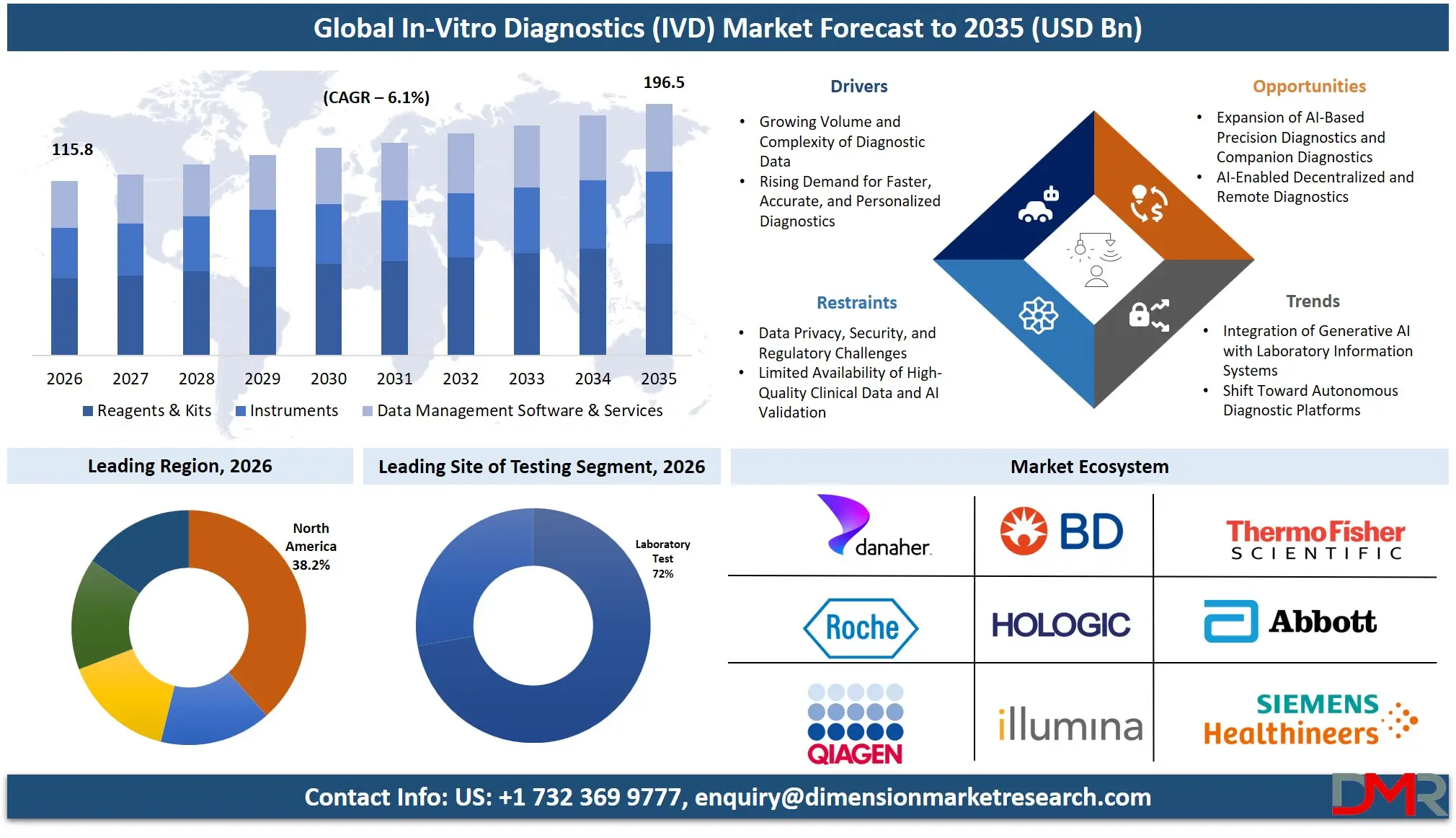
The global In-Vitro Diagnostics (IVD) market is estimated to reach USD 115.8 billion in 2026 and is forecast to grow to approximately USD 196.5 billion by 2035, expanding at a CAGR of 6.1% between 2026 and 2035.
ℹ
To learn more about this report –
Download Your Free Sample Report Here
The market growth is supported by increasing healthcare demand for early diagnosis, rising prevalence of chronic and infectious diseases, expanding elderly populations, and growing adoption of precision medicine.
Major healthcare systems worldwide are shifting from reactive disease treatment toward preventive healthcare models. This transition is increasing demand for screening programs, routine diagnostic testing, and advanced monitoring technologies.
Additional growth factors include:
- Increasing adoption of molecular diagnostics.
- Expansion of point-of-care testing.
- Growing demand for personalized medicine.
- Integration of artificial intelligence into laboratory workflows.
- Rising healthcare expenditure in emerging economies.
- Increasing investment in automation and digital laboratory solutions.
Use Cases
- Infectious Disease Detection and Monitoring: IVD technologies are widely used for identifying bacterial, viral, and fungal infections. Molecular diagnostic tests such as PCR enable rapid and highly accurate detection of pathogens, supporting faster treatment decisions and outbreak management.
- Cancer Diagnosis and Precision Oncology: IVD plays an important role in modern oncology by enabling early cancer detection, tumor profiling, and treatment selection. Biomarker testing and molecular diagnostics help identify genetic mutations associated with specific cancers.
- Diabetes Monitoring and Metabolic Disease Management: IVD solutions are essential for diagnosing and managing diabetes and metabolic disorders. Glucose monitoring systems, HbA1c testing, and clinical chemistry analyzers enable continuous assessment of patient health.
- Cardiovascular Disease Testing: IVD technologies support cardiovascular disease prevention, diagnosis, and monitoring by measuring critical biomarkers associated with heart conditions.
- Genetic Testing and Personalized Medicine: Advances in genomic technologies have expanded IVD applications into genetic disease detection and precision healthcare.
- Blood Screening and Transfusion Safety: IVD technologies are widely used by blood banks and healthcare organizations to ensure safe blood transfusions.
Key Takeaways
- The global IVD market is projected to increase from USD 115.8 billion in 2026 to USD 196.5 billion by 2035.
- Chronic disease prevalence, aging populations, and preventive healthcare initiatives are major growth drivers.
- Reagents and kits remain the largest product category due to recurring demand from laboratories.
- Molecular diagnostics is expected to be the fastest-growing technology segment through 2035.
- Point-of-care and home-based diagnostics represent major future growth opportunities.
- AI, automation, and digital healthcare integration will significantly influence the competitive landscape.
How AI/Gen AI is Transforming the In-Vitro Diagnostics (IVD) Market?
Artificial Intelligence (AI) and Generative Artificial Intelligence (GenAI) are expected to become among the most transformative technologies reshaping the global In-Vitro Diagnostics (IVD) market between 2026 and 2035. AI-driven diagnostic platforms are moving the industry beyond traditional laboratory testing toward intelligent, predictive, automated, and personalized diagnostic ecosystems.
AI and GenAI are being integrated across the entire IVD value chain, including diagnostic test development, laboratory operations, clinical interpretation, workflow optimization, and patient monitoring. These technologies enable healthcare providers to analyze large volumes of diagnostic data, identify hidden patterns, improve diagnostic accuracy, and support faster clinical decision-making.
Key Drivers in the Global In-Vitro Diagnostics (IVD) Market
Growing Volume and Complexity of Diagnostic Data
The increasing adoption of molecular diagnostics, next-generation sequencing, digital pathology, and automated laboratory systems is generating massive volumes of complex healthcare data. Traditional diagnostic approaches often require significant manual interpretation, which can increase turnaround times and create challenges in managing large datasets.
AI and GenAI technologies provide advanced capabilities for processing, analyzing, and interpreting complex diagnostic information. Machine learning algorithms can identify patterns in laboratory results, genomic data, and biomarker profiles that may not be easily detected through conventional methods.
In the IVD market, AI is increasingly being used for automated image analysis, abnormality detection, disease classification, and predictive diagnostics. GenAI platforms can further enhance these capabilities by summarizing diagnostic information, generating clinical insights, and assisting healthcare professionals in decision-making.
The growing adoption of digital laboratories and connected diagnostic ecosystems is expected to accelerate AI integration across diagnostic workflows through 2035.
Rising Demand for Faster, Accurate, and Personalized Diagnostics
Healthcare systems worldwide are shifting toward early disease detection, preventive healthcare, and precision medicine, increasing demand for faster and more accurate diagnostic solutions. AI-enabled IVD platforms support this transformation by improving diagnostic speed, reducing errors, and enabling personalized healthcare decisions.
In oncology, AI assists in identifying cancer biomarkers, interpreting genomic information, and supporting targeted treatment selection. In infectious diseases, AI models improve pathogen identification and help predict disease outbreaks. In chronic disease management, AI-powered monitoring systems analyze patient data to provide personalized health insights.
Generative AI is expected to further enhance diagnostic workflows by integrating information from multiple sources, including laboratory reports, patient history, medical literature, and genomic data. This capability allows healthcare professionals to make more informed decisions while improving patient outcomes.
Restraints in the Global In-Vitro Diagnostics (IVD) Market
Data Privacy, Security, and Regulatory Challenges
A major challenge affecting AI and GenAI adoption in the IVD market is the management of sensitive healthcare data. AI systems require access to large volumes of patient information, including laboratory results, genomic data, and clinical records, creating concerns related to privacy, cybersecurity, and ethical data usage.
Healthcare organizations and diagnostic companies must ensure compliance with evolving regulations governing medical data protection and AI-based healthcare applications. Regulatory agencies are increasingly emphasizing transparency, validation, explainability, and continuous monitoring of AI-powered diagnostic systems.
The lack of standardized regulatory pathways for AI-enabled diagnostics may increase product development timelines and create uncertainty for manufacturers.
Limited Availability of High-Quality Clinical Data and AI Validation
The performance of AI models depends heavily on access to large, diverse, and accurately labeled datasets. Inconsistent data formats, limited availability of high-quality clinical datasets, and differences in laboratory practices across regions can affect AI model reliability.
Diagnostic companies must invest significantly in data collection, algorithm validation, clinical trials, and continuous AI model improvement. Ensuring that AI systems perform consistently across different populations and healthcare environments remains a key challenge.
Growth Opportunities in the Global In-Vitro Diagnostics (IVD) Market
Expansion of AI-Based Precision Diagnostics and Companion Diagnostics
The increasing adoption of precision medicine represents a significant opportunity for AI integration within the IVD industry. AI algorithms can analyze genomic, molecular, and clinical data to identify biomarkers and predict patient responses to specific therapies.
The combination of AI with molecular diagnostics is expected to accelerate the development of companion diagnostics, particularly in oncology and rare disease applications.
AI-Enabled Decentralized and Remote Diagnostics
The growing adoption of point-of-care testing and home healthcare creates strong opportunities for AI-powered diagnostic solutions. AI can enhance portable diagnostic devices by providing automated interpretation, remote monitoring, and real-time clinical insights.
Trends in the Global In-Vitro Diagnostics (IVD) Market
Integration of Generative AI with Laboratory Information Systems
Generative AI is increasingly being integrated with laboratory information systems (LIS) and electronic health record platforms to automate reporting, improve workflow efficiency, and enhance clinical communication.
Shift Toward Autonomous Diagnostic Platforms
The IVD industry is moving toward autonomous diagnostic systems that combine advanced instruments, AI algorithms, robotics, and cloud-based analytics. These platforms aim to reduce manual intervention, improve testing consistency, and increase laboratory efficiency.
Autonomous diagnostics are expected to become increasingly important in high-volume laboratories, emergency healthcare settings, and decentralized testing environments.
Research Scope and Analysis
The global In-Vitro Diagnostics (IVD) market is segmented based on product type, technology, specimen type, site of testing, application, and end user. Each segment plays a critical role in determining market growth patterns, adoption trends, and future investment opportunities. The analysis evaluates dominant segments in 2026, fastest-growing segments through 2035, and the key factors influencing demand.
ℹ
To learn more about this report –
Download Your Free Sample Report Here
By Product Analysis
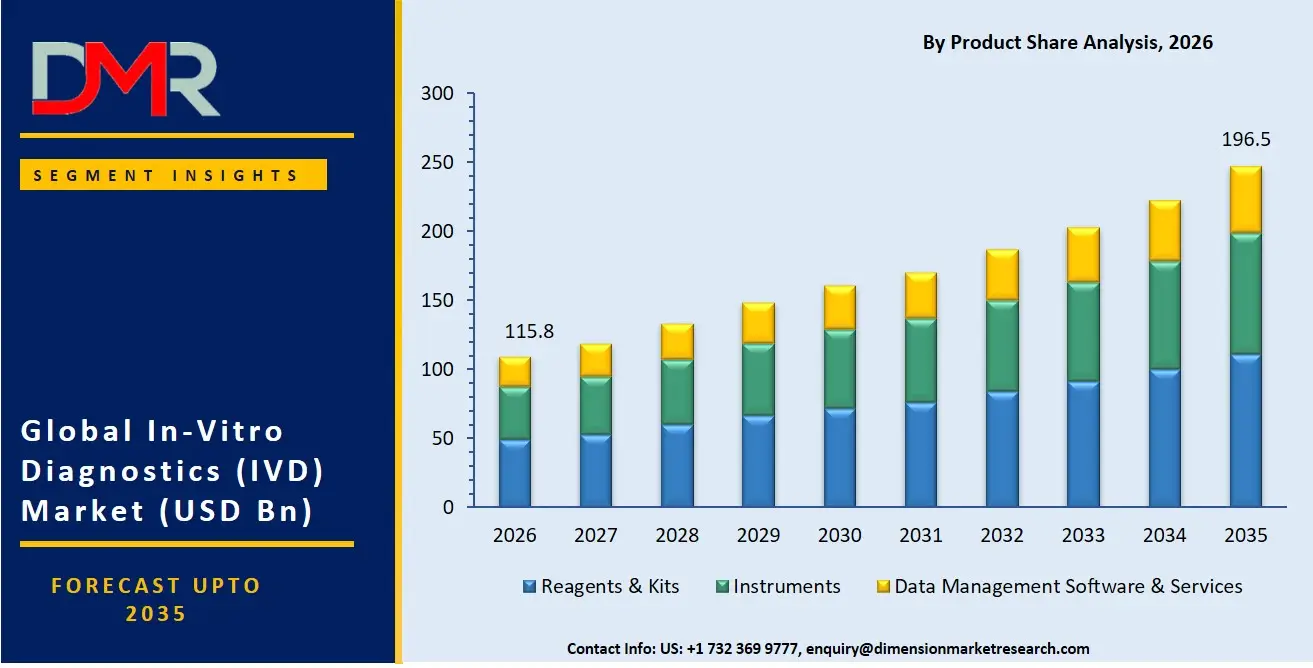
Based on product type, the global In-Vitro Diagnostics market is categorized into reagents and kits, instruments, and data management software and services. Among these, the reagents and kits segment dominated the market in 2026, accounting for approximately 57.4% of the total market revenue. The segment's leading position is attributed to the recurring consumption nature of diagnostic reagents, continuous demand for laboratory testing, and increasing screening activities worldwide. Unlike diagnostic instruments that are purchased periodically, reagents and kits require regular replacement, creating stable revenue opportunities for manufacturers. The growing prevalence of infectious diseases, chronic disorders, and cancer has further increased demand for diagnostic consumables across hospitals, clinical laboratories, and research institutions.
ℹ
To learn more about this report –
Download Your Free Sample Report Here
Within the reagents and kits category, molecular diagnostic kits are expected to represent the fastest-growing sub-segment during 2026–2035, expanding at approximately 8.5% CAGR. This growth is driven by increasing adoption of polymerase chain reaction (PCR)-based testing, next-generation sequencing, and biomarker-based diagnostics. The instruments segment represents the second-largest product category, supported by rising investments in automated analyzers, high-throughput laboratory systems, and advanced diagnostic platforms. Meanwhile, data management software and services are gaining importance due to increasing laboratory digitalization, artificial intelligence integration, and the need for efficient diagnostic data management.
By Technology Analysis
Based on technology, the IVD market includes immunoassays, clinical chemistry, molecular diagnostics, glucose monitoring, hematology, microbiology, coagulation and hemostasis, blood gas analyzers, urinalysis, and chromatography and mass spectrometry. Immunoassays accounted for the largest technology segment in 2026, representing approximately 32.8% of the global market. The dominance of immunoassays is primarily due to their extensive application across infectious disease testing, endocrinology, oncology, cardiovascular diagnostics, and allergy testing. Their advantages, including high accuracy, cost efficiency, scalability, and compatibility with automated laboratory systems, have resulted in widespread adoption among hospitals and diagnostic laboratories.
Molecular diagnostics is projected to be the fastest-growing technology segment between 2026 and 2035, with an estimated CAGR of 8.4%. The increasing demand for precision medicine, genetic testing, early disease detection, and personalized treatment strategies is accelerating adoption of molecular diagnostic platforms. Technologies such as PCR, digital PCR, next-generation sequencing, and liquid biopsy are expanding the role of molecular diagnostics beyond infectious disease testing into oncology, inherited disorders, and companion diagnostics. Clinical chemistry remains a significant segment due to its widespread use in routine diagnostic testing, including liver function, kidney function, glucose analysis, and lipid profiling. The segment continues to benefit from increasing healthcare screening programs and the expansion of automated laboratory infrastructure.
By Specimen Analysis
Based on specimen type, the IVD market is segmented into blood, serum, plasma, saliva, urine, and other biological samples. Blood-based diagnostics represented the largest specimen segment in 2026, accounting for approximately 45% of the market. Blood remains the preferred specimen type because it provides comprehensive biological information and supports a wide range of diagnostic applications, including hematology, immunology, oncology, infectious disease testing, and clinical chemistry analysis. The continued growth of routine health screening, chronic disease monitoring, and advanced molecular testing is expected to maintain the dominance of blood-based diagnostics throughout the forecast period.
The saliva specimen segment is expected to experience significant growth through 2035 due to increasing demand for non-invasive diagnostic solutions. Saliva-based testing offers advantages such as easy sample collection, reduced patient discomfort, and suitability for home-based healthcare applications. Advances in biosensor technology and molecular analysis are expanding saliva-based diagnostic applications in infectious disease detection, hormone monitoring, and genetic testing. Plasma and serum-based testing also continue to hold significant market positions due to their importance in biomarker analysis, oncology testing, and pharmaceutical research applications.
By Site of Testing Analysis
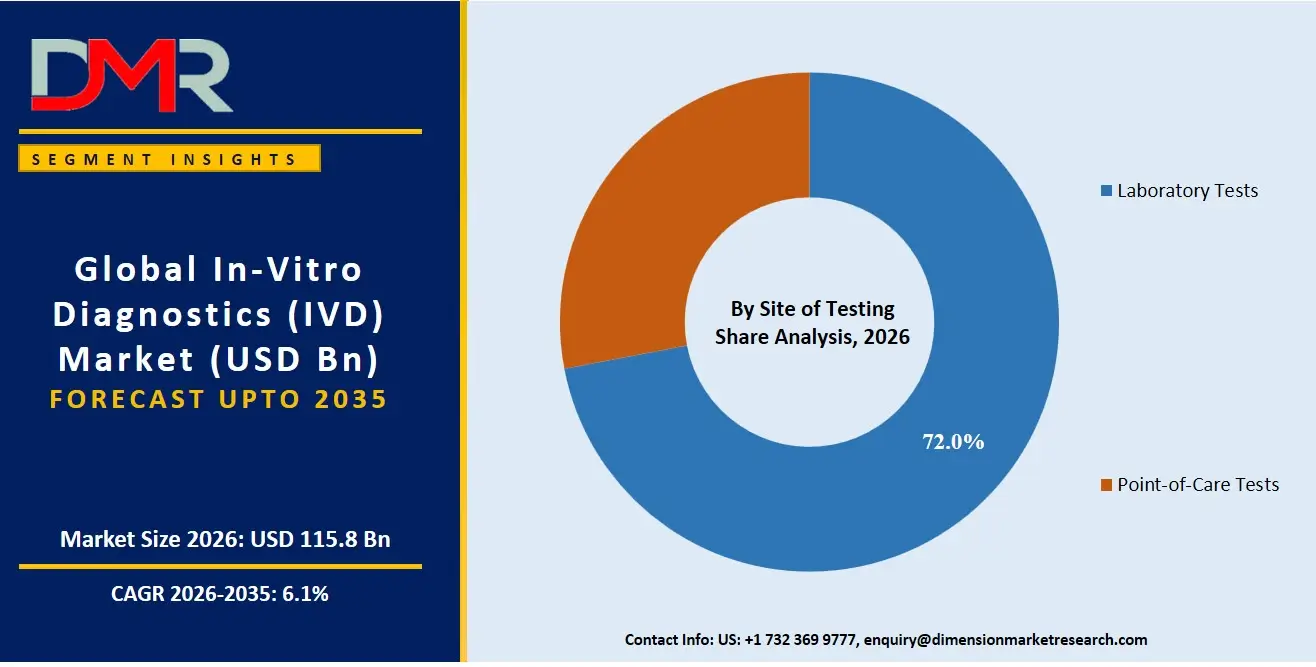
Based on the site of testing, the market is divided into laboratory testing and point-of-care testing. Laboratory testing dominated the IVD market in 2026, accounting for approximately 72% of total revenue. Central laboratories continue to perform the majority of diagnostic procedures because of their advanced analytical capabilities, high testing volumes, specialized equipment, and strict quality control processes. Hospitals, reference laboratories, and independent diagnostic centers rely heavily on centralized testing facilities for complex diagnostic procedures requiring high accuracy and advanced instrumentation.
Point-of-care testing is expected to be the fastest-growing testing segment during 2026–2035, with an estimated CAGR of approximately 9.0%. Increasing demand for rapid diagnosis, decentralized healthcare delivery, and patient convenience is driving adoption of portable diagnostic devices. Point-of-care technologies are expanding across emergency care, rural healthcare, home monitoring, and physician office settings. The growth of telemedicine, remote patient monitoring, and connected healthcare devices is expected to further accelerate the adoption of point-of-care diagnostics over the forecast period.
By Application Analysis
Based on application, the global IVD market is segmented into infectious diseases, oncology, endocrinology, cardiology, blood screening, genetic testing, autoimmune diseases, allergy diagnostics, and other applications. Infectious disease diagnostics represented one of the largest application segments in 2026 due to continuous global demand for pathogen identification and disease surveillance. Increased awareness regarding early infection detection, government screening programs, and the need for rapid diagnostic solutions continue to support segment growth.
The oncology diagnostics segment is expected to be among the fastest-growing application areas through 2035. Rising global cancer incidence, increasing focus on early detection, and advancements in precision oncology are driving demand for molecular biomarkers, liquid biopsy, and companion diagnostics. These technologies enable healthcare providers to identify specific genetic mutations and select targeted therapies based on individual patient profiles.
Endocrinology and cardiology applications remain important contributors to market growth due to increasing diabetes prevalence and cardiovascular disease burden worldwide. Blood screening continues to be a critical application area, particularly for transfusion safety and infectious disease detection in blood banks. Genetic testing is also expected to experience strong growth due to rising adoption of genomic medicine, prenatal screening, and hereditary disease testing.
By End User Analysis
Based on end user, the IVD market is segmented into hospitals and clinics, clinical laboratories, blood banks, home care settings, pharmaceutical and biotechnology companies, academic institutes, and other users. Hospitals and clinics represented the largest end-user segment in 2026, accounting for approximately 39.6% of the market. Hospitals require extensive diagnostic capabilities across emergency medicine, inpatient care, surgery, oncology, cardiology, and chronic disease management. Increasing patient volumes, healthcare infrastructure expansion, and adoption of automated diagnostic systems continue to support demand from this segment.
Clinical laboratories represent another major end-user category due to their role in processing large volumes of diagnostic samples and providing specialized testing services. Independent laboratories are increasingly investing in automation, artificial intelligence, and advanced molecular diagnostic platforms to improve operational efficiency.
The pharmaceutical and biotechnology companies segment is expected to witness strong growth through 2035 due to increasing demand for companion diagnostics, biomarker discovery, and precision medicine research. IVD technologies are becoming increasingly important in drug development, clinical trials, and patient stratification for targeted therapies. Home care settings are also expected to gain importance as healthcare systems shift toward decentralized monitoring and patient-centered care models.
The Global In-Vitro Diagnostics (IVD) Market Report is segmented on the basis of the following:
By Product
- Reagents & Kits
- Instruments
- Data Management Software & Services
By Technology
- Immunoassays
- Clinical Chemistry
- Molecular Diagnostics
- Glucose Monitoring
- Hematology
- Microbiology
- Coagulation & Hemostasis
- Blood Gas Analyzers
- Urinalysis
- Chromatography & Mass Spectrometry
By Specimen
- Blood
- Serum
- Plasma
- Saliva
- Urine
- Others
By Site of Testing
- Laboratory Tests
- Point-of-Care Tests
By Application
- Infectious Diseases
- Oncology
- Endocrinology
- Cardiology
- Blood Screening
- Genetic Testing
- Autoimmune Diseases
- Allergy Diagnostics
- Others
By End User
- Hospitals & Clinics
- Clinical Laboratories
- Blood Banks
- Home Care Settings
- Pharmaceutical & Biotechnology Companies
- Academic Institutes
- Others
Regional Analysis
North America is the Leading Region in the Global In-Vitro Diagnostics (IVD) Market
ℹ
To learn more about this report –
Download Your Free Sample Report Here
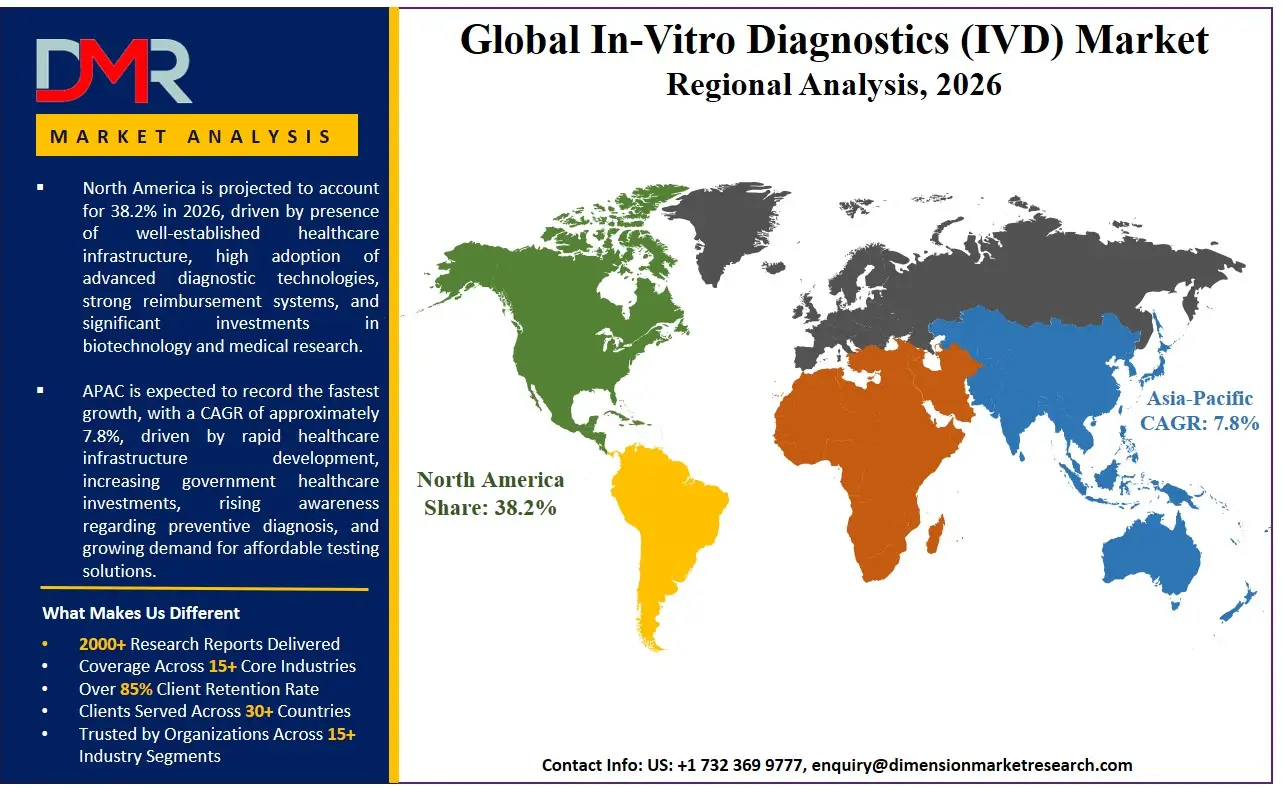
North America is expected to maintain its leading position in the global In-Vitro Diagnostics market throughout the forecast period, accounting for approximately 38.2% of global market revenue in 2026. The regional market is projected to grow from approximately USD 44.2 billion in 2026 to USD 74.1 billion by 2035, expanding at a CAGR of approximately 5.9% between 2026 and 2035.
The dominance of North America is primarily attributed to the presence of well-established healthcare infrastructure, high adoption of advanced diagnostic technologies, strong reimbursement systems, and significant investments in biotechnology and medical research. The United States represents the largest contributor to regional growth due to its extensive network of hospitals, clinical laboratories, research institutions, and diagnostic technology companies.
The region has witnessed strong adoption of molecular diagnostics, artificial intelligence-powered laboratory systems, digital pathology, and companion diagnostics. The increasing prevalence of chronic diseases, including cancer, diabetes, and cardiovascular disorders, continues to drive demand for advanced diagnostic testing.
Government initiatives supporting early disease detection, personalized medicine, and healthcare digitization are further strengthening market growth. Additionally, the presence of major industry participants and continuous product innovation are expected to maintain North America's leadership position through 2035.
Asia-Pacific is the Fastest-Growing Region in the Global In-Vitro Diagnostics (IVD) Market
Asia-Pacific is projected to be the fastest-growing regional market during 2026–2035, expanding at an estimated CAGR of 7.8%. The regional market is expected to increase from approximately USD 31.4 billion in 2026 to USD 61.2 billion by 2035.
The growth of the Asia-Pacific IVD market is driven by rapid healthcare infrastructure development, increasing government healthcare investments, rising awareness regarding preventive diagnosis, and growing demand for affordable testing solutions. Countries such as China, India, Japan, and South Korea are becoming major contributors due to expanding hospital networks, increasing diagnostic capacity, and adoption of advanced medical technologies.
China represents one of the largest diagnostic markets in the region due to its large patient population, increasing healthcare expenditure, and government initiatives aimed at improving healthcare accessibility. India is experiencing significant growth due to increasing demand for diagnostic services, expansion of private healthcare networks, and growing adoption of point-of-care testing in rural and semi-urban areas.
The region is also benefiting from rising incidence of infectious diseases, diabetes, cancer, and cardiovascular disorders. Local manufacturing capabilities, cost-effective diagnostic solutions, and partnerships between international and domestic companies are expected to create significant growth opportunities throughout the forecast period.
Europe In-Vitro Diagnostics (IVD) Market
The European In-Vitro Diagnostics market is estimated to reach approximately USD 27.8 billion in 2026 and is projected to grow to around USD 44.9 billion by 2035, registering a CAGR of approximately 5.5% during 2026–2035.
Europe represents a mature but technologically advanced diagnostic market supported by strong healthcare systems, increasing adoption of personalized medicine, and growing demand for precision diagnostics. Countries such as Germany, the United Kingdom, France, and Italy represent major contributors to regional revenue.
The implementation of advanced diagnostic regulations, including the European Union In-Vitro Diagnostic Regulation (IVDR), has increased focus on product quality, clinical validation, and regulatory compliance. Although regulatory requirements have created challenges for some manufacturers, they have also encouraged innovation and improved diagnostic reliability.
The region is experiencing increasing demand for molecular diagnostics, oncology testing, genetic screening, and laboratory automation. Aging populations and rising healthcare costs are encouraging healthcare systems to prioritize early diagnosis and disease prevention.
Germany remains one of the largest European markets due to its advanced healthcare infrastructure and strong medical technology industry. The United Kingdom and France are also witnessing increased adoption of digital diagnostics and AI-enabled healthcare solutions.
Latin America In-Vitro Diagnostics (IVD) Market
The Latin American IVD market is expected to grow from approximately USD 7.1 billion in 2026 to USD 11.8 billion by 2035, representing a CAGR of approximately 5.8%.
Growth in Latin America is supported by improving healthcare access, increasing prevalence of chronic diseases, and expanding diagnostic infrastructure. Countries such as Brazil and Mexico account for significant market share due to their large populations and growing healthcare investments.
Brazil represents the largest market in the region due to increasing demand for laboratory testing, government healthcare programs, and expansion of private diagnostic networks. Mexico is also experiencing growth due to rising healthcare modernization efforts and increasing adoption of advanced diagnostic technologies.
Challenges such as unequal healthcare access, economic fluctuations, and limited reimbursement coverage continue to affect market expansion. However, increasing investment from international diagnostic companies and growing demand for affordable testing solutions are expected to support long-term market growth.
Middle East & Africa In-Vitro Diagnostics (IVD) Market
The Middle East and Africa IVD market is projected to increase from approximately USD 5.3 billion in 2026 to USD 8.7 billion by 2035, expanding at a CAGR of approximately 5.6%.
The regional market is supported by increasing healthcare investments, government-led healthcare transformation programs, and rising demand for advanced diagnostic services. Middle Eastern countries, particularly Saudi Arabia and the United Arab Emirates, are investing heavily in healthcare infrastructure modernization and digital healthcare initiatives.
Saudi Arabia's healthcare transformation programs are creating opportunities for diagnostic automation, molecular testing, and advanced laboratory services. The country is increasing investments in hospitals, medical cities, and preventive healthcare programs.
Africa represents an emerging opportunity due to the high burden of infectious diseases and increasing need for accessible diagnostic solutions. Expansion of affordable point-of-care testing technologies is expected to improve diagnostic availability across underserved regions.
Major Countries Analysis
United States In-Vitro Diagnostics (IVD) Market
ℹ
To learn more about this report –
Download Your Free Sample Report Here
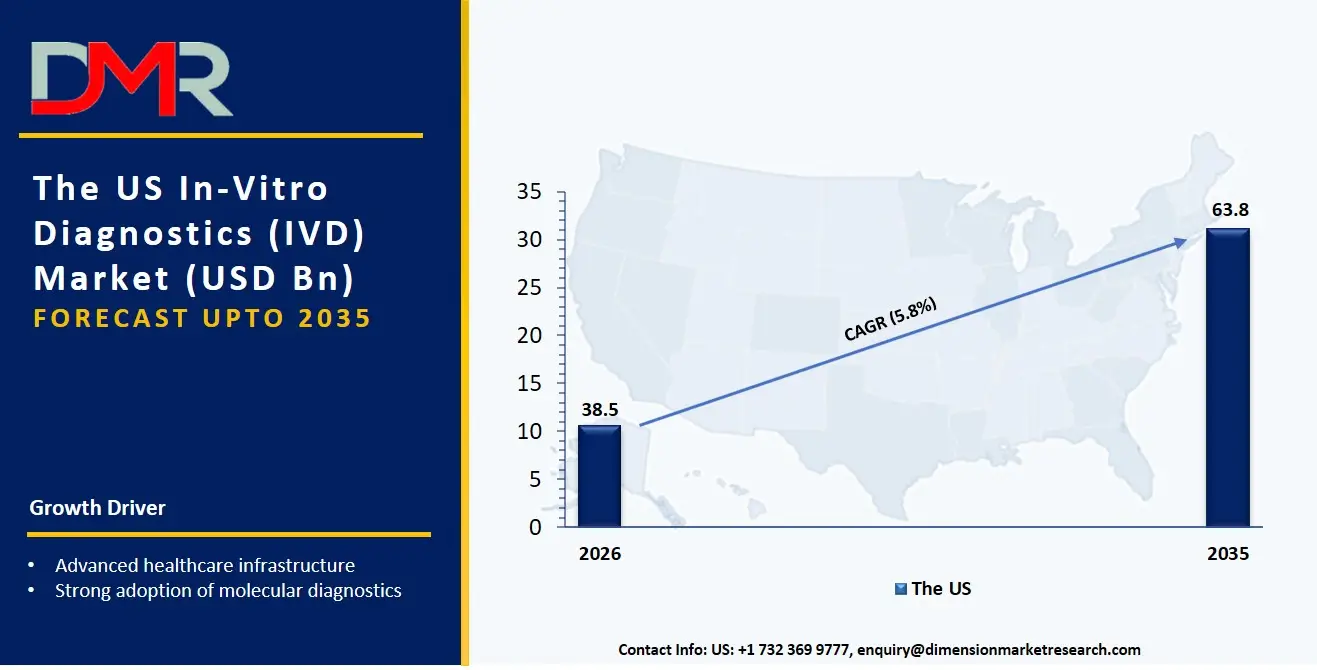
The United States represents the largest national market within the global IVD industry. The U.S. market is estimated at approximately USD 38.5 billion in 2026 and is expected to reach around USD 63.8 billion by 2035, growing at a CAGR of approximately 5.8%.
Growth is driven by advanced healthcare infrastructure, strong adoption of molecular diagnostics, increasing cancer screening demand, and significant investments in biotechnology research. The country is also a major hub for AI-based diagnostics, laboratory automation, and precision medicine development.
Japan In-Vitro Diagnostics (IVD) Market
Japan's IVD market is estimated to reach approximately USD 8.6 billion in 2026 and is projected to grow to approximately USD 13.5 billion by 2035, representing a CAGR of around 5.1%.
The Japanese market benefits from its aging population, advanced healthcare system, and strong focus on medical technology innovation. Demand for diagnostic testing is increasing due to age-related diseases, cancer screening programs, and adoption of automated laboratory solutions.
Japan is also a key market for robotics, laboratory automation, and high-quality diagnostic instruments due to the presence of advanced medical technology companies.
Saudi Arabia In-Vitro Diagnostics (IVD) Market
Saudi Arabia's IVD market is estimated at approximately USD 1.4 billion in 2026 and is expected to reach around USD 2.5 billion by 2035, growing at a CAGR of approximately 6.7%.
Growth is supported by healthcare modernization initiatives, increasing investment in medical infrastructure, and government efforts to strengthen preventive healthcare services. The expansion of hospitals, diagnostic centers, and digital healthcare platforms is increasing demand for advanced diagnostic technologies.
The country is also focusing on improving local healthcare capabilities, encouraging partnerships with global diagnostic companies, and expanding access to molecular testing and automated laboratory solutions.
Regulatory Landscape
The global In-Vitro Diagnostics (IVD) market is strongly influenced by regulatory frameworks designed to ensure diagnostic accuracy, patient safety, product reliability, and clinical effectiveness. Regulatory compliance is a critical factor affecting product development, commercialization, and market access for IVD manufacturers.
In the United States, IVD products are primarily regulated by the U.S. Food and Drug Administration (FDA) under medical device regulations. Diagnostic products are classified according to risk level, with requirements varying from premarket notification pathways to more extensive premarket approval processes for high-risk technologies. The FDA also regulates laboratory-developed tests, quality systems, clinical validation, and post-market surveillance activities.
In Europe, the implementation of the In-Vitro Diagnostic Regulation (IVDR) has significantly changed the regulatory environment by introducing stricter requirements for clinical evidence, performance evaluation, conformity assessment, and post-market monitoring. Manufacturers are required to demonstrate stronger scientific validity and analytical performance before receiving market authorization.
International quality standards such as ISO 13485 for medical device quality management systems, Good Manufacturing Practices (GMP), and laboratory accreditation standards continue to influence product development strategies globally. Emerging markets are also strengthening regulatory frameworks to improve diagnostic quality and patient safety.
Although regulatory complexity increases development costs and approval timelines, it also creates opportunities for companies with strong compliance capabilities, advanced validation processes, and high-quality diagnostic solutions.
Investment and White Space Analysis
The In-Vitro Diagnostics market presents significant investment opportunities due to increasing demand for advanced diagnostics, healthcare digitalization, and expansion into underserved markets. Investors and industry participants are focusing on technology areas that combine diagnostic accuracy, scalability, and accessibility.
One of the most attractive investment areas is molecular diagnostics, particularly in oncology, infectious diseases, and genetic testing. The growing adoption of precision medicine is creating opportunities for companies developing biomarker-based diagnostics, liquid biopsy technologies, and companion diagnostic platforms.
Point-of-care testing represents another major investment opportunity due to increasing demand for decentralized healthcare delivery. Portable diagnostic devices, rapid testing platforms, and connected monitoring solutions are expected to gain traction as healthcare systems move closer to patient-centered care models.
Emerging markets, particularly Asia-Pacific, Latin America, and the Middle East, represent significant white spaces due to expanding healthcare infrastructure and increasing diagnostic accessibility. Companies offering affordable, scalable, and easy-to-use diagnostic solutions are expected to benefit from these regions.
Artificial intelligence, cloud-based laboratory platforms, and automated diagnostic workflows are also attracting investment as healthcare providers seek improved efficiency, reduced operational costs, and data-driven decision-making capabilities.
By Region
North America
Europe
- Germany
- The U.K.
- France
- Italy
- Spain
- Rest of Europe
Asia-Pacific
- China
- Japan
- South Korea
- India
- ANZ
- ASEAN
- Rest of Asia-Pacific
Latin America
- Brazil
- Mexico
- Argentina
- Colombia
- Rest of Latin America
Middle East & Africa
- Saudi Arabia
- UAE
- South Africa
- Israel
- Egypt
- Rest of MEA
Competitive Landscape
The global In-Vitro Diagnostics market is moderately consolidated, with several multinational healthcare technology companies holding significant market positions. Leading companies compete through technological innovation, product diversification, strategic acquisitions, partnerships, geographic expansion, and development of integrated diagnostic ecosystems.
Market leaders are focusing on expanding their portfolios across molecular diagnostics, immunoassays, automation systems, companion diagnostics, and digital healthcare solutions. Companies are increasingly investing in artificial intelligence, cloud-based laboratory management systems, and connected diagnostic platforms to strengthen their competitive advantage.
The competitive environment is also influenced by increasing demand for faster diagnostic turnaround times, higher testing accuracy, and cost-effective solutions. Established players are expanding through mergers and acquisitions to strengthen capabilities in emerging technologies, while smaller biotechnology companies are contributing innovation through specialized diagnostic platforms.
Some of the prominent players in the Global In-Vitro Diagnostics (IVD) Market are
- Roche Diagnostics
- Abbott Laboratories
- Danaher Corporation
- Siemens Healthineers
- Thermo Fisher Scientific
- Becton, Dickinson and Company
- Sysmex Corporation
- bioMérieux
- QIAGEN
- Bio-Rad Laboratories
- Agilent Technologies
- Hologic
- Revvity
- Werfen
- Ortho Clinical Diagnostics
- QuidelOrtho
- Diasorin
- Sekisui Diagnostics
- Randox Laboratories
- Trinity Biotech
- Seegene
- Fujirebio
- GenMark Diagnostics
- Luminex Corporation
- Illumina
- Oxford Nanopore Technologies
- Biocartis
- EKF Diagnostics
- Standard BioTools
- Meridian Bioscience
- Nova Biomedical
- Shenzhen Mindray Bio-Medical Electronics
- Snibe Diagnostic
- Autobio Diagnostics
- Getein Biotech
- Tecan Group
- DiaSys Diagnostic Systems
- Nihon Kohden
- Arkray
- SD Biosensor
- Other Key Players
Recent Developments
- In May 2025, Siemens Healthineers continued expanding its laboratory automation and digital healthcare solutions by advancing intelligent diagnostic workflows and connected laboratory technologies. The company focused on integrating artificial intelligence, automation systems, and digital platforms to improve laboratory productivity, reduce turnaround times, and enhance diagnostic accuracy. Siemens Healthineers continued developing scalable diagnostic ecosystems that support hospitals and laboratories in managing increasing testing volumes while improving operational efficiency.
- In April 2025, Thermo Fisher Scientific expanded its molecular diagnostics and genomic analysis capabilities through new technology developments, strategic collaborations, and portfolio enhancements. The company continued investing in next-generation sequencing, molecular testing platforms, and research-driven diagnostic solutions to support precision medicine applications. Thermo Fisher focused on enabling healthcare providers, pharmaceutical companies, and research institutions to improve disease understanding, biomarker discovery, and personalized treatment approaches through advanced genomic technologies.
- In March 2025, Danaher strengthened its precision diagnostics capabilities through continued investments in molecular diagnostics, genomics, and advanced laboratory technologies. Through its diagnostic businesses, including molecular and life science-focused platforms, the company focused on developing solutions that support cancer detection, infectious disease testing, and research applications. Danaher continued expanding its technology ecosystem by integrating automation, digital tools, and high-performance diagnostic solutions to improve laboratory productivity and clinical outcomes.
- In February 2025, Abbott expanded its rapid diagnostics and point-of-care testing portfolio by advancing decentralized testing solutions designed to improve access to faster diagnostic services. The company continued focusing on portable diagnostic platforms and rapid testing technologies across hospitals, physician offices, and community healthcare settings. Abbott's initiatives emphasized improving infectious disease detection, chronic disease monitoring, and near-patient testing capabilities while supporting healthcare systems seeking efficient and accessible diagnostic solutions.
- In January 2025, Roche Diagnostics announced continued expansion of its digital diagnostics and molecular testing capabilities through advancements in laboratory automation, integrated diagnostic workflows, and precision medicine solutions. The company focused on improving laboratory efficiency by combining advanced analytics, automation platforms, and data-driven diagnostic technologies. Roche continued strengthening its molecular diagnostics portfolio, particularly in areas such as oncology testing, infectious disease detection, and personalized healthcare, supporting healthcare providers with faster and more accurate diagnostic decision-making.
Report Details
| Report Characteristics |
| Market Size (2026) |
USD 115.8 Bn |
| Forecast Value (2035) |
USD 196.5 Bn |
| CAGR (2026–2035) |
6.1% |
| Historical Period |
2021 – 2025 |
| Forecast Period |
2027 – 2035 |
| Base Year |
2025 |
| Estimate Year |
2026 |
| Segments Covered |
By Product, By Technology, By Specimen, By Site of Testing, By Application, By End User |
| Regional Coverage |
North America – The US and Canada; Europe – Germany, The UK, France, Russia, Spain, Italy, Benelux, Nordic, & Rest of Europe; Asia-Pacific – China, Japan, South Korea, India, ANZ, ASEAN, Rest of APAC; Latin America – Brazil, Mexico, Argentina, Colombia, Rest of Latin America; Middle East & Africa – Saudi Arabia, UAE, South Africa, Turkey, Egypt, Israel, & Rest of MEA |
Frequently Asked Questions
What is the projected size of the global In-Vitro Diagnostics (IVD) market by 2035?
▾ The global In-Vitro Diagnostics market is projected to reach approximately USD 196.5 billion by 2035, increasing from USD 115.8 billion in 2026. Growth will be supported by rising disease prevalence, technological innovation, and increasing demand for early diagnosis.
What is the expected CAGR of the global IVD market during 2026–2035?
▾ The global In-Vitro Diagnostics market is expected to grow at a CAGR of approximately 6.1% between 2026 and 2035. The growth rate is driven by increasing adoption of molecular diagnostics, point-of-care testing, automation, and precision medicine solutions.
What are the major factors driving the growth of the IVD market?
▾ Key growth drivers include the increasing prevalence of chronic diseases, rising demand for early disease detection, aging populations, expansion of healthcare infrastructure, advancements in molecular diagnostics, and integration of artificial intelligence into diagnostic workflows.
Which technology segment is expected to grow the fastest in the IVD market?
▾ The molecular diagnostics segment is expected to be the fastest-growing technology category during 2026–2035, with an estimated CAGR of approximately 8.4%. Growth is supported by increasing demand for PCR, next-generation sequencing, liquid biopsy, and genomic testing applications.
Which region dominates the global In-Vitro Diagnostics market?
▾ North America is expected to remain the largest regional market in 2026, accounting for approximately 38.2% of global revenue. The region benefits from advanced healthcare infrastructure, high diagnostic adoption, strong research capabilities, and the presence of major IVD companies.
Which region is expected to experience the fastest growth?
▾ Asia-Pacific is projected to be the fastest-growing region between 2026 and 2035, driven by increasing healthcare expenditure, expanding diagnostic infrastructure, rising disease burden, and growing adoption of affordable diagnostic technologies.
Who are the major players operating in the global IVD market?
▾ Major companies operating in the global In-Vitro Diagnostics market include Roche Diagnostics, Abbott Laboratories, Danaher Corporation, Siemens Healthineers, Thermo Fisher Scientific, bioMérieux, Sysmex Corporation, Becton Dickinson, QIAGEN, Bio-Rad Laboratories, Agilent Technologies, Illumina, Hologic, QuidelOrtho, and Mindray.
How is the IVD market segmented in this report?
▾ The global IVD market is segmented by product type, technology, specimen type, site of testing, application, end user, and region. The segmentation provides analysis of market size, growth trends, competitive dynamics, and future opportunities across different categories.