What is the Germany Personal Cloud Market Size?
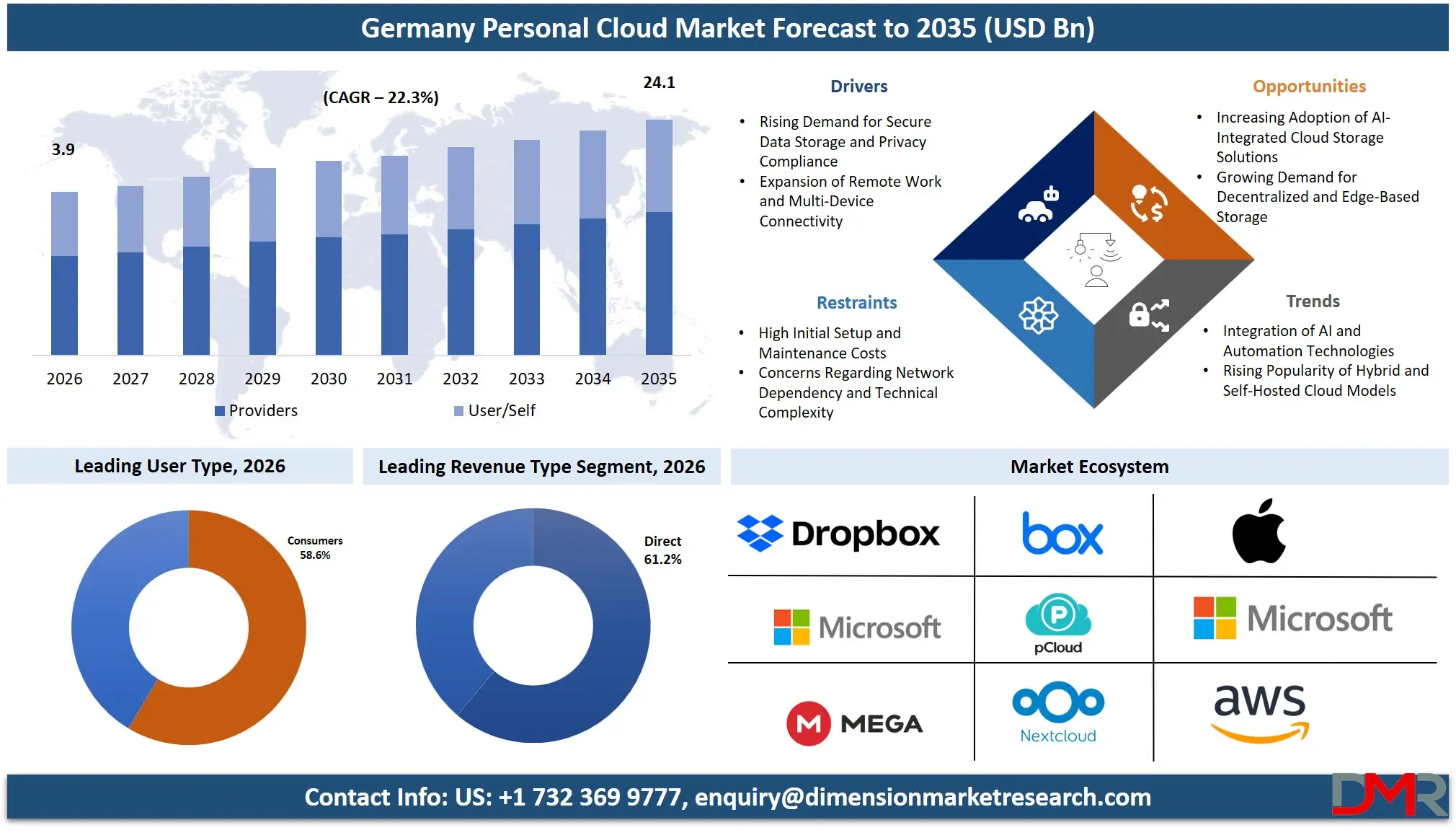
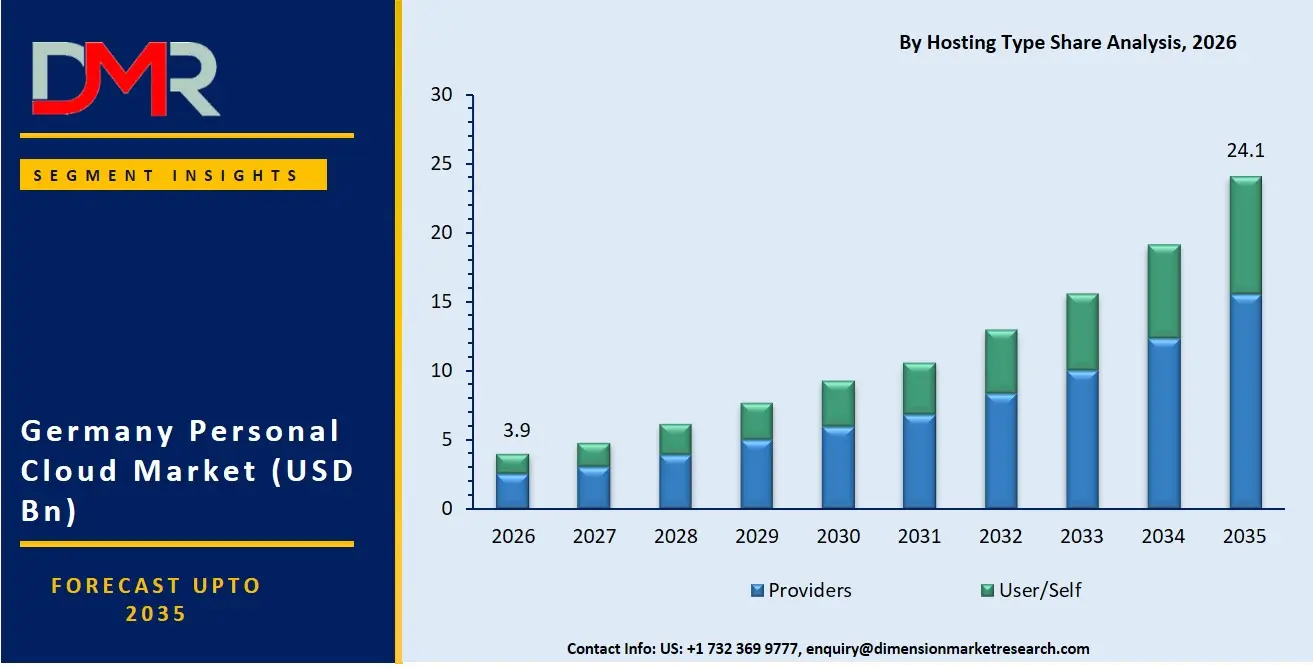
The Germany Personal Cloud Market size is expected to be USD 3.9 billion in 2026 and increase at a compound annual growth rate of 22.3% to USD 24.1 billion in 2035 due to an increase in hybrid working environment and connected devices.
ℹ
To learn more about this report –
Download Your Free Sample Report Here
The Germany Personal Cloud market consists of solutions that offer cloud storage, backup, synchronization, and remote access services, which are tailored specifically for both individual consumers as well as organizations looking for reliable and efficient digital data storage facilities. With growing concerns regarding cybersecurity, increased usage of smart devices, and stringent GDPR regulations, the market is poised for rapid growth.
ℹ
To learn more about this report –
Download Your Free Sample Report Here
Key Takeaways
- Market Size & Forecast: The Germany Personal Cloud Market size is projected to reach USD 3.9 billion in 2026 and is anticipated to have a value of USD 24.1 billion in 2035.
- Growth Rate & Outlook: The Germany Personal Cloud Market size is set to grow at a compound annual growth rate of 22.3% during the forecast period of 2026 to 2035.
- Primary Growth Drivers: Some of the major growth drivers in the market Increase in Use of Remote Working and Multi-Device Connectivity, and more.
- Key Market Trends: Some of the major trends in the market are AI and Automation Technology Integration, and more.
- By Hosting Type: Provider segment is anticipated to get the majority share of the Germany Personal Cloud Market in 2026.
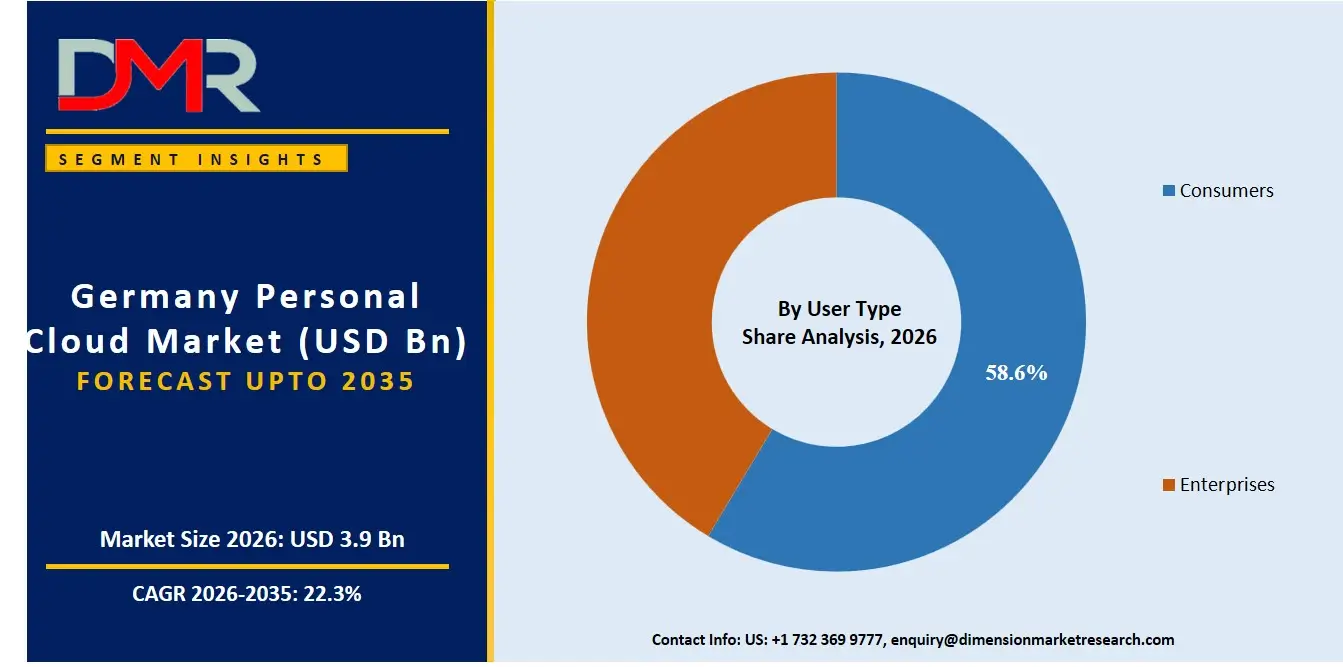
- By User Type: Consumer is expected to get the largest revenue share in 2026 in the Germany Personal Cloud Market.
- By Revenue Type: Direct segment is expected to get the largest revenue share in 2026 in the Germany Personal Cloud Market.
What is the Personal Cloud?
Personal cloud computing allows people and businesses to store, sync, and manage their digital information through cloud computing services that rely on the internet rather than physical computing resources. Personal cloud computing utilizes cloud storage architecture, encryption methods, and remote connectivity to facilitate the process. It is used in various tasks such as file sharing, automatic data backups, and device synchronization in smartphones, computers, and other IoT devices. Increased usage of digital environments, work from home models, and large amounts of data in modern-day technology are leading to a rise in demand. Enhanced security measures, data sovereignty, and storage optimization using AI have been the key drivers in the development of personal cloud computing.
Use Cases
- Remote File Accessibility: Individuals can easily access various files from personal cloud platforms in terms of documents, media, and applications from any device or place that they find themselves in at any particular time. Remote file accessibility allows for improved efficiency of personal and corporate work and enhances flexibility and functionality.
- Data Backup and Disaster Recovery: Personal clouds allow individuals and businesses to carry out automatic backup operations by storing their personal photos, videos, business documents, and other related files in a safer environment. The advanced encryption process ensures the safety of individuals' data from ransom attacks and other similar disasters.
- Smart Home and IoT Device Management: Modern-day personal clouds are now capable of managing the data stored in smart homes and IoT devices. Personal cloud allows an individual to manage different forms of data and images stored in IoT devices as well as in the smart home environment.
- Media Streaming and Content Storage: Individuals can store and even stream different types of media such as photos, videos, and music through personal cloud. The personalized media streaming and sharing processes have been enhanced as compared to using social media platforms for this purpose.
How AI Is Transforming the Germany Personal Cloud Market
The artificial intelligence sector is changing the dynamics of the personal cloud Germany market by revolutionizing storage, cybersecurity, and efficiency. AI technology classifies files, allocates storage effectively, and predicts backup needs using behavioral analysis of users. Machine learning helps detect anomalies in network traffic that would otherwise create cyber vulnerabilities.
The sector is also helping to create better experiences for users via features such as intelligent searches and voice-based file access and synchronization among multiple devices. The predictive analytical capabilities of artificial intelligence also improve system performance and energy consumption in the personal cloud, and the encryption monitoring process increases security.
Market Dynamic
Driving Factors in the Germany Personal Cloud Market
Increase in Use of Remote Working and Multi-Device Connectivity
The increase in hybrid working environment and connected devices is driving growth in the market. The personal clouds allow users to have synchronized connectivity through their smartphones, laptops, desktops, and internet of things devices for smooth access and collaboration. There is a need for a scalable and flexible solution by Germany's connected workforce for remote working and file sharing. Increased broadband capacity along with the adoption of smart homes is also boosting the demand for personal cloud platforms.
Restraints in the Germany Personal Cloud Market
Higher Initial Cost of Setup and Maintenance
Utilization of sophisticated NAS solutions, privately-owned cloud computing platforms, and encryption-based storage systems is associated with relatively high costs of implementation. Smaller business organizations and individuals may encounter financial difficulties due to expenses incurred during the process of purchase of hardware and software, as well as additional costs for maintenance and installation of security features. The financial aspect can pose obstacles to their usage by financially constrained consumers.
Opportunities in the Germany Personal Cloud Market
Growing use of cloud storage services with built-in AI features
The development of AI features in consumer clouds provides great potential in the German market. Such innovations include optimization of storage, categorization, automatic backups and cyber security monitoring. With the volume of digital content increasing continuously, users need better cloud systems that enable automation in managing files and facilitate operations. Firms adopting AI features in their cloud solutions for consumers can enjoy huge competitive advantages in the coming years.
Trends in the Germany Personal Cloud Market
AI and Automation Technology Integration
AI and automation are emerging as important trends within the Germany personal cloud segment. Various companies are using these tools to develop search functionality, automate data backup and management, and provide predictive security systems. This not only saves time but increases personalization and cybersecurity for the user. AI is further aiding users to manage their assets by analyzing different connected devices.
Research Scope and Analysis
Germany Personal Cloud Market Analysis focuses on different important segments like cloud type, hosting type, user type, business models, and vertical industries. Online cloud solutions and hosted clouds dominate the market presently because of ease of use and scalability, while self-hosted clouds and NAS-based clouds experience significant growth due to growing awareness regarding data security issues. Digitalization, artificial intelligence for data storage optimization, and increased smart devices are expected to drive market growth.
ℹ
To learn more about this report –
Download Your Free Sample Report Here
By Cloud Type Analysis
The online cloud is expected to hold the largest market share in Germany's personal cloud industry by 2026 with approximately 42.8%. Its flexibility, scalable use and access from different devices have been the major factors contributing to its growth. Users prefer cloud ecosystems that provide automated backups, synchronization and easy remote access. Moreover, strong interoperability with smartphones, laptops and smart home devices further increases the demand for online cloud solutions. The NAS (Network Attached Storage) cloud solution is expected to grow at the highest CAGR during the forecast period. This is mainly due to user preference towards improved privacy and data security features. Growing concerns among individuals about the potential dangers related to cyber security and compliance with GDPR laws are boosting the adoption rate of NAS cloud services in small and medium enterprises as well as tech-savvy households. Another type of cloud system that shows some growth is the home-made cloud ecosystem.
By Hosting Type Analysis
Hosting by providers is projected to be the major player and own around 64.3% of the market by 2026 because of the increasing popularity of managed cloud storage solutions with less technical difficulty. Businesses and individuals require third parties that can handle storage, maintenance, scalability, and even automatic software updates for them. With provider hosting, it becomes easier for individuals to deploy their applications and provides improved disaster recovery services. Self/user-hosting, however, is projected to grow at the fastest pace because of issues with data sovereignty and privacy. The average German customer now wants to retain full ownership and control over their digital assets. There are many developments in the field of Network Attached Storage (NAS), cloud software, and edge computing that have made user-hosting of personal clouds easier and affordable.
By User Type Analysis
The consumer segment is estimated to occupy the highest market share of around 58.6% within the German personal cloud market by 2026 because of the growing requirement for personal cloud-based solutions to backup data, store multimedia content, and sync devices. As the usage of smartphones, digital media, and connected home devices increases, so does the demand for secure cloud-based storage systems on an individual level. Additionally, consumers' increasing adoption of cloud-based services using AI to organize files and stream media content plays an important role in this development. The segment of SMEs under the enterprise category is estimated to register the fastest growth rate because of increased digital transformation efforts and hybrid workplaces among small businesses. These businesses need cost-effective cloud storage systems to enable collaboration and file sharing securely.
By Revenue Type Analysis
The direct revenue model is expected to account for 61.2% of the Germany personal cloud market share by 2026, which is likely to be fueled mainly by subscription-based cloud storage and high-tiered cloud service plans. People have started favoring the use of paid cloud services that come with improved storage capabilities, better security measures, and freedom from ads. A subscription-based cloud model helps technology firms generate recurring revenues and allows room for continuous improvements and innovation. At the same time, indirect revenue streams are predicted to rise sharply owing to the widespread acceptance of freemium cloud service models and bundled cloud services provided by telecom operators and device vendors. Cloud service providers are using their ecosystems to ensure customer loyalty and integration. Ad-supported cloud platforms have also gained traction among budget-conscious consumers.
By Vertical Analysis
IT & ITeS is anticipated to lead the Germany personal cloud market with an estimated 24.7% market share in 2026 due to extensive reliance on digital storage, remote collaboration, and secure data management. Organizations in the sector require scalable cloud infrastructure to support software development, virtual operations, and high-volume data exchange. Increased cybersecurity investments and hybrid workforce expansion are further strengthening adoption. Meanwhile, healthcare & life sciences is expected to emerge as the fastest-growing vertical owing to rising digitization of medical records, telemedicine adoption, and regulatory emphasis on secure patient data storage. Personal cloud systems integrated with encryption and AI-powered analytics are increasingly supporting healthcare workflows and decentralized patient information management. Government digitalization programs and growing use of connected medical devices are also accelerating cloud deployment within the healthcare ecosystem.
The Germany Personal Cloud Market Report is segmented on the basis of the following:
By Cloud Type
- Online Cloud
- NAS (Network Attached Storage) Cloud
- Server Device Cloud
- Home-Made Cloud
By Hosting Type
- User/Self Hosting
- Provider Hosting
By User Type
By Revenue Type
- Direct Revenue
- Subscription fees
- Premium storage plans
- Indirect Revenue
- Advertising
- Bundled telecom or device services
- Freemium upgrades
By Vertical
- BFSI
- IT & ITeS
- Telecommunications
- Retail & E-commerce
- Government & Public Sector
- Manufacturing
- Healthcare & Life Sciences
- Energy & Utilities
- Media & Entertainment
- Others
Competitive Landscape
In the German personal cloud sector, fierce competition exists due to innovations in technology, cybersecurity, and changing consumer preferences for privacy. The key factors considered by businesses within the industry include the implementation of AI storage optimization technology, creation of secure cloud environments, and integration of hybrid clouds. Barriers to entering the market exist in the form of regulatory compliance requirements, capital investment needs, and cybersecurity considerations. Businesses continue to invest in research and development activities, collaboration and partnership, edge computing technology, and subscription-based ecosystem growth.
Some of the prominent players in the Germany Personal Cloud are:
- Google Cloud
- Microsoft
- Apple
- Dropbox
- Amazon Web Services (AWS)
- Box
- pCloud
- MEGA
- Nextcloud
- Sync.com
- Tresorit
- Seafile
- ownCloud
- SpiderOak
- IDrive
- Acronis
- Proton Drive
- IONOS Cloud
- Hetzner Cloud
- STACKIT
- Other Key Players
Recent Developments
- In May 2026, The Tata Consultancy Services (TCS) rolled out their Sovereign Secure Cloud in Europe which will focus on governments, public-sector organizations, and other regulated sectors. The solution brings together sovereign cloud architecture and artificial intelligence (AI) to improve the sovereignty of data, operations, and infrastructure. After successful rollouts in India, Kenya, East Africa, and the Philippines, the new solution intends to help improve digital sovereignty in Europe.
- In May 2026, a partnership between Thales and Google Cloud sees the creation of a sovereign cloud region in Germany, driven by increasing demands for cloud infrastructure that is safe and compliant. Based on the previous successful implementation of the Thales S3NS approach in France, the new project will see the formation of a separate German entity which will be under local management and control to ensure compliance and sovereignty.
- In January 2026, The Amazon Web Services (AWS) European Sovereign Cloud has been introduced in Potsdam, Germany, which is a result of a EUR 7.8 billion (USD 9.1 billion) investment over the last four years. This cloud computing platform provides more than 90 cloud services that are physically and logically isolated for use by regulated industries and government organizations. AWS intends to grow its sovereign cloud services by opening up three additional Local Zones in Belgium, the Netherlands, and Portugal.
Report Details
| Report Characteristics |
| Market Size (2026) |
USD 3.9 Bn |
| Forecast Value (2035) |
USD 24.1 Bn |
| CAGR (2026–2035) |
22.3% |
| Historical Period |
2021 – 2025 |
| Forecast Period |
2027 – 2035 |
| Base Year |
2025 |
| Estimate Year |
2026 |
| Segments Covered |
By Cloud Type, By Hosting Type, By User Type, By Revenue Type, By Vertical |
| Country Coverage |
Germany |
Frequently Asked Questions
How big is the Germany Personal Cloud Market?
▾ The Germany Personal Cloud Market size is expected to reach USD 3.9 billion by 2026 and is projected to reach USD 24.1 billion by the end of 2035.
What is the CAGR of the Germany Personal Cloud Market from 2026 to 2035?
▾ The market is growing at a CAGR of 22.3 percent over the forecasted period.
What factors are driving the growth of the Germany Personal Cloud Market?
▾ Increase in Use of Remote Working and Multi-Device Connectivity, and more are the factors driving the growth of the Germany Personal Cloud Market.
What are the major trends in the Germany Personal Cloud Market?
▾ AI and Automation Technology Integration, and more are some of the major trends in the market.
Who are the key players in the Germany Personal Cloud Market?
▾ Some of the key players in the Germany Personal Cloud Market include Apple, Google, Microsoft, and more
How is the Germany Personal Cloud Market segmented?
▾ The Germany Personal Cloud Market is segmented by cloud type, hosting type, user type, revenue type, vertical.