What is the Green Methanol Market Size?
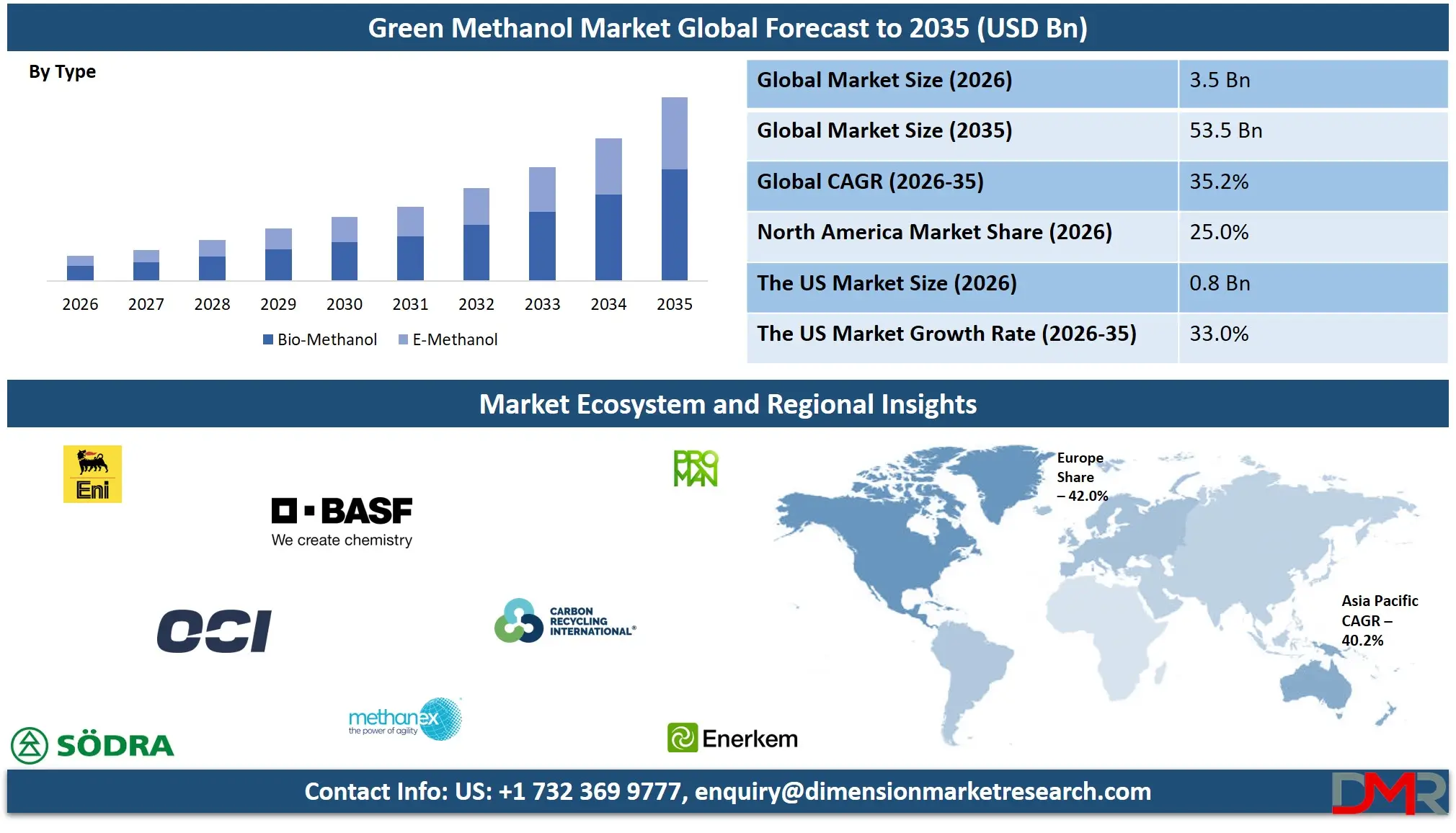
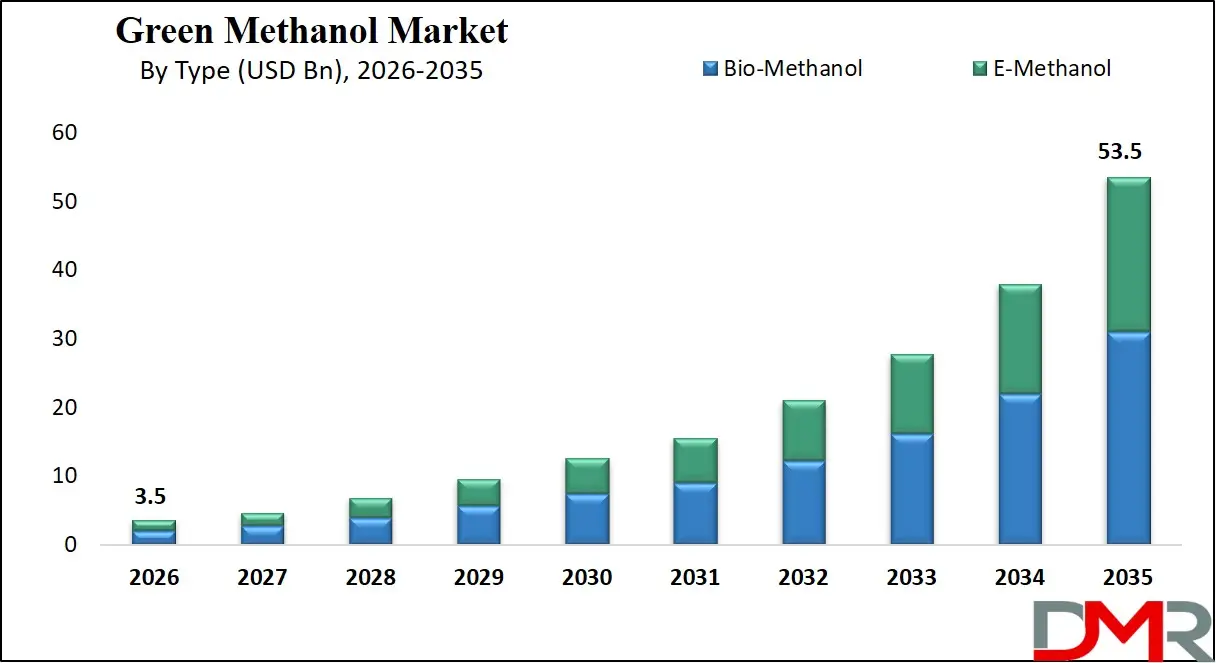
The Green Methanol Market size is projected to reach USD 3.5 billion in 2026 and grow at a compound annual growth rate of 35.2% to reach a value of USD 53.5 billion in 2035, driven by strict global climate policies and the net-zero pledges.
ℹ
To learn more about this report –
Download Your Free Sample Report Here
The Green Methanol Market is on a powerful wave as the industries shift towards low-carbon fuels and environmentally-friendly chemical feedstock. Green methanol, which is created by transforming renewable feedstocks like biomass or captured carbon dioxide mixed with green hydrogen, is becoming popular in the marine fuel, transport, and chemical industries.
Increasing decarbonization requirements, carbon pricing schemes, and corporate sustainability targets are increasing the uptake. Scalability and cost efficiency are being enhanced by technological innovations in power-to-methanol and waste-to-fuel routes. Furthermore, the global energy transition environment is changing the pattern of demand where strategic partnerships between energy producers and shipping firms are shaping green methanol as a pivotal element of the energy transition process.
ℹ
To learn more about this report –
Download Your Free Sample Report Here
The US Green Methanol Market
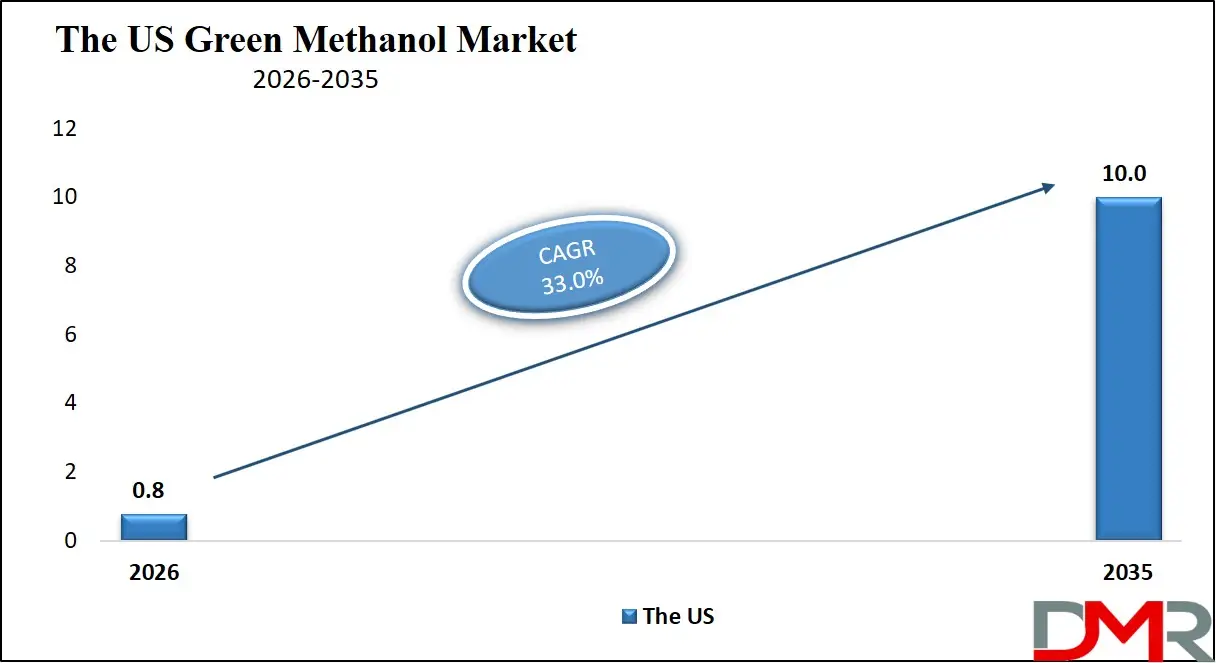
The US Green Methanol Market size is projected to reach USD 800 million in 2026 and grow at a CAGR of 33.0% during the forecast period.
ℹ
To learn more about this report –
Download Your Free Sample Report Here
Federal policies, incentives on clean fuels, and hydrogen infrastructure investments are driving the growth of the US green methanol market. Availability of sophisticated carbon capture systems and robust research and development increases the scalability of production. Shipping and chemicals are the major industries that are shifting towards the use of green methanol as a way of achieving the emission targets. Also, renewable energy companies and logistics companies are increasingly forming partnerships to enhance supply chains, and on the state level, renewable requirements further boost the use of many industries.
Europe Green Methanol Market
The Europe Green Methanol Market size is estimated to be USD 1.5 billion in 2026 and its CAGR of 32.1% over the forecast period.
Europe is a prime opportunity that is fuelled by strict environmental laws and programs like the European Green Deal. The area focuses on carbon neutrality, propelling industries to renewable sources such as green methanol. Effective policy frameworks, emissions trading, and subsidies by the government promote innovation and implementation. Maritime decarbonization represents one of the significant sources of growth, and ports and shipping companies are actively incorporating green solutions with methanol. The fast technology change and cross-border partnerships also contribute to the market penetration in the European economies.
Japan Green Methanol Market
Japan Green Methanol Market size will be USD 140 million in 2026 and CAGR is 34.5% in the forecast period.
The Japan green methanol market is steadily increasing, and this is reinforced by the government policies that encourage hydrogen and low-carbon fuels. Synthetic fuel technology is an investment that is fueled by the country and its emphasis on decarbonization and energy security. The industrial industries, especially shipping and power generation, are embracing the use of green methanol in order to minimize emissions. Nevertheless, the lack of domestic feedstock is a problem, which promotes international relations. The developed technological ecosystem and sustainability efforts put forth by Japan make the Japanese market very promising in the long-term.
Key Takeaways
- Market Size & Forecast: The Green Methanol Market size is projected to reach USD 3.5 billion in 2026 and is anticipated to have a value of USD 53.5 billion in 2035.
- Growth Rate & Outlook: The Green Methanol Market size is set to grow at a compound annual growth rate of 35.2% during the forecast period of 2026 to 2035.
- Primary Growth Drivers: Some of the major growth drivers in the market include decarbonization mandates and climate policies, improvements in renewable hydrogen & carbon capture technologies, and more.
- Key Market Trends: Some of the major trends in the market are connection to circular economy models, smart technologies and digitalization of production, and more.
- By Feedstock: The biomass segment is anticipated to get the majority share of the Green Methanol market in 2026.
- By Application: The fuel segment is expected to get the largest revenue share in 2026 in the Green Methanol market.
- By Type: The bio-methanol segment is expected to get the largest revenue share in 2026 in the Green Methanol market.
- Regional Leadership: Europe is set to lead the Green Methanol market with an estimated 42.0% share in 2026.
What is the Green Methanol?
Green methanol is a sustainable version of methanol that can be made with renewable resources (biomass, agricultural waste, municipal solid waste, or captured carbon dioxide mixed with green hydrogen produced through renewable energy). It also reduces greenhouse gas emissions as opposed to the conventional methanol, which is produced using fossil fuels. It is a clean-burning fuel, carrier of energy and chemical feedstock, which facilitates decarbonization in various industries such as shipping, power generation, and manufacturing.
Use Cases
- Marine Fuel: The use of green methanol as an alternative marine fuel is also growing because of its low emissions footprint and its ability to replace the currently installed engine technologies, enabling shipping companies to achieve global decarbonization goals.
- Road Transport Fuel: It can be blended or used directly in internal combustion engines, offering a cleaner alternative to gasoline and diesel while reducing carbon emissions in transportation systems.
- Chemical Feedstock: Green methanol is also a sustainable raw material to manufacture chemicals like formaldehyde and olefins, contributing to more eco-friendly industrial production.
- Power Generation: This is utilized in power plants and fuel cells as a clean energy source, and helps in integrating renewable energy and lessening fossil fuel dependence.
How AI Is Transforming the Green Methanol Market
The green methanol market is being changed by artificial intelligence which optimizes the production process and increases efficiency. The use of AI-based analytics enables real-time monitoring of feedstock quality, energy use, and emissions, ensuring optimal operation. AI-powered predictive maintenance minimizes downtime and improves the life of equipment. Besides, AI helps to optimize the supply chain by predicting demand and enhancing logistics planning. It increases research and development by accelerating innovation in catalyst design and production processes. These innovations help in reducing costs, scaling and enhancing sustainability throughout the green methanol value chain.
Market Dynamic
Driving Factors in the Green Methanol Market
Decarbonization Mandates and Climate Policies
One of the key contributors to the green methanol market is the strict global climate policies and the net-zero pledges. Governments across the globe are introducing carbon pricing, emission decrease goals, and renewable fuel provisions and are urging industries to change to low-carbon options. Green methanol can be a solution to hard-to-abate industries like shipping and heavy industry. The fact that it can be used as a transition fuel further increases its uptake due to its compatibility with existing infrastructure, which is also an attractive transition fuel.
Improvements in Renewable Hydrogen and Carbon Capture Technologies
The application of technological advances in green hydrogen production and the use of carbon capture are greatly increasing the production process of green methanol. The economic viability is being enhanced by the declining prices of renewable energy and the electrolyzers. Waste-to-fuel and biomass gasification are becoming more efficient and scalable through innovations. These innovations make green methanol more competitive and allow the deployment of large volumes of it in various industries, reducing reliance on fossil fuels.
Restraints in the Green Methanol Market
Exorbitant Production expenses and poor infrastructure
The production of green methanol is still an expensive process because of the expensive green hydrogen and sophisticated processing methods. Market growth is further hampered by infrastructure constraints such as storage, transportation and distribution networks. These obstacles make it hard to adopt on a large scale, particularly in developing nations, and in the short run reduce the competitiveness with conventional fuels.
Feedstock Supply and Demand
The supply of biomass and captured CO 2 as viable feedstocks differs widely between regions. Unstable supply chains and logistical issues affect the stability of production. Moreover, other sectors of renewable resources compete with biomass resources, adding complexity and costs. The limitations slow down the market growth and pose uncertainties to long-term investments.
Opportunities in the Green Methanol Market
Growth in Maritime and Aviation Industries
Green methanol is fast becoming a more acceptable cleaner fuel source in maritime industry, and this offers a great potential of growth. The investments are driven by increasing regulations of shipping emissions and the demand of sustainable fuels. On the same note, the new uses in aviation fuel blends are opening up new frontiers to market growth, making green methanol a low-carbon, all-purpose fuel.
State Intellection and World Investments
An increase in government subsidies, tax credits and funding schemes is providing prospects of growth in the market. Renewable energy and hydrogen infrastructure are going into large-scale investments, which are increasing the pace of production capacity. The partnerships between the government and the industry, as well as international cooperation, are also opening up the possibilities of growth, especially in the developing economies.
Trends in the Green Methanol Market
Connection to Circular Economy Models
There is an increasing alignment in green methanol production with circular economy principles, using waste materials and captured emissions as feedstocks. This trend makes it more sustainable and environmental friendly. Firms are turning their attention to closed loop systems, enhancing resource efficiency, and long-term environmental objectives.
Smart Technologies and Digitalization of Production
The incorporation of data analytics, automation, and digital tools is changing the process of producing green methanol. Intelligent monitoring systems maximize efficiency, save the cost of operations and improve the quality of output. These technologies are facilitating scalable and cost effective production, which is propelling competitiveness in the dynamic energy market.
Research Scope and Analysis
By Type Analysis
It is projected that bio-methanol will take over the market with an estimated 58% market share in 2026 as it has relatively mature technologies in production and biomass feedstocks. The cost-efficiency and well-established infrastructure make it attractive to initial adopters, especially transportation, and chemical sectors. Also, good government policies that favour bio based fuels and the use of waste also give it strength in the market. In the meantime, e-methanol is the fastest expanding segment as more and more efforts are made to invest in green hydrogen and carbon capture technologies. Its scalability and possible near-zero emissions make it one of the most appealing investments to decarbonize long-term strategies, particularly in areas with renewable energy reserves and high targets of clean energy.
By Feedstock Analysis
The biomass based feedstock is expected to occupy the largest portion of about 62 percent in 2026 because of the pervasive availability and familiar conversion pathways like gasification. The agricultural and forestry residues also play a major role in the predominance of this segment, and the increasing interest in waste-to-energy programs. Furthermore, it can use domestically sourced feedstock, thereby minimizing reliance on imported goods and increasing energy security. Nevertheless, the advantage of CO 2 with green hydrogen is becoming the quickest expanding segment due to the maturation of carbon capture and renewable energy technologies. The given pathway is scalable, and sustainable, especially in the areas that prioritize carbon neutrality and industrial decarbonization, and it allows capturing of emissions to be used efficiently.
By Production Technology Analysis
By 2026, biomass gasification will have a market share of about 55% because it is commercially mature and cost-efficient. It is commonly used to convert organic waste to methanol efficiently with the backing of effective supply chains and operational experience. Moreover, its ability to work with various feedstocks also increases its geographical adaptability. The most rapidly expanding sector is power-to-methanol technology, which is driven by the decreased cost of renewable energy and raised hydrogen production capacity. This approach is gaining momentum due to its capacity to create carbon-neutral fuel, which is of high relevance in the future energy system, particularly as nations invest much in the green hydrogen ecosystem and integrated energy solutions.
By Application Analysis
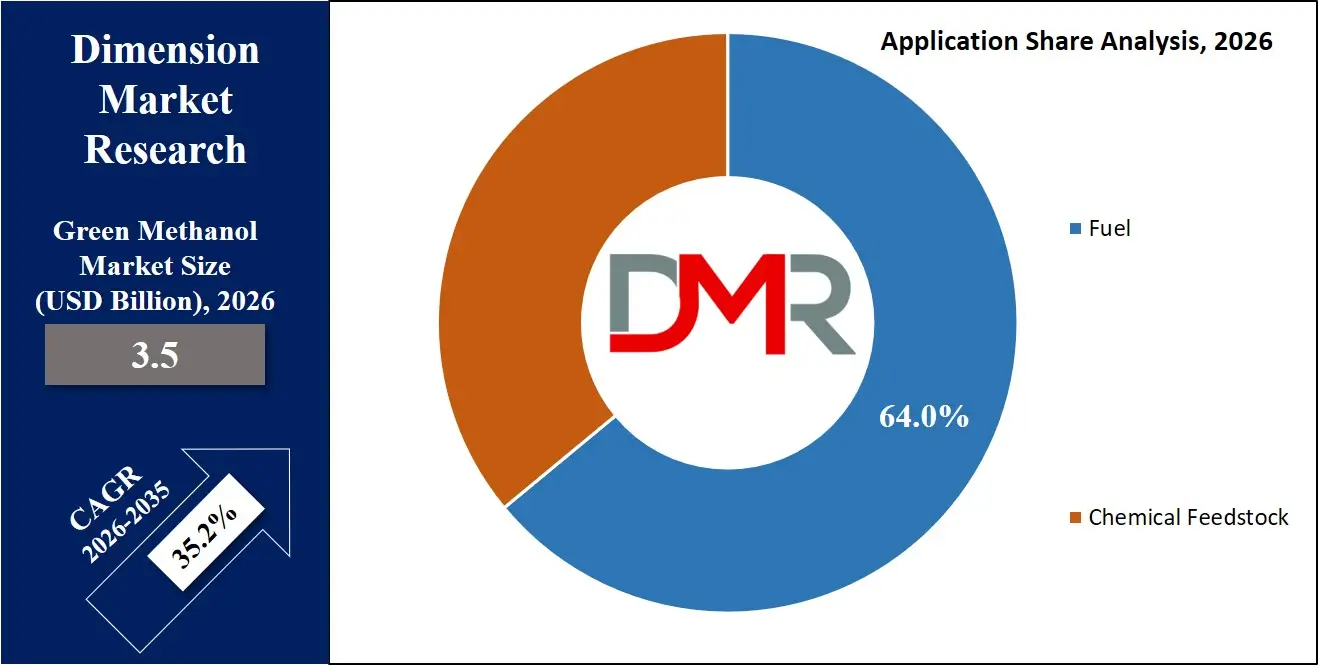
Applications in fuel are expected to prevail with a 64% share in 2026, largely due to the growing use in marine and road transportation industries. The main reasons of this dominance are the stringent regulations and the cleaner fuels. The maritime sector is especially moving to the green methanol as a substitute of the traditional fuels.
ℹ
To learn more about this report –
Download Your Free Sample Report Here
The use of chemical feedstock is also increasing consistently, which is backed by the need to have sustainable industrial inputs and environmentally friendly production processes. Also, the increase of investment in the infrastructure of alternative energy and global decarbonization targets continue to increase the growth of fuel applications and make them a key part of the green methanol market.
By End Use Industry Analysis
It is expected that the transport industry will take the lead with 60 percent in 2026 due to the rapid uptake of green methanol as a low-emission fuel by the maritime industry. The growth drivers are the increase in regulatory pressure on shipping emissions and the necessity to find sustainable solutions to logistics. There is also growth in automotive applications albeit at a lower rate owing to the infrastructural constraints. The chemical industry is the most rapidly expanding sector, as the need to use sustainable raw materials and environmentally friendly production technologies grows. Moreover, the energy and power industries are also moving towards the use of green methanol in producing cleaner electricity, thus adding to the diversification of market growth and overall market resilience.
The Green Methanol Market Report is segmented on the basis of the following:
By Type
By Feedstock
- Biomass
- Agricultural Residues
- Forestry Residues
- Municipal Solid Waste
- CO₂ + Green Hydrogen
By Production Technology
- Biomass Gasification
- Power-to-Methanol (CO₂ Hydrogenation)
- Waste-to-Methanol
By Application
- Fuel
- Marine Fuel
- Road Transport Fuel
- Chemical Feedstock
By End-Use Industry
- Transportation
- Chemical Industry
- Energy & Power
Regional Analysis
Leading Region in the Green Methanol Market
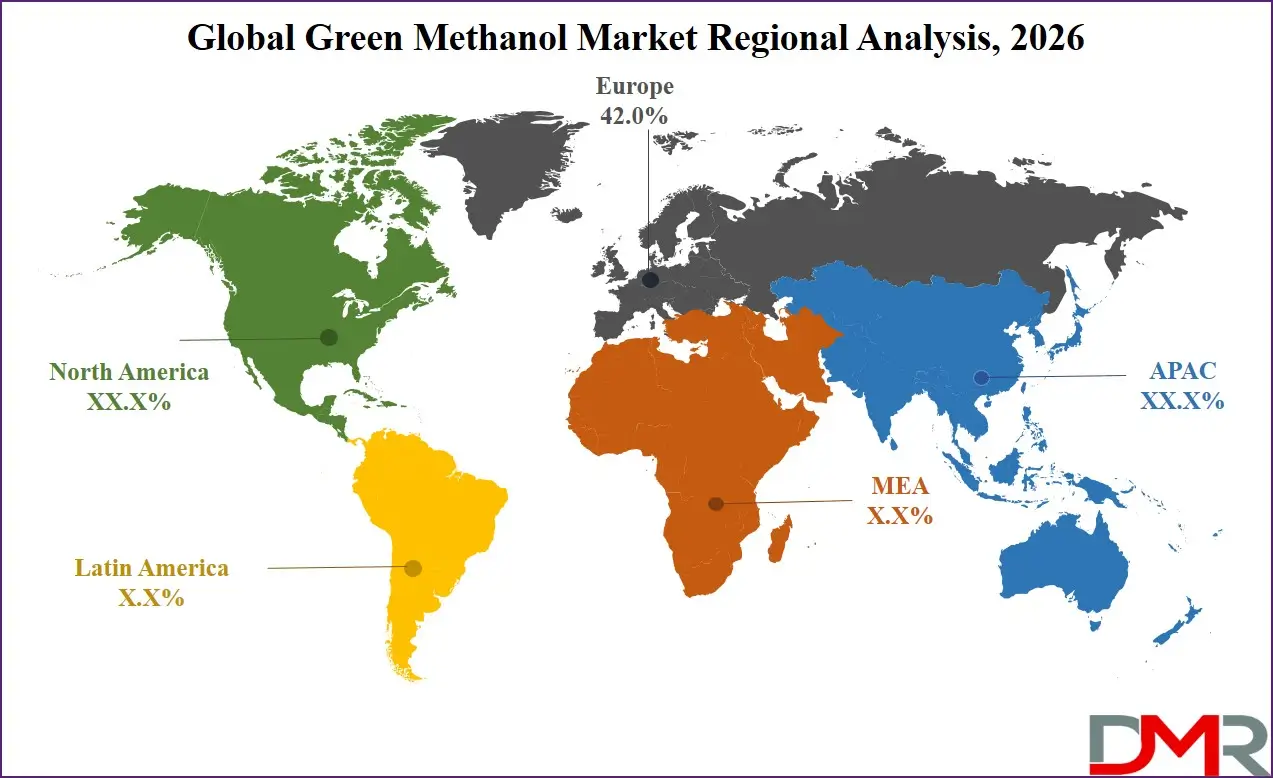
In the year 2026, Europe is likely to lead the market of green methanol with a market share of 42%. The leadership in the region is propelled by effective regulatory systems, such as tough emission reduction goals and renewable energy policies. Also, it is supported by investments in the infrastructure of green hydrogen and new fuel technologies. The maritime industry is an important industry, and there is extensive use of green methanol in transportation and port management. Moreover, the government incentives, carbon pricing systems and cross-border partnerships drive the innovation and widespread implementation, making Europe a world center in the development and commercialization of sustainable fuels.
ℹ
To learn more about this report –
Download Your Free Sample Report Here
Fastest Growing Region in the Green Methanol Market
The fastest-growing region is Asia-Pacific because of the high rate of industrialization, urbanization, and the growing energy demand. Such countries as Japan and other ones are spending a lot to develop clean fuel technologies to reach the goal of carbon-neutrality. The government programs that support the renewable energy and the production of hydrogen are important growth drivers. The increased shipping, manufacturing, and chemical industries also increase the demand of green methanol. Moreover, the growing level of foreign investments and regional cooperation is boosting production capacities, turning Asia-Pacific into an important contributor to the market expansion in the future and to the worldwide shift to sustainable energy solutions.
By Region
North America
Europe
- Germany
- The U.K.
- France
- Italy
- Russia
- Spain
- Benelux
- Nordic
- Rest of Europe
Asia-Pacific
- China
- Japan
- South Korea
- India
- ANZ
- ASEAN
- Rest of Asia-Pacific
Latin America
- Brazil
- Mexico
- Argentina
- Colombia
- Rest of Latin America
Middle East & Africa
- Saudi Arabia
- UAE
- South Africa
- Israel
- Egypt
- Rest of MEA
Competitive Landscape
The green methanol market has a high competition that is fuelled by innovation, strategic alliances and technology. Companies strive to increase production capacities, enhance cost-efficiency, and enter into long-term supply contracts. New entrants are restricted by high barriers to entry, which is caused by capital requirements and complexity of technology. Market players are focusing on research and development, vertical integration and alliances with end-use industries to enhance their standing and seize new opportunities.
Some of the prominent players in the global Green Methanol are:
- Methanex Corporation
- OCI N.V.
- BASF SE
- Södra
- Enerkem Inc.
- Carbon Recycling International
- Proman
- SunGas Renewables Inc.
- GIDARA Energy
- European Energy
- Eni S.p.A.
- Liquid Wind AB
- HIF Global
- Cepsa
- Mitsubishi Gas Chemical Company Inc.
- Mitsui & Co. Ltd.
- Alberta-Pacific Forest Industries Inc.
- Veolia
- Andritz AG
- thyssenkrupp Industrial Solutions
- Other Key Players
Recent Developments
- In April 2026, a green methanol project was started in northeast China, which is fuelled by green hydrogen and biomass. The first phase will be located in the Kangping County of Shenyang and will be able to produce 100,000 tonnes annually. The plant seeks to reduce emissions by using waste straw that has been converted into synthesis gas and hydrogen using wind power-driven electrolysers. The project will be expanded to include more e-fuel production by expanding its use of biomass processing, energy storage, and hydrogen infrastructure in the future.
- In January 2026, Cargill introduced the maiden voyage of its first green methanol dual-fuel dry bulk ship, Brave Pioneer. The ship is constructed by Tsuneishi Shipbuilding and owned by Mitsui and Co and can be operated using conventional fuel or green methanol and produces up to 70 percent less CO 2 emissions. The trip will put bunkering preparedness, carbon monitoring, and low-carbon shipping demand to the test, which will aid the wider aims of Cargill to increase sustainable maritime solutions.
- In September 2025, Lummus Technology has been chosen by Vioneo to offer its Novolen polypropylene technology to a new plant in Antwerp, Belgium. The plant will be powered by green methanol to manufacture approximately 200,000 tonnes of fossil-free plastics every year, such as polypropylene and polyethylene. The plant will be a part of a greater sustainable complex and will be based on renewable electricity and hydrogen, which will produce high-quality plastics as a direct substitute of their fossil-based counterparts.
Report Details
| Report Characteristics |
| Market Size (2026) |
USD 3.5 Bn |
| Forecast Value (2035) |
USD 53.5 Bn |
| CAGR (2026–2035) |
35.2% |
| Historical Period |
2021 – 2025 |
| Forecast Period |
2027 – 2035 |
| Base Year |
2025 |
| Estimate Year |
2026 |
| Segments Covered |
By Type (Bio-Methanol, E-Methanol), By Feedstock (Biomass, CO₂ + Green Hydrogen), By Production Technology (Biomass Gasification, Power-to-Methanol (CO₂ Hydrogenation), Waste-to-Methanol), By Application (Fuel, Chemical Feedstock), By End-Use Industry (Transportation, Chemical Industry, Energy & Power) |
| Regional Coverage |
North America – The US and Canada; Europe – Germany, The UK, France, Russia, Spain, Italy, Benelux, Nordic, & Rest of Europe; Asia-Pacific – China, Japan, South Korea, India, ANZ, ASEAN, Rest of APAC; Latin America – Brazil, Mexico, Argentina, Colombia, Rest of Latin America; Middle East & Africa – Saudi Arabia, UAE, South Africa, Turkey, Egypt, Israel, & Rest of MEA |
Frequently Asked Questions
How big is the Green Methanol Market?
▾ The Green Methanol Market size is expected to reach USD 3.5 billion by 2026 and is projected to reach USD 53.5 billion by the end of 2035.
What is the CAGR of the Green Methanol Market from 2026 to 2035?
▾ The market is growing at a CAGR of 35.2 percent over the forecasted period.
What factors are driving the growth of the Green Methanol Market?
▾ Decarbonization mandates and climate policies, improvements in renewable hydrogen and carbon capture technologies, and more are the factors driving the growth of the Green Methanol Market.
What are the major trends in the Green Methanol Market?
▾ Connection to circular economy models, smart technologies and digitalization of production, and more are some of the major trends in the market.
Who are the key players in the Green Methanol Market?
▾ Some of the key players in the Green Methanol Market include Methanex, BASF, OCI, and more.
How is the Green Methanol Market segmented?
▾ The Green Methanol Market is segmented by type, feedstock, production technology, application, and end-use industry.
Which region held the largest share of the Green Methanol Market in 2026?
▾ Europe is set to lead the Green Methanol market with an estimated 42.0% share in 2026.
Which region is expected to grow the fastest in the Green Methanol Market?
▾ Asia-Pacific is the fastest-growing region in the Green Methanol market during the forecast period.