Global Home Sleep Apnea Test Market Snapshot
- Global Home Sleep Apnea Test Market Size in 2026: USD 1.9 billion
- Global Home Sleep Apnea Test Market Size in 2035: USD 5.0 billion
- Global CAGR from 2027 to 2035: 11.3%
- Wearable Devices are the leading Product segment in 2026: 63.4%
- Offline is the leading Distribution Channel segment in 2026: 69.8%
- Home Users are the leading End User segment in 2026: 49.7%
- Wearable devices are the fastest-growing product segment: 12.3% CAGR
- North America is the leading region: 37.4%
- Online is the fastest-growing Distribution Channel segment: 12.4% CAGR
- Telehealth Providers are the fastest-growing End User segment: 13.1% CAGR
- Asia Pacific is the fastest-growing region: 11.8% CAGR
What is the Global Home Sleep Apnea Test Market and its Market Size?
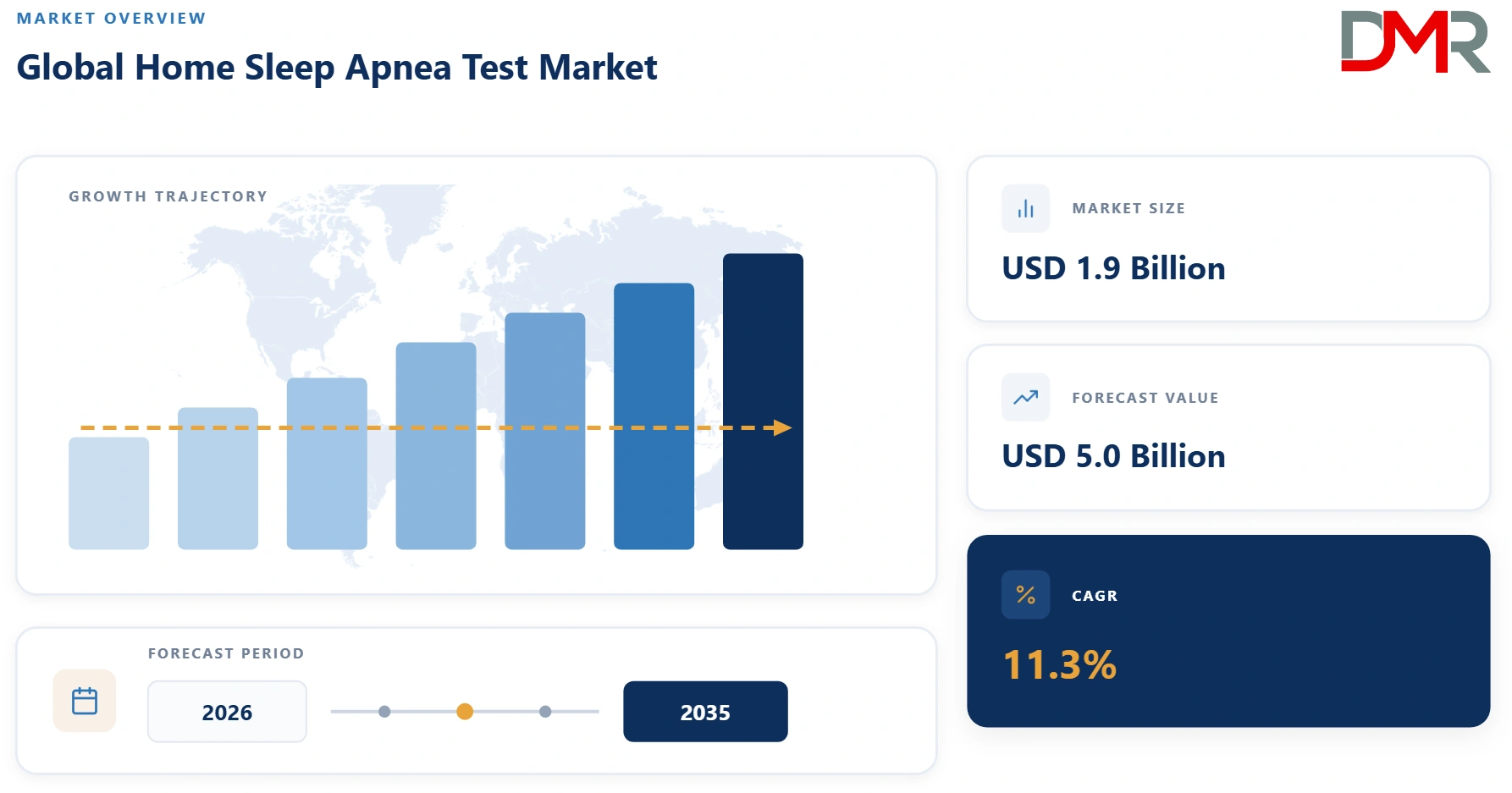
The Global Home Sleep Apnea Test Market is valued at USD 1.9 billion in 2026 and is projected to reach USD 5 billion by 2035, growing at a CAGR of approximately 11.3% during the forecast period.
ℹ
To learn more about this report –
Download Your Free Sample Report Here
The market comprises diagnostic devices and solutions that enable individuals to detect sleep apnea at home by monitoring breathing patterns, oxygen saturation, airflow, and other physiological indicators. Market growth is driven by increasing awareness of sleep disorders, rising prevalence of sleep apnea, and growing demand for convenient, cost-effective diagnostic solutions. Additionally, advancements in portable monitoring technologies, expanding telehealth services, and the growing preference for home-based healthcare are supporting market expansion.
Use Cases
- Diagnosis of Sleep Apnea: Home sleep apnea tests are used to diagnose the symptoms of sleep apnea by analyzing the breathing pattern, blood oxygen level, airflow rate, and other necessary indicators when the patient is sleeping. This information aids health care providers in evaluating the chances of breathing disturbances in order to determine whether a patient needs additional examination or treatment. The home sleep apnea tests provide a convenient diagnosis method for suitable patients.
- Home-Based Sleep Testing: A home sleep test enables the qualified patient to conduct the sleep apnea test from home as opposed to the test conducted at a healthcare facility like a hospital or sleep clinic. The portable devices are fairly easy to use, and the patient gets to sleep in a familiar setting. This process makes it easy for patients who are unable to access health facilities for testing.
- Remote Patient Monitoring: Home sleep apnea test promotes remote patient monitoring by enabling the individual to monitor their sleeping patterns from a non-healthcare environment. Healthcare providers can evaluate the gathered information for any changes in the sleep-breathing patterns and provide the needed follow-up information.
- High-Risk Patient Screening: Sleep apnea testing at home is an excellent way to screen people who show signs of having sleep apnea, which include snoring, being excessively tired during the day, or pauses in breathing when sleeping. Those who have risk factors such as obesity may need to be screened too.
- Telehealth Integration: Home sleep apnea tests can be incorporated into telehealth solutions that allow for patients to submit the findings of their tests online. Physicians will be able to go through the information provided, have a conversation with the patient about their symptoms, and make the necessary recommendations. This could serve as an innovative means of providing healthcare services related to sleep.
Key Takeaways
- Market Size: The Global Home Sleep Apnea Test Market was valued at approximately USD 1.9 billion in 2026 and is projected to reach around USD 5.0 billion by 2035
- Global Growth Rate: The Global Home Sleep Apnea Test Market is expected to grow at an approximately 11.3% CAGR from 2027 to 2035.
- Technology Trend: The market is moving toward portable, wireless, wearable, and multi-night testing devices, while AI and digital technologies are increasingly being used to support the analysis of sleep-related data.
- Market Drivers: Rising prevalence of sleep apnea, increasing awareness, preference for home-based testing, and growing adoption of convenient diagnostic technologies are key factors supporting market growth.
- Product Segment Analysis: Wearable devices dominate the market, accounting for 63.4% of the share in 2026. Wearables are the fastest-growing segment, with a projected CAGR of 12.3%, supported by technological advancements.
- By Distribution Channel Analysis: Offline distribution leads the market with a 69.8% share in 2026. Online distribution is the fastest-growing channel, with a 12.4% CAGR, driven by e-commerce expansion and increasing consumer preference for convenient purchasing.
- End User Segment Analysis: Home users represent the largest end-user segment, accounting for 49.7% of the market in 2026. Telehealth providers are the fastest-growing segment, with a projected CAGR of 13.1%, supported by expanding remote consultations and digital healthcare services.
- Regional Analysis: North America leads the global home sleep apnea test market, accounting for 37.4% of the market. Meanwhile, Asia Pacific is expected to be the fastest-growing region, with a projected CAGR of 11.8%.
How AI/Gen AI Is Transforming the Global Home Sleep Apnea Test Market?
Artificial Intelligence (AI) and Generative AI are revolutionizing the Global Home Sleep Apnea Test Market in terms of increased accuracy of diagnosis, automated analysis of sleep data, and remote monitoring of the patient. AI algorithms can analyze breathing rates, oxygen levels, airflow, and respiratory events that may indicate obstructive sleep apnea. Machine learning helps to automate the scoring of sleep tests, thus saving time and effort for healthcare workers in diagnostics. Generative AI can be useful in summarizing sleep test results, compiling patient histories, and communicating between the patient and the clinician. Combining the technologies with wearables, cloud computing, and telehealth will make home testing more accessible and convenient. In addition, predictive analytics can be helpful in identifying patients at risk.
Key Drivers in the Global Home Sleep Apnea Test Market
Rising Prevalence of Sleep Apnea
Growing cases of sleep apnea have emerged as the key factor behind the expansion of the Global Home Sleep Apnea Test Market. Various medical conditions, including obesity, an aging population, and other factors, have resulted in a rise in cases of people suffering from sleep-related breathing problems. Patients face various symptoms like snoring loudly, irregular breathing, and daytime fatigue. The availability of home sleep apnea test provides an easy way for patients to get their test done without going to a sleep lab.
Increasing Preference for Home-Based Testing
The rising inclination towards testing at home has been boosting the Global Home Sleep Apnea Test Market. This trend is due to the preference of patients to undergo testing in the comfort of their homes rather than at a hospital or sleep lab. Home sleep apnea tests will also help avoid the hassle of travel and are helpful for patients living in distant locations. The rising acceptance of telehealth services will allow doctors and other health care professionals to assess test results from far-off locations.
Restraints of the Global Home Sleep Apnea Test Market
Limitations in Test Accuracy
Limitations in Test Accuracy is one of the major restraints of the global home sleep apnea test market. Home sleep apnea tests measure fewer physiological signals than laboratory-based polysomnography, which can limit their ability to detect certain sleep-related breathing disorders accurately. These tests may miss mild cases or produce inconclusive results, requiring further evaluation through laboratory testing. Additionally, their suitability depends on the patient's health condition and symptoms, which can restrict their use across a wider patient population.
Lack of Skilled Professionals for Result Interpretation
The shortage of trained sleep specialists and healthcare professionals capable of interpreting home sleep apnea test results can limit the growth of the global home sleep apnea test market. Although home-based testing improves diagnostic convenience, the collected data still requires appropriate clinical evaluation to identify sleep apnea severity and determine suitable treatment. Inadequate expertise in analyzing test results may lead to misinterpretation, delayed diagnosis, or the need for additional laboratory-based testing. This challenge is particularly significant in developing regions, where access to qualified sleep medicine specialists and diagnostic facilities remains limited.
Trends in the Global Home Sleep Apnea Test Market
Expansion of Direct-to-Consumer Sleep Diagnostic Services
The expansion of direct-to-consumer sleep diagnostic services is creating new growth opportunities in the global home sleep apnea test market. These services allow individuals to access sleep screening devices and diagnostic solutions without initially visiting traditional healthcare facilities. Consumers can purchase or rent home sleep testing kits through online platforms, specialized diagnostic companies, and healthcare service providers. This approach offers greater convenience, flexible testing options, and improved access for individuals in areas with limited sleep clinics. Additionally, growing consumer awareness of sleep disorders and the availability of digital health platforms are encouraging companies to introduce affordable testing packages, subscription-based services, and direct online consultations.
Increasing Use of Portable and Wearable Devices
One of the key trends in the Global Home Sleep Apnea Test Market is the rise in popularity of portable and wearable devices. With the help of these devices, patients can gather data on their sleep, including blood oxygen level, pulse rate, airflow, and respiratory pattern, when sleeping in their homes. The small size and simplicity of the devices make it easy for eligible patients to perform tests. Besides, the improvement of sensors and connectivity technologies makes it easier for medical professionals to view the gathered data. In line with the growing need for convenient healthcare services, companies are working on making their devices portable and comfortable.
Growth Opportunities in the Global Home Sleep Apnea Test Market
Development of Affordable Testing Devices
The availability of affordable testing devices is a breakthrough in the Global Home Sleep Apnea Test Market. Expensive testing can be an impediment for people to get themselves tested for sleep apnea, especially in underdeveloped or developing nations. The aim of manufacturers is to come up with affordable testing devices that can produce accurate results and are user-friendly as well. The advancements in sensor technology, small size, and digitization might bring down the cost of such devices and testing. Affordable options can help in the early diagnosis of sleep apnea and increase the customer base of the products.
Use of AI and Advanced Technology
The utilization of artificial intelligence is also capable of making the process of analyzing breathing patterns and oxygen levels, among other data regarding sleep, easier when looking for indications of the condition known as sleep apnea. Technological advances in the areas of sensors, wireless technologies, and digital platforms are increasing convenience in conducting tests from the comfort of one’s own home. Technology is making it possible for medical professionals to review test results and manage patient data remotely.
Research Scope and Analysis
Global Home Sleep Apnea Test Market is being analyzed based on product type, mode of distribution, and end users. The types of products include wearable and non-wearable products. The mode of distribution is divided into offline distribution and online distribution. End users include hospitals, sleep clinics and diagnostic centers, telehealth, and home users. Online channel and telehealth markets are rapidly growing market segments.
ℹ
To learn more about this report –
Download Your Free Sample Report Here
By Product Analysis
Wearable Devices dominate the global home sleep apnea test market, accounting for 63.4% of the market in 2026. Their leading position is driven by convenience, portability, and growing demand for home-based sleep monitoring. Wearables are the fastest-growing product segment, with a projected CAGR of 12.3%, supported by technological advancements and increasing adoption of connected diagnostic solutions.
By Distribution Channel Analysis
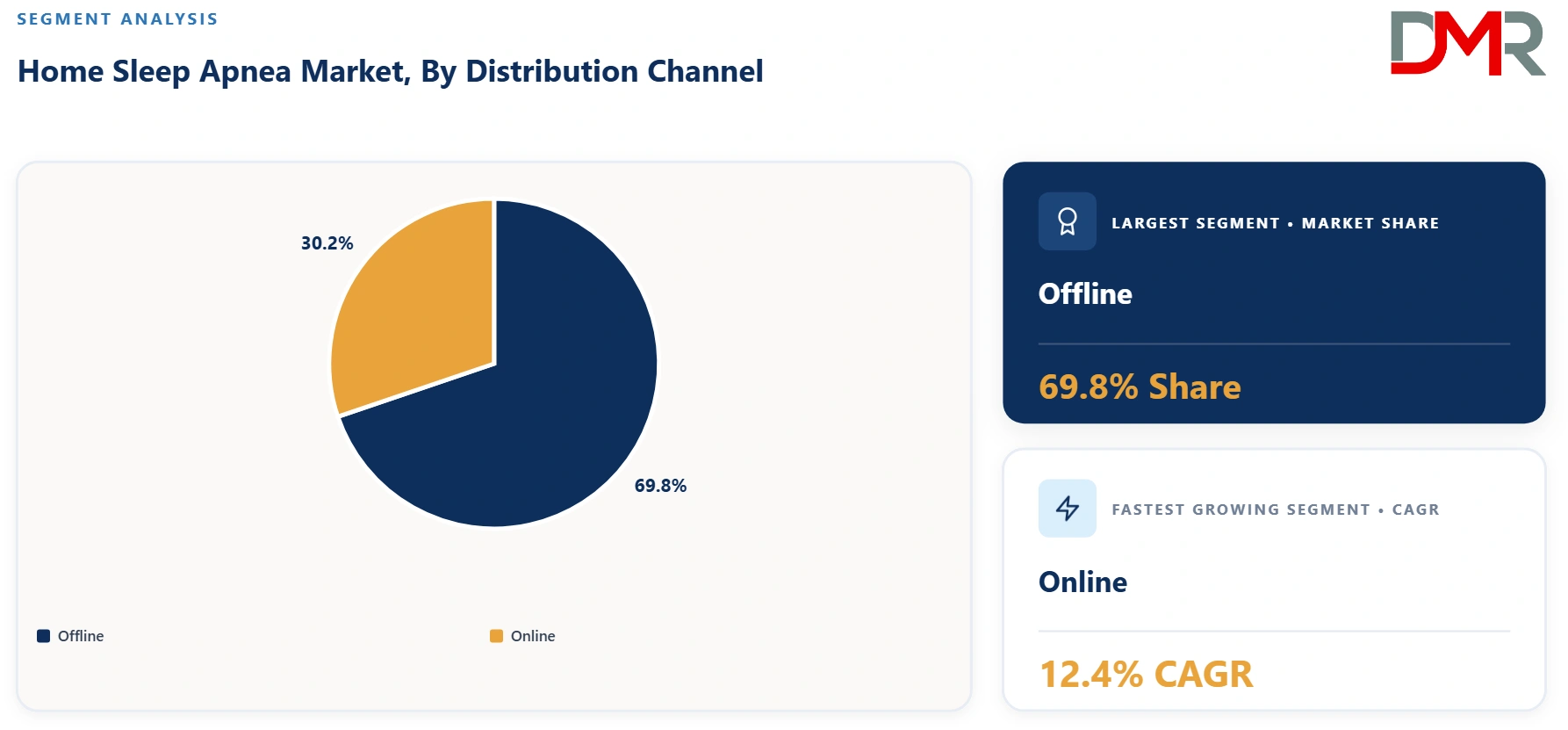
Offline distribution is the dominant market share holder in the global home sleep apnea test market with 69.8% market share in 2026. The dominant position in the market is due to the existence of hospital networks, sleep clinics, and medical device suppliers. On the other hand, the online distribution segment is the fastest-growing segment with a CAGR of 12.4%.
By End User Analysis
Home users hold the highest share in the global market for home sleep apnea test in 2026, which is 49.7%, mainly due to the increasing preference for more convenient, economical, and comfortable testing at home. The telehealth providers hold the highest growth rate among end-users, with a forecasted CAGR of 13.1%.
The Global Home Sleep Apnea Test Market Report is segmented based on the following:
By Product
By Distribution
By End User
- Hospitals
- Telehealth Providers
- Sleep Clinics and Diagnostic Centers
- Home Users
Regional Analysis
North America: Leading Region in 2026
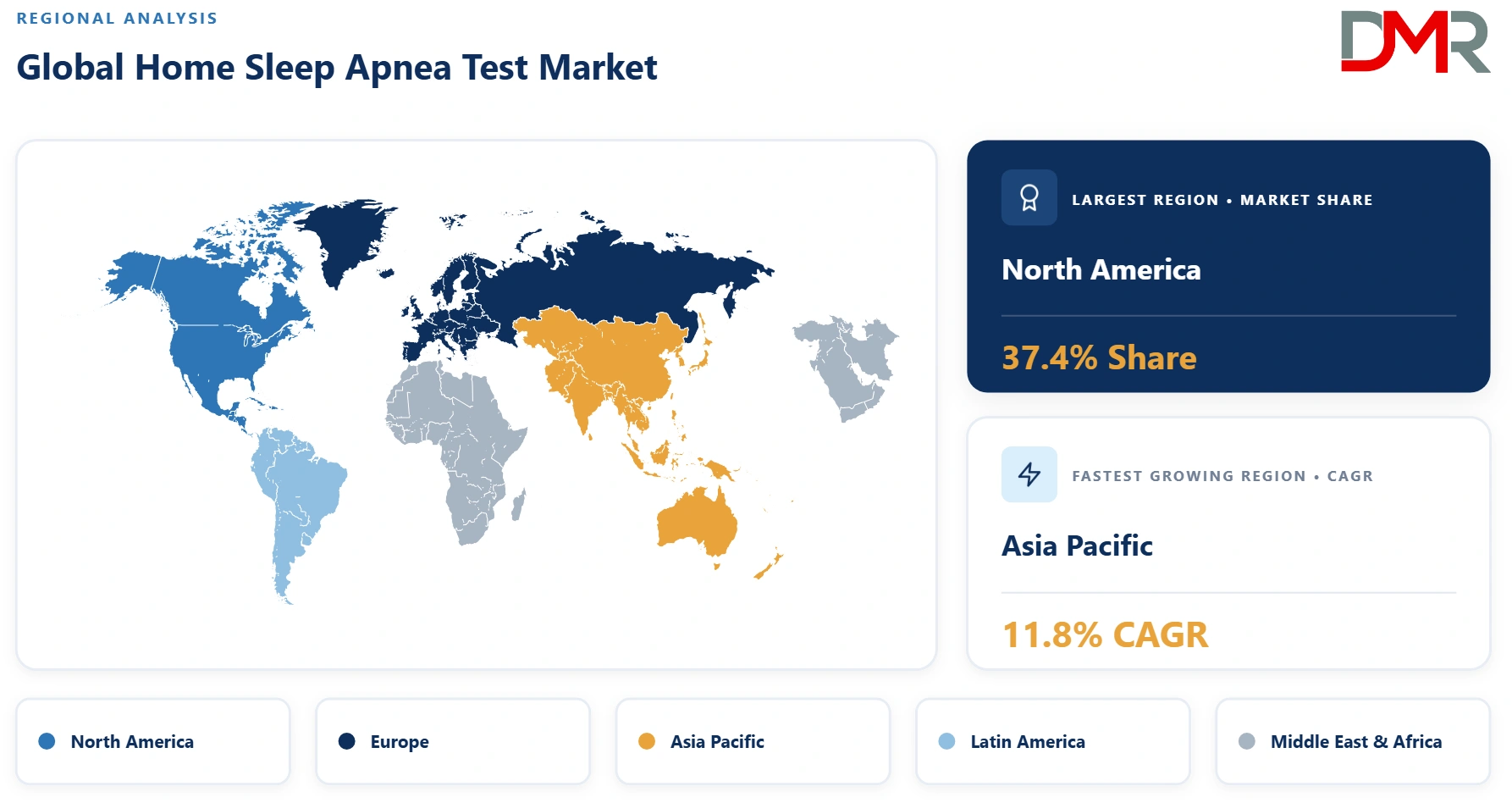
The North American region held the top position in the Global Home Sleep Apnea Test Market in 2026, holding a market share of around 37.4%. This dominance can be attributed to factors such as awareness regarding sleep apnea, good healthcare infrastructure, availability of diagnostic tests, and adoption of home testing.
ℹ
To learn more about this report –
Download Your Free Sample Report Here
Asia-Pacific: Fastest-Growing Region
Asia-Pacific will witness the highest growth rate in the Global Home Sleep Apnea Test Market during the forecast period (2027-2035), registering a CAGR of 11.8%. The reasons behind the growth include awareness about sleep apnea, improvements in healthcare facilities, and demand for easy-to-use home diagnostic tools in countries like China and India.
Europe
Europe is a vital market for home sleep apnea test because of the existing healthcare infrastructure and increasing awareness of sleep disorders in the region. Germany, the UK, and France are some of the countries that create demand for sleep apnea screening and monitoring. Increasing availability of healthcare facilities, the adoption of more sophisticated testing devices, and increased inclination towards home-based testing will favor market growth.
Latin America
Sleep apnea is becoming increasingly prevalent in Latin America, and Brazil is struggling to deal with the burden of this disease. With increased awareness about the disease, there may be an increasing number of cases seeking help through diagnostic and treatment facilities in the region, creating possibilities of testing for sleep apnea at home.
Middle East & Africa
The Middle East and Africa present avenues for development in the home sleep apnea test industry since more healthcare services have been established while knowledge about sleep disorders is growing. However, in some nations, inadequate availability of facilities where patients can be tested and diagnosed with the condition still poses a problem. Cost-effective methods of testing at home would help.
Major Countries Analysis
USA
Market value for the U.S. Home Sleep Apnea Test Device Market for the year 2026 stands at USD 510 million. Some of the factors contributing to the rapid growth in the market are the high prevalence of sleep apnea, increased awareness regarding sleep disorders, growing demand for ease of diagnosis in the home setting, and use of telehealth. The U.S. home sleep apnea test market is primarily driven by the rising prevalence of obstructive sleep apnea, increasing awareness of sleep-related health conditions, and a large undiagnosed patient population. Growing demand for convenient and cost-effective diagnostic solutions is encouraging the adoption of home-based sleep testing devices.
Japan
Japan's home sleep apnea test market is witnessing growth driven by increasing awareness of sleep-related disorders, an aging population, and rising demand for convenient diagnostic solutions. The growing prevalence of sleep apnea and other sleep-related breathing conditions is encouraging individuals to seek early diagnosis and effective monitoring options. Additionally, Japan's advanced healthcare infrastructure and strong adoption of digital health technologies are supporting the availability of portable sleep testing devices. The increasing use of wearable monitoring equipment, home-based diagnostic solutions, and telehealth services is further contributing to market development, while technological advancements are improving the accessibility and efficiency of sleep apnea testing.
Saudi Arabia
The Saudi Arabia home sleep apnea test market is gaining traction due to the high prevalence of obstructive sleep apnea, increasing obesity rates, and growing awareness of sleep-related disorders. Rising demand for early diagnosis and convenient home-based testing solutions is encouraging the adoption of portable sleep monitoring devices. Additionally, government initiatives to strengthen healthcare infrastructure under Vision 2030, expanding digital healthcare services, and the development of virtual sleep clinics are supporting market growth. The increasing availability of home sleep apnea test devices and improvements in diagnostic capacity are further creating opportunities for market expansion in Saudi Arabia.
Technology Analysis
Technological innovations such as portable gadgets, enhanced sensors, and wireless connectivity have played an essential role in supporting the expansion of the Global Home Sleep Apnea Test Market through ease of use. For instance, patients can record their breathing and oxygen level data from home using such technologies. Artificial intelligence can play an integral role in the analysis of data by healthcare professionals in identifying abnormal breathing patterns. Remote healthcare services can also enhance the process of sharing test results and consultation with healthcare professionals via telehealth solutions. Such innovations have provided significant opportunities for developing cost-effective and user-friendly testing tools. Nonetheless, technical issues, data protection risks, and different levels of accuracy are some of the main challenges.
Regulatory Landscape
The global home sleep apnea test market is governed by medical device regulations focused on product safety, clinical accuracy, data security, and diagnostic reliability. In the United States, the Food and Drug Administration (FDA) classifies home sleep apnea test devices under Class II medical devices, requiring applicable regulatory clearance, including the 510(k) premarket notification pathway. Additionally, the Centers for Medicare & Medicaid Services (CMS) establishes coverage criteria for home sleep testing, including clinical assessment and device requirements. Guidelines from the American Academy of Sleep Medicine (AASM) further support appropriate patient selection and diagnostic practices. These regulatory frameworks influence product development, market entry, and adoption of home-based sleep diagnostic technologies.
By Region
North America
Europe
- Germany
- France
- The U.K.
- Italy
- Spain
- Rest of Europe
Asia-Pacific
- China
- Japan
- India
- Australia
- South Korea
- Rest of APAC
Latin America
- Mexico
- Brazil
- Rest of LATAM
Middle East & Africa
- Saudi Arabia
- The UAE
- South Africa
- Rest of MEA
Competitive Landscape
The Global Home Sleep Apnea Test Market includes well-established medical device companies and newer businesses developing easier ways to test for sleep apnea at home. Companies such as ResMed, ZOLL Itamar, and Acurable are working on solutions that help patients get tested without spending a night in a sleep laboratory. Competition is mainly focused on improving device accuracy, comfort, and ease of use, along with making it easier to share results with doctors. A 2026 study on home sleep apnea test devices highlighted the importance of safety, clinical testing, and data security. These factors create opportunities for new developments, while meeting regulatory requirements and maintaining reliable test results remain important challenges for companies.
Some of the Prominent Players in the Global Home Sleep Apnea Test Market
- ResMed Inc.
- ZOLL Itamar Medical
- Koninklijke Philips N.V.
- Nox Medical
- Cadwell Industries, Inc.
- Compumedics Limited
- Natus Medical Incorporated
- Nihon Kohden Corporation
- Cleveland Medical Devices Inc. (CleveMed)
- SOMNOmedics GmbH
- BRAEBON Medical Corporation
- Advanced Brain Monitoring, Inc.
- Acurable Limited
- Onera Health B.V.
- BMC Medical Co., Ltd.
- Contec Medical Systems Co., Ltd.
- Bittium Corporation
- NeuroVirtual
- Neurosoft
- Allengers Medical Systems Limited
- Sunrise
- Huxley Medical
- PranaQ
- Happy Health
- Wesper
- SleepImage
- VirtuOx
- Watermark Medical
- BetterNight
- ApneaMed
- Blackstone Medical Services
- Snap Diagnostics
- Pivotal Health
- General Sleep Corporation
- EnsoData
- Lowenstein Medical Technology GmbH + Co. KG
Recent Developments
- In October, 2026, Beacon Biosignals announced the acquisition of Snap Diagnostics, a home sleep testing provider operating across all 50 U.S. states. The deal is expected to expand access to EEG-enabled home sleep testing and help bring AI-powered sleep diagnostics to more healthcare providers, including primary care and telehealth services.
- In May, 2026, Sunrise announced FDA clearance for Sunrise Air, a device combining jaw-movement monitoring with airflow, oxygen, pulse, and snoring measurements. The system is designed to provide more detailed information during home testing.
- In April, 2025, ResMed announced the U.S. availability of its NightOwl home sleep apnea. The fingertip-based device supports multi-night testing and sends data to a cloud-based platform for clinician review.
- In February, 2025, PranaQ announced FDA 510(k) clearance for its AI-enabled, wearable home sleep apnea test. The device is designed to support sleep apnea assessment using a compact sensor and remote data transfer.
- In February 2025, Huxley Medical announced FDA clearance for cellular-enabled data uploads for its SANSA home sleep apnea test. This feature reduces the need for smartphone apps or Bluetooth pairing when transferring test data.
Report Details
| Report Characteristics |
| Market Size (2026) |
USD 1.9 Billion |
| Forecast Value (2035) |
USD 5.0 Billion |
| CAGR (2027–2035) |
11.3% |
| The US Market Size (2026) |
USD 510 Million |
| Historical Data |
2021 – 2025 |
| Forecast Data |
2027 – 2035 |
| Base Year |
2026 |
| Segments Covered |
By Product, By Distribution Channel, By End User |
| Regional Coverage |
North America – The US and Canada; Europe – Germany, France, The UK, Italy, Spain, Rest of Europe; Asia-Pacific – China, Japan, India, Australia, South Korea, Rest of APAC; Latin America – Mexico, Brazil, Colombia, Argentina, Rest of LATAM; Middle East & Africa – Saudi Arabia, The UAE, South Africa, Rest of MEA |
Frequently Asked Questions
How big is the Global Home Sleep Apnea Test Market?
▾ The Global Home Sleep Apnea Test Market is valued at USD 1.9 billion in 2026 and is expected to reach USD 5.0 billion by 2035.
What is the CAGR of the Global Home Sleep Apnea Test Market from 2027 to 2035?
▾ The global home sleep apnea test market is anticipated to grow at a compound annual growth rate (CAGR) of approximately 11.3% during the forecast period from 2027 to 2035.
What factors are driving the growth of the Global Home Sleep Apnea Test Market?
▾ The market is driven by the rising prevalence of sleep apnea, increasing awareness of sleep-related breathing disorders, growing preference for home-based testing, advancements in portable diagnostic devices, and the expanding use of telehealth services.
What are the major trends in the Global Home Sleep Apnea Test Market?
▾ Key market trends include the increasing adoption of portable and wearable testing devices, AI-assisted analysis of sleep data, wireless connectivity, multi-night testing, cloud-based platforms, and the integration of home sleep testing with telehealth services.
Which region held the largest share of the Global Home Sleep Apnea Test Market in 2026?
▾ North America holds the largest share of the global home sleep apnea test market in 2026, accounting for 37.4% of the total market.
Which region is expected to grow the fastest in the Global Home Sleep Apnea Test Market?
▾ Asia Pacific is projected to be the fastest-growing regional market during the forecast period, registering a CAGR of 11.8%.
Who are the key players in the Global Home Sleep Apnea Test Market?
▾ The key players in the Global Home Sleep Apnea Test Market include ResMed Inc., Koninklijke Philips N.V., ZOLL Itamar Medical, Nihon Kohden Corporation, Natus Medical Incorporated, Compumedics Limited, Cadwell Industries, Cleveland Medical Devices (CleveMed), Nox Medical, and SOMNOmedics. Other notable participants include Acurable, Onera Health, BMC Medical, and Advanced Brain Monitoring.
How is the Global Home Sleep Apnea Test Market segmented?
▾ The Global Home Sleep Apnea Test Market is segmented by Product into Wearable and Non-Wearable Devices; by Distribution Channel, it is divided into Online and Offline channels. By End User, the market includes Hospitals, Sleep Clinics and Diagnostic Centers, Telehealth Providers, and Home Users. Geographically, the market is analyzed across North America, Europe, Asia-Pacific, Latin America, and the Middle East & Africa.