Italy Radiopharmaceuticals Market Snapshot
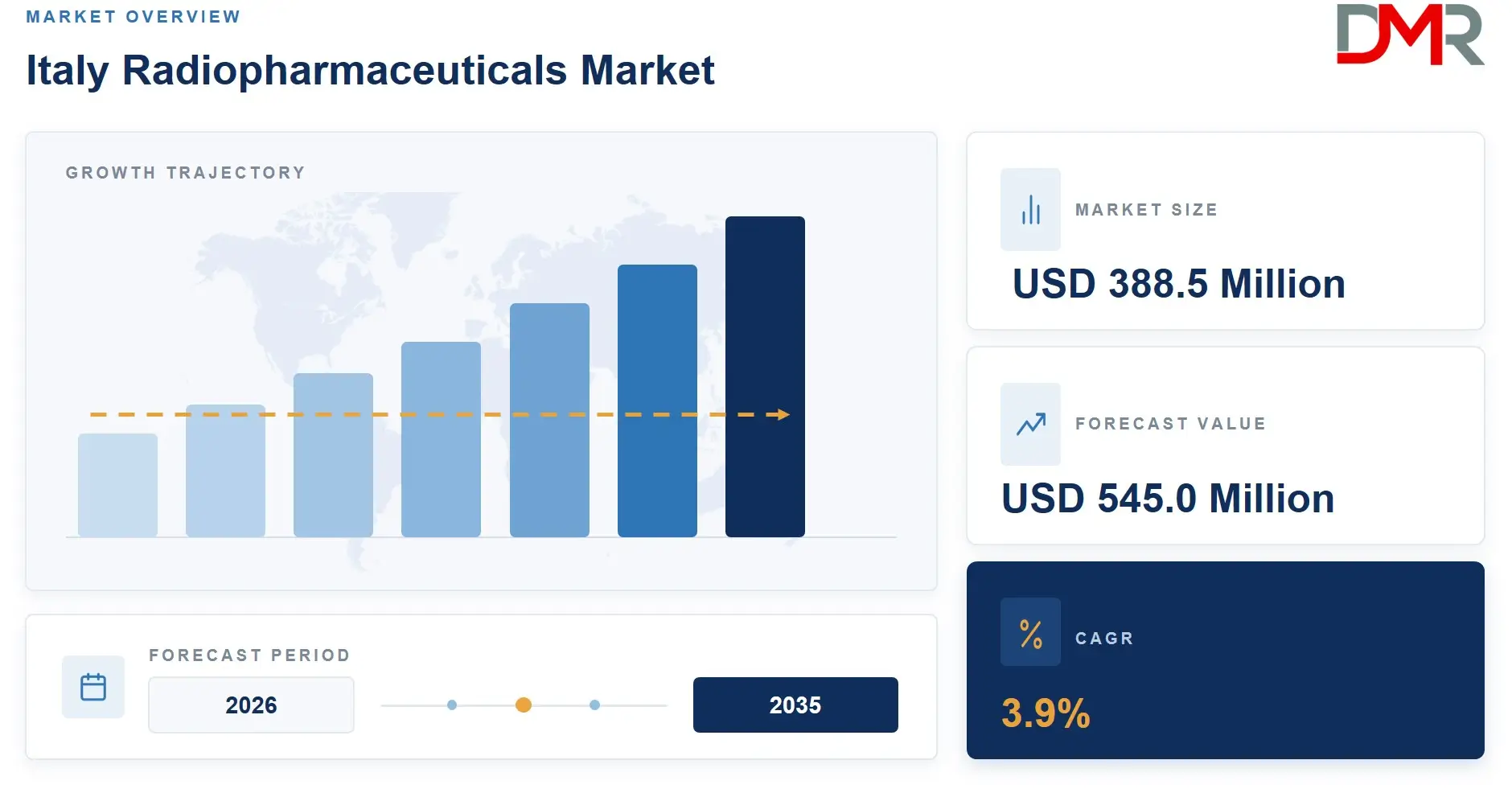
- Italy Radiopharmaceuticals Market Size in 2026: USD 388.5 Million
- Italy Radiopharmaceuticals Market Size in 2035: USD 545.0 Million
- Italy CAGR from 2026 to 2035: 3.9%
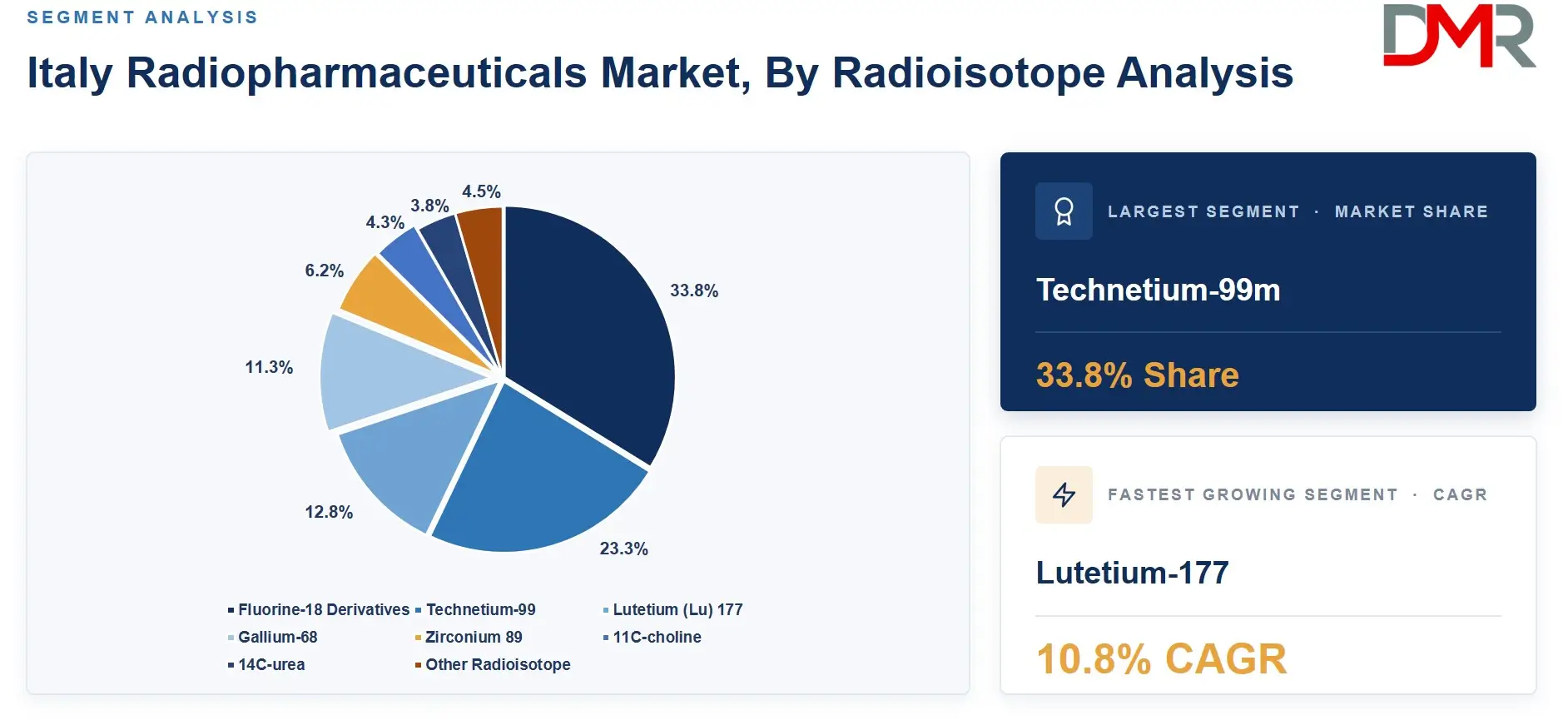
- Technetium-99 is the leading Radioisotope segment in 2026: 33.8%
- Diagnostic Radiopharmaceuticals is the leading Type segment in 2026: 78.4%
- Generators is the leading Source segment in 2026: 41.6%
- Oncology is the leading Application segment in 2026: 52.7%
- Hospitals is the leading End User segment in 2026: 49.3%
What is the Italy Radiopharmaceuticals and its Market Size?
The Italy Radiopharmaceuticals Market is projected to be valued at an estimated USD 388.5 million in 2026 and is projected to reach USD 545.0 million by 2035, expanding at a CAGR of 3.9% by 2035. Italy has one of Europe's most developed nuclear medicine infrastructures, supported by a dense national network of PET/CT and SPECT imaging centers, multiple domestic cyclotron and radiopharmacy production sites, and leading oncology and cardiology imaging programs at institutions such as the European Institute of Oncology (IEO) in Milan, Fondazione IRCCS Istituto N
Nuclear Medicineazionale dei Tumori, San Raffaele Hospital, and Niguarda Hospital. Unlike most other medical device categories, radiopharmaceuticals are regulated in Italy primarily as medicinal products rather than medical devices, falling under the oversight of the Agenzia Italiana del Farmaco (AIFA) and the broader EU pharmaceutical legislative framework, which governs manufacturing authorization, good manufacturing practice compliance, and marketing authorization for both diagnostic and therapeutic radioisotope products.
ℹ
To learn more about this report –
Download Your Free Sample Report Here
Use Cases
- FDG-PET Imaging for Oncology Staging and Treatment Response Assessment: Italian comprehensive cancer centers use Fluorine-18 FDG PET/CT imaging extensively for initial cancer staging, treatment response monitoring, and recurrence detection across a broad range of tumor types, representing the largest single volume driver within the diagnostic radiopharmaceutical category.
- Lutetium-177 Radioligand Theranostics for Neuroendocrine Tumors and Prostate Cancer: Leading nuclear medicine centers increasingly offer Lu-177-based targeted radionuclide therapy for neuroendocrine tumors and metastatic castration-resistant prostate cancer, paired with matched Gallium-68 Dotatate or Dotatoc diagnostic imaging to confirm receptor expression before treatment.
- Technetium-99m-Based Cardiac Perfusion and Bone Scintigraphy: Hospital nuclear medicine departments continue to rely heavily on Technetium-99-labeled tracers for myocardial perfusion imaging in cardiology and bone scintigraphy in oncology and orthopedics, sustaining Technetium-99's position as the highest-volume radioisotope in routine clinical use.
- Amyloid PET Imaging for Alzheimer's Disease Diagnostic Workup: Neurology centers increasingly use Fluorine-18-labeled amyloid tracers such as Florbetapir and Flurbetaben to support earlier and more definitive Alzheimer's disease diagnosis, particularly as disease-modifying therapies create growing clinical need for confirmed amyloid status.
Key Takeaways
- Market Size: The Italy Radiopharmaceuticals Market is estimated at USD 388.5 million in 2026 and forecast to reach USD 545.0 million by 2035, expanding at a CAGR of 3.9%, modestly ahead of the global market's 3.5% CAGR.
- Growth Outlook: Growth is sustained by rapid expansion of radioligand theranostics, particularly Lutetium-177-based therapies, continued PET/CT and SPECT imaging volume growth tied to Italy's aging population and rising cancer incidence, and PNRR-supported investment in nuclear medicine infrastructure.
- Primary Growth Drivers: Expanding theranostics adoption pairing diagnostic and therapeutic radioisotopes, sustained oncology imaging demand, growing neurology applications for Alzheimer's disease diagnostic imaging, and continued investment in domestic cyclotron and radiopharmacy production capacity.
- By Radioisotope Analysis: Technetium-99 is projected to lead with a 33.8% share in 2026, reflecting its entrenched role in routine cardiology and bone scintigraphy imaging, while Lutetium (Lu) 177 is expected to post the highest CAGR at approximately 10.8%, driven by rapid theranostics adoption in oncology.
- By Type Analysis: Diagnostic Radiopharmaceuticals is projected to lead with a 78.4% share in 2026, given the far higher imaging procedure volume relative to therapeutic radionuclide administration, while Therapeutic Radiopharmaceuticals is expected to post the faster CAGR at approximately 9.4%, driven by expanding Lu-177 and emerging alpha-emitter therapy adoption.
- By Source Analysis: Generators are projected to lead with a 41.6% share in 2026, reflecting their central role in point-of-use Technetium-99m production, while Cyclotrons are expected to post the fastest CAGR at approximately 7.2%, driven by rising demand for PET isotopes including Fluorine-18 and Gallium-68 radioligands.
- By Application Analysis: Oncology is projected to dominate with a 52.7% share in 2026, while Neurology is expected to be the fastest-growing application at approximately 8.6% CAGR, driven by expanding amyloid and emerging tau-PET imaging adoption for Alzheimer's disease.
- By End-User Analysis: Hospitals are projected to lead with a 49.3% share in 2026, while Cancer Research Institutes are expected to be the fastest-growing end-user segment at approximately 7.8% CAGR, reflecting expanding clinical trial activity in radioligand theranostics.
How AI/Gen AI is Transforming the Radiopharmaceuticals Market?
Artificial intelligence is increasingly embedded in Italian nuclear medicine workflows, particularly in automated quantification and image analysis of PET and SPECT studies, helping standardize interpretation of oncology treatment response and supporting more consistent identification of receptor-positive lesions ahead of theranostic treatment planning. AI-assisted dosimetry tools are gaining adoption to support individualized therapeutic radiopharmaceutical dosing, particularly for Lu-177-based therapies, where optimizing administered activity against tumor and organ-at-risk exposure is clinically important. Machine learning models are also being applied to radiopharmacy production scheduling and cyclotron capacity planning, helping Italian nuclear medicine networks better coordinate short-half-life isotope production and distribution across regional imaging center networks.
Key Drivers in the Italy Radiopharmaceuticals Market
Rapid Expansion of Radioligand Theranostics
Radioligand theranostics represents one of the fastest-growing areas of Italy’s radiopharmaceutical market, combining molecular imaging with targeted radionuclide therapy. Gallium-68-labelled tracers help identify target-expressing tumours, while Lutetium-177 therapies deliver radiation directly to malignant cells in neuroendocrine and prostate cancers. Italian nuclear medicine centres are expanding integrated theranostic programs as clinical evidence, regulatory approvals, and reimbursement pathways improve. This development is increasing demand for specialized radiopharmacies, treatment facilities, imaging systems, trained personnel, and isotope supply networks. Although diagnostic products retain the largest revenue share, therapeutic radiopharmaceuticals and Lutetium-177 are expected to generate faster growth throughout the forecast period.
Sustained Oncology Imaging Demand Amid Rising Cancer Incidence
Italy’s ageing population and persistent cancer burden are supporting strong demand for oncology radiopharmaceuticals. Fluorine-18 FDG PET/CT and other molecular imaging procedures are widely used for tumour detection, staging, treatment planning, response assessment, and recurrence surveillance. Rising clinical acceptance of precision oncology is also expanding demand for disease-specific tracers that identify biological targets and support therapy selection. National and regional cancer screening initiatives can generate additional downstream referrals for confirmatory imaging. Nevertheless, differences in regional equipment capacity and specialist availability may affect access. Continued investment in PET/CT systems, radiopharmacy networks, and nuclear medicine personnel will reinforce oncology’s position as the market’s largest application.
Growing Neurology Applications for Alzheimer’s Disease Diagnostics
Interest in earlier and more definitive diagnosis of Alzheimer’s disease is accelerating demand for neurological radiopharmaceuticals in Italy. Fluorine-18-labelled amyloid tracers, including florbetapir and florbetaben, help visualize cerebral amyloid deposition and support differential diagnosis in selected patients evaluated through memory clinics. Demand could increase as disease-modifying treatments require more precise confirmation of underlying pathology before therapy initiation. Research involving tau imaging and other neurodegenerative biomarkers provides additional development opportunities. However, high procedure costs, limited scanner availability, reimbursement uncertainty, and appropriate-use requirements may constrain adoption. Specialist training and standardized referral pathways will be essential for translating technological progress into routine neurological care.
Restraints in the Italy Radiopharmaceuticals Market
Radioisotope Supply-Chain Vulnerability
Italy remains exposed to international radioisotope supply disruptions, particularly for Molybdenum-99, the parent isotope used to generate Technetium-99m. Production depends on a limited number of ageing research reactors, making scheduled maintenance, unplanned shutdowns, transportation delays, and geopolitical disruption potential threats to routine nuclear medicine services. Because many medical isotopes cannot be stockpiled for extended periods, supply interruptions can rapidly affect diagnostic schedules and hospital capacity. Opportunities exist to diversify procurement, expand generator reserves, improve European coordination, and invest in cyclotron-based alternatives. Nevertheless, infrastructure costs and technical limitations mean reactor-produced isotopes will remain important, preserving structural supply-chain risk.
Regulatory and Logistical Complexity of Short-Half-Life Isotope Distribution
Short-lived radiopharmaceuticals require precisely coordinated production, quality control, transportation, and clinical administration. Fluorine-18 and Carbon-11 tracers decay rapidly, restricting delivery distances and requiring hospitals to operate near cyclotrons or dependable radiopharmacy networks. Traffic disruption, manufacturing failure, batch rejection, or appointment delays can make products unusable and increase operating costs. Providers must also comply with pharmaceutical manufacturing, radiation safety, transport, environmental, and clinical-use requirements. These challenges can limit access in southern Italy, islands, and lower-density regions. Investment in decentralized production, route optimization, backup suppliers, and coordinated appointment systems could improve reliability, but substantial capital and specialist workforce requirements remain barriers to broader market coverage.
Growth Opportunities in the Italy Radiopharmaceuticals Market
Expansion of Domestic Cyclotron and Radiopharmacy Production Capacity
Investment in domestic cyclotrons and radiopharmacy facilities offers an opportunity to strengthen Italy’s radioisotope availability and regional service coverage. Additional production capacity could shorten transportation distances, improve scheduling flexibility, reduce exposure to imported supply disruptions, and support growing demand for PET tracers and theranostic products. PNRR-supported hospital modernization and regional healthcare investment may facilitate new facilities, equipment upgrades, and distribution networks. Commercial opportunities extend to cyclotron manufacturers, synthesis-module suppliers, quality-control systems, logistics providers, and contract radiopharmacies. However, high capital costs, regulatory approvals, qualified workforce requirements, and minimum utilization thresholds must be addressed to ensure that new capacity remains economically and operationally sustainable.
Emerging Alpha-Emitter Targeted Therapy Development
Targeted alpha therapies represent an emerging opportunity within Italy’s radiopharmaceutical market because they deliver highly potent radiation over short cellular distances. Isotopes such as Actinium-225 and Lead-212 may enable greater tumour-cell destruction while limiting exposure to surrounding healthy tissue. Italian nuclear medicine centres and IRCCS research hospitals could participate in clinical trials, translational research, dosimetry development, and future commercial treatment programs. Important opportunities exist in resistant prostate cancer, neuroendocrine tumours, and other biomarker-defined malignancies. However, limited isotope availability, complex manufacturing, uncertain reimbursement, specialized handling requirements, and incomplete long-term safety evidence remain risks. Adoption will depend on clinical validation and reliable production capacity.
Trends in the Italy Radiopharmaceuticals Market
Continued Shift Toward Hybrid PET/CT and Emerging PET/MRI Imaging
Hybrid PET/CT remains the principal molecular imaging platform in Italy because it combines functional radiopharmaceutical uptake information with detailed anatomical localization. Its established clinical value in oncology, cardiology, infection imaging, and treatment-response assessment supports continued procedure growth. PET/MRI adoption remains concentrated in major academic and research centres because of its higher cost and operational complexity. Nevertheless, its superior soft-tissue contrast and lower ionizing-radiation exposure create opportunities in neurology, paediatrics, prostate imaging, and selected cancers. Future growth will depend on capital funding, reimbursement, scanner utilization, specialist training, and evidence demonstrating that PET/MRI delivers sufficient clinical benefit compared with more widely available PET/CT systems.
Theranostics-Driven Convergence of Diagnostic and Therapeutic Programs
Italian nuclear medicine departments are increasingly organizing diagnostic imaging and radionuclide therapy within integrated theranostic pathways. Patients first undergo molecular imaging to confirm expression of a biological target and are subsequently considered for a matched radioligand therapy. This approach supports better patient selection, individualized dosimetry, response monitoring, and multidisciplinary treatment planning. Integration creates opportunities for hospitals, radiopharmacies, imaging-system manufacturers, isotope suppliers, and clinical software providers. However, facilities must coordinate oncology, nuclear medicine, medical physics, pharmacy, radiation safety, and inpatient or outpatient treatment resources. Capacity constraints, isotope availability, reimbursement, and specialist shortages may slow implementation outside leading centres despite strong clinical demand.
Research Scope and Segment Analysis
The Italy Radiopharmaceuticals Market is examined across radioisotope, type, source, application, and end-user categories. Radioisotope coverage includes Technetium-99m, Fluorine-18 derivatives, Gallium-68, Lutetium-177, Zirconium-89, Carbon-11, Carbon-14, and other specialized isotopes. Type segmentation distinguishes diagnostic PET and SPECT products from therapeutic beta- and alpha-emitting agents. Source analysis covers generators, nuclear reactors, and cyclotrons. Applications include oncology, cardiology, neurology, endocrinology, and other clinical areas. End users comprise hospitals, medical imaging centres, cancer research institutes, and additional facilities. The analysis evaluates procedure volumes, installed infrastructure, reimbursement, clinical adoption, production capacity, distribution requirements, emerging technologies, and competitive positioning throughout Italy.
By Radioisotope Analysis
Technetium-99m is projected to lead with an estimated 33.8% market share in 2026, supported by its extensive use in SPECT cardiology, bone imaging, and routine hospital nuclear medicine. Fluorine-18 derivatives form another major category, led by FDG for oncology PET, with amyloid tracers supporting neurological growth. Gallium-68 is increasingly used for neuroendocrine and prostate cancer imaging within theranostic pathways. Lutetium-177 is expected to register the fastest CAGR, approximately 10.8%, as targeted therapies expand. Zirconium-89, Carbon-11, and Carbon-14 remain specialized products concentrated in research and advanced clinical centres because of limited applications, complex production, and demanding distribution requirements.
ℹ
To learn more about this report –
Download Your Free Sample Report Here
By Type Analysis
Diagnostic radiopharmaceuticals are projected to account for approximately 78.4% of market revenue in 2026 because imaging procedures substantially outnumber therapeutic administrations. PET products are expected to grow faster than conventional SPECT agents, supported by oncology demand, expanding tracer portfolios, and increasing PET/CT utilization. PET/MRI remains a smaller but developing subsegment within academic centres. Therapeutic radiopharmaceuticals should record the faster overall CAGR, estimated at 9.4%, driven mainly by Lutetium-177 beta-emitter therapies for neuroendocrine and prostate cancers. Alpha emitters remain an early-stage category but offer considerable long-term potential. Their adoption depends on clinical evidence, isotope availability, regulatory approval, reimbursement, and specialized treatment infrastructure.
By Source Analysis
Generators are projected to lead the source segment with approximately 41.6% market share in 2026, reflecting their essential role in producing Technetium-99m within hospital nuclear medicine departments. Their decentralized operation supports routine SPECT imaging despite dependence on reactor-produced Molybdenum-99. Nuclear reactors remain strategically important upstream sources but expose the market to maintenance outages and concentrated international supply. Cyclotrons are expected to record the fastest CAGR, approximately 7.2%, as demand rises for Fluorine-18 and other PET isotopes. Expanding cyclotron capacity could improve regional access and resilience, although high installation costs, skilled staffing, regulatory obligations, quality-control requirements, and utilization economics present significant operational challenges.
By Application Analysis
Oncology is projected to dominate the Italy radiopharmaceuticals market with an estimated 52.7% share in 2026. PET and SPECT agents support cancer detection, staging, treatment planning, response assessment, and recurrence monitoring, while radioligand therapies are expanding targeted treatment options. Cardiology remains the second-largest application, supported by Technetium-99m myocardial perfusion imaging and other functional cardiac assessments. Neurology is forecast to grow fastest, at approximately 8.6% CAGR, as amyloid PET and emerging neurodegenerative biomarkers gain clinical relevance. Endocrinology maintains an established position through thyroid imaging and radioiodine treatment. Access, reimbursement, infrastructure availability, and specialist capacity will influence growth across applications.
By End User Analysis
Hospitals are projected to lead the end-user segment with approximately 49.3% market share in 2026 because they possess the imaging systems, radiopharmacies, radiation protection infrastructure, and multidisciplinary expertise required for diagnosis and therapy. Medical imaging centres represent the second-largest category, particularly through outpatient PET/CT services supporting oncology and cardiology referrals. Cancer research institutes are expected to grow fastest, at approximately 7.8% CAGR, supported by trials involving radioligand theranostics, novel tracers, dosimetry, and alpha-emitting therapies. Italy’s IRCCS network provides a strong research foundation. Growth across end users will depend on investment capacity, reimbursement, isotope availability, qualified personnel, and regulatory compliance.
The Italy Radiopharmaceuticals Market Report is segmented based on the following:
By Radioisotope
- Fluorine-18 Derivatives
- Fluorine-18 Fludeoxyglucose (FDG)
- Fluorine-18 Sodium Fluoride
- Fluorine-18 Sodium Flucicovine
- Fluorine-18 Sodium Florbetapir
- Fluorine-18 Sodium Flurbetaben
- Others
- Technetium-99
- Lutetium (Lu) 177
- Gallium-68
- Zirconium 89
- 11C-choline
- 14C-urea
- Other Radioisotope
By Type
- Diagnostic Radiopharmaceuticals
- SPECT Radiopharmaceuticals
- PET Radiopharmaceuticals
- Standalone PET Systems
- Hybrid PET/CT
- Hybrid PET/MRI
- Therapeutic Radiopharmaceuticals
- Alpha Emitters
- Beta Emitters
- Others
By Source
- Cyclotrons
- Nuclear Reactors
- Generators
By Application
- Oncology
- Cardiology
- Neurology
- Endocrinology
- Other Application
By End User
- Hospitals
- Medical Imaging centers
- Cancer Research Institute
- Other End User
Regulatory Landscape
Italy’s radiopharmaceuticals market is governed by EU pharmaceutical legislation, Italian Medicines Agency requirements, nuclear safety rules, radiation-protection standards, and Good Manufacturing Practice obligations. Diagnostic tracers and therapeutic radioligands require marketing authorization, validated production, quality controls, pharmacovigilance, and compliant transport. Expanding reimbursement for approved Lutetium-177 therapies creates opportunities for theranostic programs, hospitals, and radiopharmacies. However, overlapping pharmaceutical and radiation regulations, regional reimbursement differences, facility authorization requirements, and complex clinical evidence expectations can delay commercialization. Companies that establish compliant manufacturing, qualified personnel, reliable pharmacovigilance, and strong AIFA and hospital engagement can accelerate adoption, protect patient safety, and secure sustainable access across Italy’s regional healthcare systems and specialist nuclear medicine networks.
Technology Analysis
Technological innovation is advancing Italy’s radiopharmaceuticals market through radioligand theranostics, novel PET tracers, automated synthesis systems, precision dosimetry, hybrid PET/CT, PET/MRI, and emerging alpha-emitter therapies. Gallium-68 imaging paired with Lutetium-177 treatment is strengthening personalized oncology pathways, while amyloid PET tracers support neurological diagnosis. Opportunities include domestic cyclotron expansion, decentralized radiopharmacy production, AI-assisted image analysis, and next-generation Actinium-225 or Lead-212 therapies. Key risks include isotope scarcity, short half-lives, complex manufacturing, equipment costs, workforce shortages, and uncertain reimbursement for emerging products. Organizations integrating dependable isotope supply, automated quality control, clinical evidence, and multidisciplinary treatment infrastructure can improve diagnostic accuracy, expand capacity, and capture premium therapeutic growth opportunities nationwide.
Competitive Landscape
The Italy Radiopharmaceuticals Market features a mix of multinational radiopharmaceutical manufacturers, specialized theranostics developers, and domestic nuclear medicine production and distribution infrastructure. Multinational players including Novartis (via its Advanced Accelerator Applications and Lutathera/Pluvicto theranostics portfolio), Curium Pharma, GE HealthCare, Lantheus, Bayer, and Eckert & Ziegler maintain significant commercial presence supplying both diagnostic and therapeutic radiopharmaceuticals to the Italian market, alongside domestic and regionally networked cyclotron and radiopharmacy production operators supplying hospitals and imaging centers across the country.
Some of the prominent players in the Italy Radiopharmaceuticals Market are:
- Advanced Accelerator Applications
- Bracco Imaging
- Blue Earth Diagnostics
- Blue Earth Therapeutics
- ITELPHARMA
- Curium Pharma
- Telix Pharmaceuticals
- Radius
- Novartis
- Bayer
- Lantheus Holdings
- GE HealthCare
- Siemens Healthineers
- Cardinal Health
- Jubilant Radiopharma
- Eckert & Ziegler
- NorthStar Medical Radioisotopes
- SHINE Technologies
- Nucleus RadioPharma
- Perspective Therapeutics
- Fusion Pharmaceuticals
- POINT Biopharma
- RayzeBio
- ITM Isotope Technologies Munich
- ARTBIO
- Orano Med
- AdvanCell
- RadioMedix
- Clarity Pharmaceuticals
- Ratio Therapeutics
- Isotopia Molecular Imaging
- IRE ELiT
- Monrol Nuclear Products
- POLATOM
- Nordion
- Tema Sinergie
- ELSE Solutions
- Comecer
- Elysia-Raytest
- Trasis
- Other Key Players
Recent Developments
- April 2026: Italian radiopharmaceutical developer ACOM received FDA Orphan Drug Designation for its experimental Copper-64-based therapy for malignant glioma. The designation supports further clinical development of an isotope originally investigated for tumour imaging.
- December 2025: The Italian Ministry of Health authorized BetaGlue Therapeutics to conduct an Italian clinical study of YntraDose, a Yttrium-90 microsphere platform for unresectable locally advanced pancreatic cancer.
- June 2025: Telix Pharmaceuticals received AIFA marketing authorization for Illuccix, a Gallium-68 PSMA-PET imaging agent used to detect and localize PSMA-positive prostate cancer lesions. March 2025: Italy’s National Health Service granted reimbursement for Novartis’ Lutetium-177 vipivotide tetraxetan, expanding patient access to targeted radioligand therapy for PSMA-positive metastatic castration-resistant prostate cancer.
Report Details
| Report Characteristics |
| Market Size (2026) |
USD 388.5 Million |
| Forecast Value (2035) |
USD 545.0 Million |
| CAGR (2026–2035) |
3.9% |
| Historical Data |
2021 – 2025 |
| Forecast Data |
2026 – 2035 |
| Base Year |
2025 |
| Segments Covered |
By Radioisotope, By Type, By Source, By Application, and By End User |
| Country Coverage |
Italy |
Frequently Asked Questions
How big is the Italy Radiopharmaceuticals Market?
▾ The Italy Radiopharmaceuticals Market is estimated at USD 388 million in 2026 and is projected to reach USD 545 million by 2035, growing modestly faster than the global radiopharmaceuticals market as radioligand theranostics adoption accelerates within Italy's established nuclear medicine infrastructure.
What is the CAGR of the Italy Radiopharmaceuticals Market from 2026 to 2035?
▾ The market is projected to expand at a CAGR of approximately 3.9% between 2026 and 2035, modestly ahead of the global radiopharmaceuticals market's 3.5% CAGR (global market projected to grow from USD 7,225.6 million in 2024 to USD 9,876.2 million by 2033), driven primarily by rapid growth in the smaller but fast-expanding therapeutic radiopharmaceutical category.
What factors are driving the growth of the Italy Radiopharmaceuticals Market?
▾ Growth is driven by rapid expansion of radioligand theranostics, particularly Lutetium-177-based therapies, sustained oncology imaging demand tied to Italy's aging population and rising cancer incidence, and growing neurology applications for Alzheimer's disease diagnostic imaging.
What are the major trends in the Italy Radiopharmaceuticals Market?
▾ Major trends include continued dominance of hybrid PET/CT imaging alongside gradually expanding PET/MRI adoption, and the structural convergence of diagnostic and therapeutic radiopharmaceutical services into integrated theranostic care pathways.
Who are the key players in the Italy Radiopharmaceuticals Market?
▾ Key participants include Novartis (through its Advanced Accelerator Applications theranostics portfolio), Curium Pharma, GE HealthCare, Lantheus Holdings, and Eckert & Ziegler, alongside domestic and regionally networked cyclotron and radiopharmacy production operators.
How is the Italy Radiopharmaceuticals Market segmented?
▾ The market is segmented by radioisotope, type, source, application, and end user, with Technetium-99-based diagnostic imaging and rapidly expanding Lutetium-177 theranostics forming the two most commercially significant poles of the current Italian market.