Market Overview
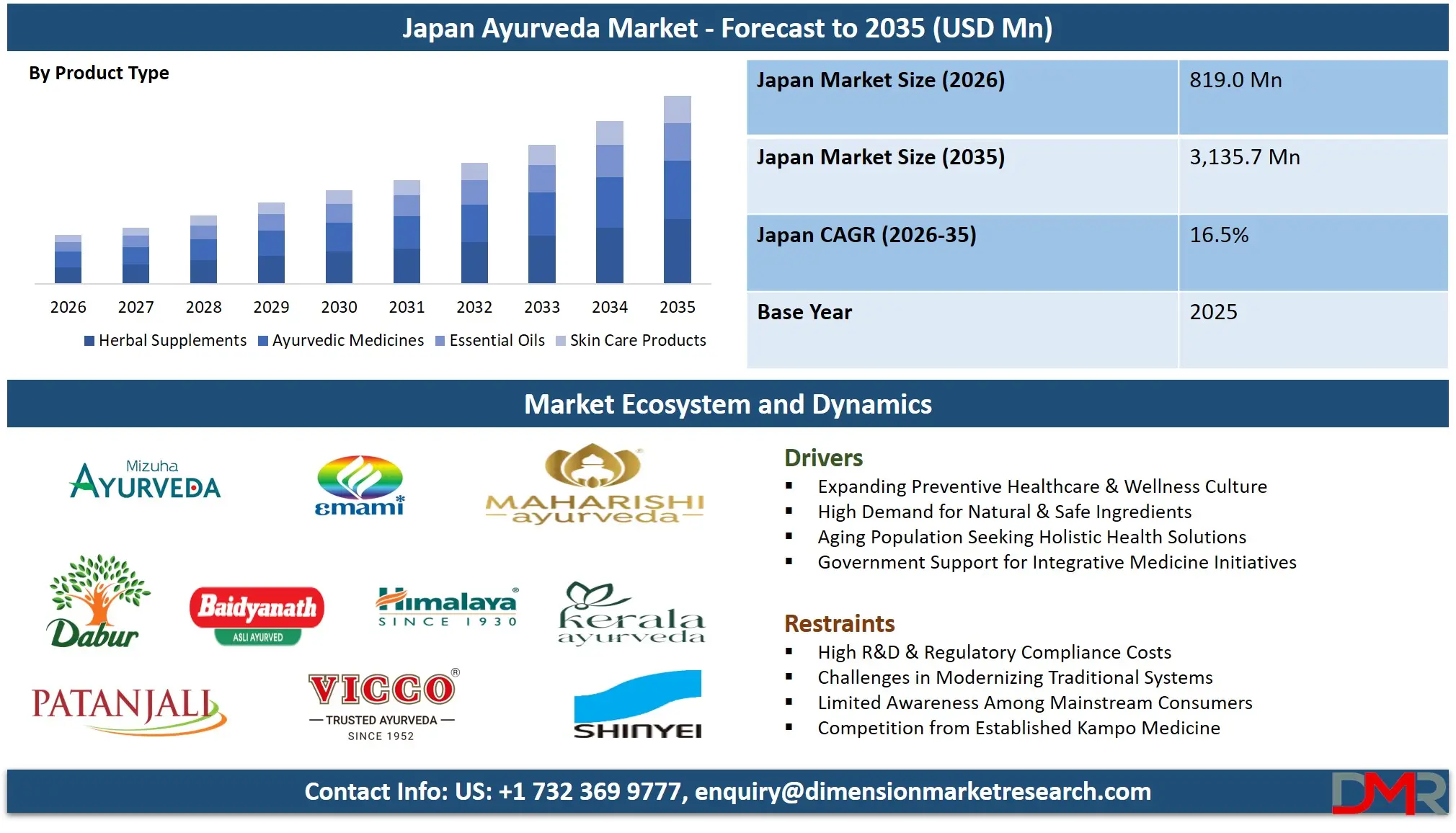
The Japan Ayurveda Market size is expected to grow from USD 819.0 million in 2026 to USD 3,135.7 million in 2035, with a compound annual growth rate (CAGR) of 16.5% during the forecast period from 2026 to 2035.
ℹ
To learn more about this report –
Download Your Free Sample Report Here
Ayurveda is an ancient medical practice that focuses on the use of herbal, herbomineral, and mineral formulations, with a focus on maintaining a balance in the body's systems of functioning. This increases the benefits of the enhancement of holistic health and wellness, disease prevention, and personal health management with minimal dependency on artificial formulations.
Ayurveda is increasingly being adopted in wellness centers, clinics, and at home to treat various health conditions and boost vitality and health benefits. The Japanese Ayurveda market is highly developed due to the cultural affinity towards natural medicine formulations and the presence of quality-conscious consumers and a strong preventive approach to health and wellness.
ℹ
To learn more about this report –
Download Your Free Sample Report Here
Japan Ayurveda Market: Key Takeaways & Other Influencing Factors
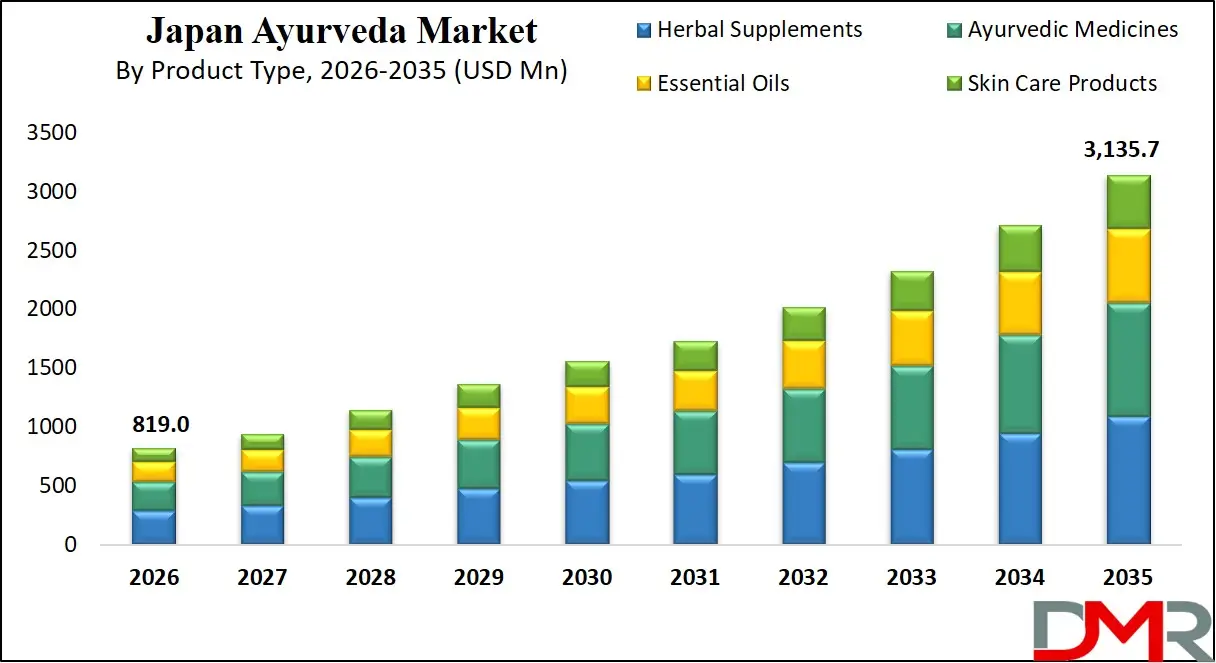
- Market Size Insights: The Japan Ayurveda Market is projected to reach USD 3,135.7 million by 2035, growing from an estimated USD 819.0 million in 2026, indicating an increase in the market over the forecast period, driven by the growing trend of preventive healthcare and wellness.
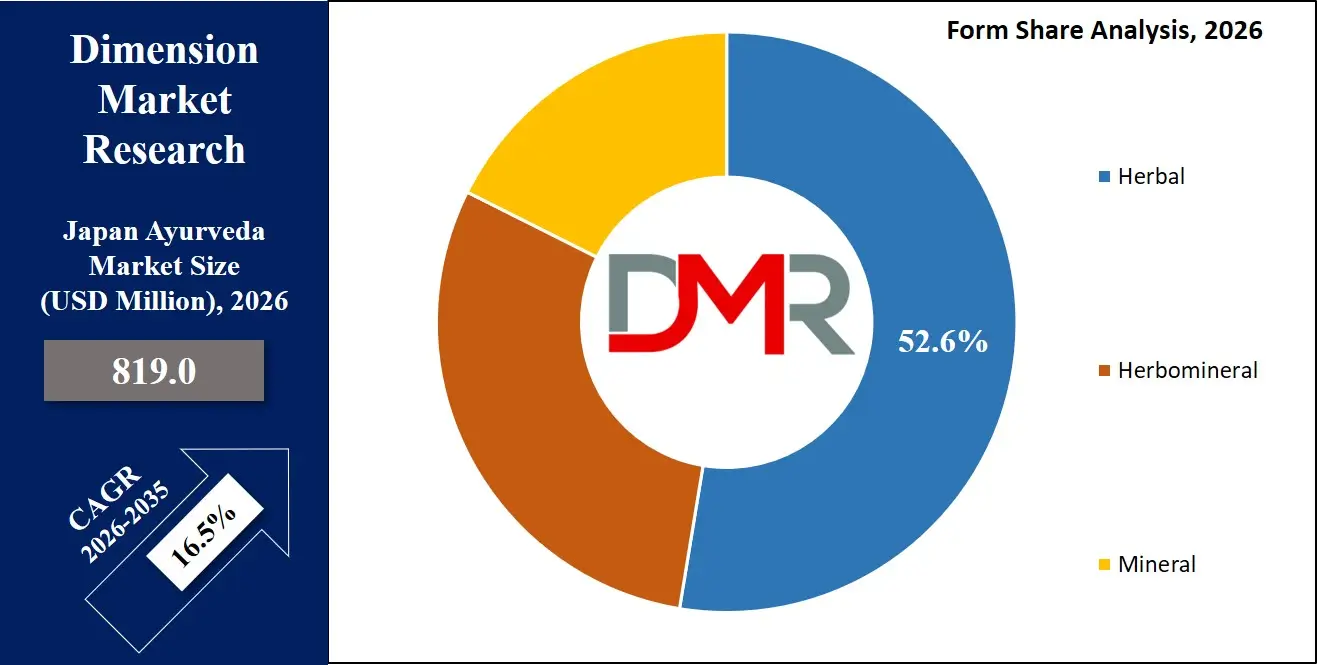
- Dominance of Herbal Formulations: The herbal segment is dominating the product form category, holding a share of 52.6% in 2026, owing to its high level of acceptance among consumers and its safe usage for health and wellness.
- Herbal Supplements Lead Product Type: The herbal supplement segment dominates the product type category and will represent approximately 41.0% of sales due to an increase in health-awareness levels among consumers.
- Lifestyle Disease Management Dominating the Ayurveda Market: The lifestyle disease management segment is dominating the medical/therapy application category, holding a share of 35.0%, owing to the increasing levels of stress, metabolic, and lifestyle-related health issues among consumers.
- Shift Toward Preventive & Smart Wellness: The Ayurveda Market is driven by the fact that over 60% of wellness-oriented consumers are utilizing digital health technologies, hence providing an opportunity for the Ayurveda Market to grow and become a platform for standardized and science-backed Ayurveda formulations.
- Infrastructure Scale (METI): Japan has a highly developed health food store infrastructure of more than 1,200 outlets and 15,000 pharmacies selling herbal medicine, with the country’s major online shopping sites recording 13.2 million annual transactions in the wellness category and 4 new dedicated wellness retail hubs planned by 2030.
- Digital Adoption (JETRO): Approximately 63% of health-conscious consumers are using digital platforms to buy health and wellness products online, and the digital segment of the Ayurveda industry contributes 12.3% to the total Ayurveda sales.
- Strong Consumer Reach (MHLW & JETRO): Japan’s health and wellness infrastructure covers 98% of the population, and the country imports a considerable volume of health and wellness products, which demonstrates the country’s strong distribution network and consistent demand for natural health infrastructure.
Impact of the Iran conflict on the Japan Ayurveda Market
The Iran conflict is augmenting global transportation and energy prices, indirectly affecting the cost of Ayurvedic formulations in Japan by inflating the cost of raw herbal materials and logistics, but the long-term demand is not declining as Japan continues to prioritize high-quality, standardized Ayurvedic products to enhance preventive healthcare and lower reliance on synthetic medicines.
Japan Ayurveda Market: Use Cases
- Urban Wellness Centers: Ayurvedic products can be used for personalized wellness centers, providing solutions for stress management, digestive issues, and vitality, thus promoting optimized health outcomes for urban Japan.
- Lifestyle Disease Management: Ayurvedic products can help manage lifestyle diseases like hypertension, diabetes, and anxiety disorders through natural metabolic balance, thus providing enhanced patient well-being.
- Beauty & Personal Care Integration: Ayurvedic products have high-quality ingredients for skincare, hair care, and oral care products, thus providing effective and natural solutions for Japanese consumers who prefer safe products.
- Home-Based Preventive Health: Ayurvedic supplements and products can be sold through retail channels, thus providing effective solutions for consumers to boost immunity, digestive health, and overall well-being at home.
Japan Ayurveda Market: Market Dynamics
Driving Factors in the Japan Ayurveda Market
Expanding Preventive Healthcare & Wellness Culture
The emphasis on preventive healthcare is on an upward swing in Japan, and this is providing a boost to Ayurvedic formulations that can help people achieve wellness and combat various lifestyle disorders. There is an emphasis on herbal supplements, digital wellness solutions, and other measures to enhance the efficacy and quality of products. The emphasis on holistic health is providing a boost to wellness solutions.
High Demand for Natural & Safe Ingredients
The cultural preference for natural products, along with safety standards, has led many organizations in Japan to offer high-purity herbal and herbomineral preparations. The use of standardized extracts and clinically studied ingredients has been rising, which provides maximum efficacy and trust to consumers.
Restraints in the Japan Ayurveda Market
High R&D & Regulatory Compliance Costs
The need to employ modern technology in manufacturing processes, as well as the need to adhere to the stringent regulatory environment in Japan concerning the quality of health products, also necessitates capital-intensive investments. The costs of quality testing, standardization, etc., may pose an entry barrier to new entrants in the industry, especially small-scale manufacturers.
Challenges in Modernizing Traditional Systems
A part of the Japanese market is being catered to by traditional formulations that are not fully modern and technologically advanced. The process of modernizing these formulations to meet the quality standards of the present day is very complex and might affect the market growth rate.
Opportunities in the Japan Ayurveda Market
Growth of Functional Foods & Nutraceuticals
Due to the increasing interest among consumers regarding functional foods and drinks that help to improve immunity, digestive health, and energize, opportunities are emerging for Ayurvedic ingredients to enter the food and nutraceutical industry. Manufacturers are launching innovative products such as herbal teas and drinks, and functional snacks to enlarge the scope.
Expansion of E-commerce & Direct-to-Consumer Channels
Digital platforms and personalized wellness recommendations are in high demand, especially because of the increased adoption of online retail. The increased adoption of AI-based solutions for consumer engagement, product recommendations, and wellness tracking is creating new growth opportunities in the health infrastructure market in Japan.
Trends in the Japan Ayurveda Market
Adoption of Standardized & Science-Backed Formulations
There is an emerging trend towards standardized Ayurvedic extracts/formulations that are backed clinically to ensure increased trust among consumers and product efficacy. Such products help to improve therapeutic results, reduce variability, and ensure high-quality product development, especially in modern wellness markets.
Adoption of Digital Wellness Technologies
Wellness consumers are moving towards digitalization, using technologies such as health-tracking apps, AI-based personalization, and consultation platforms. The technologies are being adopted along with Ayurvedic routines to boost the user experience, compliance, and personalization of health in the changing wellness scenario in Japan.
Japan Ayurveda Market: Research Scope and Analysis
By Form Analysis
The Herbal segment is expected to drive, with a share of around 52.6% in 2026, considering the country’s inclination towards herbal products and increasing awareness among consumers about wellness options offered by plants. The use of herbal formulations is considered suitable for regular use, considering their safety and minimum side effects.
ℹ
To learn more about this report –
Download Your Free Sample Report Here
The Herbomineral and mineral segments are considered crucial for therapeutic use, especially among consumers seeking better efficacy in managing diseases.
By Product Type Analysis
The herbal supplements segment is likely to dominate the Japan Ayurveda market, holding a share of approximately 41.0% in 2026, owing to the flexibility, convenience, and widespread applicability of the product in the adult health, wellness, and preventive care domains. The product offers the best balance of efficacy, safety, and improved consumer health results. The product is highly suitable for the modern lifestyle, can be customized, and can be integrated into the digital world of wellness. Ayurvedic medicines are essential in the treatment of specific health conditions in clinical settings as well as home settings. Despite the high regulatory requirements, the product offers high therapeutic reliability in the advanced healthcare environment of Japan.
By Indication Analysis
The Nervous System segment is expected to lead the market with an approximate share of 28.0% in 2026, due to high stress levels in the workplace in Japan, as well as increasing levels of anxiety, sleep disorders, and mental fatigue in urban citizens. Ayurvedic products are gaining popularity in helping individuals reduce stress levels and improve cognitive abilities. The Cardiovascular System, Reproductive System, and Infectious Diseases segment is also playing an important role in helping individuals cope with chronic diseases, as well as seasonal needs.
By Consumer Type Analysis
The Adults segment is expected to take the largest share, 65.0% in 2026, as the importance attached to lifestyle, stress, and preventive measures is high among the working population in Japan. The Adults segment demands Ayurveda products for better metabolic and energetic health. The Elderly, Children, and Pregnant Women segments are significant contributors to catering to the requirements of a particular segment and increasing the market to cover all ages.
By Application Analysis
The Medical/Therapy segment, particularly the Lifestyle Disease Management segment, is likely to be in the forefront, with an estimated market share of 35.0% in 2026, due to the rising incidence rate of metabolic-related diseases, hypertension, and stress-related conditions in Japan. Ayurvedic products are becoming popular as supplementary treatment options for chronic diseases. The Immunity Enhancement, Digestive Health, Respiratory Conditions, Personal Care, and Food & Nutraceuticals segments are the key contributors in meeting the varied needs of the consumers in the market.
By End Use Analysis
The Home Settings segment is expected to emerge at the forefront, with an approximate market share of 70.0% in 2026, due to the increased consumer behavior of focusing on self-care, preventive health management, and wellness activities done on an individual basis. Ayurvedic products are readily available for home use. The Hospitals and Clinics segment is an essential part in promoting practitioner-led treatments and integrating Ayurvedic medicine as an alternative form of medicine in the overall healthcare landscape in Japan.
The Japan Ayurveda Market Report is segmented on the basis of the following:
By Form
- Herbal
- Herbomineral
- Mineral
By Product Type
- Herbal Supplements
- Ayurvedic Medicines
- Essential Oils
- Skin Care Products
By Indication
- Nervous System
- Cardiovascular System
- Reproductive System
- Infectious Diseases
- Others
By Consumer Type
- Adults
- Elderly
- Children
- Pregnant Women
By Application
- Medical/Therapy
- Lifestyle Disease Management
- Immunity Enhancement
- Digestive Health
- Respiratory Conditions
- Personal Care
- Skin Care
- Hair Care
- Oral Care
- Food & Nutraceuticals
By Distribution Channel
- Retail & Institutional Sales
- E-sales / Online Retail
- Direct/Distance Sales
By End Use
- Hospitals & Clinics
- Home Settings
Impact of Artificial Intelligence in the Japan Ayurveda Market
The Japan Ayurveda market is being altered by artificial intelligence, as it can enable personalized wellness, optimize product recommendations, and track health outcomes in real-time due to AI-based technologies that help consumers select suitable formulations and improve adherence.
It also combines with digital health platforms to increase engagement, precision, and efficacy of treatments in strongly precision-oriented Japanese wellness markets. Also, AI facilitates predictive analytics and demand forecasting on the basis of consumer data in order to minimize waste, optimize inventory levels, and enhance the overall safety and scalability of the wellness ecosystem.
Japan Ayurveda Market: Competitive Landscape
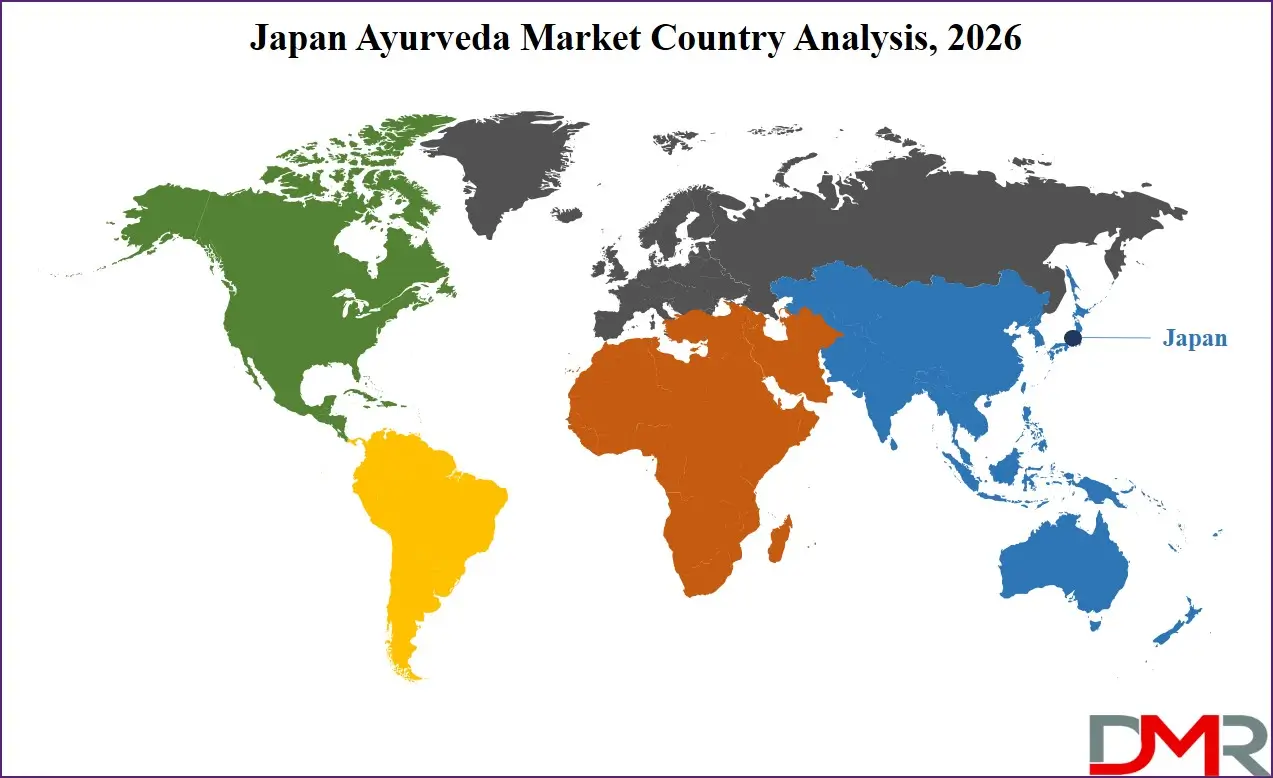
The Japan Ayurveda market is of a moderate consolidation and competitive nature, with international and regional companies providing a whole range of herbal, nutraceutical, and personal care solutions. Innovation, quality, and end-to-end wellness systems, such as personalized health platforms and smart product tracking, drive competition.
ℹ
To learn more about this report –
Download Your Free Sample Report Here
The highest demand is for standardized and clinically validated products where regulatory compliance, product purity, and system reliability are the distinguishing factors. Customization, cost efficiency, and the ability to establish trust are also some of the competencies used by companies to address the varied needs of the wellness industry.
Some of the prominent players in the Japan Ayurveda Market are:
- Dabur India Limited
- Himalaya Wellness Company
- Patanjali Ayurved Limited
- Emami Limited
- Baidyanath Ayurved Bhawan Private Limited
- Charak Pharma Private Limited
- Kerala Ayurveda Limited
- Vicco Laboratories
- Maharishi Ayurveda Products Private Limited
- Zandu Pharmaceuticals Works Ltd.
- Mizuha Ayurveda
- Ariakedo Group
- Satvik Inc.
- Daiko Shoyaku Co., Ltd.
- Sun Chlorella Corp.
- Shinyei Kaisha
- Jiva Japan Ayurveda School
- Ayushakti Ayurved Health Centre
- Biholon Company, Ltd.
- Amino Up Chemical
- Other Key Players
Recent Developments in the Japan Ayurveda Market
- April 2026: Emami Limited acquired a 100% stake in Axiom Ayurveda, strengthening its position in the Ayurvedic and herbal product segment and expanding its portfolio in health and personal care categories.
- March 2026: Himalaya Wellness Company launched its premium Ayurveda-based beauty line "Ayurveda Secrets", marking a strategic expansion into high-end personal care and reinforcing global Ayurveda positioning.
- August 2024: Patanjali Ayurved Limited resolved regulatory issues related to misleading advertisements after intervention by the Supreme Court, highlighting increasing regulatory scrutiny and compliance requirements in the Ayurveda sector globally.
Report Details
| Report Characteristics |
| Market Size (2026) |
USD 819.0 Mn |
| Forecast Value (2035) |
USD 3,315.7 Mn |
| CAGR (2026–2035) |
16.5% |
| Historical Data |
2021 – 2025 |
| Forecast Data |
2027 – 2035 |
| Base Year |
2025 |
| Estimate Year |
2026 |
| Report Coverage |
Market Revenue Estimation, Market Dynamics, Competitive Landscape, Growth Factors and etc. |
| Segments Covered |
By Form (Herbal, Herbomineral, Mineral), By Product Type (Herbal Supplements, Ayurvedic Medicines, Essential Oils, Skin Care Products), By Indication (Nervous System, Cardiovascular System, Reproductive System, Infectious Diseases, Others), By Consumer Type (Adults, Elderly, Children, Pregnant Women), By Application (Medical/Therapy, Personal Care, Food & Nutraceuticals), By Distribution Channel (Retail & Institutional Sales, E-sales / Online Retail, Direct/Distance Sales), By End Use (Hospitals & Clinics, Home Settings) |
| Country Coverage |
Japan |
| Prominent Players |
Dabur India Limited, The Himalaya Drug Company, Patanjali Ayurved Limited, Emami Limited, Baidyanath Ayurved Bhawan Private Limited, Charak Pharma Private Limited, Kerala Ayurveda Limited, Vicco Laboratories, Maharishi Ayurveda Products Private Limited, Zandu Pharmaceuticals Works Ltd., Mizuha Ayurveda, Ariakedo Group, Satvik Inc., Daiko Shoyaku Co., Ltd., Sun Chlorella Corp., Shinyei Kaisha, Jiva Japan Ayurveda School, Ayushakti Ayurved Health Centre, Biholon Company, Ltd., Amino Up Chemical, and Other Key Players |
| Purchase Options |
We have three licenses to opt for: Single User License (Limited to 1 user), Multi-User License (Up to 5 Users), and Corporate Use License (Unlimited User) along with free report customization equivalent to 0 analyst working days, 3 analysts working days and 5 analysts working days respectively. |
Frequently Asked Questions
How big is the Japan Ayurveda Market?
▾ The Japan Ayurveda Market size is estimated to have a value of USD 819.0 million in 2026 and is expected to reach USD 3,135.7 million by the end of 2035.
What is the growth rate in the Japan Ayurveda Market in 2026?
▾ The market is growing at a CAGR of 16.5% over the forecasted period of 2026.
Who are the key players in the Japan Ayurveda Market?
▾ Some of the major key players in the Japan Ayurveda Market are Himalaya Wellness Company, Zandu Pharmaceuticals Works Ltd., Mizuha Ayurveda, Ariakedo Group, Satvik Inc., and many others.