What is the Cancer Immunotherapy Market Size?
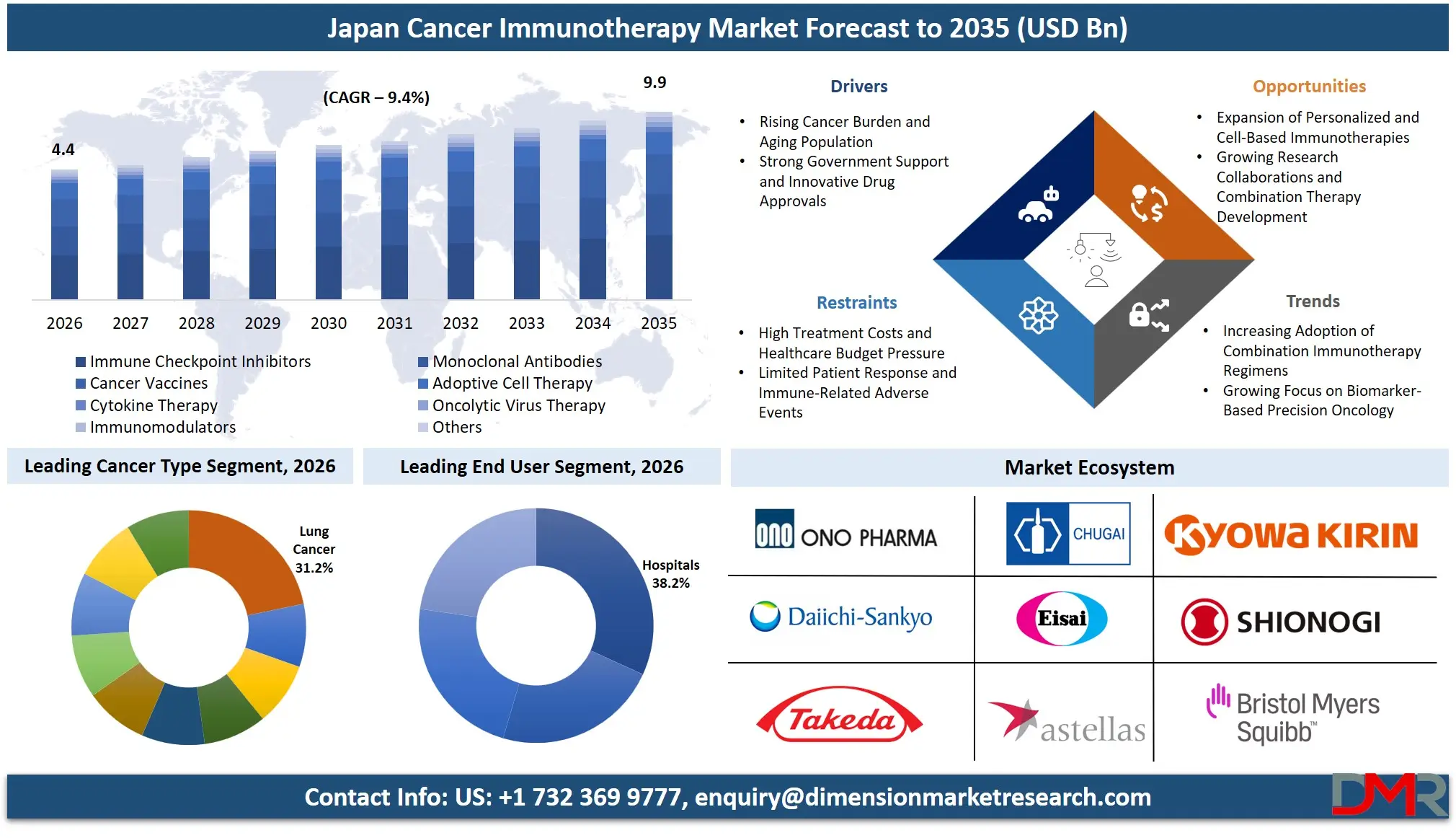
The Japan Cancer Immunotherapy Market is poised to reach a valuation of USD 4.4 billion in 2026 and is further projected to expand to USD 9.9 billion by 2035, registering a robust compound annual growth rate (CAGR) of 9.4% over the forecast period.
ℹ
To learn more about this report –
Download Your Free Sample Report Here
This remarkable growth trajectory reflects a fundamental paradigm shift in Japanese oncology, where immunotherapy has transitioned from a salvage modality to a cornerstone of curative and palliative treatment across numerous tumor types. Japan's distinction as one of the world's most rapidly aging societies, combined with its progressive regulatory architecture for regenerative and innovative medical products, positions the nation as a global vanguard in immuno-oncology. The market encompasses immune checkpoint inhibitors, monoclonal antibodies, adoptive cell therapies, cancer vaccines, and oncolytic virus therapies delivered primarily through hospital-based infusion centers and integrated cancer care networks. Pharmaceutical innovation by both domestic champions and multinational corporations, coupled with near-universal health insurance coverage that guarantees patient access, underpins sustained market expansion.
Key Takeaways
- Market Size & Forecast: The Japan cancer immunotherapy market is forecast to achieve a valuation of USD 4.4 billion by 2026, expanding at a CAGR of 9.4% to reach USD 9.9 billion by 2035. This growth trajectory is underpinned by a prolific clinical pipeline and the successful commercialization of cutting-edge modalities, including CAR-T cell therapies and bispecific antibodies.
- Growth Rate & Outlook: The market is growing at a 9.4% CAGR reflects a market propelled by the integration of artificial intelligence in biomarker discovery, the clinical validation of novel immune checkpoints beyond PD-1/PD-L1, and a strategic national focus on reducing cancer mortality through innovative treatments.
- Primary Growth Drivers: Critical growth drivers include Japan's expedited SAKIGAKE designation for breakthrough therapies, a rapidly aging demographic with a high incidence of solid and hematologic tumors, and substantial public-private investment in cell processing and vector manufacturing infrastructure.
- Key Market Trends: The market is witnessing a paradigm shift toward combination regimens that pair checkpoint inhibitors with targeted therapies, the rise of "off-the-shelf" allogeneic cell therapies using gene-editing technologies like CRISPR, and a growing focus on intratumoral immunotherapies to treat localized, inoperable tumors.
- By Therapy Type Analysis: Immune checkpoint inhibitors (ICIs) continue to dominate the therapeutic landscape, anchoring treatment protocols for non-small cell lung cancer, melanoma, and gastric adenocarcinoma. However, the adoptive cell therapy segment, spearheaded by CAR-T modalities, is expanding rapidly due to its curative potential in refractory hematological malignancies.
- By Cancer Type Analysis: Lung cancer remains the dominant application segment by volume, driven by high incidence and established ICI treatment algorithms. Nevertheless, gastric and liver cancers, which pose a significant epidemiological burden in Japan, represent high-growth verticals, attracting concentrated clinical research and drug development.
What is the Cancer Immunotherapy?
Cancer immunotherapy represents a therapeutic class that circumvents the direct cytotoxicity of traditional chemotherapy or radiation, instead engaging the host's innate and adaptive immune defenses to mount a selective, durable anti-tumor response. Mechanistically, this is achieved through several levers: releasing the "brakes" on T-cells via checkpoint inhibition (anti-PD-1/CTLA-4), engineering autologous or allogeneic lymphocytes to express chimeric antigen receptors (CAR-T) for targeted cytotoxicity, or priming the immune system against tumor-specific neoantigens through therapeutic cancer vaccines. Japan's unique regulatory pathway for regenerative medicine facilitates a clinical gateway where immunotherapies demonstrating robust phase I/II efficacy can receive conditional, time-limited market authorization, accelerating patient access while real-world evidence is gathered.
Use Cases
- Relapsed and Refractory Hematologic Malignancies: Designated cancer treatment centers administer autologous CD19-directed CAR-T cell infusions, involving a complex workflow of leukapheresis, lentiviral transduction to encode the chimeric receptor, lymphodepletion, and subsequent infusion, achieving deep remission in B-cell acute lymphoblastic leukemia and diffuse large B-cell lymphoma.
- Advanced Non-Small Cell Lung Cancer (NSCLC): Hospital oncology departments routinely utilize anti-PD-1/PD-L1 checkpoint inhibitors, often guided by companion diagnostics like PD-L1 tumor proportion score (TPS), to achieve prolonged progression-free survival as a first-line monotherapy or in combination with platinum-based chemotherapy.
- Unresectable Malignant Melanoma: Clinical protocols leverage combination immunotherapy, such as anti-PD-1 and anti-CTLA-4 dual blockade, to overcome tumor immune evasion, significantly elevating durable response rates compared to single-agent approaches.
- Solid Tumor Antigen Targeting: Biopharmaceutical companies are developing next-generation T-cell receptor-engineered T-cell (TCR-T) therapies targeting specific cancer-testis antigens like NY-ESO-1, aimed at treating synovial sarcoma and other refractory solid tumors with high unmet medical need.
How AI is Transforming the Cancer Immunotherapy Market?
Artificial intelligence is revolutionizing the Japanese cancer immunotherapy market by compressing target identification timelines and de-risking clinical development. Machine learning algorithms are pivotal in neo-antigen prediction, analyzing whole-exome sequencing data from tumor biopsies to identify patient-specific mutations most likely to elicit a robust T-cell response, thereby enabling truly personalized cancer vaccines. In the realm of immune checkpoint inhibition, AI-powered spatial biology platforms analyze tumor microenvironment heterogeneity, stratifying patients likely to respond to mono versus combination therapies by digitally profiling immune cell infiltration patterns. Furthermore, deep learning models are accelerating the discovery of novel immune-modulating antibodies by simulating molecular dynamics and predicting binding affinities to exhaustion markers like LAG-3 and TIGIT, significantly truncating the lead optimization phase.
Market Dynamics
Key Drivers in the Japan Cancer Immunotherapy Market
Rising Cancer Burden and Aging Population
Japan's rapidly aging population has significantly increased the prevalence of cancer, creating sustained demand for advanced treatment options such as immunotherapy. As cancer remains one of the leading causes of mortality in the country, healthcare providers are increasingly adopting immune checkpoint inhibitors, CAR-T therapies, and monoclonal antibodies for improved clinical outcomes. Government-backed cancer control programs and nationwide screening initiatives also support earlier diagnosis, allowing patients to benefit from immunotherapy at earlier disease stages. Furthermore, increasing awareness among physicians and patients regarding long-term survival benefits compared with conventional chemotherapy continues to accelerate treatment adoption across major hospitals and specialized oncology centers throughout Japan.
Strong Government Support and Innovative Drug Approvals
Japan's regulatory agencies have established accelerated review pathways for innovative oncology drugs, enabling faster commercialization of breakthrough immunotherapies. The Pharmaceuticals and Medical Devices Agency (PMDA) works closely with pharmaceutical companies to expedite approvals for therapies addressing unmet medical needs. Government reimbursement policies under the national health insurance system further improve patient access to expensive immunotherapies. Additionally, collaborations between domestic pharmaceutical companies, academic institutions, and global biotechnology firms have strengthened clinical research and expanded the pipeline of novel immunotherapeutic products. These supportive regulatory and reimbursement frameworks continue driving investment, innovation, and broader adoption across Japan's cancer treatment landscape.
Restraints in the Japan Cancer Immunotherapy Market
High Treatment Costs and Healthcare Budget Pressure
Cancer immunotherapy treatments remain among the most expensive oncology therapies available in Japan, particularly CAR-T cell therapies and advanced biologics. Although the national health insurance system covers many approved treatments, rising reimbursement expenditures place increasing financial pressure on healthcare budgets. Hospitals must also invest in specialized infrastructure, laboratory capabilities, and trained personnel to administer complex immunotherapies safely. These substantial operational and treatment costs can limit widespread adoption, especially for smaller healthcare institutions. Cost-effectiveness evaluations and periodic drug price revisions by Japanese authorities may also influence manufacturer revenues and slow broader commercialization of premium immunotherapy products.
Limited Patient Response and Immune-Related Adverse Events
Despite remarkable clinical success, cancer immunotherapies do not produce consistent responses across all patient populations. Biomarker variability, tumor heterogeneity, and differences in immune system activity contribute to unpredictable treatment outcomes. Some patients experience immune-related adverse events affecting organs such as the lungs, liver, skin, and endocrine system, requiring intensive monitoring and specialized management. Identifying suitable candidates through advanced diagnostic testing remains a significant challenge. Furthermore, resistance to immune checkpoint inhibitors in certain cancer types necessitates combination therapies, increasing treatment complexity, healthcare costs, and clinical decision-making challenges for oncologists across Japan.
Growth Opportunities in the Japan Cancer Immunotherapy Market
Expansion of Personalized and Cell-Based Immunotherapies
Japan is witnessing growing investment in personalized cancer treatment approaches, creating substantial opportunities for advanced immunotherapies. Precision medicine initiatives supported by genomic profiling enable physicians to select therapies based on individual tumor characteristics, improving treatment effectiveness. Cell-based therapies, including CAR-T, TCR-T, NK cell therapies, and tumor-infiltrating lymphocyte therapies, are gaining momentum through ongoing clinical trials and commercial development. Domestic pharmaceutical companies are increasingly collaborating with biotechnology firms to accelerate innovation. As manufacturing technologies improve and production costs gradually decline, personalized immunotherapies are expected to become more accessible across Japan's healthcare system.
Growing Research Collaborations and Combination Therapy Development
Japan's strong biomedical research ecosystem provides significant opportunities for developing next-generation immunotherapy solutions. Pharmaceutical companies are expanding partnerships with universities, research institutes, and international biotechnology firms to investigate innovative immune-modulating agents and combination therapies. Clinical studies increasingly evaluate immunotherapies alongside chemotherapy, targeted therapy, radiation therapy, and cancer vaccines to improve patient response rates. Advances in artificial intelligence, biomarker discovery, and genomic sequencing further support personalized treatment development. These collaborative research initiatives are expected to generate new product approvals, expand therapeutic indications, and strengthen Japan's leadership in oncology innovation during the coming years.
Trends in the Japan Cancer Immunotherapy Market
Increasing Adoption of Combination Immunotherapy Regimens
Combination immunotherapy has become a major trend in Japan as oncologists seek improved treatment efficacy across multiple cancer types. Pharmaceutical companies are developing regimens that combine immune checkpoint inhibitors with chemotherapy, targeted therapies, radiation therapy, and anti-angiogenic drugs to enhance immune responses and overcome treatment resistance. Clinical evidence demonstrating longer progression-free survival and improved overall survival has encouraged wider adoption in hospitals. Regulatory approvals for combination therapies continue expanding therapeutic indications, while ongoing clinical trials explore additional combinations for difficult-to-treat cancers. This trend is expected to remain central to future oncology treatment strategies.
Growing Focus on Biomarker-Based Precision Oncology
Japanese healthcare providers increasingly integrate biomarker testing into cancer treatment planning to optimize immunotherapy outcomes. Advanced genomic sequencing and companion diagnostics help identify patients most likely to benefit from immune checkpoint inhibitors and emerging cell-based therapies. Hospitals are investing in molecular diagnostic capabilities to improve treatment selection while minimizing unnecessary exposure to costly therapies. Pharmaceutical companies are simultaneously developing biomarker-driven clinical trials to accelerate regulatory approvals and expand precision medicine applications. This growing emphasis on personalized oncology is improving clinical outcomes, supporting efficient healthcare resource utilization, and driving innovation throughout Japan's cancer immunotherapy market.
Research Scope and Analysis
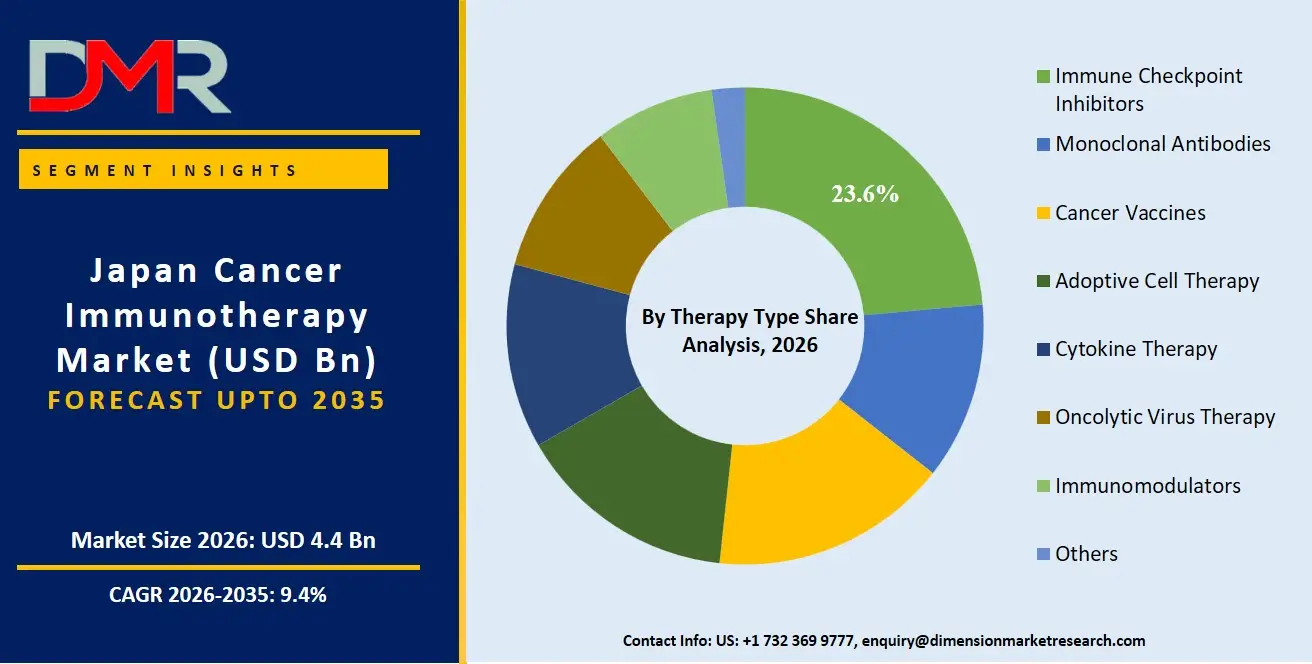
The Japan Cancer Immunotherapy Market is segmented by Therapy Type (immune checkpoint inhibitors, monoclonal antibodies, cancer vaccines, adoptive cell therapy, cytokine therapy, oncolytic virus therapy, immunomodulators, others), Cancer Type, Route of Administration, Distribution Channel, and End User, covering major treatment modalities, cancer indications, administration methods, healthcare facilities, and pharmaceutical distribution channels across Japan.
ℹ
To learn more about this report –
Download Your Free Sample Report Here
By Therapy Type Analysis
Immune Checkpoint Inhibitors is poised to dominate the market, driven primarily by the PD-1 inhibitor subclass. This leadership stems from the blockbuster status of Opdivo (nivolumab), which was developed by Ono Pharmaceutical and Bristol-Myers Squibb and first approved in Japan for melanoma before expanding into non-small cell lung cancer and other indications. The PD-1 segment's dominance is reinforced by Keytruda (pembrolizumab), which holds approved indications across multiple tumor types, often with higher response rates in biomarker-selected populations. The established clinical utility, deep physician familiarity, broad reimbursement coverage, and an extensive pipeline of combination trials for both domestic and international companies firmly secure this segment's market leadership.
By Cancer Type Analysis
Lung cancer is expected to be the dominant segment, reflecting Japan's high incidence and mortality rates from the disease. The transformative introduction and broad approval of immune checkpoint inhibitors, specifically Opdivo and Keytruda, as first- and second-line therapies for non-small cell lung cancer have fundamentally shifted the treatment paradigm. This dominance is further propelled by the widespread adoption of PD-L1 testing as a standard diagnostic, the approval of combination regimens like chemotherapy plus immunotherapy, and the targeting of specific molecular subtypes with high immunogenicity. The large patient pool and the deep integration of immunotherapies into standard clinical pathways ensure lung cancer remains the largest and most commercially significant segment.
By Route of Administration Analysis
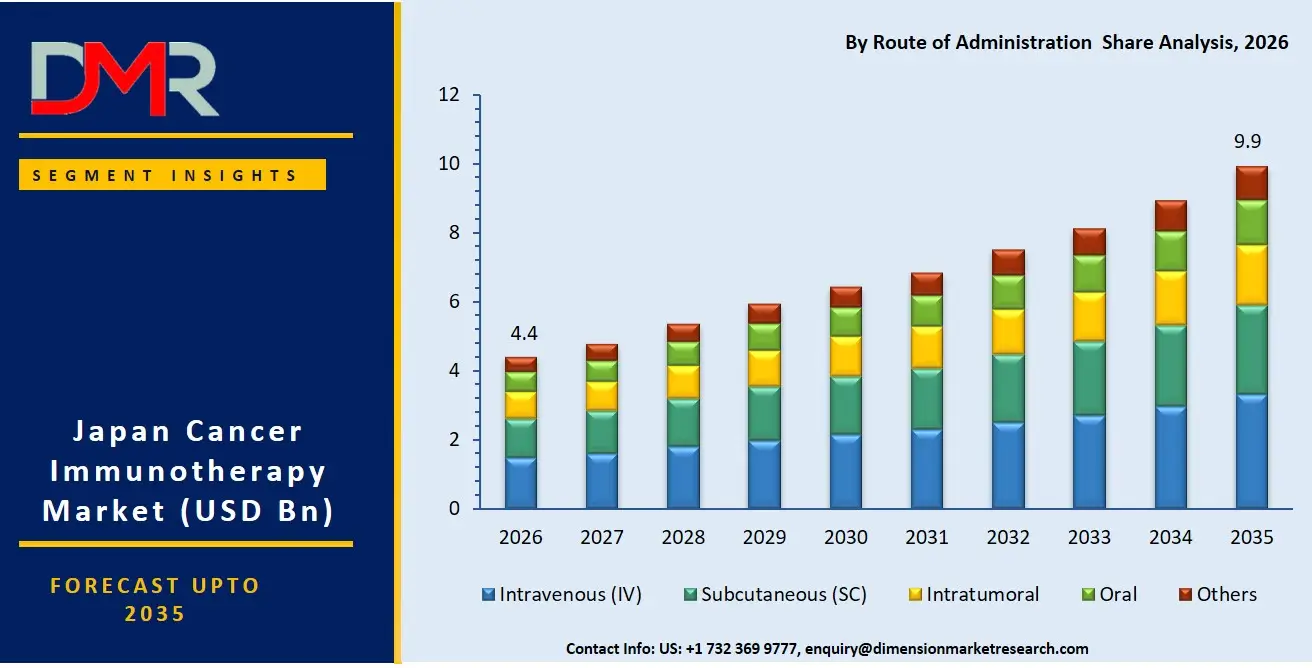
Intravenous (IV) infusion is projected to be the dominant route of administration. This is a direct consequence of the market's reliance on monoclonal antibodies, including PD-1 and PD-L1 inhibitors, which are biologic drugs requiring parenteral delivery to maintain their structural integrity and bioavailability.
ℹ
To learn more about this report –
Download Your Free Sample Report Here
Standardized dosing protocols, typically weight-based or flat-dosing administered in a hospital or clinic setting, are universally established for these leading therapies. While subcutaneous formulations are emerging for convenience, the entrenched infrastructure, established safety protocols for infusion reactions, and the majority of approved immunotherapies being IV biologics, including CAR-T cell infusions, solidify this segment's formidable and lasting market dominance.
By Distribution Channel Analysis
Hospital pharmacies are expected to be the dominant distribution channel, a structure dictated by Japan's healthcare delivery model and the nature of immunotherapy administration. The leading therapies, particularly intravenous immune checkpoint inhibitors and complex cell therapies like CAR-T, are exclusively administered within hospitals accredited for such high-risk protocols. These institutions house integrated pharmacy departments that manage the specialized, often patient-specific, ordering, reconstitution, and dispensing processes. The Ministry of Health, Labour and Welfare's stringent regulatory framework for high-cost biologics and the need for immediate management of severe immune-related adverse events necessitate a closed-loop system, ensuring that the overwhelming majority of these drugs flow directly through the hospital channel.
By End User Analysis
Hospitals are poised to be the dominant end user, consolidating the entire treatment journey for cancer immunotherapy. This dominance extends beyond drug administration to encompass the essential ecosystem of a designated cancer hospital, including diagnostic pathology for biomarker testing, advanced radiology for response assessment, and multidisciplinary intensive care units capable of managing complex, multi-organ immune-related adverse events. Japan's network of government-designated cancer hospitals serves as the compulsory hub for expensive and logistically intricate therapies. The need for a sterile compounding environment for IV biologics and the strictly controlled care pathway for monitoring post-CAR-T therapy patients functionally lock all other end users into a supportive or referral-based role to the hospital system.
The Japan Cancer Immunotherapy Market Report is segmented on the basis of the following:
By Therapy Type
- Immune Checkpoint Inhibitors
- PD-1 Inhibitors
- PD-L1 Inhibitors
- CTLA-4 Inhibitors
- Others
- Monoclonal Antibodies
- Cancer Vaccines
- Preventive Vaccines
- Therapeutic Vaccines
- Adoptive Cell Therapy
- CAR-T Cell Therapy
- TCR-T Cell Therapy
- Tumor-Infiltrating Lymphocyte (TIL) Therapy
- NK Cell Therapy
- Cytokine Therapy
- Oncolytic Virus Therapy
- Immunomodulators
- Others
By Cancer Type
- Lung Cancer
- Breast Cancer
- Colorectal Cancer
- Melanoma
- Prostate Cancer
- Ovarian Cancer
- Cervical Cancer
- Head & Neck Cancer
- Liver Cancer
- Others
By Route of Administration
- Intravenous (IV)
- Subcutaneous (SC)
- Intratumoral
- Oral
- Others
By Distribution Channel
- Hospital Pharmacies
- Retail Pharmacies
- Online Pharmacies
By End User
- Hospitals
- Cancer Treatment Centers
- Specialty Clinics
- Academic & Research Institutes
Competitive Landscape
The Japanese cancer immunotherapy market is characterized by a strategic confluence of domestic pharmaceutical champions and global biotechnological innovators. The competitive dynamic hinges on pioneering novel target biology such as LAG-3, TIGIT, and CD3 bispecific engagers while differentiating through superior translational science and real-world evidence generation within Japan's unique genetic and regulatory milieu. Domestic leaders like Daiichi Sankyo are gaining a disruptive edge through next-generation platforms like antibody-drug conjugates (ADCs) that synergize with immunotherapy by inducing immunogenic cell death. Strategic partnerships between Japanese trading houses and overseas biotechs for local clinical development and commercialization rights have become critical. Market incumbents are fiercely competing not only on clinical efficacy endpoints but also on optimizing manufacturing processes for autologous cell therapies to reduce the critical vein-to-vein time.
Some of the prominent players in the Japan Cancer Immunotherapy Market are:
- Ono Pharmaceutical Co., Ltd.
- Chugai Pharmaceutical Co., Ltd.
- Takeda Pharmaceutical Company Limited
- Daiichi Sankyo Company, Limited
- Astellas Pharma Inc.
- Eisai Co., Ltd.
- Kyowa Kirin Co., Ltd.
- Shionogi & Co., Ltd.
- Bristol Myers Squibb
- Merck & Co., Inc.
- F. Hoffmann-La Roche Ltd.
- AstraZeneca PLC
- Pfizer Inc.
- Novartis AG
- Johnson & Johnson
- Amgen Inc.
- GSK plc
- AbbVie Inc.
- Regeneron Pharmaceuticals, Inc.
- BeiGene, Ltd.
- Other Key Players
Recent Developments
- September 2025: Daiichi Sankyo Company, Limited announced positive results from the DESTINY-Breast09 Phase III trial, demonstrating significant progression-free survival improvement for Enhertu (trastuzumab deruxtecan) plus pertuzumab as a first-line treatment for HER2-positive metastatic breast cancer.
- April 2025: Ono Pharmaceutical Co., Ltd. and Bristol Myers Squibb received approval in Japan for expanded indications of Opdivo (nivolumab) in additional cancer settings, strengthening the country's immune checkpoint inhibitor portfolio.
- January 2025: Chugai Pharmaceutical Co., Ltd. continued the expansion of clinical development programs for cancer immunotherapies, including combination regimens involving Tecentriq (atezolizumab) for multiple solid tumors in Japan.
Report Details
| Report Characteristics |
| Market Size (2026) |
USD 4.4 Bn |
| Forecast Value (2035) |
USD 9.9 Bn |
| CAGR (2026–2035) |
9.4% |
| Historical Data |
2021 – 2025 |
| Forecast Data |
2027 – 2035 |
| Base Year |
2025 |
| Estimate Year |
2026 |
| Segments Covered |
By Therapy Type, By Cancer Type, By Route of Administration, By Distribution Channel, and By End User |
| Country Coverage |
Japan |
Frequently Asked Questions
How big is the Japan Cancer Immunotherapy Market?
▾ The Japan Cancer Immunotherapy market is poised to be valued at USD 4.4 billion in 2026 and is projected to reach USD 9.9 billion by 2035, driven by an urgent clinical need for durable oncological solutions for an aging population with high rates of gastrointestinal and pulmonary malignancies.
What is the CAGR of the Japan Cancer Immunotherapy Market from 2026 to 2035?
▾ The market is expected to grow at a CAGR of 9.4% from 2026 to 2035, reflecting the prolific clinical pipeline of bispecific antibodies and cellular immunotherapies, underpinned by Japan's world-leading regulatory acceleration for regenerative medical products.
What factors are driving the growth of the Japan Cancer Immunotherapy Market?
▾ Key drivers include Japan’s SAKIGAKE fast-track approval pathway for innovative cancer therapies, the escalating healthcare burden of a super-aging society, and strategic national investment in iPSC-based allogeneic cell therapy manufacturing platforms.
What are the major trends in the Japan Cancer Immunotherapy Market?
▾ Major trends include the shift toward neoadjuvant immunotherapy for resectable cancers, the convergence of gene-edited allogeneic cell therapies to bypass autologous manufacturing bottlenecks, and the use of intratumoral oncolytic viruses to prime systemic anti-tumor immunity.
Who are the key players in the Japan Cancer Immunotherapy Market?
▾ Key players include Ono Pharmaceutical, Bristol-Myers Squibb K.K., Chugai Pharmaceutical (Roche), Daiichi Sankyo, Astellas Pharma, and Takara Bio, driving innovation through next-generation checkpoint inhibitors, antibody-drug conjugates, and iPSC-derived immune effector cell platforms.
How is the Japan Cancer Immunotherapy Market segmented?
▾ The market is segmented by Therapy Type, Cancer Type, Route of Administration, Distribution Channel, and End User.