What is the Japan Genomics Market Size?
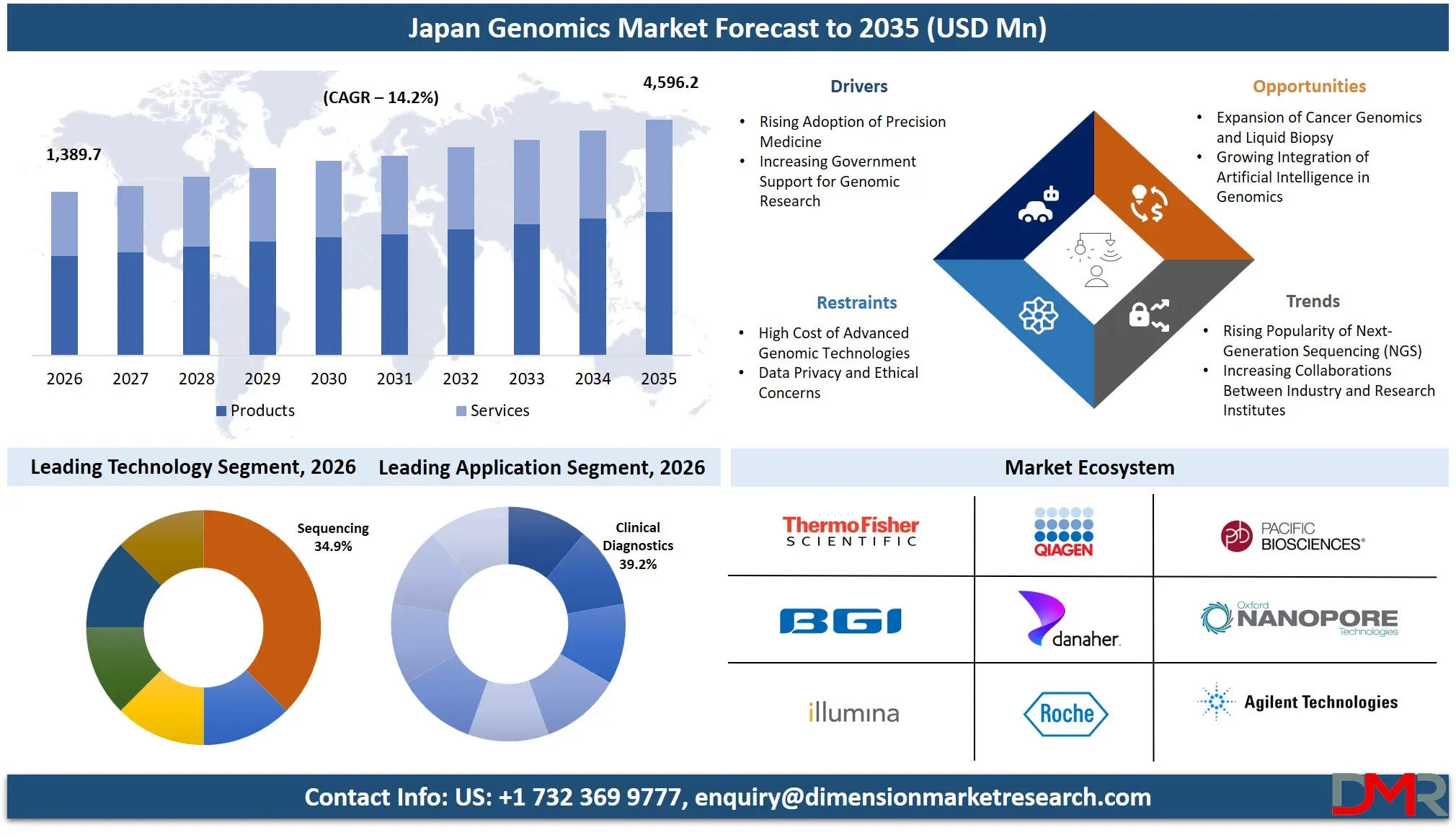
The Japan Genomics Market is expected to reach a value of USD 1,389.7 million in 2026, and it is further anticipated to reach USD 4,596.2 million by 2035, growing at a CAGR of 14.2% during the forecast period.
ℹ
To learn more about this report –
Download Your Free Sample Report Here
The Japan genomics market is experiencing fast growth owing to the rising emphasis on precision medicine, the aging demographic in the country, and incorporating genomics data into public health studies and oncology studies. The market includes genomics sequencing systems, consumables, and special genomics solutions that help research centers, hospitals, and pharma firms in developing drugs and biomarkers and conducting clinical diagnoses.
The rising need for utilizing high-throughput next-generation sequencing (NGS), undertaking population cohort studies, and utilizing AI bioinformatics solutions is creating the requirement for special genomics solutions. Research centers and academic organizations are the most common adopters, while NGS solutions and consumables have continued to be the most popular because of their reduced cost and increased utility. Pharmaceutical firms, oncology, and rare diseases are among the primary contributors to genomics adoption because they need accurate genomic analysis environments.
ℹ
To learn more about this report –
Download Your Free Sample Report Here
Key Takeaways
- Market Size & Forecast: It is predicted that Japan’s genomics market will reach USD 1,389.7 million by 2026 and grow substantially to touch USD 4,596.2 million by 2035 on the back of two major drivers national-level adoption of precision medicine and growing need for sophisticated diagnostics among older people.
- Growth Rate & Outlook: It is anticipated that market growth will occur at a CAGR of 14.2% due to the scarcity of professional bioinformatics experts throughout the country and growing complexity associated with analyzing multi-omics data obtained from WGS.
- Primary Growth Drivers: Key drivers are the transition towards diagnostic tests from experimental analyses, the establishment of national population-based genome database projects, and increased R&D activity on drug discovery and biomarker discovery among pharmaceutical organizations in the country.
- Key Market Trends: Major trends include an increase in adoption of liquid biopsy testing through comprehensive genomic profiling (CGP), the employment of artificial intelligence (AI)-driven tools in the bioinformatics pipeline for automated variant annotation, and migration to cloud computational services to address data storage issues.
- By Component Analysis: It is projected that the Services component will grow faster than products even if product is projected to dominate the segment, because the limitation will now move away from generating data to the complexity involved in interpreting the results clinically.
- By Application Analysis: The two most profitable segments in terms of application are the oncology research and clinical diagnostics, which can be attributed to the prevalence of cancer in Japan and the presence of coverage system for specific genomics tests. The functional genomics is growing fast.
What is the Genomics?
Genomics is the scientific discipline of molecular biology and biotechnology that involves the study of all genes, termed the genome, in an organism. This study seeks to unravel the structures, functions, mapping, sequencing, and interactions of genes to establish how genes affect development, diseases, wellness, and biological activities. The use of techniques such as DNA sequencing, gene editing, and bioinformatics in genomics helps in identifying mutations that cause diseases. Genomics has become an important aspect in areas such as cancer investigation, drug discovery, medical care personalization, precision medicine, and agriculture.
Use Cases
- Hospital-wide Genomics-Based Cancer Profiling Programs: The leading cancer treatment hospitals employ NGS-based services and purchase consumables & reagents to perform extensive profiling of cancer genes by sequencing tumor biopsy samples, allowing instant decision-making by tumor boards on targeted therapies for resistant cases.
- Diagnosis of Undetermined Rare Disease in Pediatric Populations: Academic & Government institutions utilize genomics and computational core services to analyze whole genome sequences from family trios to find novel de novo genetic lesions, thus achieving a final molecular diagnosis following an extended diagnostic journey.
- Pharmacogenomics for Avoiding Adverse Medication Reactions: Hospital-based clinics take advantage of microarray and PCR-based pharmacogenomic testing services to analyze patient metabolic enzymes before giving standard medications, which is becoming a routine practice in clinical settings to avoid medication side effects.
- Biomarker Detection Using Multi-Omics Approach for Alzheimer’s: Pharmaceuticals and Biotechnology Companies utilize biomarker translation services and pathway analysis software tools to combine data from genomics, epigenomics, and proteomics analysis of aging subjects to identify biomarkers for early Alzheimer’s disease detection.
How AI is Transforming the Genomics Market?
The role that AI is playing in transforming the field of genomics in Japan is through speeding up the process of clinical variant interpretation as well as improving laboratory processes efficiency. Through the implementation of computational services using AI, there could be an ability to automatically prioritize disease-causing mutations from thousands of benign variants, significantly lowering the need for manual labor and reducing clinical reporting time as well as mistakes. In addition, the incorporation of AI in NGS-Based Services enables companies to effectively manage their cloud computing budget through prediction of storage demands and optimization of data processing pipelines, enabling them to use automated FinOps methods for handling large genomics datasets.
Genomics research as well as public health genomics are increasingly becoming reliant on AI technologies as well. Biomarker Translation Services use smart machine learning systems to continually search multi-cohort studies to establish novel associations between epigenetics marks and disease progression so that research institutions are always aligned with the latest biological knowledge. Additionally, generative AI assistants are being utilized together with pharmacogenomics consultation to predict the effect that different genomics may have on proteins involved in drugs.
Market Dynamics
Key Drivers in the Japan Genomics Market
Rising Adoption of Precision Medicine
Japan is witnessing an increasing trend in its healthcare sector toward implementing precision medicine concepts which depend greatly on genomics-based testing for customized therapy selection. Genomic sequencing is being utilized by hospitals and clinics to detect disease-related genetic variations and thereby enhance their treatments especially for cancer treatment. The implementation of precision medicine programs and national genome initiatives backed by the Japanese government has increased the application of genomics in clinical settings. Pharmaceutical firms are also making companion diagnostic tests and pharmacogenomic studies in order to develop customized therapies.
Increasing Government Support for Genomic Research
Genomic innovation is heavily supported by the government of Japan through various funding programs, national genome projects, and healthcare modernization plans. Public bodies are making investments in new sequencing equipment, biobanks, and huge genomic databases to enhance disease research and diagnostics. The development of various genomic programs such as those concerned with cancer and rare disease research has encouraged the use of next generation sequencing technology in hospitals and research centers. Precision medicine and the integration of healthcare services into digital technology are two other regulatory areas that promote genomic innovations.
Restraints in the Japan Genomics Market
High Cost of Advanced Genomic Technologies
Expensive genomic technologies, sequencing devices, and bioinformatics setup represent one of the most restraining factors in the Japanese Genomics Market. The next generation sequencing devices entail heavy capital expenditure coupled with ongoing cost for the use of consumables, reagents, and analysis software. Budget constraints at smaller health facilities may limit the uptake of advanced genomics technology. Furthermore, genomic testing and personalized medicine may entail high operating costs, thus hindering their availability at healthcare facilities. Although costs associated with sequencing technologies are progressively reducing, the cost associated with the maintenance of genomic laboratories and professionals is high.
Data Privacy and Ethical Concerns
The genomic data itself comprises extremely sensitive personal information about patients, which raises many issues with respect to privacy, security, and proper handling in Japan. The medical organizations and research facilities have to strictly adhere to many regulations on patient rights, data transfer, and cybersecurity. The fear of potential abuse, unauthorized access, and discrimination based on genetic data could decrease the confidence in the use of genomic tests by the population. Also, the use of big genomic databases requires robust cybersecurity measures to avoid leaks. The controversial nature of genetic modification, reproductive genomics, and storing of the genetic data is an additional hurdle.
Growth Opportunities in the Japan Genomics Market
Expansion of Cancer Genomics and Liquid Biopsy
There are great opportunities for growth in the domain of cancer genomics in Japan, owing to the increasing incidence of cancer cases in Japan, along with the need for methods for early diagnosis. Genomic sequencing and liquid biopsy techniques have become common practice in hospitals and laboratories to detect cancers in a non-invasive way and monitor the response to treatment. This will also aid in the discovery of genetic markers that can be used for personalized medicine. The emphasis on precision medicine and companion diagnostics in Japan has led to drug manufacturers producing targeted drugs through genomic analysis.
Growing Integration of Artificial Intelligence in Genomics
AI and machine learning technology incorporation in genomic analysis is providing tremendous benefits in the Japan Genomics Market. The use of these technologies facilitates quick analysis of genomics data which leads to accurate disease prediction, biomarker identification, and treatment plan development. Research facilities and biotech organizations in Japan have started to incorporate AI-driven bioinformatics tools in genomic analyses and pharmaceutical development. Moreover, the advanced technological infrastructure available in Japan enables the incorporation of these technologies efficiently. Additionally, AI and machine learning technology in genomic analysis saves time and improves clinical decision-making.
Trends in the Japan Genomics Market
Rising Popularity of Next-Generation Sequencing (NGS)
The advent of next-generation sequencing has become the key trend in the Japanese Genomics Market on account of its rising application in the field of clinical diagnostics, oncology, and personalized medicine. This is because next-generation sequencing technology offers faster and more extensive genomics analysis than traditional sequencing methods. This technology has gained popularity in the detection of genetic variations related to cancers, rare and inherited diseases. Further developments in terms of faster, more accurate, and cheaper sequencing will result in increased uptake of this technology. Also, pharma companies are taking advantage of next-generation sequencing platforms for biomarker discovery.
Increasing Collaborations Between Industry and Research Institutes
The collaboration between pharmaceutical companies, biotechnology companies, academic institutes, and government agencies is emerging as one of the significant trends in the field of genomics in Japan. This collaboration aims at advancing research in genomics, developing advanced sequencing technology and precision medicine approaches. On the one hand, academic institutes bring their experience and knowledge about genomics along with extensive datasets to the collaboration table. Private organizations, on the other hand, have the technological capability and commercial expertise. The result of such a collaboration is that genomics databases are expanded, biomarkers identified and drugs developed.
Research Scope and Analysis
The Japan Genomics Market is segmented by Component into Products and Services, by Technology into Sequencing, Microarray, PCR, Nucleic Acid Extraction & Purification, Flow Cytometry, and Others, by Application into Clinical Diagnostics, Functional Genomics, Epigenomics, Biomarker Discovery, Pathway Analysis, Pharmacogenomics, Oncology Research, Rare Disease Diagnostics, and Others, and by End User into Research Centers, Academic & Government Institutes, Hospitals & Clinics, Pharmaceutical & Biotechnology Companies, CROs, and Other End Users.
ℹ
To learn more about this report –
Download Your Free Sample Report Here
By Component Analysis
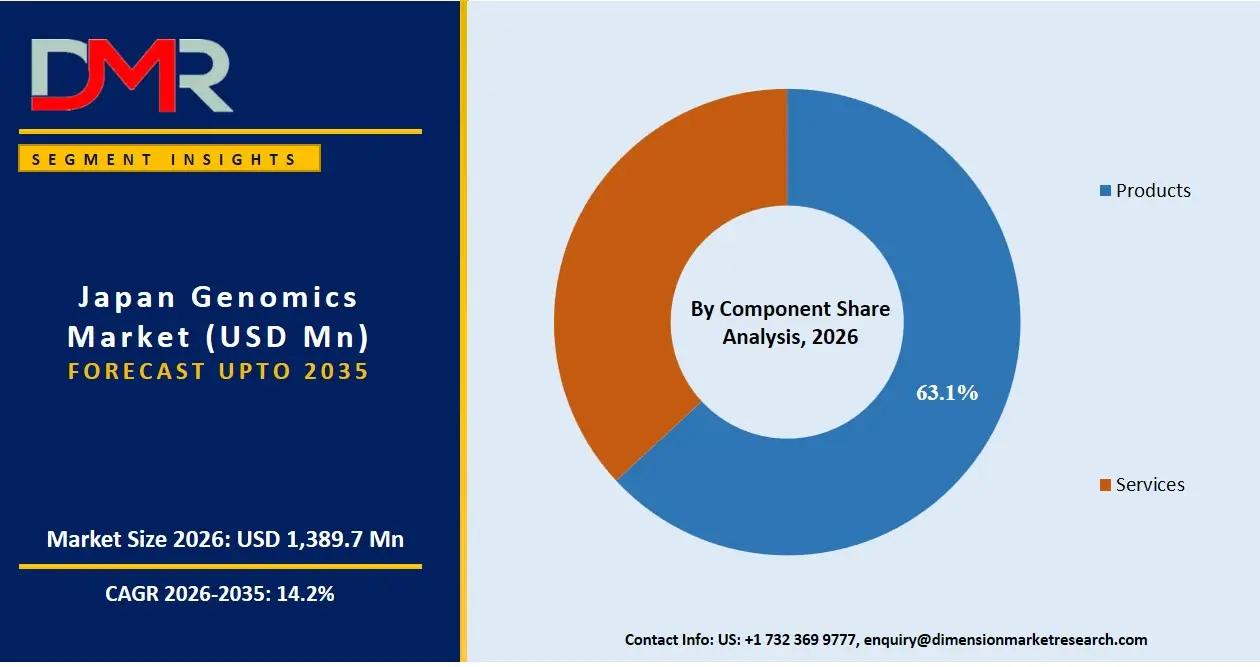
The Products segment is expected to capture the largest share of the Japan Genomics Market owing to the consistent requirement for sequencing equipment, PCR devices, reagents, assays, and bioinformatics tools in hospitals, research centers, and pharma firms. The Consumables and Reagents category will contribute the highest revenue since they keep being utilized in genomics experiments and sequencing. The country’s increasing emphasis on precision medicine and cancer genomics will lead to greater usage of sophisticated genomic technologies. Furthermore, the growth of NGS labs and public-funded genomic studies drives continued procurement of expensive instrumentation and lab consumables, thus establishing products as the dominant component segment in the market.
By Technology Analysis
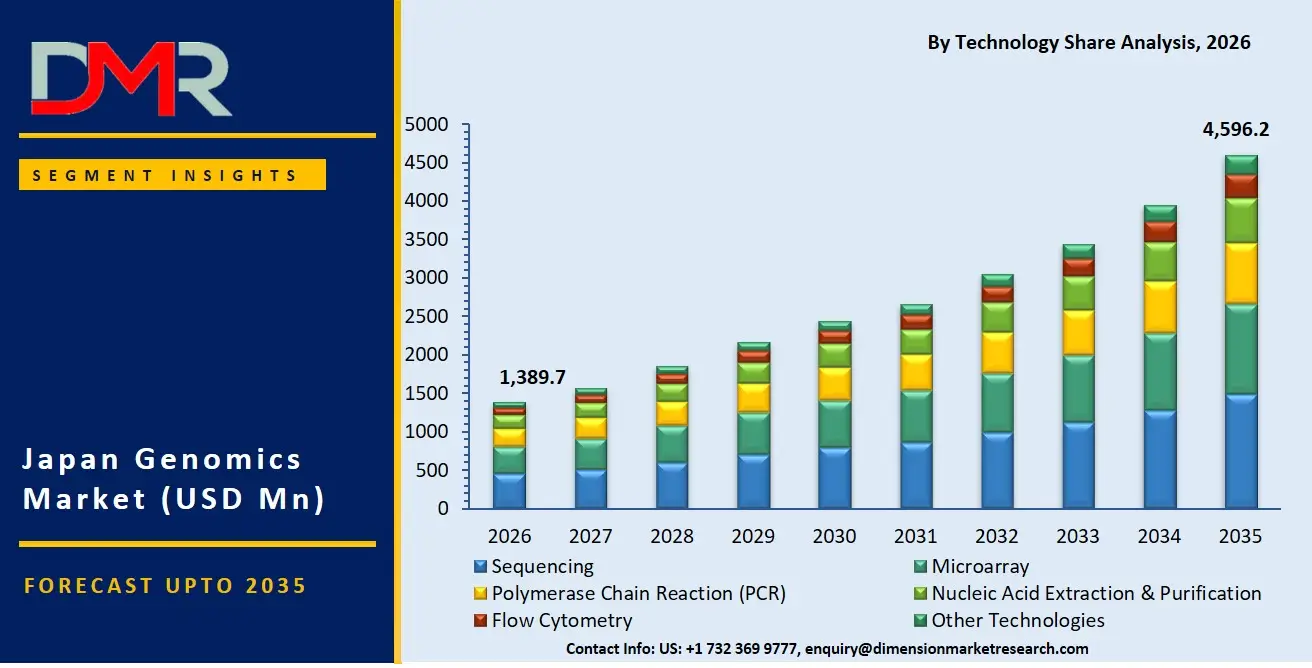
Sequencing is expected to dominate the Japan Genomics Market owing to the extensive use of next-generation sequencing technology in oncology, rare disease diagnosis, pharmacogenomics, and precision medicine studies. The high level of support received by Japan for genomic medicine and its national genome programs has contributed to the increased use of sequencing devices within hospitals and research institutions. Sequencing devices have become essential in identifying biomarkers through whole-genome and targeted sequencing of cancer samples. The presence of sophisticated sequencing equipment offered by manufacturers across the world is also driving the growth of the sequencing devices segment.
By Application Analysis
Clinical diagnostics is expected to be the major application segment in the Japan Genomics market because of the increasing utilization of genomics in diagnosing cancer, hereditary disorders, pre-natal screenings, and customized treatment plans. The increase in the number of aged patients in Japan, along with an increase in cancer prevalence rate, creates a higher demand for molecular diagnostics. Various government policies promoting precision medicine and reimbursements for genetic tests make it easier for clinicians and researchers to adopt genomics for diagnostics. Genomic tests are being increasingly incorporated in healthcare services for identifying diseases at an earlier stage and choosing appropriate treatments. Clinical applications involving oncology diagnostics through companion diagnostics and liquid biopsies have made clinical diagnostics the foremost genomics application area in Japan.
By End User Analysis
The Genomics Market in Japan is expected to be led by pharmaceuticals and biotechnology companies due to the significant spending on drug discovery, precision medicine, biomarker identification, and clinical studies in the field of genomics. These companies rely extensively on genomic tools and technologies to identify targets and for companion diagnostics and pharmacogenomics studies in order to bring innovation in therapeutics. The advanced pharmaceutical industry in Japan and collaboration between biotech firms, research organizations, and sequencing technology providers in Japan adds value to this category. In addition, increased demand for personalized treatments and genome-driven drug discovery technologies plays a role in the adoption of sequencing and bioinformatics tools.
The Japan Genomics Market Report is segmented on the basis of the following:
By Component
- Products
- Instruments & Software
- Consumables & Reagents
- Services
- Core Genomics Services
- NGS-Based Services
- Biomarker Translation Services
- Computational Services
- Other Services
By Technology
- Sequencing
- Microarray
- Polymerase Chain Reaction (PCR)
- Nucleic Acid Extraction & Purification
- Flow Cytometry
- Other Technologies
By Application
- Clinical Diagnostics
- Functional Genomics
- Epigenomics
- Biomarker Discovery
- Pathway Analysis
- Pharmacogenomics
- Oncology Research
- Rare Disease Diagnostics
- Others
By End User
- Research Centers
- Academic & Government Institutes
- Hospitals & Clinics
- Pharmaceutical & Biotechnology Companies
- Clinical Research Organizations (CROs)
- Other End Users
Competitive Landscape
The competitive dynamics within the Japan genomics market have turned out to be very fast-paced due to the presence of a diverse range of multinational sequencing technology companies, local players providing chemical reagents, and unique biotechnology startups utilizing bioinformatics tools and artificial intelligence. The winning factor in this situation will be related to the creation of deep strategic collaborations with national universities and prominent hospitals since such moves would lead to the provision of necessary opportunities for collaborative development and early adoption of innovations within the next generation sequencing systems. The tendency towards market consolidation and acquisition of specialized genomics CROs by traditional pharmaceutical contract research organizations has been developing very fast.
Some of the prominent players in the Japan Genomics Market are:
- Illumina, Inc.
- Thermo Fisher Scientific Inc.
- Agilent Technologies, Inc.
- QIAGEN N.V.
- F. Hoffmann-La Roche Ltd.
- Pacific Biosciences of California, Inc.
- Oxford Nanopore Technologies plc
- BGI Genomics Co., Ltd.
- Danaher Corporation
- PerkinElmer Inc.
- Bio-Rad Laboratories, Inc.
- Takara Bio Inc.
- Sysmex Corporation
- Shimadzu Corporation
- Hitachi High-Tech Corporation
- Nippon Gene Co., Ltd.
- Eurofins Scientific
- Guardant Health, Inc.
- Exact Sciences Corporation
- Standard BioTools Inc.
- Other Key Players
Recent Developments
- March 2026: Genomic biomarker research partnership was strengthened by Astellas Pharma in Japan through collaborations with several universities in the country for advancing precision therapies and promoting personalized treatments. This will help the company to further enhance their capabilities in oncology genomics, rare disease genomics, and advanced molecular diagnostics in Japan.
- February 2026: Genomics-related initiatives received a boost from Takeda Pharmaceutical Company in Japan, which has made further investments in pharmacogenomics and precision medicines. It also helped them establish partnerships with biotech companies and hospitals involved in research in innovative genomics solutions.
- May 2025: The TruSight Oncology Comprehensive test from Illumina Inc. was approved in Japan, which will further promote their initiatives in precision oncology and genomic profiling technologies for advanced cancer diagnosis and treatment in Japan.
Report Details
| Report Characteristics |
| Market Size (2026) |
USD 1,389.7 Mn |
| Forecast Value (2035) |
USD 4,596.2 Mn |
| CAGR (2026–2035) |
14.2% |
| Historical Data |
2021 – 2025 |
| Forecast Data |
2027 – 2035 |
| Base Year |
2025 |
| Estimate Year |
2026 |
| Segments Covered |
By Component, By Technology, By Application, By End User |
| Country Coverage |
Japan |
Frequently Asked Questions
How big is the Japan Genomics Market?
▾ The Japan Genomics market is poised to be valued at USD 1,389.7 million in 2026 and is projected to reach USD 4,596.2 million by 2035, driven by the universal need for specialized tools, consumables, and services in NGS-based clinical diagnostics, drug discovery, and national precision medicine.
What is the CAGR of the Japan Genomics Market from 2026 to 2035?
▾ The market is expected to grow at a CAGR of 14.2% from 2026 to 2035, reflecting the accelerating complexity of multi-omics data analysis and the persistent nationwide shift from research to clinical reimbursement.
What factors are driving the growth of the Japan Genomics Market?
▾ Key drivers include the national precision medicine mandate, the clinical shift to comprehensive genomic profiling, the aging society’s burden of chronic and rare diseases, and the surge in demand for AI-driven Computational Services amid a bioinformatics skills gap.
What are the major trends in the Japan Genomics Market?
▾ Major trends include the integration of Generative AI into variant interpretation workflows, the rise of cloud-native bioinformatics platforms, the demand for liquid biopsy-based testing, and the focus on integrated multi-omics biomarker services within complex aging research environments.
Who are the key players in the Japan Genomics Market?
▾ Key players include global platform leaders like Illumina and Thermo Fisher Scientific, domestic biotech champions such as Takara Bio and Hitachi High-Tech, and specialized long-read sequencing and bioinformatics service firms.
How is the Japan Genomics Market segmented?
▾ The market is segmented by Component, Technology, Application, and End User.