What is the Japan Liquid Biopsy Market Size?
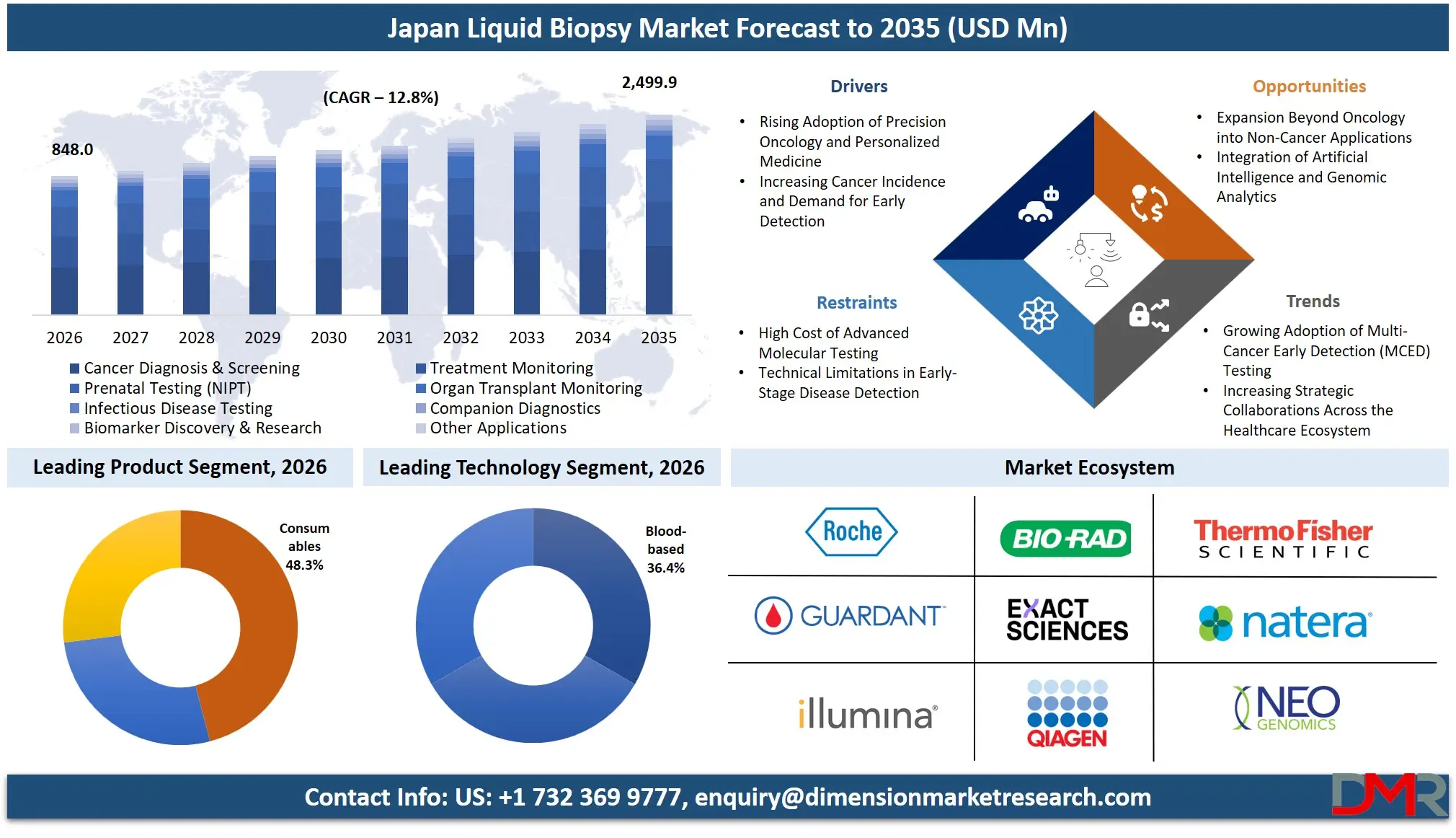
The Japan Liquid Biopsy Market is expected to reach a value of USD 848.0 million in 2026, and it is further anticipated to reach USD 2,499.9 million by 2035, growing at a CAGR of 12.8% during the forecast period.
ℹ
To learn more about this report –
Download Your Free Sample Report Here
The liquid biopsy market in Japan has witnessed impressive growth, driven by the nation's strategic focus on precision medicine and its rapidly aging population. This non-invasive diagnostic approach enables the detection and monitoring of diseases at the molecular level by analyzing circulating biomarkers such as tumor DNA, RNA, and cells from a simple blood, urine, or saliva sample. The escalating demand for early cancer detection and the need for real-time treatment monitoring to address the rising burden of cancer cases have necessitated significant research and development in this field. Pharmaceutical organizations and advanced diagnostic companies are the major drivers, with next-generation sequencing (NGS) and digital PCR technologies continuing to be the dominant analytical platforms due to their high sensitivity and precision.
Key Takeaways
- Market Size & Forecast: The Japan liquid biopsy market is forecast to attain a value of USD 848.0 million by 2026, expanding dramatically to USD 2,499.9 million by 2035, fueled by the robust adoption of advanced diagnostic technologies and Japan's accelerated approval pathways for companion diagnostics.
- Growth Rate & Outlook: The market is predicted to register a CAGR of 12.8%, attributed to a confluence of factors, including a critical mass of clinical research validating liquid biopsy utility and a paradigm shift towards non-invasive testing for a super-aging society.
- Primary Growth Drivers: Key growth drivers include the conditional reimbursement approval for innovative diagnostic tests, an increase in government attention towards genomic medicine, and a high prevalence of cancer, which creates a massive, addressable market for screening and monitoring.
- Key Market Trends: Prominent trends involve the clinical integration of NGS-based multi-cancer early detection (MCED) assays, the use of digital PCR for ultrasensitive minimal residual disease (MRD) monitoring, and heightened interest in exosome-based diagnostics for neurological disorders, which are more prevalent in Japan.
- By Product Analysis: The consumables segment is anticipated to dominate the Japan liquid biopsy market owing to the recurrent need for specialized blood collection tubes, high-quality reagents, and sensitive assay kits required for every test. The high frequency of serial testing for longitudinal cancer monitoring ensures a sustained and recurring revenue stream for this segment.
- By Technology Analysis: NGS-based platforms are projected to lead the market by technology, as they allow comprehensive multiplexed analysis of circulating nucleic acids, from broad mutation profiling for therapy selection to ultra-deep sequencing for MRD detection, aligning with the demands of precision oncology.
What is the Liquid Biopsy?
A liquid biopsy is a minimally invasive diagnostic technique that analyzes biomarkers, such as circulating tumor cells (CTCs), cell-free DNA (cfDNA), and extracellular vesicles (EVs), found in bodily fluids like blood or urine. Unlike a traditional tissue biopsy that requires a surgical procedure, a simple blood draw or urine sample provides a real-time snapshot of a disease's genetic landscape. This enables multiple applications, including early cancer screening, where pathogenic mutations are detected in asymptomatic individuals; therapy selection, where actionable genetic alterations are identified to guide treatment; and treatment monitoring, where the emergence of drug resistance or disease recurrence is tracked serially. Given Japan's expedited regulatory framework for innovative medical devices and diagnostics, clinical validation of liquid biopsy assays for these use cases has rapidly expanded.
Use Cases
- Longitudinal Cancer Monitoring: Oncologists in hospitals utilize serial cfDNA analysis via advanced consumables and software platforms to monitor a patient's response to targeted therapy, identifying resistance mutations months before they would be visible on a radiological scan.
- Non-Invasive Prenatal Testing (NIPT): Clinical laboratories employ blood-based NGS technology and specialized library preparation kits to screen maternal blood for fetal aneuploidies, replacing more invasive procedures like amniocentesis.
- Comprehensive Genomic Profiling for Therapy Selection: When tissue samples are insufficient, physicians order comprehensive liquid biopsy tests from reference laboratories. These services use NGS systems and bioinformatics software to screen for dozens of actionable mutations across multiple genes to guide treatment decisions in non-small cell lung cancer.
- Minimal Residual Disease (MRD) Detection: Biotechnology companies and hospitals are leveraging digital PCR and high-sensitivity NGS assays to detect traces of circulating tumor DNA after curative-intent surgery or chemotherapy, identifying patients at high risk of relapse.
How AI is Transforming the Liquid Biopsy Market?
The impact of AI on the Japanese liquid biopsy market involves exponentially accelerating the analysis of complex multi-analyte data and enhancing clinical decision support. In sequencing-based workflows, AI-driven bioinformatics software is deployed to denoise NGS data, distinguishing true low-frequency mutations from sequencing artifacts, which is critical for accurate MRD detection. Machine learning algorithms are also integral to multi-cancer early detection tests, where they are trained on vast, high-dimensional datasets of ctDNA methylation patterns and fragmentomic profiles to not only detect the presence of cancer but also predict its tissue of origin. Furthermore, AI-based cloud platforms are being developed to integrate liquid biopsy results with electronic health records and imaging data, providing oncologists with a holistic, AI-simulated assessment of a patient's disease trajectory and enabling proactive, personalized treatment adjustments in line with Japan's Society 5.0 vision.
Market Dynamics
Key Drivers in the Japan Liquid Biopsy Market
Rising Adoption of Precision Oncology and Personalized Medicine
Japan's healthcare system is increasingly embracing precision oncology, creating strong demand for liquid biopsy technologies that enable personalized treatment decisions. Liquid biopsy provides comprehensive molecular profiling through minimally invasive blood sampling, helping clinicians identify actionable genetic mutations and select targeted therapies. Growing adoption of companion diagnostics, increasing availability of targeted cancer drugs, and expanding genomic testing programs continue supporting market growth. Government initiatives promoting precision medicine and collaborations between pharmaceutical companies, diagnostic developers, and healthcare institutions further accelerate technology adoption. Continuous improvements in sequencing technologies and molecular diagnostics reinforce precision oncology as a primary driver of Japan's liquid biopsy market.
Increasing Cancer Incidence and Demand for Early Detection
The rising burden of cancer in Japan is significantly increasing demand for advanced diagnostic technologies capable of detecting malignancies at earlier stages. Liquid biopsy enables non-invasive cancer screening, recurrence monitoring, and treatment response assessment without requiring repeated tissue biopsies. Growing awareness among clinicians regarding the clinical value of circulating biomarkers has expanded adoption across major healthcare institutions. Improvements in diagnostic accuracy, faster turnaround times, and patient preference for minimally invasive procedures continue driving utilization. Expanding national cancer control initiatives, greater investment in molecular diagnostics, and increasing healthcare expenditure further strengthen the role of liquid biopsy in Japan's oncology landscape.
Restraints in the Japan Liquid Biopsy Market
High Cost of Advanced Molecular Testing
Liquid biopsy relies on sophisticated technologies including next-generation sequencing, digital PCR, and advanced bioinformatics platforms, resulting in relatively high testing costs. Significant investments are required for laboratory infrastructure, quality assurance, skilled personnel, and genomic data analysis. Smaller hospitals and regional diagnostic laboratories may face financial constraints limiting widespread implementation. In addition, reimbursement remains limited for certain emerging liquid biopsy applications, reducing accessibility for broader patient populations. These economic challenges may slow routine clinical adoption despite growing clinical evidence supporting liquid biopsy, particularly outside major academic medical centers and specialized oncology institutions across Japan.
Technical Limitations in Early-Stage Disease Detection
Although liquid biopsy technology continues to improve, detecting extremely low concentrations of circulating biomarkers in early-stage cancers remains technically challenging. Limited biomarker abundance may reduce test sensitivity, increasing the possibility of false-negative results for certain cancer types. Standardization across analytical platforms and laboratory procedures also remains an ongoing challenge affecting result consistency. Healthcare providers often continue relying on conventional tissue biopsy to confirm molecular findings before making treatment decisions. Addressing these technical limitations through improved assay sensitivity, standardized protocols, and enhanced validation studies remains essential for expanding routine clinical adoption throughout Japan.
Growth Opportunities in the Japan Liquid Biopsy Market
Expansion Beyond Oncology into Non-Cancer Applications
While oncology remains the primary application, liquid biopsy technologies offer substantial opportunities across prenatal testing, organ transplant monitoring, infectious disease diagnosis, and chronic disease management. Advances in circulating nucleic acid analysis enable earlier detection of transplant rejection, fetal abnormalities, and infectious pathogens using minimally invasive sampling. Increasing research investments and broader clinical validation continue expanding potential applications beyond cancer. Japan's aging population, advanced healthcare infrastructure, and growing focus on preventive medicine create favorable conditions for wider implementation. Diversification into multiple disease areas is expected to generate significant long-term growth opportunities for the national liquid biopsy market.
Integration of Artificial Intelligence and Genomic Analytics
Artificial intelligence and advanced bioinformatics are creating new opportunities by improving interpretation of complex genomic data generated through liquid biopsy testing. AI-powered algorithms enhance mutation detection, identify clinically relevant biomarkers, and support personalized treatment recommendations with greater speed and accuracy. Cloud-based genomic platforms enable efficient management of large sequencing datasets while facilitating collaboration among hospitals, research institutions, and pharmaceutical companies. Japan's continued digital transformation within healthcare and increasing investment in medical artificial intelligence support broader implementation of intelligent diagnostic solutions, creating valuable opportunities for innovation and commercial expansion across the liquid biopsy ecosystem.
Trends in the Japan Liquid Biopsy Market
Growing Adoption of Multi-Cancer Early Detection (MCED) Testing
A major trend in Japan's liquid biopsy market is the increasing development of multi-cancer early detection assays capable of identifying multiple tumor types from a single blood sample. Advances in sequencing technologies, methylation analysis, and biomarker discovery are significantly improving test sensitivity and specificity. Healthcare providers increasingly recognize the potential of these tests to enhance population screening and improve patient outcomes through earlier intervention. Ongoing clinical studies, growing pharmaceutical partnerships, and continued investment in precision diagnostics are accelerating commercialization efforts, making multi-cancer early detection one of the most influential trends shaping the future market.
Increasing Strategic Collaborations Across the Healthcare Ecosystem
Strategic collaborations among pharmaceutical companies, diagnostic developers, academic institutions, hospitals, and biotechnology firms are becoming increasingly common throughout Japan's liquid biopsy market. These partnerships accelerate biomarker discovery, technology development, assay validation, and commercialization while reducing development costs and improving access to specialized expertise. Joint clinical research programs support regulatory approvals and expand evidence for broader clinical adoption. International collaborations also facilitate technology transfer and integration of advanced sequencing platforms into Japanese healthcare. Growing cross-sector cooperation continues strengthening innovation capacity and accelerating the introduction of next-generation liquid biopsy solutions across the country's precision medicine ecosystem.
Research Scope and Analysis
The Japan Liquid Biopsy Market is segmented by Product (Consumables, Instruments, Software & Services), Biomarker Type (Circulating Nucleic Acids, Circulating Tumor Cells, Extracellular Vesicles, Others), Technology (Blood-based, Urine-based, Saliva & Other Body Fluids), Sample Type (Cloud-based, On-premise, Hybrid), Clinical Application (Cancer Diagnosis & Screening, Treatment Monitoring, NIPT, Organ Transplant Monitoring, Infectious Disease Testing, Companion Diagnostics, Biomarker Discovery & Research, Others), and End User (Hospitals & Laboratories, Specialty Clinics, Academic & Research Institutes).
ℹ
To learn more about this report –
Download Your Free Sample Report Here
By Product Analysis
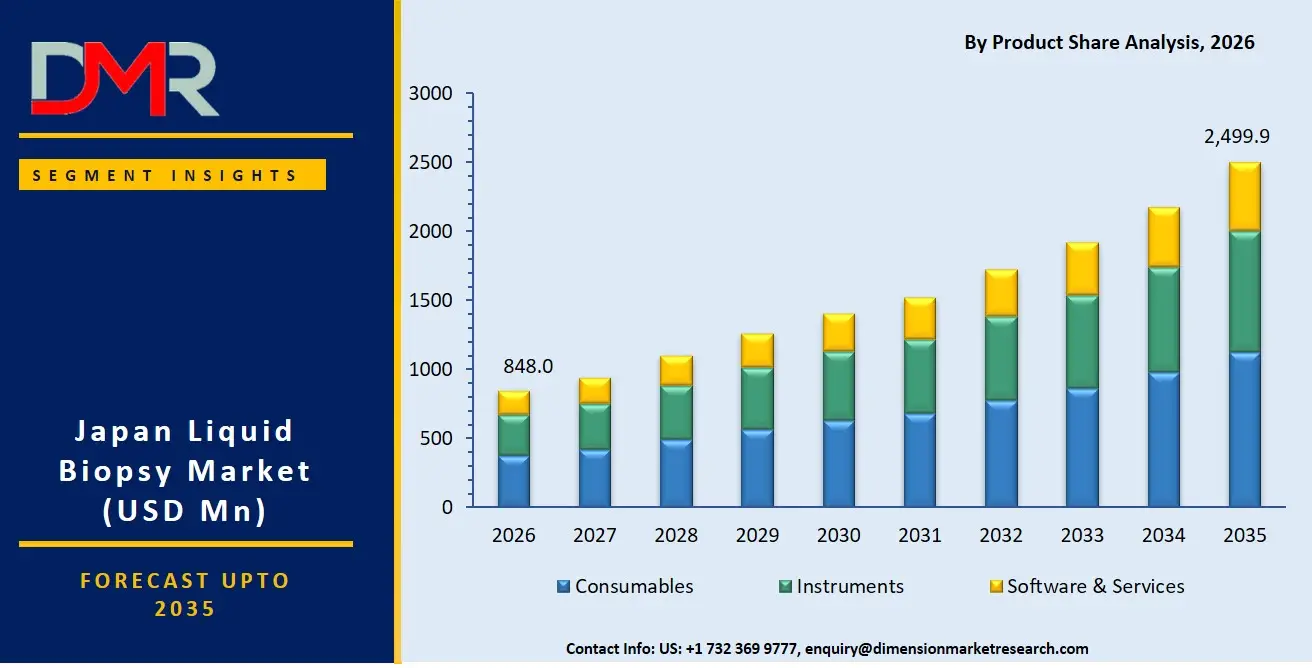
Consumables is projected to dominate the Japan liquid biopsy market because every diagnostic workflow requires continuous use of reagents, assay kits, extraction kits, sequencing consumables, and PCR reagents. Unlike instruments, which involve one-time capital purchases, consumables generate recurring revenue through routine testing and ongoing clinical research.
ℹ
To learn more about this report –
Download Your Free Sample Report Here
The increasing adoption of liquid biopsy for oncology diagnostics, treatment monitoring, and precision medicine has significantly boosted demand for high-quality consumables. Growing volumes of next-generation sequencing and PCR-based testing across hospitals, diagnostic laboratories, and research institutions further strengthen this segment. Continuous product innovation and expanding clinical applications ensure Consumables remain the largest contributor to Japan's liquid biopsy market.
By Biomarker Type Analysis
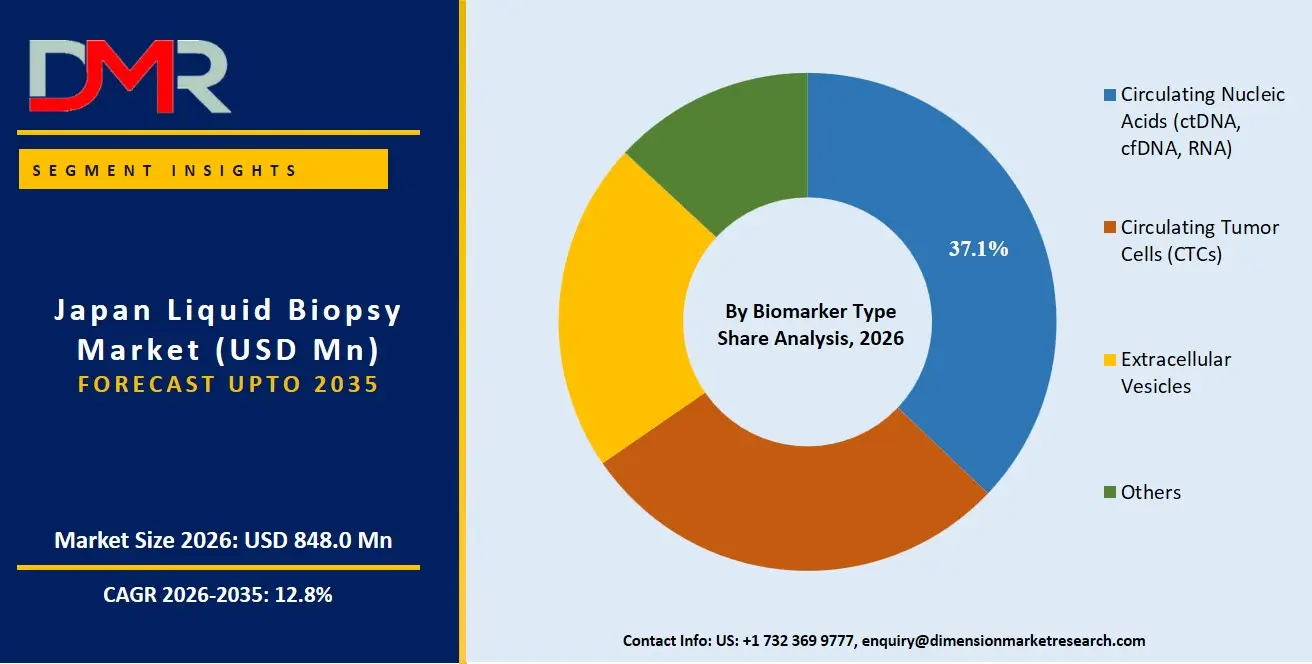
Circulating Nucleic Acids, including circulating tumor DNA (ctDNA), cell-free DNA (cfDNA), and circulating RNA, are poised to dominate the Japan liquid biopsy market due to their superior sensitivity and broad clinical utility. These biomarkers enable non-invasive cancer detection, mutation profiling, treatment selection, disease monitoring, and minimal residual disease assessment using simple blood samples. Advances in sequencing technologies and digital PCR have significantly improved detection accuracy for low-frequency genetic alterations. Pharmaceutical companies, diagnostic laboratories, and healthcare providers increasingly rely on circulating nucleic acids for precision oncology applications. Their expanding role in personalized medicine firmly establishes this biomarker category as Japan's leading market segment.
By Technology Analysis
Blood-based liquid biopsy is anticipated to dominate the Japan market because blood samples are easy to collect, minimally invasive, and widely accepted in routine clinical practice. Blood enables reliable detection of circulating tumor DNA, circulating tumor cells, extracellular vesicles, and other biomarkers used for cancer diagnosis and treatment monitoring. Most commercially available liquid biopsy assays and companion diagnostics are validated for blood specimens, supporting widespread clinical adoption. Japan's advanced healthcare infrastructure, increasing cancer screening programs, and growing implementation of precision medicine further encourage utilization of blood-based testing. High clinical reliability, patient convenience, and extensive regulatory acceptance reinforce blood-based technology as the dominant market segment.
By Sample Type Analysis
Cloud-based platforms is projected to dominate the Japan liquid biopsy market because they provide scalable storage, rapid genomic data processing, secure information sharing, and advanced bioinformatics capabilities required for high-throughput sequencing analysis. Clinical laboratories and research institutions increasingly utilize cloud infrastructure to manage large genomic datasets while enabling collaborative research across multiple healthcare facilities. Integration with artificial intelligence and machine learning further enhances variant interpretation and reporting efficiency. Growing digital transformation within Japan's healthcare sector and increasing demand for remote access to genomic information continue supporting cloud adoption. These operational advantages position cloud-based solutions as the leading deployment segment within the market.
By Clinical Application Analysis
Cancer Diagnosis & Screening is projected to represent the dominant clinical application because oncology accounts for the largest use of liquid biopsy technologies in Japan. Liquid biopsy enables early cancer detection, molecular profiling, treatment selection, recurrence monitoring, and minimal residual disease assessment without invasive tissue biopsies. Rising cancer prevalence, growing emphasis on precision oncology, and increased physician awareness have accelerated adoption across healthcare institutions. Pharmaceutical companies also utilize liquid biopsy to identify biomarkers and optimize targeted therapies during clinical development. Continuous technological improvements, expanding reimbursement support, and increasing integration into routine oncology practice firmly establish Cancer Diagnosis & Screening as the market's largest application segment.
By End User Analysis
Hospitals & Laboratories is poised to dominate the Japan liquid biopsy market because they perform the majority of cancer diagnostics, molecular testing, genomic profiling, and treatment monitoring services. These healthcare facilities possess advanced sequencing platforms, digital PCR systems, skilled laboratory professionals, and integrated pathology infrastructure required for accurate liquid biopsy testing. Growing patient volumes, increasing cancer screening initiatives, and expanding adoption of precision medicine have significantly increased testing demand. Hospitals also collaborate closely with pharmaceutical companies and academic institutions for clinical research and biomarker validation. Their comprehensive diagnostic capabilities and strong healthcare infrastructure make Hospitals & Laboratories the leading end-user segment in Japan.
The Japan Liquid Biopsy Market Report is segmented on the basis of the following:
By Product
- Consumables
- Blood Collection Tubes
- Reagents & Assay Kits
- Cell-Free DNA (cfDNA) Extraction Kits
- Cell-Free RNA (cfRNA) Extraction Kits
- Circulating Tumor Cell (CTC) Isolation Kits
- Exosome Isolation Kits
- Library Preparation Kits
- Sequencing Consumables
- PCR Reagents
- Other Consumables
- Instruments
- Next-Generation Sequencing (NGS) Systems
- PCR & qPCR Instruments
- Digital PCR (dPCR) Systems
- Microfluidic Platforms
- Automated Sample Preparation Systems
- Flow Cytometers
- Other Instruments
- Software & Services
- Bioinformatics Software
- Data Analysis & Interpretation Software
- Cloud-Based Analytics Platforms
- Laboratory Information Management Systems (LIMS)
- Sample Testing Services
- Data Analysis Services
- Consulting & Technical Support Services
- Other Software & Services
By Biomarker Type
- Circulating Nucleic Acids (ctDNA, cfDNA, RNA)
- Circulating Tumor Cells (CTCs)
- Extracellular Vesicles
- Others
By Technology
- Blood-based
- Urine-based
- Saliva & Other Body Fluids
By Sample Type
- Cloud-based
- On-premise
- Hybrid
By Clinical Application
- Cancer Diagnosis & Screening
- Early Cancer Detection
- Therapy Selection
- Minimal Residual Disease (MRD) Detection
- Cancer Recurrence Monitoring
- Treatment Monitoring
- Prenatal Testing (NIPT)
- Organ Transplant Monitoring
- Infectious Disease Testing
- Companion Diagnostics
- Biomarker Discovery & Research
- Other Applications
By End User
- Hospitals & Laboratories
- Specialty Clinics
- Academic & Research Institutes
Competitive Landscape
The competitive landscape of the Japan liquid biopsy market is intensely dynamic, characterized by strategic competition between global molecular diagnostics giants, domestic Japanese conglomerates, and highly specialized precision oncology companies. Critical success factors are moving beyond assay sensitivity to encompass end-to-end workflow integration, from automated sample preparation to AI-powered clinical reporting. Strategic alliances between NGS instrument manufacturers and pharmaceutical companies for companion diagnostics co-development are a defining feature of the market. Japanese trading companies are increasingly acting as conduits, in-licensing cutting-edge liquid biopsy platforms from abroad and leveraging their established distribution networks. Intellectual property related to proprietary ctDNA chemistries, unique EV isolation methods, and advanced machine learning algorithms for methylation-based tissue-of-origin prediction are key competitive moats.
Some of the prominent players in the Japan Liquid Biopsy Market are:
- Guardant Health, Inc.
- F. Hoffmann-La Roche Ltd.
- Illumina, Inc.
- Thermo Fisher Scientific Inc.
- QIAGEN N.V.
- Bio-Rad Laboratories, Inc.
- Exact Sciences Corporation
- Natera, Inc.
- Foundation Medicine, Inc.
- NeoGenomics, Inc.
- Sysmex Corporation
- FUJIFILM Holdings Corporation
- LSI Medience Corporation
- SRL, Inc.
- BML, Inc.
- Shimadzu Corporation
- Agilent Technologies, Inc.
- Danaher Corporation
- Personalis, Inc.
- Freenome Holdings, Inc.
- Other Key Players
Recent Developments
- December 2025: Guardant Health Japan Corp. received approval from Japan's Ministry of Health, Labour and Welfare for Guardant360® CDx as the first blood-based companion diagnostic to detect ESR1 mutations in hormone receptor-positive, HER2-negative metastatic or recurrent breast cancer patients eligible for imlunestrant therapy.
- January 2026: BillionToOne, Inc. announced that its Northstar Select® liquid biopsy assay was selected for the nationwide LC-SCRUM-TRY clinical study led by the National Cancer Center Hospital East to support genomic profiling of treatment-resistant non-small cell lung cancer.
- August 2024: Guardant Health Japan Corp. obtained MHLW approval for Guardant360® CDx as Japan's first blood-based companion diagnostic to identify EGFR exon 20 insertion mutations in patients with advanced non-small cell lung cancer eligible for amivantamab-based therapy.
- September 2025: RIKEN GENESIS Co., Ltd. received approval for the AmoyDx® Lung Cancer Multi-Gene PCR Panel as Japan's first companion diagnostic supporting taletrectinib treatment for patients with ROS1 fusion-positive non-small cell lung cancer, strengthening Japan's precision oncology and liquid biopsy ecosystem.
Report Details
| Report Characteristics |
| Market Size (2026) |
USD 848.0 Mn |
| Forecast Value (2035) |
USD 2,499.9 Mn |
| CAGR (2026–2035) |
12.8% |
| Historical Data |
2021 – 2025 |
| Forecast Data |
2027 – 2035 |
| Base Year |
2025 |
| Estimate Year |
2026 |
| Segments Covered |
By Product, By Biomarker Type, By Technology, By Sample Type, By Clinical Application, and By End User |
| Country Coverage |
Japan |
Frequently Asked Questions
How big is the Japan Liquid Biopsy Market?
▾ The Japan Liquid Biopsy market is poised to be valued at USD 848.0 million in 2026 and is projected to reach USD 2,499.9 million by 2035, driven by the universal shift toward non-invasive diagnostic solutions for the country’s aging population with a high prevalence of cancer.
What is the CAGR of the Japan Liquid Biopsy Market from 2026 to 2035?
▾ The market is expected to grow at a CAGR of 12.8% from 2026 to 2035, reflecting the accelerating clinical utility data and the nation's proactive regulatory and reimbursement framework enabling broader access to precision diagnostics.
What factors are driving the growth of the Japan Liquid Biopsy Market?
▾ Key drivers include Japan’s high cancer incidence in its super-aging society, expedited national health insurance coverage for validated liquid biopsy-based companion diagnostics, and a deep ecosystem of academic and industry collaboration in genomic medicine.
What are the major trends in the Japan Liquid Biopsy Market?
▾ Major trends include the development of multi-cancer early detection (MCED) assays using AI-driven analysis of methylation patterns, the shift toward automated and decentralized point-of-care microfluidic platforms, and a strong focus on MRD detection as a surrogate endpoint in clinical trials.
Who are the key players in the Japan Liquid Biopsy Market?
▾ Key players in the Japan Liquid Biopsy Market include Roche Diagnostics, Sysmex Corporation, Guardant Health, Illumina, Thermo Fisher Scientific, and Konica Minolta, driving innovation through advanced assay development, NGS instrumentation, AI-powered bioinformatics software, and strategic partnership activities.