What is the Japan Nanomedicine Market Size?
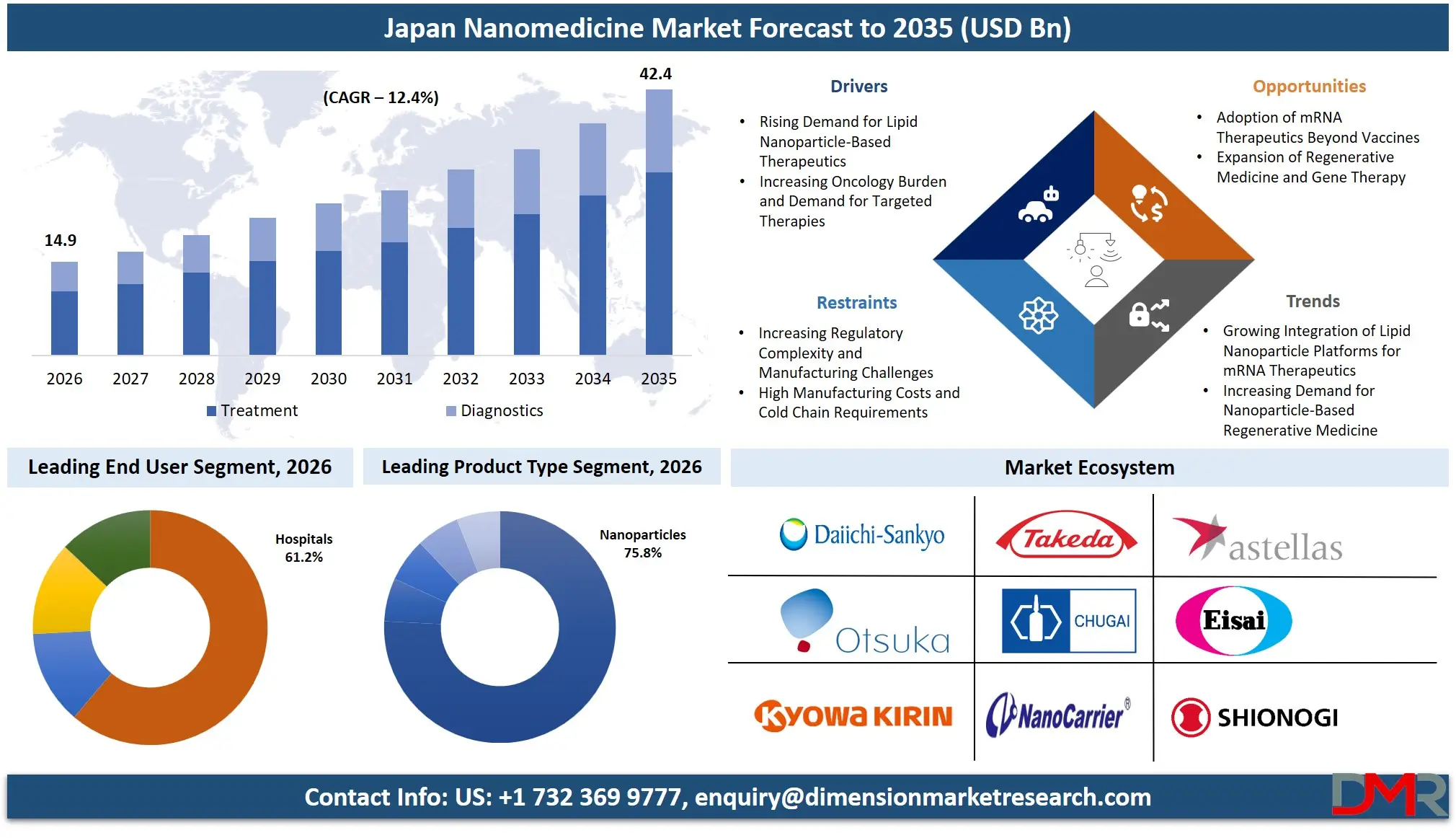
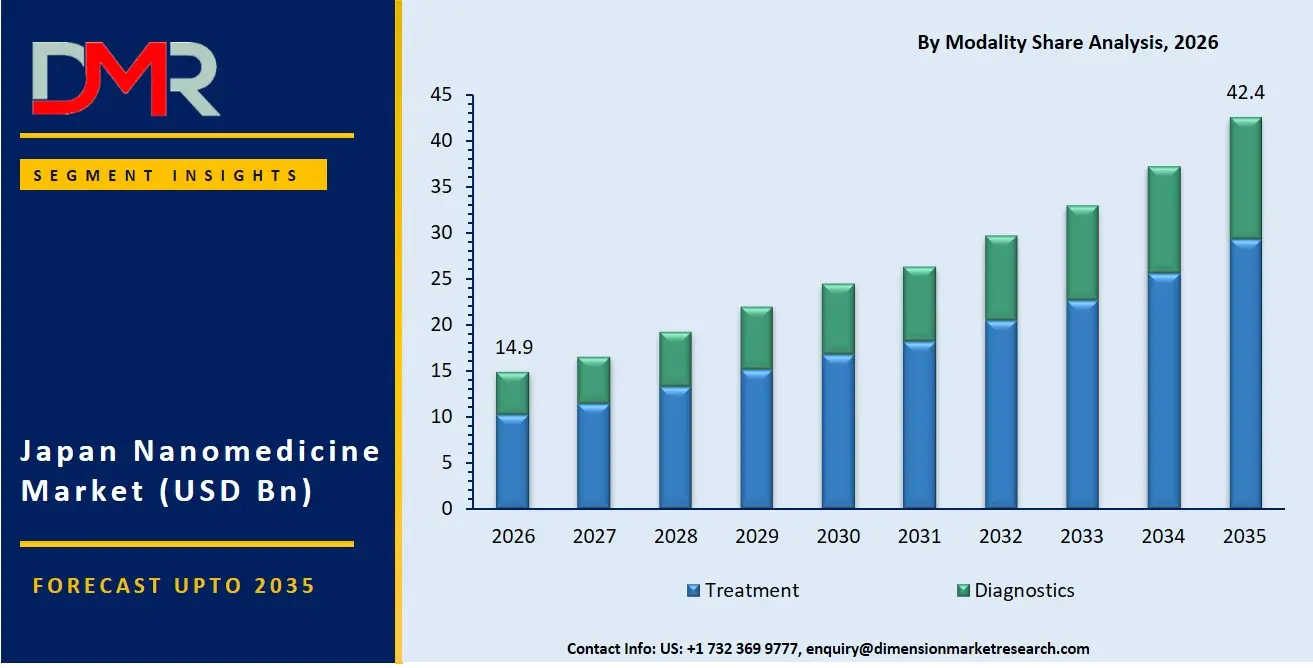
The Japan Nanomedicine Market is expected to reach a value of USD 14.9 billion in 2026, and it is further anticipated to reach USD 42.4 billion by 2035, growing at a CAGR of 12.4% during the forecast period.
ℹ
To learn more about this report –
Download Your Free Sample Report Here
The nanomedicine market is growing in Japan because the country relies on nanoscale technologies. These techs are used for better, more precise patient treatment. That includes nanoparticle drug systems, nanocarriers, and tiny diagnostic tools. Health care providers and customers use these for hospitals, clinics, and research projects. There's a big need for people skilled in making lipid nanoparticles, too.
They help with advanced mRNA treatments and protect biologics from breaking down. Also, they ensure top-notch, targeted meds get to those who need them. Big research hospitals and cancer centers buy the most nanomedicine stuff. They love lipid nanoparticles for their role in mRNA vaccines and cancer cures. On the other hand, growth in metallic nanoparticles supports antibody-drug combo methods.
ℹ
To learn more about this report –
Download Your Free Sample Report Here
Key Takeaways
- Market Size & Forecast: The Japan Nanomedicine market is forecasted to be valued at USD 14.9 billion in 2026, growing incrementally to USD 42.4 billion by 2035, due to ongoing advances in nanoparticle research, targeted drug delivery technologies, and increasing adoption of gene and cell therapy platforms.
- Growth Rate & Outlook: Japan market is expected to grow at 9.0% CAGR, propelled by the need for safer and more effective therapies, particularly in oncology, as well as the growing demand for advanced drug delivery solutions.
- Primary Growth Drivers: Key growth factors include rising use of nanoparticle-based therapeutics, expanding development of lipid nanoparticle platforms, and increasing focus on targeted treatment approaches that improve efficacy while reducing side effects.
- Key Market Trends: Major trends include wider adoption of mRNA-based therapeutics, growing use of AI in nanoparticle design and formulation development, and increased attention to nanomedicine safety and regulatory standards.
- By Product Type Analysis: Nanoparticles are expected to remain the leading segment owing to their broad use in targeted drug delivery, improved bioavailability, and ability to enhance treatment outcomes across multiple therapeutic areas.
- By Indication Analysis: Clinical Oncology is anticipated to account for the largest share of the market, supported by growing use of nanomedicine-based cancer therapies that offer better targeting, improved drug delivery, and lower systemic toxicity.
- By Application Analysis: Drug Delivery is projected to dominate the market due to the widespread use of liposomal and nanoparticle formulations that improve drug stability, solubility, and therapeutic effectiveness.
What is Nanomedicine?
Nanomedicines use nanotechnology to enhance health care in diagnosis, treatment, monitoring, and disease prevention. They work with tiny materials and devices that are roughly 1 to 100 nanometers in size, such as lipid and polymer particles, metal bits, liposomes, nanoshells, and tubes. This tech can improve drug solubility, bioavailability, and targeted release, making sure treatments hit the right spots inside your body without causing as many side effects. Unlike standard meds, nanomedicines focus on hitting their targets precisely at the cellular and molecular level. A great example is how tumors are tackled using something called the enhanced permeability and retention (EPR) effect. To make things even cooler, by attaching special surface ligands, these nano-gadgets can actively seek out problem areas. Some of them can even breach tough biological barriers, like the blood-brain barrier. All this makes nanomedicines really important in today's precision medicine scene, helping out big time with cancer, infections, and advanced diagnostics and regenerative treatments.
Use Cases
- Oncology Targeted Chemotherapy: For solid tumors, patients get liposomal dox or nanoparticle albumin-bound paclitaxel. These build up more in tumor tissue, cutting down on heart troubles and boosting time before the cancer spreads. It's an upgrade from older chemo methods.
- mRNA Vaccine Delivery: Hospital networks use lipid nanoparticle platforms to deliver mRNA vaccines. This method keeps the mRNA stable, helps it escape endosomes efficiently, and ensures proteins get made properly. It also follows local health safety rules.
- Iron Replacement Therapy: Municipal health authorities use ferric carboxymaltose iron nanoparticles for treating iron deficiency via IV. This helps monitor public health by controlling iron release and cutting down infusion reactions.
- Diagnostic Imaging: Large research hospitals leverage superparamagnetic iron oxide nanoparticles as MRI contrast agents to detect liver metastases and lymph node involvement with higher sensitivity than conventional gadolinium-based agents.
How AI is Transforming the Nanomedicine Market?
AI is transforming nanomedicine by speeding up nanoparticle design. It uses machine learning to sift through huge datasets, predicting which lipid nanoparticle mixes work best. This helps with optimizing particle size, too. These same AI systems model how nanoparticles interact with biological components, find top choices for targeted treatments, and adjust polymer makeups for better release control. Because of this, development moves faster, and companies avoid issues in later stages. Also, AI predicts nanotoxicity, allowing firms to check safety, pick the right doses, and tweak nanoparticle surfaces accordingly. AI forms an essential part of formulation governance and patient safety initiatives. Research platforms involve intelligent agents that predict nanoparticle degradation pathways and keep nanodrug characterization logs free of any non-compliant entries while ensuring that all operations comply with regulations and the stringent nanomedicine safety protocols in Japan.
Market Dynamics
Key Drivers in the Japan Nanomedicine Market
Rising Demand for Lipid Nanoparticle-Based Therapeutics
Lipid nanoparticles are really changing the Japan Nanomedicine Industry. They make treatments better, more accurate, and safer. Options like liposomal doxorubicin, nanoparticle albumin-bound paclitaxel, and mRNA lipid nanoparticles are big hits for cancer, infections, and rare illnesses. People are using these because of advances in how we understand things like the EPR effect, ways to modify surfaces, and better clinical tests. Japan's health industry is super innovative, especially in places like Tokyo and Osaka's national cancer centers. This helps bring in more of these useful treatments. Drug makers are also putting money into making nanomedicine production processes better, to keep the products high-quality and consistent. Because of all this, lipid nanoparticle therapies will likely be one of the most important parts of Japan's nanomedicine market. They work great on their own and even team up well with ADC methods in fighting cancer.
Increasing Oncology Burden and Demand for Targeted Therapies
The rising incidence of cancer in Japan's aging population is one of the factors that are contributing to growth structure in the Japan nanomedicine market. With over 1 million new cancer cases diagnosed annually and cancer remaining the leading cause of death in Japan, there is increasing demand for therapeutic delivery systems that improve efficacy while reducing systemic toxicity. Nanomedicines like liposomal irinotecan, nanoparticle albumin-bound paclitaxel, and polymer-conjugated camptothecin analogs make chemo more bearable. They help increase doses and free up hospital beds by cutting down bad side effects. Plus, using nanoparticles for drug delivery now lets older folks in both cities and towns across Japan access targeted therapies for cancer.
Restraints in the Japan Nanomedicine Market
Increasing Regulatory Complexity and Manufacturing Challenges
Regulatory restrictions play an important part in constraining market flexibility and becoming more prevalent in Japan. Regulatory frameworks for nanotoxicology assessments and physicochemical characterizations—covering things like particle size and sterility have been set up recently. Alongside this, nanomedicine makers now have to follow special GMP guidelines for stuff like lipid nanoparticles and polymeric carriers. This all makes the development and production process much more complex and expensive, particularly for biologic-nanoparticle conjugates, which already take ages to develop. Another issue is that the PMDA updates its guidelines a lot, forcing firms to constantly validate their methods and update their documents. Not sticking to these rules can result in big problems like delays or even having products recalled.
High Manufacturing Costs and Cold Chain Requirements
The Japanese nanomedicine market faces constraints from high production costs associated with specialized equipment (microfluidics, high-pressure homogenizers), expensive raw materials (specialty lipids, polymers), and stringent quality control requirements. Unlike conventional small-molecule drugs, lipid nanoparticles and many biologic-nanoparticle conjugates require cold chain storage and distribution (2-8°C or -20°C to -80°C for mRNA formulations), adding significant logistics expenses. Furthermore, the two-year price revision procedure under the National Health Insurance (NHI) program puts pressure on premium-priced nanomedicines, requiring clear demonstration of superior clinical benefit over conventional therapies for favorable reimbursement decisions.
Growth Opportunities in the Japan Nanomedicine Market
Adoption of mRNA Therapeutics Beyond Vaccines
mRNA-based therapeutics delivered via lipid nanoparticles look really promising for Japan's nanomedicine industry. The success of COVID-19 mRNA vaccines shows that lipid nanoparticle platforms work great for delivering nucleic acids. Now, there are clinical trials going on for mRNA cancer vaccines, protein replacement therapies, and even gene editing. Plus, Japan is super ready for these mRNA nanomedicines because the country prioritizes the quality of health care and is advanced in biotech. So, everything's lining up nicely for this field to take off there. AI-assisted mRNA sequence design and nanoparticle formulation optimization are becoming increasingly popular in development processes. In addition, the aging population and high prevalence rates of chronic conditions in Japan increase the demand for novel therapeutic modalities. As time passes, mRNA lipid nanoparticles will help to develop more effective vaccines and protein replacement therapies.
Expansion of Regenerative Medicine and Gene Therapy
The rise of regenerative medicine and gene therapy in Japan, backed by the Act on the Safety of Regenerative Medicine and changes in the Pharmaceutical Affairs Law, offers new paths for nanomedicine firms. These advances use nanoparticle-based gene delivery systems, such as polymeric, lipid, and inorganic types, to safely tweak stem cells and for direct in vivo gene editing. Take CRISPR-Cas9; its delivery benefits greatly from the precision and safety that lipids offer. Also, nanofiber scaffolds and reinforced hydrogels boost tissue engineering results. With strong nanotech support and a drive toward creative medical solutions, Japan nurtures these therapies. Companies and research places in academia are joining forces more now than before.
Trends in the Japan Nanomedicine Market
Growing Integration of Lipid Nanoparticle Platforms for mRNA Therapeutics
A big trend in Japan's nanomedicine scene is the fast growth of lipid nanoparticle-based mRNA treatments. More patients are getting LNP-formulated mRNA vaccines and cancer immunotherapies that do a great job at targeting antigen-presenting cells. Plus, there are LNPs being developed for rare diseases and in vivo gene editing moving through clinical stages. These LNPs offer excellent protection for nucleic acids and make it easier for therapeutic agents to escape the endosome, boosting their effectiveness. Because of Japan's robust nanotechnology research base, these platforms are adopted quickly, too.
Increasing Demand for Nanoparticle-Based Regenerative Medicine
A notable development in the nanomedicine industry of Japan relates to the growing interest in nanoparticle-based scaffolds and drug-eluting implants that allow sustained release of growth factors and differentiation factors. Such devices as nanofiber meshes, nanoparticle-reinforced hydrogels, and nanoceramic bone grafts are becoming more common in orthopedic and dental applications. Through this process, better tissue integration and healing outcomes are established between patients and practitioners, and treatment of bone defects and cartilage injuries becomes more effective. Integration of nanoparticle-based growth factor delivery is being facilitated by collaboration between nanomedicine organizations and regenerative medicine centers focused on facilitating integrated care practices, especially for elderly patients with osteoarthritis and spinal disorders. Given the aging population, these services are becoming increasingly popular in Japan, which helps improve quality of life and reduce long-term healthcare costs.
Research Scope and Analysis
The Japan Nanomedicine Market is segmented by product type, modality, indication, application, and end user. The market supports hospital oncology drug delivery, clinical diagnostic imaging, research institute nanotherapy development, and government public health across individual consumers, small clinics, large hospital networks, educational institutions, and government health agencies through lipid nanoparticle, polymeric nanoparticle, and metallic nanoparticle platforms.
ℹ
To learn more about this report –
Download Your Free Sample Report Here
By Product Type Analysis
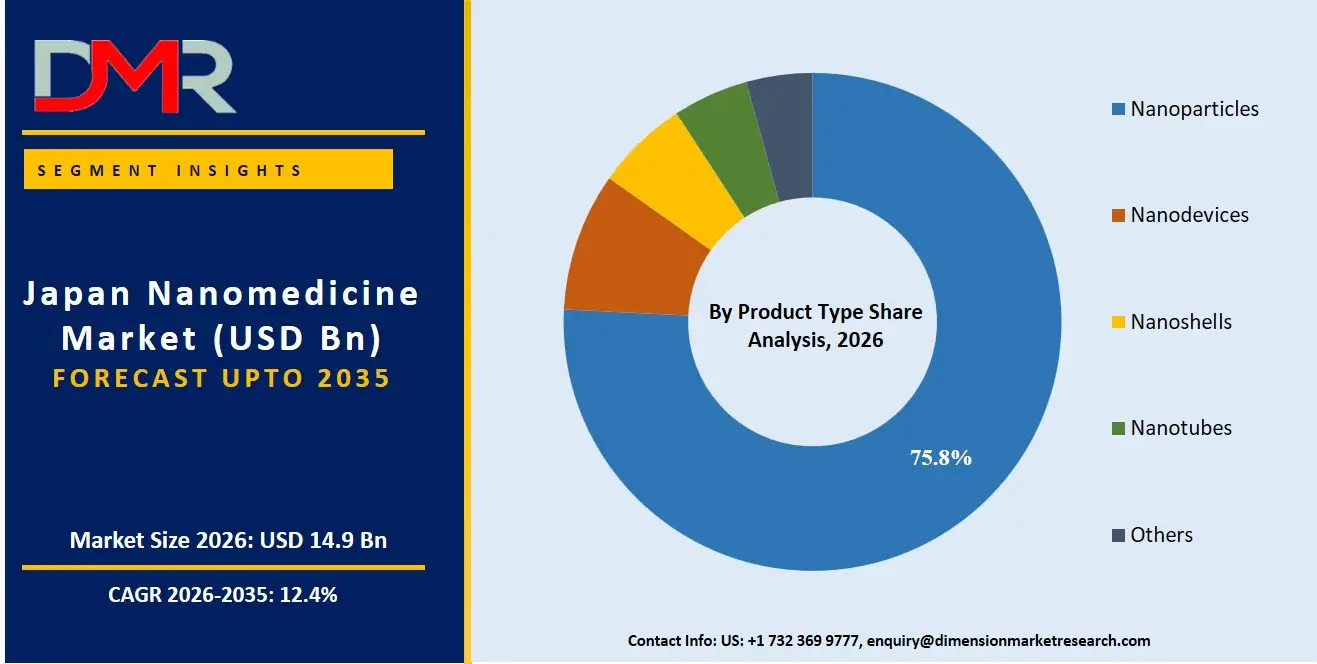
Nanoparticles are expected to lead the Japan Nanomedicine Market in 2026 with a projected market share of 75.8% as a result of healthcare providers' growing preference for targeted therapy platforms. Japanese patients have developed a preference for lipid nanoparticles, polymeric nanoparticles, and metallic nanoparticles for performing such functions as passive tumor targeting, controlled drug release, and enhanced oral bioavailability. Lipid nanoparticles specifically are likely to occupy the leading sub-segment due to the rising trend in favor of mRNA therapeutics and nucleic acid delivery across hospital networks. Polymeric nanoparticles continue their growth as a consequence of increased controlled-release initiatives and ongoing chronic disease management modernization projects in Tokyo, Osaka, and Nagoya. Other product types including nanoshells, nanodevices, nanotubes, and others continue to serve niche applications such as thermal ablation therapies and nanoscale diagnostic procedures among Japan's aging demographics.
By Modality Analysis
The Treatment segment is projected to dominate the Japan Nanomedicine Market in 2026 with an estimated share of 68.7%, driven by strong clinical adoption of nanoparticle-based therapeutic platforms across oncology, infectious disease, and regenerative medicine applications. Japanese healthcare providers prefer treatment-oriented nanomedicines such as liposomal chemotherapeutics, mRNA lipid nanoparticle vaccines, and polymeric nanocarriers for chronic disease management due to their enhanced efficacy, reduced systemic toxicity, and targeted delivery capabilities. The Diagnostics segment continues to support the market through nanoparticle-enhanced imaging agents, point-of-care nanodiagnostic devices, and molecular detection platforms used across hospital radiology departments and research settings.
By Indication Analysis
Clinical Oncology is projected to dominate the Japanese Nanomedicine Market in 2026, accounting for an estimated 47.3% share, driven by extensive use of liposomal chemotherapeutics and nanoparticle albumin-bound drugs across both urban and rural populations. Their dominance is supported by strong prescribing patterns in breast, lung, gastric, and colorectal cancers, particularly among Japan's aging population. Other indications including infectious diseases, neurology, clinical cardiology, orthopedics, urology, ophthalmology, and immunology continue to expand as nanoparticle platforms demonstrate utility in vaccine delivery, blood-brain barrier crossing, anti-restenosis formulations, and regenerative medicine applications across Japanese healthcare settings.
By Application Analysis
The Drug Delivery segment is expected to lead with 61.2% share in 2026, driven by strong demand for targeted and controlled-release nanocarriers. Patients and clinicians prefer lipid and polymeric nanoparticles for chronic disease management, offering enhanced bioavailability, reduced systemic toxicity, and extended circulation time. Demand is concentrated in major cities such as Tokyo, Osaka, and Yokohama, where higher healthcare access supports nanomedicine adoption. Other applications including diagnostic imaging, vaccines, regenerative medicine, and implants continue to grow steadily, supported by nanoparticle-enhanced contrast agents, mRNA lipid nanoparticle platforms, nanofiber scaffolds for tissue engineering, and nanocoatings for orthopedic and dental devices across hospital and research institute settings.
By End User Analysis
Hospitals are anticipated to dominate the Japan Nanomedicine Market in 2026 with an estimated share of 61.2%, owing to Japanese patients' strong preference for specialized oncology care, availability of infusion suites for intravenous nanomedicines, and access to multidisciplinary cancer care. Major hospital networks continue to attract patients through comprehensive cancer centers, integrated chemotherapy administration areas, and on-site clinical research capabilities. Other end users including research institutes and clinics continue to contribute to market growth through government-funded nanomedicine R&D projects, academic-industry collaborations, nanoparticle formulation development, and adoption of point-of-care nanodiagnostic devices across Japanese healthcare and research infrastructure.
The Japan Nanomedicine Market Report is segmented based on the following:
By Product Type
- Nanoparticles
- Lipid Nanoparticles
- Polymeric Nanoparticles
- Metallic Nanoparticles
- Nanoshells
- Nanotubes
- Nanodevices
- Others
By Modality
By Indication
- Clinical Oncology
- Infectious Diseases
- Clinical Cardiology
- Orthopedics
- Neurology
- Urology
- Ophthalmology
- Immunology
- Others
By Application
- Drug Delivery
- Diagnostic Imaging
- Vaccines
- Regenerative Medicine
- Implants
- Others
By End User
- Hospitals
- Clinics
- Research Institutes
- Others
Competitive Landscape
The dynamics of competition in the Japan Nanomedicine marketplace have developed to become increasingly dynamic, with a wide range of multinational nanomedicine manufacturers and Japanese pharmaceutical companies specializing in various niche nanotherapeutic categories such as clinical oncology, infectious diseases, neurology, and regenerative medicine. The essential ingredient for success is found in deep-seated strategic partnerships with lipid and polymer raw material suppliers, contract development and manufacturing organizations (CDMOs), and academic research institutions in Japan, which strengthen nanomanufacturing capabilities and enable advanced formulation expertise to be delivered alongside core nanomedicine products. Market consolidation trends are moving steadily ahead, with established players in the pharmaceutical industry acquiring specialized nanoparticle formulation, lipid excipient, and analytical characterization capability providers to enhance lipid nanoparticle functionality and targeting performance features. Proprietary intellectual property rights, with novel lipid excipients, polymer compositions, and surface functionalization strategies, hold increasing importance compared to just competitive nanodrug pricing.
Some of the prominent players in the Japan Nanomedicine Market are:
- Takeda Pharmaceutical Company Limited
- Daiichi Sankyo Company, Limited
- Astellas Pharma Inc.
- Chugai Pharmaceutical Co., Ltd.
- Otsuka Holdings Co., Ltd.
- Eisai Co., Ltd.
- Mitsubishi Tanabe Pharma Corporation
- Kyowa Kirin Co., Ltd.
- Shionogi & Co., Ltd.
- NanoCarrier Co., Ltd.
- FUJIFILM Holdings Corporation
- Pfizer Inc.
- F. Hoffmann-La Roche Ltd
- Merck & Co., Inc.
- Johnson & Johnson
- Novartis AG
- Sanofi S.A.
- Teva Pharmaceutical Industries Ltd.
- AbbVie Inc.
- Gilead Sciences, Inc.
- Other Key Players
Recent Developments
- February 2026: Daiichi Sankyo Company, Limited announced that DS-3790, the company's first DXd antibody-drug conjugate (ADC) candidate for hematological malignancies, entered clinical development. The development expands Daiichi Sankyo's industry-leading ADC portfolio and reinforces its position in nanomedicine-enabled targeted therapeutics.
- February 2026: FUJIFILM Holdings Corporation expanded its biologics CDMO manufacturing capabilities through FUJIFILM Diosynth Biotechnologies, investing in advanced biologics and next-generation therapeutic production technologies. The expansion strengthens the company's role in supporting antibody-based therapies, complex biologics, and advanced drug-delivery platforms within the nanomedicine ecosystem.
- January 2026: Takeda Pharmaceutical Company Limited entered a global collaboration and license agreement with Halozyme Therapeutics to utilize ENHANZE drug-delivery technology with vedolizumab (ENTYVIO). The partnership is aimed at advancing innovative drug-delivery approaches and improving patient access through enhanced biologic administration technologies.
- October 2025: Chugai Pharmaceutical Co., Ltd. entered a licensing agreement with Rani Therapeutics valued at up to USD 1.09 billion to develop and commercialize oral formulations of Chugai antibody therapies using Rani's oral drug-delivery platform, supporting innovation in non-invasive biologic delivery technologies.
Report Details
| Report Characteristics |
| Market Size (2026) |
USD 14.9 Bn |
| Forecast Value (2035) |
USD 42.4 Bn |
| CAGR (2026–2035) |
12.4% |
| Historical Data |
2021 – 2025 |
| Forecast Data |
2027 – 2035 |
| Base Year |
2025 |
| Estimate Year |
2026 |
| Segments Covered |
By Product Type, By Modality, By Indication, By Application, By End User |
| Country Coverage |
Japan |
Frequently Asked Questions
How big is the Japan Nanomedicine Market?
▾ The Japan Nanomedicine Market is poised to be valued at USD 14.9 billion in 2026 and is projected to reach USD 42.4 billion by 2035.
What is the CAGR of the Japan Nanomedicine Market from 2026 to 2035?
▾ The market is projected to grow at a CAGR of around 12.4% from 2026 to 2035, supported by premium nanoparticle adoption, mRNA vaccine platform growth, and consistent demand for more effective and less toxic cancer therapies in a mature healthcare ecosystem.
What factors are driving the growth of the Japan Nanomedicine Market?
▾ Growth is driven by rising demand for lipid nanoparticle-based mRNA therapeutics, nanoparticle-enabled drug delivery for poorly soluble compounds, regenerative medicine applications, and the need for reduced systemic toxicity in cancer treatment. Japan's aging population and high cancer incidence also support steady market expansion.
What are the major trends in the Japan Nanomedicine Market?
▾ Key trends include lipid nanoparticle platforms for mRNA delivery, AI-assisted nanoparticle design, increasing demand for nanoparticle-based regenerative medicine, and complementarity with antibody-drug conjugate approaches. Researchers and clinicians prefer nanoparticle formulations that improve bioavailability, reduce toxicity, and enable targeted delivery.
Who are the key players in the Japan Nanomedicine Market?
▾ Key players include Takeda Pharmaceutical Company Limited, Daiichi Sankyo Company, Limited, Eisai Co., Ltd., Chugai Pharmaceutical Co., Ltd., NanoCarrier Co., Ltd., NOF Corporation, and many more.
How is the Japan Nanomedicine Market segmented?
▾ The market is segmented by product type, modality, indication, application, and end user.