Japan Radiopharmaceuticals Market Snapshot
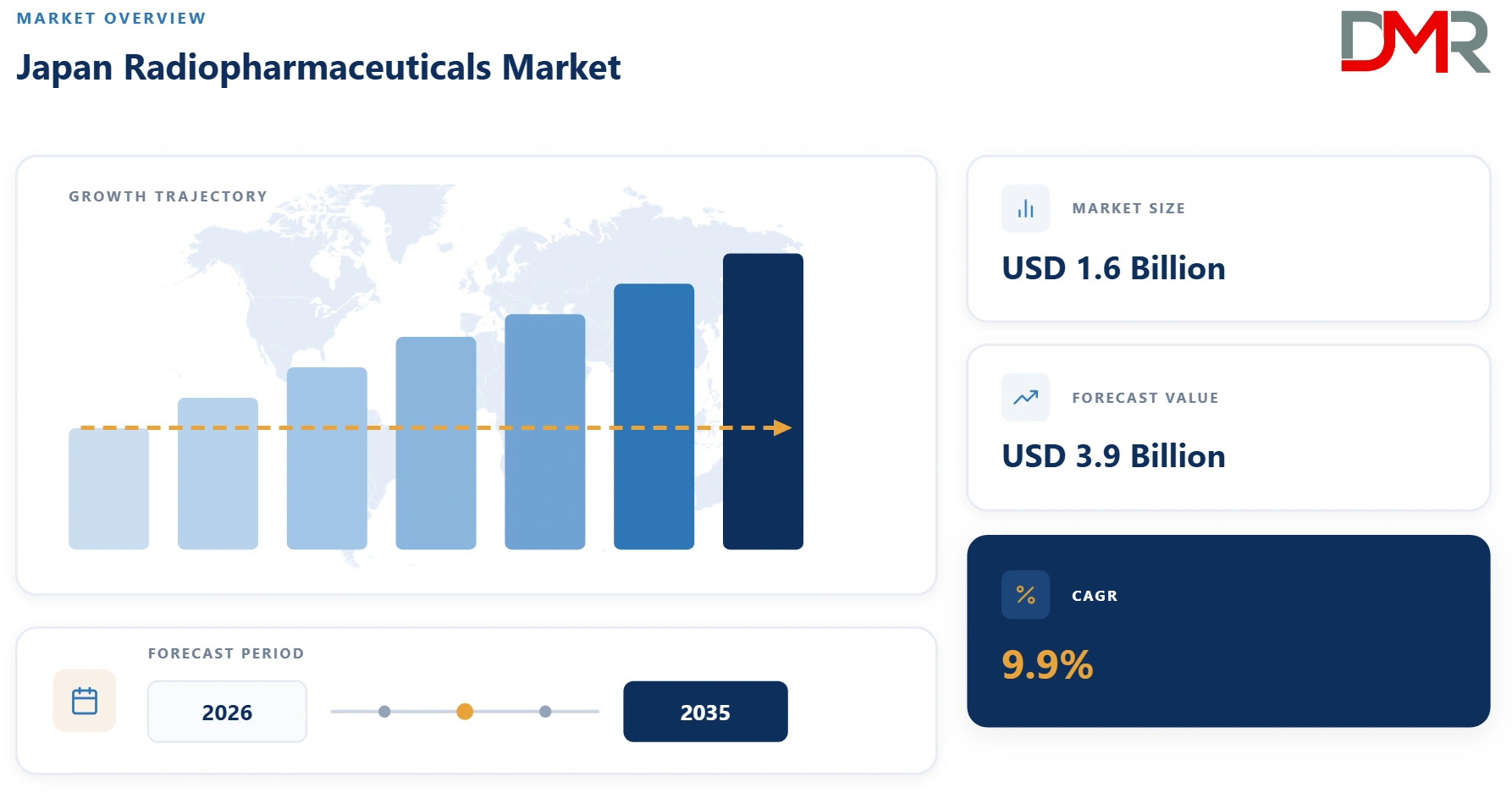
- Japan Radiopharmaceuticals Market Size in 2026: USD 1.6 Billion
- Japan Radiopharmaceuticals Market Size in 2035: USD 3.9 Billion
- Japan CAGR from 2026 to 2035: 9.9%
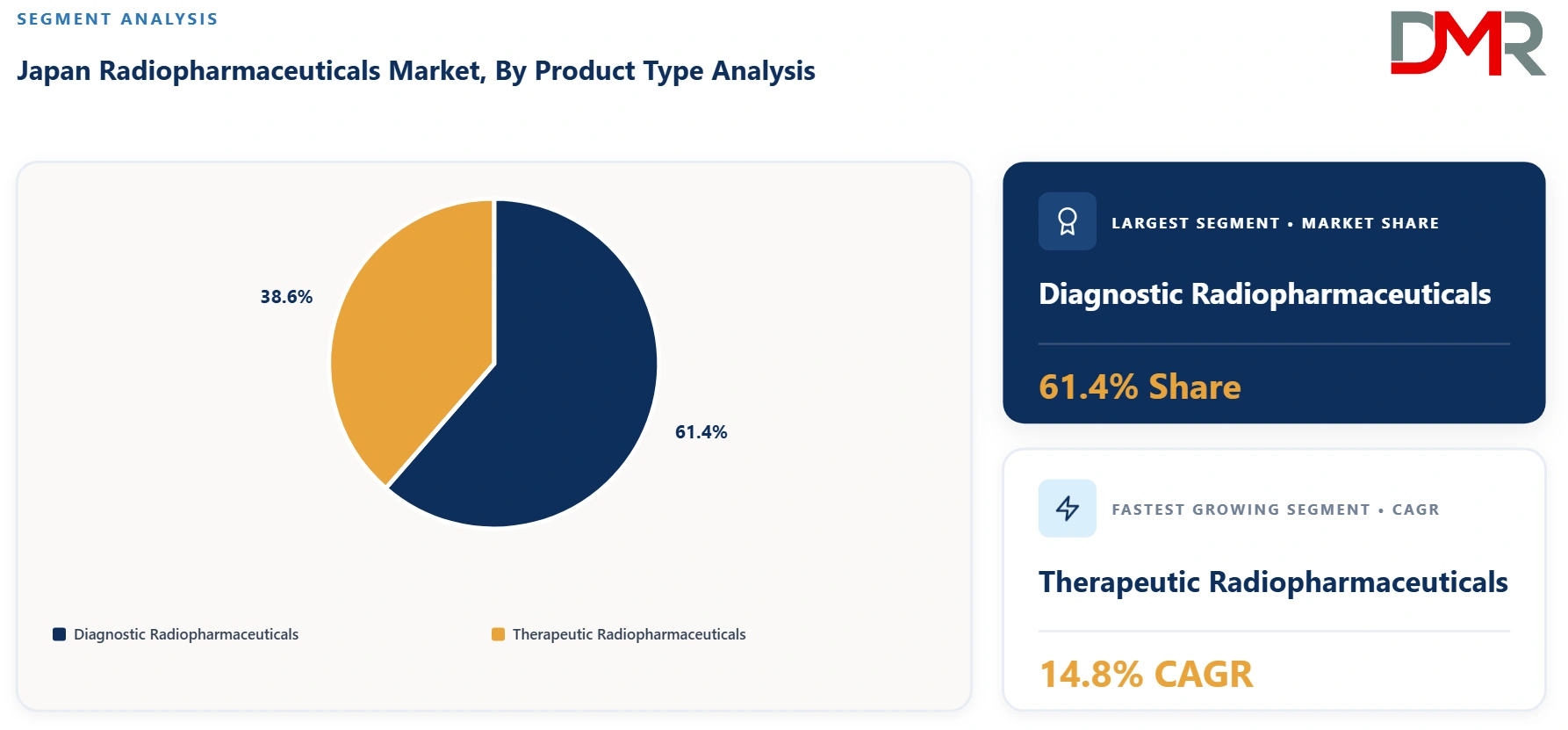
- Diagnostic Radiopharmaceuticals is the leading product type segment in 2026: 61.4%
- Technetium-99m is the leading radioisotope type segment in 2026: 34.8%
- Oncology is the leading application segment in 2026: 48.6%
- Hospitals is the leading end user segment in 2026: 58.3%
What is the Japan Radiopharmaceuticals Market and its Market Size?
The Japan Radiopharmaceuticals Market is projected to be valued at USD 1.6 Billion in 2026 and is projected to reach USD 3.9 Billion by 2035, expanding at a CAGR of 9.9% during the forecast period.
ℹ
To learn more about this report –
Download Your Free Sample Report Here
Growth is being propelled by Japan's rapidly aging population driving substantial growth in cancer incidence and associated diagnostic imaging and therapeutic demand, sustained government and pharmaceutical industry investment in radioligand therapy development following global clinical successes in targeted radiopharmaceutical cancer treatment, and Japan's well-established nuclear medicine infrastructure and long clinical experience with diagnostic radiopharmaceutical imaging. The maturing of targeted alpha and beta particle therapy technologies offering more precise cancer treatment with reduced off-target effects, growing domestic radioisotope production capacity investment to reduce reliance on imported medical isotopes, and continued expansion of PET imaging infrastructure across Japanese hospitals supporting both oncology diagnosis and broader neurological and cardiac imaging applications are reshaping the market from a traditionally diagnostic-imaging-focused nuclear medicine sector into an increasingly therapeutic-oriented, technologically advanced radiopharmaceutical industry. Investment is accelerating as Japanese pharmaceutical companies and research institutions pursue both domestic radioisotope production capability and participation in the global radioligand therapy development pipeline.
Use Cases
- PET Imaging for Oncology Diagnosis and Treatment Monitoring: Japanese hospitals and diagnostic imaging centers use fluorine-18 and gallium-68-based PET radiopharmaceuticals to diagnose, stage, and monitor treatment response across a wide range of cancer types, supporting Japan's substantial and growing oncology patient population.
- Technetium-99m-Based Diagnostic Imaging for Cardiac and Bone Studies: Healthcare providers rely on technetium-99m-based radiopharmaceuticals for widely used diagnostic imaging applications including myocardial perfusion studies and bone scintigraphy, reflecting the isotope's established role as a nuclear medicine imaging workhorse.
- Lutetium-177-Based Targeted Radioligand Therapy for Cancer Treatment: Oncology centers increasingly offer lutetium-177-based targeted radioligand therapies for neuroendocrine tumors and prostate cancer, reflecting global clinical advances in targeted radiopharmaceutical cancer treatment that deliver radiation directly to cancer cells while limiting healthy tissue exposure.
- Iodine-131 Therapy for Thyroid Disorder Treatment: Endocrinologists and nuclear medicine specialists use iodine-131 radiopharmaceutical therapy for treating hyperthyroidism and differentiated thyroid cancer, representing one of the most established and long-standing therapeutic radiopharmaceutical applications in clinical practice.
Key Takeaways
- Market Size: The Japan Radiopharmaceuticals Market is anticipated to be valued at USD 1.6 Billion in 2026 and is forecast to reach USD 3.9 Billion by 2035, expanding at a CAGR of 9.9%.
- Growth Outlook: Market expansion is sustained by Japan's rapidly aging population driving cancer incidence growth, sustained investment in radioligand therapy development following global clinical successes, and Japan's well-established nuclear medicine infrastructure and clinical expertise.
- Primary Growth Drivers: Rapidly aging population driving cancer incidence and diagnostic imaging demand growth, sustained investment in targeted radioligand therapy development, growing domestic radioisotope production capacity investment, and continued PET imaging infrastructure expansion are accelerating market growth.
- By Product Type Analysis: Diagnostic Radiopharmaceuticals is projected to lead the product type segment with a 61.4% share in 2026, reflecting Japan's well-established diagnostic nuclear medicine imaging infrastructure and clinical practice. Therapeutic Radiopharmaceuticals is the fastest-growing product type segment at 14.8% CAGR, driven by rapid adoption of targeted radioligand therapy following global clinical advances.
- By Radioisotope Type Analysis: Technetium-99m is expected to dominate with a 34.8% share in 2026, supported by its established, cost-effective role across widely used diagnostic imaging applications. Lutetium-177 is the fastest-growing radioisotope type segment at 16.4% CAGR, driven by expanding targeted radioligand therapy adoption for neuroendocrine tumors and prostate cancer.
- By Application Analysis: Oncology is poised to lead with a 48.6% share in 2026, reflecting both diagnostic and therapeutic radiopharmaceutical demand tied to Japan's substantial and growing cancer patient population. Oncology is also the fastest-growing application segment given the significant expansion of targeted radioligand cancer therapy.
- By End User Analysis: Hospitals are projected to dominate with a 58.3% share in 2026, reflecting their central role in both diagnostic imaging and radiopharmaceutical therapy administration. Diagnostic Imaging Centers is the fastest-growing end user segment at 11.2% CAGR, driven by continued expansion of dedicated PET and nuclear medicine imaging capacity.
Key Drivers in the Japan Radiopharmaceuticals Market
Rapidly Aging Population Driving Cancer Incidence and Diagnostic Imaging Demand
Japan's position as one of the world's most rapidly aging societies, with one of the highest proportions of elderly population globally, is driving substantial growth in cancer incidence and associated demand for diagnostic imaging and therapeutic radiopharmaceutical products. As age-related cancer risk continues to expand Japan's oncology patient population, sustained demand growth for both diagnostic radiopharmaceuticals supporting cancer detection and staging, and therapeutic radiopharmaceuticals supporting treatment, is expected to continue as a structural, demographically-driven market driver throughout the forecast period.
Sustained Investment in Radioligand Therapy Following Global Clinical Successes
Significant global clinical successes in targeted radioligand therapy, particularly within neuroendocrine tumor and prostate cancer treatment, have generated substantial pharmaceutical industry and research investment in expanding radioligand therapy development and clinical adoption within Japan. Japanese pharmaceutical companies and healthcare institutions are increasingly investing in radioligand therapy clinical trial participation, treatment infrastructure, and domestic radioisotope supply capability to support anticipated growth in this therapeutic category, reflecting confidence in the continued clinical and commercial expansion of targeted radiopharmaceutical cancer treatment.
Restraints in the Japan Radiopharmaceuticals Market
Radioisotope Supply Chain Vulnerability and Short Half-Life Logistics Challenges
Japan's radiopharmaceutical industry faces meaningful supply chain vulnerability associated with radioisotope production and distribution, given that many key isotopes used in radiopharmaceutical products have very short half-lives requiring rapid production-to-patient delivery timelines and limiting the feasibility of extensive inventory buffering. Japan's historical reliance on imported medical isotopes for certain radiopharmaceutical products creates supply chain risk exposure to international production disruptions, and the specialized nuclear reactor and cyclotron infrastructure required for domestic isotope production requires substantial capital investment that has historically constrained full domestic supply self-sufficiency.
Growth Opportunities in the Japan Radiopharmaceuticals Market
Domestic Radioisotope Production Capacity Expansion for Supply Chain Resilience
Growing recognition of radioisotope supply chain vulnerability presents a substantial opportunity for Japanese companies and research institutions to invest in expanded domestic radioisotope production capacity, reducing reliance on imported medical isotopes and improving supply chain resilience for both diagnostic and therapeutic radiopharmaceutical products. Companies and institutions capable of establishing reliable domestic production capability for key isotopes, particularly those supporting the growing radioligand therapy category, can capture significant strategic value and government support given the national health security considerations associated with radiopharmaceutical supply chains.
Targeted Alpha Therapy Development for Next-Generation Cancer Treatment
Growing global clinical interest in targeted alpha particle therapy, offering potentially greater treatment precision and effectiveness compared to beta particle-based radioligand therapies for certain cancer types, presents a substantial opportunity for Japanese pharmaceutical companies and research institutions to participate in this emerging next-generation radiopharmaceutical therapy category. Companies investing early in alpha-emitting isotope production capability and targeted alpha therapy clinical development can position themselves advantageously as this therapeutic category continues to mature globally.
Trends in the Japan Radiopharmaceuticals Market
Growing Government and Industry Collaboration on Radioisotope Supply Security
Japanese government agencies and pharmaceutical industry stakeholders are increasingly collaborating on initiatives aimed at strengthening domestic radioisotope supply security, reflecting growing recognition of radiopharmaceutical supply chains as a component of broader national health security policy. This collaborative approach is supporting coordinated investment in domestic production infrastructure and more resilient supply chain planning across the Japanese radiopharmaceutical industry.
Continued Expansion of PET and Nuclear Medicine Imaging Infrastructure
Japanese hospitals and diagnostic imaging centers continue to expand PET imaging and broader nuclear medicine infrastructure, supporting both the substantial existing diagnostic radiopharmaceutical imaging volume and anticipated growth in diagnostic imaging supporting patient selection and monitoring for expanding radioligand therapy programs. This infrastructure investment trend reflects the interconnected nature of diagnostic and therapeutic radiopharmaceutical growth, as effective radioligand therapy deployment often depends on companion diagnostic imaging capability to appropriately select and monitor treatment candidates.
Research Scope and Analysis
The Japan Radiopharmaceuticals Market is segmented by product type, radioisotope type, application, and end user, covering diagnostic and therapeutic radiopharmaceuticals, technetium-99m, fluorine-18, lutetium-177, iodine-131, and other isotopes, and oncology, cardiology, and neurology applications.
ℹ
To learn more about this report –
Download Your Free Sample Report Here
By Product Type Analysis
Diagnostic Radiopharmaceuticals is projected to dominate the Japan Radiopharmaceuticals Market with 61.4% share in 2026, reflecting Japan's well-established diagnostic nuclear medicine imaging infrastructure and decades of clinical practice experience with diagnostic radiopharmaceutical applications. Therapeutic Radiopharmaceuticals is expected to register the highest CAGR of 14.8% during 2026-2035, driven by rapid clinical adoption of targeted radioligand therapy following substantial global clinical successes in neuroendocrine tumor and prostate cancer treatment.
By Radioisotope Type Analysis
Technetium-99m is anticipated to dominate the Japan Radiopharmaceuticals Market by radioisotope type, accounting for 34.8% share in 2026, supported by its established, cost-effective, and widely available role across numerous diagnostic imaging applications including cardiac and bone scintigraphy. Lutetium-177 is projected to register the highest CAGR of 16.4% between 2026 and 2035, driven by rapidly expanding targeted radioligand therapy adoption for neuroendocrine tumors and prostate cancer treatment.
By Application Analysis
Oncology is projected to lead the Japan Radiopharmaceuticals Market with an estimated 48.6% share in 2026, reflecting both substantial diagnostic imaging demand for cancer detection and staging and rapidly growing therapeutic radioligand therapy adoption, both tied to Japan's large and expanding cancer patient population. Oncology also represents the fastest-growing application segment overall, given the significant clinical and commercial expansion occurring within targeted radiopharmaceutical cancer therapy.
By End User Analysis
Hospitals are projected to dominate the Japan Radiopharmaceuticals Market with 58.3% share in 2026, reflecting their central role in both diagnostic imaging service delivery and radiopharmaceutical therapy administration requiring specialized nuclear medicine facilities and clinical expertise. Diagnostic Imaging Centers are expected to register the fastest CAGR of 11.2% through 2035, driven by continued expansion of dedicated PET and broader nuclear medicine imaging capacity across Japan's healthcare system.
The Japan Radiopharmaceuticals Market Report is segmented based on the following:
By Product Type
- Diagnostic Radiopharmaceuticals
- Therapeutic Radiopharmaceuticals
By Radioisotope Type
- Technetium-99m
- Fluorine-18
- Lutetium-177
- Iodine-131
- Gallium-68
- Actinium-225
- Others
By Application
- Oncology
- Cardiology
- Neurology
- Thyroid Disorders
- Others
By End User
- Hospitals
- Diagnostic Imaging Centers
- Academic and Research Institutes
Technology Analysis
Technology development is central to the trajectory of the Japan Radiopharmaceuticals Market as companies and research institutions invest in advanced cyclotron and reactor-based isotope production technology, improved radiolabeling and targeting ligand chemistry supporting more precise radioligand therapy delivery, and next-generation PET and SPECT imaging systems offering improved diagnostic resolution and sensitivity. Growing use of theranostic approaches, pairing diagnostic and therapeutic radiopharmaceuticals targeting the same biological pathway, is improving treatment selection precision and patient monitoring capability. Opportunities are expanding for companies developing targeted alpha therapy production and delivery technology, domestic isotope production capacity addressing supply chain resilience, and advanced radiochemistry supporting novel targeting ligand development. However, the specialized nuclear infrastructure, radiation safety, and short-half-life logistics requirements inherent to radiopharmaceutical technology present persistent technical and capital investment challenges across the industry.
Investment and White Space Analysis
Investment opportunities in the Japan Radiopharmaceuticals Market are expanding alongside the country's rapidly aging population and associated cancer incidence growth, sustained global radioligand therapy clinical advances, and growing government and industry focus on radioisotope supply chain resilience. Significant white space exists in domestic radioisotope production capacity expansion, targeted alpha therapy development, and theranostic platform development pairing diagnostic and therapeutic radiopharmaceutical products. Companies with strong radiochemistry and isotope production capability, established clinical development and regulatory expertise, and government relationship strength supporting supply chain security initiatives are positioned to capture premium, longer-duration growth opportunities. However, radioisotope supply chain vulnerability and short-half-life logistics challenges, combined with the substantial capital investment required for nuclear production infrastructure, can constrain the pace of market expansion for smaller or newly entering companies.
Competitive Landscape
The Japan Radiopharmaceuticals Market is moderately consolidated and increasingly competitive, comprising large diversified global radiopharmaceutical and pharmaceutical companies with Japanese operations, established Japanese nuclear medicine and pharmaceutical companies, and specialized radioisotope production and radiochemistry companies. Competition centers on radioisotope production capability and supply reliability, targeted therapy clinical development pipeline strength, regulatory approval track record, and established relationships with Japanese hospitals and academic medical centers. Large global companies benefit from substantial research and development resources and international radioligand therapy clinical development experience, while Japanese domestic companies compete through established local regulatory relationships and deep nuclear medicine clinical practice integration. Companies increasingly differentiate through domestic isotope production capability and theranostic platform development rather than diagnostic imaging product breadth alone.
Some of the prominent players in the Japan Radiopharmaceuticals Market are:
- Nihon Medi-Physics Co., Ltd.
- PDRadiopharma Inc.
- Novartis Pharma K.K.
- GE HealthCare Japan Corporation
- Bayer Yakuhin, Ltd.
- Telix Pharmaceuticals Japan K.K.
- Eli Lilly Japan K.K.
- AstraZeneca K.K.
- Johnson & Johnson Innovative Medicine
- Bristol Myers Squibb K.K.
- DENIS Pharma K.K.
- Cosmic Corporation
- NovAccel Co., Ltd.
- Yamasa Corporation
- Sumitomo Heavy Industries, Ltd.
- ATOX Co., Ltd.
- Chiyoda Technol Corporation
- Revvity Japan Co., Ltd.
- Pharmaron Japan
- Curium Pharma
- Lantheus Holdings, Inc.
- Advanced Accelerator Applications
- ITM Isotope Technologies Munich SE
- Fusion Pharmaceuticals
- POINT Biopharma Global Inc.
- RayzeBio, Inc.
- Blue Earth Therapeutics
- Blue Earth Diagnostics
- RadioMedix, Inc.
- Clarity Pharmaceuticals
- Ariceum Therapeutics
- Orano Med
- Actinium Pharmaceuticals, Inc.
- Perspective Therapeutics, Inc.
- Nucleus RadioPharma
- NorthStar Medical Radioisotopes
- SHINE Technologies
- Eckert & Ziegler SE
- Isotopia Molecular Imaging
- Full-Life Technologies
- Other Key Players
Recent Developments
- July 2026: Telix Pharmaceuticals completed enrollment of 105 patients in its Japanese Phase 3 study of TLX591-Px (Illuccix), a ^68Ga-PSMA-11 PET imaging agent for prostate cancer. The study is intended to support a Japanese New Drug Application.
- July 2026: National Cancer Center Japan reported initial post-dose analysis in the first patient in a first-in-human study of ^64Cu-PD-29875, a Claudin18.2-targeting PET radiopharmaceutical candidate for gastric cancer.
- June 2026: Curium, PeptiDream and PDRadiopharma completed patient dosing in a registrational Phase 2 Japanese trial of ^64Cu-PSMA-I&T for prostate cancer imaging. Data analysis is underway to support a potential regulatory submission in Japan.
Report Details
| Report Characteristics |
| Market Size (2026) |
USD 1.6 Bn |
| Forecast Value (2035) |
USD 3.9 Bn |
| CAGR (2026–2035) |
9.9% |
| Historical Data |
2021 – 2025 |
| Forecast Data |
2026 – 2035 |
| Base Year |
2025 |
| Segments Covered |
By Product Type, By Radioisotope Type, By Application, and By End User |
| Country Coverage |
Japan |
Frequently Asked Questions
How big is the Japan Radiopharmaceuticals Market?
▾ The Japan Radiopharmaceuticals Market is poised to be valued at USD 1.6 Billion in 2026 and is projected to reach USD 3.9 Billion by 2035, reflecting Japan's rapidly aging population and rising cancer incidence alongside sustained investment in targeted radioligand therapy.
What is the CAGR of the Japan Radiopharmaceuticals Market from 2026 to 2035?
▾ The market is projected to expand at a compound annual growth rate (CAGR) of 9.9% between 2026 and 2035, supported by demographic-driven cancer incidence growth, radioligand therapy clinical advances, and expanding domestic radioisotope production investment.
What factors are driving the growth of the Japan Radiopharmaceuticals Market?
▾ Growth is driven by Japan's rapidly aging population driving cancer incidence and diagnostic imaging demand growth, sustained investment in targeted radioligand therapy development, growing domestic radioisotope production capacity investment, and continued PET imaging infrastructure expansion.
What are the major trends in the Japan Radiopharmaceuticals Market?
▾ Major trends include growing government and industry collaboration on radioisotope supply security, continued expansion of PET and nuclear medicine imaging infrastructure, and rising development of theranostic platforms pairing diagnostic and therapeutic radiopharmaceuticals.
Who are the key players in the Japan Radiopharmaceuticals Market?
▾ Key market participants include Nihon Medi-Physics, FUJIFILM Toyama Chemical, Sumitomo Pharma, Takeda Pharmaceutical Company, and Daiichi Sankyo, among other Japanese and international radiopharmaceutical companies.
How is the Japan Radiopharmaceuticals Market segmented?
▾ The market is segmented by product type, radioisotope type, application, and end user, with demand analysis concentrated across Tokyo, Osaka, and other major Japanese metropolitan healthcare centers.