What is the Japan Regenerative Medicine Market Size?
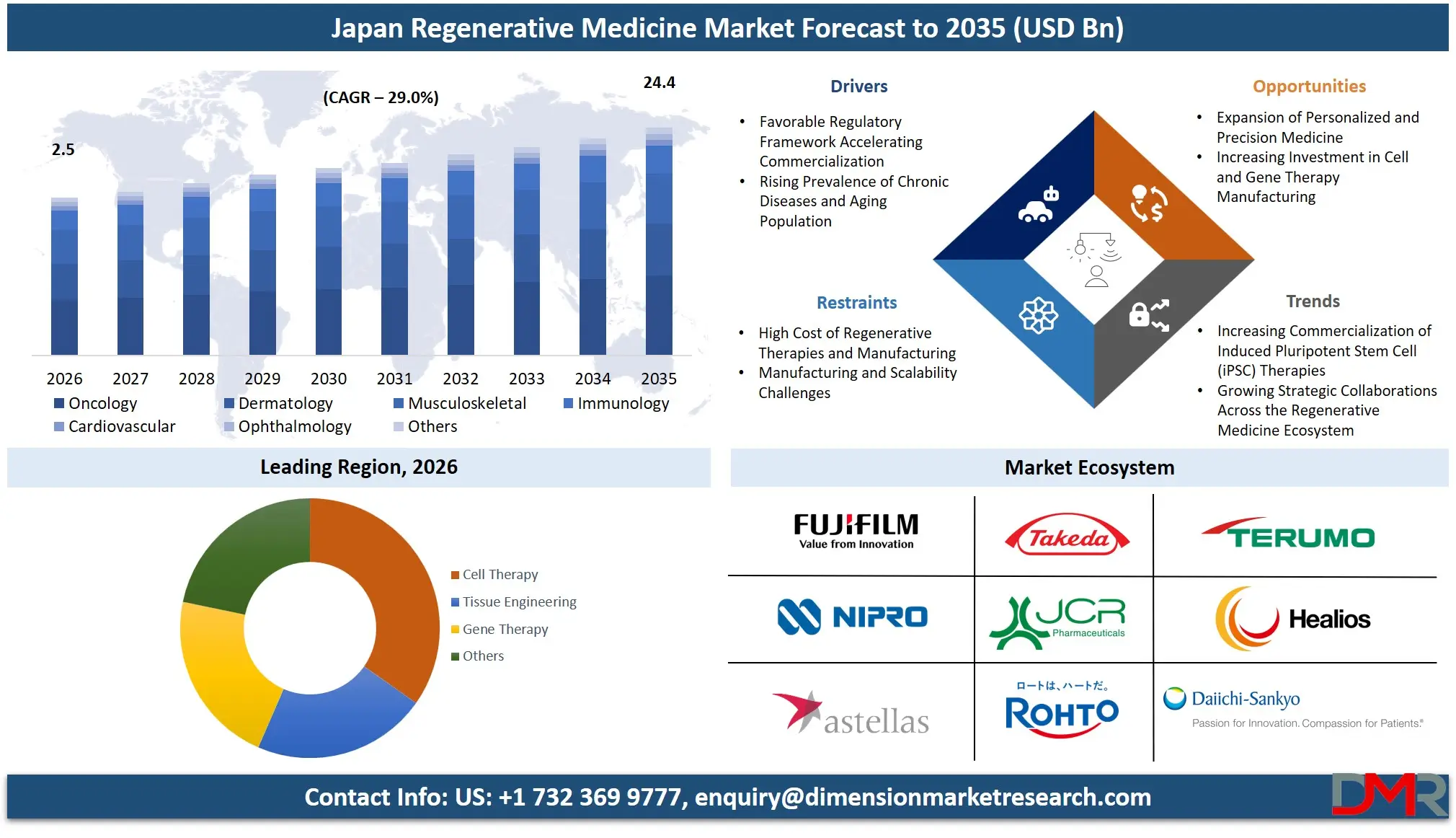
The Japan Regenerative Medicine Market is expected to reach a value of USD 2.5 billion in 2026 and is further anticipated to surge to USD 24.4 billion by 2035, growing at a robust CAGR of 29.0% during the forecast period.
ℹ
To learn more about this report –
Download Your Free Sample Report Here
This exponential growth trajectory is anchored in Japan's pioneering regulatory framework, designed to accelerate the development and commercialization of regenerative therapies. As the world's first country to enact specific laws for regenerative medicine, Japan has cultivated a fertile ecosystem where cutting-edge science, including gene therapy, cell therapy, and tissue engineering, translates rapidly from bench to bedside. The market's expansion is fueled by a national imperative to address the healthcare challenges of a super-aging society, positioning Japan not just as a market, but as a global testbed for the future of curative medicine.
Key Takeaways
- Market Size & Forecast: The Japanese regenerative medicine market, valued at USD 2.5 billion in 2026, is projected to soar to USD 24.4 billion by 2035, driven by a unique fast-track regulatory approval system and a burgeoning pipeline of cell and gene therapies.
- Growth Rate & Outlook: A blistering CAGR of 29.0% will be sustained by concentrated research in gene editing, an escalating disease burden from an aging populace, and a government actively fostering innovation through streamlined pathways and public-private partnerships.
- Primary Growth Drivers: Primary catalysts include the regenerative medicine conditional approval framework (Sakigake Designation System), surging national healthcare demands for age-related and rare diseases, and substantial investment in domestic biomanufacturing capabilities for advanced therapy medicinal products (ATMPs).
- Key Market Trends: Dominant trends include a shift toward in vivo gene therapies for systemic disorders, rapid advancement in CRISPR-Cas systems for allogeneic "off-the-shelf" cell therapies, and intensified focus on curative interventions for ophthalmic and neurodegenerative diseases prevalent in Japan's elderly demographic.
- By Type Analysis: Gene therapy commands a significant premium in the market, driven by its potential for one-time, curative solutions. Concurrently, cell therapy, particularly CAR-T and iPSC-derived therapies, forms the bedrock of the market volume, showcasing Japan's historic strengths in stem cell biology and oncology.
- By Application Analysis: The oncology segment dominates the application landscape, fueled by a high incidence of hematologic and solid tumors and the rapid clinical integration of CAR-T cell and oncolytic virus therapies. Ophthalmology and musculoskeletal applications are emerging as the next high-growth frontiers.
What is the Japan Regenerative Medicine Market?
The Japan Regenerative Medicine Market encompasses a tripartite of advanced therapeutic modalities Cell Therapy, Gene Therapy, and Tissue Engineering designed to repair, replace, or regenerate damaged cells, tissues, and organs to restore or establish normal function. Unlike palliative pharmacology, regenerative medicine seeks curative outcomes by addressing the root cause of disease. In Japan, this is achieved through in-vivo approaches, such as adeno-associated virus (AAV) vectors delivering functional genes directly to retinal or neural tissue, and ex-vivo strategies, where a patient's own cells (autologous) or a donor's cells (allogeneic) are genetically modified or expanded in culture before infusion. The country's dual-track regulatory pathway one for clinical research and another for approved therapies under the Pharmaceuticals and Medical Devices Act (PMD Act) allows for conditional, time-limited marketing authorizations based on early-phase clinical data showing safety and likely efficacy, a paradigm shift that has reshaped global commercial strategies for regenerative products.
Use Cases
- Oncology (Hematologic Cancers): University hospitals and cancer centers employ ex vivo gene-modified cell therapy, using lentiviral vectors to engineer patient-derived T-cells with chimeric antigen receptors (CARs) to target and eliminate CD19-positive B-cell malignancies.
- Ophthalmology (Inherited Retinal Disease): Specialized ophthalmology clinics administer gene therapy via subretinal injection of an AAV vector carrying a functional copy of the RPE65 gene, halting the progression of blindness in patients with inherited retinal dystrophy.
- Rare Neurological Disorders: Academic medical centers systemically infuse an AAV9 vector to deliver a functional SMN1 gene, providing a one-time treatment for spinal muscular atrophy (SMA) in pediatric patients.
- Dermatology & Genetic Diseases: Clinics apply the first topical gene therapy, a non-invasive, redosable herpes simplex virus (HSV) vector, delivering a functional COL7A1 gene to heal chronic wounds in patients with dystrophic epidermolysis bullosa.
- Musculoskeletal & Tissue Engineering: Hospitals utilize autologous cell-seeded scaffolds to repair focal cartilage defects in the knee, integrating tissue engineering to regenerate durable, hyaline-like tissue and delay osteoarthritis.
How AI is Transforming the Regenerative Medicine Market?
Artificial intelligence is a critical force multiplier in Japan's regenerative medicine sector, accelerating discovery and de-risking clinical translation. AI-driven platforms are used to design next-generation AAV capsids with enhanced tissue tropism and reduced hepatic sequestration, effectively predicting and circumventing immunogenicity. In gene editing, machine learning algorithms analyze vast genomic datasets to predict off-target effects of CRISPR-Cas systems with high fidelity, optimizing guide RNA design for therapeutic precision. Clinically, AI is revolutionizing patient recruitment for rare disease trials by mining electronic health records and genomic registries to identify genetically stratified, ultra-rare patient cohorts. Furthermore, AI-powered computational models simulate regulatory review scenarios, helping companies optimize post-marketing surveillance data collection to meet the specific conditional approval requirements of Japan's PMDA, thereby accelerating market access and long-term product surveillance.
Market Dynamics
Key Drivers in the Japan Regenerative Medicine Market
Favorable Regulatory Framework Accelerating Commercialization
Japan's regenerative medicine market is strongly supported by a progressive regulatory framework that enables accelerated approval pathways for regenerative therapies. The Pharmaceuticals and Medical Devices Agency (PMDA) and conditional approval system reduce commercialization timelines while maintaining safety standards. This regulatory environment encourages domestic innovation, attracts foreign investment, and facilitates faster patient access to advanced therapies. Pharmaceutical companies, biotechnology firms, and research institutions increasingly invest in regenerative medicine because of predictable regulatory processes. Continued policy support and streamlined clinical development have established Japan as one of the world's leading markets for regenerative medicine innovation and commercialization.
Rising Prevalence of Chronic Diseases and Aging Population
Japan's rapidly aging population and increasing incidence of chronic diseases are significantly driving demand for regenerative medicine. Growing cases of cancer, cardiovascular disorders, orthopedic diseases, neurodegenerative conditions, and retinal disorders require innovative therapies capable of repairing or regenerating damaged tissues. Conventional treatments often provide symptom management rather than long-term restoration, increasing interest in regenerative approaches. Healthcare providers are adopting advanced cell and gene therapies to improve patient outcomes while reducing disease burden. The expanding elderly population, combined with rising healthcare expenditure and increasing awareness of regenerative treatments, continues supporting sustained market growth.
Restraints in the Japan Regenerative Medicine Market
High Cost of Regenerative Therapies and Manufacturing
Regenerative medicine products involve complex manufacturing processes, specialized facilities, stringent quality control, and personalized treatment approaches, resulting in significantly higher costs than conventional therapies. Cell processing, cryopreservation, logistics, and regulatory compliance further increase production expenses. These high costs create affordability challenges for healthcare providers and patients despite Japan's advanced healthcare reimbursement system. Smaller biotechnology companies also face substantial financial burdens during product development and commercialization. Consequently, manufacturing complexity and elevated treatment costs remain major barriers limiting broader adoption of regenerative medicine across Japan's healthcare system.
Manufacturing and Scalability Challenges
Scaling regenerative medicine products from research laboratories to commercial manufacturing remains technically challenging. Maintaining consistent product quality, ensuring cell viability, preventing contamination, and complying with Good Manufacturing Practice (GMP) standards require sophisticated production infrastructure and skilled personnel. Variability in biological materials further complicates manufacturing standardization and regulatory approval. Companies must continuously invest in automation, quality assurance, and manufacturing optimization to meet increasing clinical demand. These production challenges can delay commercialization timelines and increase operational costs, restricting the widespread availability of regenerative medicine therapies throughout Japan.
Growth Opportunities in the Japan Regenerative Medicine Market
Expansion of Personalized and Precision Medicine
The growing adoption of personalized medicine presents significant opportunities for Japan's regenerative medicine market. Advanced genomic testing, biomarker identification, and precision diagnostics enable healthcare providers to develop patient-specific regenerative therapies with improved clinical outcomes. Cell and gene therapies are increasingly integrated into personalized treatment strategies for oncology, rare diseases, and inherited disorders. Pharmaceutical companies are investing heavily in precision medicine research to develop targeted regenerative therapies. As personalized healthcare becomes a national priority, demand for customized regenerative medicine solutions is expected to expand considerably across Japan's healthcare ecosystem.
Increasing Investment in Cell and Gene Therapy Manufacturing
Japan continues to attract substantial investments in advanced manufacturing facilities dedicated to regenerative medicine production. Pharmaceutical companies, biotechnology firms, and contract development and manufacturing organizations are expanding production capabilities for cell therapies, gene therapies, and tissue-engineered products. Automation technologies, closed-system manufacturing, and digital quality monitoring are improving scalability while reducing production costs. Government funding and public-private collaborations further strengthen manufacturing capacity and innovation. These investments create opportunities for faster commercialization, increased exports, and broader clinical adoption of regenerative medicine therapies across domestic and international markets.
Trends in the Japan Regenerative Medicine Market
Increasing Commercialization of Induced Pluripotent Stem Cell (iPSC) Therapies
Japan continues to lead global research and commercialization of induced pluripotent stem cell (iPSC)-based regenerative therapies. Academic institutions, biotechnology companies, and pharmaceutical manufacturers are advancing clinical trials targeting retinal diseases, cardiac disorders, neurological conditions, and immune-related diseases. Improvements in iPSC manufacturing, differentiation technologies, and quality control are accelerating commercialization. Strong government support and internationally recognized stem cell research expertise further strengthen Japan's competitive position. The growing transition from laboratory research to commercial therapeutic applications is becoming one of the defining trends shaping Japan's regenerative medicine industry.
Growing Strategic Collaborations Across the Regenerative Medicine Ecosystem
Strategic partnerships between pharmaceutical companies, biotechnology firms, academic institutions, hospitals, and contract manufacturing organizations are becoming increasingly common across Japan. These collaborations accelerate research, technology transfer, clinical development, and commercial manufacturing of regenerative therapies. Companies are combining expertise in stem cell biology, gene editing, biomaterials, artificial intelligence, and advanced manufacturing to improve innovation efficiency. International collaborations are also expanding access to new technologies and global markets. This collaborative ecosystem continues strengthening Japan's leadership position while accelerating the development and commercialization of next-generation regenerative medicine solutions.
Research Scope and Analysis
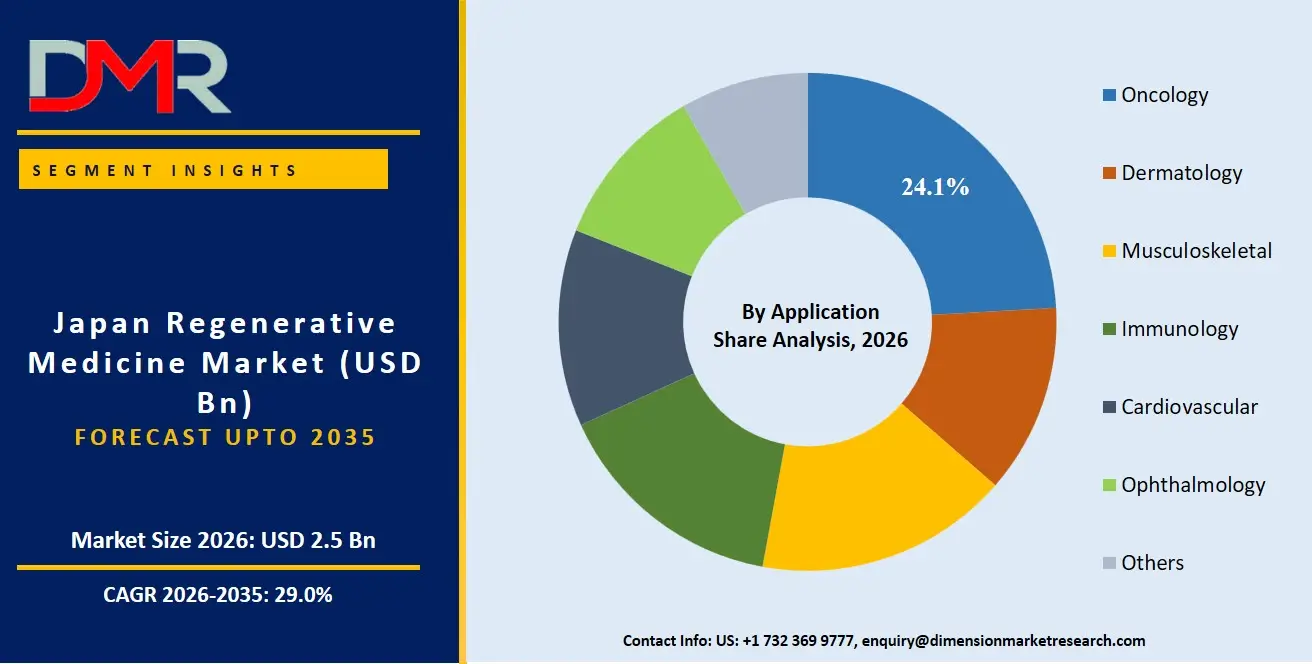
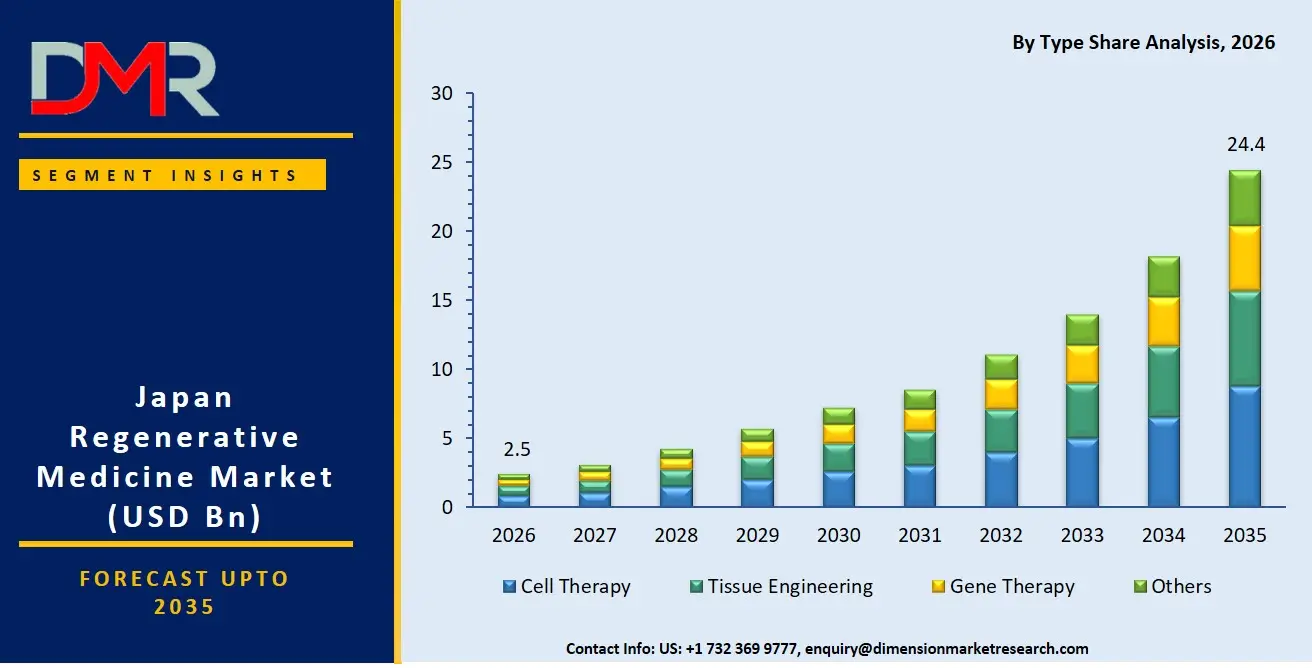
The Japan Regenerative Medicine Market is segmented by Type into Cell Therapy, Tissue Engineering, Gene Therapy, and Others. By Application, the market includes Oncology, Dermatology, Musculoskeletal, Immunology, Cardiovascular, Ophthalmology, and Others. These segments reflect the expanding adoption of regenerative therapies across diverse therapeutic areas and clinical treatment applications in Japan.
ℹ
To learn more about this report –
Download Your Free Sample Report Here
By Type Analysis
Cell therapy is projected to dominate the Japan regenerative medicine market because it represents the most mature and commercially advanced regenerative medicine segment in the country. Japan has established one of the world's most supportive regulatory frameworks for cell-based therapies, accelerating product approvals and commercialization.
ℹ
To learn more about this report –
Download Your Free Sample Report Here
Increasing applications in oncology, cardiovascular disorders, cartilage repair, and immune-related diseases continue driving demand. Strong investments from pharmaceutical companies, biotechnology firms, and academic research institutions further support innovation and manufacturing capacity. The availability of approved stem cell therapies, favorable reimbursement policies, and continuous clinical research have positioned cell therapy as the leading segment, generating the largest share of Japan's regenerative medicine market.
By Application Analysis
Oncology is expected to dominate the Japan regenerative medicine market due to the country's rising cancer incidence and strong focus on developing innovative cancer treatments. Regenerative medicine approaches, including cell therapies, gene therapies, and immune-based treatments, are increasingly used to improve clinical outcomes for patients with hematological malignancies and solid tumors. Japan's advanced oncology research ecosystem, supportive regulatory environment, and significant investments in precision medicine continue accelerating product development and commercialization. Numerous clinical trials evaluating regenerative therapies for various cancers further strengthen market growth. High healthcare expenditure, increasing adoption of personalized medicine, and continuous innovation firmly establish oncology as the dominant application segment.
The Japan Regenerative Medicine Market Report is segmented on the basis of the following:
By Type
- Cell Therapy
- Tissue Engineering
- Gene Therapy
- Others
By Application
- Oncology
- Dermatology
- Musculoskeletal
- Immunology
- Cardiovascular
- Ophthalmology
- Others
Competitive Landscape
The competitive landscape of the Japan Regenerative Medicine Market is a dynamic interplay between global biopharmaceutical giants and deeply innovative domestic champions. Multinational corporations leverage their global commercialization scale and in-license advanced vector platforms, while Japanese pharmaceutical leaders such as Takeda, Astellas, and Kyowa Kirin are forging high-impact strategic alliances and making targeted acquisitions of gene editing and iPSC-focused biotechs to build world-class platforms. The critical competitive differentiator is no longer just pipeline depth but the mastery of a complex, Japan-specific regulatory and commercial ecosystem. Success hinges on intellectual property pertaining to proprietary AAV capsid libraries for enhanced tissue targeting, non-immunogenic allogeneic iPSC line engineering, and sophisticated biomanufacturing process science. Companies are building strategic moats by establishing domestic supply chain sovereignty and integrating novel delivery systems, from topical HSV vectors for dermatology to intrathecal AAV administration for CNS disorders, positioning themselves to capture a dominant share in one of the world's most fertile regenerative medicine markets.
Some of the prominent players in the Japan Regenerative Medicine Market are:
- Fujifilm Holdings Corporation
- Terumo Corporation
- Takeda Pharmaceutical Company Limited
- Astellas Pharma Inc.
- Daiichi Sankyo Company, Limited
- JCR Pharmaceuticals Co., Ltd.
- Nipro Corporation
- Rohto Pharmaceutical Co., Ltd.
- Healios K.K.
- ReproCELL Inc.
- CellSeed Inc.
- Heartseed Inc.
- Nikon Corporation
- Lonza Group AG
- Catalent, Inc.
- Thermo Fisher Scientific Inc.
- Danaher Corporation
- Sartorius AG
- Cyfuse Biomedical K.K.
- Orizuru Therapeutics, Inc.
- Other Key Players
Recent Developments
- February 2026: Chugai Pharmaceutical Co., Ltd. commercially launched ELEVIDYS® (delandistrogene moxeparvovec) in Japan following its National Health Insurance (NHI) reimbursement listing. The therapy became Japan's first approved regenerative medicine product for Duchenne muscular dystrophy (DMD), marking a major advancement in the country's gene therapy landscape.
- May 2026: Sumitomo Pharma Co., Ltd. received regulatory approval in Japan for Amchepry, the world's first regenerative medicine product using induced pluripotent stem cell (iPSC)-derived dopamine neural progenitor cells for advanced Parkinson's disease, reinforcing Japan's leadership in iPSC-based regenerative medicine.
- May 2026: Cuorips Inc. obtained Japanese regulatory approval for ReHeart, an iPSC-derived cardiomyocyte cell-sheet therapy for severe heart failure. The approval represented a significant milestone for commercial iPSC-based cardiac regenerative therapies and strengthened Japan's position in advanced regenerative medicine innovation.
Report Details
| Report Characteristics |
| Market Size (2026) |
USD 2.5 Bn |
| Forecast Value (2035) |
USD 24.4 Bn |
| CAGR (2026–2035) |
29.0% |
| Historical Data |
2021 – 2025 |
| Forecast Data |
2027 – 2035 |
| Base Year |
2025 |
| Estimate Year |
2026 |
| Segments Covered |
By Type, By Application |
| Country Coverage |
Japan |
Frequently Asked Questions
What is the current size and future outlook of the Japan Regenerative Medicine Market?
▾ The Japan Regenerative Medicine Market is valued at USD 2.5 billion in 2026 and is projected to reach USD 24.4 billion by 2035, expanding at a robust 29.0% CAGR, driven by innovation, regulatory support, and increasing clinical adoption.
What is driving the unprecedented growth of regenerative medicine in Japan?
▾ Growth is driven by Japan's accelerated regulatory framework, increasing government funding, rapid population aging, rising chronic disease burden, expanding stem cell research, growing investment in advanced therapies, and strong collaboration between academia, biotechnology firms, and hospitals.
Which therapy type is expected to dominate the Japan Regenerative Medicine Market?
▾ Cell Therapy dominates the market through extensive commercialization, strong stem cell expertise, expanding oncology applications, favorable reimbursement, and increasing clinical adoption, while Gene Therapy is anticipated to record the fastest growth during the forecast period.
How does Japan's regulatory framework specifically accelerate market access for regenerative products?
▾ Japan's regulatory framework enables conditional and time-limited approvals based on promising clinical evidence, reducing commercialization timelines, accelerating patient access, encouraging innovation, attracting investment, and supporting faster development of regenerative medicine products across multiple therapeutic areas.
What are the major trends shaping the Japan Regenerative Medicine Market?
▾ Major trends include increasing commercialization of iPSC-based therapies, expansion of allogeneic cell therapies, integration of gene editing technologies, growing AI-supported manufacturing, strategic industry collaborations, and rising investment in scalable regenerative medicine production capabilities.
Who are the key players competing in the Japan Regenerative Medicine Market?
▾ Leading companies include Takeda Pharmaceutical, Astellas Pharma, Terumo, Fujifilm Holdings, Healios, ReproCELL, JCR Pharmaceuticals, Kyowa Kirin, CellSeed, and Heartseed, alongside global regenerative medicine innovators expanding their presence in Japan.