What is the Stem Cell Therapy Market Size?
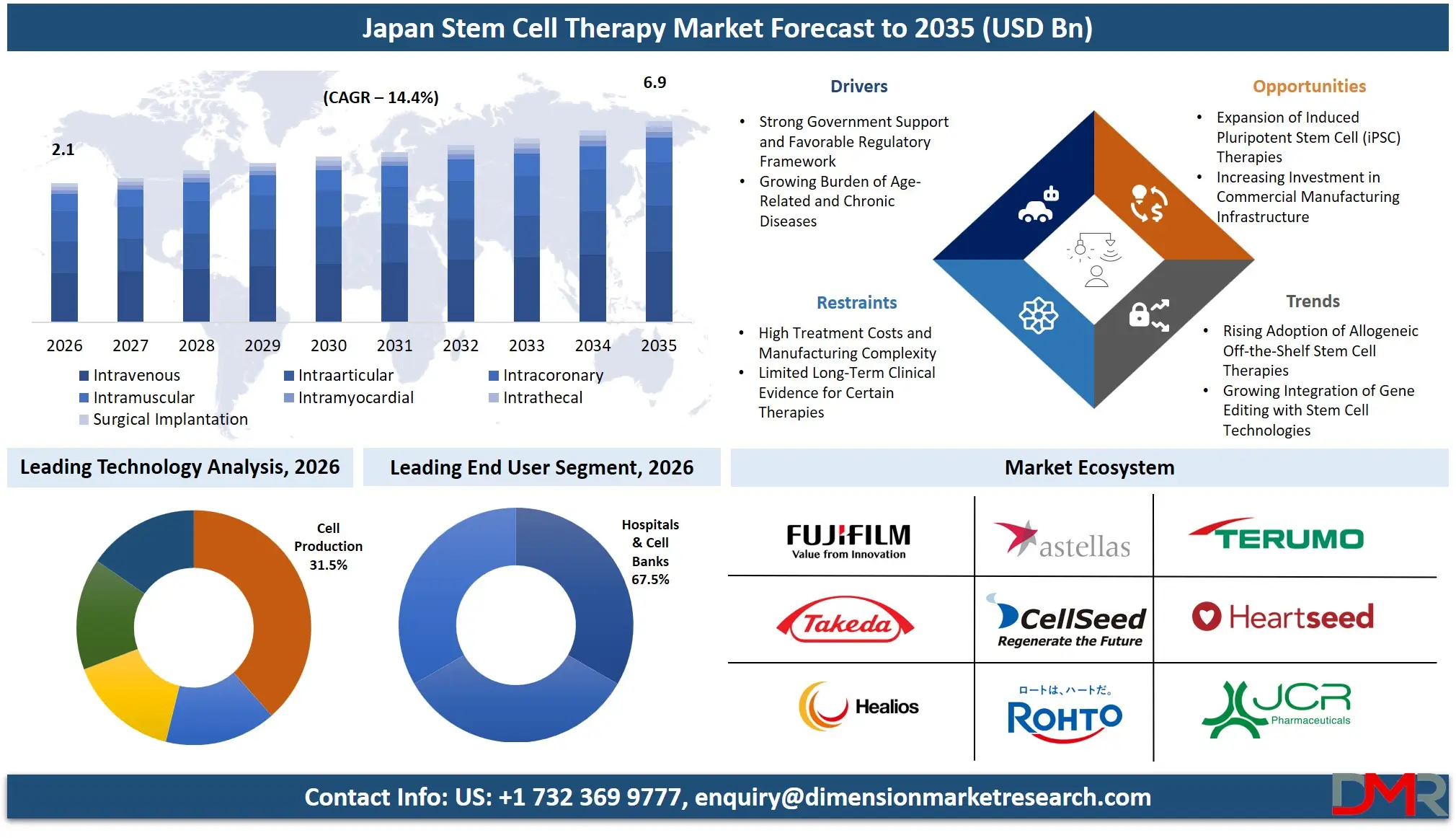
The Japan Stem Cell Therapy Market is expected to reach a value of USD 2.1 billion in 2026, and it is further anticipated to grow to USD 6.9 billion by 2035, at a compound annual growth rate (CAGR) of 14.4% during the forecast period.
ℹ
To learn more about this report –
Download Your Free Sample Report Here
The stem cell therapy market in Japan has demonstrated remarkable momentum, driven by the nation's pioneering regulatory framework for regenerative medicine and its strategic ambition to combat the healthcare challenges of a super-aging society. This market encompasses a broad spectrum of therapeutic applications utilizing allogeneic, autologous, and iPSC-derived cellular products to drive tissue repair, immunomodulation, and functional restoration. The escalating prevalence of age-related degenerative conditions, hematological malignancies, and unmet needs in musculoskeletal repair has catalyzed robust research and development. Academic-corporate partnerships and a streamlined conditional approval pathway are the primary accelerators, with iPSC-based therapies and mesenchymal stem cell infusions representing the most commercially advanced modalities.
Key Takeaways
- Market Size & Forecast: The market valuation for stem cell therapies in Japan is projected to reach USD 2.1 billion in 2026 and expand substantially to USD 6.9 billion by 2035. This trajectory is underpinned by the Pharmaceuticals and Medical Devices Agency's (PMDA) expedited approval scheme for regenerative medical products and a deep pipeline of allogeneic cell therapies.
- Growth Rate & Outlook: A CAGR of 14.4% is anticipated, fueled by Japan's strategic national initiatives in regenerative medicine, the establishment of world-leading iPSC biobanks, and the rising incidence of chronic pathologies requiring cellular grafting and tissue engineering.
- Primary Growth Drivers: Key catalysts include Japan's unique Act on the Safety of Regenerative Medicine, which provides a fast-tracked conditional approval pathway, and the demographic imperative to develop therapies that alleviate the socioeconomic burden of an elderly population. The nation's global dominance in induced pluripotent stem cell research and clinical translation further acts as a critical engine.
- Key Market Trends: Dominant trends include the progression from autologous patient-specific models to scalable, "off-the-shelf" allogeneic iPSC-derived therapies. Simultaneously, there is a surge in the utilization of mesenchymal stem cells (MSCs) for their paracrine immunomodulatory properties in treating graft-versus-host disease and inflammatory conditions, moving beyond simple differentiation paradigms.
- By Cell Source Analysis: The market is led by induced pluripotent stem cells (iPSCs), owing to their unlimited expansion potential and ethical sourcing advantage over embryonic cells. Hematopoietic stem cells (HSCs) maintain a stronghold in treating hematologic malignancies, while mesenchymal stem cells (MSCs) are the leading cell type for organ regeneration and immune modulation.
- By Application Analysis: The market is projected to be dominated by musculoskeletal disorders, driven by the growing geriatric population suffering from osteoarthritis and spinal degeneration, where cell-based injections aim to halt degeneration and regenerate cartilage.
What is the Stem Cell Therapy?
Stem cell therapy is a cornerstone of regenerative medicine involving the transplantation of stem cells either from the patient (autologous), a healthy donor (allogeneic), or a genetically identical twin (syngeneic) to repair damaged tissue, modulate the immune system, or restore organ function. Unlike palliative pharmacological treatments, stem cell therapeutics aim to resolve the underlying pathology by leveraging the cells' inherent ability to differentiate into specialized lineages or secrete regenerative cytokines. In Japan, the regulatory landscape distinguishes these as distinct "regenerative medical products," subject to a conditional, time-limited approval model that mandates post-market surveillance to verify long-term safety and efficacy.
Use Cases
- Hematopoietic Reconstruction in Oncology: Hospitals and cell banks administer hematopoietic stem cell transplantation (HSCT) utilizing cells acquired via bone marrow harvest or apheresis from autologous or allogeneic sources to rebuild marrow function following high-dose chemotherapy in hematologic cancers.
- Cartilage Regeneration in Orthopedics: Surgical centers employ autologous chondrocyte implantation and intraarticular mesenchymal stem cell injections to repair focal cartilage defects and alleviate pain in osteoarthritic joints, addressing high morbidity in Japan's aged population.
- Treatment of Acute Graft-Versus-Host Disease (GVHD): Bone marrow transplant units utilize the immunomodulatory properties of allogeneic mesenchymal stem cells (MSCs), administered intravenously, to suppress severe, steroid-refractory acute GVHD and quell the inflammatory cascade.
- iPSC-Derived Cell Sheets for Organ Failure: Research institutes and university hospitals are developing the surgical implantation of iPSC-derived cardiomyocyte patches for heart failure and retinal pigment epithelium (RPE) sheets for macular degeneration, aiming to restore tissue function in previously untreatable conditions.
How AI is Transforming the Stem Cell Therapy Market?
The integration of artificial intelligence is fundamentally accelerating and de-risking the stem cell therapy landscape in Japan. AI-driven computer vision tools are revolutionizing quality control by non-invasively assessing stem cell morphology, colony formation, and differentiation status in real-time during cell culture and isolation, significantly reducing manual variability. Machine learning algorithms are used to model complex gene editing outcomes for iPSC engineering, predicting off-target effects and optimizing reprogramming protocols to ensure genomic stability. Furthermore, AI is enhancing clinical translation by mining patient registries to identify optimal candidates for autologous versus allogeneic therapies, predicting responder populations based on biomarker profiles, and streamlining the management of post-marketing surveillance data to satisfy Japan's unique conditional approval requirements.
Market Dynamics
Key Drivers in the Japan Stem Cell Therapy Market
Strong Government Support and Favorable Regulatory Framework
Japan's stem cell therapy market benefits from one of the world's most progressive regulatory environments for regenerative medicine. The Pharmaceuticals and Medical Devices Act (PMD Act) and the Act on the Safety of Regenerative Medicine (ASRM) enable accelerated approval pathways for qualified stem cell therapies, reducing commercialization timelines. Government agencies continue funding stem cell research, translational medicine, and manufacturing infrastructure to strengthen domestic innovation. These supportive policies encourage investment from pharmaceutical companies, biotechnology firms, and research institutions while improving patient access to advanced regenerative treatments. The favorable regulatory landscape remains a major catalyst for sustained market expansion across Japan.
Growing Burden of Age-Related and Chronic Diseases
Japan's rapidly aging population is significantly increasing the prevalence of musculoskeletal disorders, cardiovascular diseases, neurological conditions, cancer, and other chronic illnesses requiring advanced treatment options. Stem cell therapies offer regenerative capabilities beyond conventional treatments by repairing damaged tissues and restoring biological function. Rising demand for minimally invasive and long-lasting therapeutic solutions is encouraging hospitals and healthcare providers to adopt regenerative medicine. Continuous improvements in clinical evidence and increasing patient awareness further strengthen market demand. As healthcare providers seek innovative therapies for age-related diseases, stem cell therapy adoption continues expanding throughout Japan.
Restraints in the Japan Stem Cell Therapy Market
High Treatment Costs and Manufacturing Complexity
Stem cell therapies involve sophisticated manufacturing processes requiring specialized facilities, stringent quality control, skilled personnel, and compliance with Good Manufacturing Practice (GMP) standards. Cell collection, processing, expansion, cryopreservation, and transportation significantly increase production costs. These expenses contribute to high treatment prices, limiting affordability for many healthcare providers and patients despite Japan's advanced healthcare system. Smaller biotechnology companies also face financial challenges when scaling manufacturing operations. Consequently, elevated production costs and manufacturing complexity remain major barriers to the widespread commercialization and accessibility of stem cell therapies across Japan.
Limited Long-Term Clinical Evidence for Certain Therapies
Although stem cell therapy has demonstrated promising clinical outcomes, several therapeutic applications still require additional long-term safety and efficacy data before achieving widespread clinical acceptance. Healthcare providers and regulatory authorities continue demanding comprehensive evidence from large-scale clinical studies to validate treatment effectiveness across different disease indications. Variability in stem cell sources, manufacturing methods, and patient responses also creates challenges in standardizing treatment protocols. These scientific and clinical uncertainties may slow physician adoption, reimbursement expansion, and broader commercialization of emerging stem cell therapies within Japan's healthcare system.
Growth Opportunities in the Japan Stem Cell Therapy Market
Expansion of Induced Pluripotent Stem Cell (iPSC) Therapies
Japan's global leadership in induced pluripotent stem cell research presents significant growth opportunities for the stem cell therapy market. Continuous advances in iPSC technology are enabling the development of regenerative treatments for neurological disorders, cardiac diseases, retinal degeneration, diabetes, and other chronic conditions. Government funding, academic excellence, and industry collaboration continue accelerating clinical translation and commercialization. Improvements in manufacturing technologies and quality control are also supporting scalable production of iPSC-derived therapies. These developments position Japan as a global innovation hub for next-generation stem cell therapeutics and regenerative medicine.
Increasing Investment in Commercial Manufacturing Infrastructure
Pharmaceutical companies, biotechnology firms, and contract manufacturing organizations are investing heavily in advanced stem cell manufacturing facilities throughout Japan. Automation, closed-system production, digital monitoring, and scalable bioprocessing technologies are improving manufacturing efficiency while reducing production costs. These investments strengthen domestic production capacity, accelerate commercialization, and improve supply chain reliability for regenerative therapies. Growing collaborations between industry, academic institutions, and healthcare providers further enhance technology transfer and innovation. Expanding manufacturing infrastructure creates substantial opportunities for broader clinical adoption and international competitiveness in Japan's stem cell therapy market.
Trends in the Japan Stem Cell Therapy Market
Rising Adoption of Allogeneic Off-the-Shelf Stem Cell Therapies
Japan is witnessing increasing development of allogeneic stem cell therapies designed for large-scale commercial production and immediate clinical availability. Unlike patient-specific autologous therapies, allogeneic products enable standardized manufacturing, lower production costs, and faster treatment delivery. Researchers and biotechnology companies are expanding clinical programs targeting cardiovascular diseases, immune disorders, musculoskeletal conditions, and neurological diseases. Improvements in donor screening, manufacturing technologies, and quality assurance continue supporting commercialization. This transition toward scalable off-the-shelf regenerative therapies represents one of the most important trends shaping Japan's stem cell therapy industry.
Growing Integration of Gene Editing with Stem Cell Technologies
Gene editing technologies such as CRISPR are increasingly being integrated with stem cell research to improve therapeutic safety, efficacy, and precision. Japanese researchers are developing genetically engineered stem cells capable of treating inherited disorders, cancer, and degenerative diseases with greater effectiveness. Advances in genome engineering, cell manufacturing, and precision medicine are creating new opportunities for personalized regenerative therapies. Collaborative research involving pharmaceutical companies, biotechnology firms, and academic institutions continues accelerating innovation. The convergence of gene editing and stem cell technologies is emerging as a transformative trend across Japan's regenerative medicine ecosystem.
Research Scope and Analysis
The Japan Stem Cell Therapy Market is segmented by Therapy (Allogeneic, Autologous Cellular Immunotherapies, Autologous, and Syngeneic Stem Cell Therapy), Cell Source, Technology, Route of Administration, Application, and End User. These segments reflect Japan's expanding regenerative medicine ecosystem, supported by advanced research, clinical innovation, and increasing commercialization of stem cell-based therapeutic solutions.
ℹ
To learn more about this report –
Download Your Free Sample Report Here
By Therapy Analysis
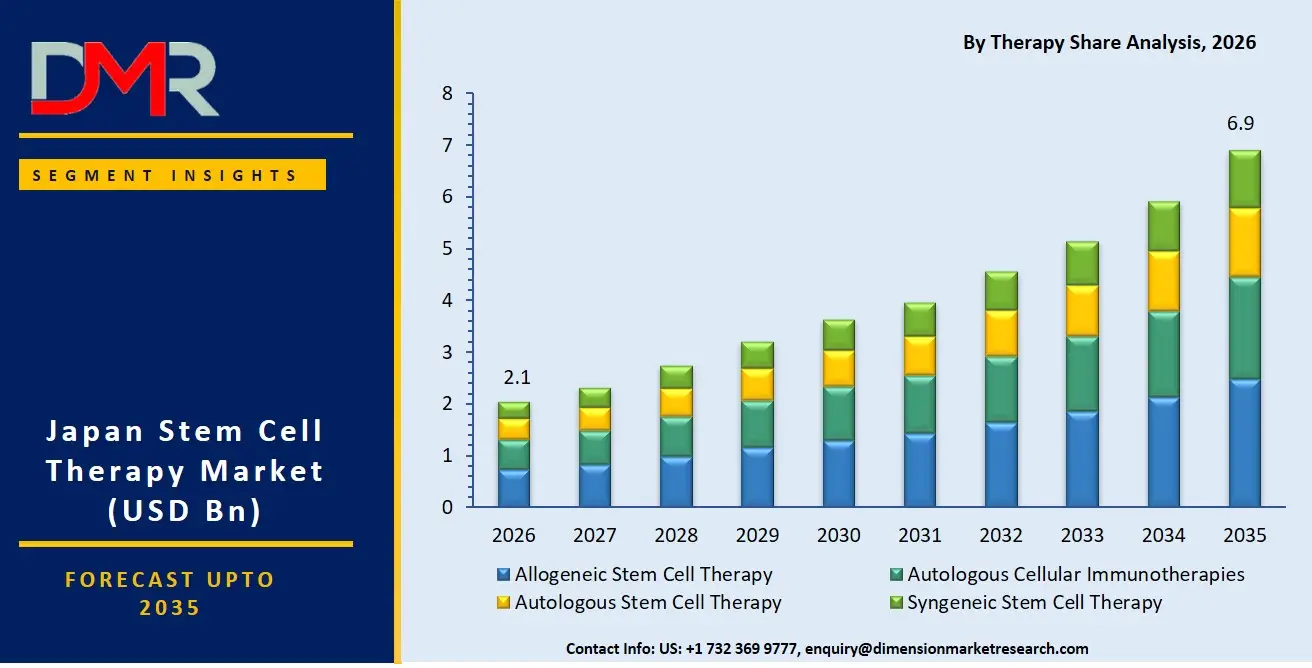
Allogeneic stem cell therapy is poised to dominate the Japan stem cell therapy market due to its scalability, immediate availability, and suitability for large patient populations. Unlike autologous therapies, allogeneic products can be manufactured in bulk from healthy donors, reducing production costs and treatment delays.
ℹ
To learn more about this report –
Download Your Free Sample Report Here
Japan's strong regulatory support for regenerative medicine and growing investment in off-the-shelf stem cell products have accelerated commercialization. The country's leadership in induced pluripotent stem cell (iPSC) research further supports the development of standardized allogeneic therapies. Increasing applications in oncology, cardiovascular disease, and immune disorders continue strengthening allogeneic stem cell therapy as the largest segment.
By Cell Source Analysis
Induced pluripotent stem cells (iPSCs) is expected to dominate Japan's stem cell therapy market because the country is a global leader in iPSC research and commercialization. Strong government funding, pioneering scientific research, and collaborations between academic institutions and biotechnology companies have accelerated clinical development. iPSCs offer the ability to generate multiple cell types while avoiding ethical concerns associated with embryonic stem cells. Their applications in treating Parkinson's disease, retinal disorders, cardiac diseases, and other degenerative conditions continue expanding. Japan's supportive regulatory environment and leadership in regenerative medicine firmly position iPSCs as the dominant cell source segment.
By Technology Analysis
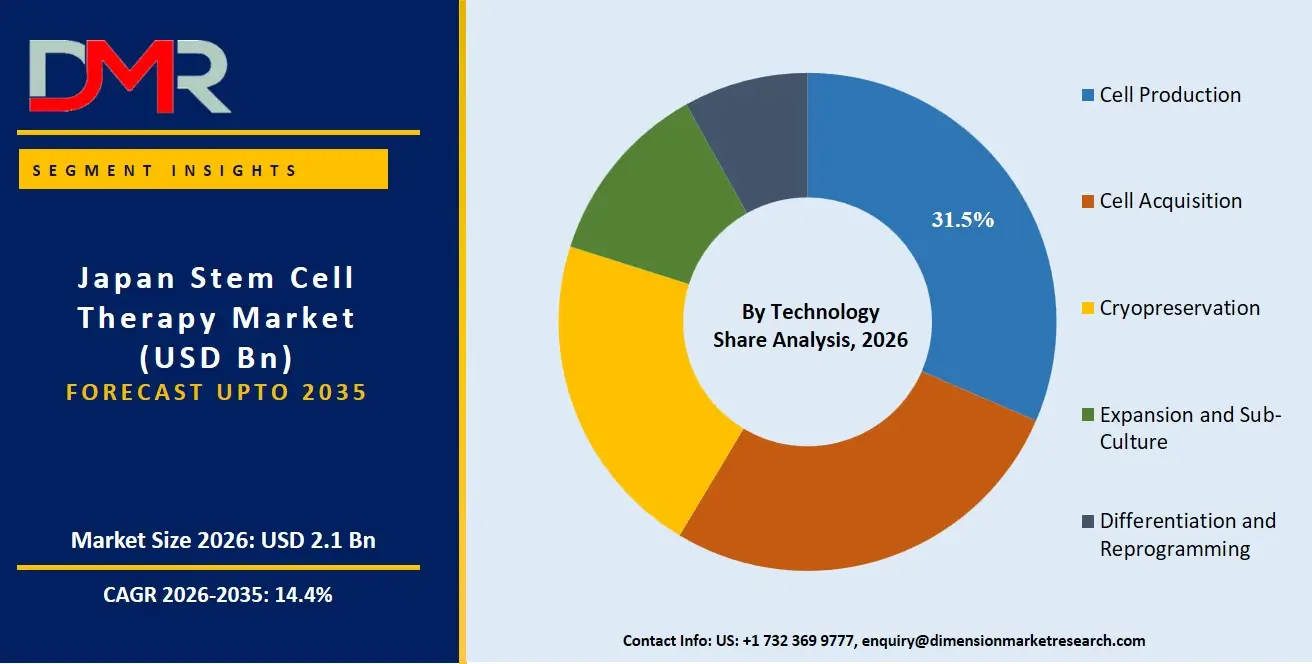
Cell production is anticipated to dominate the Japan stem cell therapy market because manufacturing high-quality therapeutic cells is the most critical step in regenerative medicine development. Advanced technologies including cell culture, isolation, gene editing, and large-scale expansion ensure consistent quality, safety, and clinical effectiveness. Japan has invested heavily in automated manufacturing platforms, Good Manufacturing Practice (GMP) facilities, and advanced bioprocessing technologies to support commercial production. Growing demand for standardized, scalable stem cell therapies further increases investment in production technologies. Continuous innovation in cell manufacturing processes establishes cell production as the leading technology segment within the Japanese stem cell therapy market.
By Route of Administration Analysis
Intravenous administration is anticipated to dominate the Japan stem cell therapy market because it offers a minimally invasive, convenient, and widely accepted delivery method for numerous regenerative therapies. Intravenous infusion enables systemic distribution of stem cells, making it suitable for treating immune disorders, hematological diseases, inflammatory conditions, and several degenerative disorders. Hospitals and clinicians favor this route because it is familiar, efficient, and easier to administer compared to surgical implantation or localized injections. Ongoing clinical research evaluating intravenous stem cell therapies across multiple disease areas continues expanding its adoption, maintaining its leadership within Japan's regenerative medicine landscape.
By Application Analysis
Musculoskeletal disorders is expected to dominate the Japan stem cell therapy market due to the country's aging population and the increasing prevalence of osteoarthritis, cartilage degeneration, osteoporosis, and orthopedic injuries. Stem cell therapies are increasingly investigated to regenerate damaged cartilage, bone, tendons, and ligaments while reducing pain and improving mobility. Japan's advanced orthopedic research, strong regenerative medicine ecosystem, and growing demand for minimally invasive treatment options continue driving clinical adoption. Increasing investments in stem cell research for orthopedic applications, combined with favorable regulatory support, have positioned musculoskeletal disorders as the leading therapeutic application in Japan's stem cell therapy market.
By End User Analysis
Hospitals and cell banks is poised to dominate the Japan stem cell therapy market because they serve as the primary centers for stem cell collection, processing, storage, clinical administration, and patient management. Large hospitals possess advanced regenerative medicine facilities, specialized healthcare professionals, and integrated clinical infrastructure necessary for delivering complex stem cell therapies. Cell banks ensure secure collection, cryopreservation, and long-term storage of high-quality stem cells for future therapeutic use. Strong government support, increasing hospital investments, and expanding regenerative medicine programs further reinforce hospitals and cell banks as the largest end-user segment across Japan's stem cell therapy market.
The Japan Stem Cell Therapy Market Report is segmented on the basis of the following:
By Therapy
- Allogeneic Stem Cell Therapy
- Autologous Cellular Immunotherapies
- Autologous Stem Cell Therapy
- Syngeneic Stem Cell Therapy
By Cell Source
- Induced Pluripotent Stem Cells (iPSCs)
- Adult Stem Cells (ASCs)
- Hematopoietic Stem Cells (HSCs)
- Mesenchymal Stem Cells (MSCs)
- Neural Stem Cells
- Epithelial/Skin Stem Cells
- Others
- Human Embryonic Stem Cells (HESCs)
- Very Small Embryonic Stem Cells
By Technology
- Cell Production
- Therapeutic Cloning
- In-vitro Fertilization
- Cell Culture and Isolation
- Gene Editing
- Cell Acquisition
- Bone Marrow Harvest
- Umbilical Blood Cord
- Apheresis
- Cryopreservation
- Expansion and Sub-Culture
- Differentiation and Reprogramming
By Route of Administration
- Intravenous
- Intraarticular
- Intracoronary
- Intramuscular
- Intramyocardial
- Intrathecal
- Surgical Implantation
By Application
- Musculoskeletal Disorders
- Acute Graft Versus Host Disease (GVHD)
- Wounds and Injuries
- Cardiovascular Diseases
- Surgeries
- Gastrointestinal Diseases
- Other Applications
By End User
- Hospitals & Cell Banks
- Pharmaceutical and Biotechnology Companies
- Academic & Research Institutes
Competitive Landscape
The competitive landscape of the Japan stem cell therapy market is a stratified ecosystem of global pharmaceutical giants, domestic trading conglomerates with biotech arms, and specialized cellular platform pioneers. Japanese firms hold a distinct first-mover advantage in iPSC technologies, controlling foundational patents and clinical-grade donor cell banks. The competitive dynamic pivots on transitioning from a labor-intensive, hospital-centric service model of autologous expansion to a true allogeneic product distribution model with centralized manufacturing and cryopreserved logistics. Strategic alliances between Japanese cell sourcing experts and multinational entities possessing commercial infrastructure are critical to bridging the gap between clinical proof-of-concept and commercial scale. Intellectual property in gene editing for immune cloaking and bioreactor-based differentiation protocols are the defining assets for market leaders.
Some of the prominent players in the Japan Stem Cell Therapy Market are:
- Healios K.K.
- Fujifilm Holdings Corporation
- Astellas Pharma Inc.
- Takeda Pharmaceutical Company Limited
- Terumo Corporation
- JCR Pharmaceuticals Co., Ltd.
- Rohto Pharmaceutical Co., Ltd.
- CellSeed Inc.
- Heartseed Inc.
- ReproCELL Inc.
- Nipro Corporation
- Cyfuse Biomedical K.K.
- AnGes, Inc.
- Nikon Corporation
- Sumitomo Pharma Co., Ltd.
- Lonza Group AG
- Thermo Fisher Scientific Inc.
- Sartorius AG
- Novo Nordisk A/S
- BlueRock Therapeutics LP
- Other Key Players
Recent Developments
- October 2025: Sumitomo Pharma Co., Ltd. advanced its regenerative medicine pipeline, targeting regulatory approval in Japan for its allogeneic iPSC-derived dopaminergic neural progenitor cell therapy (DSP-1083/CT1-DAP001) for Parkinson's disease while continuing clinical development of retinal and spinal cord regenerative therapies.
- August 2025: Healios K.K. and Sumitomo Pharma Co., Ltd. continued the Phase I/II clinical study of HLCR011, an allogeneic iPSC-derived retinal pigment epithelial (RPE) cell therapy for retinal pigment epithelium tear, following successful patient enrollment and ongoing safety evaluation in Japan.
- March 2025: JCR Pharmaceuticals Co., Ltd. continued expanding its regenerative medicine portfolio through research and development in cell-based therapies for rare diseases and immune-related disorders, strengthening its position in Japan's stem cell and regenerative medicine ecosystem.
Report Details
| Report Characteristics |
| Market Size (2026) |
USD 2.1 Bn |
| Forecast Value (2035) |
USD 6.9 Bn |
| CAGR (2026–2035) |
14.4% |
| Historical Data |
2021 – 2025 |
| Forecast Data |
2027 – 2035 |
| Base Year |
2025 |
| Estimate Year |
2026 |
| Segments Covered |
By Therapy, By Cell Source, By Technology, By Route of Administration, By Application, and By End User |
| Country Coverage |
Japan |
Frequently Asked Questions
How big is the Japan Stem Cell Therapy Market?
▾ The Japan Stem Cell Therapy market is projected to be valued at USD 2.1 billion in 2026 and is forecast to reach USD 6.9 billion by 2035, driven by the nation’s pioneering regulatory framework and the acute need for regenerative solutions within a super-aging population.
What is the CAGR of the Japan Stem Cell Therapy Market from 2026 to 2035?
▾ The market is expected to grow at a CAGR of 14.4% from 2026 to 2035, reflecting the rapid clinical translation of iPSC research into scalable allogeneic products and the expansion of cell-based musculoskeletal treatments.
What factors are driving the growth of the Japan Stem Cell Therapy Market?
▾ Key drivers include Japan’s expedited conditional approval pathway for regenerative medicine products, the immense demographic burden of age-related chronic diseases, and a globally unmatched national competency in induced pluripotent stem cell banking and differentiation technologies.
What are the major trends in the Japan Stem Cell Therapy Market?
▾ Major trends include the industrial-scale production of "off-the-shelf" allogeneic iPSC-derived and MSC therapies, the use of gene editing to create hypoimmune universal donor cell lines, and a mechanistic shift toward leveraging the cell secretome for immunomodulation rather than direct cell replacement.
Who are the key players in the Japan Stem Cell Therapy Market?
▾ Key players include Healios K.K., Sumitomo Pharma, Astellas Pharma, JCR Pharmaceuticals, Mesoblast, CiRA (Kyoto University), Takeda, and Nipro Corporation, driving innovation through iPSC biobanks, MSC clinical trials, and commercialization of regenerative medical products.
How is the Japan Stem Cell Therapy Market segmented?
▾ The market is segmented by Therapy, Cell Source, Technology, Route of Administration, Application, and End User.