Market Overview
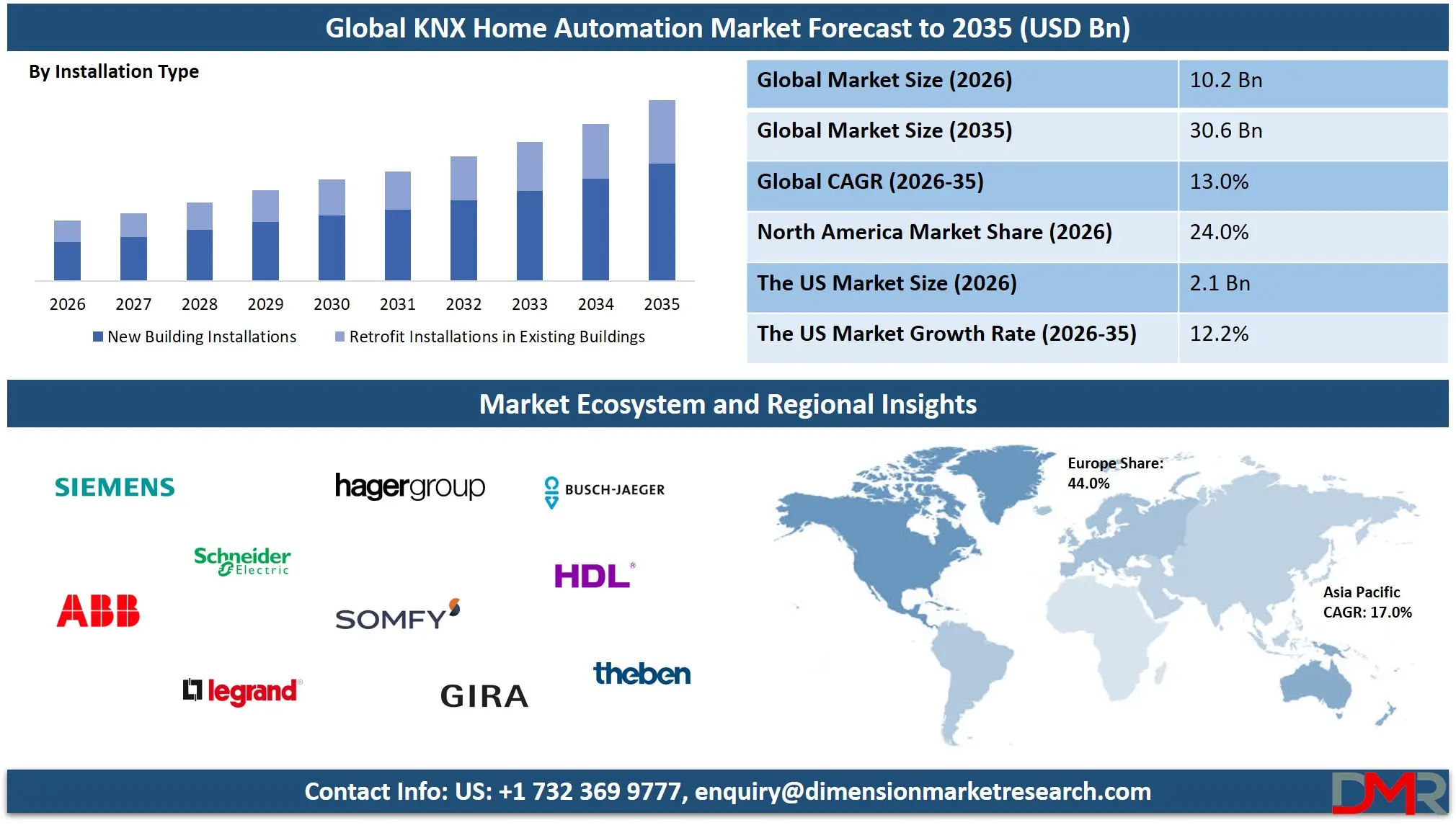
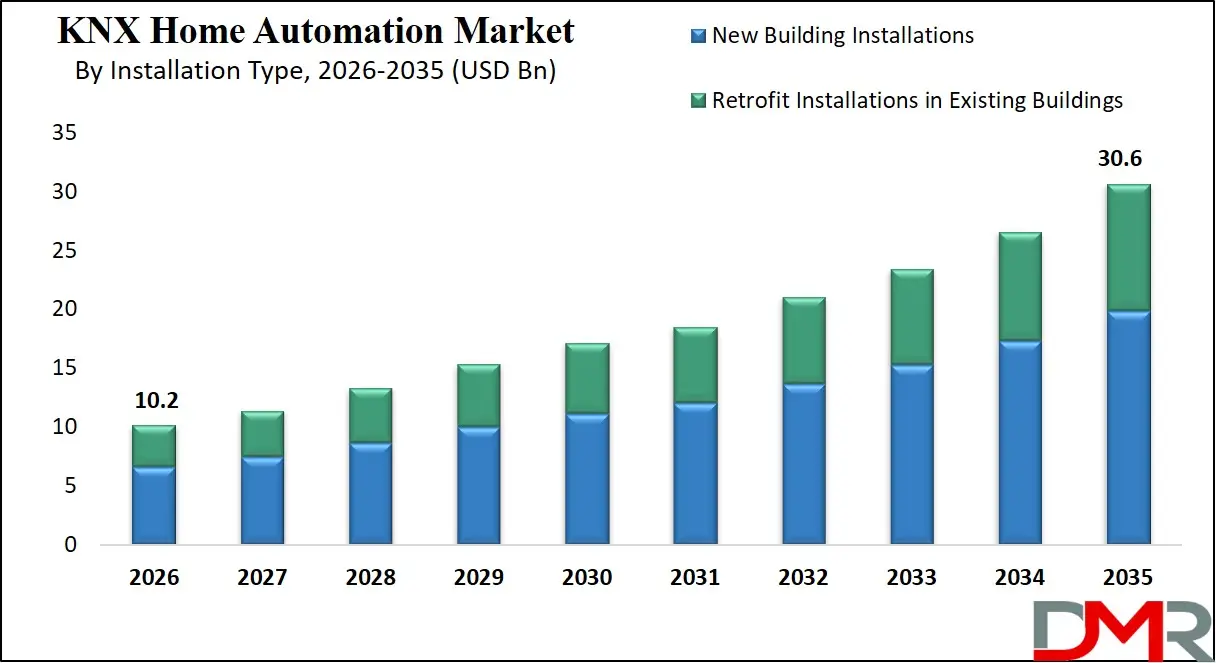
The global KNX home automation market is estimated to reach USD 10.2 billion in 2026 and is expected to grow at a CAGR of 13.0%, reaching approximately USD 30.6 billion by 2035, driven by increasing adoption of smart home systems, building automation technologies, intelligent lighting control, energy management solutions, and integrated IoT based residential infrastructure.
ℹ
To learn more about this report –
Download Your Free Sample Report Here
KNX home automation refers to a standardized building automation technology that enables intelligent control and integration of multiple household systems through a unified communication protocol. The system allows devices such as lighting controls, climate management units, blinds, security systems, energy monitoring devices, and smart appliances to communicate with each other within a centralized or decentralized network. KNX technology operates through dedicated communication infrastructure including twisted pair wiring, radio frequency connectivity, and internet protocol networks, enabling reliable device interoperability across manufacturers. Through programmable logic and automation scenarios, KNX systems allow homeowners to manage lighting intensity, room temperature, energy consumption, and safety functions through wall panels, sensors, or mobile interfaces. This approach enhances convenience, energy efficiency, and building intelligence by enabling real time monitoring and automated responses based on occupancy, environmental conditions, and user preferences.
The global KNX home automation market represents the expanding industry ecosystem that develops, manufactures, integrates, and deploys KNX based smart building technologies across residential and commercial environments. Growth in this market is strongly supported by rising demand for intelligent building management systems that improve energy efficiency and occupant comfort. Increasing construction of smart homes, luxury residential complexes, and technologically advanced commercial buildings has accelerated adoption of KNX based lighting control, heating and ventilation management, smart shading solutions, and integrated security infrastructure. Advancements in internet of things connectivity, smart sensors, and building energy management platforms are also strengthening the capabilities of KNX based automation networks.
ℹ
To learn more about this report –
Download Your Free Sample Report Here
Another key driver shaping the global KNX home automation market is the increasing emphasis on sustainable building practices and digital building infrastructure. Governments and construction developers are investing in smart building technologies that optimize electricity consumption, reduce carbon emissions, and improve operational efficiency of modern infrastructure. KNX enabled systems support these goals by allowing precise monitoring of energy usage, automated lighting optimization, and adaptive climate control, and predictive maintenance capabilities. The market is further supported by technological convergence with smart home platforms, cloud based building management systems, and mobile control applications, which are making integrated home automation solutions more accessible for residential users as well as large scale property developers.
The US KNX Home Automation Market
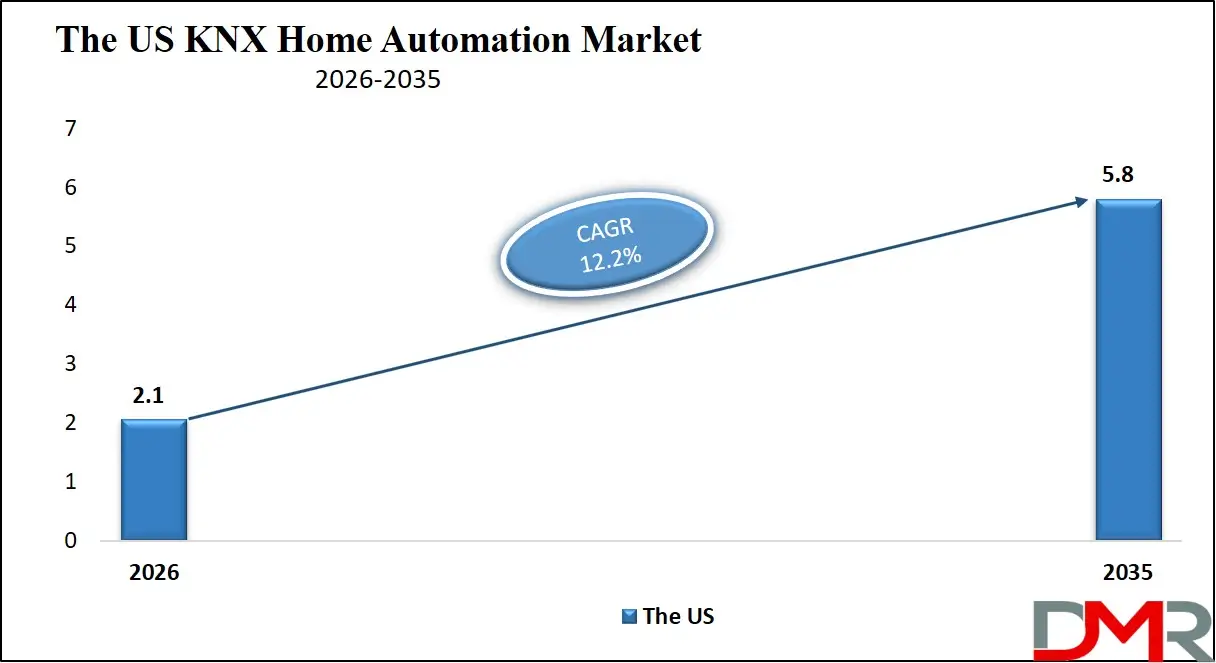
The US KNX Home Automation Market size is expected to reach at USD 2.1 billion in 2026. It is further expected to witness subsequent growth in the upcoming period, holding USD 5.8 billion in 2035 at a CAGR of 12.2%.
ℹ
To learn more about this report –
Download Your Free Sample Report Here
The US KNX home automation market is witnessing gradual expansion as demand for smart home ecosystems and intelligent building technologies continues to rise across residential and commercial sectors. Increasing adoption of automated lighting control, climate management systems, smart shading solutions, and integrated security platforms is encouraging the deployment of KNX based building automation infrastructure. High end residential properties, luxury apartments, and modern office developments are integrating KNX communication protocols to enable seamless device connectivity and centralized control. The growing preference for connected living environments and advanced building management solutions is strengthening the adoption of KNX automation systems across the US.
The market is also supported by rising focus on energy efficiency, digital building infrastructure, and sustainable construction practices across the US. KNX enabled automation systems allow property owners and facility managers to optimize electricity consumption through intelligent lighting control, adaptive heating and cooling management, and real time energy monitoring. Integration with internet of things platforms, smart sensors, and mobile based control interfaces is further improving user convenience and system efficiency. Increasing investments in smart buildings, modern infrastructure upgrades, and technology driven residential projects are expected to continue supporting the expansion of the US KNX home automation market.
The Europe KNX Home Automation Market
The Europe KNX home automation market is projected to reach approximately USD 4.5 billion in 2026, expanding at a CAGR of about 12.0%. The region has been a long standing leader in KNX based building automation due to early adoption of smart building technologies and the strong presence of advanced electrical and automation equipment manufacturers. Countries such as Germany, France, the Netherlands, and Switzerland have widely implemented KNX based solutions in residential complexes, commercial buildings, and public infrastructure. Growing demand for intelligent lighting control, automated climate management, and integrated building security systems continues to support steady market expansion across Europe.
Another key factor supporting market growth is the increasing focus on energy efficient construction and sustainable building infrastructure across European countries. Government regulations promoting low energy buildings and carbon reduction targets are encouraging property developers to adopt advanced building automation technologies. KNX based systems enable centralized management of lighting, heating, ventilation, and energy consumption, helping building operators improve operational efficiency and reduce electricity usage. The rising development of smart homes, connected residential communities, and digitally integrated commercial properties is expected to further strengthen the demand for KNX home automation solutions across the European market.
The Japan KNX Home Automation Market
The Japan KNX home automation market is projected to reach approximately USD 510 million in 2026, expanding at a CAGR of around 14.5%. Market growth is supported by the country's strong technological infrastructure and increasing adoption of smart home systems across urban residential developments. Japanese homeowners are increasingly adopting intelligent lighting control, automated climate management, and integrated home security systems to improve convenience and energy efficiency. Rising demand for connected living environments and advanced building automation technologies is encouraging the deployment of KNX based automation networks in modern residential properties.
Another important factor contributing to market expansion is Japan's focus on energy efficiency and smart building innovation. With growing emphasis on sustainable construction and efficient energy consumption, KNX automation solutions are being integrated into residential apartments, smart housing communities, and technologically advanced commercial facilities. These systems enable centralized control of lighting, heating and cooling, and energy monitoring through connected devices and smart sensors. Increasing investment in intelligent infrastructure and digital building management platforms is expected to further accelerate the adoption of KNX home automation technologies across Japan.
Global KNX Home Automation Market: Key Takeaways
- Market Growth Outlook: The global KNX home automation market is projected to reach USD 10.2 billion in 2026 and grow to USD 30.6 billion by 2035, expanding at a CAGR of 13.0% due to increasing adoption of smart building and home automation technologies.
- Regional Leadership: Europe is expected to dominate the global market with around 44.0% share in 2026, supported by early adoption of building automation standards and widespread implementation of KNX systems.
- United States Market Growth: The United States market is estimated to reach USD 2.1 billion in 2026 and grow to USD 5.8 billion by 2035, registering a CAGR of 12.2% driven by rising smart home installations.
- Component Segment Leadership: Hardware devices are anticipated to lead the component segment with around 69.0% market share in 2026, as sensors, controllers, and actuators form the foundation of KNX automation systems.
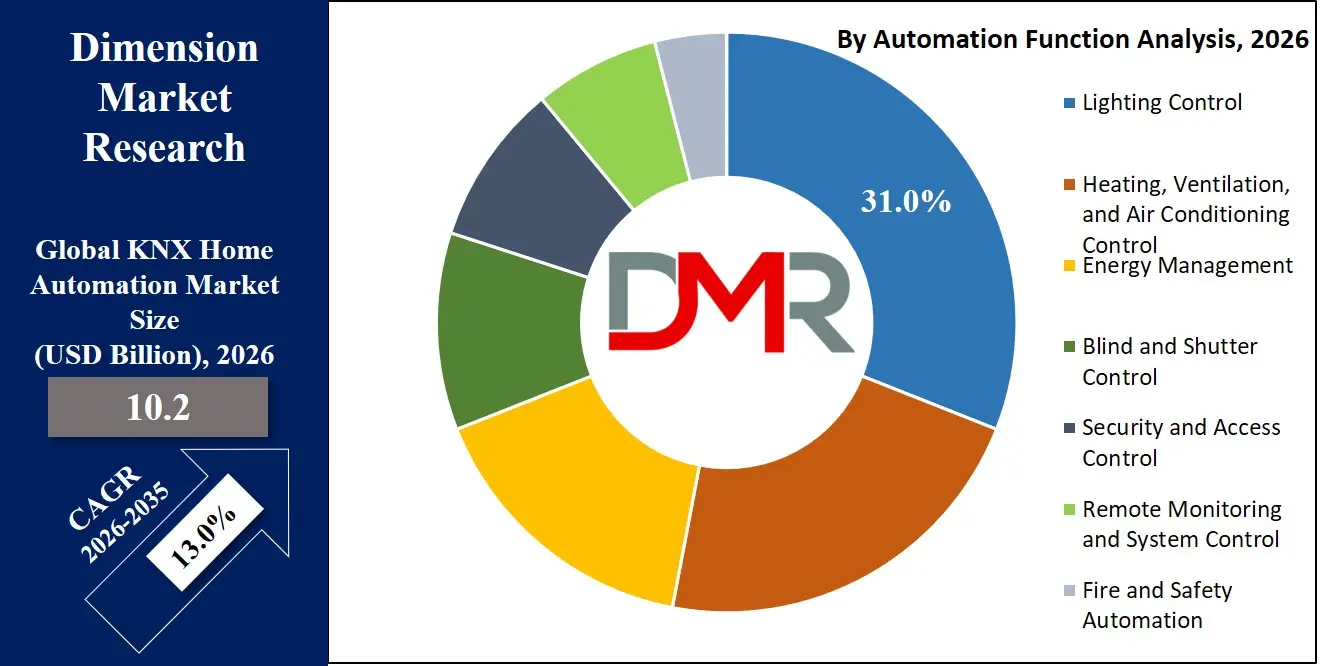
- Technology and Application Trends: Lighting control accounts for about 31.0% share, while twisted pair communication technology holds nearly 55.0% share in 2026, reflecting strong demand for efficient lighting automation and reliable wired communication infrastructure.
Global KNX Home Automation Market: Use Cases
- Smart Lighting Control: KNX systems enable automated lighting management using motion sensors, dimming controls, and programmable schedules. Lights automatically adjust based on occupancy and daylight conditions, improving energy efficiency and reducing electricity consumption. This intelligent lighting automation is widely used in smart homes, apartments, and commercial buildings to optimize energy usage and enhance user convenience.
- HVAC and Climate Automation: KNX home automation allows centralized control of heating, ventilation, and air conditioning systems. Temperature sensors and smart thermostats regulate indoor climate automatically based on room occupancy and environmental conditions. This improves indoor comfort while reducing energy waste, making KNX a key technology for modern smart building climate management.
- Smart Security and Access Control: KNX networks integrate security systems such as motion detectors, smart locks, surveillance cameras, and alarm controls. The system can automatically trigger alerts, activate lighting, or lock entry points during security events. This integrated building security solution enhances safety and provides centralized monitoring for residential and commercial properties.
- Energy Monitoring and Management: KNX automation platforms enable real time monitoring of electricity consumption across lighting, appliances, and HVAC systems. Smart meters and energy management devices help users analyze power usage patterns and optimize energy performance. This supports sustainable building operations and improves overall efficiency in connected smart home environments.
Global KNX Home Automation Market: Stats & Facts
- International Energy Agency (IEA)
- Buildings accounted for around 36% of global final energy consumption in 2023.
- The buildings sector produced about 37% of global energy related carbon dioxide emissions in 2023.
- Smart building technologies can reduce building energy consumption by 20% to 30% through automation and intelligent controls.
- Heating and cooling account for nearly 50% of total building energy demand globally.
- Digital energy management systems can lower electricity consumption in buildings by up to 15%.
- Global building floor area increased by over 250 billion square meters between 2000 and 2023.
- Smart energy technologies could reduce global building energy demand by about 1.2 exajoules annually by 2030.
- Energy efficient building automation can reduce operational emissions by up to 25% in commercial buildings.
- U.S. Department of Energy (DOE)
- Buildings consume about 40% of total energy in the United States.
- Lighting accounts for around 15% of total building electricity consumption in the United States.
- Automated lighting systems can reduce lighting energy use by 25% to 40%.
- Retrofitting buildings with smart automation technologies could save up to USD 100 billion annually in US energy costs by 2030.
- Heating, ventilation, and air conditioning systems represent approximately 40% of energy consumption in commercial buildings.
- Smart thermostats can reduce heating and cooling energy usage by 10% to 15% in residential buildings.
- Building automation can lower peak electricity demand by 10% to 20% in commercial buildings.
- U.S. Environmental Protection Agency (EPA)
- Smart heating and cooling optimization technologies can reduce building energy use by 30% to 50%.
- ENERGY STAR certified smart buildings use about 35% less energy than conventional buildings.
- Automated lighting and occupancy sensors can reduce energy waste in office spaces by up to 30%.
- Energy efficient building systems can reduce greenhouse gas emissions by up to 25% in commercial facilities.
- Eurostat (European Union)
- Buildings account for around 40% of total energy consumption in the European Union.
- Heating represents about 64% of residential energy consumption in Europe.
- Smart energy management systems can reduce building carbon emissions by around 0.8 tons per square meter annually.
- More than 75% of buildings in the European Union are considered energy inefficient.
- Nearly 85% of buildings in the European Union were constructed before 2001, increasing the need for smart building retrofits.
Global KNX Home Automation Market: Market Dynamic
Driving Factors in the Global KNX Home Automation Market
Rising Demand for Smart Homes and Intelligent Building Automation
The increasing adoption of smart homes and connected living environments is a major driver for the global KNX home automation market. Consumers and property developers are integrating intelligent lighting control, automated climate management, smart shading systems, and centralized building control to improve comfort and convenience. KNX based building automation enables seamless communication between sensors, actuators, and smart devices across residential and commercial infrastructure. The growing popularity of integrated home automation platforms, smart lighting systems, and digital building management solutions is encouraging wider deployment of KNX enabled building automation networks worldwide.
Increasing Focus on Energy Efficiency and Sustainable Buildings
Growing emphasis on energy efficiency and sustainable infrastructure is accelerating the adoption of KNX automation technologies globally. KNX based energy management systems allow real time monitoring and automated optimization of lighting, heating, ventilation, and electricity consumption across smart buildings. Governments and real estate developers are increasingly promoting intelligent building technologies to reduce carbon emissions and improve energy performance. Features such as automated HVAC control, occupancy based lighting systems, and smart energy monitoring solutions make KNX automation an effective tool for achieving sustainable building operations and efficient resource management.
Restraints in the Global KNX Home Automation Market
High Installation Cost and Complex System Integration
One of the major restraints in the KNX home automation market is the relatively high installation cost and technical complexity associated with system deployment. KNX infrastructure requires specialized wiring, certified devices, and professional system integration, which increases overall project costs. For many residential users and small property developers, these installation requirements can limit adoption compared to simpler wireless smart home platforms. Additionally, integrating KNX systems with existing building infrastructure and other smart home ecosystems may require advanced configuration, making implementation more challenging for cost sensitive markets.
Limited Awareness in Emerging Residential Markets
Another challenge affecting the growth of the KNX home automation market is limited consumer awareness in several developing regions. While KNX technology is widely recognized in advanced building automation sectors, many residential users remain unfamiliar with its benefits compared to conventional smart home systems. In emerging housing markets, builders and homeowners often prioritize lower cost automation solutions rather than comprehensive building automation platforms. This knowledge gap can slow the adoption of KNX enabled lighting control, climate automation, and energy management technologies in certain regions.
Opportunities in the Global KNX Home Automation Market
Expansion of Smart Cities and Intelligent Infrastructure
The expansion of smart city initiatives and intelligent infrastructure projects presents strong growth opportunities for the KNX home automation market. Governments and urban planners are investing in advanced building technologies to support efficient energy management, digital building operations, and connected urban infrastructure. KNX based automation systems enable integrated control of lighting, heating, ventilation, and energy monitoring across residential complexes and commercial facilities. As smart city projects continue to expand globally, the demand for interoperable building automation standards such as KNX is expected to increase significantly.
Growing Integration with Internet of Things Platforms
Integration of KNX technology with Internet of Things platforms is creating new opportunities for advanced smart home ecosystems. Modern KNX automation systems can connect with cloud platforms, smart sensors, mobile control applications, and building analytics tools to enhance functionality and user experience. This integration allows homeowners and facility managers to monitor building performance, automate energy consumption, and control multiple smart devices remotely. The convergence of KNX building automation with IoT connectivity is expected to drive innovation and expand the capabilities of intelligent residential and commercial infrastructure.
Trends in the Global KNX Home Automation Market
Adoption of Mobile Based Smart Home Control
A key trend shaping the KNX home automation market is the growing use of mobile based smart home control applications. Modern KNX systems allow users to manage lighting, climate control, blinds, and security systems through smartphone or tablet interfaces. This remote access capability improves convenience and supports real time monitoring of building operations. The increasing demand for user friendly smart home control platforms is encouraging technology providers to develop advanced KNX compatible mobile applications and digital control dashboards.
Increasing Demand for Integrated Building Management Systems
Another emerging trend is the growing adoption of integrated building management systems that combine multiple automation functions within a unified platform. KNX technology allows seamless integration of lighting automation, HVAC management, energy monitoring, and security systems into a centralized control network. This approach improves operational efficiency and simplifies building management for property owners and facility managers. As buildings become more digitally connected, the demand for integrated automation solutions based on standardized protocols such as KNX is expected to continue rising.
Global KNX Home Automation Market: Research Scope and Analysis
By Component Analysis
Hardware devices are anticipated to dominate the component segment of the global KNX home automation market, capturing around 69.0% of the total market share in 2026. This dominance is primarily driven by the essential role of physical devices such as sensors, actuators, switches, controllers, and communication modules that form the backbone of KNX based building automation systems. These devices enable core automation functions including smart lighting control, HVAC automation, energy monitoring, and security management across residential and commercial buildings. Increasing deployment of smart home infrastructure, intelligent lighting systems, and energy efficient building technologies is significantly driving demand for KNX certified hardware components.
Software platforms also play a crucial role within this market segment by enabling system configuration, device communication management, and centralized control of automation networks. KNX software solutions support functions such as system programming, automation scheduling, device monitoring, and remote building management through digital interfaces and mobile applications. As smart home ecosystems become more connected with internet of things platforms and cloud based building management tools, software platforms are becoming increasingly important for integrating multiple automation devices and improving operational efficiency in KNX enabled smart buildings.
By Device Type Analysis
Actuators are anticipated to dominate the device type segment of the global KNX home automation market, capturing around 24.0% of the total market share in 2026. Their dominance is driven by their central role in executing automation commands within KNX based building automation systems. Actuators control key building functions such as lighting switching and dimming, heating and cooling regulation, blind and shutter movement, and appliance control. As smart homes and intelligent buildings increasingly adopt automated lighting control, climate management systems, and energy optimization technologies, the demand for KNX compatible actuators continues to grow across residential, commercial, and smart infrastructure projects.
Sensors also represent an important device category in this market segment as they provide the data required for automated decision making in KNX networks. Devices such as motion sensors, presence detectors, temperature sensors, humidity sensors, and light intensity sensors monitor environmental conditions and occupancy patterns within buildings. This information enables KNX systems to automatically adjust lighting, climate control, and security functions to improve energy efficiency and occupant comfort. The growing use of smart sensors in connected homes and intelligent building management systems is supporting steady demand for KNX compatible sensing devices.
By Automation Function Analysis
Lighting control is anticipated to dominate the automation function segment of the global KNX home automation market, capturing around 31.0% of the total market share in 2026. This dominance is largely driven by the widespread use of intelligent lighting systems in smart homes and modern buildings. KNX based lighting automation enables functions such as dimming control, occupancy based switching, daylight harvesting, and programmable lighting scenes that improve convenience and energy efficiency. Residential complexes, commercial offices, hotels, and retail spaces increasingly deploy KNX lighting control systems to reduce electricity consumption, enhance interior ambiance, and support advanced building management strategies.
ℹ
To learn more about this report –
Download Your Free Sample Report Here
Heating, ventilation, and air conditioning control also represents a significant function within this market segment as climate management is a key component of smart building automation. KNX systems allow automated regulation of indoor temperature, airflow, and humidity through connected thermostats, climate sensors, and smart HVAC controllers. These solutions help maintain comfortable indoor environments while optimizing energy usage across residential and commercial properties. Integration of HVAC automation with smart building management platforms and energy monitoring systems further strengthens the role of KNX technology in improving operational efficiency and sustainable building performance.
By Communication Technology Analysis
Twisted pair communication technology is anticipated to dominate the communication technology segment of the global KNX home automation market, capturing around 55.0% of the total market share in 2026. This dominance is mainly due to its reliability, stability, and long standing use in KNX based building automation networks. Twisted pair wiring allows secure and consistent communication between sensors, actuators, controllers, and other automation devices within a building. It is widely used in residential complexes, commercial buildings, and smart infrastructure projects because it supports dependable data transmission, reduced interference, and efficient integration of lighting control, climate automation, and energy management systems.
Internet protocol communication technology also plays an important role in this market segment as building automation systems increasingly integrate with digital networks and smart home ecosystems. KNX systems using IP communication enable faster data transfer and easier connection with building management platforms, cloud based monitoring tools, and mobile control applications. This technology allows facility managers and homeowners to remotely monitor and control lighting, HVAC systems, security devices, and energy consumption through internet enabled interfaces. Growing adoption of connected buildings and internet of things based automation solutions is supporting the gradual expansion of KNX IP communication infrastructure.
By Installation Type Analysis
New building installations are anticipated to dominate the installation type segment of the global KNX home automation market, capturing around 65.0% of the total market share in 2026. This dominance is largely attributed to the ease of integrating KNX based building automation systems during the construction phase of residential and commercial properties. When automation infrastructure is planned at the design stage, developers can efficiently install communication wiring, sensors, actuators, and centralized control systems across the building. This approach supports seamless integration of lighting control, climate management, security automation, and energy monitoring, making KNX technology a preferred solution for modern smart buildings and luxury residential projects.
Retrofit installations in existing buildings also represent an important portion of the market as property owners increasingly upgrade older infrastructure with smart automation technologies. Many residential homes, office buildings, and hospitality facilities are adopting KNX compatible systems to improve energy efficiency, enhance indoor comfort, and enable centralized building control. Through system upgrades and integration with smart sensors, lighting controllers, and climate management devices, retrofit solutions allow existing buildings to transition into intelligent building environments. Growing interest in building modernization and energy efficient infrastructure is gradually expanding demand for KNX retrofit automation projects.
By End User Analysis
Commercial buildings are anticipated to dominate the end user segment of the global KNX home automation market, capturing around 41.0% of the total market share in 2026. This leadership is mainly driven by the increasing deployment of intelligent building automation systems across offices, hotels, retail complexes, and corporate facilities. Commercial properties require advanced lighting control, climate management, security monitoring, and energy management solutions to improve operational efficiency and reduce electricity consumption. KNX based building automation provides centralized control and reliable communication between multiple devices, making it highly suitable for large scale commercial infrastructure and modern smart building environments.
Residential buildings also represent a significant portion of the market as homeowners increasingly adopt smart home technologies to enhance comfort, convenience, and energy efficiency. KNX home automation systems allow integrated control of lighting, heating and cooling systems, window blinds, security devices, and household appliances through centralized control panels or mobile applications. The growing popularity of connected homes, luxury apartments, and technologically advanced residential communities is supporting the adoption of KNX based automation networks. Increasing consumer interest in intelligent home environments and energy efficient living solutions is further strengthening demand for KNX automation in residential properties.
The Global KNX Home Automation Market Report is segmented on the basis of the following:
By Component
- Hardware Devices
- Software Devices
- Services
By Device Type
- Actuators
- Sensors
- Lighting Control Devices
- Communication Devices
- Routers
- Gateways
- Couplers
- Controllers and Logic Modules
- User Interface Devices
- Touch Panels
- Smart Devices
- Security Devices
- Metering and Monitoring Devices
By Automation Function
- Lighting Control
- Heating, Ventilation, and Air Conditioning Control
- Energy Management
- Blind and Shutter Control
- Security and Access Control
- Remote Monitoring and System Control
- Fire and Safety Automation
By Communication Technology
- Twisted Pair Communication Technology
- Internet Protocol Communication Technology
- Powerline Communication Technology
- Radio Frequency Communication Technology
By Installation Type
- New Building Installations
- Retrofit Installations in Existing Buildings
By End User
- Commercial Buildings
- Residential Buildings
- Industrial Buildings
- Public Infrastructure
Impact of Artificial Intelligence in the Global KNX Home Automation Market
Artificial intelligence is increasingly influencing the global KNX home automation market by enhancing the intelligence, responsiveness, and efficiency of building automation systems. AI powered algorithms enable KNX platforms to analyze data collected from sensors, smart meters, and connected devices to optimize lighting control, climate management, and energy consumption in real time. Through machine learning capabilities, automation systems can learn user behavior patterns and automatically adjust lighting levels, temperature settings, and appliance operations based on occupancy and daily routines. This improves both energy efficiency and user convenience in smart home and intelligent building environments.
AI integration also strengthens predictive maintenance and advanced building analytics within KNX based automation networks. By analyzing operational data from HVAC systems, lighting infrastructure, and energy management devices, artificial intelligence can detect anomalies, predict equipment failures, and recommend maintenance actions before system disruptions occur. In addition, AI driven voice assistants and smart home interfaces are improving user interaction with KNX systems, allowing homeowners and facility managers to control multiple building functions through voice commands or intelligent digital assistants. This combination of AI, IoT connectivity, and building automation technology is transforming KNX systems into more adaptive and data driven smart building solutions.
Global KNX Home Automation Market: Regional Analysis
Region with the Largest Revenue Share
Europe is anticipated to lead the global KNX home automation market landscape, accounting for approximately 44.0% of total global market revenue in 2026. The region's leadership is largely driven by early adoption of building automation standards, strong presence of KNX technology providers, and increasing implementation of smart building infrastructure across countries such as Germany, France, the Netherlands, and Switzerland. Growing emphasis on energy efficient buildings, strict sustainability regulations, and the expansion of intelligent residential and commercial construction projects are further supporting market growth. In addition, widespread integration of smart lighting control, HVAC automation, and energy management systems continues to strengthen Europe's dominance in the KNX home automation industry.

ℹ
To learn more about this report –
Download Your Free Sample Report Here
Region with the Highest CAGR
Asia Pacific is expected to register the highest CAGR in the global KNX home automation market during the forecast period. This rapid growth is primarily driven by expanding urbanization, increasing construction of smart residential complexes, and rising investments in intelligent building infrastructure across countries such as China, India, Japan, and South Korea. Governments and real estate developers in the region are increasingly adopting smart building technologies to improve energy efficiency, building security, and digital infrastructure management. Growing demand for connected homes, advanced lighting automation, climate control systems, and integrated building management platforms is further accelerating the adoption of KNX based home automation solutions across the Asia Pacific region.
By Region
North America
Europe
- Germany
- The U.K.
- France
- Italy
- Russia
- Spain
- Benelux
- Nordic
- Rest of Europe
Asia-Pacific
- China
- Japan
- South Korea
- India
- ANZ
- ASEAN
- Rest of Asia-Pacific
Latin America
- Brazil
- Mexico
- Argentina
- Colombia
- Rest of Latin America
Middle East & Africa
- Saudi Arabia
- UAE
- South Africa
- Israel
- Egypt
- Rest of MEA
Global KNX Home Automation Market: Competitive Landscape
The global KNX home automation market is characterized by a moderately competitive and semi consolidated landscape, where several large multinational building automation and electrical equipment manufacturers compete alongside specialized regional device producers. The market structure is supported by the open KNX protocol, which allows multiple vendors to develop interoperable devices and solutions, creating a broad ecosystem of certified products and system integrators. Competition is largely driven by product innovation, integration of internet of things connectivity, cloud based building management platforms, and energy efficient automation solutions. Companies are focusing on expanding their portfolios of smart lighting control, HVAC automation, security integration, and energy management technologies while strengthening global distribution networks and partnerships with system integrators and construction developers to increase their market presence.
Some of the prominent players in the Global KNX Home Automation Market are:
- Siemens AG
- Schneider Electric SE
- ABB Ltd
- Legrand SA
- Hager Group
- Somfy SA
- Busch‑Jaeger Elektro GmbH
- HDL Automation Co. Ltd.
- Gira Giersiepen GmbH & Co. KG
- Theben AG
- Steinel GmbH
- Elsner Elektronik GmbH
- MDT technologies GmbH
- Zennio Avance y Tecnología S.L.
- Albrecht Jung GmbH & Co. KG
- Urmet S.p.A.
- B.E.G. Brück Electronic GmbH
- Ekinex S.p.A.
- Bonzi Technology
- JOBO Smartech Co. Ltd.
- Other Key Players
Recent Developments in the Global KNX Home Automation Market
- August 2025: The KNX Association introduced the KNX Standard Version 3.0.4, adding enhanced energy management capabilities, improved system testing features, and stronger interoperability to support advanced smart home and intelligent building automation systems.
- June 2025: Albrecht Jung GmbH & Co. KG launched an advanced KNX DALI-2 Gateway designed for next generation lighting control, enabling seamless integration between KNX building automation networks and DALI lighting systems for efficient smart lighting management in commercial and residential buildings.
- January 2025: MDT technologies GmbH acquired its Italian partner Ergo Design & Technology to expand its European footprint and strengthen its KNX based smart building automation product development and distribution network.
Report Details
| Report Characteristics |
| Market Size (2026) |
USD 10.2 Bn |
| Forecast Value (2035) |
USD 30.6 Bn |
| CAGR (2026–2035) |
13.0% |
| The US Market Size (2026) |
USD 2.1 Bn |
| Historical Data |
2021 – 2025 |
| Forecast Data |
2027 – 2035 |
| Base Year |
2025 |
| Estimate Year |
2026 |
| Report Coverage |
Market Revenue Estimation, Market Dynamics, Competitive Landscape, Growth Factors and etc. |
| Segments Covered |
By Component (Hardware Devices, Software Devices, Services), By Device Type (Actuators, Sensors, Lighting Control Devices, Communication Devices, Controllers and Logic Modules, User Interface Devices, Security Devices, Metering and Monitoring Devices), By Automation Function (Lighting Control, Heating, Ventilation, and Air Conditioning Control, Energy Management, Blind and Shutter Control, Security and Access Control, Remote Monitoring and System Control, Fire and Safety Automation), By Communication Technology (Twisted Pair Communication Technology, Internet Protocol Communication Technology, Powerline Communication Technology, Radio Frequency Communication Technology), By Installation Type (New Building Installations, Retrofit Installations in Existing Buildings), and By End User (Commercial Buildings, Residential Buildings, Industrial Buildings, Public Infrastructure) |
| Regional Coverage |
North America – The US and Canada; Europe – Germany, The UK, France, Russia, Spain, Italy, Benelux, Nordic, & Rest of Europe; Asia-Pacific – China, Japan, South Korea, India, ANZ, ASEAN, Rest of APAC; Latin America – Brazil, Mexico, Argentina, Colombia, Rest of Latin America; Middle East & Africa – Saudi Arabia, UAE, South Africa, Turkey, Egypt, Israel, & Rest of MEA |
| Prominent Players |
Siemens AG, Schneider Electric SE, ABB Ltd, Legrand SA, Hager Group, Somfy SA, Busch-Jaeger Elektro GmbH, HDL Automation Co. Ltd., Gira Giersiepen GmbH & Co. KG, Theben AG, Steinel GmbH, Elsner Elektronik GmbH, MDT technologies GmbH, Zennio Avance y Tecnología S.L., Albrecht Jung GmbH & Co. KG, Urmet S.p.A., B.E.G. Brück Electronic GmbH, Ekinex S.p.A., Bonzi Technology, JOBO Smartech Co. Ltd., and Other Key Players |
| Purchase Options |
We have three licenses to opt for: Single User License (Limited to 1 user), Multi-User License (Up to 5 Users) and Corporate Use License (Unlimited User) along with free report customization equivalent to 0 analyst working days, 3 analysts working days and 5 analysts working days respectively. |
Frequently Asked Questions
How big is the Global KNX Home Automation Market?
▾ The Global KNX Home Automation Market size is estimated to have a value of USD 10.2 billion in 2026 and is expected to reach USD 30.6 billion by the end of 2035.
What is the growth rate in the Global KNX Home Automation Market in 2026?
▾ The market is growing at a CAGR of 13.0% over the forecasted period of 2026.
What is the size of the US KNX Home Automation Market?
▾ The US KNX Home Automation market is projected to be valued at USD 2.1 billion in 2026. It is expected to witness subsequent growth in the upcoming period as it holds USD 5.8 billion in 2035 at a CAGR of 12.2%.
Which region accounted for the largest Global KNX Home Automation Market?
▾ Europe is expected to have the largest market share in the Global KNX Home Automation Market with a share of about 44.0% in 2026.
Who are the key players in the Global KNX Home Automation Market?
▾ Some of the major key players in the Global KNX Home Automation Market are Siemens AG, Schneider Electric SE, ABB Ltd, Legrand SA, Hager Group, Somfy SA, Busch-Jaeger Elektro GmbH, HDL Automation Co. Ltd., Gira Giersiepen GmbH & Co. KG, Theben AG, Steinel GmbH, Elsner Elektronik GmbH, MDT technologies GmbH, Zennio Avance y Tecnología S.L., Albrecht Jung GmbH & Co. KG, and many others.