What is the Medical Imaging Informatics Market Size?
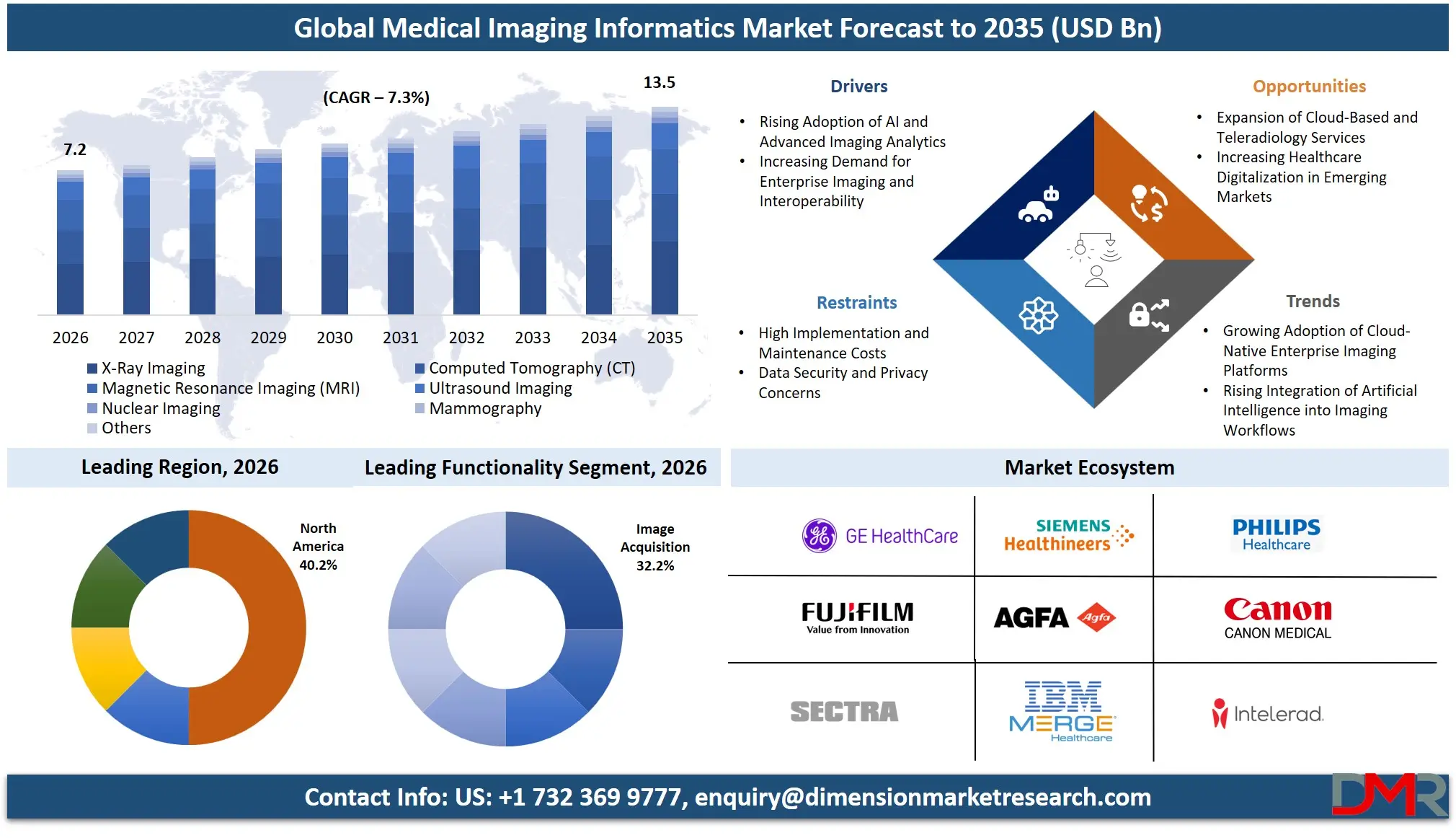
The Global Medical Imaging Informatics Market is expected to reach a value of USD 7.2 billion in 2026, and it is further anticipated to reach USD 13.5 billion by 2035, growing at a CAGR of 7.3% during the forecast period.
ℹ
To learn more about this report –
Download Your Free Sample Report Here
The industry of medical imaging informatics records very fast growth due to digitization of diagnostic imaging and the transition from analog imaging with the help of films and legacy systems to more modern systems. Medical imaging informatics refers to software and service tools that are used in order to manage, store, analyze and distribute medical imaging. Increasing number of procedures, which require diagnostic imaging, use of AI driven analytics in order to make decisions and need for interoperability in order to integrate IT systems, which are used in the healthcare, are among the drivers behind the need for imaging informatics. Cloud-based PACS and VNA solutions are also in high demand because of scalability and enterprise-wide deployment possibilities. Departments of radiology, cardiology and oncology are the major customers of these solutions.
The US Medical Imaging Informatics Market
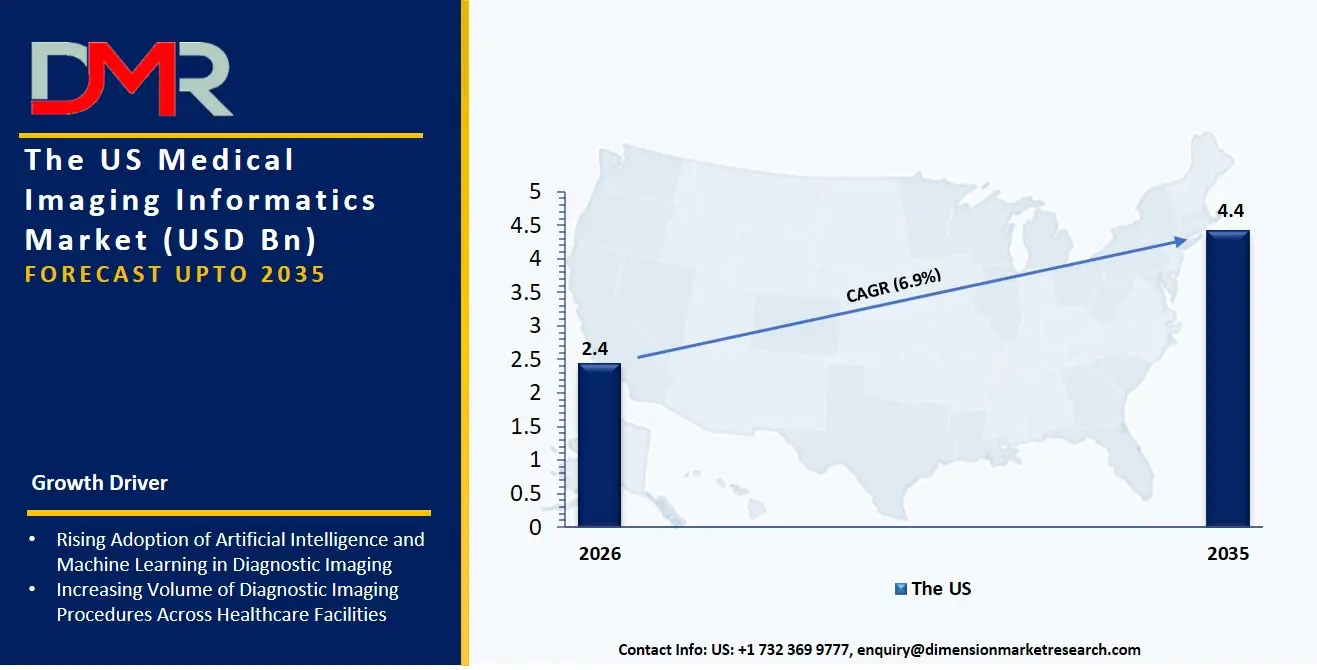
The US Medical Imaging Informatics Market is projected to reach USD 2.4 billion in 2026 at a compound annual growth rate of 6.9% over its forecast period, culminating in a value of USD 4.4 billion by 2035.
ℹ
To learn more about this report –
Download Your Free Sample Report Here
The United States still holds on to its position as the largest and most advanced Imaging Informatics market because of the fast-paced advancement that is taking place in many health care systems in the US, along with the concentration of imaging centers in the nation. This market is fueled by very high demands in AI and Analytics Software because of the need to use deep learning software for image triaging and lesion detection. Besides, considering the demands in generative AI solutions for generating automated reports, there will also be the need for Integration and Implementation Services.
The Europe Medical Imaging Informatics Market
The European Medical Imaging Informatics Market is estimated to be valued at USD 2.1 billion in 2026 and is further anticipated to reach USD 3.8 billion by 2035 at a CAGR of 6.8%. The regulatory landscape, consisting of the GDPR law as well as the upcoming EU AI Act, plays a big part in the European market environment, resulting in the need for robust Reporting and Documentation Software and Picture Archiving Systems that guarantee patient information privacy. Also, there is a growing trend in the need for implementation of the Vendor Neutral Archive (VNA) in the region, where different healthcare institutions and hospitals in Germany, France, and the Nordics are trying to connect their individual PACS systems into one single PACS system. On the other hand, teleradiology initiatives are prompting the vendors to create image exchange platforms that support data residency and interoperability through DICOM.
The Japan Medical Imaging Informatics Market
The Japan Medical Imaging Informatics Market is projected to be valued at USD 640.2 million in 2026 at a CAGR of 6.4%. It is significant to say that the Japanese market is extremely affected by the fast aging process of Japanese society and the company's effort to solve the problem of a lack of radiologists via innovations. The segment of investment related to AI-Based Imaging Informatics Solutions and Advanced Visualization is extremely large because of the need of the hospitals and diagnostic chains to improve the diagnostic ability with the help of computers. There is also a great demand for local integration because it will make it possible to connect the old legacy HIS with the modern cloud PACS.
Key Takeaways
- Market Size & Forecast: The Global Medical Imaging Informatics market size is expected to grow to reach USD 7.2 billion in 2026, growing gradually to reach USD 13.5 billion in 2035 due to two major growth drivers of increasing adoption of artificial intelligence in diagnostics and the mandatory move from image archiving in silos to a platform.
- Growth Rate & Outlook: Global market growth is expected at a CAGR of 7.3%, due to increasing volumes of diagnostic imaging data, severe shortages of radiologists in certain geographic regions and increasing difficulty in managing multi-vendor imaging environments due to move towards value-based care model.
- Primary Growth Drivers: The key drivers include the evolution of PACS system from high cost capital expenditures to lower cost operational expenditures and cloud computing, need for imaging analytics software to gather quantitative data for precision medicine and integration of clinical decision support tools with artificial intelligence and analytics software.
- Key Market Trends: Major trends include enterprise imaging solutions that combine radiology, cardiology, and pathology services, use of AI-powered auto-populate functionality of reporting and documentation applications to alleviate physician fatigue, and use of the managed service delivery model as healthcare providers become more security conscious.
- By Deployment Mode Analysis: Cloud deployment model is gaining preference among organizations owing to the necessity of scalability and disaster recovery capability. While the hybrid deployment model which will require specific Integration and Implementation services to allow the integration of on-premise legacy PACS with cloud-based analytical and collaboration capabilities.
- Regional Leadership: North America is poised to dominate this market with 40.2% of the market share in 2026 because of the advanced health IT infrastructure, increased adoption of diagnostic imaging, and availability of major players developing AI imaging technologies.
What is the Medical Imaging Informatics?
Medical Imaging Informatics is defined as the specific software platforms and technical services involved in the process of data management for medical imaging data in the entire organization. While the medical imaging informatics platforms are distinct from the actual medical imaging devices used such as CT scanner, MRI and X-rays, these platforms are involved in the processing of medical imaging data rather than imaging devices. The software platforms include PACS and VNA used in visualization and storage of images, Artificial Intelligence (AI) and Analytics Software which is used in interpreting and understanding the information and Image Sharing Platform which is used to collaborate between the physicians. The technical services provided are Consulting for developing the imaging strategies of the organization, Integration and Implementation which is used in implementation of medical imaging informatics without interrupting the workflow of the physicians and Managed Services which involves optimization of the solutions. It is important to have medical imaging informatics platforms due to the large volume of data produced every year by healthcare organizations.
Use Cases
- AI-Powered Stroke Triage in Neurology: Comprehensive stroke centers utilize AI-Based Imaging Informatics Solutions which facilitate automatic analysis of CT angiograms and the detection of large vessel occlusions, triggering alerts which are then prioritized and sent into the radiologist's reporting platform, thus greatly reducing the turnaround time from admission to treatment.
- Enterprise Imaging in Large Healthcare Organizations: Large healthcare organizations use VNA and Image Exchange products to unify imaging silos in radiology, cardiology, and dermatology in one image view available to clinicians in an EHR interface.
- Cloud-based Teleradiology for Critical Access Hospitals: Small hospitals with no on-call radiologist staff take advantage of Cloud-based Image Sharing Platforms in order to have their overnight CT scans reviewed by teleradiology services without the need to hire expensive after-hours staff.
- Quantitative Imaging Biomarkers in Oncology: Academic/research institutions employ visualization and post-processing tools to quantitatively analyze sequential MRI and PET images and assess objective response of cancer patients to experimental therapies.
How AI is Transforming the Medical Imaging Informatics Market?
The core of how the AI is influencing the field of medical imaging informatics is in converting the software into a diagnostic assistance tool rather than a mere instrument for viewing of images. Deep learning is applied in the AI and Analytics Software category as a part of PACS, which will help to prioritize urgent findings, automate segmentation of the organs and identify the small pathology that may not be caught by the human eye. This will facilitate the process of image interpretation, reduce the risk of mistakes in the diagnosis and solve the issue of the global shortage of radiologists.
Furthermore, AI is transforming the workflow and documentation. In the Reporting and Documentation Software category, it includes the implementation of generative AI that can communicate with imaging studies, write the initial impression section and generate structured reports. As for the Consultation and Integration Services category, it is used to have intelligent agents that will control the performance of the system, predict the possible bandwidth problems related to the transfer of big files and automatically ensure DICOM compliance and security in accordance with SOC 2 and HIPAA standards.
Market Dynamics
Key Drivers in the Global Medical Imaging Informatics Market
Rising Adoption of AI and Advanced Imaging Analytics
Intelligent imaging, involving artificial intelligence and analytics, is one of the most important trends influencing the medical imaging informatics market. AI-based solutions offer enhanced image processing, process automation, improved diagnostics outcomes, and more efficient decision-making. Healthcare organizations rely on AI-based solutions to address the growing number of imaging procedures and the lack of radiologists. Furthermore, visualization and predictive analytics allow for disease diagnosis and customized patient treatment. Ongoing innovations and investments in digital healthcare lead to the introduction of intelligent imaging systems.
Increasing Demand for Enterprise Imaging and Interoperability
The growing necessity of image exchange and efficient handling of data related to health care is resulting in an increased uptake of imaging informatics solutions. The enterprise imaging solution is being increasingly used in hospitals and healthcare settings due to the advantages provided in storing images and collaboration between departments. The interoperability of PACS, EHRs, and vendor-neutral archiving becomes increasingly important for improving work processes. The healthcare networks which are expanding to several locations and provide teleradiology services also add towards the demand for imaging informatics solutions.
Restraints in the Global Medical Imaging Informatics Market
High Implementation and Maintenance Costs
There is a significant problem with the expensive nature of setting up and maintaining the complicated imaging informatics system in terms of hindering the development of the market. A lot of funds are required in the software, hardware, security, service provision and staff training. Small hospitals and other diagnostic centers may not have enough money to afford such complicated systems. Upgrades and compliance requirements also result in the expensive nature of the process. Additionally, the migration from the existing system to the sophisticated digital system is another factor. This is mainly because most developing countries have healthcare facilities less sophisticated compared to those in developed countries.
Data Security and Privacy Concerns
There have been concerns relating to the cybersecurity issues that arise from the use of medical imaging informatics, patient privacy issues, and compliance with the required regulations. These technologies contain many records of patients; therefore, they can easily be subjected to cyber attacks. There is a need for data protection and information exchange in these organizations to be done according to the regulatory standards. Otherwise, it might affect the clinical process and patient's trust. Besides this, there are also concerns regarding cloud computing security and cross-platform integration, making the issue even more complicated for the health care organizations.
Growth Opportunities in the Global Medical Imaging Informatics Market
Expansion of Cloud-Based and Teleradiology Services
The rising need for telehealth and remote diagnostics has been providing great prospects for cloud-enabled imaging informatics solutions. The cloud provides a safe environment for storing images and making them available to healthcare specialists in several locations at the same time. The growing number of tele-radiology services, especially in underserved areas, helps in expanding the market. Such solutions increase the efficiency of diagnostics while decreasing costs for infrastructure and increasing scalability. The development of cybersecurity and cloud computing technology makes people more confident about using digital imaging systems. It can be estimated that cloud-enabled imaging informatics systems will offer many prospects in the near future.
Increasing Healthcare Digitalization in Emerging Markets
Healthcare in emerging economies is undergoing rapid modernization, providing conducive conditions for the adoption of medical imaging informatics. Significant investments are being made by governments and private organizations in the development of digital infrastructure, improvements to hospitals, and advancements in diagnostic imaging technology. High spending on healthcare and the importance placed on early disease detection through medical imaging technology are some other key factors driving demand for medical imaging informatics. With continued advancements in healthcare infrastructure and availability of advanced medical imaging solutions, there is immense potential for solution providers in this market.
Trends in the Global Medical Imaging Informatics Market
Growing Adoption of Cloud-Native Enterprise Imaging Platforms
There is increasing movement from conventional point-to-point healthcare imaging solutions to cloud-based enterprise imaging solutions. The use of such cloud-based solutions allows for improved image management and interoperability in addition to better accessibility in different departments and hospitals. Using a cloud-based solution ensures improved scalability and cost reduction in maintenance, and also enables easy collaboration from remote locations. Such solutions are being adopted by different organizations as a means of improving efficiencies in their operations, and also as a way of delivering healthcare services from multiple locations. In addition to integration with EHRs and VNAs, there is increased adoption of cloud-based enterprise imaging solutions among healthcare organizations.
Rising Integration of Artificial Intelligence into Imaging Workflows
AI is changing the face of medical imaging informatics through the capability of image analysis, workflow management, and decision support functions. AI tools help radiologists in spotting abnormalities, prioritization of cases, and minimizing diagnostic mistakes. Hospitals now are leveraging the use of AI analytics to increase efficiency and overcome staff shortages. The use of AI, machine learning, deep learning, and visualization technology helps in boosting the efficiency of the clinical process and patient care. Vendors keep launching new AI imaging solutions that have predictive and analytical features. With the rise of precision medicine and personal healthcare, AI adoption is among the key market trends.
Research Scope and Analysis
The Global Medical Imaging Informatics Market is segmented by component into software and services, by product type, deployment mode, imaging modality, functionality, organization size, application, and end user. These segments support medical image acquisition, storage, visualization, reporting, interoperability, workflow management, analytics, and clinical decision support across diverse healthcare environments worldwide.
ℹ
To learn more about this report –
Download Your Free Sample Report Here
By Component Analysis
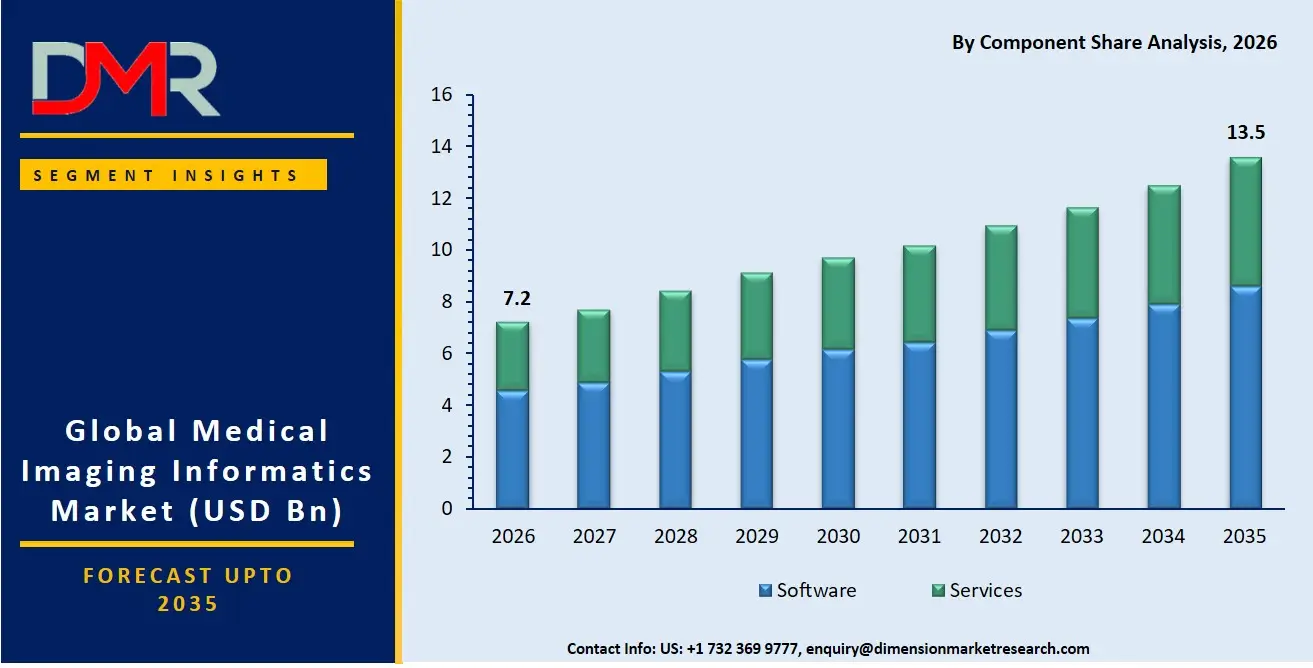
The software category is expected to lead the components market owing to its importance in handling and processing imaging data of patients in the healthcare setting. More and more hospitals and imaging centers are utilizing image management software, workflow software, reporting software, analytics software based on AI, and software for image exchange purposes.
ℹ
To learn more about this report –
Download Your Free Sample Report Here
The increasing use of cloud infrastructure along with enterprise imaging solutions has further contributed to the demand for software products. Regular advancements in artificial intelligence and machine learning technology will result in better interpretation of images. With healthcare providers moving towards digitization of the healthcare process and creating an imaging ecosystem, software continues to enjoy the largest revenue share.
By Product Type Analysis
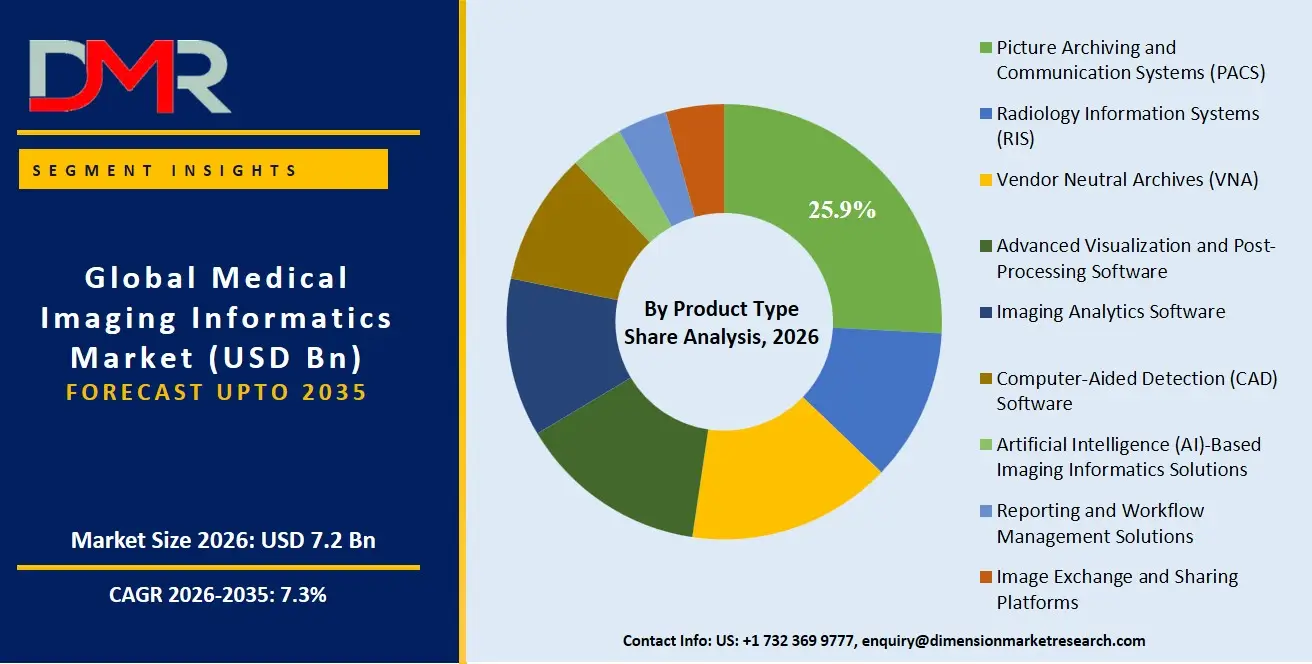
Picture Archiving and Communication Systems (PACS) is expected to hold the largest share in the product type segment since they act as the base of the digital imaging process in healthcare institutions. PACS help in storing, managing, accessing, and transmitting medical images produced from different imaging modalities. The increased volumes of imaging procedures, increased demand for enterprise imaging systems, and integration with electronic health records have helped them in gaining their position in the market. The preference for advanced and cloud-based PACS systems by the healthcare institutions for better accessibility and collaboration among the clinicians is another factor driving them in the medical imaging informatics market.
By Deployment Mode Analysis
Deployment by the cloud environment is expected to lead the deployment market segment because of its scalability, flexibility, and cost efficiency when contrasted to on-premise solutions. Medical institutions have become more interested in utilizing the cloud because of the ability to store large quantities of imaging information while offering remote diagnostics and teleradiology services. Cloud-based deployment makes it simpler for medical facilities to integrate their enterprise imaging solutions; it also offers better communication between healthcare specialists and saves money on infrastructure. More worry about data availability and efficiency has driven adoption of cloud-based technologies in imaging informatics.
By Imaging Modality Analysis
The Computed Tomography (CT) modality is expected to dominate the imaging modalities market due to its extensive application in the diagnosis of cardiovascular diseases, cancer, trauma, and neurological diseases. CT scan processes produce huge amounts of image data that need efficient storage and analysis using imaging informatics. There is an increased need for early disease detection, increased demands for emergency care, and improvement in multi-slice CT technologies that contribute to the high level of utilization. Use of CT imaging together with AI-based analytics and enterprise imaging systems also improves the efficiency of the diagnostic process.
By Functionality Analysis
Image Storage and Archiving is expected to be the leading function in the functionality category because of the immense amounts of imaging data created in the healthcare setting. The need for efficient storage systems is crucial to ensure that images are accessible and compliant with regulations as well as facilitate long-term record keeping. Increasing adoption of archiving technology and vendor-neutral archives by hospitals and diagnostic centers contributes to interoperable and smooth data transfer. Growing requirements for the centralized archiving and cloud-based storage solutions further support the functionality. The benefits of good archiving practices include enhanced clinical workflow and fast access to images for analysis and planning purposes.
By Organization Size Analysis
Large hospitals and healthcare networks are expected to dominate the organization size segment since they handle large imaging volumes and have adequate finances to allocate towards developing a sophisticated informatics platform. In addition to that, there is the need for such organizations to develop an effective solution for handling the imaging process, workflow, and reports from the different departments and institutions within them. The increasing focus on enterprise imaging has led to widespread adoption by large healthcare institutions. Utilization of AI-driven analytics and cloud technology increases operational and diagnostic effectiveness. The high patient volume and requirement for a centralized imaging system increase their share of the market for medical imaging informatics.
By Application Analysis
The Radiology application area is expected to lead in terms of dominance in the application area due to the fact that radiology performs the highest volume of diagnostic imaging procedures on a global basis. The area of radiology needs to use imaging informatics technologies in order to ensure effective imaging management, acquisition, storage, reporting, and communication between healthcare providers. Chronic diseases, the need for early diagnoses, and high imaging volumes have made the application area more attractive for adopting imaging informatics technologies. Cloud PACS and AI have additionally made the work of radiologists more effective.
By End User Analysis
The hospitals are expected to hold the largest share in the end-user category owing to their high number of patients and the extensive use of imaging technologies. These organizations will need complete imaging informatics solutions for managing images and workflows, reporting, and clinical decision support. Investments made by healthcare organizations in their IT infrastructure and enterprise imaging solutions will drive the adoption of these solutions by the hospitals across the globe. Higher incidences of chronic diseases and the growing demand for precise diagnostic procedures are other factors responsible for the increase in imaging procedures. The hospitals will also benefit from the systems offering better integration and inter-departmental cooperation.
The Global Medical Imaging Informatics Market Report is segmented on the basis of the following:
By Component
- Software
- Image Management Software
- Workflow Management Software
- Reporting and Documentation Software
- AI and Analytics Software
- Image Sharing Platforms
- Services
- Consulting Services
- Integration and Implementation Services
- Maintenance and Support Services
- Managed Services
- Training and Education Services
By Product Type
- Picture Archiving and Communication Systems (PACS)
- Radiology Information Systems (RIS)
- Vendor Neutral Archives (VNA)
- Advanced Visualization and Post-Processing Software
- Imaging Analytics Software
- Computer-Aided Detection (CAD) Software
- Artificial Intelligence (AI)-Based Imaging Informatics Solutions
- Reporting and Workflow Management Solutions
- Image Exchange and Sharing Platforms
By Deployment Mode
- On-Premise
- Cloud-Based
- Hybrid
By Imaging Modality
- X-Ray Imaging
- Computed Tomography (CT)
- Magnetic Resonance Imaging (MRI)
- Ultrasound Imaging
- Nuclear Imaging
- Mammography
- Others
By Functionality
- Image Acquisition
- Image Storage and Archiving
- Image Processing and Visualization
- Reporting and Documentation
- Image Exchange and Interoperability
- Workflow and Data Management
- Clinical Decision Support
By Organization Size
- Large Hospitals and Healthcare Networks
- Medium-Sized Healthcare Facilities
- Small Clinics and Diagnostic Centers
By Application
- Radiology
- Cardiology
- Oncology
- Neurology
- Orthopedics
- Obstetrics and Gynecology
- Dental Imaging
- Pulmonology
- Gastroenterology
- Others
By End User
- Hospitals
- Diagnostic Imaging Centers
- Ambulatory Surgical Centers (ASCs)
- Specialty Clinics
- Academic and Research Institutes
- Teleradiology Service Providers
- Other Healthcare Facilities
Regional Analysis
Leading Region by Market Share
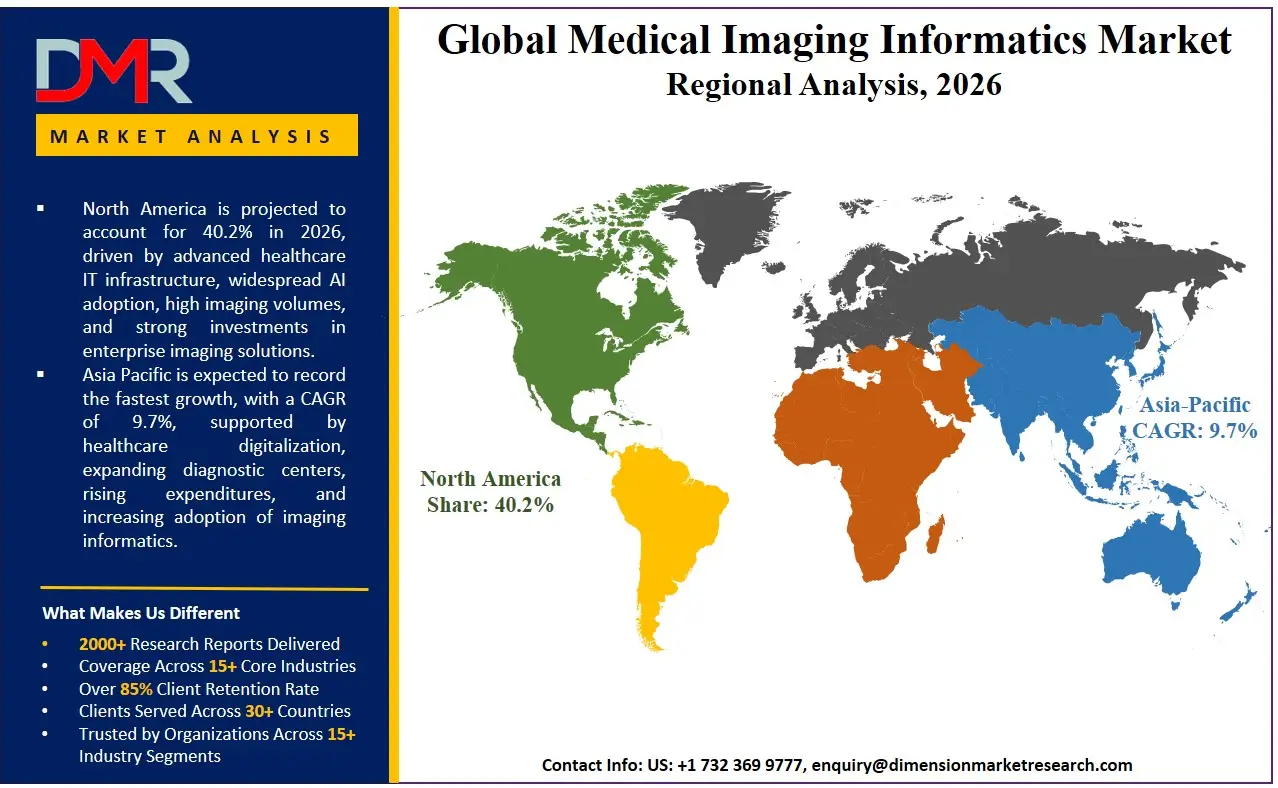
North America is poised to dominate the global medical imaging informatics market, projected to hold 40.2% of the market share by the end of 2026. North America, which is led by the U.S., commands the highest market share because of the unparalleled density of imaging volume, sophisticated use of health IT solutions and the robust digital transformation initiatives of the integrated delivery networks. This market boasts of a well-established base of software vendors, system integrators and experts in clinical informatics. There is continuous demand for artificial intelligence analytics, VNA migrations, and managed services because of the massive investments in artificial intelligence, value-based care which requires outcomes measurement and the consolidation of health systems into networks that are ready for enterprise imaging. Furthermore, there is a good venture capital environment that invests in innovative imaging informatics start-ups that require integration and implementation services.
ℹ
To learn more about this report –
Download Your Free Sample Report Here
Fastest-Growing Regional Market
The Asia-Pacific will be among the fastest-growing market for medical imaging informatics. This can be attributed to the efforts by governments in countries such as India, China, Japan, and Southeast Asia to promote digitization of their healthcare systems. Fast-paced economic development, the increasing presence of private hospital chains, and fast-growing healthcare consumption of middle classes compel existing public hospitals and private facilities to abandon inefficient manual and film-based practices. Platforms for clinical workflow management and teleradiology are highly sought after in order to bridge the resource gap between specialized centers in cities and diagnostic facilities in rural areas. At the same time, there is a severe shortage of skilled imaging IT professionals in the region, making outsourcing an attractive solution for closing skill gaps and accelerating investment in cloud-based projects.
By Region
North America
Europe
- Germany
- The U.K.
- France
- Italy
- Russia
- Spain
- Benelux
- Nordic
- Rest of Europe
Asia-Pacific
- China
- Japan
- South Korea
- India
- ANZ
- ASEAN
- Rest of Asia-Pacific
Latin America
- Brazil
- Mexico
- Argentina
- Colombia
- Rest of Latin America
Middle East & Africa
- Saudi Arabia
- UAE
- South Africa
- Israel
- Egypt
- Rest of MEA
Competitive Landscape
Competitive landscape of the global medical imaging informatics market has evolved to become quite volatile with a very diverse set of players ranging from big conglomerates of multinational health IT companies to imaging software pure-plays and the health cloud business units of hyperscaler technology companies. The essence of success is found in strong strategic relationships as imaging informatics providers team up with clinical workflow specialists, cloud computing service providers, and AI model builders to form a well-integrated best-in-class ecosystem. Market consolidation processes are currently taking place at a rapid pace with classic PACS and VNA companies buying AI algorithms and advanced visualization software from niche players to integrate intelligence in their own core solutions. Intellectual property that includes automated data migration software, specialty-specific workflow designs, and clinically validated AI models becomes more relevant than ever before in terms of competitive advantage.
Some of the prominent players in the Global Medical Imaging Informatics Market are:
- GE HealthCare
- Siemens Healthineers
- Philips Healthcare
- Fujifilm Holdings Corporation
- Canon Medical Systems Corporation
- Agfa-Gevaert Group
- Sectra AB
- Merge Healthcare (IBM Watson Health)
- Intelerad Medical Systems
- Carestream Health
- Konica Minolta Healthcare
- RamSoft Inc.
- Mach7 Technologies Ltd.
- Visage Imaging Inc.
- Novarad Corporation
- BridgeHead Software
- INFINITT Healthcare Co., Ltd.
- ESAOTE S.p.A.
- Terarecon Inc.
- Medinformatix Inc.
- Other Key Players
Recent Developments
- January 2026: GE HealthCare announced a major expansion of its AI and Analytics Software portfolio, launching a new cloud-based platform that orchestrates third-party AI models directly within its PACS workflow to assist radiologists in Oncology and Neurology with automated lesion measurement and emergency case flagging.
- November 2025: Sectra AB strengthened its collaboration with a major public cloud provider and introduced a specific hybrid cloud enterprise imaging practice, offering Risk & Compliance Consulting and Integration and Implementation Services aimed at supporting government hospitals in deploying a sovereign-cloud VNA that meets EU data residency requirements.
- October 2025: Philips Healthcare acquired a specialized radiology workflow AI firm to further enhance its Reporting and Documentation Software and Advanced Visualization solutions, targeting the integration of conversational generative AI for automated impression drafting and clinical decision support for cardiology imaging.
Report Details
| Report Characteristics |
| Market Size (2026) |
USD 7.2 Bn |
| Forecast Value (2035) |
USD 13.5 Bn |
| CAGR (2026–2035) |
7.3% |
| The US Market Size (2026) |
USD 2.4 Bn |
| Historical Data |
2021 – 2025 |
| Forecast Data |
2027 – 2035 |
| Base Year |
2025 |
| Estimate Year |
2026 |
| Segments Covered |
By Component, By Product Type, By Deployment Mode, By Imaging Modality, By Functionality, By Organization Size, By Application, and By End User |
| Regional Coverage |
North America – The US and Canada; Europe – Germany, The UK, France, Russia, Spain, Italy, Benelux, Nordic, & Rest of Europe; Asia-Pacific – China, Japan, South Korea, India, ANZ, ASEAN, Rest of APAC; Latin America – Brazil, Mexico, Argentina, Colombia, Rest of Latin America; Middle East & Africa – Saudi Arabia, UAE, South Africa, Turkey, Egypt, Israel, & Rest of MEA |
Frequently Asked Questions
How big is the Global Medical Imaging Informatics Market?
▾ The Global Medical Imaging Informatics market is poised to be valued at USD 7.2 billion in 2026 and is projected to reach USD 13.5 billion by 2035, driven by the universal need to manage exploding imaging data volumes and integrate AI into diagnostic workflows.
What is the CAGR of the Global Medical Imaging Informatics Market from 2026 to 2035?
▾ The market is expected to grow at a CAGR of 7.3% from 2026 to 2035, reflecting the accelerating complexity of enterprise imaging environments and the persistent need to replace siloed legacy PACS with interoperable platforms.
What factors are driving the growth of the Global Medical Imaging Informatics Market?
▾ Key drivers include the exponential growth in imaging data volume, the mandate for enterprise-wide image interoperability, the integration of AI and analytics for clinical decision support, and the persistent shortage of radiologists globally.
Which region held the largest share of the Medical Imaging Informatics Market in 2026?
▾ North America is poised to hold a 40.2% market share in 2026, driven by a mature health IT ecosystem and aggressive enterprise investment in AI and cloud-based VNA platforms.
Which region is expected to grow the fastest in the Medical Imaging Informatics Market?
▾ The Asia-Pacific region is expected to grow the fastest, fueled by rapid healthcare digitization in India, China, and Japan, where teleradiology and workflow management solutions are critical for connecting disparate urban and rural diagnostic centers.
What are the major trends in the Global Medical Imaging Informatics Market?
▾ Major trends include the shift to enterprise imaging platforms, the adoption of generative AI within reporting workflows, the move to cloud-based managed services (Imaging as a Service), and the rise of AI orchestration platforms that manage a portfolio of point-solution diagnostic algorithms.
Who are the key players in the Global Medical Imaging Informatics Market?
▾ Key players include global imaging IT leaders like GE HealthCare, Philips, Siemens Healthineers, and Sectra, alongside specialized AI and software firms like Arterys, Aidoc, and Intelerad, as well as the healthcare divisions of major cloud platform providers.
How is the Global Medical Imaging Informatics Market segmented?
▾ The market is segmented by Component, Product Type, Deployment Mode, Imaging Modality, Functionality, Organization Size, Application, and End User.