What is the Medical Imaging Reagents Market Size?
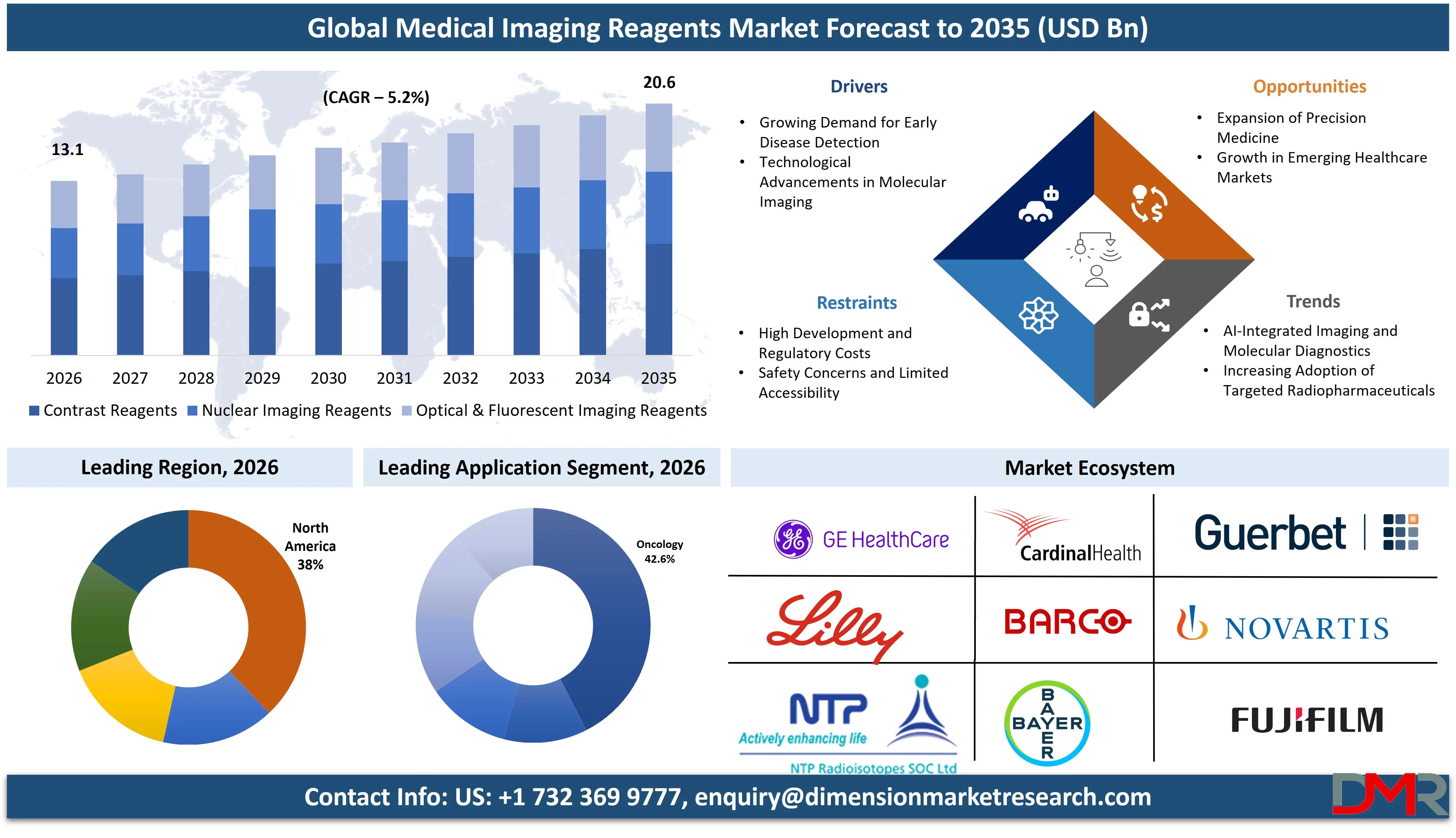
The Medical Imaging Reagents Market size is expected to be USD 13.1 billion in 2026 and increase at a compound annual growth rate of 5.2% to USD 20.6 billion in 2035 due to growing demand for early disease detection.
ℹ
To learn more about this report –
Download Your Free Sample Report Here
The Medical Imaging Reagents Market comprises contrast agents, radiopharmaceuticals, optical imaging reagents, and specialized compounds that enhance visualization of tissues, organs, and physiological processes during diagnostic imaging. These reagents are widely used across computed tomography (CT), magnetic resonance imaging (MRI), ultrasound, positron emission tomography (PET), single-photon emission computed tomography (SPECT), and optical imaging platforms. Growing demand for early disease detection, precision medicine, and minimally invasive diagnostics is strengthening market expansion. Increasing prevalence of cancer and cardiovascular diseases, technological advancements in molecular imaging, AI-assisted diagnostics, and continuous innovation in targeted imaging biomarkers are transforming the market while supporting higher diagnostic accuracy and personalized healthcare solutions.
The US Medical Imaging Reagents Market
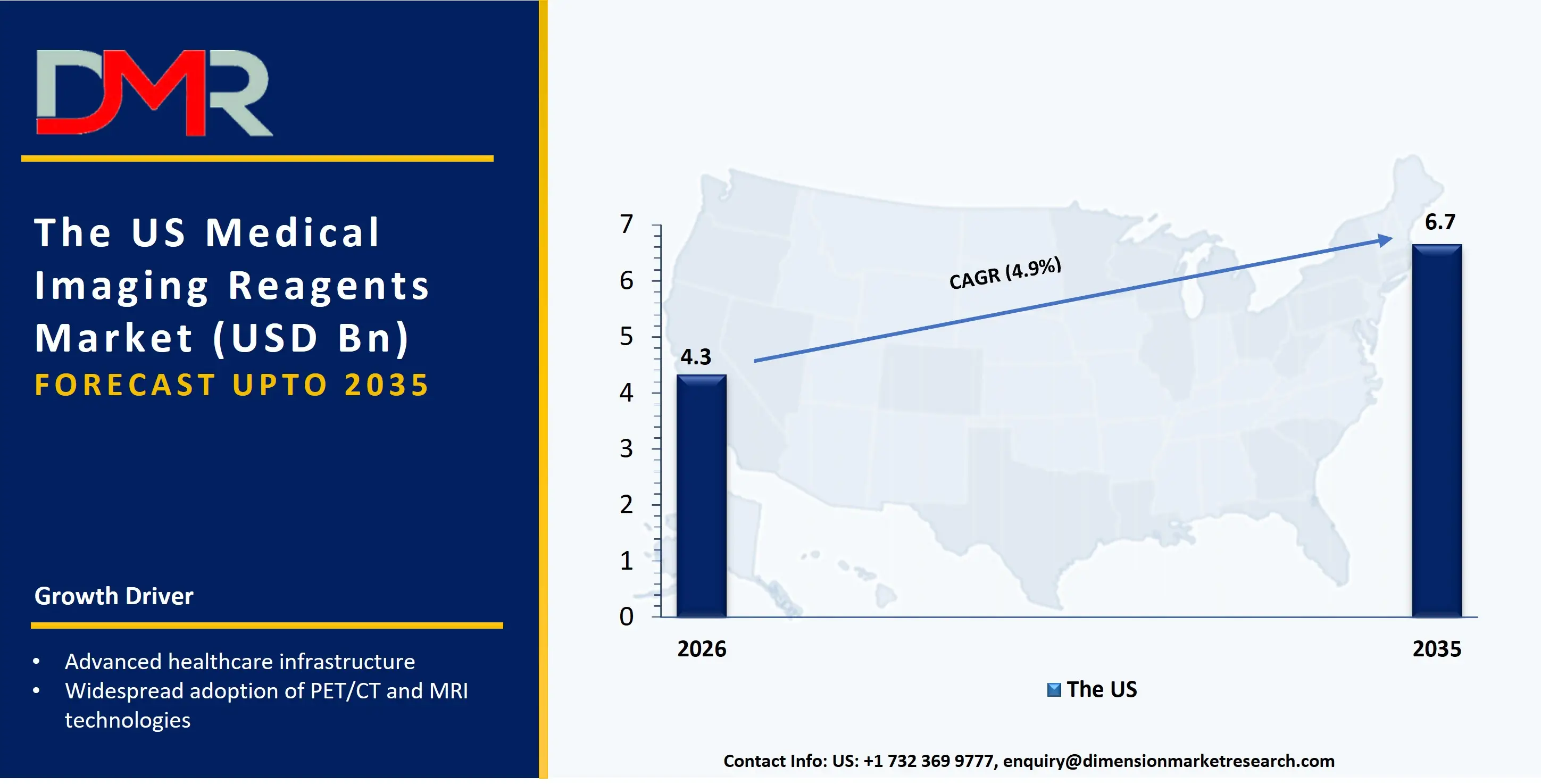
The US Medical Imaging Reagents Market size is estimated to be USD 4.3 billion in 2026 and is expected to increase at a CAGR of 4.9% over the forecast period.
ℹ
To learn more about this report –
Download Your Free Sample Report Here
The United States represents one of the largest markets owing to advanced healthcare infrastructure, widespread adoption of PET/CT and MRI technologies, and strong reimbursement frameworks. Continuous investment in molecular imaging, precision diagnostics, and oncology research supports sustained demand for innovative reagents. Pharmaceutical manufacturers, imaging technology developers, and healthcare providers actively collaborate to commercialize next-generation imaging agents. Regulatory oversight by the FDA encourages product safety while accelerated approval pathways for innovative radiopharmaceuticals further strengthen commercialization opportunities and market growth.
Europe Medical Imaging Reagents Market
The Europe Medical Imaging Reagents Market size is estimated to be USD 2.9 billion in 2026 and is expected to increase at a CAGR of 4.7% over the forecast period.
Europe maintains a strong market position through favorable healthcare systems, growing investments in precision medicine, and increasing utilization of hybrid imaging technologies. The European Green Deal encourages environmentally sustainable manufacturing practices, while stringent regulatory frameworks improve product quality and patient safety. Rising adoption of PET imaging, increasing cancer screening initiatives, expanding clinical research, and continuous innovation in radiopharmaceuticals contribute to regional market development. Academic institutions and healthcare organizations also play an important role in accelerating innovation.
Japan Medical Imaging Reagents Market
The market size of Japan Medical Imaging Reagents will be USD 917 million in 2026 and at a CAGR of 5.0% in the forecast period.
Japan continues to experience robust market growth due to its aging population, high burden of chronic diseases, and advanced diagnostic infrastructure. Government initiatives supporting medical innovation and healthcare digitalization encourage broader adoption of sophisticated imaging reagents. Oncology and neurology remain among the fastest-growing application areas. Japanese manufacturers continue investing in molecular imaging technologies, AI-assisted diagnostics, and next-generation contrast agents while hospitals increasingly integrate precision imaging into routine clinical practice to improve patient outcomes.
Key Takeaways
- Market Size & Forecast: The Medical Imaging Reagents Market size is projected to reach USD 13.1 billion in 2026 and is anticipated to have a value of USD 20.6 billion in 2035.
- Growth Rate & Outlook: The Medical Imaging Reagents Market size is set to grow at a compound annual growth rate of 5.2% during the forecast period of 2026 to 2035.
- Primary Growth Drivers: Some of the major growth drivers in the market are Growing Demand for Early Disease Detection, and more.
- Key Market Trends: Some of the major trends in the market are Increasing Adoption of Targeted Radiopharmaceuticals, and more.
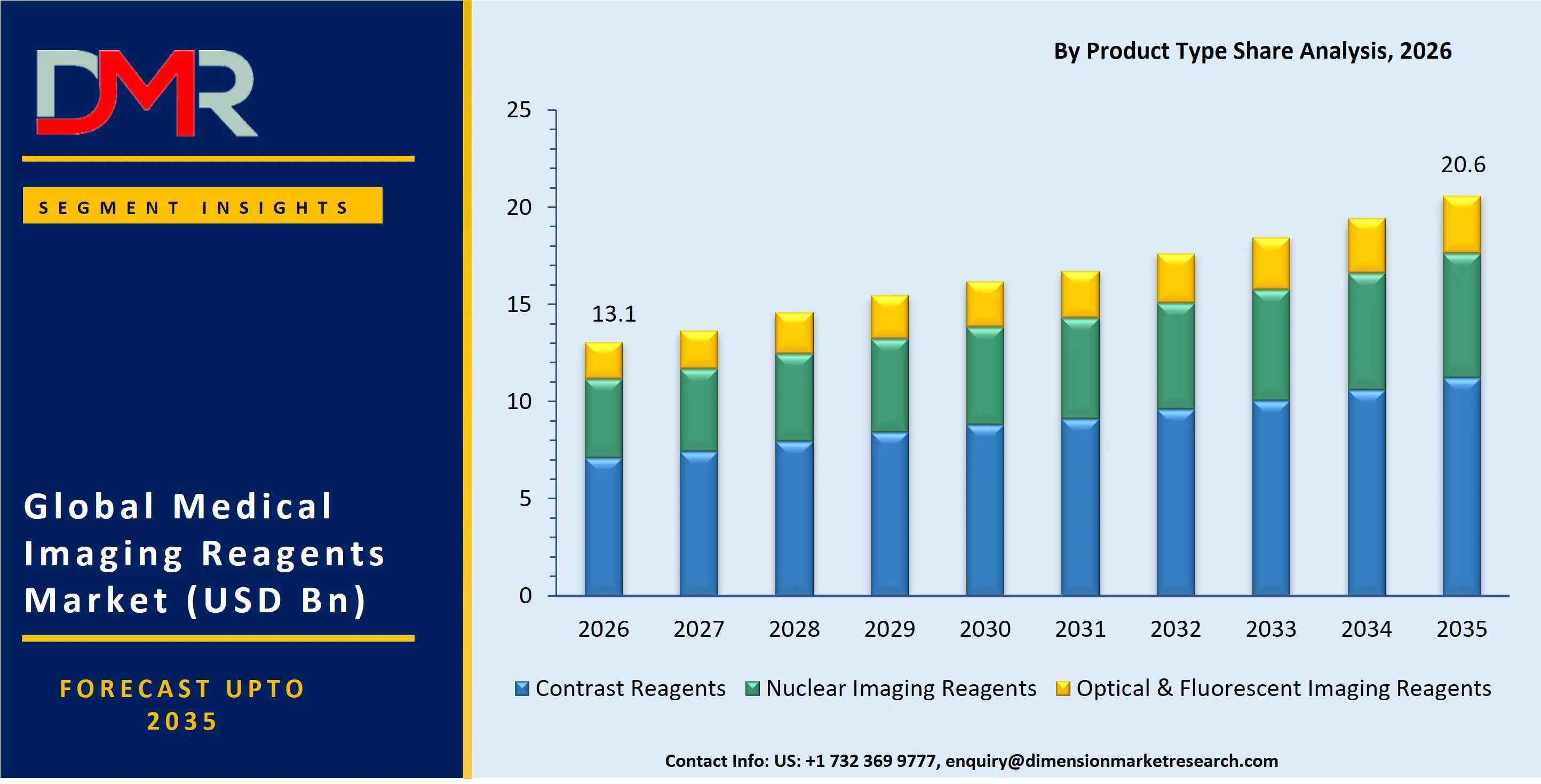
- By Product Type: Contrast Reagents are anticipated to get the majority share of the Medical Imaging Reagents Market in 2026.
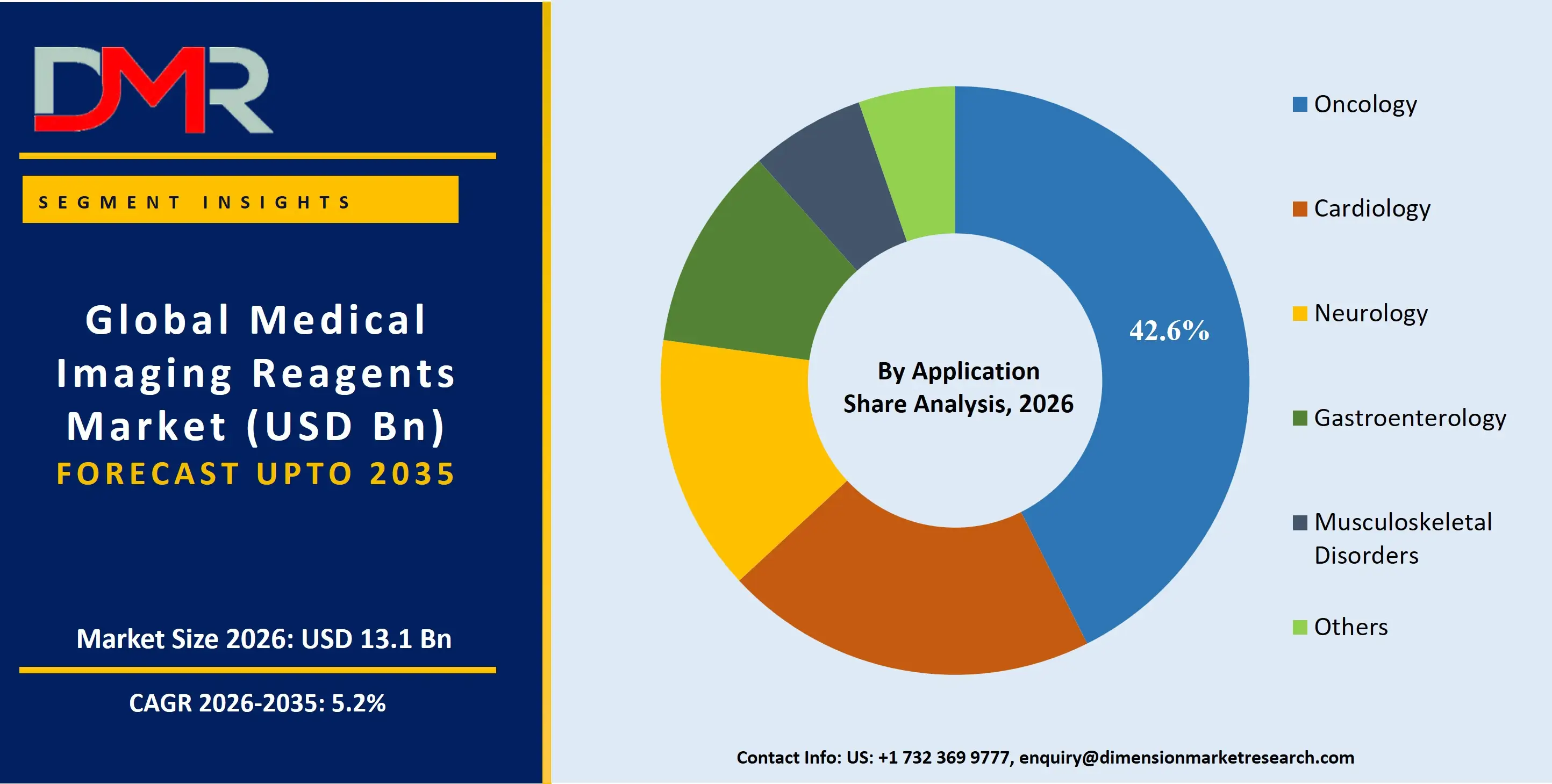
- By Application Type: Oncology is expected to get the largest revenue share in 2026 in the Medical Imaging Reagents Market.
- Regional Leadership: North America is set to lead the Medical Imaging Reagents Market with an estimated 38.0% share in 2026.
What is the Medical Imaging Reagents?
Medical imaging reagents are specialized chemical or biological substances administered to improve the visualization of anatomical structures, tissues, cells, or physiological functions during diagnostic imaging procedures. They include contrast media, radiopharmaceuticals, fluorescent probes, and molecular imaging agents that enhance image quality, improve diagnostic accuracy, enable disease characterization, monitor treatment response, and facilitate early detection across modalities such as CT, MRI, PET, SPECT, ultrasound, and optical imaging.
Use Cases
- Oncology Diagnosis: Medical imaging reagents enable early detection, tumor localization, staging, and treatment monitoring across CT, MRI, PET, and SPECT imaging. Advanced molecular imaging agents improve visualization of malignant tissues while supporting personalized cancer therapies and precision medicine.
- Cardiovascular Disease Assessment: Contrast reagents and nuclear imaging tracers improve visualization of blood vessels, myocardial perfusion, and cardiac function. These agents assist physicians in diagnosing coronary artery disease, vascular abnormalities, ischemia, and heart failure with greater diagnostic confidence.
- Neurological Disorder Evaluation: MRI contrast agents and PET radiotracers facilitate diagnosis of Alzheimer's disease, Parkinson's disease, epilepsy, stroke, and brain tumors. They improve visualization of brain anatomy and metabolic activity, enabling earlier intervention and better disease monitoring.
- Drug Development and Clinical Research: Research institutions utilize imaging reagents to monitor biological pathways, evaluate therapeutic response, study disease progression, and validate novel drug candidates. Molecular imaging significantly reduces development timelines while improving the quality of preclinical and clinical research.
How AI Is Transforming the Medical Imaging Reagents Market
Artificial intelligence is improving reagent utilization by optimizing imaging protocols, reducing scan variability, enhancing image reconstruction, and assisting clinicians in selecting the most appropriate imaging agents for individual patients. AI algorithms also improve lesion detection, automate quantitative measurements, and increase diagnostic consistency across imaging modalities.
AI additionally accelerates reagent discovery by identifying promising molecular targets, supporting predictive modeling, and streamlining clinical research. Pharmaceutical companies leverage AI to optimize formulation development, improve manufacturing efficiency, reduce research costs, and accelerate commercialization of innovative medical imaging reagents while enabling more personalized diagnostic solutions.
Market Dynamic
Driving Factors in the Medical Imaging Reagents Market
Growing Demand for Early Disease Detection
Increasing prevalence of cancer, cardiovascular diseases, neurological disorders, and chronic illnesses is significantly boosting demand for advanced diagnostic imaging. Healthcare providers increasingly rely on high-quality imaging reagents to achieve earlier diagnosis, improve treatment planning, and reduce healthcare costs. Population aging, preventive healthcare initiatives, and precision medicine strategies further increase utilization of sophisticated contrast agents and molecular imaging compounds across hospitals and diagnostic centers.
Restraints in the Medical Imaging Reagents Market
High Development and Regulatory Costs
Developing innovative imaging reagents requires extensive clinical validation, toxicology studies, manufacturing optimization, and regulatory approval, making commercialization both lengthy and expensive. Strict quality requirements increase development timelines and financial risks for manufacturers. Smaller companies often face challenges competing with established industry participants because of these significant investment requirements.
Opportunities in the Medical Imaging Reagents Market
Expansion of Precision Medicine
Precision medicine continues creating substantial opportunities for targeted imaging biomarkers capable of identifying disease-specific molecular characteristics. Personalized imaging protocols improve therapeutic decision-making, disease monitoring, and patient outcomes. Growing investment in companion diagnostics and molecular imaging research is expected to generate significant commercial opportunities for reagent manufacturers.
Trends in the Medical Imaging Reagents Market
Increasing Adoption of Targeted Radiopharmaceuticals
Targeted PET tracers, theranostic agents, and disease-specific radiopharmaceuticals are transforming diagnostic imaging. Healthcare providers increasingly utilize specialized imaging reagents capable of detecting molecular changes before anatomical abnormalities become visible. Growing interest in theranostics continues driving innovation and expanding clinical applications across oncology and neurology.
Research Scope and Analysis
The research scope analyzes the Medical Imaging Reagents Market across product types, imaging modalities, applications, and end users. The study evaluates market trends, growth drivers, challenges, regional performance, competitive strategies, technological advancements, and emerging opportunities influencing adoption of contrast agents, radiopharmaceuticals, and advanced imaging solutions globally.
ℹ
To learn more about this report –
Download Your Free Sample Report Here
By Product Type Analysis
The Medical Imaging Reagents Market by product type is primarily dominated by Contrast Reagents, which are estimated to account for approximately 54.5% of the global market share in 2026. Their dominance is attributed to extensive utilization in CT, MRI, and ultrasound procedures for improving visualization of anatomical structures, particularly in oncology, cardiovascular imaging, and neurological diagnostics.
ℹ
To learn more about this report –
Download Your Free Sample Report Here
Iodinated contrast media represent the largest subsegment due to their widespread application in CT examinations. Meanwhile, the fastest-growing segment is expected to be Nuclear Imaging Reagents (Radiopharmaceuticals), supported by increasing adoption of PET imaging, targeted radiotracers, and theranostic approaches in cancer diagnosis and treatment monitoring. Advancements in molecular imaging and rising investments in precision medicine are accelerating demand for specialized radiopharmaceutical agents.
Optical and fluorescent imaging reagents are gaining traction in research, surgical guidance, and molecular diagnostics. Increasing utilization of fluorescence-guided surgery and biomedical research applications is supporting segment expansion. Innovation in near-infrared fluorescent probes and targeted biomarkers is expected to improve adoption, especially in oncology research and minimally invasive procedures.
By Imaging Modality Analysis
The X-ray & Computed Tomography (CT) segment is projected to maintain the leading position, accounting for approximately 39.2% of the global Medical Imaging Reagents Market share in 2026. The segment benefits from widespread global installation of CT systems, emergency diagnostic applications, and extensive use of iodinated contrast media. The fastest-growing segment is expected to be Nuclear Imaging (PET/SPECT) due to increasing adoption of molecular diagnostics, oncology screening, and targeted radiopharmaceutical therapies. MRI imaging also represents a significant growth area due to demand for advanced neurological, orthopedic, and cardiovascular diagnostics.
CT imaging remains a major contributor because of its speed, accessibility, and effectiveness in detecting complex diseases. Iodinated contrast agents are widely used for vascular imaging, tumor assessment, trauma evaluation, and organ visualization. Growth in emergency care and cancer diagnostics continues supporting demand.
By Application Analysis
The Oncology segment is expected to remain the largest application category, accounting for approximately 42.6% of the Medical Imaging Reagents Market share in 2026. Cancer diagnosis, staging, treatment monitoring, and recurrence detection require extensive use of contrast agents and radiopharmaceuticals. PET tracers and targeted imaging agents are becoming increasingly important in precision oncology. The fastest-growing application segment is expected to be Neurology, driven by increasing demand for Alzheimer's disease imaging, Parkinson's disease assessment, and brain function analysis. Growing aging populations and advancements in neurological biomarkers are supporting expansion.
Cardiology applications utilize contrast media and nuclear imaging agents for evaluating blood vessels, myocardial function, and perfusion. Increasing cardiovascular disease prevalence and demand for minimally invasive diagnosis continue driving adoption.
By End User Analysis
The Hospitals segment is projected to dominate the end-user category, accounting for approximately 61.8% of the global market share in 2026. Hospitals maintain leadership due to their advanced imaging infrastructure, high patient volumes, and ability to provide comprehensive diagnostic services. The fastest-growing segment is expected to be Diagnostic Imaging Centers, supported by increasing outsourcing of imaging procedures, expansion of private diagnostic networks, and rising demand for affordable outpatient diagnostic services.
Diagnostic imaging centers are expanding rapidly due to increasing healthcare accessibility and patient preference for specialized outpatient services. Investments in advanced imaging equipment are improving adoption of innovative reagents.
The Medical Imaging Reagents Market Report is segmented on the basis of the following:
By Product Type
- Contrast Reagents
- Iodinated Contrast Media
- Gadolinium-Based Contrast Media
- Microbubble Contrast Agents
- Barium-Based Contrast Media
- Nuclear Imaging Reagents (Radiopharmaceuticals)
- PET Radiotracers
- SPECT Radiotracers
- Optical & Fluorescent Imaging Reagents
By Imaging Modality
- X-ray & Computed Tomography (CT)
- Magnetic Resonance Imaging (MRI)
- Ultrasound Imaging
- Nuclear Imaging (PET/SPECT)
- Optical Imaging
By Application
- Oncology
- Cardiology
- Neurology
- Gastroenterology
- Musculoskeletal Disorders
- Others
By End User
- Hospitals
- Diagnostic Imaging Centers
- Research & Academic Institutes
Regional Analysis
Leading Region in the Medical Imaging Reagents Market
ℹ
To learn more about this report –
Download Your Free Sample Report Here
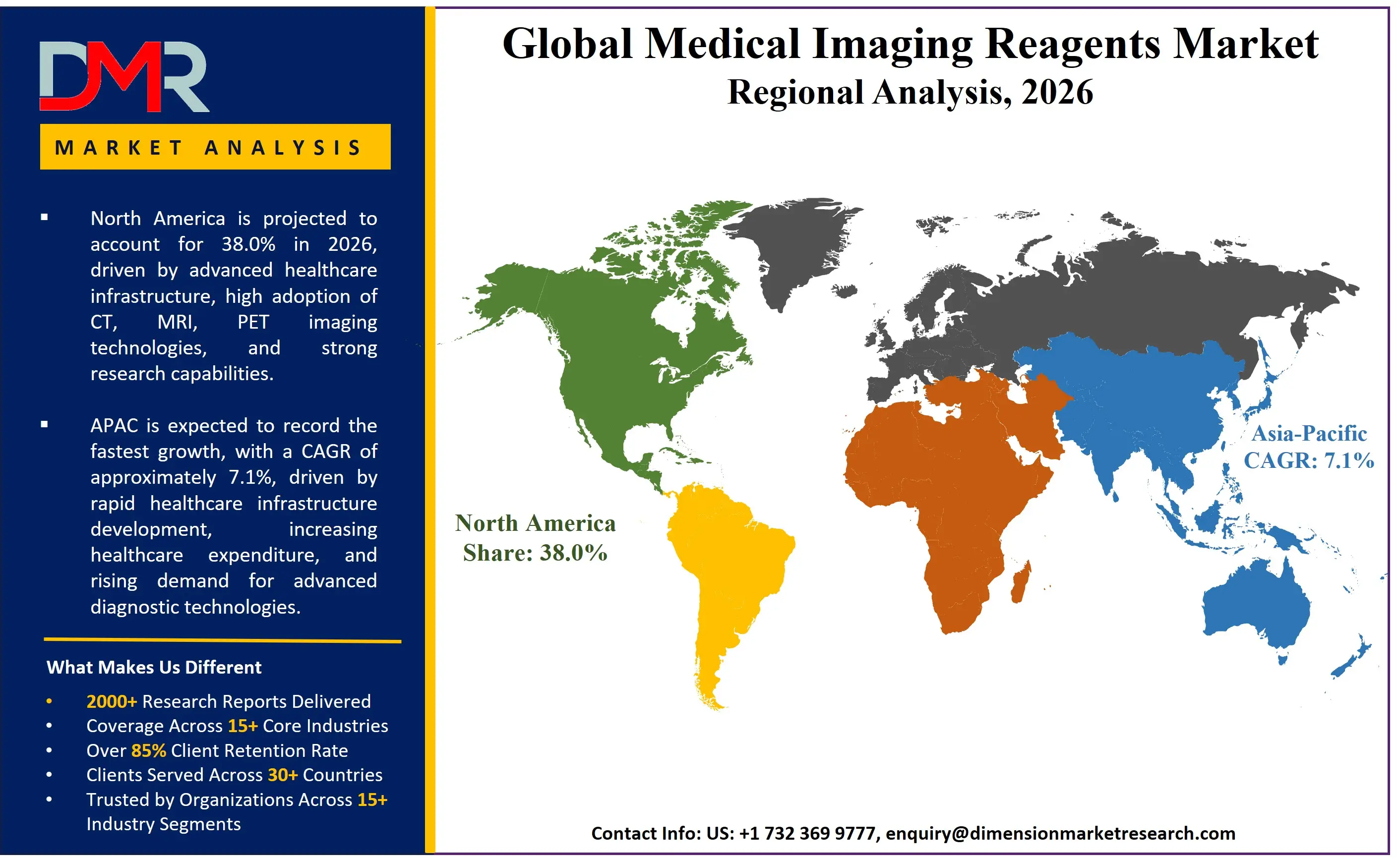
North America is expected to remain the leading region, accounting for approximately 38.0% of the global Medical Imaging Reagents Market share in 2026. The region maintains dominance due to advanced healthcare infrastructure, high adoption of CT, MRI, PET imaging technologies, and strong research capabilities. The presence of major pharmaceutical and medical technology companies, favorable reimbursement systems, and increasing investments in precision medicine strengthen regional growth. Government support for healthcare innovation, rising cancer screening programs, and increasing demand for molecular diagnostics continue expanding the regional market. The United States represents the largest contributor because of its extensive diagnostic imaging network and strong clinical research ecosystem.
Fastest Growing Region in the Medical Imaging Reagents Market
Asia-Pacific is projected to be the fastest-growing region due to rapid healthcare infrastructure development, increasing healthcare expenditure, and rising demand for advanced diagnostic technologies. Countries including China, India, Japan, and South Korea are investing heavily in medical imaging facilities and precision healthcare solutions. Growing elderly populations, increasing cancer incidence, urbanization, and government initiatives supporting healthcare modernization are accelerating adoption. Expansion of private hospitals and diagnostic centers, along with improved access to advanced imaging technologies, creates significant opportunities for imaging reagent manufacturers across the region.
By Region
North America
Europe
- Germany
- The U.K.
- France
- Italy
- Russia
- Spain
- Benelux
- Nordic
- Rest of Europe
Asia-Pacific
- China
- Japan
- South Korea
- India
- ANZ
- ASEAN
- Rest of Asia-Pacific
Latin America
- Brazil
- Mexico
- Argentina
- Colombia
- Rest of Latin America
Middle East & Africa
- Saudi Arabia
- UAE
- South Africa
- Israel
- Egypt
- Rest of MEA
Competitive Landscape
The Medical Imaging Reagents Market is characterized by intense competition driven by technological innovation, regulatory compliance, manufacturing capabilities, and expansion of diagnostic applications. Market participants focus on developing safer contrast agents, targeted radiopharmaceuticals, and advanced molecular imaging solutions to strengthen their competitive position. High entry barriers exist due to stringent regulatory approvals, complex manufacturing requirements, specialized infrastructure, and extensive clinical validation processes. Companies are increasingly investing in research and development, strategic collaborations, supply chain optimization, and geographic expansion to improve market presence. Partnerships between pharmaceutical firms, imaging technology providers, hospitals, and research institutions are becoming important strategies for accelerating innovation and commercialization.
Some of the prominent players in the global Medical Imaging Reagents are:
- GE HealthCare Technologies Inc.
- Bayer AG
- Bracco Imaging S.p.A.
- Guerbet Group
- Siemens Healthineers AG
- Fujifilm Holdings Corporation
- Lantheus Holdings, Inc.
- Curium Pharma
- Cardinal Health, Inc.
- Jubilant Radiopharma
- NTP Radioisotopes SOC Ltd.
- Telix Pharmaceuticals Limited
- Blue Earth Diagnostics Ltd.
- Novartis AG
- Eli Lilly and Company
- Spectrum Dynamics Medical Ltd.
- Positron Corporation
- NanoPET Pharma GmbH
- Trivitron Healthcare
- Jiangsu Hengrui Pharmaceuticals Co., Ltd.
- Other Key Players
Recent Developments
- In June 2025, Siemens Healthineers expanded its focus on molecular imaging and advanced diagnostic solutions by enhancing technologies supporting PET, SPECT, and hybrid imaging applications. The company continued developing integrated imaging solutions that improve workflow efficiency, quantitative analysis, and precision diagnostics. These advancements support increasing demand for radiopharmaceuticals and specialized imaging reagents, particularly in oncology and neurological applications.
- In March 2025, Bracco Imaging continued advancing its diagnostic imaging portfolio through initiatives focused on improving contrast media performance and supporting safer imaging procedures. The company strengthened research efforts in contrast-enhanced imaging solutions designed for CT, MRI, and other diagnostic applications. Bracco's continued investment in innovation reflects increasing industry demand for improved contrast agent safety profiles, enhanced diagnostic performance, and optimized patient outcomes.
- In January 2025, GE HealthCare continued strengthening its medical imaging ecosystem by expanding innovations focused on improving diagnostic accuracy and workflow efficiency. The company emphasized advancements in precision imaging, artificial intelligence integration, and enhanced visualization capabilities across CT, MRI, and molecular imaging platforms. These developments support the broader adoption of advanced imaging reagents by enabling healthcare providers to achieve improved image quality and more accurate disease characterization.
Report Details
| Report Characteristics |
| Market Size (2026) |
USD 13.1 Bn |
| Forecast Value (2035) |
USD 20.6 Bn |
| CAGR (2026–2035) |
5.2% |
| Historical Period |
2021 – 2025 |
| Forecast Period |
2027 – 2035 |
| Base Year |
2025 |
| Estimate Year |
2026 |
| Segments Covered |
By Product Type, By Imaging Modality, By Application, By End User |
| Regional Coverage |
North America – The US and Canada; Europe – Germany, The UK, France, Russia, Spain, Italy, Benelux, Nordic, & Rest of Europe; Asia-Pacific – China, Japan, South Korea, India, ANZ, ASEAN, Rest of APAC; Latin America – Brazil, Mexico, Argentina, Colombia, Rest of Latin America; Middle East & Africa – Saudi Arabia, UAE, South Africa, Turkey, Egypt, Israel, & Rest of MEA |
Frequently Asked Questions
How big is the Medical Imaging Reagents Market?
▾ The Medical Imaging Reagents Market size is expected to reach USD 13.1 billion by 2026 and is projected to reach USD 20.6 billion by the end of 2035.
What is the CAGR of the Medical Imaging Reagents Market from 2026 to 2035?
▾ The market is growing at a CAGR of 5.2 percent over the forecasted period.
What factors are driving the growth of the Medical Imaging Reagents Market?
▾ Growing Demand for Early Disease Detection, and more are the factors driving the growth of the Medical Imaging Reagents Market.
What are the major trends in the Medical Imaging Reagents Market?
▾ Increasing Adoption of Targeted Radiopharmaceuticals, and more are some of the major trends in the market.
Who are the key players in the Medical Imaging Reagents Market?
▾ Some of the key players in the Medical Imaging Reagents Market include Lily, Barco, Bayers, more
How is the Medical Imaging Reagents Market segmented?
▾ The Medical Imaging Reagents Market is segmented by product type, imaging modality, application, end user.
Which region held the largest share of the Medical Imaging Reagents Market in 2026?
▾ North America is set to lead the Medical Imaging Reagents Market with an estimated 38.0% share in 2026.
Which region is expected to grow the fastest in the Medical Imaging Reagents Market?
▾ Asia Pacific is the fastest-growing region in the Medical Imaging Reagents Market during the forecast period.