What is the Microbiome Therapeutics Market Size?
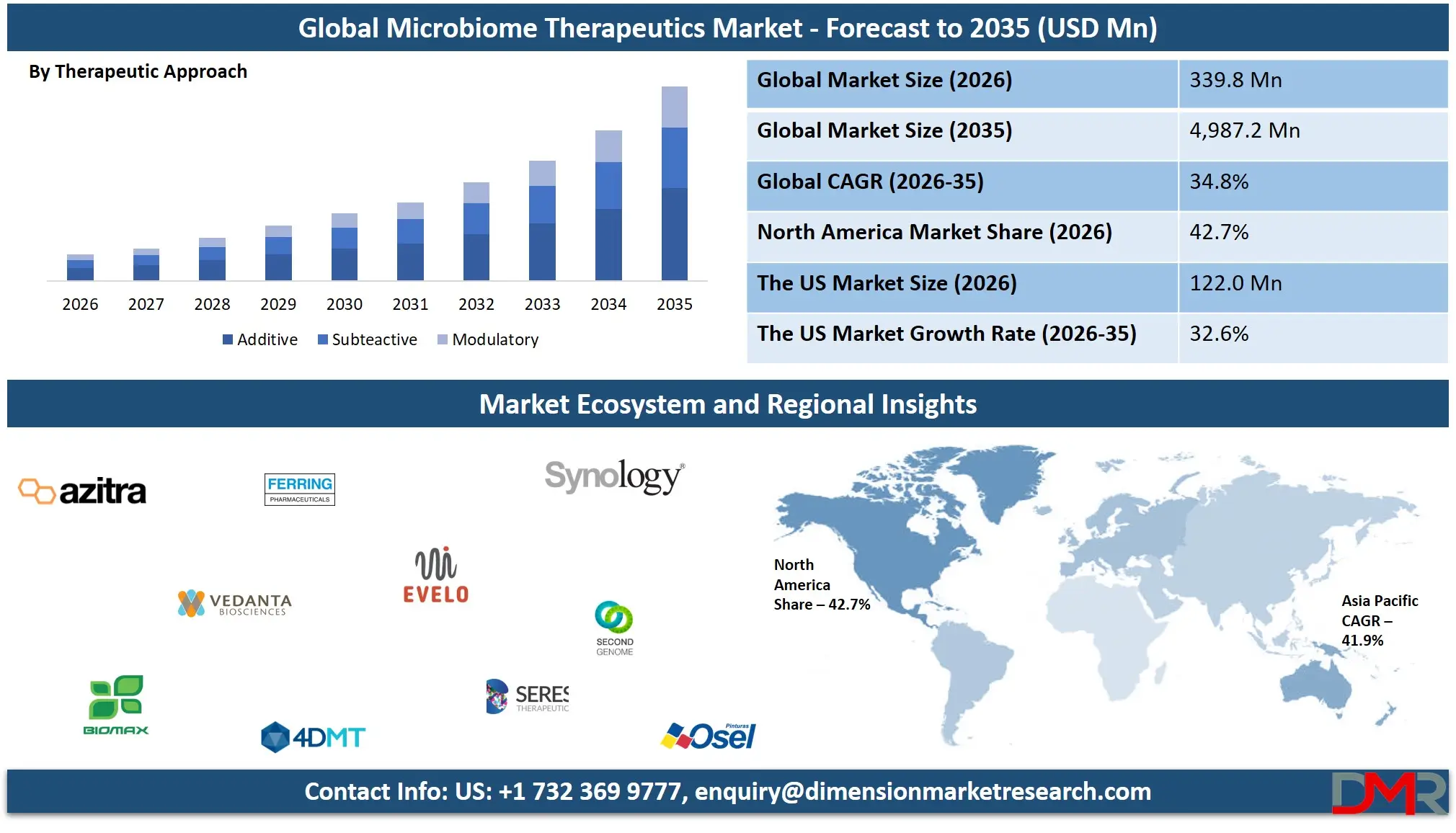
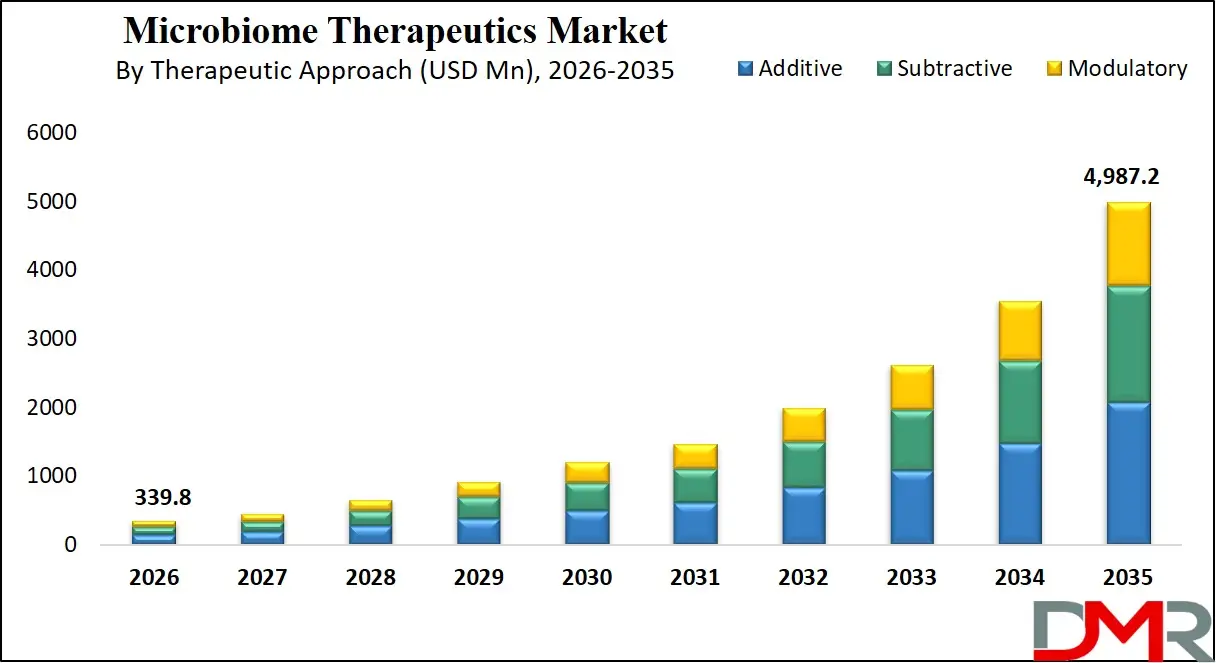
The Microbiome Therapeutics Market size is expected to be USD 339.8 million in 2026 and increase at a compound annual growth rate of 34.8% to USD 4,987.2 million in 2035 due to rising prevelance of chronic and lifestyle disease.
ℹ
To learn more about this report –
Download Your Free Sample Report Here
The Microbiome Therapeutics market refers to the design and use of drugs that influence the microorganism populations to protect against, control, or cure certain diseases. The market consists of products such as live biotherapeutic products, metabolites derived from the microbiome, and phage therapy. The Microbiome Therapeutics market is highly significant in developing precision medicine by identifying the mechanisms of the disease associated with microbiome imbalance. Rising studies on the gut-brain axis and gut-immune axis coupled with investment in biotechnology will continue to drive innovations in the market.
ℹ
To learn more about this report –
Download Your Free Sample Report Here
The US Microbiome Therapeutics Market
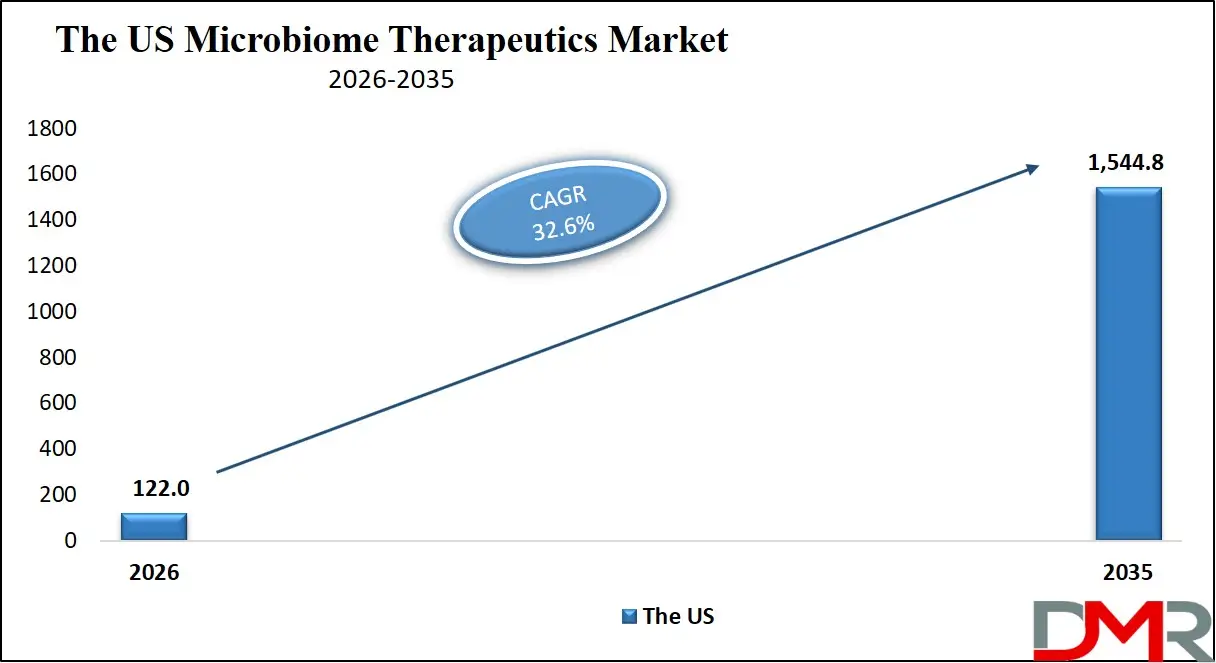
The US Microbiome Therapeutics Market size is estimated to be USD 122.0 million in 2026 and is expected to increase at a CAGR of 32.6% over the forecast period.
ℹ
To learn more about this report –
Download Your Free Sample Report Here
The US market is dominated by advanced biotechnological infrastructure, availability of venture capital funds, and efficient clinical trials environment. Regulatory support for such companies comes in the form of quick product approval due to fast track or orphan drug designation. Contributions of top-notch biotech firms and increasing academic-industry partnerships play a crucial role in expanding this market.
Europe Microbiome Therapeutics Market
The Europe Microbiome Therapeutics Market size is estimated to be USD 101.9 million in 2026 and at a CAGR of 35.1% over the forecast period.
The growth of the market in Europe is driven by modern healthcare regulations and innovative research funding programs, including Horizon Europe / IMI / EMA pathways. Safety and sustainability of regulatory frameworks promote innovations in microbiome-based medicines. Germany, France, and the UK are leaders in clinical research, whereas growing interest in personalized medicine drives adoption of the solutions for various medical conditions.
Japan Microbiome Therapeutics Market
The market size of Japan's Microbiome Therapeutics will be USD 13.6 million in 2026, with a CAGR of 35.5% in the forecast period.
The market in Japan is growing owing to the active support of the government toward the progress of regenerative medicines and innovations in biotechnology. Factors that increase the demand include urbanization, aging population, and prevalence of diseases. The focus is on microbiome studies related to metabolic and gastrointestinal diseases. Nevertheless, regulation and expenses pose some barriers.
Key Takeaways
- Market Size & Forecast: The Microbiome Therapeutics Market size is projected to reach USD 339.8 million in 2026 and is anticipated to have a value of USD 4,987.2 million in 2035.
- Growth Rate & Outlook: The Microbiome Therapeutics Market size is set to grow at a compound annual growth rate of 34.8% during the forecast period of 2026 to 2035.
- Primary Growth Drivers: Some of the major growth drivers in the market include advancements in microbiome research and genomics, rising prevalence of chronic and lifestyle diseases, and more.
- Key Market Trends: Some of the major trends in the market are expansion into personalized medicine, emerging applications beyond gut health, and more.
- By Therapeutic Approach: The additive segment is anticipated to get the majority share of the Microbiome Therapeutics market in 2026.
- By Target Site: The gut microbiome segment is expected to get the largest revenue share in 2026 in the Microbiome Therapeutics market.
- By Application: The gastrointestinal disorders segment is expected to get the largest revenue share in 2026 in the Microbiome Therapeutics market.
- Regional Leadership: North America is set to lead the Microbiome Therapeutics market with an estimated 42.7% share in 2026.
What are Microbiome Therapeutics?
The term "microbiome therapeutics" denotes a set of medicines used for treating illnesses by means of the microbiome, the set of microorganisms present in an individual's body that are aimed at correcting imbalances. The treatment uses a range of biological agents, such as live microbes, modified bacteria, their metabolites, and viruses, with the intent of affecting microbial communities' structure or activity. Such medicines may be used in addressing conditions resulting from an imbalance within specific biological systems.
How AI Is Transforming the Microbiome Therapeutics Market?
AI technology is revolutionizing microbiome therapies in terms of the ability to make precise evaluations of highly intricate microbial communities. With the aid of AI, it becomes possible to find the connections between microbiota and the corresponding diseases. This approach saves time and increases success rates for clinical trials.
Furthermore, AI facilitates patient selection and helps develop personalized treatments based on patients' microbiomes. The use of artificial intelligence also allows for better management of the production process, improving its consistency.
Market Dynamic
Driving Factors in the Microbiome Therapeutics Market
Advancements in Microbiome Research and Genomics
The advancements made in terms of sequencing and computation have enabled us to study how microbes function within ecosystems and their connection to diseases. This has been a crucial step in designing treatments more effectively, thereby reducing the risk of failed clinical trials.
Rising Prevalence of Chronic and Lifestyle Diseases
The increasing prevalence of illnesses like obesity, diabetes, gastrointestinal problems, and autoimmune disorders is creating a need for novel treatment options. Therapies based on the microbiome provide new modes of action by targeting underlying causes instead of symptoms, making them an attractive substitute to traditional medicines and contributing to market growth.
Restraints in the Microbiome Therapeutics Market
Regulatory and Clinical Validation Challenges
It is difficult to regulate microbiome-based therapies because of their unique biological makeup and mechanisms. The challenge of setting up standardized protocols and proving efficacy in clinical trials has slowed down the approval process, leading to increased costs of developing products.
High Development Costs and Limited Commercialization
The development of microbiome therapies is capital-intensive and entails high expenditure in research and development, clinical trials, and manufacturing systems. There have not been many success stories in the commercial space, and reimbursement models are still unclear.
Opportunities in the Microbiome Therapeutics Market
Expansion into Personalized Medicine
There are many possibilities in the area of microbiome therapeutic treatment due to increased interest in personalized medicine. This approach can be highly profitable as well because the therapy will be customized according to each person's specific bacterial population.
Emerging Applications Beyond Gut Health
Further exploration of skin, mouth, and urogenital microbiomes opens doors for developing novel drug targets. Such emerging fields hold significant promise, allowing pharmaceutical companies to explore alternative treatment strategies and address various patient demographics.
Trends in the Microbiome Therapeutics Market
Growth of live biotherapeutic products (LBPs)
There is an increasing trend toward the development of live biotherapeutic products (LBPs) that use carefully selected microorganisms to prevent or treat disease. Their potential to deliver targeted, measurable effects is encouraging investment and clinical research, creating opportunities for innovation across infectious, gastrointestinal, metabolic, and immune-related conditions.
Evolving regulation and clinical evidence standards
Regulators are adapting frameworks for different microbiome product types. Clinical programs also need clearer methods to measure microbial engraftment and connect microbiome changes with patient outcomes.
Research Scope and Analysis
By Product Type
LBPs constitute the major share of the market and will account for around 38.6% of the market in 2026 owing to their direct therapeutic effect and clinical validation. The ability of LBPs to address specific microbiota imbalances has rendered them highly effective in addressing a variety of conditions such as gastrointestinal disorders and metabolic disorders. In addition, the rising number of approvals and advances in the field of microbial strain engineering have been instrumental in augmenting their market share. Bacteriophage-based therapies represent the fastest-growing category in the market owing to their potential role in addressing antimicrobial resistance and pathogenic bacteria.
By Therapeutic Approach
Based on the estimates for 2026, the additive method dominates the market, commanding around 41.2%, as it involves the use of beneficial microbes to bring back microbial balance in the body. The ease of implementation, the existence of clinical studies supporting it, and the method's compatibility with current medical practices make this technique popular among healthcare providers. On the other hand, modulatory methods hold the highest growth rate since it involves the regulation of microbiomes without the introduction of new microbes. Research into the relationship between hosts and microbiomes is driving the adoption of this technique in the treatment of various diseases, even auto-immune and neurological disorders.
By Application Analysis
Gastrointestinal disorders account for the biggest portion, expected to amount to 36.9% by 2026, owing to the well-established connection between the microbiota of the gut and digestion. The high incidence rate of various diseases like C. difficile infection, Crohn's disease, and inflammatory bowel disease further strengthens the dominance of gastrointestinal disorders. In addition to the success of the therapy and the acceptance levels of physicians, oncology will witness the fastest growth owing to the rising evidence of improving the efficacy and response rates of immunotherapy through microbiome treatments. Increasing research on metabolic disorders, neurodegenerative diseases, and immune disorders will also create additional growth opportunities in the market.
By Target Site Analysis
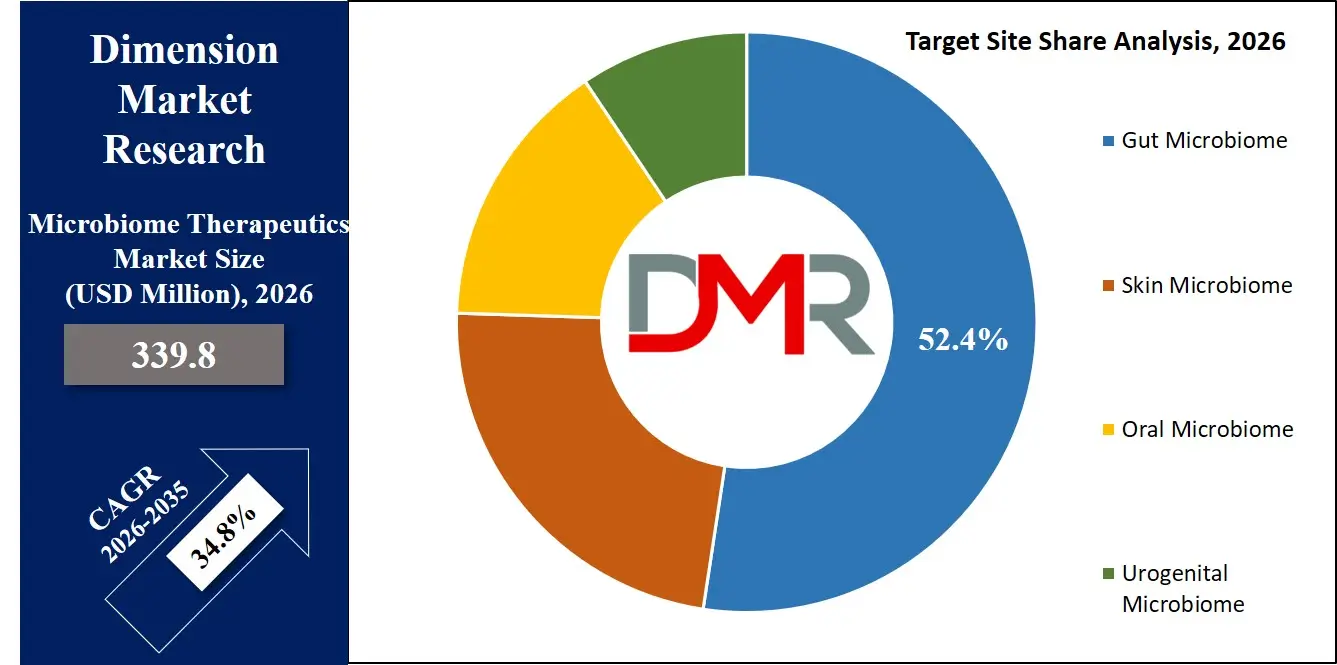
The largest segment of the market would be that of the gut microbiome, expected to capture more than 52.4% of the total market share in 2026 due to the extensive research done in addition to its impact on multiple disease states. The primary reasons why the segment leads in terms of importance to the market are the accessibility to samples and real-world impact of the segment on patients, which drives the development of drugs targeting the segment.
ℹ
To learn more about this report –
Download Your Free Sample Report Here
Increased funding for the study and clinical testing of gut microbiome further reinforce the position of the segment. Skin microbiome would have the fastest growing rate, spurred by the growing demand for dermatological products and cosmetics based on microbiome research.
The Microbiome Therapeutics Market Report is segmented on the basis of the following:
By Product Type
- Fecal Microbiota Transplantation (FMT)
- Microbiome Drugs
- Live Biotherapeutic Products (LBPs)
- Single-strain
- Multi-strain
- Genetically engineered microbes
- Microbiome-derived metabolites
- Bacteriophage therapies
By Therapeutic Approach
- Additive
- Subtractive
- Modulatory
By Application
- Gastrointestinal Disorders
- C. difficile infection
- Crohn's disease
- Inflammatory bowel disease
- Metabolic Disorders
- Oncology
- Autoimmune & Immune Disorders
- Neurological Disorders
- Infectious Diseases
By Target Site
- Gut Microbiome
- Skin Microbiome
- Oral Microbiome
- Urogenital Microbiome
Regional Analysis
Leading Region in the Microbiome Therapeutics Market
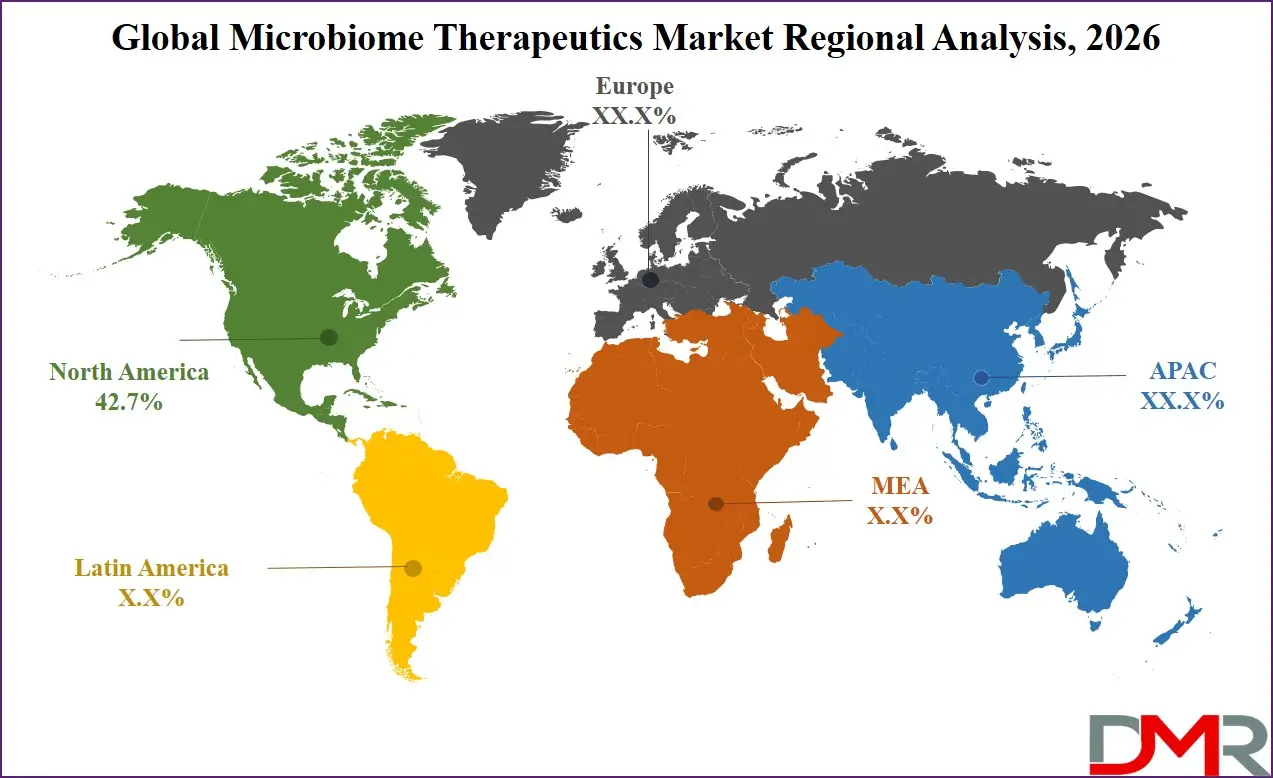
North America is forecasted to capture the largest market share of 42.7% by 2026, owing to its well-developed research base, significant health care spending, and presence of biotech firms in the region. North America possesses a solid clinical trials infrastructure and favorable regulatory approaches, which contribute towards driving innovation in the market and expedited approval of products. Large investments made by both government and private agencies, as well as increased collaboration between academics and industries, fuel market growth in the region. In addition, growing awareness about microbiome-based treatments among medical practitioners and consumers boosts market adoption.
ℹ
To learn more about this report –
Download Your Free Sample Report Here
Fastest Growing Region in the Microbiome Therapeutics Market
The Asia-Pacific region stands out due to the fast economic development and increased focus on health care systems along with investment opportunities in biotech and life science areas. China, Japan, and India have taken active steps towards promoting research on the topic of microbiome by means of implementing various government programs and initiatives. Large demographics and an increase in the number of chronic illnesses among the population result in a high demand for advanced solutions in this area. Growing interest in personalized medicine is another factor driving the expansion of market players in the area.
By Region
North America
Europe
- Germany
- The U.K.
- France
- Italy
- Russia
- Spain
- Benelux
- Nordic
- Rest of Europe
Asia-Pacific
- China
- Japan
- South Korea
- India
- ANZ
- ASEAN
- Rest of Asia-Pacific
Latin America
- Brazil
- Mexico
- Argentina
- Colombia
- Rest of Latin America
Middle East & Africa
- Saudi Arabia
- UAE
- South Africa
- Israel
- Egypt
- Rest of MEA
Competitive Landscape
Innovation and technological progress define the competitive nature of the market. The main priorities of companies include the development of their clinical pipeline, patenting, and collaboration with other firms to secure their position in the market. Given high barriers to entry in terms of regulatory issues and the high costs of research and development, the market favors existing firms.
Some of the prominent players in the global Microbiome Therapeutics Market are:
- Seres Therapeutics
- Vedanta Biosciences
- Rebiotix (Ferring)
- Second Genome
- Synlogic
- Enterome
- Assembly Biosciences
- BiomX
- MaaT Pharma
- Microbiotica
- Locus Biosciences
- AOBiome
- Azitra
- Osel
- MicroBiome Therapeutics LLC
- Metabiomics
- EnteroBiotix
- Nestlé Health Science
- EnteroBiotix Limited
- Other Key Players
Recent Developments
- In January 2026, EnteroBiotix Limited reported positive final Phase 2a results for EBX-102-02, an oral microbiome therapeutic for IBS-C and IBS-D. The TrIuMPH study showed significant symptom improvement versus placebo, with early and sustained benefits across pain, bowel habits, and quality of life. Efficacy was consistent in both subtypes, supporting a single-treatment approach. The company plans publication and a Phase 2b IBS-C trial following U.S. Food and Drug Administration guidance.
- In December 2025, CARB-X announced funding support of up to USD 3.6 million for Seres Therapeutics to advance SER-155, a live biotherapeutic aimed at preventing antibiotic-resistant infections in ICU patients. The liquid oral formulation targets gut pathogen decolonization and improved barrier function. The program will progress to a Phase 1b trial, expanding use in high-risk patients unable to swallow capsules while reducing antimicrobial resistance risks.
- In August, 2026, Vedanta secured $60 million in funding and provided an update on the Phase 3 RESTORATiVE303 study of VE303, an oral defined bacterial consortium being tested to prevent recurrent C. difficile infection
Report Details
| Report Characteristics |
| Market Size (2026) |
USD 339.8 Mn |
| Forecast Value (2035) |
USD 4,987.2 Mn |
| CAGR (2026–2035) |
34.8% |
| Historical Period |
2021 – 2025 |
| Forecast Period |
2027 – 2035 |
| Base Year |
2025 |
| Estimate Year |
2026 |
| Segments Covered |
By Product Type (Fecal Microbiota Transplantation (FMT), Microbiome Drugs, Live Biotherapeutic Products (LBPs), Microbiome-derived metabolites, Bacteriophage therapies), By Therapeutic Approach (Additive, Subtractive, Modulatory), By Application (Gastrointestinal Disorders, Metabolic Disorders, Oncology, Autoimmune & Immune Disorders, Neurological Disorders, Infectious Diseases), By Target Site (Gut Microbiome, Skin Microbiome, Oral Microbiome, Urogenital Microbiome) |
| Regional Coverage |
North America – The US and Canada; Europe – Germany, The UK, France, Russia, Spain, Italy, Benelux, Nordic, & Rest of Europe; Asia-Pacific – China, Japan, South Korea, India, ANZ, ASEAN, Rest of APAC; Latin America – Brazil, Mexico, Argentina, Colombia, Rest of Latin America; Middle East & Africa – Saudi Arabia, UAE, South Africa, Turkey, Egypt, Israel, & Rest of MEA |
Frequently Asked Questions
How big is the Microbiome Therapeutics Market?
▾ The Microbiome Therapeutics Market size is expected to reach USD 339.8 million by 2026 and is projected to reach USD 4,987.2 million by the end of 2035.
What is the CAGR of the Microbiome Therapeutics Market from 2026 to 2035?
▾ The market is growing at a CAGR of 34.8 percent over the forecasted period.
What factors are driving the growth of the Microbiome Therapeutics Market?
▾ Advancements in microbiome research and genomics, the rising prevalence of chronic and lifestyle diseases, and other factors are driving the growth of the Microbiome Therapeutics Market.
What are the major trends in the Microbiome Therapeutics Market?
▾ Expansion into personalized medicine, emerging applications beyond gut health, and more are some of the major trends in the market.
Who are the key players in the Microbiome Therapeutics Market?
▾ Some of the key players in the Microbiome Therapeutics Market include Vedanta Bioscience, 4D Pharma, BiomX, and more.
How is the Microbiome Therapeutics Market segmented?
▾ The Microbiome Therapeutics Market is segmented by product type, therapeutic approach, application, and target site.
Which region held the largest share of the Microbiome Therapeutics Market in 2026?
▾ North America is set to lead the Microbiome Therapeutics market with an estimated 42.7% share in 2026.
Which region is expected to grow the fastest in the Microbiome Therapeutics Market?
▾ Asia-Pacific is the fastest-growing region in the Microbiome Therapeutics market during the forecast period.