Middle East Camel Meat Market Snapshot
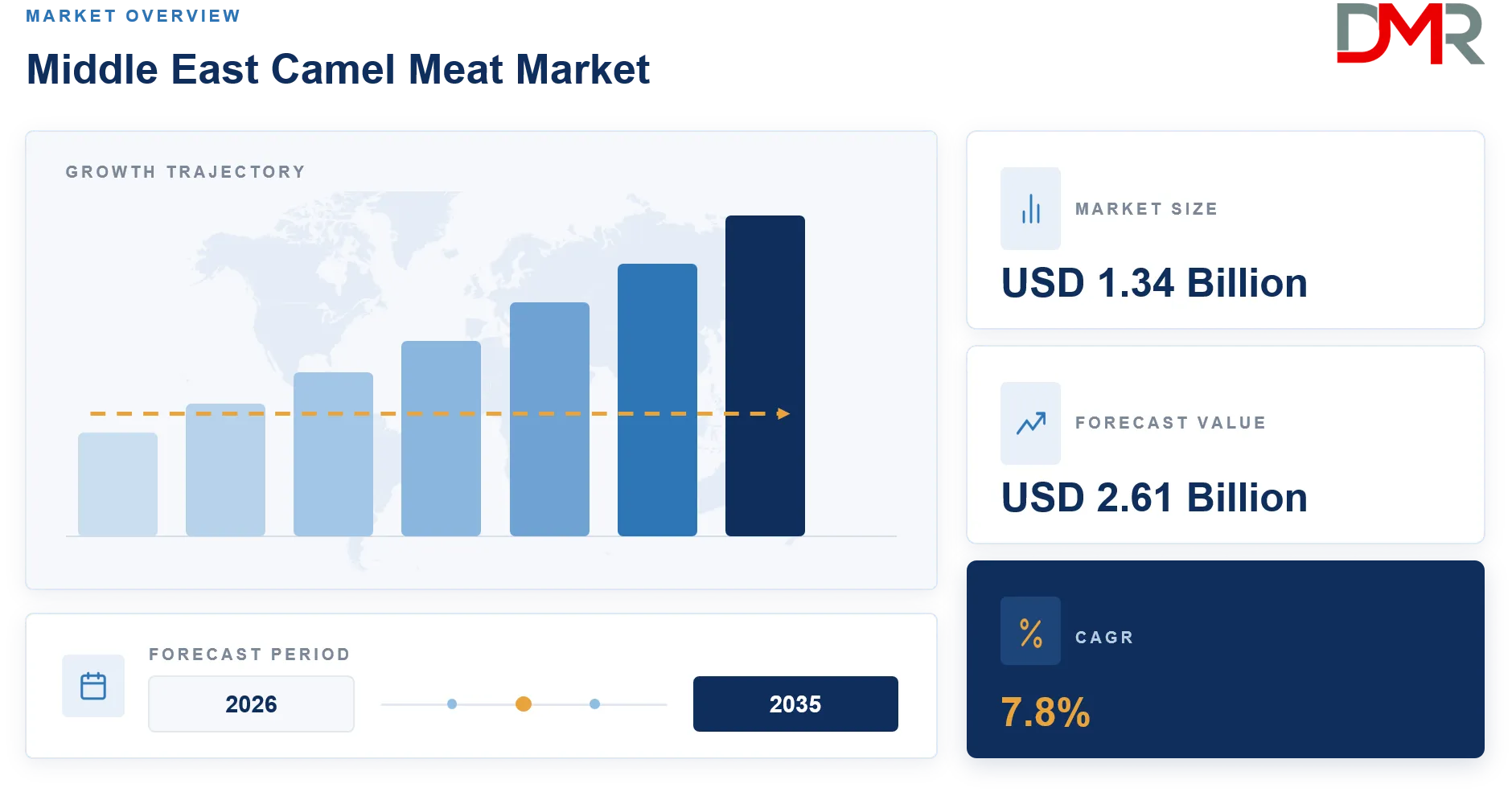
- Market Value: Middle East camel meat market size is valued at USD 1.34 billion in 2026 and is expected to reach USD 2.61 billion by 2035.
- CAGR: Middle East camel meat market is expected to grow at a CAGR of 7.8% from 2026 to 2035.
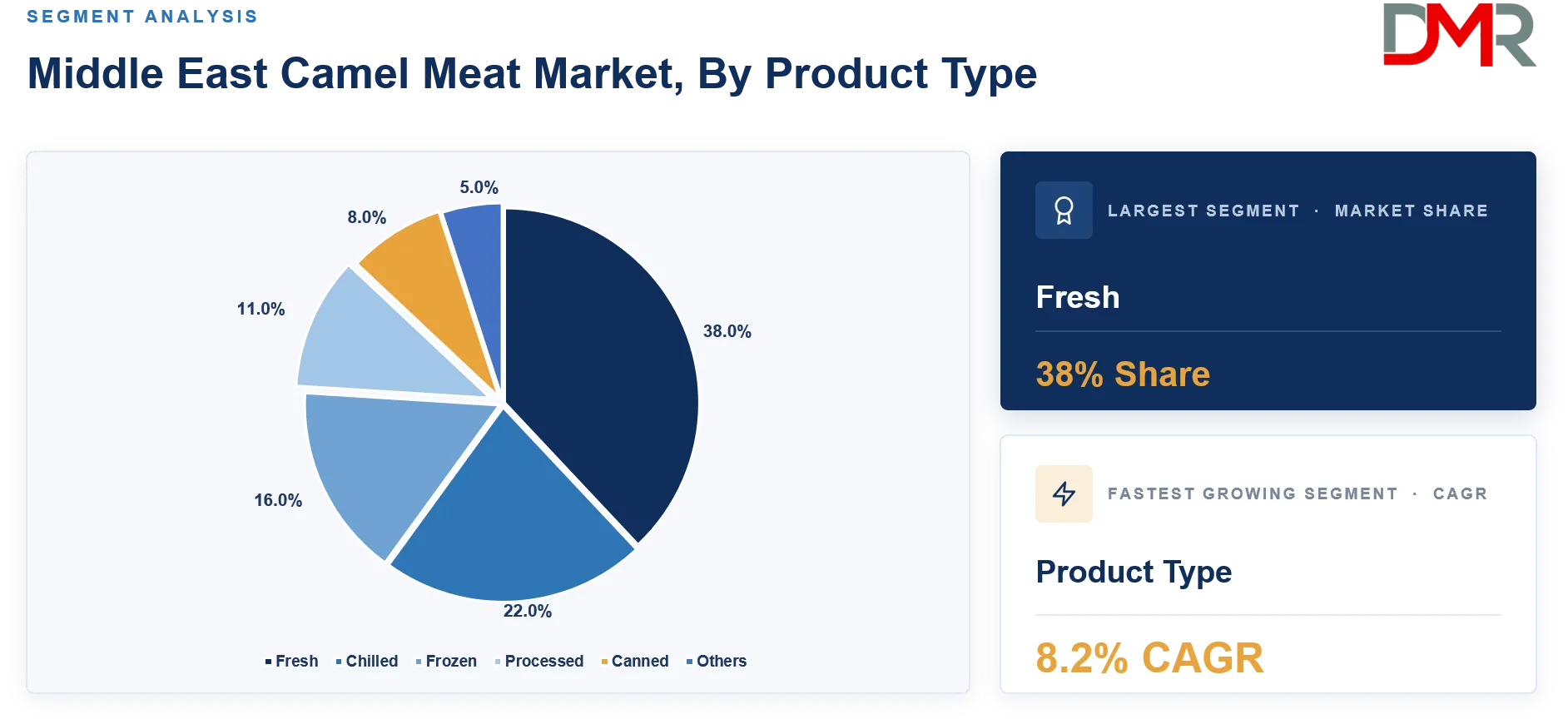
- By Product Type Analysis: Fresh camel meat led the product type segment with a 38% share in 2026.
- By Quality & Source Analysis: Conventional quality held 62% share, while imported sources accounted for 55% in 2026.
- By End Use Analysis: Household consumption held the largest share at 48% in 2026.
- By Distribution Channel Analysis: Supermarkets and hypermarkets led with a 29% revenue share in 2026.
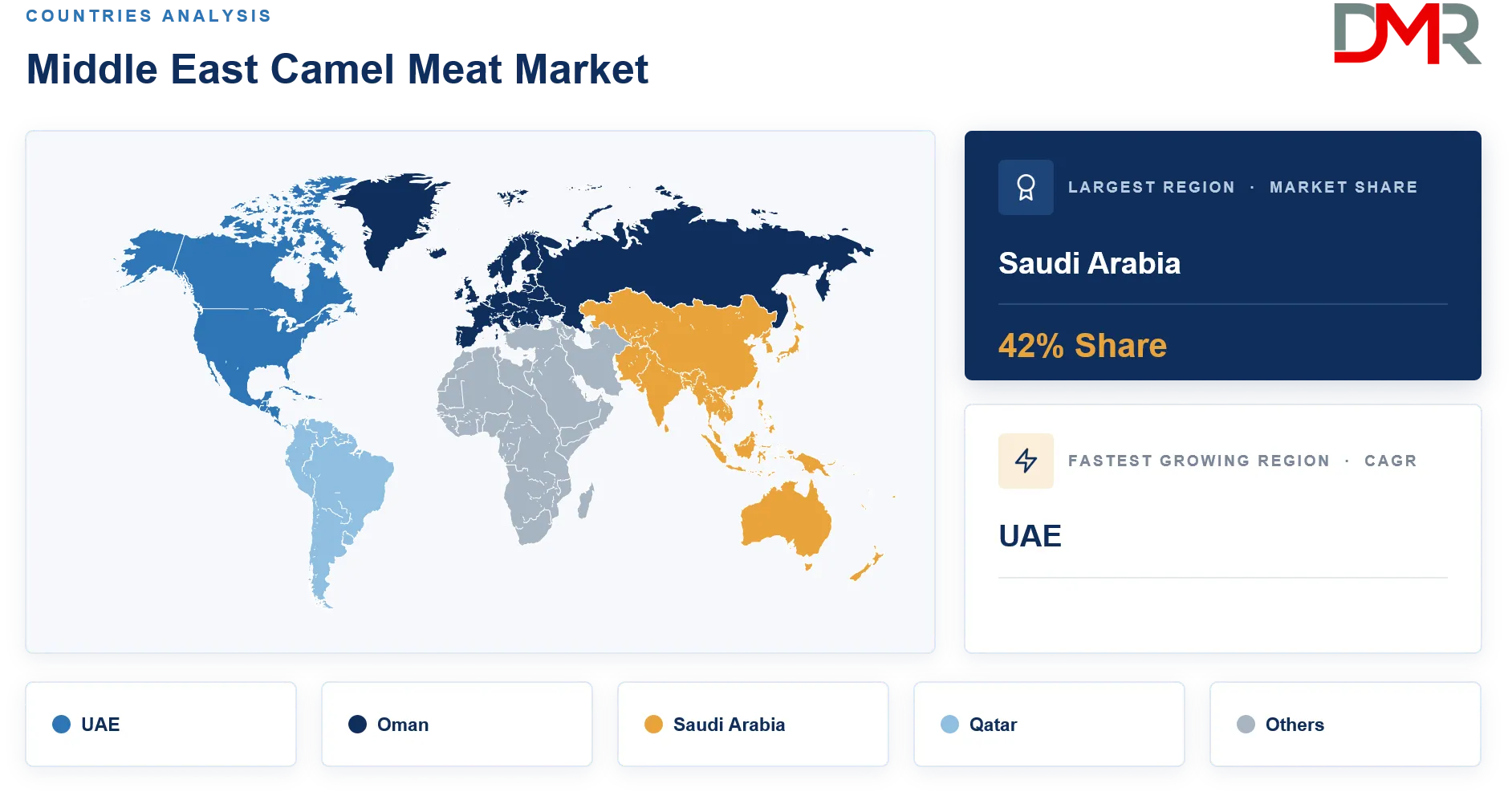
- Regional Analysis: Saudi Arabia led the Middle East camel meat market with a 42% share in 2026.
- Major Players: Al Ain Farms, Al Waha Camel Co., Al Thumama Camel Farms, Al Khayala Camel Ranch, and others.
What is the Middle East Camel Meat Market and its Market Size?
The Middle East Camel Meat Market size is projected to be valued at USD 1.34 billion in 2026 and is expected to reach USD 2.61 billion by 2035, expanding at a CAGR of 7.8% during the forecast period. The market covers fresh, chilled, frozen, processed and prepared camel meat supplied through formal retail, traditional butchers, wholesale networks, foodservice distributors and direct channels across Saudi Arabia, the UAE, Oman, Qatar, Kuwait, Bahrain, Yemen, Jordan and Iraq.
ℹ
To learn more about this report –
Download Your Free Sample Report Here
Camel meat occupies a distinctive position within the Middle East red meat industry because demand combines cultural consumption with a commercial livestock economy. Saudi Arabia represents the largest country market in this study, while the UAE and Oman provide additional demand through retail, hospitality and meat distribution networks. FAO identifies camels as multipurpose livestock raised for meat, milk, fibre and other uses, while Saudi sector research shows that camel production remains economically and culturally significant within the Kingdom.
The growth of the camel meat market in the Middle East region is also being shaped by modernization of slaughtering, cold storage, meat cutting and food distribution. Fresh meat remains central to consumption, yet chilled cuts, frozen products, minced meat and ready-to-cook formats are creating a wider commercial base. For processors and distributors, value creation increasingly depends on traceability, product consistency, halal compliance, cold-chain reliability and access to organized retail rather than simply increasing slaughter volumes.
Use Cases
- Traditional Household Meals: Camel meat is purchased for family meals, celebrations and culturally established dishes, supporting recurring demand for fresh cuts, whole carcasses and butcher-prepared portions.
- Restaurants and Local Cuisine: Restaurants use camel meat in rice dishes, grilled preparations, kebabs, burgers and regional menus, extending demand beyond traditional home consumption.
- Hotels and Hospitality: Hotels and resorts can position camel meat as a distinctive regional food experience for visitors, banquets and premium Arabic dining concepts.
- Processed Meat Products: Processors can use camel meat for minced products, sausages, cured items and ready-to-cook foods, improving carcass utilization and creating higher-value formats.
- Wholesale and Import Trade: Importers, slaughterhouses and meat distributors supply carcasses and cuts to supermarkets, butchers, caterers and foodservice operators requiring dependable volume and halal documentation.
How AI/Gen AI is Transforming the Middle East Camel Meat Market?
Digital intelligence is beginning to create practical opportunities across camel farming, meat processing and distribution. Computer vision can support animal identification, body-condition monitoring and automated inspection, while predictive systems can combine herd, feed, veterinary and weather information to improve production planning. At the processing stage, vision-based grading can help identify carcass characteristics and standardize cutting. These technologies are especially relevant as commercial buyers seek more consistent specifications from a livestock category that has historically relied heavily on traditional trading practices.
Data-driven demand forecasting can also improve the economics of fresh camel meat. Retailers and distributors can model sales by location, season, customer type and product form to reduce stockouts and spoilage. Generative tools can assist product information management, multilingual catalogues and restaurant menu development, while traceability platforms can link farm, animal, slaughter and shipment records. Saudi Arabia's movement toward more structured camel identification and livestock data systems strengthens the long-term foundation for digital traceability, although commercial adoption will depend on data quality, integration costs and supplier participation.
Key Drivers in the Middle East Camel Meat Market
Deep Cultural Demand and Saudi Arabia's Established Camel Economy
Camel meat retains strong cultural relevance across parts of the Arabian Peninsula, particularly in Saudi Arabia, where camel ownership, trading and consumption form part of a broader livestock economy. Research on Saudi consumer preferences shows that camel meat remains commercially relevant even as lamb, chicken and fish hold strong positions in everyday diets. Saudi Arabia's 42% market share in 2026 therefore provides a substantial demand base for slaughterhouses, butchers, retailers and processors serving both routine and occasion-led consumption.
Expansion of Organized Meat Retail and Cold-Chain Distribution
Supermarkets and hypermarkets generated 29% of market revenue in 2026, indicating a shift toward organized purchasing channels alongside traditional butcher and wet-market sales. Modern retail supports labelled cuts, controlled refrigeration, standardized weights and broader availability of chilled and frozen meat. These capabilities help camel meat reach urban households that prefer convenient packaged products while giving suppliers clearer demand data. The same infrastructure supports premium cuts, minced meat and ready-to-cook products that can raise revenue per carcass.
Restraints in the Middle East Camel Meat Market
Competition from More Frequently Consumed Proteins
Camel meat competes with chicken, lamb, beef and fish for household and foodservice spending. Saudi consumer research indicates that lamb, chicken and fish remain stronger overall preferences, limiting the frequency with which camel meat enters routine diets. This competition can restrict volume growth outside culturally established customer groups. Suppliers therefore need convenient cuts, consistent tenderness, competitive pricing and processed formats if they want to move camel meat from an occasional purchase into broader weekly consumption.
Food Safety, Traceability and Import Compliance Requirements
Formal market expansion requires strict control of animal health, slaughtering, storage and meat handling. Research on camel meat hygiene in the Middle East highlights the importance of monitoring zoonotic, microbial and contamination risks across the value chain. Imported meat adds another compliance layer. Saudi Food and Drug Authority requirements include documentation such as certificates of origin, halal certificates and slaughter certificates, while imports must come through permitted establishments.
Growth Opportunities in the Middle East Camel Meat Market
Premium Cuts and Value-Added Camel Meat Products
The dominance of whole carcass sales leaves room for greater value capture through portioned retail cuts, minced meat, marinated products, burgers, sausages and ready-to-cook formats. Scientific literature has identified processing, packaging and shelf-life improvement as important areas for strengthening camel meat acceptance and commercialization. Processors that standardize tenderness, packaging and portion size can serve supermarkets, restaurants and younger urban consumers while improving utilization of different carcass components.
Formalization of Regional and Cross-Border Supply Chains
Imported sources represented 55% of the market's source mix in 2026, making procurement and logistics important commercial opportunities. Importers can build stronger positions by establishing approved slaughter partners, temperature-controlled transport and traceable halal supply. Recent disruption to meat shipments into Gulf markets has also shown how sensitive regional meat supply can be to air freight availability and logistics costs. Companies with diversified origins, frozen inventory options and multiple transport routes can reduce exposure to short-term supply shocks.
Trends in the Middle East Camel Meat Market
Shift from Carcass Trading Toward Convenient Retail Formats
Whole carcasses held 31% of product-form demand in 2026, yet growth opportunities are moving toward retail cuts, minced meat and ready-to-cook formats. Urban customers increasingly purchase meat through supermarkets and structured retail environments where portion size, refrigeration and packaging influence buying decisions. This creates demand for centralized cutting facilities and branded packs. For suppliers, the change is important because a carcass can be converted into differentiated products for households, restaurants and premium buyers instead of being sold primarily as an undivided commodity.
Greater Emphasis on Product Quality and Meat Science
The market is paying more attention to animal age, feeding, slaughter practices, tenderness, storage and packaging because these factors affect consumer acceptance. Studies of Arabian camel meat show that animal age and muscle characteristics influence meat quality, reinforcing the value of better production specifications. At the same time, research into packaging and processing technologies is creating routes to extend shelf life and improve eating quality, which is important for chilled retail, e-commerce and longer-distance distribution.
Research Scope and Analysis
The Middle East Camel Meat Market is segmented based on Product Type, Product Form, Quality & Source, End Use, Distribution Channel, Customer Type and Country. The study evaluates applications, consumption patterns, sourcing structures, retail development, foodservice demand, product positioning and commercial opportunities that influence overall market size, share and growth.
By Product Type
Fresh camel meat dominated the product type segment with a 38% share in 2026. Its leadership is closely connected with established buying habits in Saudi Arabia and other Gulf markets where customers often associate recently slaughtered meat with quality and authenticity. Fresh camel meat is commonly supplied through butcher shops, local meat markets and supermarket meat counters. Demand is also supported by restaurants preparing traditional dishes. Chilled and frozen products are gaining commercial relevance because they provide longer distribution windows, while processed and prepared products create opportunities to broaden consumption among customers seeking convenience.
ℹ
To learn more about this report –
Download Your Free Sample Report Here
By Quality & Source
Conventional camel meat held 62% share in 2026 because mainstream household and foodservice purchasing remains strongly influenced by availability, freshness and price. Imported sources represented 55%, demonstrating the role of cross-border procurement in balancing regional demand and supply. Halal certification remains fundamental for formal meat trade, particularly for imported products. Saudi Arabia requires relevant halal and slaughter documentation for imported meat, making approved facilities, traceable sourcing and regulatory compliance important supplier-selection factors.
By End Use
Household consumption led the market with a 48% share in 2026. Home demand is supported by established regional recipes, family gatherings and direct purchasing from supermarkets and butchers. Foodservice represents an important secondary growth route as restaurants use camel meat in traditional dishes and newer formats such as grilled meat, minced preparations and burgers. Hotels and hospitality operators also offer opportunities to position camel meat as a regional culinary experience, particularly in destinations where international visitors seek local food products.
By Distribution Channel
Supermarkets and hypermarkets accounted for 29% of revenue in 2026. Their leadership reflects the ability to offer chilled cabinets, packaged cuts, food safety controls and convenient one-stop shopping. Specialty butchers remain strategically important because they offer cutting expertise and established customer relationships, while wholesale distributors serve restaurants, hotels and institutional buyers. Online retail is a smaller but increasingly relevant channel for packaged meat because scheduled delivery and refrigerated logistics can improve access for urban households.
The Middle East Camel Meat Market Report is segmented on the basis of the following:
By Product Type
- Fresh
- Chilled
- Frozen
- Processed
- Cured/Smoked/Dried
- Canned
- Prepared Products
- Offal & By-products
By Product Form
- Whole Carcass
- Primary/Retail Cuts
- Minced/Ground
- Ready-to-Cook
- Ready-to-Eat
By Quality & Source
- Conventional
- Premium
- Organic/Naturally Raised
- Local
- Imported
- Halal-Certified
By End Use
- Household
- Foodservice & Restaurants
- Hotels & Hospitality
- Catering
- Food Processing
- Pet Food & Animal Feed
By Distribution Channel
- Supermarkets/Hypermarkets
- Specialty Stores & Butchers
- Wet/Local Markets
- Wholesale & Distributors
- Direct Sales
- Online Retail
- Foodservice Distributors
By Customer Type
- Households
- Restaurants & Cafés
- Hotels & Resorts
- Caterers
- Institutions
- Meat Processors
- Wholesalers/Distributors
- Importers/Exporters
Countries Analysis
Saudi Arabia is the Leading Country in the Middle East Camel Meat Market
Saudi Arabia held 42% of the regional market in 2026, supported by a large domestic camel economy, established slaughter activity and strong cultural demand. Government livestock statistics cover slaughter by animal type across the Kingdom's 13 administrative regions, indicating an increasingly structured statistical environment around livestock production. Organized retail, foodservice demand and improved traceability offer further scope for suppliers to develop chilled cuts, packaged meat and value-added products.
ℹ
To learn more about this report –
Download Your Free Sample Report Here
UAE is an Important Growth Market in the Middle East Camel Meat Industry
The UAE offers strong commercial potential through its urban retail network, restaurant sector, hospitality industry and role as a regional food-trading hub. Camel meat can be marketed both as a traditional product and as a distinctive local cuisine offering for residents and visitors. The country's dependence on international meat supply chains also makes cold storage, import compliance and supplier diversification important. Growing availability of packaged and portion-controlled meat can expand camel meat distribution beyond specialist butcher channels into supermarkets and foodservice.
By Country
-
Saudi Arabia
- UAE
- Oman
- Qatar
- Kuwait
- Bahrain
- Yemen
- Jordan
- Iraq
- Others
Competitive Landscape
The Middle East camel meat market is fragmented across camel farms, slaughterhouses, traditional butcher businesses, meat distributors, food companies and diversified livestock groups. Competitive advantage depends less on scale alone and more on access to healthy livestock, slaughter capacity, halal compliance, freshness, cold-chain control and dependable distribution. Fresh camel meat's 38% share keeps proximity to slaughter and retail outlets important, while the growing potential of chilled, frozen and prepared products favors companies able to invest in processing and packaging. The 55% share attributed to imported sources also creates a significant role for importers and wholesalers with approved international supply relationships. Over the forecast period, competition is expected to become more structured as supermarkets demand standardized specifications and foodservice buyers seek consistent cuts, traceability and scheduled delivery. Companies that integrate farm sourcing, slaughter, processing and refrigerated logistics are positioned to capture more value than businesses operating at only one stage of the chain.
Some of the prominent players profiled in the Middle East camel meat industry are:
- Al Ain Farms
- Al Waha Camel Co.
- Al Thumama Camel Farms
- Al Khayala Camel Ranch
- Al Rawabi Dairy Company
- Al Zaidi Camel Butchery
- Al Safa Camel Dairy
- Taiba Farms
- Al Maha Desert Farms
- Al Dhabiya Camel Slaughterhouse
- Al Jawhara Camel Butchery
- NADEC
- Al Naseem Camel Farm
- Al Ghazal Camel Meat Co.
- Al Marai / Marai Group
- Others
Regulatory Landscape
The Middle East camel meat market operates under food safety, veterinary health, halal slaughter, meat inspection, import and traceability rules that directly affect producers, processors and distributors. Saudi Arabia represents the most influential regulatory environment because of its 42% market share. The Saudi Food and Drug Authority oversees imported food requirements, while meat shipments require relevant documentation, including halal slaughter certification and certificates of origin. Veterinary controls are also important for managing animal diseases and protecting the commercial supply chain. In the UAE, federal and local food authorities regulate slaughterhouses, meat handling, labelling, storage temperatures and imported food clearance. These requirements favor businesses with approved slaughter facilities, documented animal sourcing and reliable cold-chain systems. As organized retail expands, stronger traceability, standardized packaging and verifiable halal compliance will become important competitive requirements for camel meat suppliers seeking supermarket, hospitality and institutional contracts.
Investment and White Space Analysis
The Middle East camel meat market presents investment white space between traditional carcass trading and higher-value processed meat supply. Whole carcasses held 31% of product-form sales in 2026, while fresh meat represented 38% of product-type demand, showing that a large part of the industry remains concentrated in conventional formats. This creates room for investment in centralized cutting plants, chilled retail cuts, minced camel meat, marinated products, ready-to-cook meals, vacuum packaging and temperature-controlled distribution. Imported sources accounted for 55% in 2026, creating another opportunity for regional producers to strengthen local supply, traceability and farm-to-retail integration. Online meat retail and specialized foodservice distribution remain additional areas for development. Investors can also target carcass utilization through offal and by-products, reducing waste and improving processing economics. Saudi Arabia offers the largest addressable opportunity, while the UAE provides an attractive route for premium retail, hospitality and branded camel meat products.
Recent Developments
- June 2026: Al Ain Farms Group highlights camel meat’s health benefits and rising export interest from the US and Australia, supported by UAE government veterinary and feed programs strengthening breeder capacity.
- September 2025: Al Ain Farms partners with Food Tech Valley to build a 260,000 sq.ft logistics hub, enhancing cold-chain distribution for fresh meat and dairy, indirectly supporting camel meat supply chain resilience.store.
Report Details
| Report Characteristics |
| Market Size (2026) |
USD 1.34 Bn |
| Forecast Value (2035) |
USD 2.61 Bn |
| CAGR (2026–2035) |
7.8% |
| Historical Data |
2021 – 2025 |
| Forecast Data |
2027 – 2035 |
| Base Year |
2025 |
| Estimate Year |
2026 |
| Segments Covered |
By Product Type (Fresh, Chilled, Frozen, Processed, Cured/Smoked/Dried, Canned, Prepared Products, and Offal & By-products), By Product Form (Whole Carcass, Primary/Retail Cuts, Minced/Ground, Ready-to-Cook, and Ready-to-Eat), By Quality & Source (Conventional, Premium, Organic/Naturally Raised, Local, Imported, and Halal-Certified), By End Use (Household, Foodservice & Restaurants, Hotels & Hospitality, Catering, Food Processing, and Pet Food & Animal Feed), By Distribution Channel (Supermarkets/Hypermarkets, Specialty Stores & Butchers, Wet/Local Markets, Wholesale & Distributors, Direct Sales, Online Retail, and Foodservice Distributors), By Customer Type (Households, Restaurants & Cafés, Hotels & Resorts, Caterers, Institutions, Meat Processors, Wholesalers/Distributors, and Importers/Exporters), By Country (Saudi Arabia, UAE, Oman, Qatar, Kuwait, Bahrain, Yemen, Jordan, Iraq, and Other) |
| Regional Coverage |
Middle East |
Frequently Asked Questions
What is the current size of the Middle East Camel Meat Market?
▾ Middle East camel meat market is valued at USD 1.34 billion in 2026 and forecast to reach USD 2.61 billion by 2035.
What is the growth rate of the Middle East Camel Meat Market during?
▾ The Middle East camel meat market is expected to grow at a CAGR of 7.8% during the forecast period from 2026 to 2035.
Which country dominates the Middle East Camel Meat Market?
▾ Saudi Arabia dominates the Middle East camel meat market, accounting for the largest revenue share of 42% in 2026.
What factors are driving the growth of the Middle East Camel Meat Market?
▾ Cultural demand, organized retail, halal supply chains and foodservice growth drive the Middle East camel meat market.
What are the major challenges restraining the Middle East Camel Meat Market?
▾ Cold-chain gaps, competing proteins, compliance costs and fragmented supply restrain the Middle East camel meat market.
Which segment holds the largest share of the Middle East Camel Meat Market?
▾ Fresh camel meat holds the largest product type share of the Middle East camel meat market, accounting for 38% in 2026.
Who are the leading companies in the global Middle East Camel Meat Market?
▾ Al Ain Farms, Al Waha Camel Co., Al Thumama Camel Farms, Al Khayala Camel Ranch, Al Rawabi Dairy Company, Al Zaidi Camel Butchery, Al Safa Camel Dairy, Taiba Farms, Al Maha Desert Farms, Al Dhabiya Camel Slaughterhouse, Al Jawhara Camel Butchery, NADEC, Al Naseem Camel Farm, Al Ghazal Camel Meat Co., Al Marai / Marai Group, and others are leading participants in the Middle East camel meat market.
How is AI influencing the Middle East Camel Meat Market?
▾ AI shapes the Middle East camel meat market through demand forecasting, traceability and automated quality checks.
What are the future opportunities and trends in the Middle East Camel Meat Market?
▾ Premium cuts, processed foods, online retail and cold-chain expansion offer Middle East camel meat market opportunities.