What is the Organic Yeast Market Size?
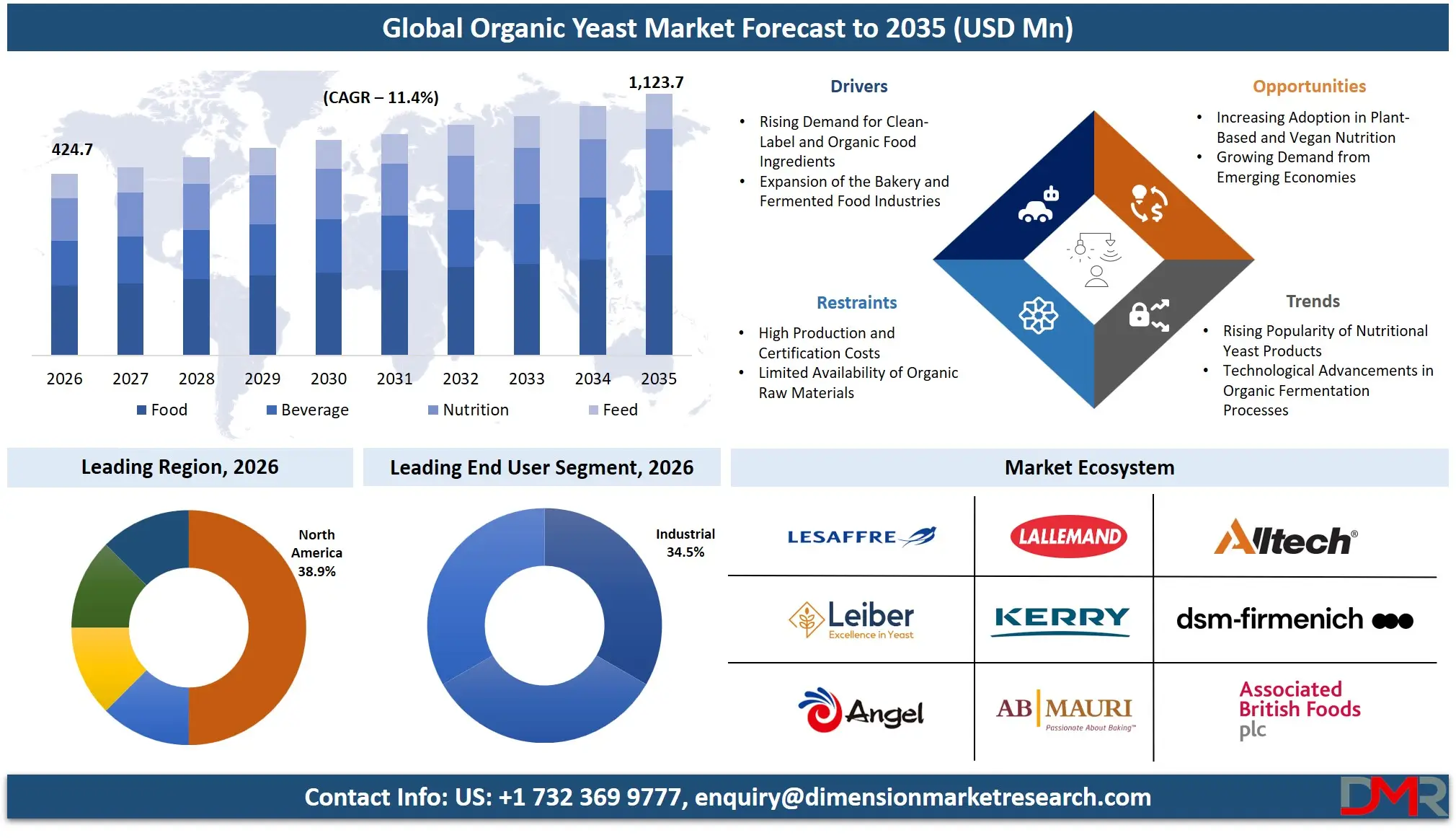
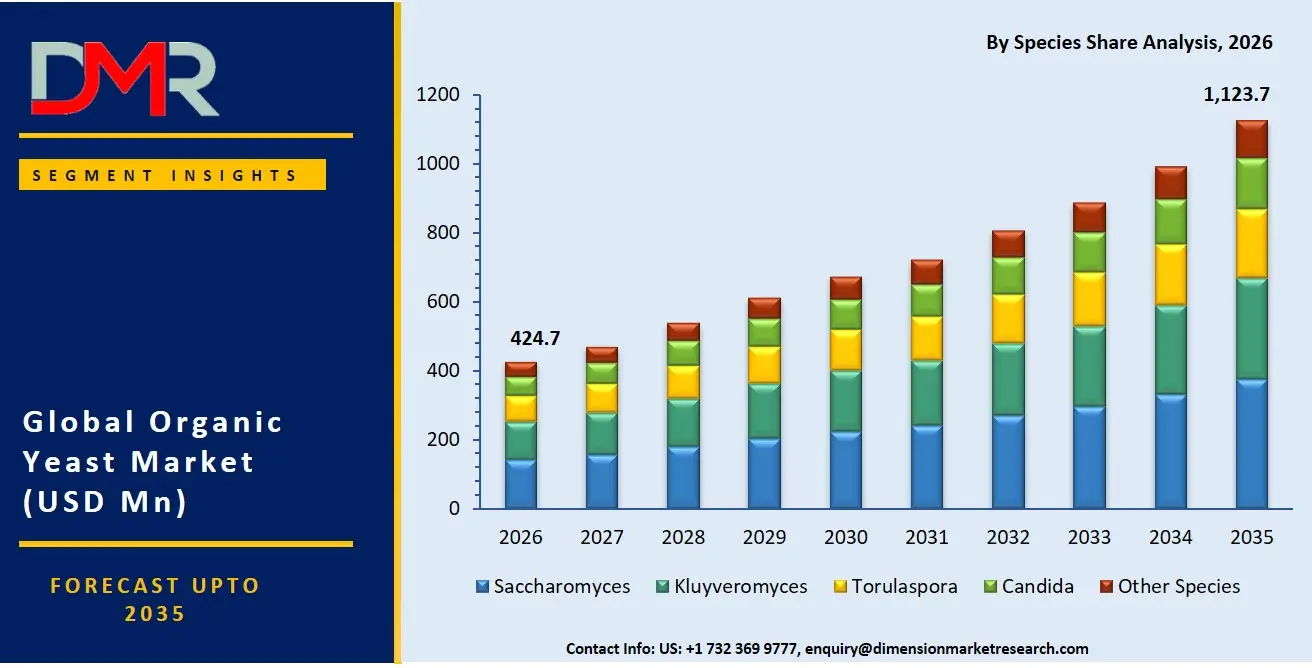
The Global Organic Yeast Market is expected to reach a value of USD 424.7 million in 2026, and it is further anticipated to reach USD 1,123.7 million by 2035, growing at a CAGR of 11.4% during the forecast period.
ℹ
To learn more about this report –
Download Your Free Sample Report Here
The organic yeast market has been experiencing a high growth rate due to an increase in the demand for clean-label, natural, and less processed food products, shifting their consumption away from food additives. The organic yeast market has four main product types including yeast extract, nutritional yeast, inactive dry yeast, and active dry yeast, which help food producers produce organic foods in bakery, beverages, snacks, and nutrition applications. There is a high demand in implementing plant-based food products, functional foods, and non-GMO food ingredients, which creates a need for organic yeast products. The primary users of this technology include food processors who mainly use yeast extracts and nutritional yeast, making them the most popular because of their flavoring and nutritional value.
ℹ
To learn more about this report –
Download Your Free Sample Report Here
The US Organic Yeast Market
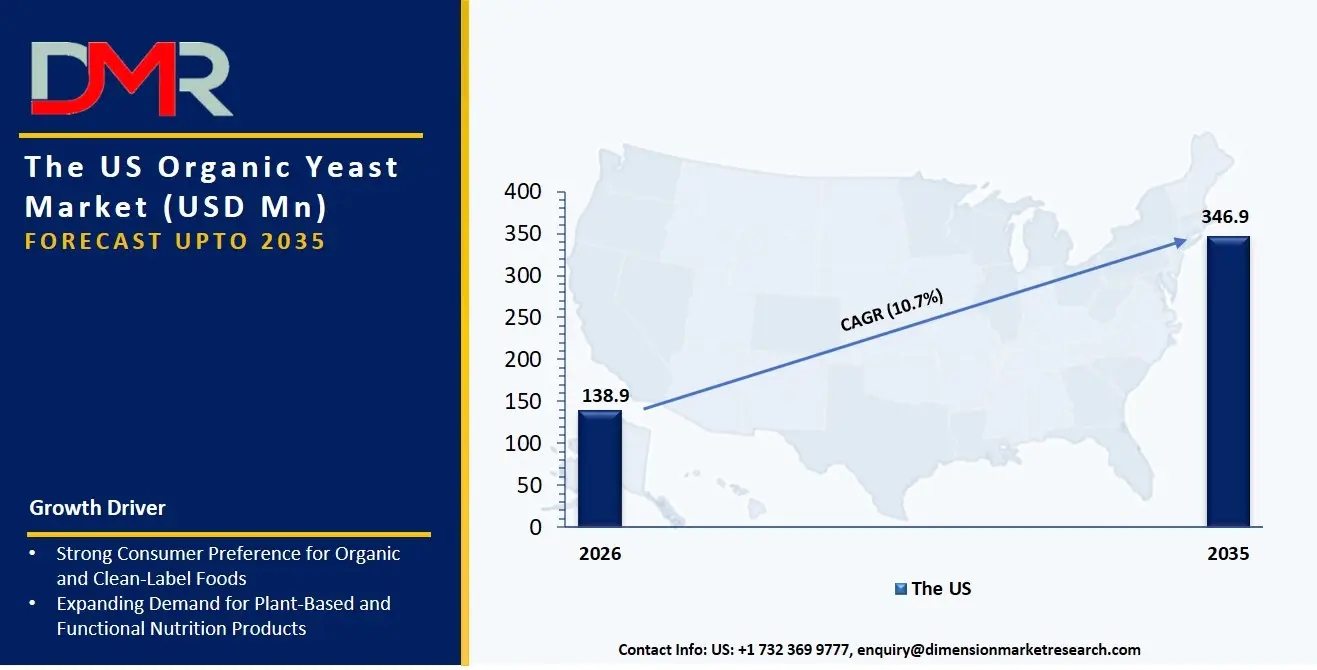
The US Organic Yeast Market is projected to reach USD 138.9 million in 2026 at a compound annual growth rate of 10.7% over its forecast period, which is further anticipated to reach a value of USD 346.9 million by 2035. The United States still remains ahead when it comes to being the most matured and biggest market for organic yeast because of the continued process of modernization that is happening at the hands of the best Fortune 500 food manufacturers who are trying to make products that have clean labels, and there is an increased availability of certified organic manufacturing plants. There is an increased trend in the growing demand for Nutritional Yeast, thanks to which people are increasingly becoming conscious about adding proteins and vitamin B through natural means in their regular diet.
ℹ
To learn more about this report –
Download Your Free Sample Report Here
The Europe Organic Yeast Market
The Europe Organic Yeast Market is estimated to be valued at USD 118.9 million in 2026 and is further anticipated to reach USD 308.0 million by 2035 at a CAGR of 11.1%. With regard to the regulations, including the EU Organic Regulation 2018/848, and the strict labeling for non-GMO products, the market environment is very significant, which necessitates the use of organic yeast extracts and inactive dry yeast. The growing trend in the usage of organic bakery products is also occurring due to the increasing interest of artisan and industrial bakeries in countries like Germany and France, who seek to maintain consistency in leavening through clean labels. Moreover, the initiatives like the European Green Deal will require the suppliers to establish an exclusive yeast supply chain for Europe.
The Japan Organic Yeast Market
The Japan Organic Yeast Market is projected to be valued at USD 44.6 million in 2026. It is further expected to witness robust growth, holding USD 115.7 million in 2035 at a CAGR of 11.2%. The Japanese market is quite different from any other market since it has a cultural inclination toward fermentation processes due to the aging population and their desire for healthy benefits and the true umami flavors that can only be achieved through the traditional process. Nutritional Yeast and Yeast Derivatives represent a significant portion of the budget since established food manufacturers are adopting traditional formulations and making them into certified organic products. There is a great demand for deep involvement within the local market so that there can be a bridge created between fermented traditional products such as miso and shoyu and new instant organic soups and sauces.
Key Takeaways
- Market Size & Forecast: It is estimated that the size of the Global Organic Yeast market will reach USD 424.7 million in 2026, to witness an impressive growth to USD 1,123.7 million in 2035, owing to two driving factors the emergence of the organic nutrition movement and the mandate on clean labeling in the reformulation of mature processed foods.
- Growth Rate & Outlook: The rate of expansion is forecasted to be at a CAGR of 11.4% with the growth being propelled by severe shortages of availability of organic materials and complexities associated with handling of non-GMO and organic certifications in the global value chain.
- Primary Growth Drivers: The key growth drivers are a widespread shift from artificial flavor enhancers like MSG to Natural Yeast Extracts, the requirement of organic leavening agents for clean-label bakery products without any artificial ingredients and the utilization of Nutritional Yeast in fortified functional foods, which require unique skills for masking.
- Key Market Trends: Key market trends include development of customized organic yeasts for special applications such as low-sodium broths or vegan cheese flavors, use of fermentation technologies for innovation of yeast derivatives and usage of certified organic Inactive Dry Yeast for food processing.
- By Type Analysis: Active dry yeast is projected to lead due to its extended shelf life, stability in fermentation performance, ease in storing, and wide application range in commercial and domestic baking. Growing need for organic bakery products and clean labeling is further consolidating its position as market leader.
- By Species Analysis: Saccharomyces is anticipated to dominate to its superior fermentation performance, dependable processability, and wide applicability in bakery, beverages, nutritional products, and feed applications. Safety properties and compatibility in organic food products manufacturing processes continue to favor its dominant position across industries.
- Regional Leadership: North America is poised to be the leading region in this market with 38.9% of market share in 2026 due to developed food industry with infrastructure making it a leader in this market.
What is the Organic Yeast?
Organic Yeast products, which are unique fermentation products and derivatives, are provided by organic ingredient suppliers and manufacturers for the purpose of helping food and beverages organizations throughout the entire product life cycle process. Unlike traditional yeast, which uses synthesized chemical-based nutrient substrates in its production process, organic yeast products have a direct relationship with how organic compliant products should be produced. The production process of organic yeast products entails cultivation using certified organic molasses or grain substrate for complete traceability purposes, processing using no synthetic chemicals to preserve certification integrity, and application of particular strains for the enhancement of flavors and leavening to guarantee replacement of synthetic products in formulations with organic yeast systems.
Use Cases
- Fortification of Clean Label Savory Snacks: The application expert services of Organic Yeast Extracts will enable savory snack makers to reformulate their seasoning mixes by replacing MSG and HVP with a cleaner, organic-compatible umami taste enhancer.
- Enhancement of Plant-based Ready Meals: Vegan ready-meal producers can fortify their foods with plant-based ingredients using Inactive Dry Yeast and Nutritional Yeast as natural sources of protein, B complex vitamins, and minerals such as zinc in preparation for meeting the nutritional demands of the consumers.
- Leavening of Organic Baked Products: Artisan and industrial bakers will leverage the certified Organic Baker's Yeast and Instant Yeast to develop leavening systems that meet organic product development requirements in the absence of conventional yeast solutions.
- Taste Enhancing Low Sodium Broth/Soup: Broth and soup producers from around the world will benefit from the organic Yeast Extracts to introduce natural flavor building blocks in low sodium applications.
How AI is Transforming the Organic Yeast Market?
Fermentation technology is revolutionizing the organic yeast industry through advancements in strain development processes as well as improvements in product functionality. For Yeast Derivatives products, innovative approaches to strain screening and propagation can be employed to help automatically select the best organic-compatible strains, which will significantly reduce the amount of time and effort needed to bring a flavor innovation to market. Process optimization using analytics also provides benefits to organic yeast producers through the detection of metabolic bottlenecks, predictions regarding future biomass yield and suggestions for parameter changes that promote sustainable manufacturing practices.
Innovation in product development as well as functional foods is increasingly becoming biotechnology-driven. For Yeast Extracts, smart monitoring of fermentation parameters as well as enzymes is essential for determining when hydrolysis of organic yeast extracts results in maximum yield of products high in nucleotides in order to deliver desired kokumi tastes. Metabolic engineering techniques can also aid nutritional yeast manufacturers in optimizing their processes by simulating the intracellular buildup of vitamins to provide a visual representation of nutritional value gains before manufacturing begins.
Market Dynamics
Key Drivers in the Global Organic Yeast Market
Rising Demand for Clean-Label and Organic Food Ingredients
Natural, non-GMO, and organic food products have been receiving more consumer attention, leading to high consumer demand for organic yeast used in baked products, beverages, and processed foods. Food manufacturers have been using organic yeast in their products in order to ensure compliance with the safety standards required by the market. Rising health consciousness, growing disposable income, and the increasing trend towards veganism are fueling the adoption. Furthermore, increasing preference for minimally processed foods with known source ingredients has prompted the food manufacturers to use organic yeast as an alternative to artificial ingredients.
Expansion of the Bakery and Fermented Food Industries
The fast-paced development of the bakery industry and fermented foods industry across the globe is adding to the demand for organic yeast products. The application of organic yeast in breads, bakery items, fermented drinks, soups, sauces, and savory foods is driven by the efficiency of fermentation process, enhancing taste of foods, and nutrient value of organic yeast. Urbanization and lifestyle changes coupled with the consumption of convenience foods have been helping increase bakery item sales across the globe. In addition, the trend of artisan baking along with availability of organic food products is spurring food manufacturers to use organic yeast in their products.
Restraints in the Global Organic Yeast Market
High Production and Certification Costs
Organic yeast manufacturing requires adherence to the organic agricultural criteria along with traceability and certification, leading to increased costs for manufacturers. The procurement of organic ingredients and the requirement of non-contaminated manufacturing plants raise manufacturing costs even further. Manufacturers operating at smaller and moderate scales frequently experience challenges with renewing their certifications and complying with regulations in various nations. All these costs inevitably get passed on to the final prices of the goods produced, making them too expensive for consumers in developing nations.
Limited Availability of Organic Raw Materials
The availability of certified organic molasses, grains, and substrates for the process of fermentation is still a problem in some parts of the world. Instability in agricultural production, weather changes, and competition for organic products make it even harder for companies producing organic yeast. Another challenge lies in the fact that production volumes can be kept constant since there is not much organic agriculture when compared to traditional agriculture, as far as the area taken up by each is concerned.
Growth Opportunities in the Global Organic Yeast Market
Increasing Adoption in Plant-Based and Vegan Nutrition
The accelerated growth of the vegan and plant-based food industries is creating excellent prospects for the development of the organic yeast manufacturing sector. Yeast is popular among consumers owing to its protein-rich nature and natural vitamins, thus providing great benefits as an ingredient in dairy replacements, meat alternatives, and nutritionally enhanced foods. With the rising popularity of sustainably produced and nutritious foods, there are increasing numbers of people integrating yeast into their daily nutrition. In addition, food manufacturers are developing new kinds of snack foods, which include organic yeast as one of their ingredients.
Growing Demand from Emerging Economies
The rising trend of awareness of organic foods is observed in emerging economies located in the Asia-Pacific region, Latin America, and the Middle East. The increasing population of cities, increased income levels of the middle class, and the development of modern retail facilities are promoting the use of superior quality organic food ingredients, such as organic yeast. Sustainable farming practices and organic food certification schemes are also being promoted by governments and food regulatory bodies in many nations. Furthermore, there has been a significant development in the e-commerce space, providing consumers with better access to organic products.
Trends in the Global Organic Yeast Market
Rising Popularity of Nutritional Yeast Products
There is a growing interest among conscious consumers and vegetarians in the use of nutritional yeast due to its high protein, fiber, and Vitamin B content. The usage of nutritional yeast is growing as a flavoring agent in snacks, soups, sauces, and dairy alternatives because of its cheese-like flavor. The impact of social media, the wellness trend, and increased demand for functional foods by consumers is making the products more popular worldwide. Manufacturers have been adding flavors to nutritional yeast products, and retailers have been allocating more shelf space for plant-based nutritional products.
Technological Advancements in Organic Fermentation Processes
Advanced fermentation technology is being embraced by many manufacturers as a means of enhancing the efficiency, quality and sustainability of the manufacturing of organic yeast. Through new technologies, biotechnologies and processes, the manufacturers have managed to lower energy use, optimize fermentation yield, and achieve high standards of production. They have also embraced automation and precision fermentation technologies, which help in increasing scalability and decreasing chances of contamination. Eco-friendly approaches to production and reduced production waste are now common strategies adopted by companies to achieve sustainability and boost competitiveness in the market.
Research Scope and Analysis
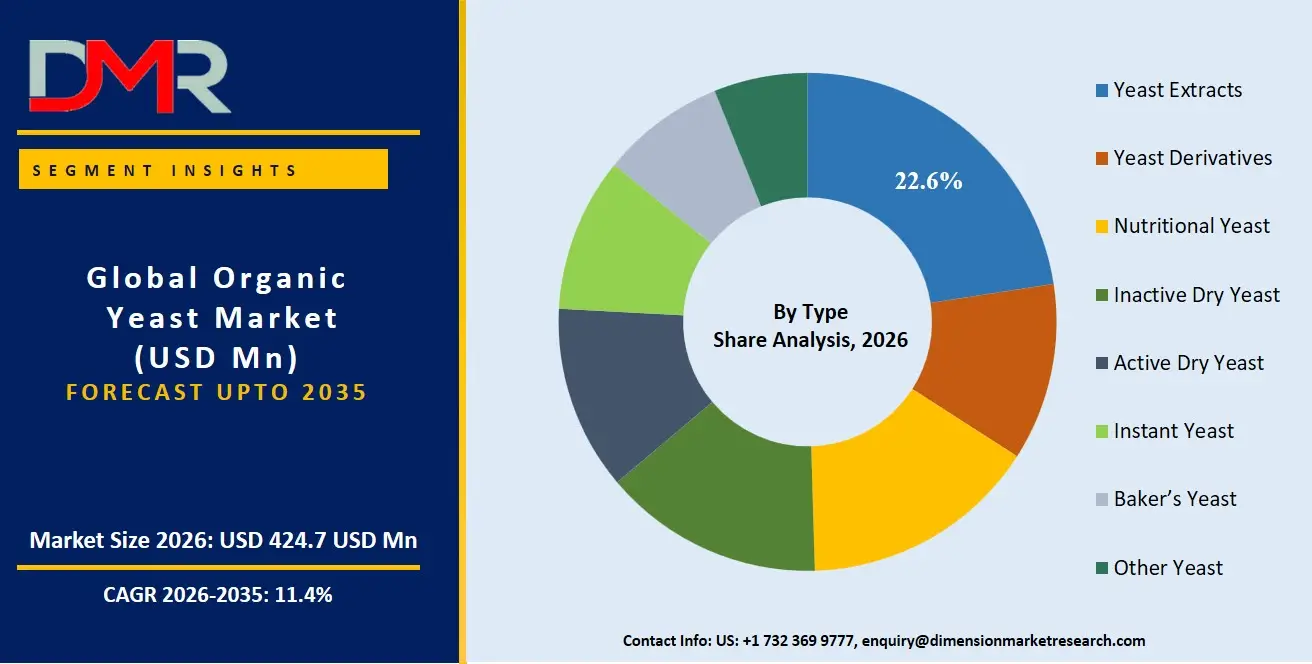
The Global Organic Yeast Market is segmented by type into yeast extracts, derivatives, nutritional and bakery yeasts, by species including Saccharomyces and Candida, by applications across food, beverages, nutrition, and feed, by distribution channels such as retail and e-commerce, and by end users including household, commercial, and industrial sectors.
ℹ
To learn more about this report –
Download Your Free Sample Report Here
By Type Analysis
Active dry yeast is projected to occupy the largest market share among yeast types on account of its long shelf life, ease of storage, consistent fermentative properties, and extensive application in bakery products at both commercial and home levels. Organic active dry yeast holds the highest preference in bakeries, food processing industries, and artisan breads owing to its ability to provide constant rising power without refrigeration. Increasing preference from consumers toward organically produced baked products and convenience in baking products drives this trend even more. Besides, the wide use of active dry yeast can be attributed to its extensive application in developing countries owing to lack of refrigerated facilities in such regions.
By Species Analysis
The Saccharomyces family is anticipated to dominate the species segment owing to the wide application of saccharomyces yeast in food processes such as baking, fermentation, beer making, and nutrition products. Saccharomyces cerevisiae is particularly favored for its excellent fermenting ability, rapid growth rate, and resistance to varying processing conditions. The preference for this family in organic food and drink manufacturing is attributed to its safe use, natural fermentation, and flavoring benefits. Saccharomyces is highly applied in baked goods, alcoholic drinks, nutrition products, and feed products. Further research and development in fermenting technologies and increased production of organic processed foods ensure the dominance of Saccharomyces yeast in the industry.
By Application Analysis
Food sector is anticipated to lead the application types owing to the widespread usage of organic yeast in various foods such as bakery products, savory foods, soups, sauces, and processed food production. Increasing consumers' tendency towards healthier, natural, organic, and clean-label ingredients in the food industry has resulted in an increase in the demand for organic yeast in the global market. Applications in bakery lead to high demand because of the increasing consumption of organic bread, pizzas, pastries, and bakery products. Organic yeast also helps in improving the taste, texture, nutrition, and storage properties of processed foods.
By Distribution Channel Analysis
The Direct Sales/B2B is projected to take the lead in the distribution channel category due to the fact that the organic yeast is mainly sold directly by manufacturers to bakeries, food processing firms, beverages, and industrial fermentation plants in bulk quantities. The efficiency of using B2B channels in transactions can be attributed to long-term agreements and consistent quality control. Industrial buyers tend to purchase directly in order to guarantee a constant raw material supply and enjoy price benefits. Moreover, the growth of global organic food processing industries has enhanced relationships between yeast providers and food firms.
By End User Analysis
The industrial segment is the anticipated to be leader within the end user market share owing to the extensive usage of organic yeast in applications such as food production, baking, fermentation of beverages, health and nutrition supplements, and in animal feed. Industries have an increased demand for yeast in order to be able to manufacture their products continuously on an industrial level. This makes them the biggest consumers within the industry. There has been a notable increase in consumer demand for organic packaged foods and functional beverages, which has led to higher demand for industrial yeast.
The Global Organic Yeast Market Report is segmented on the basis of the following:
By Type
- Yeast Extracts
- Yeast Derivatives
- Nutritional Yeast
- Inactive Dry Yeast
- Active Dry Yeast
- Instant Yeast
- Baker's Yeast
- Other Yeast
By Species
- Saccharomyces
- Kluyveromyces
- Torulaspora
- Candida
- Other species
By Application
- Food
- Snacks & Savory Products
- Soups & Broths
- Sauces, Seasonings & Dressings
- Bakery Products
- Meat Products
- Other Food Applications
- Beverage
- Fermented Beverages
- Non-Fermented Beverages
- Nutrition
- Feed
By Distribution Channel
- Direct Sales/B2B
- Supermarkets & Hypermarkets
- Specialty Stores
- Online Retail/E-Commerce
- Convenience Stores
- Others
By End User
- Household
- Commercial
- Industrial
Regional Analysis
Leading Region by Market Share
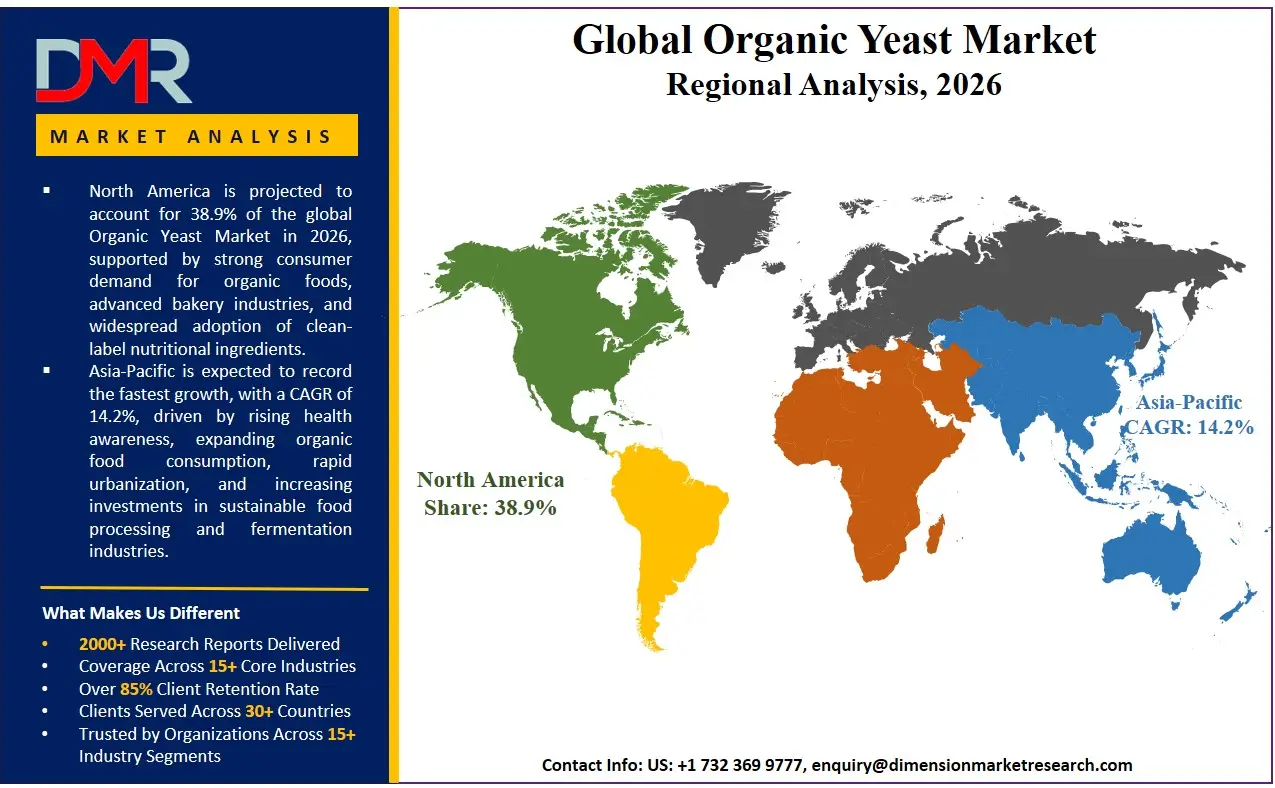
North America is poised to dominate the global organic yeast market as it is projected to hold 38.9% of the market share by the end of 2026. This is because the US, which takes the lead in North America, has the greatest market share in the organic yeast market due to the unparalleled density of organic food processing companies as well as innovation programs among Fortune 500 food and beverage companies. North America has an existing infrastructure of global organic ingredient suppliers, application laboratories, and culinary science experts. Investments in plant-based meat products, functional beverages, and discontinuation of synthetic flavoring systems create additional demand for Yeast Extracts and Nutritional Yeast as well as continued development of innovative products. In addition, venture capitalists continue to fund emerging organic food products through investments as these organic food brands require specialized organic ingredients for faster development and certification.
ℹ
To learn more about this report –
Download Your Free Sample Report Here
Fastest-Growing Regional Market
Global organic yeast market is forecasted to have the fastest growth in the Asia-Pacific region because of the growing trends of health and wellness being pursued by consumers in India, China, Japan, and Southeast Asian countries. The rapid development of the economy, creation of the middle class, and dynamic development of the segment of organic packaged foods makes the established food companies abandon the history of using chemical additives. Nutritional yeast and Yeast extracts used in cooking are sought after by these companies to facilitate their movement toward products that are organic and natural. Another reason for choosing international suppliers of organic yeast is the lack of organic certification knowledge at the suppliers from different small businesses in the region.
By Region
North America
Europe
- Germany
- The U.K.
- France
- Italy
- Russia
- Spain
- Benelux
- Nordic
- Rest of Europe
Asia-Pacific
- China
- Japan
- South Korea
- India
- ANZ
- ASEAN
- Rest of Asia-Pacific
Latin America
- Brazil
- Mexico
- Argentina
- Colombia
- Rest of Latin America
Middle East & Africa
- Saudi Arabia
- UAE
- South Africa
- Israel
- Egypt
- Rest of MEA
Competitive Landscape
The competitive nature of the global organic yeast industry has become increasingly complex due to the heterogeneity of multinational ingredients conglomerates, dedicated organic fermentation segments of leading food companies, and dedicated pure-play organic yeast manufacturers. The winning strategy would be through forming strong alliances with organic ingredient aggregators and leading food processors, as they will provide the required cooperation possibilities and timely exposure to the emerging capabilities of clean label platform solutions. The trends towards market consolidation have developed very fast, since conventional ingredients players are purchasing small boutiques focusing on strain development and organic-compatible processing operations in order to survive. Intellectual property rights, such as proprietary strains of yeast extract containing high nucleotides, and application-based solution accelerators to cut down sodium content, have become the major source of competitive advantage.
Some of the prominent players in the Global Organic Yeast Market are:
- Lesaffre
- Lallemand Inc.
- Angel Yeast Co., Ltd.
- AB Mauri
- Associated British Foods plc
- Kerry Group plc
- DSM-Firmenich
- Leiber GmbH
- Alltech
- Chr. Hansen Holding A/S
- Biorigin
- Ohly GmbH
- Bio Springer
- Synergy Flavors
- Oriental Yeast Co., Ltd.
- Pakmaya
- Levapan
- Koninklijke DSM N.V.
- Cargill, Incorporated
- Archer Daniels Midland Company
- Other Key Players
Recent Developments
- January 2026: The expansion of the Organic Yeast Extract Innovation Center by Lesaffre was meant to provide help for manufacturers of Snacks & Savory Products as well as Soups & Broths to come up with solutions to clean-label flavor systems and sodium reductions through organic-certified yeast extracts.
- November 2025: Lallemand Inc. increased its cooperation with a North American organic food producer and launched its Organic Nutritional Yeast Fortification and Flavor Masking concept which could be used by plant-based meat manufacturers to enhance flavors and replace vitamins.
- October 2025: DSM-Firmenich made an acquisition of an organic yeast extract company based in Europe and increased its range of products in the category of Specialty Organic Yeast Solutions.
Report Details
| Report Characteristics |
| Market Size (2026) |
USD 424.7 Mn |
| Forecast Value (2035) |
USD 1,123.7 Mn |
| CAGR (2026–2035) |
11.4% |
| The US Market Size (2026) |
USD 138.0 Mn |
| Historical Data |
2021 – 2025 |
| Forecast Data |
2027 – 2035 |
| Base Year |
2025 |
| Estimate Year |
2026 |
| Segments Covered |
By Type, By Species, By Application, By Distribution Channel, and By End User |
| Regional Coverage |
North America – The US and Canada; Europe – Germany, The UK, France, Russia, Spain, Italy, Benelux, Nordic, & Rest of Europe; Asia-Pacific – China, Japan, South Korea, India, ANZ, ASEAN, Rest of APAC; Latin America – Brazil, Mexico, Argentina, Colombia, Rest of Latin America; Middle East & Africa – Saudi Arabia, UAE, South Africa, Turkey, Egypt, Israel, & Rest of MEA |
Frequently Asked Questions
How big is the Global Organic Yeast Market?
▾ The Global Organic Yeast market is poised to be valued at USD 424.7 million in 2026 and is projected to reach USD 1,123.7 million by 2035, driven by the universal need for specialized, clean-label ingredients in food reformulation, plant-based nutrition, and organic baking.
What is the CAGR of the Global Organic Yeast Market from 2026 to 2035?
▾ The market is expected to grow at a CAGR of 11.4% from 2026 to 2035, reflecting the accelerating complexity of clean-label food systems and the persistent shortage of organic-compliant ingredient supply.
What factors are driving the growth of the Global Organic Yeast Market?
▾ Key drivers include the clean-label and plant-based mega-trend, the imperative to replace synthetic flavor enhancers like MSG, the supply chain complexity of multi-certification organic ingredients, and the surge in demand for Nutritional Yeast amid evolving dietary supplement norms.
Which region held the largest share of the Organic Yeast Market in 2026?
▾ North America, specifically the United States, held 38.9% of the market share in 2026, driven by a mature organic food processing ecosystem and aggressive industry investment in clean-label reformulation and plant-based organic product capabilities.
Which region is expected to grow the fastest in the Organic Yeast Market?
▾ The Asia-Pacific region is expected to grow the fastest, fueled by rapid organic food sector expansion in India, China, and Japan, where sourcing organic-certified ingredients is critical for transitioning large food manufacturers to organic product lines.
What are the major trends in the Global Organic Yeast Market?
▾ Major trends include the development of application-specific yeast extract solutions, the rise of sustainability and upcycled nutrient sourcing, the demand for organic-compliant fermentation solutions, and the focus on flavor optimization within complex low-sodium food matrices.
Who are the key players in the Global Organic Yeast Market?
▾ Key players include global fermentation leaders like Lallemand Inc., Lesaffre Group, Angel Yeast Co., Ltd., and Leiber GmbH, as well as the organic yeast divisions of major ingredient suppliers like Kerry Group and DSM, alongside specialized pure-play organic yeast producers.
How is the Global Organic Yeast Market segmented?
▾ The market is segmented by Type, Species, Application, Distribution Channel, and End User.