Global Oscillating Positive Expiratory Pressure Device Market Snapshot
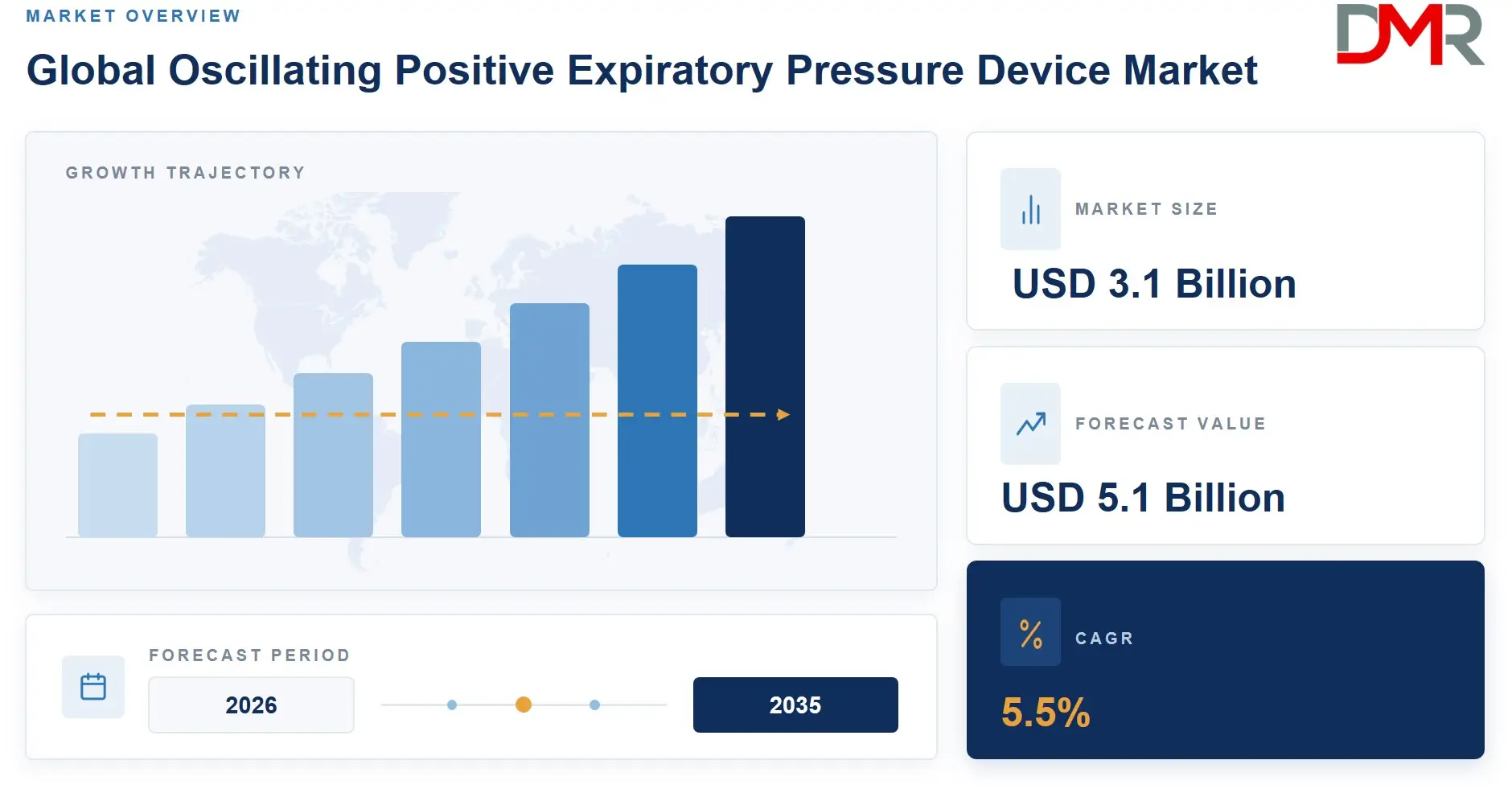
- Global OPEP Device Market Size in 2026: USD 3.1 Billion
- Global OPEP Device Market Size in 2035: USD 5.1 Billion
- Global CAGR from 2026 to 2035: 5.5%
- Face-mask OPEP Devices is the leading product type segment in 2026: 50.5%
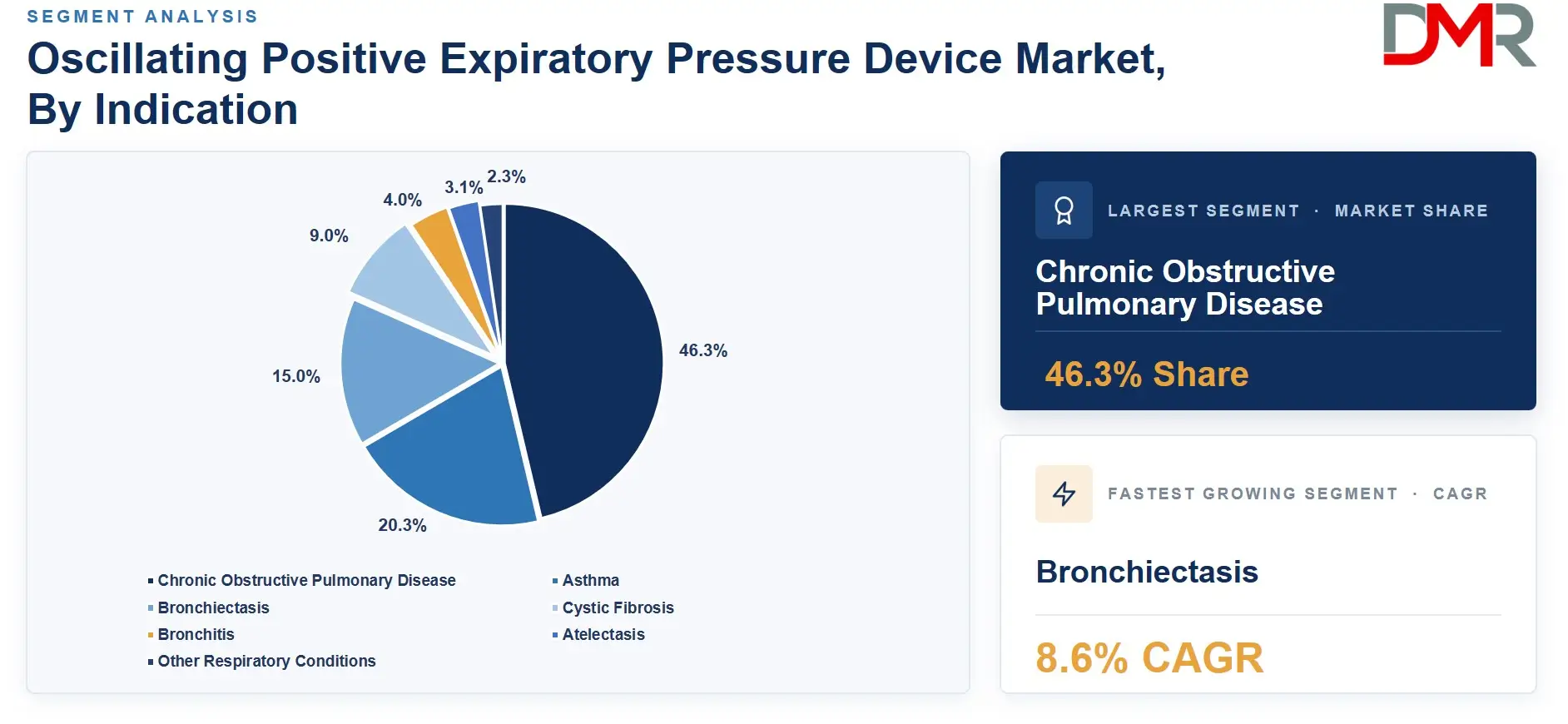
- Chronic Obstructive Pulmonary Disease is the leading indication segment in 2026: 46.3%
- Hospital Pharmacies is the leading distribution channel segment in 2026: 52.14
- Hospitals and Clinics is the leading end user segment in 2026: 47.8%
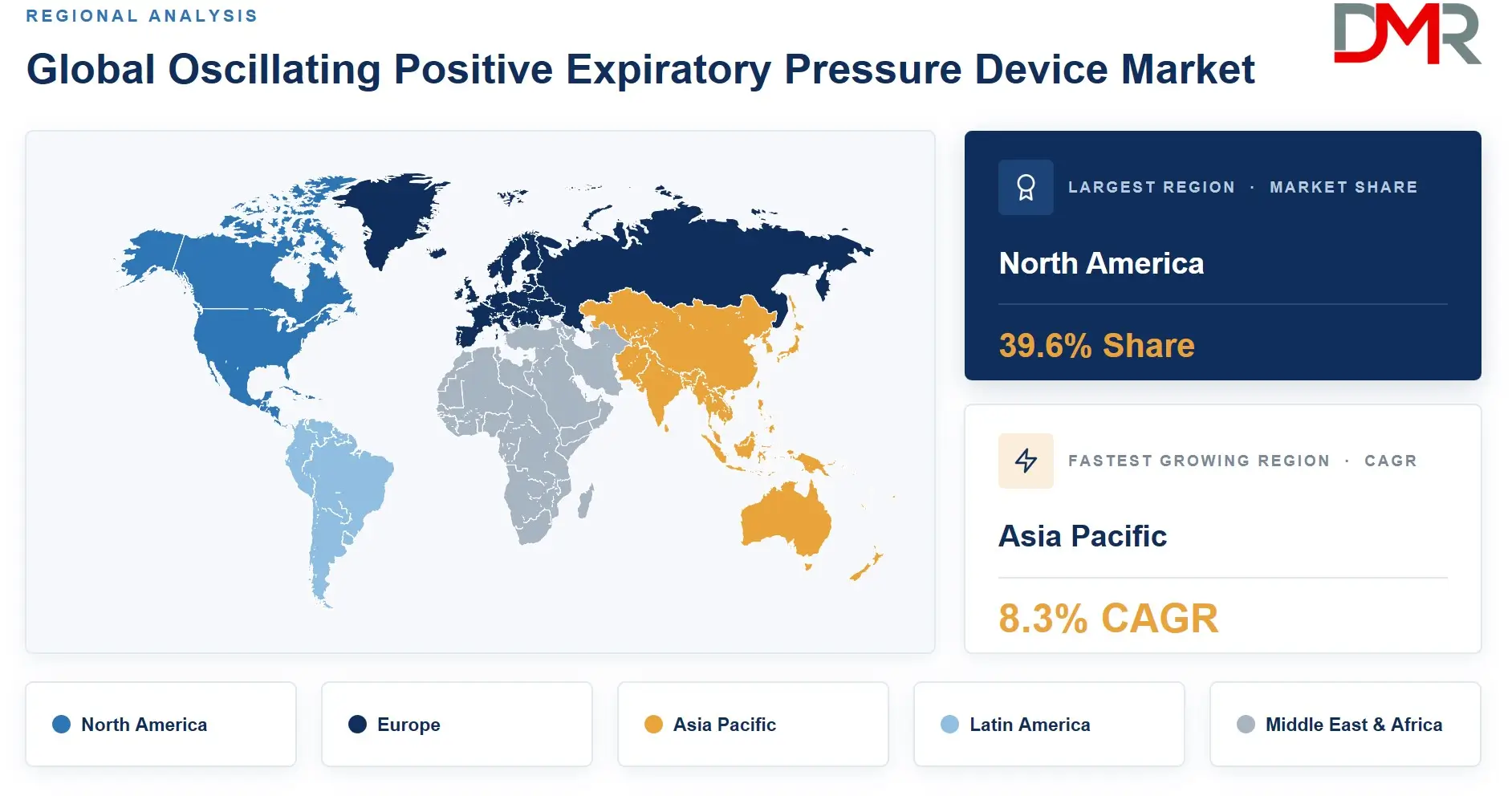
- North America is the leading region in 2026: 39.6%
What is the Global Oscillating Positive Expiratory Pressure Device and its Market Size?
The Global Oscillating Positive Expiratory Pressure (OPEP) Device Market is projected to reach USD 3.1 billion in 2026, expanding further to USD 5.1 billion by 2035 at a compound annual growth rate (CAGR) of 5.5% across the 2026–2035 forecast period.
ℹ
To learn more about this report –
Download Your Free Sample Report Here
OPEP devices encompassing mouthpiece OPEP devices, face-mask OPEP devices, bottle PEP devices, flutter valve and Acapella-type handheld devices, Aerobika oscillating PEP therapy systems, and tabletop airway clearance units have become a cornerstone of non-pharmacological bronchial hygiene and mucus clearance therapy for patients with chronic respiratory disease. Demand is being propelled by the rising global burden of chronic obstructive pulmonary disease (COPD), bronchiectasis, cystic fibrosis, and other secretion-retentive airway disorders, alongside an expanding preference for portable, low-cost, drug-free airway clearance therapy that can be self-administered at home. Growing clinical emphasis on pulmonary rehabilitation, post-acute respiratory recovery, and reduction of hospital readmission rates is accelerating adoption of oscillating positive expiratory pressure therapy across hospitals, ambulatory surgical centers, homecare settings, and pulmonary rehabilitation centers, positioning the OPEP device category as a fast-maturing segment of the broader respiratory and airway clearance device market.
Use Cases
- Secretion Mobilization in Chronic Obstructive Pulmonary Disease: Pulmonologists and respiratory therapists prescribe handheld OPEP devices such as flutter and Acapella devices to help COPD patients loosen and mobilize retained mucus, reduce airway obstruction, and lower the frequency of acute exacerbations.
- Airway Clearance Therapy for Bronchiectasis and Cystic Fibrosis: Specialty respiratory clinics integrate mouthpiece and face-mask OPEP devices into daily bronchial hygiene regimens for bronchiectasis and cystic fibrosis patients to reduce sputum retention, mitigate recurrent infection risk, and preserve long-term lung function.
- Post-Surgical and Post-Acute Atelectasis Prevention: Hospitals and ambulatory surgical centers deploy bottle PEP devices and tabletop oscillating PEP systems in perioperative and post-operative recovery protocols to prevent atelectasis, encourage lung re-expansion, and support faster post-surgical respiratory recovery.
- Home-Based Pulmonary Rehabilitation and Chronic Disease Self-Management: Homecare providers and pulmonary rehabilitation programs equip patients with gravity-independent handheld OPEP devices for daily, self-administered airway clearance therapy that reduces dependence on in-clinic chest physiotherapy visits.
Key Takeaways
- Market Size: The Global OPEP Device Market is poised to be valued at USD 3.1 billion in 2026 and is forecast to reach USD 5.12 billion by 2035, registering a CAGR of 5.5% across the forecast horizon.
- Growth Outlook: Market growth is sustained by the escalating global prevalence of COPD, bronchiectasis, and cystic fibrosis, rising clinical adoption of oscillating PEP therapy as a first-line airway clearance modality, expanding homecare-based pulmonary rehabilitation, and broadening reimbursement and e-commerce accessibility for portable respiratory devices.
- Primary Growth Drivers: An aging population with rising chronic respiratory disease burden, growing physician and respiratory therapist preference for non-invasive, drug-free mucus clearance therapy, increasing hospital readmission-reduction initiatives centered on pulmonary rehabilitation, and expanding online pharmacy distribution of handheld airway clearance devices are accelerating category investment.
- By Product Type Analysis: Face-mask OPEP Devices are projected to lead the product type segment with a dominant 50.5% share in 2026, while Mouthpiece OPEP Devices are expected to register the highest CAGR of 7.8% through 2035.
- By Indication Analysis: Chronic Obstructive Pulmonary Disease is anticipated to account for 46.3% of the market in 2026, the largest indication share, while Bronchiectasis is projected to post the fastest growth at an 8.6% CAGR.
- By Distribution Channel Analysis: Hospital Pharmacies are expected to command a 52.1% share in 2026, while Online Pharmacies and E-commerce channels are forecast to expand at the fastest CAGR of 9.0% as direct-to-consumer respiratory device sales accelerate.
- By End User Analysis: Hospitals and Clinics are projected to lead the end user segment with a 47.8% share in 2026, while Homecare Settings are expected to be the fastest-growing end-user category at a 9.4% CAGR, reflecting the broader shift toward self-managed, home-based airway clearance therapy.
How AI/Gen AI is Transforming the Oscillating Positive Expiratory Pressure Device Market?
Digital health integration and connected respiratory monitoring are reshaping the oscillating positive expiratory pressure device landscape by enabling adherence tracking, remote coaching, and data-driven pulmonary rehabilitation. Sensor-enabled handheld OPEP devices and companion mobile applications now capture exhalation pressure, therapy duration, and session frequency, transmitting this information to respiratory therapists and pulmonary rehabilitation platforms for real-time adherence monitoring. These connected airway clearance tools are increasingly embedded into chronic disease management programs that flag COPD and bronchiectasis patients at risk of exacerbation due to declining therapy compliance, closing critical gaps between in-clinic chest physiotherapy and home-based self-administered oscillating PEP therapy. Gamified feedback loops and app-based coaching are also improving pediatric and cystic fibrosis patient adherence, supplementing traditional airway clearance technique training with a more engaging, outcomes-oriented care experience.
Key Drivers in the Global OPEP Device Market
Escalating Global Burden of Chronic Respiratory Disease
Chronic obstructive pulmonary disease, bronchiectasis, cystic fibrosis, and chronic bronchitis remain the dominant clinical drivers of oscillating PEP therapy demand, together accounting for the majority of secretion-retentive airway disorders requiring regular mucus clearance intervention. The unabated rise in tobacco use legacy effects, ambient and household air pollution exposure, and an aging population predisposed to chronic bronchial hygiene needs is expanding the pool of patients requiring routine airway clearance therapy. As global COPD prevalence remains among the leading causes of chronic disease burden worldwide, downstream demand for mouthpiece, face-mask, and handheld OPEP devices intensifies commensurately, reinforcing routine prescription of flutter, Acapella, and Aerobika-type oscillating PEP systems as guideline-supported components of COPD and bronchiectasis disease management.
Expanding Clinical Preference for Non-Pharmacological Airway Clearance Therapy
Growing clinical evidence supporting oscillating positive expiratory pressure therapy as an effective, low-cost, drug-free alternative and complement to chest physiotherapy has repositioned OPEP devices as a first-line airway clearance modality across pulmonology and respiratory therapy practice. Respiratory societies increasingly recommend self-administered airway clearance techniques for patients with chronic secretion retention, reducing dependence on labor-intensive manual chest physiotherapy and expanding the eligible patient population to include earlier-stage COPD and non-cystic-fibrosis bronchiectasis. This evidence-driven clinical shift is generating sustained demand across hospital, clinic, and homecare settings, elevating handheld and mouthpiece OPEP device utilization and propelling above-market growth for portable, gravity-independent devices.
Restraints in the Global OPEP Device Market
Limited Awareness and Inconsistent Reimbursement Across Emerging Markets
Despite their clinical utility, oscillating PEP devices face inconsistent reimbursement coverage and limited patient and physician awareness in many low- and middle-income countries, where out-of-pocket purchase requirements restrict access among lower-income chronic respiratory disease patients. Fragmented distribution infrastructure, competition from conventional chest physiotherapy techniques and low-cost manual PEP devices, and a shortage of trained respiratory therapists in rural and underserved regions further limit market penetration. Even in higher-income markets, device replacement and accessory costs can create adherence barriers for long-term daily users, moderating category growth relative to more heavily reimbursed segments of the broader respiratory device market.
Growth Opportunities in the Global OPEP Device Market
Expansion of Homecare-Based Airway Clearance and Pulmonary Rehabilitation Programs
The global shift toward home-based pulmonary rehabilitation and chronic disease self-management represents a high-growth opportunity for OPEP device manufacturers, digital health platform developers, and homecare service providers. Health systems are increasingly incentivizing home-based airway clearance therapy through readmission-reduction and value-based pulmonary care initiatives that reward reduced hospitalizations and improved quality-of-life outcomes for COPD and bronchiectasis patients. This trend is creating a fertile market for user-friendly, gravity-independent handheld OPEP devices, connected adherence-tracking accessories, and structured patient training and telehealth support services.
E-Commerce-Driven Direct Access to Airway Clearance Devices
Rising consumer comfort with online pharmacy and e-commerce purchasing of durable medical equipment is opening a significant growth channel for OPEP device manufacturers seeking to reach chronic respiratory disease patients directly. Online distribution reduces geographic access barriers, enables faster replacement of mouthpieces and accessories, and supports subscription-based accessory replenishment models. Manufacturers that build direct-to-consumer digital storefronts, telehealth-linked prescription fulfillment, and educational content on proper oscillating PEP therapy technique are well positioned to capture the fastest-growing distribution channel in the category.
Trends in the Global OPEP Device Market
Integration of OPEP Therapy into Broader Pulmonary Rehabilitation and COPD Management Platforms
A defining trend is the integration of oscillating positive expiratory pressure therapy into holistic pulmonary rehabilitation programs that combine airway clearance therapy, breathing exercise training, and chronic disease coaching on a single care platform. This convergence is expanding the use of handheld and tabletop OPEP devices alongside inhaled bronchodilator and mucolytic therapy, and is fostering development of integrated respiratory care dashboards that track adherence, exhalation pressure trends, and exacerbation risk. Market implications include broader prescribing across pulmonology, primary care, and physical therapy specialties, and the rise of pulmonary rehabilitation-focused digital therapeutic applications built around airway clearance device data.
Miniaturization and Design Innovation in Handheld Oscillating PEP Devices
Manufacturers are increasingly focused on miniaturized, ergonomic, and easy-to-clean handheld OPEP device designs that improve patient adherence and reduce therapy fatigue. Innovations in gravity-independent flutter and Acapella-type mechanisms, quieter oscillation chambers, and dishwasher-safe, low-maintenance components are commercializing rapidly as manufacturers compete on patient comfort and daily-use convenience. This trend is particularly pronounced in the pediatric cystic fibrosis and bronchiectasis segments, where device usability directly influences long-term therapy compliance and clinical outcomes.
Research Scope and Analysis
The Global OPEP Device Market is segmented by product type, indication, distribution channel, and end user. Product type includes mouthpiece OPEP devices, face-mask OPEP devices, bottle PEP devices, handheld devices, tabletop devices, and accessories and replacement components. End users include hospitals, ambulatory surgical centers, homecare settings, rehabilitation and pulmonary care centers, and other outpatient facilities.
ℹ
To learn more about this report –
Download Your Free Sample Report Here
By Product Type Analysis
Face-mask OPEP Devices is poised to dominate the Global OPEP Device Market, accounting for an estimated 50.5% share in 2026. Face-mask configurations are widely used in hospital, pulmonary rehabilitation, and clinical airway clearance settings due to their suitability for patients with limited ability to maintain a mouthpiece seal, including pediatric, elderly, and post-surgical patients, alongside their compatibility with concurrent nebulized therapy. Their broad clinical applicability, ease of supervised administration, and established use in structured chest physiotherapy protocols sustain high procurement volumes across hospitals and clinics. Mouthpiece OPEP Devices are anticipated to register the highest CAGR of 7.8% during 2026–2035, driven by rising homecare adoption and growing patient preference for compact, self-administered airway clearance devices.
By Indication Analysis
Chronic Obstructive Pulmonary Disease is expected to be the largest indication segment, representing an estimated 46.3% share in 2026. The high global prevalence of COPD, its strong association with chronic mucus hypersecretion and recurrent exacerbations, and well-established clinical guidelines recommending airway clearance therapy as part of comprehensive COPD management sustain this segment's leadership. These patients typically require long-term, recurring oscillating PEP therapy to manage secretion retention and reduce exacerbation-driven hospitalizations. Bronchiectasis is anticipated to record the highest CAGR of 8.6% from 2026 to 2035, reflecting rising diagnosis rates and growing clinical recognition of the role of daily airway clearance therapy in bronchiectasis disease management.
By Distribution Channel Analysis
Hospital Pharmacies is anticipated to lead the distribution channel segment, holding an estimated 52.1% share in 2026. Hospital pharmacies remain the primary procurement channel for OPEP devices used in inpatient respiratory care, perioperative recovery, and structured pulmonary rehabilitation programs, supported by established institutional purchasing relationships and clinician-directed device selection. Online Pharmacies and E-commerce channels are projected to post the fastest CAGR of 9.0% during 2026–2035, propelled by rising direct-to-consumer purchasing of handheld and mouthpiece OPEP devices for home-based airway clearance therapy.
By End User Analysis
Hospitals and Clinics is projected to dominate the end user segment, accounting for an estimated 47.8% share in 2026. They provide integrated respiratory diagnosis, physician-supervised airway clearance training, perioperative pulmonary care, and structured chest physiotherapy protocols, and their established infrastructure and ability to manage complex, high-acuity respiratory patients sustain their leading position. Homecare Settings are expected to grow at the highest CAGR of 9.4% during 2026–2035, driven by patient preference for self-administered airway clearance therapy, expanding pulmonary rehabilitation-at-home programs, and improving accessibility of portable, gravity-independent handheld devices.
The Global Oscillating Positive Expiratory Pressure Device Market Report is segmented based on the following:
By Product Type
- Mouthpiece OPEP Devices
- Face-mask OPEP Devices
- Bottle PEP Devices
- Handheld Devices
- Flutter Devices
- Acapella Devices
- Aerobika Devices
- Gravity-dependent Devices
- Gravity-independent Devices
- Tabletop Devices
- Accessories and Replacement Components
By Indication
- Chronic Obstructive Pulmonary Disease
- Asthma
- Bronchiectasis
- Cystic Fibrosis
- Bronchitis
- Atelectasis
- Other Respiratory Conditions
By Distribution Channel
- Hospital Pharmacies
- Retail Pharmacies
- Online Pharmacies and E-commerce
- Medical Supply Stores
- Direct Sales and Distributor Networks
By End User
- Hospitals and Clinics
- Ambulatory Surgical Centers
- Homecare Settings
- Rehabilitation and Pulmonary Care Centers
- Other Outpatient Facilities
Regional Analysis
North America Is the Leading Region in the Global OPEP Device Market
North America is poised to lead the Global OPEP Device Market with an estimated 39.6% revenue share in 2026. The region's dominance is anchored by a high prevalence of COPD and bronchiectasis, well-established pulmonary rehabilitation infrastructure, strong physician and respiratory therapist familiarity with oscillating PEP therapy, and broad insurance and durable medical equipment reimbursement coverage. The United States, in particular, is characterized by early adoption of connected and app-integrated handheld OPEP devices, an extensive network of hospital and homecare respiratory therapy providers, and active readmission-reduction initiatives centered on chronic obstructive pulmonary disease management.
ℹ
To learn more about this report –
Download Your Free Sample Report Here
Asia Pacific Is the Fastest-Growing Region in the Global OPEP Device Market
Asia Pacific is projected to register the fastest CAGR of approximately 8.3% through 2035, driven by the region's large and rapidly aging population, rising air pollution-linked chronic respiratory disease burden particularly in China and India, and expanding healthcare infrastructure investment. Economic development is enabling greater access to pulmonary rehabilitation services and durable respiratory devices, with both public and private healthcare providers expanding respiratory therapy capacity to meet growing COPD and bronchiectasis caseloads. Additionally, government-led chronic respiratory disease screening and management programs are boosting diagnosis rates and airway clearance therapy adoption across the region.
The Europe OPEP Device Market
Europe represents one of the largest regional markets, characterized by universal healthcare coverage models that provide comprehensive access to pulmonary rehabilitation and airway clearance devices, though with notable cross-national variation in homecare therapy penetration. Germany and the United Kingdom hold leading European market shares, driven by well-developed respiratory therapy workforces, strong national pulmonary rehabilitation guideline adoption, and broad reimbursement for chronic respiratory disease management devices.
Latin America OPEP Device Market
The Latin America OPEP Device Market is expanding as rising COPD and bronchiectasis prevalence, growing urban air pollution exposure, and increasing private healthcare investment drive demand for structured airway clearance therapy. Brazil and Mexico are the primary national markets, with Brazil's public health system supporting growing pulmonary rehabilitation access and Mexico's expanding private respiratory care sector fueling device adoption.
Middle East and Africa OPEP Device Market
The Middle East and Africa OPEP Device Market is developing against a backdrop of rising chronic respiratory disease prevalence linked to smoking, occupational dust exposure, and urban air quality challenges. Saudi Arabia and the United Arab Emirates are the most attractive markets, supported by high government healthcare spending, expanding pulmonary rehabilitation infrastructure, and growing adoption of internationally sourced respiratory devices.
Major Countries Analysis
The US OPEP Device Market
The United States OPEP Device Market is a leading contributor to North American demand, underpinned by a substantial population living with COPD and bronchiectasis and sustained clinical emphasis on non-pharmacological airway clearance therapy as part of comprehensive pulmonary disease management. Growth is supported by expanding homecare pulmonary rehabilitation programs, rising adoption of connected handheld OPEP devices, and favorable durable medical equipment reimbursement pathways.
Japan OPEP Device Market
Japan's super-aged society and substantial chronic respiratory disease burden sustain steady demand for hospital- and clinic-based airway clearance therapy. The market is distinguished by sophisticated respiratory care infrastructure, strong physician familiarity with structured chest physiotherapy protocols, and gradual expansion of home-based pulmonary rehabilitation services supported by national healthy aging initiatives.
Saudi Arabia OPEP Device Market
Market expansion is tied to the Kingdom's rising chronic respiratory disease burden and the Ministry of Health's continued investment in pulmonary rehabilitation and respiratory therapy infrastructure. Vision 2030's healthcare transformation agenda, which emphasizes expanded outpatient care access and digital health adoption, is opening opportunities for international OPEP device manufacturers and homecare respiratory therapy providers.
Regulatory Landscape
The regulatory landscape for OPEP devices is shaped by medical device authorities that classify oscillating positive expiratory pressure devices as low-to-moderate risk airway clearance equipment, generally subject to streamlined premarket clearance pathways relative to implantable or life-sustaining respiratory equipment. In the United States, the FDA regulates OPEP devices as Class II medical devices, typically requiring 510(k) premarket notification demonstrating substantial equivalence to predicate airway clearance devices. Regulatory bodies in Europe, Japan, and other major markets similarly apply moderate-risk device classification frameworks, supporting relatively efficient market entry for new handheld and mouthpiece OPEP device designs while maintaining quality and performance standards for oscillation mechanism consistency and patient safety.
Clinical and Epidemiological Context
Chronic respiratory diseases requiring routine airway clearance therapy represent a substantial and growing global health burden. Chronic obstructive pulmonary disease remains among the leading causes of chronic morbidity worldwide, affecting a large share of adults over the age of 40 in high-prevalence regions, while bronchiectasis and cystic fibrosis, though comparatively less prevalent, are associated with intensive, lifelong airway clearance therapy needs. Rising diagnostic awareness, improved access to pulmonary function testing, and expanding respiratory therapist availability are together supporting higher rates of oscillating PEP therapy prescription across both high-income and emerging healthcare markets, reinforcing the long-term demand outlook for the OPEP device category.
By Region
North America
Europe
- Germany
- France
- The U.K.
- Italy
- Spain
- Rest of Europe
Asia-Pacific
- China
- Japan
- India
- Australia
- South Korea
- Rest of APAC
Latin America
- Mexico
- Brazil
- Rest of LATAM
Middle East & Africa
- Saudi Arabia
- The UAE
- South Africa
- Rest of MEA
Competitive Landscape
The Global OPEP Device Market features a mix of established respiratory device manufacturers, specialty airway clearance therapy companies, and durable medical equipment distributors. Leading manufacturers compete on oscillation mechanism design, device portability, ease of cleaning and maintenance, and expanding accessory and replacement component portfolios, while distributors and homecare providers compete on patient training, adherence support, and direct-to-consumer accessibility.
Some of the prominent players in the Global Oscillating Positive Expiratory Pressure Device Market are:
- PARI GmbH
- ICU Medical, Inc.
- Monaghan Medical Corporation
- Trudell Medical International
- D-R Burton Healthcare
- AirPhysio Pty Ltd.
- R. Cegla GmbH & Co. KG
- Philips Respironics
- Baxter International Inc.
- Tactile Medical
- ResMed Inc.
- Drive DeVilbiss Healthcare
- Teleflex Incorporated
- Medtronic plc
- Dynarex Corporation
- Thayer Medical Corporation
- Vortran Medical Technology
- Medica Holdings, LLC
- Aerogen Ltd.
- SunMed
- MGC Diagnostics Corporation
- Allied Healthcare Products, Inc.
- Besmed Health Business Corp.
- Medline Industries, LP
- OMRON Healthcare Co., Ltd.
- Mercury Medical
- Intersurgical Ltd.
- Ambu A/S
- Fisher & Paykel Healthcare Corporation Limited
- Vyaire Medical
- Breas Medical AB
- Armstrong Medical Ltd.
- GaleMed Corporation
- Flexicare Medical Limited
- GCE Group
- HUM Gesellschaft für Homecare und Medizintechnik mbH
- Löwenstein Medical SE & Co. KG
- Rossmax International Ltd.
- BMC Medical Co., Ltd.
- Apex Medical Corp.
- Other Key Players
Recent Developments
- June 2026: ABM Respiratory Care closed a Series B financing round, raising $14.8 million (above its $12 million target), to accelerate commercialization of its BiWaze Clear airway clearance system, scale U.S. sales efforts, and expand clinical research and digital health capabilities.
- January 2026: Trudell Medical International's AeroChamber2go spacer received a GOOD DESIGN Award, reflecting the company's continued design-innovation investment across its respiratory device portfolio, which includes the Aerobika OPEP device.
- May 2025: ABM Respiratory Care and Delve Health launched a multi-center home-care study enrolling roughly 85 bronchiectasis patients to evaluate the BiWaze Clear System's impact on reducing pulmonary exacerbations over a six-month period, using a decentralized, wearable-integrated trial platform.
Report Details
| Report Characteristics |
| Market Size (2026) |
USD 3.1 Bn |
| Forecast Value (2035) |
USD 5.1 Bn |
| CAGR (2026–2035) |
5.5% |
| The US Market Size (2026) |
USD 1.0 Bn |
| Historical Data |
2021 – 2025 |
| Forecast Data |
2026 – 2035 |
| Base Year |
2025 |
| Segments Covered |
By Product Type, By Indication, By Distribution Channel, By End User |
| Regional Coverage |
North America – The US and Canada; Europe – Germany, France, The UK, Italy, Spain, Rest of Europe; Asia-Pacific – China, Japan, India, Australia, South Korea, Rest of APAC; Latin America – Mexico, Brazil, Colombia, Argentina, Rest of LATAM; Middle East & Africa – Saudi Arabia, The UAE, South Africa, Rest of MEA |
Frequently Asked Questions
How big is the Global OPEP Device Market?
▾ The Global OPEP Device Market is valued at USD 3.1 billion in 2026 and is projected to reach USD 5.12billion by 2035, reflecting steady global demand for airway clearance and mucus clearance therapy devices.
What is the CAGR of the Global OPEP Device Market from 2026 to 2035?
▾ The market is projected to expand at a compound annual growth rate (CAGR) of 5.5% between 2026 and 2035, supported by rising chronic respiratory disease prevalence, growing homecare adoption, and expanding e-commerce distribution.
What factors are driving the growth of the Global OPEP Device Market?
▾ Growth is driven by the escalating global burden of COPD, bronchiectasis, and cystic fibrosis, increasing clinical preference for non-pharmacological airway clearance therapy, expansion of home-based pulmonary rehabilitation programs, and rising online pharmacy accessibility for handheld respiratory devices.
What are the major trends in the Global OPEP Device Market?
▾ Major trends include the integration of OPEP therapy into broader pulmonary rehabilitation platforms, miniaturization and ergonomic innovation in handheld oscillating PEP devices, growing adherence-tracking digital health integration, and expanding direct-to-consumer e-commerce distribution.
Which region held the largest share of the Global OPEP Device Market in 2026?
▾ North America is expected to lead the global market with a 39.6% share in 2026, supported by high chronic respiratory disease prevalence, established pulmonary rehabilitation infrastructure, and broad reimbursement coverage.
Which region is expected to grow the fastest in the Global OPEP Device Market?
▾ Asia Pacific is expected to record the fastest growth at approximately an 8.3% CAGR through 2035, driven by its large aging population, rising chronic respiratory disease burden, and expanding healthcare infrastructure investment.
Who are the key players in the Global OPEP Device Market?
▾ Key market participants include Trudell Medical International, Smiths Medical, Vyaire Medical, PARI Respiratory Equipment, Monaghan Medical Corporation, Teleflex, Baxter International, Philips Respironics, and other respiratory device manufacturers and distributors.
How is the Global OPEP Device Market segmented?
▾ The market is segmented by product type, indication, distribution channel, and end user, with regional analysis covering North America, Europe, Asia Pacific, Latin America, and the Middle East and Africa.