Market Snapshot
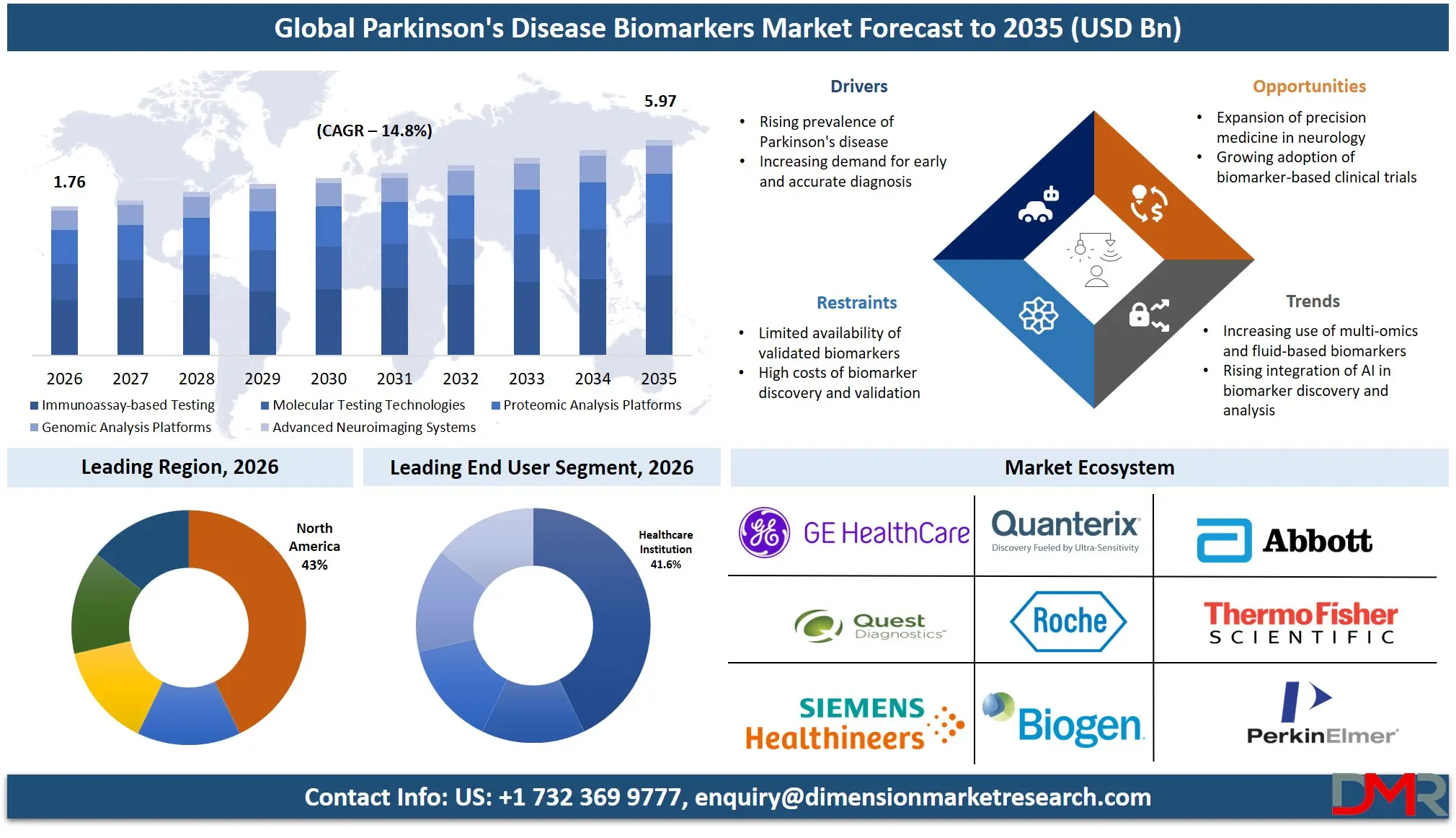
- The Parkinson's Disease Biomarkers market size is USD 1.5 Billion in 2025, reached USD 1.72 Billion in 2026, and is projected to hit USD 5.97 Billion by 2035 at a CAGR of 14.8%.
- Protein-based Biomarkers leads all biomarker categories with a 43.8% revenue share in 2026.
- North America holds the dominant regional position with a 43.0% revenue share in 2026.
- Healthcare Institutions lead the end-user segment with a 41.6% revenue share in 2026.
- Early Disease Detection commands the largest clinical utility share at 39.25% in 2026.
- Immunoassay-based Testing leads the analytical platform segment with a 32.6% revenue share in 2026.
- MJFF announced 108 grants totaling USD 62.4 Million in November 2025 to advance diagnostic tool development and early imaging.
- CSF alpha-synuclein seed amplification assays achieved 88.0% sensitivity in early-stage manifest PD patients within the PPMI cohort.
- External validation in the S4 cohort yielded a predictive model AUROC of 0.978, confirming clinical-grade accuracy.
Market Overview
The Parkinson's Disease Biomarkers Market covers the development, validation, and commercialization of molecular, imaging, and fluid-based diagnostic tools for detecting, staging, and tracking Parkinson's disease and related synucleinopathies. Scope includes protein-based biomarkers, diagnostic imaging biomarkers, genomic biomarkers, fluid-based biomarkers, and the digital health platforms and analytical systems that process them. General neurological diagnostics without Parkinson's-specific validation, standard MRI and PET equipment sold outside biomarker research contexts, and unrelated neurodegenerative disease testing fall outside Parkinson's Disease Biomarkers Market's boundaries.
ℹ
To learn more about this report –
Download Your Free Sample Report Here
Quanterix joined the PD-BUILD program as a Co-Investigator institution in April 2026, connecting its Simoa platform to a collaborative network spanning 32 teams, 103 institutions, and 23 countries dedicated to standardizing scalable blood-based assays for Parkinson's disease, as reported by Quanterix on April 28, 2026. Infrastructure at this scale signals that the field is moving from isolated research validation toward coordinated multi-site deployment of standardized biomarker protocols. A PPMI baseline analytical pool of 1,260 participants, where 37% were female and mean disease duration was 1.2 years at enrollment, confirms that the field is capturing early-stage disease populations that clinical checklist criteria have historically missed, per PMC research published in April 2026.
The transition from subjective clinical criteria to objective molecular profiling is the structural shift reshaping how Parkinson's Disease Biomarkers Market is funded and procured. The UK Brain Bank Registry's behavioral checklists are being replaced by seed amplification assays, proteomics platforms, and NfL fluid testing in both research and clinical diagnostic settings. Pharmaceutical sponsors advancing disease-modifying therapies need biomarker-confirmed patient populations for trial enrollment. That need is creating a sustained commercial pull that no clinical staging tool based on symptom observation can satisfy.
Federal and philanthropic funding is accelerating the transition from research-grade validation to commercial deployment. The MJFF grant portfolio and the NIA-adjacent programs directing capital toward biomarker standardization represent a policy-level commitment that reduces commercialization risk for specialized diagnostic vendors. Vendors whose assays achieve multi-site validation within programs like PD-BUILD enter commercial procurement conversations with institutional credibility that independently validated platforms cannot replicate at equivalent cost or speed.
Market Size and Forecast
The Global Parkinson's Disease Biomarkers Market size is estimated at USD 1.72 Billion in 2026 from USD 1.5 Billion in 2025, and is projected to reach USD 5.97 Billion by 2035, exhibiting a CAGR of 14.8% during the forecast period.
MJFF announced 108 newly structured grants totaling USD 62.4 million in November 2025 to advance diagnostic tool development, target validation, and early imaging tracking for neurodegenerative pathology, as reported by PublicNow. Grant portfolios of this scale from the field's largest disease-specific funder confirm that diagnostic biomarker infrastructure is a strategic investment priority rather than a supplementary research expense. Roche confirmed the first successful target biology biomarker shift for an anti-alpha-synuclein therapy in June 2025, establishing clinical proof that biomarker-defined patient selection can detect meaningful biological change in a therapeutic trial. That confirmation pulls pharmaceutical procurement of validated PD biomarker assays from a supporting role into a clinical development prerequisite.
The 14.8% CAGR reflects three compounding forces. Pharmaceutical sponsors advancing disease-modifying therapies require biomarker-confirmed enrollment populations that symptom-based criteria cannot provide. Regulatory bodies in the U.S. and EU are incorporating objective biomarker evidence into approval pathways, creating compliance demand alongside clinical demand. Blood-based and non-invasive assay platforms are reducing the procedural barriers that previously limited biomarker testing to academic and specialist centers. The downside scenario centers on reimbursement delays. Amprion and CND Life Sciences both launched dedicated patient access teams in 2025 to secure private insurance, Medicare, and Medicaid coverage. Until payer coverage frameworks standardize for novel LBP and seed amplification assays, adoption in community neurology settings will remain slower than the clinical evidence supports.
Biomarker Category Analysis
Protein-based Biomarkers led the biomarker category segment with a 43.8% share in 2026.
Alpha-synuclein seed amplification assays anchor this segment's commercial leadership. CSF SAA achieved 88.0% sensitivity in early-stage manifest PD patients within the PPMI cohort, per PMC research published April 22, 2026. Sporadic PD cases without familial genetic variants returned an assay positivity rate of 93.3% in the same dataset, confirming that protein-based assays deliver the highest diagnostic accuracy in the largest and most clinically homogeneous patient subgroup. CSF neurofilament light chain levels in Multiple System Atrophy reached 3,859 pg/mL versus 997 pg/mL in sporadic adult-onset ataxia, per medRxiv data published May 14, 2026, establishing NfL as a quantitatively distinct marker for differential atypical Parkinsonian diagnosis. Tau-related markers and DJ-1 protein markers serve complementary roles in co-pathology mapping and pharmaceutical target validation contexts.
Diagnostic Imaging Biomarkers encompass PET, MRI, and SPECT modalities, which remain essential for spatial visualization of dopaminergic pathway degeneration. Their role is shifting from primary diagnosis toward confirmation and progression tracking as molecular assays assume the early-detection function. Genomic Biomarkers address LRRK2, GBA, and SNCA variants, where clinical utility is highest in genetically stratified trial enrollment. Alpha-synuclein assay positivity dropped to 67.5% in LRRK2 mutation carriers compared to 93.3% in sporadic PD, per the same PMC dataset, confirming that genomic subtype profiling is essential for accurate biomarker interpretation rather than optional supplementary testing. Fluid-based Biomarkers in blood and saliva are the fastest-developing sub-category, driven by the commercial imperative to replace lumbar-puncture-dependent CSF testing with accessible, scalable collection methods.
Analytical Platform Analysis
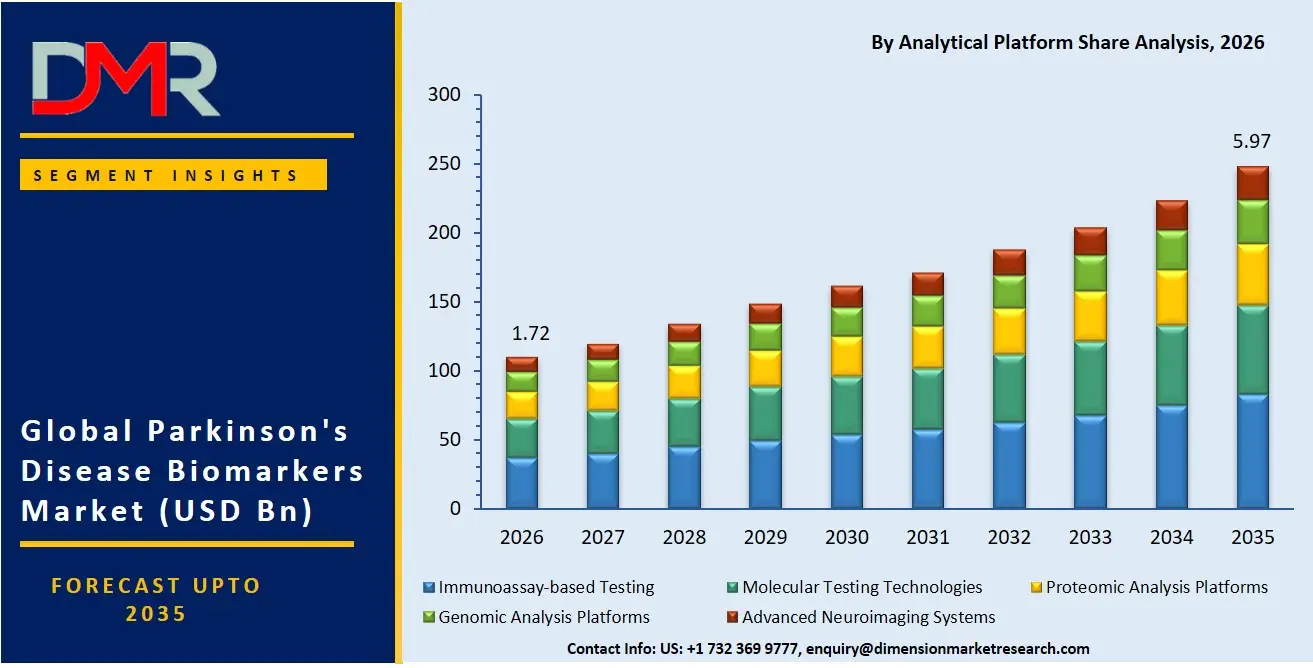
Immunoassay-based Testing captured 32.6% of the analytical platform segment in 2026, ahead of all rivals.
ℹ
To learn more about this report –
Download Your Free Sample Report Here
Immunoassay platforms lead because they offer validated, reproducible quantification of protein biomarkers across large clinical sample volumes at a cost and throughput that academic and clinical diagnostic labs can operationalize without specialized infrastructure. Quanterix commercialized its Simoa Alpha-Synuclein Total Advantage PLUS Assay with a lower limit of detection of 2.4736 pg/mL in serum and EDTA plasma in May 2026, as reported by Quanterix. A LOD at this sensitivity level enables detection of misfolded neuronal protein concentrations that standard ELISA platforms cannot resolve, extending the clinical utility of immunoassay testing into the low-abundance ranges required for early-stage and pre-symptomatic biomarker screening.
Molecular Testing Technologies address seed amplification assays and real-time quaking-induced conversion platforms that detect prion-like seeding activity directly. These platforms are gaining regulatory attention following the FDA Letter of Support for Amprion's SAAmplify-αSYN CSF assay in 2024. Proteomic Analysis Platforms using mass spectrometry support multi-marker panel development and co-pathology mapping programs, where single-analyte immunoassays are insufficient. Genomic Analysis Platforms serve LRRK2, GBA, and SNCA variant detection for trial stratification and companion diagnostic development. Advanced Neuroimaging Systems retain a role in pharmaceutical development programs requiring spatial biomarker data that fluid assays cannot provide.
Clinical Utility Analysis
Early Disease Detection accounted for 39.25% of clinical utility demand in 2026, the highest of any category.
Early detection commands the largest clinical utility share because it serves both the diagnostic and the pharmaceutical development markets simultaneously. A pre-screening regression algorithm trained on PPMI data achieved sensitivity of 0.858 and specificity of 0.868 in internal validation, per PMC research from April 22, 2026. Algorithms performing at this level before any invasive fluid collection are commercially significant. They allow clinical labs to triage which patients warrant lumbar puncture for SAA testing, reducing procedural burden and improving the overall health economics of biomarker-guided diagnosis.
Disease Progression Tracking is the second clinical utility pillar, serving both long-term patient management and pharmaceutical endpoint measurement. The S4 external validation cohort included 71 participants with a mean age of 63.0 years and a mean tracking duration of 5.1 years, with 70.4% presenting manifest PD, per PMC data from April 22, 2026. Validation across an older cohort with longer disease duration confirms that the predictive models maintain accuracy in populations reflecting real-world clinical tracking, not just early-enrollment research populations. Therapeutic Research and Drug Development is the third utility category, where biomarker confirmation of target engagement and disease modification drives the highest per-assay contract values in the market.
End User Analysis
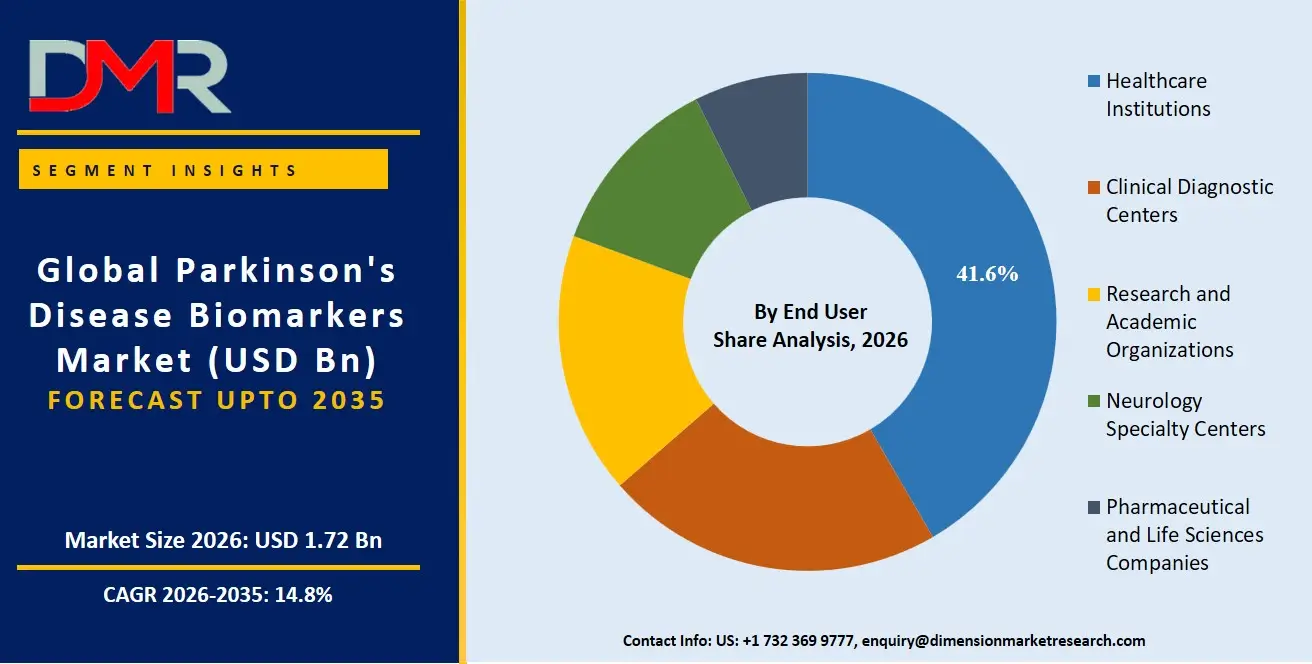
Healthcare Institutions led end-user demand with a 41.6% revenue share in 2026.
ℹ
To learn more about this report –
Download Your Free Sample Report Here
Hospitals and integrated health systems anchor procurement because they combine neuroimaging infrastructure, clinical laboratory capacity, and neurology specialist staffing in a single institutional setting. Healthcare institutions procure both imaging biomarker and fluid biomarker services under the same capital budget cycle, making them the highest-value account type for full-portfolio biomarker vendors. Research and Academic Organizations drive assay validation and protocol development that precedes commercial lab adoption, functioning as a qualification pipeline rather than a high-volume revenue source. Neurology Specialty Centers represent the most clinically intensive end-user segment, where differential diagnosis of atypical parkinsonian syndromes demands the full range of NfL, synSAA, and protein biomarker testing in parallel.
Pharmaceutical and Life Sciences Companies are the fastest-growing end-user segment by contract value. Every disease-modifying therapy in late-stage PD development requires a validated biomarker readout for patient stratification, endpoint measurement, and regulatory submission. Clinical Diagnostic Centers serve the outpatient and community neurology market, where accessible, non-invasive biomarker testing is the primary adoption driver. CND Life Sciences' Syn-One skin biopsy test, recognized as a top promising medical finding for 2024 by the NIH, exemplifies the type of clinically practical, non-CSF-dependent product that community diagnostic centers can operationalize without specialist infrastructure.
Key Market Segments
By Biomarker Category
- Protein-based Biomarkers
- Alpha-Synuclein Markers
- DJ-1 Protein Markers
- Tau-related Markers
- Neurofilament Light Chain (NfL) Markers
- Diagnostic Imaging Biomarkers
- Positron Emission Tomography (PET) Markers
- Magnetic Resonance Imaging (MRI) Indicators
- Single-Photon Emission Computed Tomography (SPECT) Indicators
- Genomic Biomarkers
- LRRK2 Genetic Variants
- GBA Genetic Variants
- SNCA Gene Alterations
- Fluid-based Biomarkers
- Cerebrospinal Fluid (CSF) Indicators
- Blood-derived Biomarkers
- Saliva-derived Biomarkers
By Digital Health Solution
- Connected Wearable Devices
- Virtual Patient Monitoring Platforms
- AI-powered Biomarker Analysis Solutions
By Analytical Platform
- Immunoassay-based Testing
- Molecular Testing Technologies
- Proteomic Analysis Platforms
- Genomic Analysis Platforms
- Advanced Neuroimaging Systems
By End User
- Healthcare Institutions
- Clinical Diagnostic Centers
- Research and Academic Organizations
- Neurology Specialty Centers
- Pharmaceutical and Life Sciences Companies
By Clinical Utility
- Early Disease Detection
- Disease Progression Tracking
- Therapeutic Research and Drug Development
Regional Analysis
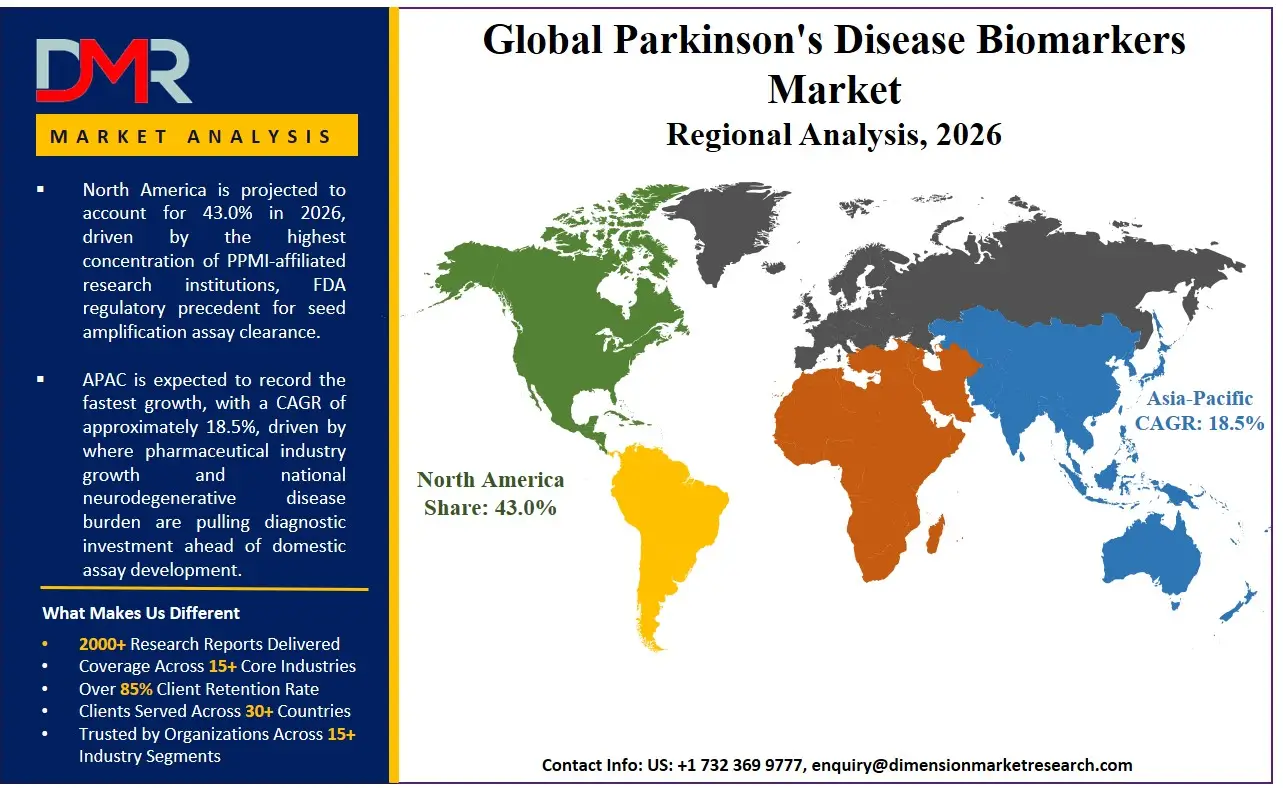
North America held a 43.0% revenue share in 2026, the largest of any region in Parkinson's Disease Biomarkers Market.
ℹ
To learn more about this report –
Download Your Free Sample Report Here
The U.S. anchors North America's dominant position through the highest concentration of PPMI-affiliated research institutions, FDA regulatory precedent for seed amplification assay clearance, and the deepest pool of pharmaceutical sponsors funding biomarker-enabled clinical trials. The MJFF, headquartered in the U.S., directs USD 62.4 Million in grant funding across its portfolio, concentrating diagnostic development capital in American academic and commercial laboratory networks. Quanterix's PD-BUILD Co-Investigator status, connecting 103 institutions across 23 countries, confirms that North American platforms are anchoring global standardization efforts rather than participating at the periphery.
Europe holds the second-largest regional position, driven by strong academic neurology infrastructure in Germany, France, the UK, and the Nordic countries. Multi-center European validation trials addressing SAA protocol variance were completed in January 2026, reducing inter-laboratory variability that had previously limited cross-border diagnostic comparability. Amprion's pursuit of EU regulatory compliance for a commercial SAAmplify-αSYN release confirms that North American-developed assays are treating European market access as a near-term commercial priority rather than a longer-term geographic expansion. Asia Pacific is an emerging biomarker market where pharmaceutical industry growth and national neurodegenerative disease burden are pulling diagnostic investment ahead of domestic assay development. Latin America and the Middle East and Africa remain early-stage markets where research collaboration with North American and European institutions precedes independent commercial procurement.
Key Regions and Countries
North America
Europe
- Germany
- France
- The UK
- Spain
- Italy
- Rest of Europe
Asia Pacific
- China
- Japan
- South Korea
- India
- Australia
- Rest of APAC
Latin America
- Brazil
- Mexico
- Rest of Latin America
Middle East & Africa
- GCC
- South Africa
- Rest of MEA
Market Dynamics
Validated Assay Performance and Pharma Trial Demand Pull Biomarkers Into Clinical Standard of Care
Within the PPMI analytical cohort of 1,260 participants, 68.7% presented positive alpha-synuclein status when screened via CSF seed amplification assays, per PMC research published April 22, 2026. A positivity rate at this level across a broad, early-stage research population confirms that SAA testing is capturing true biological disease burden rather than a narrow clinical sub-population. Pharmaceutical sponsors need this scale of biomarker-positive patient identification to power adequately enrolled clinical trials. The multi-variable predictive screening model trained on PPMI baseline metrics achieved an AUROC of 0.921, per the same PMC dataset. A classification accuracy at this level before invasive fluid collection allows clinical sites to pre-screen candidates efficiently, reducing the procedural load that has historically constrained large-scale biomarker-based trial enrollment.
Federal and philanthropic funding is reducing commercialization barriers for specialized diagnostic vendors. MJFF's USD 62.4 Million grant portfolio, Quanterix's PD-BUILD network membership spanning 103 institutions, and the FDA Letter of Support for Amprion's SAAmplify-αSYN assay all represent policy-level investments that private capital alone could not have generated at this pace. Vendors whose platforms are embedded in these programs enter hospital and pharmaceutical procurement conversations with a multi-institutional validation record that independently developed assays cannot present at equivalent cost.
Genetic Subtype Gaps and Procedural Barriers Limit Universal Assay Applicability
Alpha-synuclein assay positivity dropped to 67.5% in PD patients carrying pathogenic LRRK2 mutations, compared to 93.3% in sporadic cases without familial variants, per PMC research from April 22, 2026. A 25.8 percentage point accuracy gap between genetic subtypes creates a material diagnostic error risk if assays are applied without prior genetic screening. PD patients lacking concurrent hyposmia returned an assay positivity rate of only 63.0% in the same dataset. Biomarker performance gaps linked to specific clinical and genetic profiles mean that no single assay currently covers the full PD patient spectrum, limiting the addressable market for individual platform vendors until complementary multi-marker panel protocols are validated and commercially available.
Lumbar puncture requirements for CSF-dependent assays impose procedural risk that constrains adoption outside specialist neurology centers. Amprion's SAAmplify-αSYN assay induces post-procedural spinal headaches and lower back pain in a subset of patients, as confirmed by clinical reporting in 2024. Community neurologists and outpatient diagnostic centers cannot order lumbar-puncture-dependent tests at the frequency required for population-scale screening programs. This procedural barrier concentrates current SAA adoption in academic and tertiary care settings, deferring the community diagnostic market expansion that blood-based and skin-biopsy alternatives are being developed to capture.
Non-Invasive Blood Assays and European Market Access Create Near-Term Expansion Pathways
External validation of the predictive alpha-synuclein status model in the independent S4 cohort yielded an AUROC of 0.978, per PMC research from April 22, 2026. Model performance improving from 0.921 in internal validation to 0.978 in external validation confirms generalizability across independent populations, the most commercially significant validation milestone for any diagnostic algorithm seeking multi-site deployment. CND Life Sciences advanced multi-site cutaneous biomarker quantification trials in May 2025, building the clinical evidence base for non-invasive skin biopsy testing that community diagnostic centers can operationalize without lumbar puncture capability. Blood-based RNA repetitive motif biomarkers validated at AD/PD 2026 are entering FDA evaluation for non-invasive prodromal screening, per available market data. Academic teams seeking FDA evaluation for novel blood-based biomarkers represents the leading edge of the next accessible diagnostic category.
Amprion's pursuit of EU regulatory compliance for a planned commercial SAAmplify-αSYN release positions the European molecular assay market as a near-term revenue expansion target. Multi-center European SAA protocol variance studies completed in January 2026 address the inter-laboratory consistency barrier that had previously delayed European regulatory submission. Vendors that achieve simultaneous FDA and EU approval for the same assay platform will hold a cross-market commercial advantage that single-jurisdiction approvals cannot replicate.
Market Trends
Computational Biomarker Models and Multiomic Cohort Programs Accelerate Objective Diagnostic Infrastructure
Replication validation of the predictive alpha-synuclein screening model in the S4 external dataset yielded clinical sensitivity of 0.958 combined with specificity of 0.870, per PMC research published April 22, 2026. Sensitivity approaching 0.96 in external validation means the model misses fewer than 5 in 100 true PD cases during pre-screening, a performance standard that supports population-scale deployment rather than specialist-only use. Metabolon and MJFF partnered in May 2026 to launch the largest global multiomic cohort analysis in the field, combining metabolomics, proteomics, and genomics data streams across a single study population. Multi-omic integration at this scale will generate composite biomarker signatures that outperform any single-analyte assay, accelerating the transition from protein-based to panel-based diagnostic workflows across both clinical and pharmaceutical research settings.
Market Competition Overview
The Parkinson's Disease Biomarkers Market is moderately fragmented, with competition concentrated between large in-vitro diagnostics platform companies, specialized neurodiagnostic assay developers, and imaging technology vendors. No single vendor holds dominant share across protein, genomic, imaging, and fluid biomarker categories simultaneously. Platform-level competitive advantage belongs to vendors with published multi-site validation data embedded in PPMI or equivalent high-credibility cohort programs. Quanterix won the R&D 100 Award in August 2025 for its high-sensitivity neurodegeneration testing platform, confirming independent industry recognition of its Simoa technology's technical differentiation in a field where assay sensitivity determines clinical utility.
NfL fluid testing achieved a standalone clinical sensitivity of 96.9% and diagnostic specificity of 85.7% for neuroaxonal degeneration differentiation, per medRxiv data published May 14, 2026. Performance at this level makes NfL testing a mandatory component of any atypical Parkinsonian differential diagnosis panel rather than an optional add-on. The synSAA screening protocol achieved 85.2% specificity in rejecting non-synuclein pathology across sporadic ataxia cases in the same dataset. Vendors whose platforms deliver both sensitivity and specificity above 85% across independent validation datasets occupy a defensible technical position that competitors must match before entering the same institutional procurement conversations. Large IVD platform companies hold distribution and regulatory infrastructure advantages, while specialist vendors like Quanterix and CND Life Sciences hold clinical validation depth in PD-specific assay categories that general-purpose diagnostics companies have not replicated.
Company Profiles
F. Hoffmann-La Roche Ltd. competes across protein biomarker assay development, advanced neuroimaging systems, and pharmaceutical biomarker research partnerships within the PD diagnostics market. Roche confirmed the first successful target biology biomarker shift for an anti-alpha-synuclein therapy in June 2025, establishing it as the first major pharma company to demonstrate biomarker-confirmed target engagement in a PD therapeutic program. This milestone positions Roche's biomarker platforms as validated instruments for companion diagnostic development, a commercial application that commands premium contract pricing in pharmaceutical clinical trial supply agreements.
Quanterix has built the most technically differentiated ultra-sensitive protein detection platform in the PD biomarker market through its Simoa technology. Named a Co-Investigator in the PD-BUILD network spanning 103 institutions in April 2026, Quanterix holds a multi-institutional validation position that competitors would require years of cohort enrollment to replicate. Its Simoa Alpha-Synuclein Advantage PLUS Assay achieves a LOD of 2.4736 pg/mL, enabling serum and plasma-based quantification at sensitivity levels that extend biomarker testing into accessible non-CSF sample types. The risk Quanterix faces is sustaining assay performance differentiation as larger IVD companies invest in competing ultra-sensitive detection platforms targeting the same PPMI-validated biomarker analytes.
Key Players
- F. Hoffmann-La Roche Ltd.
- Quest Diagnostics
- PerkinElmer
- Quanterix
- Siemens Healthineers
- GE HealthCare
- Thermo Fisher Scientific
- Abbott Laboratories
- Biogen Inc.
- Sysmex Corporation
Supply Chain and Value Chain Analysis
The value chain begins with biological sample collection, where CSF via lumbar puncture, blood draws, skin biopsies, and saliva samples serve as the raw inputs for all downstream biomarker analysis. Sample quality at this stage determines the analytical accuracy of every platform in the chain. CSF collection requires specialist procedural capacity that limits collection to tertiary care and academic settings, which is why blood-based and skin-biopsy collection methods carry the highest commercial development priority for vendors seeking to expand beyond specialist markets.
Assay and reagent development is the next layer, where immunoassay kits, seed amplification reagents, and molecular testing consumables are manufactured and quality-controlled against reference standards. Vendors with proprietary reagent formulations, such as Quanterix's Simoa assay kits with validated LOD specifications, hold intellectual property protection at the consumable layer that generates recurring revenue independent of instrument sales. This reagent-and-instrument lock-in model mirrors the commercial architecture of established IVD platform businesses and creates durable switching costs after initial laboratory deployment.
Analytical platform operation encompasses the instrumentation, software, and AI-based quantification systems that process collected samples. CND Life Sciences integrated its NerValence AI-based system to quantify and track cutaneous nerve phosphorylated alpha-synuclein over time in 2025, embedding computational analysis directly into the clinical workflow rather than requiring separate bioinformatics processing. Platforms that combine sample analysis and AI-powered result interpretation within a single workflow capture more of the clinical budget per test than those requiring external computational tools.
Clinical data integration and reporting represent the highest value-creation layer for pharmaceutical clients. Vendors whose biomarker outputs connect directly to clinical trial data management systems, electronic health records, and regulatory submission packages command premium pricing over those delivering standalone results. The biggest supply chain bottleneck sits at the standardization layer between assay platforms across different laboratory sites. Multi-center European SAA protocol variance trials completed in January 2026 addressed exactly this bottleneck, confirming that cross-laboratory reproducibility is the primary technical barrier between research-grade validation and commercial clinical deployment at scale.
Regulatory Landscape
The FDA's De Novo and 510(k) clearance pathways govern commercial diagnostic test approval for PD biomarker assays in the U.S. The FDA Letter of Support issued to Amprion for its SAAmplify-αSYN CSF assay in 2024 represents a formal acknowledgment that the agency views seed amplification technology as a viable diagnostic pathway, reducing regulatory risk for subsequent assay submissions in the same technology class. Vendors whose assays achieve FDA Letter of Support or clearance gain a procurement qualification that hospital laboratory directors and health system purchasing committees require before ordering clinical-grade tests. Laboratory-developed tests operating under CLIA oversight occupy a parallel regulatory track that commercial kits do not, creating a two-tier market where LDT developers can reach clinical deployment faster but face restrictions on commercial distribution.
The EU In Vitro Diagnostic Regulation, fully applicable since May 2022, classifies high-risk diagnostic assays including neurodegenerative biomarker tests under Class C, requiring Notified Body conformity assessment before commercial sale. Amprion's active pursuit of EU regulatory compliance for a planned SAAmplify-αSYN commercial release reflects the compliance investment required to access European markets under the IVD Regulation framework. Vendors that achieved CE marking under the predecessor In Vitro Diagnostic Directive must complete IVDR conformity assessment on a rolling basis, creating a compliance burden that disadvantages smaller specialist developers without dedicated regulatory affairs teams relative to large IVD platform companies with established European regulatory infrastructure.
Companion diagnostic co-development with pharmaceutical sponsors introduces an additional regulatory layer where FDA and EMA expect biomarker assay performance data to be submitted alongside the therapeutic application. Roche's confirmed target biology biomarker shift for its anti-alpha-synuclein therapy in June 2025 brings its biomarker platform into the companion diagnostic regulatory pathway. Vendors partnering with late-stage pharmaceutical sponsors must align assay validation timelines with drug approval schedules, creating a dependency that compresses development flexibility but guarantees a commercial launch event tied to drug approval.
Investment and White Space Analysis
Investment is concentrating in ultra-sensitive blood-based protein detection, multi-site assay standardization programs, and non-invasive skin and saliva biomarker platforms. Scout AI raised USD 115 Million in its 2024 Series A and USD 100 Million in April 2026, and within the PD biomarker space, Casma Therapeutics secured USD 7.6 Million from MJFF in March 2026 for biomarker and therapeutic co-development. Smaller targeted grants from the MJFF portfolio signal where the field's leading funder sees the most promising translational opportunities. Vendors aligned with MJFF grant recipients gain co-development credibility and clinical data access that commercially sourced partnerships cannot provide at equivalent cost.
Non-invasive prodromal biomarker testing represents the clearest white space in the current market. CSF-dependent SAA assays are validated but procedurally constrained. Blood-based RNA repetitive motif biomarkers are entering FDA evaluation following AD/PD 2026 presentations, and CND Life Sciences is advancing multi-site cutaneous testing. The first non-invasive assay achieving FDA clearance with validated prodromal sensitivity will access the outpatient neurology market that CSF-based testing has been structurally excluded from, representing the single largest addressable market expansion event available to the category in the near term.
Pharmaceutical companion diagnostic partnerships represent the highest per-contract revenue opportunity in the market. Every late-stage PD therapeutic in development requires a validated biomarker platform for trial enrollment and endpoint measurement. Vendors with published multi-cohort validation data across PPMI and S4 study populations hold the credibility required to enter exclusive companion diagnostic agreements. Genomic subtype-specific assay development for LRRK2 and GBA variant patient populations is an underinvested sub-category. The 25.8 percentage point assay positivity gap between LRRK2 carriers and sporadic PD patients, confirmed by PPMI data, creates a validated clinical need for genotype-adjusted biomarker panels that no commercially available product currently addresses.
Recent Developments
- March 2026, Casma Therapeutics secured USD 7.6 Million from the Michael J. Fox Foundation to support parallel biomarker identification and therapeutic development programs targeting Parkinson's disease pathology.
- January 2026, Bexorg received an MJFF grant to conduct systematic postmortem human brain biomarker mapping, generating reference-grade tissue-level data to support commercial assay validation and target identification programs.
- January 2026, Multi-center European validation trials addressed seed amplification assay protocol variance, reducing inter-laboratory variability that had previously constrained cross-border diagnostic comparability and delayed EU regulatory submissions for commercial SAA products.
Report Details
| Report Characteristics |
| Market Value (2025) |
USD 1.5 Billion |
| Market Value (2026) |
USD 1.72 Billion |
| Forecast Revenue (2035) |
USD 5.97 Billion |
| CAGR (2026 to 2035) |
14.8% |
| Base Year for Estimation |
2025 |
| Historic Period |
2020 to 2024 |
| Forecast Period |
2026 to 2035 |
| Report Coverage |
Revenue Forecast, Market Dynamics, Competitive Landscape, Recent Developments |
| Segments Covered |
By Biomarker Category (Protein-based Biomarkers, Diagnostic Imaging Biomarkers, Genomic Biomarkers, Fluid-based Biomarkers), By Digital Health Solution (Connected Wearable Devices, Virtual Patient Monitoring Platforms, AI-powered Biomarker Analysis Solutions), By Analytical Platform (Immunoassay-based Testing, Molecular Testing Technologies, Proteomic Analysis Platforms, Genomic Analysis Platforms, Advanced Neuroimaging Systems), By End User (Healthcare Institutions, Clinical Diagnostic Centers, Research and Academic Organizations, Neurology Specialty Centers, Pharmaceutical and Life Sciences Companies), By Clinical Utility (Early Disease Detection, Disease Progression Tracking, Therapeutic Research and Drug Development) |
| Regional Analysis |
North America – US and Canada; Europe – Germany, France, The UK, Spain, Italy, and Rest of Europe; Asia Pacific – China, Japan, South Korea, India, Australia, and Rest of APAC; Latin America – Brazil, Mexico, and Rest of Latin America; Middle East & Africa – GCC, South Africa, and Rest of MEA |
| Competitive Landscape |
F. Hoffmann-La Roche Ltd., Quest Diagnostics, PerkinElmer, Quanterix, Siemens Healthineers, GE HealthCare, Thermo Fisher Scientific, Abbott Laboratories, Biogen Inc., Sysmex Corporation |
| Customization Scope |
Customization for segments and region or country level will be provided. Additional customization can be done based on requirements. |
| Purchase Options |
Three license options: Single User License, Multi-User License (Up to 5 Users), Corporate Use License (Unlimited Users and Printable PDF). |
Frequently Asked Questions
What is the biggest investment opportunity in Parkinson’s Disease Biomarkers Market?
▾ The market grows from USD 1.5 Billion in 2025 to a projected USD 5.97 Billion by 2035. Non-invasive blood-based and skin-biopsy prodromal assays represent the highest-return entry point, as the first FDA-cleared non-invasive prodromal test will access the outpatient neurology market that CSF-dependent assays cannot reach. Genomic subtype-specific panels for LRRK2 and GBA variant populations are the most underinvested validated clinical need in the current market.
Who are the top companies in Parkinson’s Disease Biomarkers Market?
▾ Leading companies include F. Hoffmann-La Roche Ltd., Quest Diagnostics, PerkinElmer, Quanterix, Siemens Healthineers, GE HealthCare, Thermo Fisher Scientific, Abbott Laboratories, Biogen Inc., and Sysmex Corporation. Quanterix holds the strongest published technical differentiation position, with its Simoa platform embedded in the PD-BUILD network spanning 103 institutions across 23 countries as of April 2026.
Which segment is growing fastest in Parkinson’s Disease Biomarkers Market and why?
▾ Fluid-based Blood-derived Biomarkers and the Therapeutic Research and Drug Development clinical utility category are growing fastest by investment activity and pharmaceutical partnership volume. Every late-stage PD therapeutic requires validated biomarker patient stratification. Blood-based assays advancing toward FDA evaluation after AD/PD 2026 presentations are creating a non-invasive alternative to CSF testing that expands the addressable clinical market for molecular diagnostics beyond specialist neurology centers.
Which region is growing fastest in Parkinson’s Disease Biomarkers Market and why?
▾ Europe is the fastest-growing region by near-term regulatory and commercial activity. Amprion's planned EU commercial release of SAAmplify-aSYN and the completion of multi-center SAA protocol variance trials in January 2026 are removing the inter-laboratory consistency and regulatory compliance barriers that previously concentrated commercial adoption in North America. European molecular assay market unification under the IVDR framework creates a single commercial entry point that justifies the Notified Body conformity investment for vendors with validated platforms.
What is the biggest challenge holding Parkinson’s Disease Biomarkers Market back?
▾ Alpha-synuclein assay positivity drops to 67.5% in LRRK2 mutation carriers, compared to 93.3% in sporadic PD cases without familial variants, per PPMI dataset analysis published in April 2026. No single commercial assay currently covers the full genetic spectrum of PD patients with consistent accuracy. Until genotype-adjusted multi-marker panels achieve clinical validation and commercial availability, biomarker-based diagnosis will carry material false-negative risk in genetically defined patient subgroups, limiting universal clinical adoption and constraining pharmaceutical trial enrollment efficiency.