What is the Pharmaceutical Manufacturing Equipment Market Size?
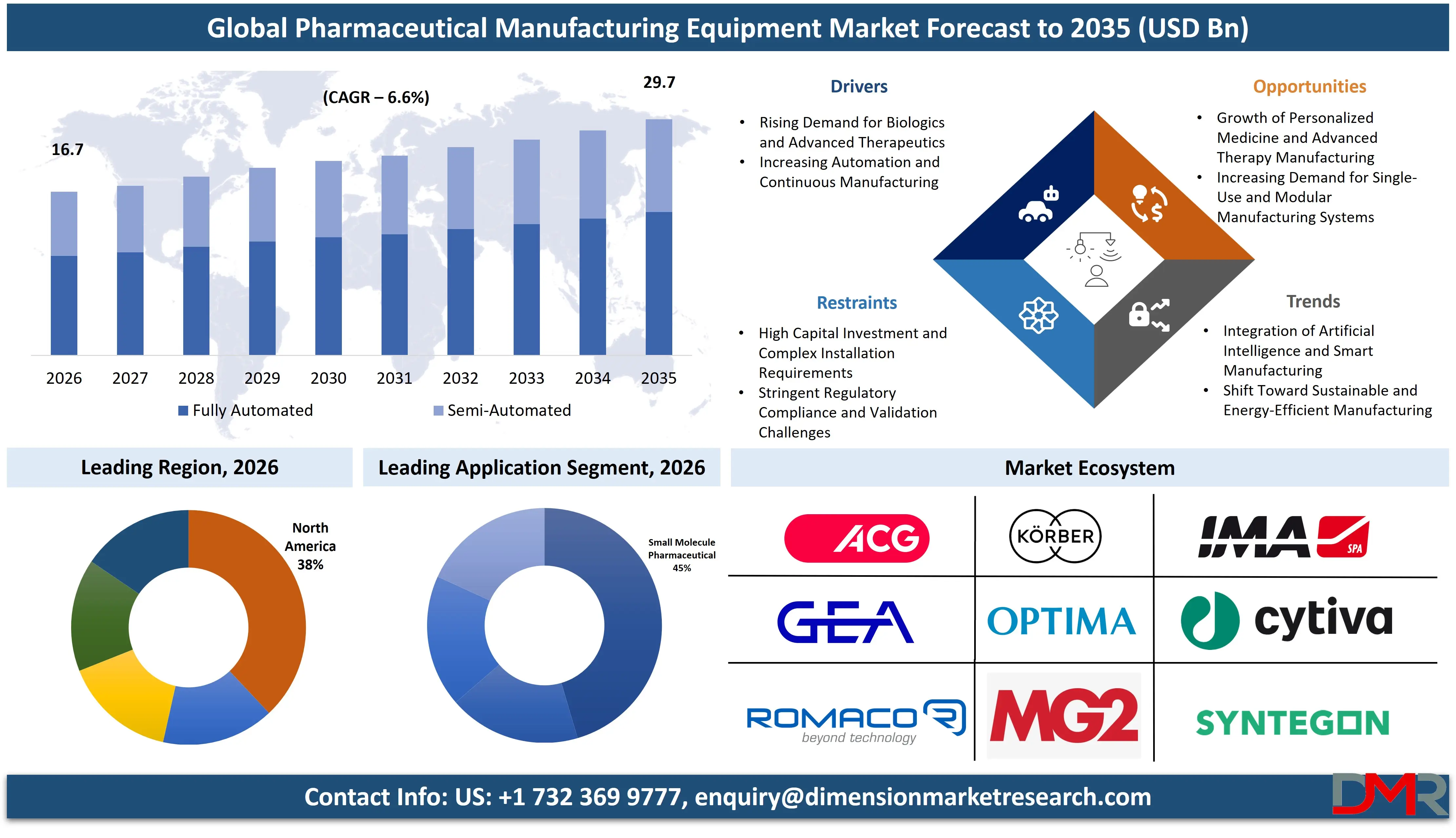
The Pharmaceutical Manufacturing Equipment Market size is expected to be USD 16.7 billion in 2026 and increase at a compound annual growth rate of 6.6% to USD 29.7 billion in 2035 due to rising demand for biologics and advanced therapeutics.
ℹ
To learn more about this report –
Download Your Free Sample Report Here
The Pharmaceutical Manufacturing Equipment Market comprises machinery and integrated systems used to manufacture, process, sterilize, fill, package, inspect, and validate pharmaceutical products across small-molecule drugs, biologics, vaccines, and advanced therapies. The market includes solid dosage, liquid processing, sterile manufacturing, bioprocessing, and packaging equipment supported by automation, digital monitoring, and quality control technologies. Rising pharmaceutical production, increasing biologics manufacturing, regulatory compliance requirements, and investments in continuous manufacturing are accelerating market expansion. Emerging trends such as single-use technologies, AI-enabled process optimization, modular production facilities, and Industry 4.0 integration are further transforming manufacturing efficiency and operational flexibility.
The US Pharmaceutical Manufacturing Equipment Market
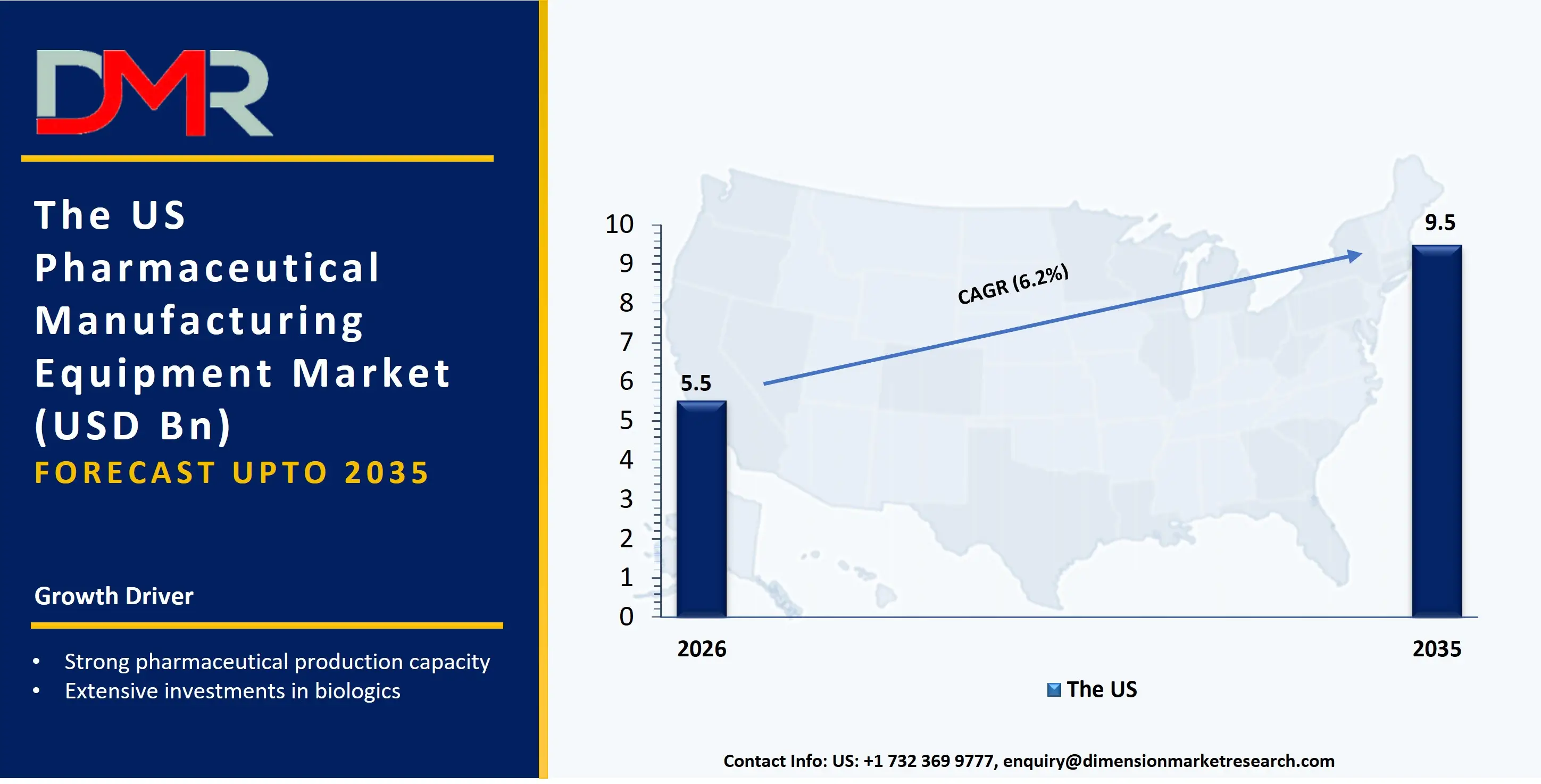
The US Pharmaceutical Manufacturing Equipment Market size is estimated to be USD 5.5 billion in 2026 and is expected to increase at a CAGR of 6.2% over the forecast period.
ℹ
To learn more about this report –
Download Your Free Sample Report Here
The United States remains a technologically advanced market owing to strong pharmaceutical production capacity, extensive investments in biologics and cell therapies, and rapid adoption of automation technologies. FDA regulatory requirements encourage manufacturers to modernize production facilities with validated and digitally integrated equipment. Continuous manufacturing initiatives, expanding CDMO capacity, reshoring of pharmaceutical manufacturing, and investments in sterile production infrastructure continue to strengthen equipment demand. High R&D spending and increasing domestic manufacturing projects further support sustained market growth.
Europe Pharmaceutical Manufacturing Equipment Market
The Europe Pharmaceutical Manufacturing Equipment Market size is estimated to be USD 4.2 billion in 2026 and is expected to increase at a CAGR of 6.4% over the forecast period.
Europe maintains a mature pharmaceutical manufacturing ecosystem supported by strict GMP regulations, sustainability initiatives, and advanced industrial infrastructure. The region benefits from significant investments in biologics manufacturing, aseptic processing, and continuous production technologies. Environmental sustainability objectives encourage energy-efficient equipment, while digital manufacturing, serialization, and quality-by-design practices continue expanding across pharmaceutical facilities. Strong collaboration between manufacturers, equipment suppliers, and research organizations further accelerates technological innovation and manufacturing modernization.
Japan Pharmaceutical Manufacturing Equipment Market
The market size of Japan Pharmaceutical Manufacturing Equipment will be USD 919 million in 2026 and at a CAGR of 6.7% in the forecast period.
Japan's pharmaceutical manufacturing equipment market is driven by advanced manufacturing capabilities, precision engineering, and increasing investments in biologics and regenerative medicine. Government support for pharmaceutical innovation and modernization encourages adoption of automated manufacturing systems, robotics, and digital quality management. Growing production of high-value therapeutics, an aging population requiring innovative medicines, and strong emphasis on manufacturing reliability stimulate equipment upgrades. Japanese manufacturers also prioritize compact, high-performance, and energy-efficient equipment to improve productivity while maintaining stringent regulatory standards.
Key Takeaways
- Market Size & Forecast: The Pharmaceutical Manufacturing Equipment Market size is projected to reach USD 16.7 billion in 2026 and is anticipated to have a value of USD 29.7 billion in 2035.
- Growth Rate & Outlook: The Pharmaceutical Manufacturing Equipment Market size is set to grow at a compound annual growth rate of 6.6% during the forecast period of 2026 to 2035.
- Primary Growth Drivers: Some of the major growth drivers in the market are Rising Demand for Biologics and Advanced Therapeutics, and more.
- Key Market Trends: Some of the major trends in the market are Shift Toward Sustainable and Energy-Efficient Manufacturing, and more.
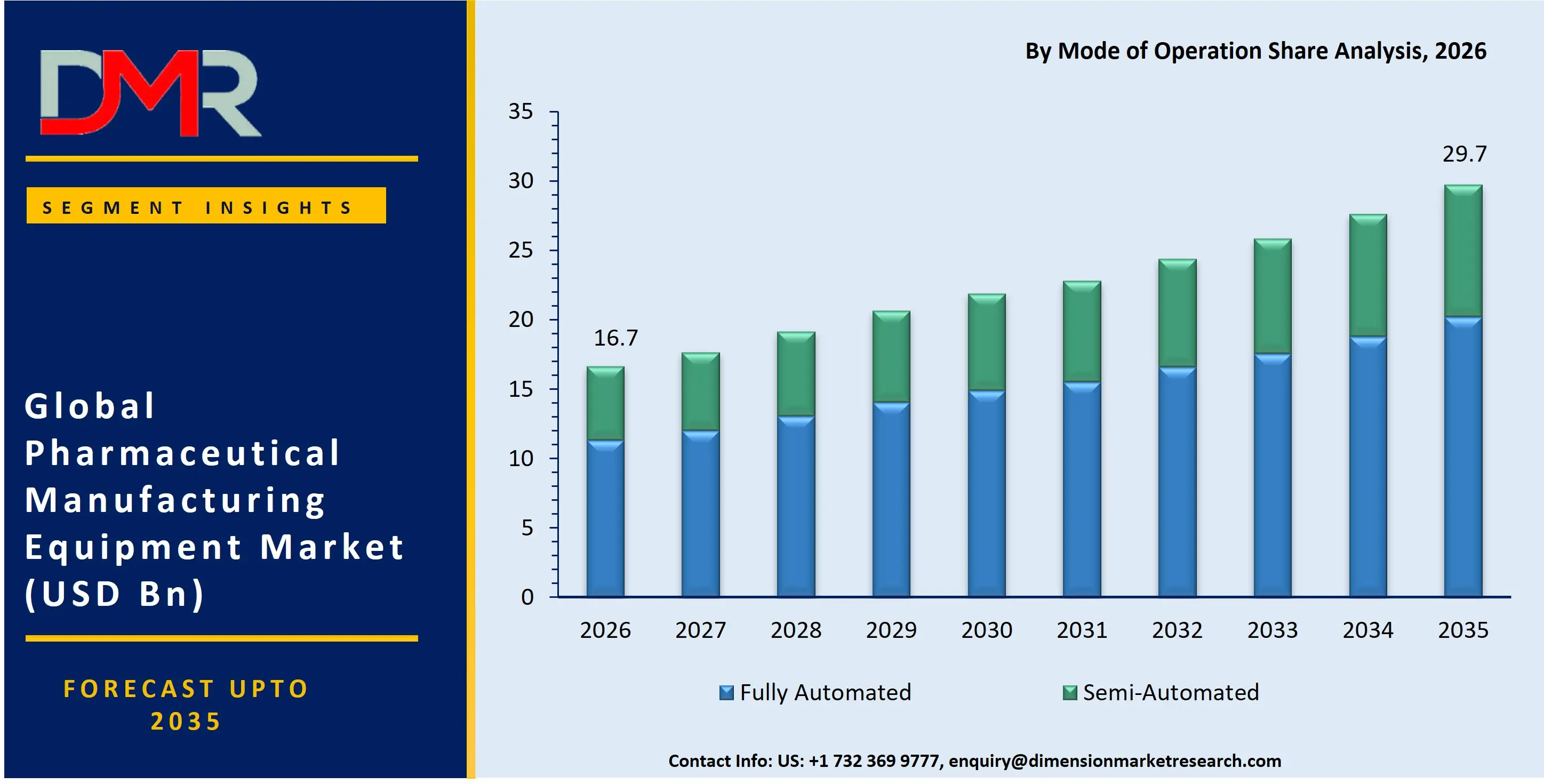
- By Mode of Operation Type: Full Automated is anticipated to get the majority share of the Pharmaceutical Manufacturing Equipment Market in 2026.
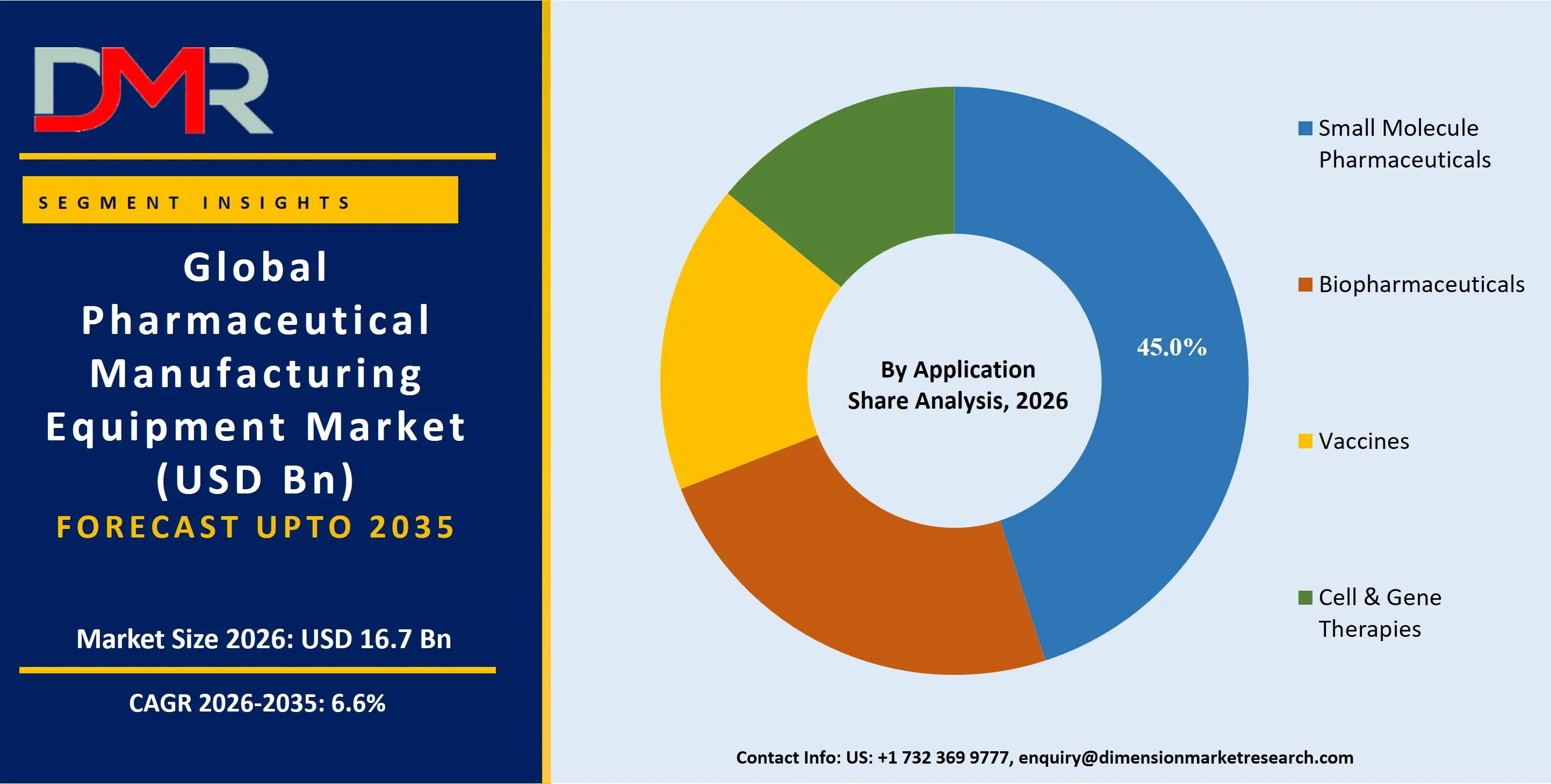
- By Application Type: Small Molecule Pharmaceutical are expected to get the largest revenue share in 2026 in the Pharmaceutical Manufacturing Equipment Market.
- Regional Leadership: North America is set to lead the Pharmaceutical Manufacturing Equipment Market with an estimated 38.0% share in 2026.
What is the Pharmaceutical Manufacturing Equipment?
Pharmaceutical manufacturing equipment consists of specialized machinery, automated systems, and processing technologies designed to manufacture, formulate, sterilize, fill, package, inspect, and validate pharmaceutical products under regulated conditions. These systems include granulators, mixers, tablet presses, aseptic filling machines, bioreactors, chromatography systems, filtration units, sterilizers, packaging equipment, and inspection systems that ensure product quality, regulatory compliance, production efficiency, sterility, scalability, and consistent manufacturing performance throughout pharmaceutical production.
Use Cases
- Solid Oral Drug Manufacturing: Granulators, mixers, tablet presses, capsule filling machines, and coating equipment enable efficient production of tablets and capsules. These systems ensure consistent dosage, product uniformity, regulatory compliance, and high-volume manufacturing while minimizing production losses and improving operational efficiency.
- Vaccine and Sterile Injectable Production: Aseptic filling machines, sterilizers, isolators, and cleanroom-compatible equipment facilitate contamination-free manufacturing of vaccines, biologics, and injectable medicines. These systems support sterile processing, regulatory compliance, and high product quality throughout pharmaceutical production.
- Biopharmaceutical Manufacturing: Bioreactors, fermenters, chromatography systems, and filtration technologies enable upstream and downstream processing of monoclonal antibodies, recombinant proteins, biosimilars, and advanced biologics. These systems improve yield, scalability, purification efficiency, and manufacturing consistency.
- Pharmaceutical Packaging and Inspection: Automated packaging, serialization, labeling, vision inspection, and quality control equipment ensure product traceability, regulatory compliance, counterfeit prevention, and secure pharmaceutical distribution while increasing packaging throughput and reducing manual intervention.
How AI Is Transforming the Pharmaceutical Manufacturing Equipment Market
Artificial intelligence is improving pharmaceutical manufacturing by enabling predictive maintenance, automated inspection, and real-time process optimization. AI algorithms analyze equipment performance data to identify potential failures before they occur, reducing downtime and maintenance costs. Machine vision systems powered by AI improve quality inspection by detecting defects in tablets, packaging, and sterile products with greater accuracy.
AI-driven manufacturing platforms enhance production planning, process control, and regulatory compliance by providing advanced data analytics and automated documentation. In biopharmaceutical manufacturing, AI supports process optimization, yield improvement, and faster development of complex therapies. The integration of AI with robotics, sensors, and digital twins is expected to accelerate the transition toward smart pharmaceutical factories with improved efficiency and reliability.
Market Dynamic
Driving Factors in the Pharmaceutical Manufacturing Equipment Market
Rising Demand for Biologics and Advanced Therapeutics
Growing production of biologics, biosimilars, vaccines, antibody therapies, and cell and gene therapies has significantly increased demand for advanced pharmaceutical manufacturing equipment. Manufacturers require highly specialized sterile processing, bioprocessing, filtration, and aseptic filling technologies capable of meeting stringent regulatory standards while maintaining high productivity. Capacity expansions by pharmaceutical companies and CDMOs continue driving investments in modern manufacturing facilities worldwide.
Restraints in the Pharmaceutical Manufacturing Equipment Market
High Capital Investment and Complex Installation Requirements
Pharmaceutical manufacturing equipment requires substantial capital investment due to advanced engineering, strict quality standards, validation procedures, and specialized installation requirements. Small and medium-sized pharmaceutical manufacturers may face difficulties adopting expensive automated systems, bioprocess equipment, and sterile manufacturing technologies. Additional costs associated with facility modification, regulatory validation, employee training, and maintenance further increase the financial burden. These challenges can delay equipment upgrades and limit adoption among smaller market participants, particularly in developing economies where pharmaceutical manufacturing infrastructure is still evolving.
Opportunities in the Pharmaceutical Manufacturing Equipment Market
Growth of Personalized Medicine and Advanced Therapy Manufacturing
The rapid development of personalized medicines, cell therapies, and gene therapies creates significant opportunities for specialized pharmaceutical manufacturing equipment providers. These therapies require flexible, small-batch, highly controlled manufacturing systems capable of handling complex production processes. Increasing investments in advanced therapy facilities are driving demand for single-use bioprocess equipment, automated cell processing systems, and advanced analytical technologies. As personalized healthcare expands, equipment manufacturers have opportunities to develop innovative solutions focused on scalability, efficiency, and precision manufacturing.
Trends in the Pharmaceutical Manufacturing Equipment Market
Shift Toward Sustainable and Energy-Efficient Manufacturing
Sustainability has become an important trend influencing pharmaceutical equipment development. Manufacturers are increasingly focusing on energy-efficient machinery, reduced waste generation, water conservation, and environmentally responsible production processes. Pharmaceutical companies are investing in equipment that supports sustainability goals while maintaining regulatory compliance and product quality. Green manufacturing initiatives, combined with rising operational costs, are encouraging adoption of advanced systems designed to minimize resource consumption and improve overall manufacturing efficiency.
Research Scope and Analysis
The research scope analyzes the Pharmaceutical Manufacturing Equipment Market across equipment type, application, mode of operation, and end-user segments. It evaluates market share distribution, growth drivers, adoption trends, technological advancements, and regional performance to identify leading and fastest-growing segments influencing future market expansion.
ℹ
To learn more about this report –
Download Your Free Sample Report Here
By Equipment Type Analysis
The equipment type segment represents one of the most important categories in the pharmaceutical manufacturing equipment market, covering solid dosage equipment, liquid processing equipment, sterile processing equipment, bioprocess equipment, and packaging and inspection systems. In 2026, solid dosage equipment is estimated to hold the leading market share of approximately 32%, supported by high-volume production of tablets and capsules globally. Tablet presses, granulators, mixers, and coating systems remain widely adopted due to their importance in generic drug manufacturing. However, bioprocess equipment is expected to be the fastest-growing segment, driven by increasing biologics, vaccines, monoclonal antibodies, and cell and gene therapy production. Growing investments in advanced therapies are accelerating demand for bioreactors, chromatography systems, and filtration technologies.
By Application Analysis
The application segment includes small molecule pharmaceuticals, biopharmaceuticals, vaccines, and cell and gene therapies. In 2026, small molecule pharmaceuticals are expected to account for the largest share of approximately 45% due to continued global demand for generic drugs, established manufacturing infrastructure, and large-scale tablet and capsule production. However, cell and gene therapies represent the fastest-growing application segment, supported by increasing clinical approvals, personalized medicine development, and investments in advanced manufacturing facilities. Biopharmaceutical applications are also expanding rapidly as pharmaceutical companies increase production of biologics and biosimilars requiring specialized sterile and bioprocessing equipment.
By Mode of Operation Analysis
The mode of operation segment includes semi-automated and fully automated pharmaceutical manufacturing equipment. In 2026, fully automated equipment is estimated to hold the leading market share of approximately 68%, driven by increasing demand for high-speed production, improved quality control, reduced human intervention, and compliance with strict pharmaceutical manufacturing standards.
ℹ
To learn more about this report –
Download Your Free Sample Report Here
Fully automated systems are increasingly adopted in sterile processing, packaging, inspection, and biopharmaceutical production facilities because they provide better process consistency and operational efficiency. Meanwhile, semi-automated equipment is expected to maintain steady growth, particularly among small and medium-sized pharmaceutical manufacturers seeking cost-effective modernization solutions without extensive infrastructure investment. However, the shift toward smart factories, robotics, and Industry 4.0 technologies is expected to accelerate the transition from semi-automated to fully automated production systems.
By End User Analysis
The end-user segment consists of pharmaceutical manufacturers, biopharmaceutical manufacturers, and contract development and manufacturing organizations (CDMOs). In 2026, pharmaceutical manufacturers are expected to account for the largest market share of approximately 52%, supported by extensive global production of conventional medicines, generic drugs, and established manufacturing networks. These companies continue investing in upgraded equipment to improve efficiency, comply with regulatory requirements, and expand production capacity. However, CDMOs are projected to be the fastest-growing end-user segment, driven by increasing outsourcing trends, demand for flexible manufacturing capacity, and rising investments in biologics and advanced therapies. CDMOs are adopting modular, automated, and scalable equipment to support multiple pharmaceutical clients and rapidly changing production requirements.
The Pharmaceutical Manufacturing Equipment Market Report is segmented on the basis of the following:
By Equipment Type
- Solid Dosage Equipment
- Granulators
- Mixers & Blenders
- Tablet Presses
- Capsule Filling Machines
- Coating Equipment
- Liquid Processing Equipment
- Sterile Processing Equipment
- Aseptic Filling Machines
- Sterilizers
- Isolators
- Bioprocess Equipment
- Bioreactors & Fermenters
- Chromatography Systems
- Filtration Systems
- Packaging & Inspection Equipment
By Application
- Small Molecule Pharmaceuticals
- Biopharmaceuticals
- Vaccines
- Cell & Gene Therapies
By Mode of Operation
- Semi-Automated
- Fully Automated
By End User
- Pharmaceutical Manufacturers
- Biopharmaceutical Manufacturers
- Contract Development and Manufacturing Organizations (CDMOs)
Regional Analysis
Leading Region in the Pharmaceutical Manufacturing Equipment Market
ℹ
To learn more about this report –
Download Your Free Sample Report Here
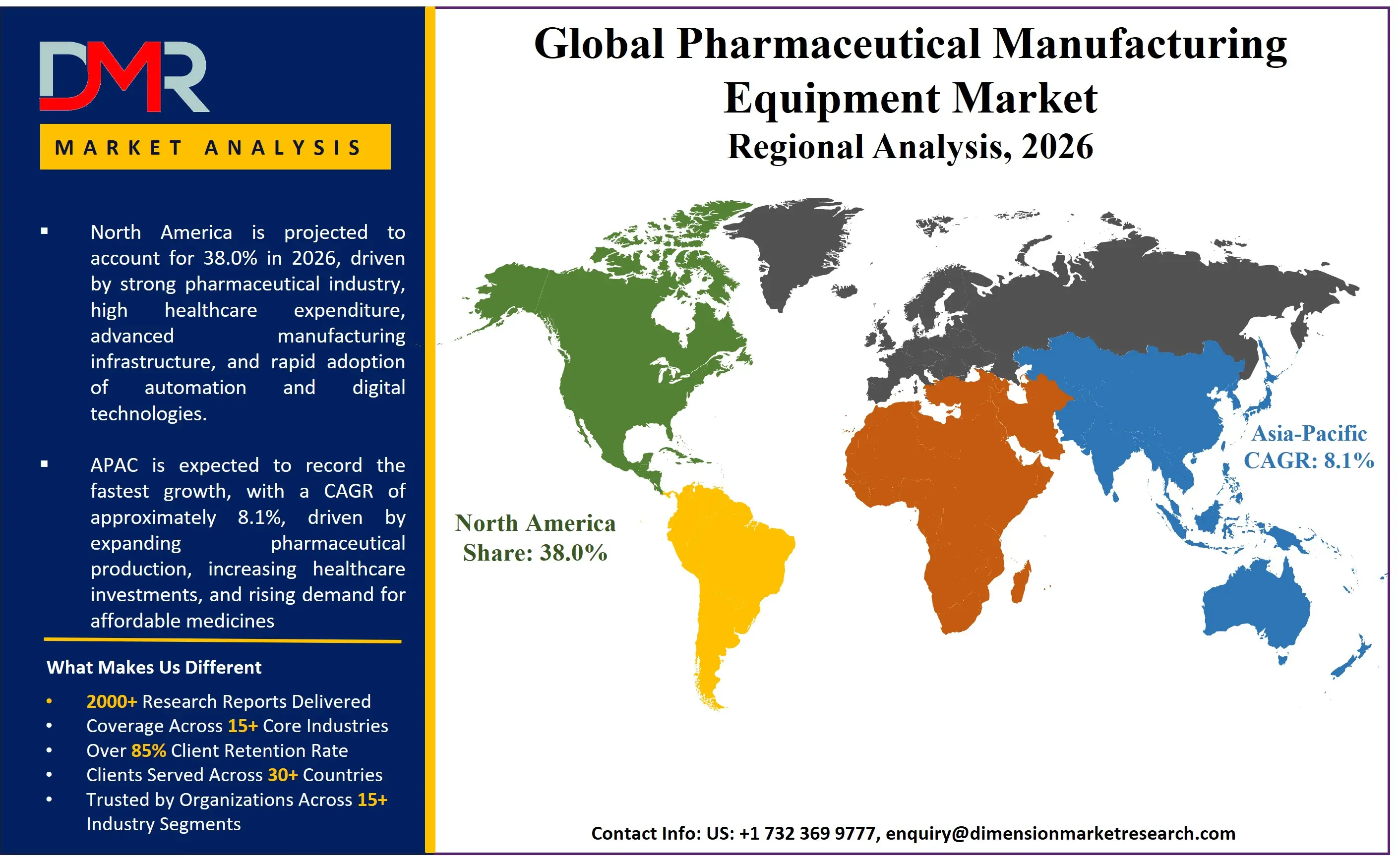
North America is expected to remain the leading region in the pharmaceutical manufacturing equipment market, accounting for an estimated 38% market share in 2026. The region's dominance is supported by a strong pharmaceutical industry, high healthcare expenditure, advanced manufacturing infrastructure, and rapid adoption of automation and digital technologies. The presence of major pharmaceutical companies, biotechnology firms, and CDMOs drives continuous investment in advanced production equipment. Government initiatives encouraging domestic pharmaceutical manufacturing, supply chain security, and increased production of critical medicines further strengthen regional demand. Additionally, strong regulatory frameworks and emphasis on quality standards encourage manufacturers to adopt advanced sterile processing, bioprocessing, and inspection equipment.
Fastest Growing Region in the Pharmaceutical Manufacturing Equipment Market
Asia-Pacific is projected to be the fastest-growing region in the pharmaceutical manufacturing equipment market due to expanding pharmaceutical production, increasing healthcare investments, and rising demand for affordable medicines. Countries such as China, India, Japan, South Korea, and Singapore are strengthening pharmaceutical manufacturing capabilities through infrastructure development and government-supported healthcare initiatives. Growth in generic drug production, vaccine manufacturing, biologics, and CDMO services is creating significant opportunities for equipment suppliers. The region is also benefiting from increasing foreign investments, manufacturing diversification strategies, and the development of advanced pharmaceutical production facilities. Rapid industrialization and improving regulatory standards are further supporting adoption of modern manufacturing equipment across emerging markets.
By Region
North America
Europe
- Germany
- The U.K.
- France
- Italy
- Russia
- Spain
- Benelux
- Nordic
- Rest of Europe
Asia-Pacific
- China
- Japan
- South Korea
- India
- ANZ
- ASEAN
- Rest of Asia-Pacific
Latin America
- Brazil
- Mexico
- Argentina
- Colombia
- Rest of Latin America
Middle East & Africa
- Saudi Arabia
- UAE
- South Africa
- Israel
- Egypt
- Rest of MEA
Competitive Landscape
The pharmaceutical manufacturing equipment market is characterized by strong competition driven by technological innovation, regulatory expertise, product reliability, and service capabilities. Companies operating in this market focus on developing advanced automated systems, improving equipment flexibility, and integrating digital technologies to strengthen their competitive position. Strategic partnerships with pharmaceutical manufacturers and CDMOs, investments in research and development, and expansion into emerging markets are common approaches used to increase market presence. High entry barriers exist due to strict regulatory requirements, extensive validation procedures, specialized engineering capabilities, and the need for long-term customer relationships. Manufacturers with strong after-sales support, customization capabilities, and integrated manufacturing solutions maintain significant competitive advantages.
Some of the prominent players in the global Pharmaceutical Manufacturing Equipment are:
- Syntegon Technology
- GEA Group AG
- IMA S.p.A.
- Korber AG
- Bausch+Ströbel
- OPTIMA packaging group GmbH
- Romaco Group
- Marchesini Group S.p.A.
- ACG Group
- Fette Compacting GmbH
- Glatt GmbH
- MG2 S.r.l.
- Bosch Packaging Technology
- Sartorius AG
- Cytiva
- Thermo Fisher Scientific Inc.
- Merck KGaA
- Eppendorf SE
- SPX FLOW, Inc.
- Alfa Laval AB
- Other Key Players
Recent Developments
- In June 2025, Siemens AG enhanced its pharmaceutical manufacturing automation portfolio by advancing digital solutions designed to improve production efficiency, process monitoring, and quality management. The company continued promoting digital transformation technologies, including industrial software, automation systems, and data-driven manufacturing platforms for pharmaceutical facilities. These solutions support manufacturers in achieving regulatory compliance, reducing production variability, and implementing smart factory strategies.
- In March 2025, Thermo Fisher Scientific Inc. announced continued expansion of its pharmaceutical manufacturing capabilities through investments supporting biologics, sterile manufacturing, and advanced therapy production. The company increased focus on integrated solutions combining manufacturing services with advanced laboratory and production technologies.
- In January 2025, Sartorius AG continued strengthening its position in the pharmaceutical manufacturing equipment sector by expanding capabilities in bioprocess technologies supporting biologics production. The company focused on advancing solutions for single-use systems, filtration technologies, and process optimization tools used by pharmaceutical manufacturers and CDMOs.
Report Details
| Report Characteristics |
| Market Size (2026) |
USD 16.7 Bn |
| Forecast Value (2035) |
USD 29.7 Bn |
| CAGR (2026–2035) |
6.6% |
| Historical Period |
2021 – 2025 |
| Forecast Period |
2027 – 2035 |
| Base Year |
2025 |
| Estimate Year |
2026 |
| Segments Covered |
By Equipment Type, By Application, By Mode of Operation, By End User |
| Regional Coverage |
North America – The US and Canada; Europe – Germany, The UK, France, Russia, Spain, Italy, Benelux, Nordic, & Rest of Europe; Asia-Pacific – China, Japan, South Korea, India, ANZ, ASEAN, Rest of APAC; Latin America – Brazil, Mexico, Argentina, Colombia, Rest of Latin America; Middle East & Africa – Saudi Arabia, UAE, South Africa, Turkey, Egypt, Israel, & Rest of MEA |
Frequently Asked Questions
How big is the Pharmaceutical Manufacturing Equipment Market?
▾ The Pharmaceutical Manufacturing Equipment Market size is expected to reach USD 16.7 billion by 2026 and is projected to reach USD 29.7 billion by the end of 2035.
What is the CAGR of the Pharmaceutical Manufacturing Equipment Market from 2026 to 2035?
▾ The market is growing at a CAGR of 6.6 percent over the forecasted period.
What factors are driving the growth of the Pharmaceutical Manufacturing Equipment Market?
▾ Rising Demand for Biologics and Advanced Therapeutics, and more are the factors driving the growth of the Pharmaceutical Manufacturing Equipment Market.
What are the major trends in the Pharmaceutical Manufacturing Equipment Market?
▾ Shift Toward Sustainable and Energy-Efficient Manufacturing, and more are some of the major trends in the market.
Who are the key players in the Pharmaceutical Manufacturing Equipment Market?
▾ Some of the key players in the Pharmaceutical Manufacturing Equipment Market include GEA, MG2, ACG, more
How is the Pharmaceutical Manufacturing Equipment Market segmented?
▾ The Pharmaceutical Manufacturing Equipment Market is segmented by equipment type, application, mode of operation, end user.
Which region held the largest share of the Pharmaceutical Manufacturing Equipment Market in 2026?
▾ North America is set to lead the Pharmaceutical Manufacturing Equipment Market with an estimated 38.0% share in 2026.
Which region is expected to grow the fastest in the Pharmaceutical Manufacturing Equipment Market?
▾ Asia Pacific is the fastest-growing region in the Pharmaceutical Manufacturing Equipment Market during the forecast period.