What is the Global Photodynamic Therapy Market Size?
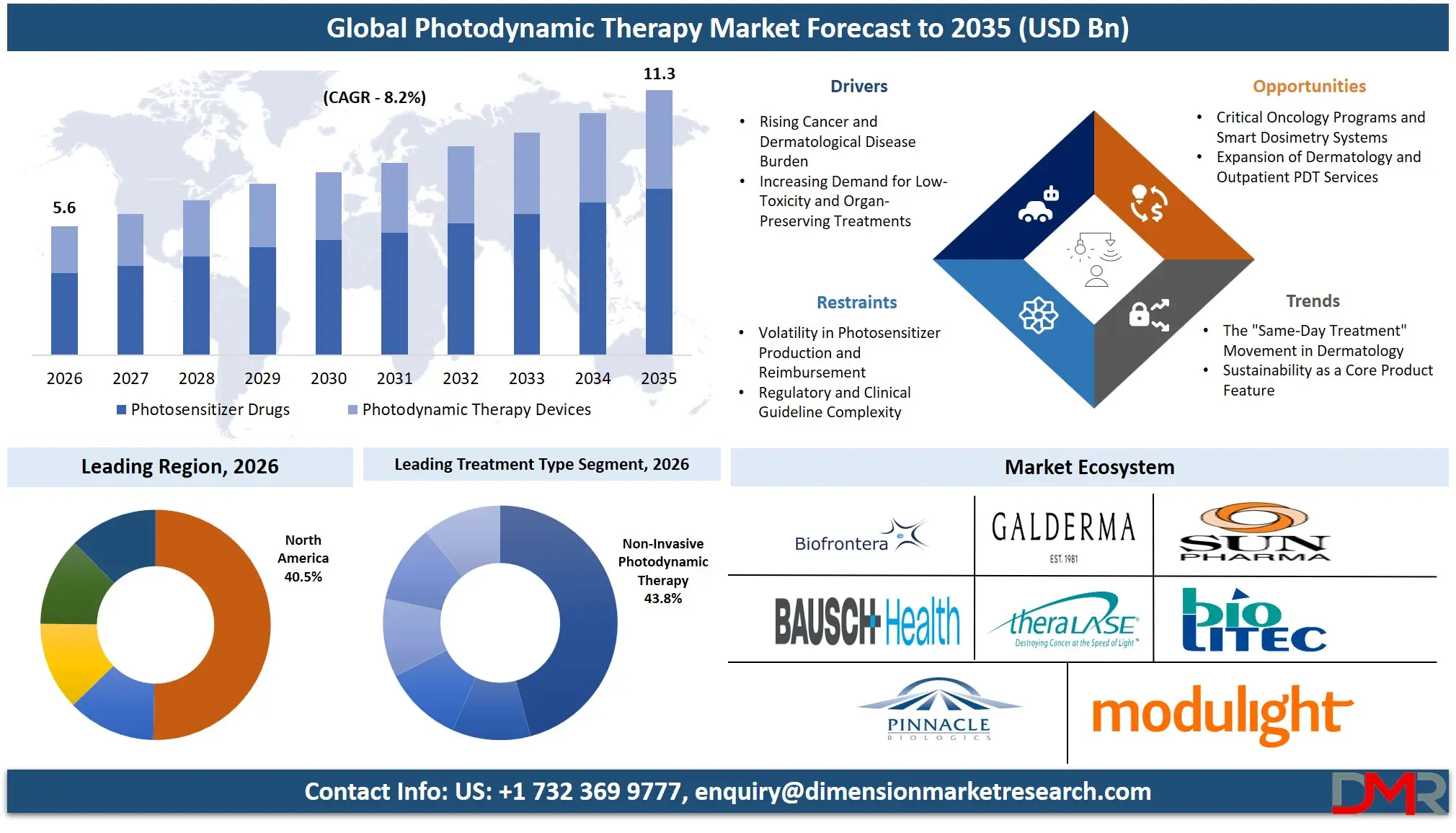
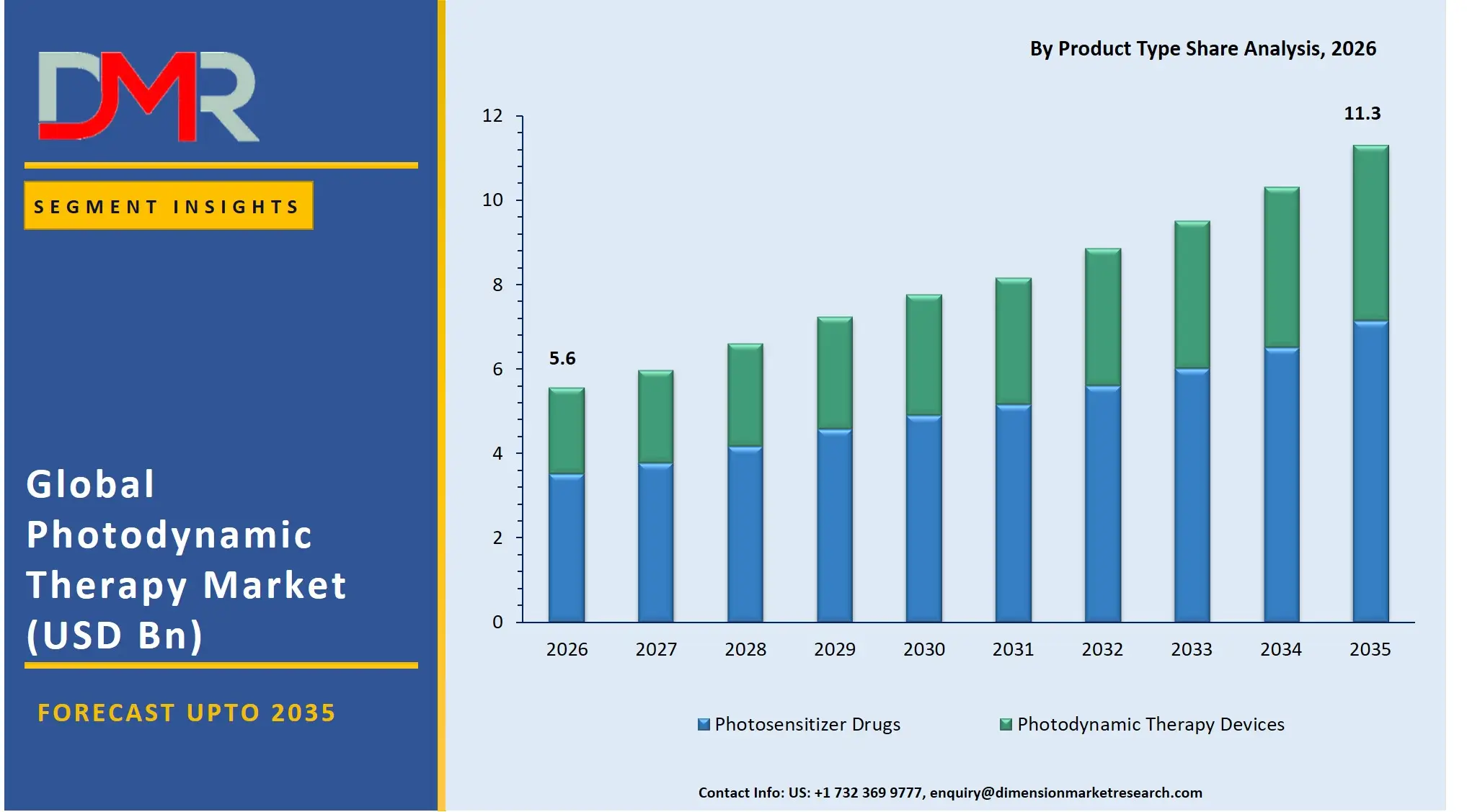
The Global Photodynamic Therapy Market size is estimated at USD 5.6 billion in 2026 and is projected to reach USD 11.3 billion by 2035, exhibiting a CAGR of 8.2% during the forecast period, driven by the rising use of advanced photosensitizers in targeted cancer treatment, automation of light delivery systems, and integrated non-invasive therapy management in precision oncology.
ℹ
To learn more about this report –
Download Your Free Sample Report Here
The global photodynamic therapy market is expanding because of increasing use of novel photosensitizers (such as chlorines and porphyrin derivatives) in detecting and treating solid tumors and actinic keratosis; increasing approvals which reduce the probability of treatment resistance during early-stage cancer intervention and speed up the reimbursement process for photodynamic therapy services; and greater funding in automating the application of light dosimetry and treatment planning.
Some other reasons for expansion in this market are technological innovations in real-time light dose monitoring, combination therapy (PDT with immunotherapy), automated bioinformatics for treatment response tracking, and high-throughput LED-based systems along with better data integration standards. The digital revolution in oncology and dermatology service providers has been helpful in speeding up treatment protocols and making cancer and skin disease management easier. This includes treatment response tracking research. In addition, national policies focusing on non-invasive oncology and early-stage skin cancer detection have ensured sustainable research in photodynamic therapy diagnostics.
ℹ
To learn more about this report –
Download Your Free Sample Report Here
The US Photodynamic Therapy Market
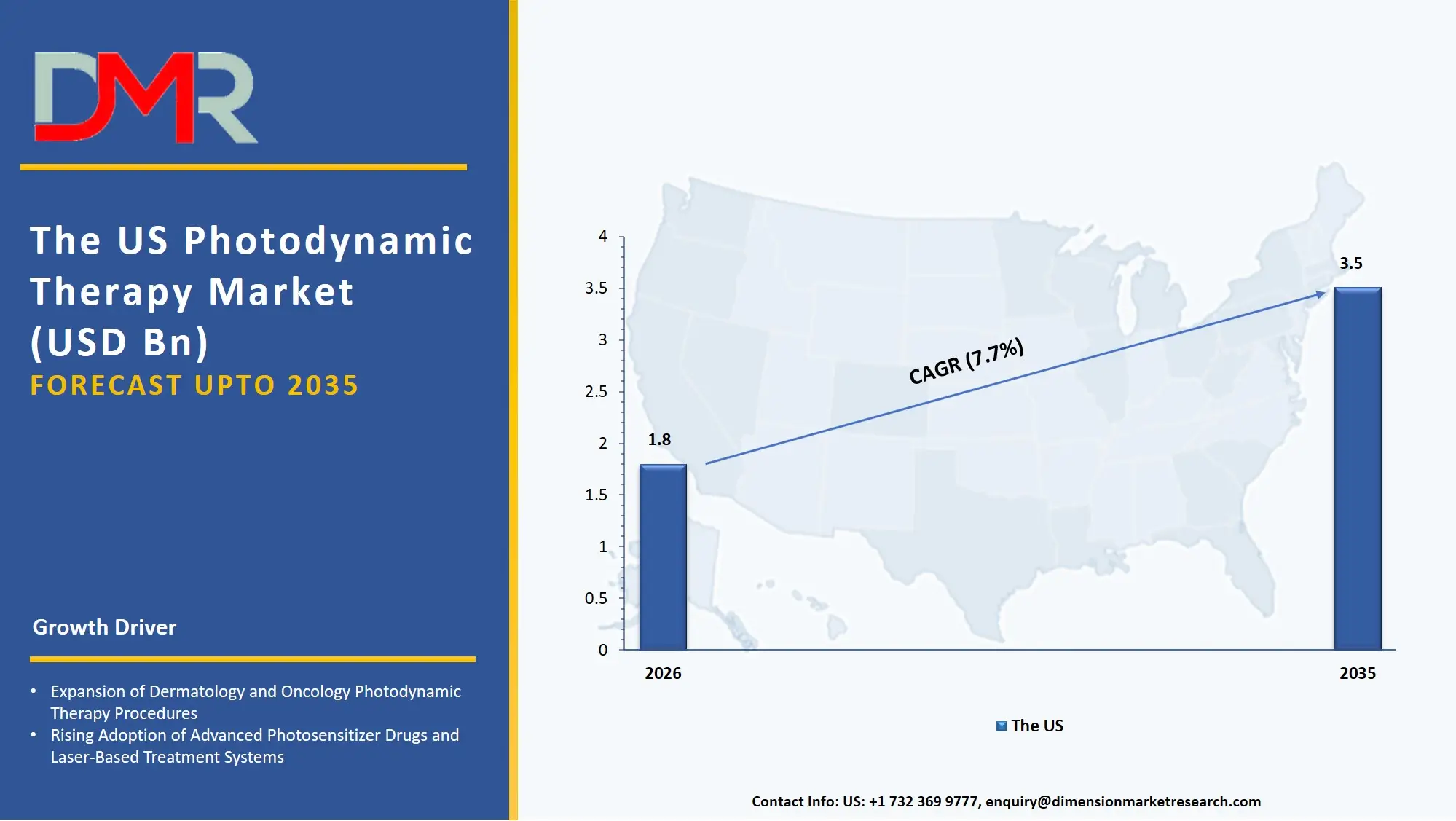
The US Photodynamic Therapy Market is estimated to grow to USD 1.8 billion in 2026 with a compound annual growth rate of 7.7% during the forecast period.
ℹ
To learn more about this report –
Download Your Free Sample Report Here
The US remains the largest and most mature photodynamic therapy market because of a robust healthcare infrastructure, substantial investment in cancer research, and an unrelenting emphasis on non-invasive treatment options in both public and private sectors. The high demand for chlorines and LED-based systems has been characteristic of the market, with oncologists and dermatologists placing more emphasis on treatment precision, reduced recovery time, and lower cumulative toxicity as opposed to traditional chemotherapy or surgery. In addition to this, the introduction of daylight PDT for actinic keratosis and automated light delivery systems in hospital settings is creating an analogous demand for specialized photodynamic therapy devices, able to integrate these complicated systems safely and efficiently.
Europe Photodynamic Therapy Market
The Europe Photodynamic Therapy Market is estimated to be valued at USD 1.6 billion in 2026, witnessing growth at a CAGR of 7.4%, during the forecast period.
The existence of stringent medical device regulations and high emphasis on advanced dermatological care make a huge difference in the European market and contribute to the necessity of high-quality photosensitizers and certified light delivery systems. The region also experiences accelerated growth in daylight PDT as clinics in Germany and France try to balance patient convenience with clinical efficacy in the treatment of actinic keratosis and superficial skin cancers. Moreover, there are attempts to protect and improve public health, demanding PDT manufacturers to develop specific photosensitizer formulations offering high standards of targeted phototoxicity for oncological and dermatological applications throughout the European healthcare ecosystem.
Japan Photodynamic Therapy Market
The Japan Photodynamic Therapy Market is projected to be valued at USD 363.5 million in 2026, progressing at a CAGR of 8.6%, during the period spanning from 2026 to 2035.
Japan's market presents itself as unique, due to the concerted effort put forth by corporations and government institutions to improve cancer treatment and care within the country. The majority of this budget includes porphyrins and diode lasers. Hospitals and specialized centers have already established treatment routines for cancers of the lungs, esophagus, and stomach. Another aspect that is in great demand is discrete and precise photosensitizers that will help to bridge the gap between traditional surgical treatments and new photodynamic therapy needs.
Key Takeaways
- Market Size & Forecast: The Global Photodynamic Therapy market is projected to reach USD 5.6 billion in 2026, expanding steadily to USD 11.3 billion by 2035.
- Growth Rate & Outlook: The market is expected to witness growth at a compound annual growth rate of 8.2% in the forecast period.
- Primary Growth Drivers: The major drivers are the mass exodus from surgical and chemotherapeutic approaches to low-toxicity photodynamic alternatives, the demand to use targeted photosensitizers to fight an increase in skin cancer and actinic keratosis, and the expansion of outpatient dermatology and oncology clinics, which demand effective and patient-friendly treatment protocols.
- Key Market Trends: Some of the major trends in the industry include the emergence of combination therapy paradigms (PDT with immunotherapy), the adoption of daylight PDT for non-invasive dermatological treatments, and the move toward nanotechnology-enhanced photosensitizers as researchers focus on improved bioavailability and targeted delivery.
- By Product Type: Photosensitizer drugs, particularly porphyrin derivatives, are projected to dominate the global photodynamic therapy market in 2026.
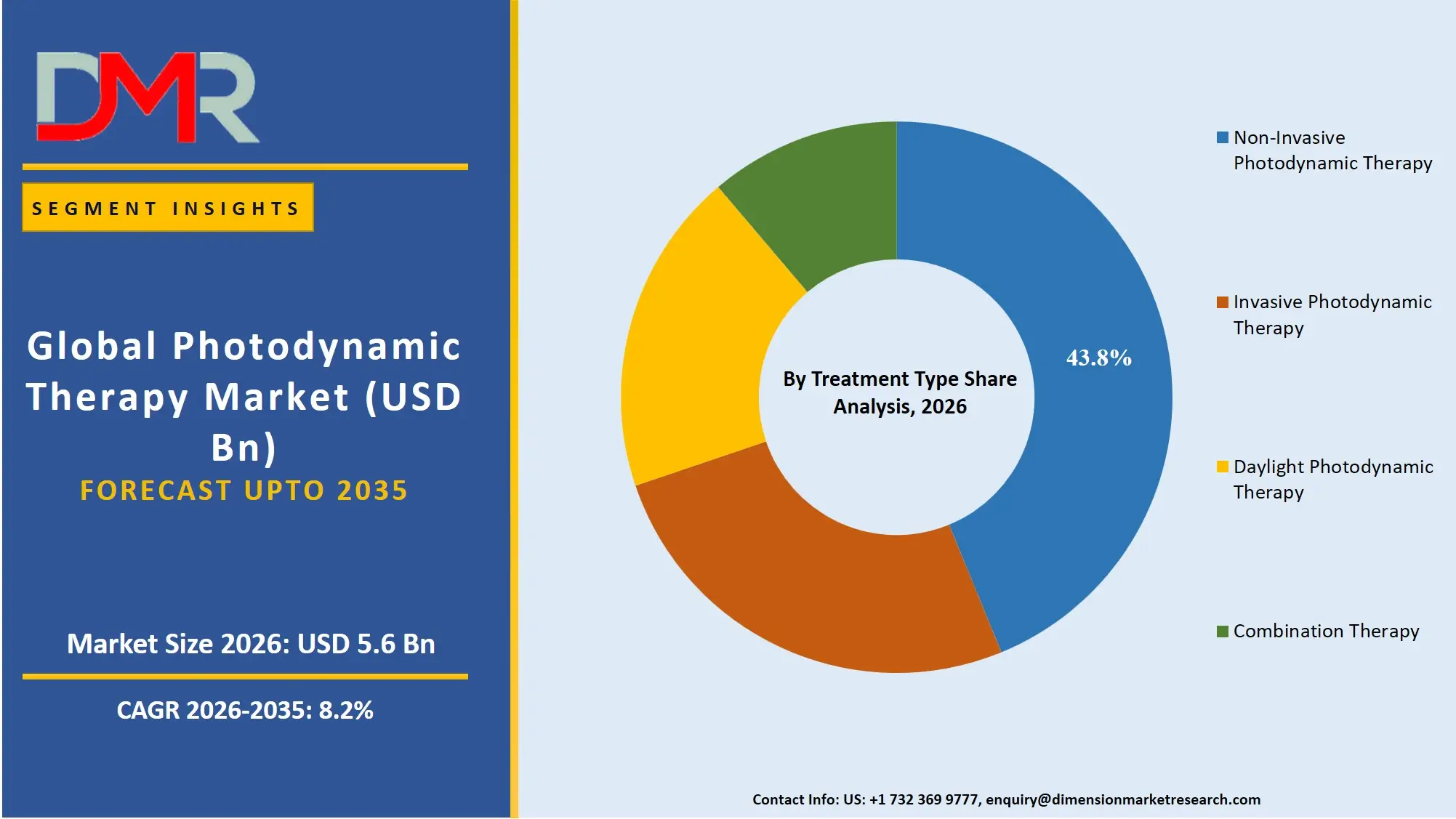
- By Treatment Type: Non-invasive photodynamic therapy is expected to take the largest revenue share in 2026 in the global market.
- By End User: Hospitals are estimated to take the lead in 2026 with the largest share in the photodynamic therapy market.
- Regional Leadership: North America is estimated to take the lead in 2026 with 38.2% share in the global market, since the region owns a large number of advanced cancer treatment centers, has a high prevalence of skin cancers, and a highly developed healthcare infrastructure that employs the best photodynamic protocols to the maximum.
What is Photodynamic Therapy?
Photodynamic therapy (PDT) is a medical technique that employs drugs known as photosensitizers and specific light rays to target and kill undesirable cancerous cells. The drugs and light rays employed in this type of therapy are products, not components or agents, that form the core of the definition of selective cell killing and treatment effectiveness. These include drugs like aminolevulinic acid, porphyrin, and chlorine, which target various types of cancer, as well as devices that utilize diode or LED light to activate the photosensitizers. In light of the challenges facing the oncologist and dermatologists in ensuring the effective use of this technique while at the same time keeping it safe for patients, the PDT options should enable effective delivery of tumor selectivity, depth, and normal tissue selectivity such that there is value obtained from investment in the process.
Use Cases
- Non-Invasive Treatment of Actinic Keratosis: Dermatology clinics use daylight PDT or LED-based systems using aminolevulinic acid to treat extensive actinic keratosis on the face and scalp, providing patients with a painless, office-based treatment with a very high cosmetic outcome and no surgical scarring.
- Palliative Care for Esophageal Cancer: Porphyrin derivatives and disposable fiber optic light delivery devices (DFOLDD) are used via endoscopy to manage dysphagia in patients with inoperable esophageal cancer, which can substantially improve their quality of life and nutritional intake.
- Combination Therapy for Basal Cell Carcinoma: In cancer therapy centers, invasive PDT (with chlorines and diode lasers) is used with immunotherapy to treat recurrent or multiple basal cell carcinomas, with a higher complete response rate than either one alone.
- Acne and Recalcitrant Inflammatory Conditions: LED-based systems and topical photosensitizers have been used by cosmetic clinics to treat severe, antibiotic-resistant acne and other inflammatory dermatoses, developing a vital non-antibiotic treatment pathway.
How AI Is Transforming the Global Photodynamic Therapy Market?
The use of artificial intelligence in photodynamic therapy has grown significantly to enhance treatment planning, light dosing, and outcomes for patients. Photodynamic therapy is used in different specialized fields in medicine and has different dosimetry, light administration, and patient adherence protocols within each field. In oncology departments within hospitals, companies have made use of invasive PDT with porphyrin derivatives and diode laser for treating lung, bladder, and esophageal cancers, and these have been incorporated with electronic medical records and treatment planning software along with endoscopic and interstitial light delivery methods. There has been an increasing adoption of non-invasive and daylight PDT for actinic keratosis and superficial skin cancer in dermatology clinics.
In the field of dermatology, the use of ALA and LED devices is popular among cosmetic facilities in treating patients who have acne, where large areas of the skin will be treated by targeting the sebaceous glands without affecting the adjacent tissues, and ensuring that the facility remains productive without being affected by patients' compliance. Meanwhile, studies conducted by institutions are investigating the use of innovative photosensitizers such as hypericin and HPPH, and fluence rate control devices as a method of improving the protocol of photodynamic therapy in hard-to-treat tumors and orphan diseases.
Market Dynamics
Key Drivers of the Global Photodynamic Therapy Market
Rising Cancer and Dermatological Disease Burden
Global populations are grappling with a surge in new cancer and skin disease diagnoses, outpacing the capacity of traditional surgical and chemotherapeutic services. The expertise to administer specialized photosensitizers and light delivery equipment, especially for complex solid tumors and extensive actinic keratosis, is being demanded at a higher rate than trained clinical specialists, resulting in structural deficiency in the healthcare workforce. This is creating a shift toward relying on certified photodynamic therapy centers, instead of general medical practitioners, in both public hospitals and private clinics. These specialists help in such key activities as patient selection, light dosimetry calculation, and post-treatment care that enable healthcare organizations to speed up the process of treatment optimization and reduce the risks of inadequate therapy.
Increasing Demand for Low-Toxicity and Organ-Preserving Treatments
The size of the patient population also demands preserved organ function and fewer systemic side effects, and they are moving away more and more to photodynamic options in place of high-toxicity chemotherapy or disfiguring surgery. Nevertheless, it is not easy to select the right photosensitizer and light source based on a particular tumor type, location, and depth. Healthcare organizations require the ability to match photosensitizer pharmacokinetics, light wavelength, and fluence rate among various vendor standards. Such complexity can result in treatment failure and adverse events without expert clinical guidance. Therefore, hospital pharmacies and distribution channels are increasingly in need of specialists capable of helping end-users in selecting the appropriate photosensitizer and device combination that can be used in their respective patient populations in accordance with their tumor characteristics and treatment goals.
Restraints in the Global Photodynamic Therapy Market
Volatility in Photosensitizer Production and Reimbursement
The majority of PDT manufacturers depend on complex chemical synthesis and purified light-sensitive compounds, the prices of which have been unpredictable in the past. These essential components are a major challenge to stable pricing, even though PDT is in high demand. The unpredictable costs of raw materials for porphyrin derivatives as a result of supply chain failures or regulatory changes can render certain photosensitizers prohibitively costly, and swings in laser diode prices have a direct effect on the profitability of PDT device manufacturing and clinical adoption. Healthcare organizations are afraid of committing to fixed-price procurement contracts with long lead times since they risk budget disruption in the event of a spike in drug or device cost. In turn, raw material and reimbursement uncertainty slows large-scale PDT program approvals and requires hospitals to implement cautious, staged deployment approaches, instead of transformation on a large scale.
Regulatory and Clinical Guideline Complexity
Complicated national regulatory pathways and varying clinical guidelines have led hospitals and clinics to be more unwilling to invest in PDT programs without going through a lengthy approval process. Although targeted phototherapy is a strategic focus, healthcare providers are under pressure to justify all the details of an investment and show adherence to local photoprotection, light source calibration, and adverse event reporting regulations. The treatment planning and protocol development stage of PDT adoption, thus, falls under greater scrutiny. This has seen hospitals and clinics move to less controversial treatment modalities, and complex or combination PDT protocols may be put on hold until providers can overcome regulatory challenges. This transformation is compelling PDT manufacturers to hire more consultative, clinical-expert specialists.
Growth Opportunities in the Global Photodynamic Therapy Market
Critical Oncology Programs and Smart Dosimetry Systems
The development of precise, real-time monitored photodynamic protocols in academic cancer centers is one of the major growth prospects in the PDT market. Many countries are currently demanding their own bespoke integrated solutions that suit their specific tumor profiles, genetic backgrounds, and compliance needs. These advanced treatment environments are developed using the advanced expertise of incorporating real-time light dosimetry, oxygen sensing, and treatment response monitoring. Photodynamic therapy device manufacturers and system integrators can help hospitals construct resilient, smart photodynamic protocols that can facilitate automated fluence rate adjustment and treatment verification. The market can generate the need for highly specialized treatment planning and technical support services.
Expansion of Dermatology and Outpatient PDT Services
The necessity to combine not only the clinical treatment competence but also the knowledge of dermatological practice management is a reason to develop further, as skin cancer and precancer diagnoses are increasing and clinics are getting more data-oriented. These include daylight PDT protocols, topical aminolevulinic acid applications, and LED array treatment schedules. Firms in the dermatology and cosmetic industry must comply with the rules of photoprotection and cosmetic outcome standards. They, therefore, need technology partners that understand PDT physics and clinical workflow systems. PDT service providers can add value by looking at the possibilities of combining LED-based systems with practice management software, following patient adherence patterns, and tailoring workflows for field cancerization treatment.
Global Photodynamic Therapy Market Trends
The "Same-Day Treatment" Movement in Dermatology
The notion that an office-based, same-day treatment is something that is being increasingly embraced by patients as an alternative to repeat surgical visits. Instead of excisions and sutures, patients are choosing photodynamic sessions that offer complete field treatment in under two hours. These procedures allow one to treat multiple lesions in a single, seamless session. As a response to this, clinics and device manufacturers have started offering experience in integrating daylight PDT or short-contact aminolevulinic acid with portable LED panels to make a complete same-day treatment protocol.
Sustainability as a Core Product Feature
Environmental awareness is also becoming a central product feature in PDT choices, as healthcare systems and clinicians are being pressured to achieve ESG targets and minimize medical waste. Photosensitizer formulations and light delivery devices that can assist in attaining sustainability objectives without compromising on efficacy are of interest to hospitals. This has also led to environmental product declarations and recyclable/disposable device verification requirements. Professional device manufacturers and distributors can help healthcare organizations choose reusable light sources with long lifecycles and to implement low-waste drug reconstitution methods that produce less hazardous pharmaceutical waste at the clinical site.
Research Scope and Analysis
The global photodynamic therapy market encompasses photosensitizer drugs and light-based devices for targeted treatment in oncology and dermatology. It is segmented by product type, treatment type, application, and end user, driven by rising demand for minimally invasive therapies, advancements in light delivery systems, and expanding adoption across hospitals, clinics, and research institutes.
ℹ
To learn more about this report –
Download Your Free Sample Report Here
By Product Type Analysis
The Photosensitizer Drugs segment is expected to dominate the market in 2026, accounting for approximately 61.3% of the global photodynamic therapy market share. This is due to the essential role of photosensitizing agents in determining treatment specificity, phototoxicity, and therapeutic outcomes, which are critical for both oncological and dermatological applications. The segment's dominance is further reinforced by continuous drug development efforts, the need for second-generation photosensitizers with deeper tissue penetration (e.g., chlorines), and the integration of topical formulations for outpatient use. The Porphyrin Derivatives sub-segment holds the largest share within photosensitizers, driven by decades of clinical validation in bladder, lung, and esophageal cancers. Chlorines are the fastest-growing sub-segment due to higher singlet oxygen yield and absorption at longer wavelengths. The Photodynamic Therapy Devices segment is growing rapidly, driven by recurring adoption of diode laser systems, LED-based panels, and disposable fiber optic light delivery devices (DFOLDD) for routine clinical procedures in hospitals and dermatology clinics.
By Treatment Type Analysis
The Non-Invasive Photodynamic Therapy segment is expected to account for 43.8% share in 2026, due to superior patient compliance, excellent cosmetic outcomes, and minimal recovery time compared to invasive alternatives. The segment is also driven by growing adoption of outpatient dermatological treatments for actinic keratosis (AK) and acne, and integrated light delivery systems to increase value for dermatologists in clinical and cosmetic applications. It is also the fastest-growing segment in the PDT market, due to the rapid uptake of daylight PDT protocols and portable LED-based systems in ambulatory care settings. Invasive PDT is the second-largest segment, primarily used for deep-seated or solid tumors such as esophageal and lung cancers, followed by Combination Therapy (PDT with immunotherapy or chemotherapy), which is gaining traction in advanced oncology. Daylight PDT is emerging as a distinct, pain-minimizing sub-segment, particularly in Europe.
By Application Analysis
The Cancer segment is expected to hold the largest share in 2026, accounting for approximately 53.6% of the market, owing to the high global burden of solid tumors, the need for organ-preserving treatments, and established clinical protocols for lung, bladder, esophageal, and skin cancers. Cancer PDT is widely adopted for palliative care, definitive treatment of early-stage tumors, and as an adjunct to surgery or radiation. The Actinic Keratosis (AK) segment is the second-largest, benefiting from high prevalence in aging populations, favorable reimbursement in developed regions, and the convenience of daylight PDT for field cancerization. The Acne segment is gaining traction, particularly among cosmetic and dermatology clinics, supported by non-antibiotic mechanisms of action and the ability to treat large skin areas with LED-based systems. Psoriasis and Others (including ophthalmic and gynecological applications) are emerging segments.
By End User Analysis
The Hospitals segment is the largest end-user category in 2026, accounting for 44.1% share, driven by access to multidisciplinary oncology teams, endoscopic and interstitial light delivery capabilities, and the ability to manage complex invasive PDT procedures. Hospitals also benefit from centralized purchasing power, established regulatory compliance frameworks, and integration with electronic medical records for treatment planning. Cancer Treatment Centers are the second-largest segment, specializing in high-volume PDT for solid tumors and offering dedicated photodynamic therapy suites with advanced dosimetry systems. Cosmetic & Dermatology Clinics are the fastest-growing segment, driven by increasing demand for non-invasive and daylight PDT for actinic keratosis, acne, and photoaging. Research & Academic Institutions form a smaller but significant segment, focusing on novel photosensitizer development (e.g., hypericin, HPPH) and combination therapy optimization.
The Global Photodynamic Therapy Market Report is segmented based on the following:
By Product Type
- Photosensitizer Drugs
- Aminolevulinic Acid
- Porphyrin Derivatives
- Chlorines
- Others
- Photodynamic Therapy Devices
- Disposable Fiber Optic Light Delivery Devices (DFOLDD)
- Diode Laser Systems
- LED-based Systems
- Lamps and Other Light Sources
By Treatment Type
- Invasive Photodynamic Therapy
- Non-Invasive Photodynamic Therapy
- Daylight Photodynamic Therapy
- Combination Therapy
By Application
- Cancer
- Actinic Keratosis (AK)
- Acne
- Psoriasis
- Others
By End User
- Hospitals
- Cancer Treatment Centers
- Cosmetic & Dermatology Clinics
- Research & Academic Institutions
- Others
Regional Analysis
Leading Region by Market Share
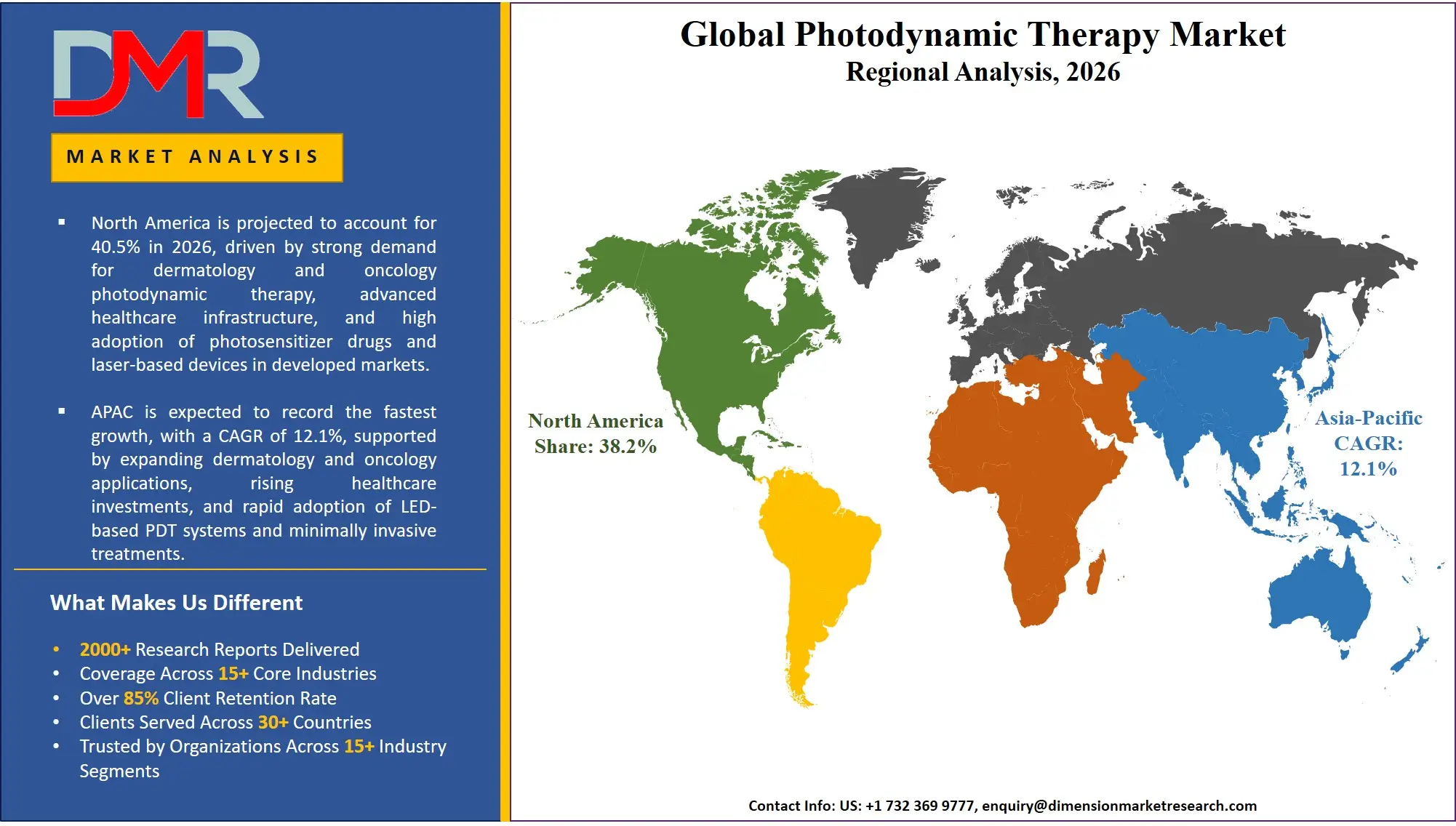
North America is poised to dominate the global photodynamic therapy market as it is projected to hold 38.2% of the market share by the end of 2026. The US, the North American powerhouse, holds the largest PDT stake due to unmatched concentration of comprehensive cancer centers and aggressive adoption of non-invasive dermatological treatments in private practice clinics. The region boasts a well-established ecosystem of national specialty distributors, boutique photodynamic centers, and an abundant source of trained clinical specialists. The high patient preference for organ-preserving therapies, low-toxicity treatment regimens, and the general substitution of older surgical or chemotherapeutic protocols helps to sustain the demand for porphyrin derivatives, chlorines, and diode laser systems, as well as professional clinical administration. In addition, there is a robust dermatology climate that continues to fund new daylight PDT protocols requiring professional application to ensure cost-effective field treatment of actinic keratosis.
ℹ
To learn more about this report –
Download Your Free Sample Report Here
Fastest-Growing Regional Market
Asia-Pacific will be the fastest-growing photodynamic therapy market, as the region sees government-led sweeping healthcare infrastructure and smart hospital projects in India, China, and Southeast Asia. Economic development driven by rapid pace, emergence of middle-income access to healthcare, and the dynamic growth of the private hospital sector are forcing governments and national healthcare agencies that are aging to ensure the treatment of high-burden cancers. High-precision photosensitizers and diode laser systems are in demand to assist these large healthcare organizations in treating lung, gastric, and esophageal cancers, as well as skin diseases. The region is also in dire need of defining and treating widespread actinic keratosis in aging populations, and chlorines and LED-based systems need to be deployed in a cost-effective and long-lasting manner to overcome the challenge of traditional excision and current clinical productivity.
By Region
North America
Europe
- Germany
- The U.K.
- France
- Italy
- Russia
- Spain
- Benelux
- Nordic
- Rest of Europe
Asia-Pacific
- China
- Japan
- South Korea
- India
- ANZ
- ASEAN
- Rest of Asia-Pacific
Latin America
- Brazil
- Mexico
- Argentina
- Colombia
- Rest of Latin America
Middle East & Africa
- Saudi Arabia
- UAE
- South Africa
- Israel
- Egypt
- Rest of MEA
Competitive Landscape
The competitive landscape of the global photodynamic therapy market has become very dynamic with a diverse set of large-established worldwide and regional pharmaceutical manufacturers and niche device and dosimetry innovators. In-depth strategic alliances with large hospital purchasing groups and dermatology clinic chains will be the key to success; they will provide the required volume sales opportunities and access to clinical adoption trends early.
The trend of market consolidation is advancing at a very high rate, with traditional oncology drug manufacturers acquiring novel photosensitizer biotech startups and light device specialists in order to survive. Proprietary intellectual property, such as patented nanoparticle photosensitizer formulations, developed light-diffusing fiber technology, and automated dosimetry software algorithms, is increasingly an important source of competitive differentiation rather than commodity drug pricing or generic device catalogs.
Some of the prominent players in the Global Photodynamic Therapy Market are:
- Biofrontera AG
- Galderma S.A.
- Sun Pharmaceutical Industries Limited
- Bausch Health Companies Inc.
- Theralase Technologies Inc.
- Biolitec Holding GmbH & Co. KG
- Modulight Corporation
- Lumibird SA
- Lumenis Be Ltd.
- Soligenix, Inc.
- Photocure ASA
- Pinnacle Biologics, Inc.
- Quest PharmaTech Inc.
- IRIDEX Corporation
- DUSA Pharmaceuticals, Inc.
- LEO Pharma A/S
- Allergan plc (AbbVie Inc.)
- Shanghai Fudan-Zhangjiang Bio-Pharmaceutical Co., Ltd.
- Candela Corporation
- Hamamatsu Photonics K.K.
- Other Key Players
Recent Developments
- December 2025: Biofrontera AG completed the transfer of FDA approvals and associated intellectual property for Ameluz® and the RhodoLED® light system, consolidating full ownership of its PDT platform and strengthening its long-term commercial control in the U.S.
- May 2025: Lumibird SA (Quantel Medical) expanded its medical laser systems portfolio supporting photodynamic and ophthalmic therapies through upgraded precision laser platforms, reinforcing its position in advanced light-based medical treatment technologies used in PDT applications.
- May 2025: Sun Pharmaceutical Industries Limited announced U.S. FDA approval of its next-generation BLU-U LED-based Photodynamic Therapy (PDT) Illuminator used in combination with LEVULAN® KERASTICK (aminolevulinic acid), enhancing treatment efficiency and patient comfort for actinic keratosis therapy and strengthening its dermatology PDT portfolio.
Report Details
| Report Characteristics |
| Market Size (2026) |
USD 5.6 Bn |
| Forecast Value (2035) |
USD 11.3 Bn |
| CAGR (2026–2035) |
8.2% |
| The US Market Size (2026) |
USD 1.8 Bn |
| Historical Period |
2021 – 2025 |
| Forecast Period |
2027 – 2035 |
| Base Year |
2025 |
| Estimated Year |
2026 |
| Segments Covered |
By Product Type, By Treatment Type, By Application, By End User |
| Regional Coverage |
North America – The US and Canada; Europe – Germany, The UK, France, Russia, Spain, Italy, Benelux, Nordic, & Rest of Europe; Asia-Pacific – China, Japan, South Korea, India, ANZ, ASEAN, Rest of APAC; Latin America – Brazil, Mexico, Argentina, Colombia, Rest of Latin America; Middle East & Africa – Saudi Arabia, UAE, South Africa, Turkey, Egypt, Israel, & Rest of MEA |
Frequently Asked Questions
How big is the Global Photodynamic Therapy Market?
▾ The Global Photodynamic Therapy Market size is estimated to have a value of USD 5.6 billion in 2026 and is expected to reach USD 11.3 billion by the end of 2035.
Which region is expected to grow the fastest in the Global Photodynamic Therapy Market?
▾ Asia Pacific is the fastest-growing region in the market during the forecast period.
Who are the key players in the Global Photodynamic Therapy Market?
▾ Some of the major key players in the global photodynamic therapy market are Sun Pharmaceutical Industries Ltd., Photocure ASA, Biofrontera AG, Galderma S.A., Modulight, Inc., Lumibird Medical, and many others.
What is the CAGR of the Global Photodynamic Therapy Market from 2026 to 2035?
▾ The market is growing at a CAGR of 8.2% over the forecasted period.
What factors are driving the growth of the Global Photodynamic Therapy Market?
▾ The market is driven by advances in photosensitizer development and real-time light dosimetry, regulatory pressure to reduce invasive surgeries and chemotherapy toxicity, and increased government investment in non-invasive oncology and dermatology infrastructure.
What are the major trends in the Global Photodynamic Therapy Market?
▾ The key market trends include the adoption of daylight PDT protocols and combination therapy (PDT with immunotherapy), along with a growing shift toward smart dosimetry systems, nanotechnology-enhanced photosensitizers, and AI-integrated treatment planning software.
Which region held the largest share of the Global Photodynamic Therapy Market in 2026?
▾ North America is expected to account for the largest market share in 2026, with a share of about 38.2%.
How is the Global Photodynamic Therapy Market segmented?
▾ The market is segmented by product type, treatment type, application, and end user.