Portugal Medical Devices Market Snapshot
- Portugal Medical Devices Market Size in 2026: USD 1.5 Billion
- Portugal Medical Devices Market Size in 2035: USD 2.3 Billion
- Portugal CAGR from 2026 to 2035: 5.3%
- Diagnostic Devices is the leading product type segment in 2026: 35.4%
- Class II Medical Devices is the leading device class segment in 2026: 44.2%
- Conventional Medical Devices is the leading technology segment in 2026: 46.1%
- Cardiology is the leading application segment in 2026: 21.3%
- Hospitals is the leading end-user segment in 2026: 50.4%
What is the Portugal Medical Devices and its Market Size?
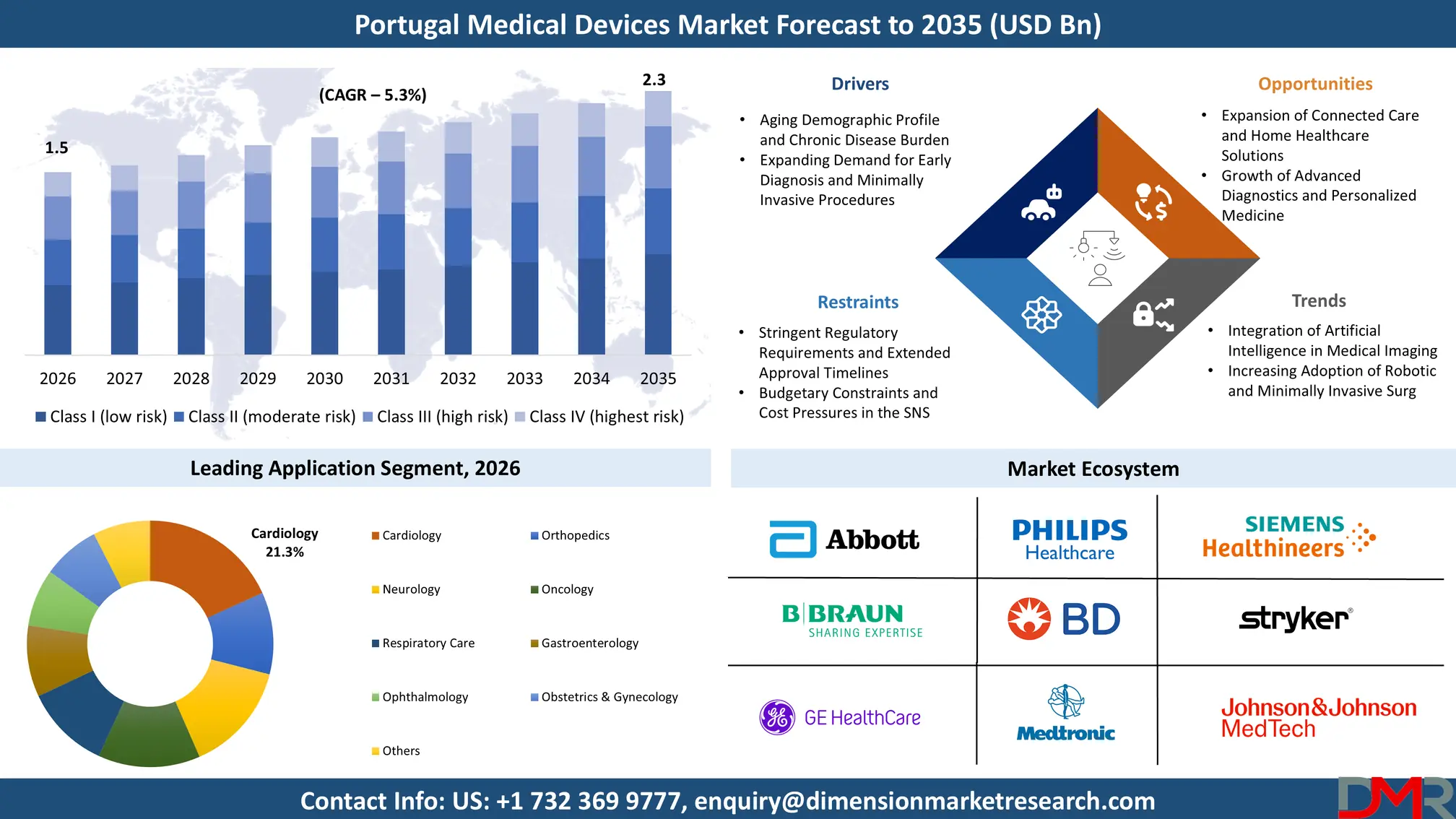
The Portugal Medical Devices Market was valued at USD 1.5 billion in 2026 and is projected to reach USD 2.3 billion by 2035, expanding at a CAGR of 5.3% during the forecast period. Market expansion is underpinned by the country's accelerating demographic aging, the rising prevalence of chronic non-communicable diseases within the Serviço Nacional de Saúde (SNS), and strategic investments in hospital infrastructure modernization.
ℹ
To learn more about this report –
Download Your Free Sample Report Here
The market is fundamentally reshaped by the full enforcement of the EU Medical Device Regulation (MDR) 2017/745, which is driving a quality-over-quantity paradigm shift, compelling both local distributors and multinationals to prioritize clinical evidence and post-market surveillance. Growth is further propelled by the digitization of clinical workflows, the adoption of telehealth platforms to serve Portugal's archipelagic and rural interior regions, and an increasing reliance on AI-enhanced imaging modalities and remote patient monitoring ecosystems within both public hospitals and the expanding private health sector.
Use Cases
- Diabetic Retinopathy Screening in Primary Care Units: Portuguese family health units deploy portable, non-mydriatic fundus cameras integrated with AI-enabled diagnostic software for population-wide screening of diabetic retinopathy.
- Remote Cardiac Resynchronization Therapy (CRT) Monitoring in the Algarve: Connected patient monitoring devices continuously transmit thoracic impedance, arrhythmia logs, and activity data, enabling proactive clinical intervention and reducing heart failure hospitalization rates without requiring elderly patients to travel long distances to specialist centers.
- Minimally Invasive Robotic-Assisted Colorectal Surgery: Major central hospitals in Lisbon and Porto, including the Champalimaud Foundation and Hospital de São João, are expanding general surgery programs using robotic-assisted surgical systems for colorectal resections.
- Point-of-Care Molecular Diagnostics for Tuberculosis Control: Pulmonology centers and chest disease hospitals utilize cartridge-based molecular diagnostic platforms for rapid detection of Mycobacterium tuberculosis and rifampicin resistance.
Key Takeaways
- Market Size: The Portugal Medical Devices Market was valued at USD 1.5 billion in 2026 and is forecast to reach USD 2.3 billion by 2035, expanding at a CAGR of 5.3%.
- Growth Outlook: Market expansion is sustained by Portugal's status as one of Europe's most aged nations, the escalating burden of chronic cardiometabolic and oncological diseases, and a systemic push toward digital health and outpatient care models, which drive procurement of advanced diagnostic, therapeutic, and monitoring technologies.
- Primary Growth Drivers: The strict implementation of the EU MDR, technological convergence of AI/ML with medical imaging to combat radiologist shortages, a surge in demand for home-based care to cover the mainland interior and islands, and the expansion of public-private partnerships for advanced surgery are key forces accelerating investment and innovation.
- By Product Type Analysis: Diagnostic Devices is projected to lead with a 35.4% share in 2026, driven by high-volume utilization of CT, MRI, and ultrasound in oncological and cardiovascular screening, while Patient Monitoring Devices is expected to exhibit the highest CAGR of 9.5% due to the proliferation of remote cardiac and neurological monitoring solutions for an aging demographic.
- By Device Class Analysis: Class II Medical Devices is expected to dominate with a 44.2% share in 2026, reflecting the massive market for imaging systems, non-invasive monitoring tools, and powered surgical instruments; Class III Medical Devices is anticipated to grow the fastest at a 9.7% CAGR, fueled by next-generation active implantable devices and AI-diagnostic software classified as high-risk under MDR.
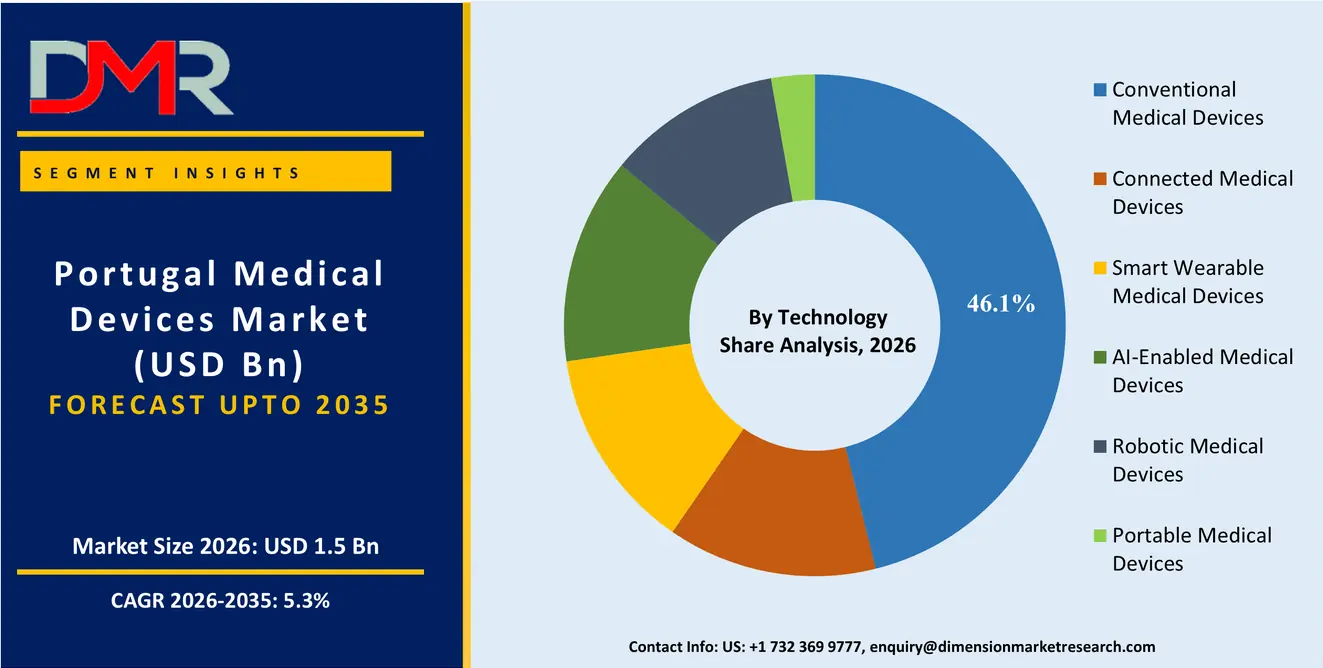
- By Technology Analysis: Conventional Medical Devices is poised to hold a 46.1% share in 2026, forming the capital-intensive backbone of hospital infrastructure, whereas AI-Enabled Medical Devices is projected to achieve the highest CAGR of 12.4%, transforming diagnostic radiology, pathology, and surgical planning workflows within the SNS and major private hospital groups.
- By Application Analysis: Cardiology is forecast to command a 21.3% share in 2026, underpinned by the pervasive prevalence of heart failure, arrhythmias, and coronary artery disease, while Oncology is expected to register the highest CAGR of 10.1%, driven by AI-integrated imaging and molecular diagnostics for precision cancer care in national reference centers.
- By End-User Analysis: Hospitals is projected to be the leading segment with a 50.4% share in 2026, as the central hub for high-acuity interventional procedures and complex imaging; Home Healthcare Settings is the fastest-growing segment at a 10.9% CAGR, accelerated by telemonitoring, smart wearables, and the shift of post-operative care and chronic disease management to the domestic environment, supported by the SNS 24 digital health strategy.
How AI/Gen AI is Transforming the Medical Devices Market?
Artificial intelligence is fundamentally redefining the Portuguese medical device landscape by moving from assistive tools to autonomous diagnostic and predictive systems, a shift closely scrutinized under the EU MDR's new classification rules. Generative AI is accelerating this transformation by creating synthetic medical scans to train algorithms on rare pathologies prevalent in Portugal, anonymizing patient data for multi-center clinical research, and generating structured radiology and pathology reports from unstructured clinical findings, significantly reducing clinician burnout in overburdened SNS departments. AI-enabled software as a medical device (SaMD) is rapidly gaining CE-mark certification for triage and notification, particularly in stroke imaging where algorithms automatically detect large vessel occlusions on CT angiography and alert interventional neuroradiology teams, shortening time-to-treatment and improving outcomes in the national "Via Verde do AVC" stroke pathway.
Key Drivers in the Portugal Medical Devices Market
Aging Demographic Profile and Chronic Disease Burden
Portugal's rapidly growing elderly population, one of the highest proportions in the EU, and the rising prevalence of cardiovascular disorders, diabetes, cancer, respiratory diseases, and osteoarticular conditions are major drivers of medical device demand. Older adults require frequent diagnostic assessment, surgical intervention, continuous patient monitoring, mobility support, and integrated long-term disease management. This increases the adoption of imaging equipment, cardiac devices, orthopedic implants, diabetes care devices, respiratory systems, and home monitoring solutions. Healthcare providers are also emphasizing early diagnosis and preventive care to improve clinical outcomes and manage treatment costs under the national health budget.
Expanding Demand for Early Diagnosis and Minimally Invasive Procedures
The increasing focus on early disease detection and minimally invasive treatment is accelerating medical device adoption across Portugal. Hospitals and diagnostic centers are investing in advanced imaging systems, in vitro diagnostic devices, endoscopic equipment, robotic assisted surgical systems, and patient monitoring technologies to support faster and more accurate clinical decisions. Minimally invasive procedures can reduce hospital stays, lower recovery time, and improve patient comfort, making them increasingly preferred by both the SNS and private healthcare providers. Growing awareness of preventive healthcare further supports regular screening for cancer, cardiovascular disorders, and metabolic diseases.
Restraints in the Portugal Medical Devices Market
Stringent Regulatory Requirements and Extended Approval Timelines
Portugal's medical device market is directly regulated by strict EU-wide safety, clinical evaluation, quality, and post market surveillance requirements. Compliance with the Medical Device Regulation creates significant documentation, testing, certification, and monitoring obligations for the many SMEs and distributors that characterize the Portuguese market. Smaller companies may face particular challenges due to the financial and operational resources needed to obtain and maintain regulatory approval, potentially leading to portfolio consolidation. Delays in notified body assessments can also postpone product launches and limit the availability of innovative devices in the Portuguese market.
Budgetary Constraints and Cost Pressures in the SNS
Portugal's healthcare system, primarily the SNS, faces persistent financial pressure due to rising treatment demand, workforce shortages, and expanding public healthcare expenditure. Centralized procurement and public tendering by SPMS (Serviços Partilhados do Ministério da Saúde) often prioritize cost efficiency, leading to aggressive price negotiations, bulk-buying frameworks, and delayed replacement cycles for expensive medical equipment. This can limit the adoption of premium imaging systems, robotic platforms, and other capital intensive devices, particularly among smaller hospitals and regional healthcare facilities outside Lisbon and Porto. Reimbursement uncertainty can further affect demand for innovative technologies, especially when their clinical and economic value is not clearly demonstrated.
Growth Opportunities in the Portugal Medical Devices Market
Expansion of Connected Care and Home Healthcare Solutions
The growing transition toward decentralized healthcare creates substantial opportunities for connected, wearable, portable, and home use medical devices in Portugal. Remote patient monitoring systems can help healthcare providers track vital signs, cardiac conditions, glucose levels, respiratory health, and recovery progress outside traditional care facilities, a critical need for an aging population dispersed across the mainland and the Madeira/Azores archipelagos. These technologies support earlier intervention, reduce unnecessary hospital visits, and improve long-term management of chronic diseases. Demand is particularly strong among ageing populations and patients requiring continuous care after discharge.
Growth of Advanced Diagnostics and Personalized Medicine
Personalized medicine is creating new demand for medical devices that support precise diagnosis, treatment selection, and therapy monitoring. Molecular diagnostic platforms, genetic testing tools, advanced imaging systems, digital pathology solutions, and AI-supported clinical software can help clinicians identify diseases earlier and tailor care to individual patient characteristics. Portugal's strong research ecosystem, anchored by institutions like the Champalimaud Foundation and i3S in Porto, and its focus on cancer care, rare diseases, and chronic disease management support this opportunity. Medical device companies can collaborate with hospitals, laboratories, research institutes, and pharmaceutical organizations to develop integrated diagnostic solutions.
Trends in the Portugal Medical Devices Market
Integration of Artificial Intelligence in Medical Imaging
Artificial intelligence is becoming an important trend in Portugal's medical device sector, particularly in diagnostic imaging, clinical decision support, patient monitoring, and workflow management. AI enabled software can assist healthcare professionals by identifying abnormalities in scans, prioritizing high risk cases, analyzing large clinical datasets, and supporting more consistent diagnostic interpretation, helping to mitigate the shortage of radiologists in the SNS. The technology can also improve operational efficiency by reducing manual workloads and helping hospitals allocate resources more effectively. Growing investments in digital healthcare infrastructure, including the National Telehealth Plan, are encouraging the adoption of AI integrated imaging platforms, monitoring systems, and diagnostic tools.
Increasing Adoption of Robotic and Minimally Invasive Surgery
Robotic assisted surgery and minimally invasive medical devices are gaining momentum across Portugal as hospitals seek to improve surgical precision, reduce complications, and support faster patient recovery. Robotic platforms are increasingly used in urology, gynecology, general surgery, orthopedics, and cardiology within both public university hospitals and private groups like CUF and Luz Saúde, while advanced endoscopic and laparoscopic devices continue to expand procedure options. These technologies can enable smaller incisions, reduced blood loss, shorter hospital stays, and enhanced visualization for surgeons. Demand is supported by growing surgical volumes, an ageing population, and the need to optimize hospital efficiency and turnover.
Research Scope and Analysis
The Portugal Medical Devices Market is segmented by product type into diagnostic, therapeutic, surgical, patient monitoring devices, and medical consumables. It is analysed by device class, technology, application, and end user. Product coverage includes imaging, IVD, cardiovascular, orthopedic, respiratory, diabetes care, endoscopic, and consumable solutions across hospitals, clinics, diagnostic centers, ASCs, home healthcare, and research institutes.
ℹ
To learn more about this report –
Download Your Free Sample Report Here
By Product Type Analysis
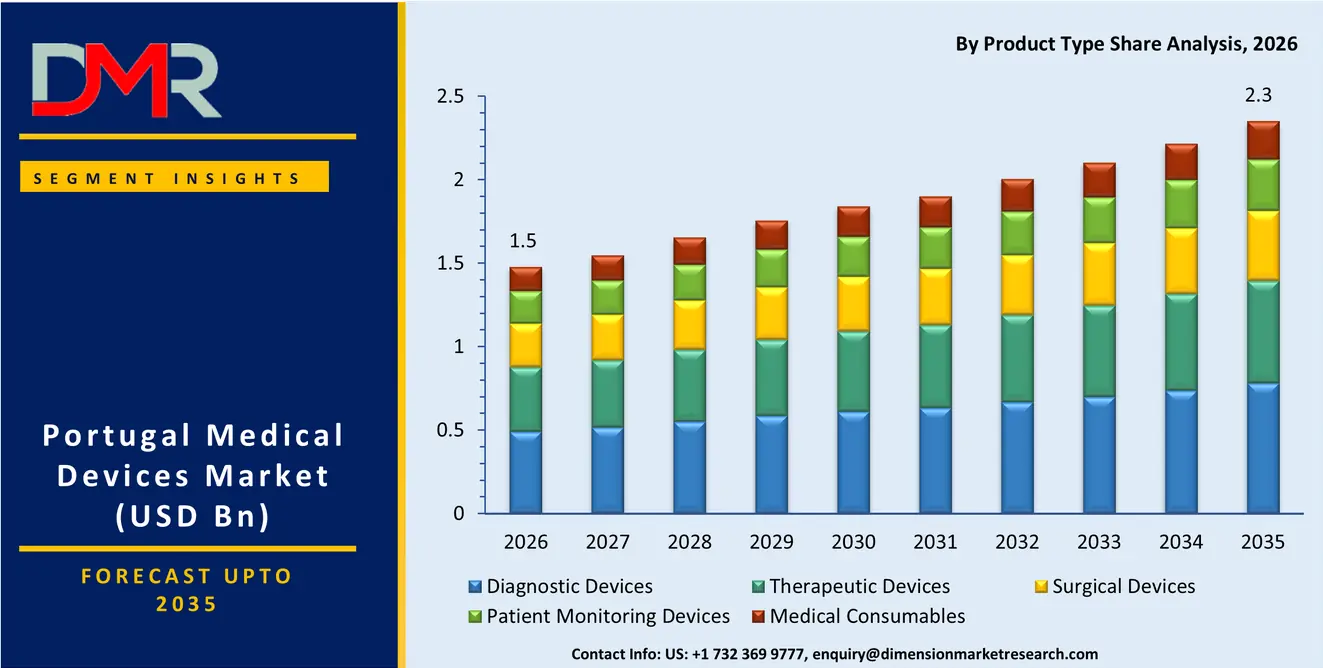
Diagnostic Devices are expected to dominate the Portugal Medical Devices Market, accounting for 35.4% market share in 2026. Their leadership is supported by the widespread use of imaging systems, in vitro diagnostics, and screening equipment across SNS hospitals, private diagnostic centers, and specialty care settings.
ℹ
To learn more about this report –
Download Your Free Sample Report Here
Within this category, Imaging Devices represent the largest product area, driven by sustained procurement of X-ray systems, MRI systems, CT scanners, ultrasound equipment, and nuclear imaging solutions for oncology staging. Meanwhile, Patient Monitoring Devices are projected to record the highest growth rate, at a 9.5% CAGR during 2026–2035, driven by the expansion of telehealth and continuous care programs for aging chronic patients.
By Device Class Analysis
Class II Medical Devices are anticipated to hold the largest share of the Portugal Medical Devices Market, representing 44.2% in 2026. These moderate risk devices cover a broad range of commonly used products, including infusion pumps, diagnostic imaging equipment, monitoring systems, surgical instruments, and orthopedic devices. Their high volume of use across SNS hospitals, private clinics, and diagnostic facilities supports their dominant position. Class III Medical Devices are forecast to expand at the highest rate, with a 9.7% CAGR during 2026–2035. This growth is linked to increasing demand for implantable, life-sustaining, and advanced therapeutic equipment, including next-generation pacemakers and neurostimulation systems.
By Technology Analysis
Conventional Medical Devices are projected to remain the dominant technology segment, with a 46.1% market share in 2026. Their extensive installed base, broad clinical acceptance, relatively accessible pricing, and routine use in standard hospital care sustain their leading position. This segment includes standard diagnostic, therapeutic, surgical, and consumable medical devices that remain essential to daily patient care. However, AI-Enabled Medical Devices are expected to register the highest CAGR of 12.4% during 2026–2035. Their growth is being driven by the integration of artificial intelligence into imaging interpretation, clinical decision support, patient monitoring, workflow automation, and predictive diagnostics, a key solution to efficiency challenges in the Portuguese health system.
By Application Analysis
Cardiology is expected to dominate the Portugal Medical Devices Market by application, capturing 21.3% of market revenue in 2026. The segment benefits from Portugal's high prevalence of cardiovascular diseases, an ageing population, and significant demand for cardiac monitoring devices, stents, pacemakers, defibrillators, catheterization systems, and imaging technologies, making it a leading cause of hospitalization. Oncology is projected to witness the fastest growth, expanding at a 10.1% CAGR during 2026–2035. Technological innovation in early detection and targeted therapy delivery is further accelerating oncology device adoption in national reference centers and private oncology units.
By End User Analysis
Hospitals are anticipated to hold the largest share of the Portugal Medical Devices Market, accounting for 50.4% in 2026. Their dominance reflects high patient inflow, the availability of advanced diagnostic and surgical infrastructure in major centers like Lisbon, Porto, and Coimbra, and their broad use of medical devices across emergency care, inpatient treatment, intensive care, and specialist departments. Hospitals also make significant investments in imaging systems, robotic surgery platforms, patient monitoring equipment, and therapeutic devices. Home Healthcare Settings are expected to grow at the fastest pace, at a 10.9% CAGR during 2026–2035, propelled by the SNS 24 digital strategy and the need to manage chronic conditions outside of hospital walls.
The Portugal Medical Devices Market Report is segmented based on the following:
By Product Type
- Diagnostic Devices
- Imaging Devices
- X-ray Systems
- Magnetic Resonance Imaging (MRI) Systems
- Computed Tomography (CT) Scanners
- Ultrasound Systems
- Nuclear Imaging Systems
- Others
- In-Vitro Diagnostic (IVD) Devices
- Clinical Chemistry
- Immunoassay
- Molecular Diagnostics
- Hematology
- Microbiology
- Others
- Therapeutic Devices
- Cardiovascular Devices
- Orthopedic Devices
- Respiratory Devices
- Diabetes Care Devices
- Wound Care Devices
- Ophthalmic Devices
- Others
- Surgical Devices
- General Surgical Instruments
- Electrosurgical Devices
- Endoscopic Devices
- Robotic-Assisted Surgical Systems
- Minimally Invasive Surgical Devices
- Others
- Patient Monitoring Devices
- Vital Signs Monitoring
- Cardiac Monitoring
- Neurological Monitoring
- Fetal & Neonatal Monitoring
- Others
- Medical Consumables
- Syringes & Needles
- Catheters
- Bandages & Dressings
- Disposable Gloves
- Others
By Device Class
- Class I (low risk)
- Class II (moderate risk)
- Class III (high risk)
- Class IV (highest risk)
By Technology
- Conventional Medical Devices
- Connected Medical Devices
- Smart Wearable Medical Devices
- AI-Enabled Medical Devices
- Robotic Medical Devices
- Portable Medical Devices
By Application
- Cardiology
- Orthopedics
- Neurology
- Oncology
- Respiratory Care
- Gastroenterology
- Ophthalmology
- Obstetrics & Gynecology
- Others
By End User
- Hospitals
- Ambulatory Surgical Centers (ASCs)
- Diagnostic Centers
- Specialty Clinics
- Home Healthcare Settings
- Academic & Research Institutes
- Others
Regulatory Landscape
The medical device regulatory landscape in Portugal is governed by the EU Medical Device Regulation (MDR) 2017/745, overseen by INFARMED, I.P., which strengthens clinical evidence, post-market surveillance, traceability via UDI, and quality-management requirements. The framework improves patient confidence and supports higher safety standards, but it raises certification costs, documentation workloads, and approval timelines, particularly for smaller Portuguese distributors and local manufacturers. Opportunities exist for firms offering regulatory consulting, clinical-data services, and local market-entry support. Manufacturers with robust evidence-generation capabilities can strengthen competitive positioning and gain hospital trust. However, limited notified-body capacity, mandatory Portuguese-language labeling and IFU requirements, and complex reimbursement pathways for innovative devices under the SNS may delay innovation.
Investment and White Space Analysis
Portugal's medical devices market offers substantial white-space opportunities in home healthcare, remote monitoring, AI-supported diagnostics, and affordable solutions for the under-resourced primary care and interior regions. Investment is increasingly directed toward connected devices that support chronic disease management, early intervention, and reduced hospital dependency, aligning with the national eHealth strategy. Emerging opportunities include interoperable monitoring platforms for the archipelagos, portable imaging systems for decentralized diagnostics, smart surgical tools, and specialized devices for elderly care in long-term facilities. Companies can also target unmet needs in rural healthcare access, post-operative monitoring, and personalized diagnostics. However, investors must consider regulatory complexity, SPMS procurement consolidation, long commercialization cycles, and pricing pressures. Overall, white-space investment can create scalable growth by addressing clinical gaps while improving efficiency, patient access, and healthcare system capacity.
Competitive Landscape
The Portuguese Medical Devices Market features a competitive landscape marked by the dominance of global conglomerates and a network of specialized local distributors, all navigating the rigorous EU MDR framework enforced by INFARMED. Siemens Healthineers AG and GE HealthCare hold commanding positions in public hospital imaging, leveraging their extensive installed base to offer AI-driven enterprise solutions. Philips Healthcare is a leader in patient monitoring and telehealth, critical for Portuguese healthcare integration. Medtronic plc maintains a strong presence across cardiology, minimally invasive surgery, and diabetes, while Abbott Laboratories competes intensely on cardiac rhythm management and structural heart devices. Johnson & Johnson MedTech is increasing its footprint in orthopaedic joint reconstruction and robotic-assisted surgery within large private hospital groups.
Some of the prominent players in the Portugal Medical Devices Market are:
- Siemens Healthineers AG
- Philips Healthcare
- Medtronic plc
- GE HealthCare
- Johnson & Johnson MedTech
- Abbott Laboratories
- Boston Scientific Corporation
- Becton, Dickinson and Company
- Stryker Corporation
- Baxter International Inc.
- Fresenius Medical Care AG
- Fresenius Kabi AG
- Smith and Nephew plc
- B. Braun SE
- Drägerwerk AG
- Carl Zeiss Meditec AG
- Zimmer Biomet Holdings Inc.
- Terumo Corporation
- Olympus Corporation
- Getinge AB
- Edwards Lifesciences Corporation
- Intuitive Surgical Inc.
- Hologic Inc.
- Alcon Inc.
- Mölnlycke Health Care AB
- Coloplast A S
- Demant A S
- Sonova Holding AG
- Straumann Holding AG
- Elekta AB
- Smiths Medical
- Nipro Corporation
- Fisher and Paykel Healthcare Corporation Limited
- Canon Medical Systems Corporation
- Mindray Medical International Limited
- Merit Medical Systems Inc.
- Conmed Corporation
- ResMed Inc.
- LivaNova PLC
- Haemonetics Corporation
- Other Key Players
Recent Developments
- May 2026: Siemens Healthineers received CE Mark for AI Contouring for Eclipse, an AI-powered solution that automates organ-at-risk contouring in radiation therapy planning, helping improve workflow efficiency and consistency for oncology care across Europe.
- November 2025: Portugal enacted Decree-Law No. 118/2025, amending the national Medical Devices Regime to align with the EU Medical Device Regulation (MDR), including updates to the rules governing single-use medical device reprocessing and regulatory compliance.
- April 2026: Medtronic announced CE Mark approval for the Stealth AXiS Surgical System, an AI-enabled surgical planning, navigation, and robotic guidance platform designed for spine, cranial, and ENT procedures, expanding its advanced surgical technology portfolio for European healthcare providers.
- 2025: Portugal continued implementation of its Digital Health Strategy, supporting greater adoption of connected medical devices, telemedicine, AI-enabled healthcare solutions, and interoperable digital health platforms across hospitals and healthcare providers through dedicated government investment.
Report Details
| Report Characteristics |
| Market Size (2026) |
USD 1.5 Bn |
| Forecast Value (2035) |
USD 2.3 Bn |
| CAGR (2026–2035) |
5.3% |
| Historical Data |
2021 – 2025 |
| Forecast Data |
2027 – 2035 |
| Base Year |
2025 |
| Estimate Year |
2026 |
| Segments Covered |
By Product Type, By Device Class, By Technology, By Application, and By End User |
| Country Coverage |
Portugal |
Frequently Asked Questions
How big is the Portugal Medical Devices Market?
▾ The Portugal Medical Devices Market is valued at USD 1.5 billion in 2026 and is projected to reach USD 2.3 billion by 2035, reflecting robust demand for advanced diagnostic, therapeutic, and monitoring technologies within the national health system and private sector.
What is the CAGR of the Portugal Medical Devices Market from 2026 to 2035?
▾ The market is projected to expand at a compound annual growth rate (CAGR) of 5.3% between 2026 and 2035, supported by an aging population, the transition to MDR, and the digitization of healthcare delivery via the National Telehealth Plan.
What factors are driving the growth of the Portugal Medical Devices Market?
▾ Growth is driven by Portugal’s aging demographic profile, the rising prevalence of chronic cardiovascular and oncological diseases, the shift toward home-based and minimally invasive care, and the integration of AI-enabled diagnostic platforms to address radiologist shortages.
What are the major trends in the Portugal Medical Devices Market?
▾ Major trends include the rapid proliferation of AI-enabled SaMD for imaging triage, the expansion of robotic-assisted surgery in private hospital groups, the shift to decentralized point-of-care molecular testing, and the acceleration of remote monitoring to serve geographically dispersed populations.
Who are the key players in the Portugal Medical Devices Market?
▾ Key market participants include global conglomerates like Siemens Healthineers, Royal Philips, Medtronic, Abbott, and Johnson & Johnson, alongside strong local distributors and private healthcare groups that facilitate market access and procurement.
How is the Portugal Medical Devices Market segmented?
▾ The market is segmented by product type, device class, technology, application, and end user, with a focus on how these segments perform within Portugal’s specific public-private healthcare economy.