Market Snapshot
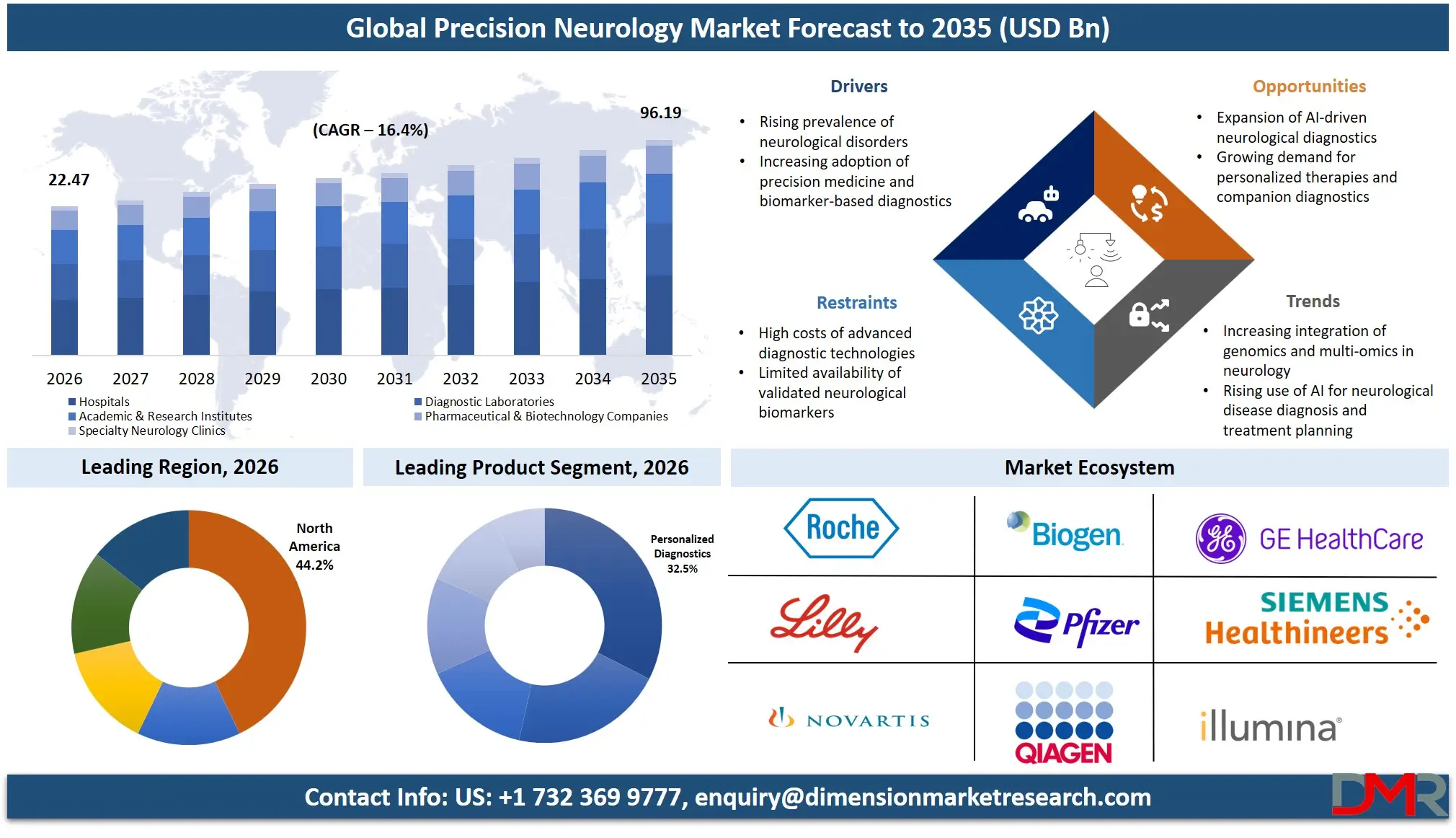
- The Precision neurology market size is USD 19.3 Billion in 2025, reached USD 22.47 Billion in 2026, and is projected to hit USD 96.19 Billion by 2035 at a CAGR of 16.4%.
- Genomics leads the By Technology segment with a 38.6% revenue share in 2026.
- Alzheimer's Disease holds the largest therapeutic area share at 34.2% in 2026.
- Personalized Diagnostics leads the By Application segment with a 32.5% revenue share in 2026.
- Hospitals lead the By End-Use segment with a 46.02% revenue share in 2026.
- North America dominates all regions with a 44.2% revenue share in 2026.
Market Overview
Precision neurology applies molecular diagnostics, genetic profiling, and biomarker-based tools to classify and treat neurological disease at the individual patient level. The market spans genomics platforms, AI-powered analytics, neuroimaging, proteomics, and biomarker-based diagnostics. End-use settings range from hospital neurology units and diagnostic laboratories to academic research institutes, pharmaceutical companies, and specialty neurology clinics.
ℹ
To learn more about this report –
Download Your Free Sample Report Here
The structural shift anchoring Precision Neurology Market is the replacement of symptom-based diagnosis with molecular stratification. Genomics occupies the foundational data layer. No downstream precision neurology decision, from trial enrollment to drug selection, proceeds without genomic data as its base. Alzheimer's Disease concentrates the highest commercial investment, while Personalized Diagnostics captures value at the most defensible upstream point before any therapeutic intervention begins.
AI platforms are accelerating molecular classification at a scale no clinical team can replicate manually. As reported by research published in PubMed Central in April 2026, deep learning algorithms applied to neuroimaging arrays achieved test sensitivity exceeding 90% when detecting intracranial aneurysms. The same research confirms that multi-modal AI platforms predict conversion from mild cognitive impairment to full Alzheimer's disease with accuracy between 85% and 90%. These thresholds matter commercially. Payers and health systems begin integrating AI tools into reimbursable diagnostic pathways once accuracy clears 85%, which directly expands the addressable market for precision neurology vendors.
Market Size and Forecast
The Global Precision Neurology Market size is estimated at USD 22.47 Billion in 2026 from USD 19.3 Billion in 2025, and is projected to reach USD 96.19 Billion by 2035, exhibiting a CAGR of 16.4% during the forecast period.
A 16.4% CAGR sustained over ten years does not reflect a single innovation cycle. Genomics, AI diagnostics, and targeted biologic therapies are scaling in parallel across multiple disease categories, compounding one another's commercial momentum. Biogen's February 2026 SEC filing confirmed that global Q4 2025 in-market sales for LEQEMBI reached approximately $134 million, a 54% year-over-year increase. Alnylam's combined TTR franchise revenues reached $858.3 million in Q4 2025 alone, a 151% year-over-year increase, per its February 2026 SEC filing. Both are post-approval therapies expanding through established reimbursement channels, not early-access programs.
Downside risk centers on cost barriers already visible in current commercial data. The American Academy of Neurology confirmed in February 2025 that out-of-pocket patient costs for targeted neurological medications escalated by as much as 4,099% for some drug classes. Cost escalation at that magnitude restricts patient uptake, slows payer coverage expansion, and creates access gaps particularly outside the United States where reimbursement frameworks are less mature. Vendors whose growth models assume broad global uptake without addressing cost access will face slower-than-projected revenue curves.
Technology Analysis
Genomics led the technology segment with a 38.6% share in 2026.
Whole Genome Sequencing, Targeted Gene Panels, and Pharmacogenomics collectively position Genomics as the entry point for every downstream precision neurology workflow. A 38.6% technology share confirms that genetic profiling has moved from academic research into routine clinical practice. No other technology layer generates actionable patient stratification without genomic data as its foundation, which gives genomics vendors a structural pricing advantage across the entire care pathway.
Biomarker-based Diagnostics holds the second position, benefiting directly from neurofilament light chain protocol standardization across expert centers. Neuroimaging Technologies, covering MRI, PET, and Functional Neuroimaging, are gaining commercial traction as AI platforms increase diagnostic yield from existing hardware without capital-intensive equipment replacement. AI and Machine Learning Analytics is the fastest-shifting sub-segment. Its value multiplies the output of genomics and neuroimaging data rather than standing alone, which means vendors integrating analytics with upstream data capture hold a structural pricing advantage over point-solution providers. Proteomics remains the least commercially mature sub-segment but represents the next frontier for biomarker discovery in neurodegenerative disease.
Therapeutic Area Analysis
With a 34.2% share in 2026, Alzheimer's Disease outpaced all other therapeutic area categories.
Alzheimer's Disease commands a 34.2% therapeutic area share because commercial drug launches, reimbursement pathways, and diagnostic infrastructure are more developed here than in any other neurological category. Payers, regulators, and health systems have built structured access frameworks for precision therapies in Alzheimer's that do not yet exist at equivalent depth elsewhere. LEQEMBI's commercial trajectory, documented across multiple SEC filings, confirms that biomarker-confirmed patient selection has become a prerequisite for reimbursement, not a regulatory option.
Amyotrophic Lateral Sclerosis and Multiple Sclerosis follow in commercial maturity, supported by established biomarker protocols and active pipeline investment. Parkinson's Disease is the fastest-evolving therapeutic area. The FDA's open-access digital biomarker repositories for Parkinson's evaluation, combined with institutional capital targeting LRRK2 and G2019S kinase pathways, signal that Parkinson's will narrow the commercial gap with Alzheimer's over the forecast period. The H. Lundbeck acquisition of Longboard Pharmaceuticals for approximately $2.6 billion in December 2024 specifically to add bexicaserin for rare epileptic encephalopathies confirms that capital is already repositioning toward Epilepsy and other underpenetrated therapeutic areas before those markets fully develop.
End-Use Analysis
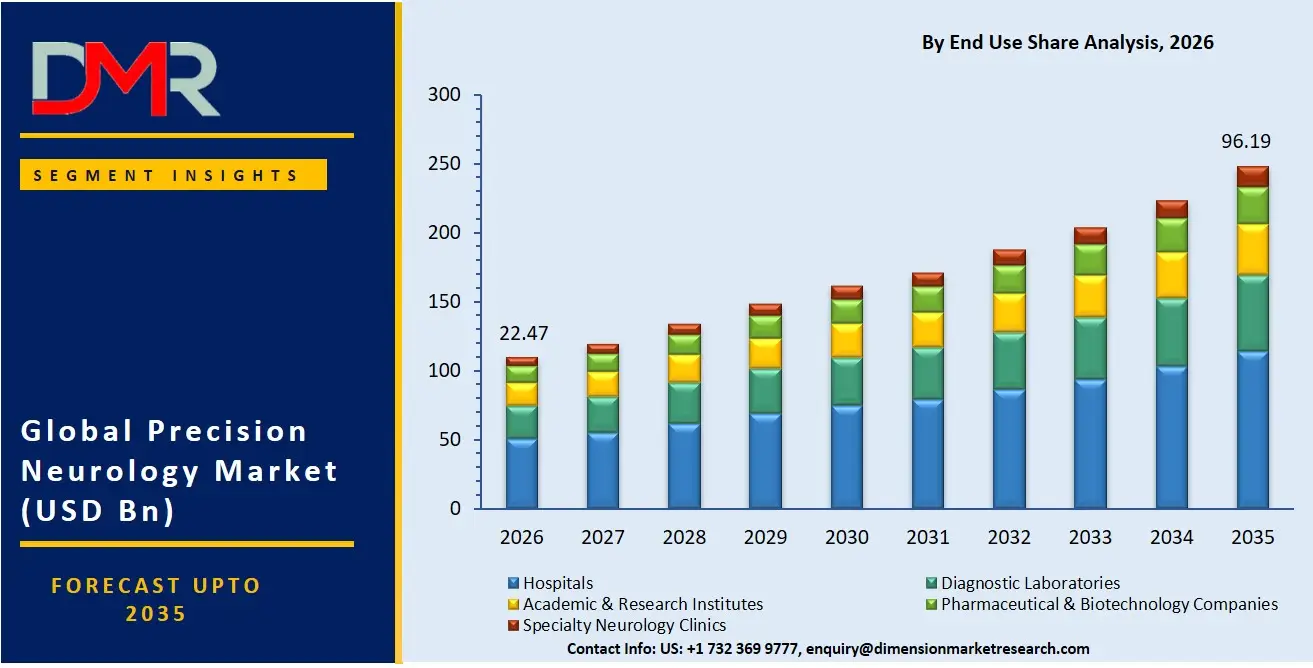
Hospitals accounted for 46.02% of end-use demand in 2026, the highest of any category.
ℹ
To learn more about this report –
Download Your Free Sample Report Here
Hospitals hold a 46.02% end-use share because infusion-based biologics, intraoperative neuroimaging, and genetic testing panels require infrastructure, specialist staffing, and payer billing relationships that only hospital systems can support at scale. As reported by the American Academy of Neurology in August 2025, the average net revenue generated by a single practicing clinical neurologist reached $2,052,884 per year across 3,000 U.S. clinical networks. Hospitals have direct financial incentives to expand precision neurology capacity, and those incentives compound as more targeted therapies enter reimbursement frameworks.
Diagnostic Laboratories are the second most commercially active end-use setting, serving as the primary channel for genomic sequencing, biomarker assays, and liquid biopsy processing outside hospital walls. Pharmaceutical and Biotechnology Companies represent a growing direct end-use channel as more firms build internal precision diagnostics capabilities to support companion diagnostic requirements in clinical trials. Specialty Neurology Clinics are the most under-penetrated setting but carry the highest per-patient revenue potential as targeted oral and subcutaneous therapies reduce the infusion dependency that currently anchors patients to hospital settings.
Application Analysis
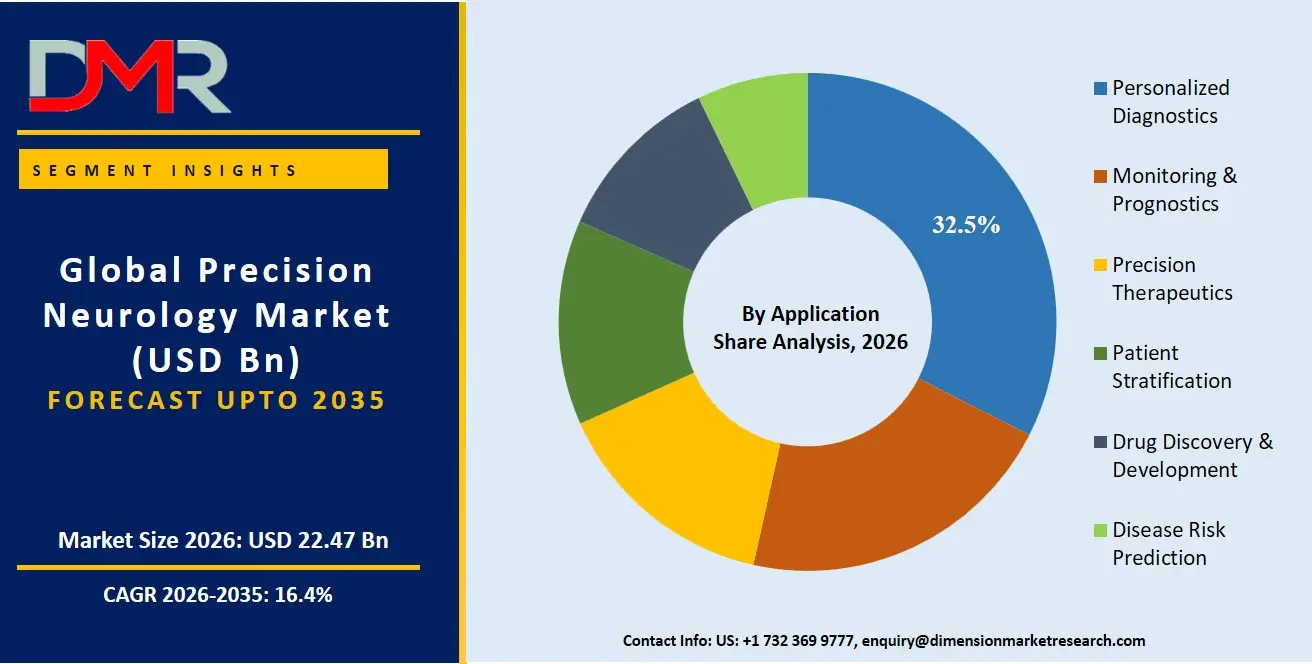
Personalized Diagnostics captured 32.5% of the application segment in 2026, ahead of all rivals.
ℹ
To learn more about this report –
Download Your Free Sample Report Here
Personalized Diagnostics holds a 32.5% application share because diagnosis precedes every other function in Precision Neurology Market. Before a drug is selected, a trial patient is enrolled, or a monitoring protocol is activated, a diagnostic must confirm disease subtype and molecular profile. Vendors in this application category capture value at the most defensible point in the care pathway, upstream of therapeutic decisions where switching costs are lowest.
Monitoring and Prognostics is growing in commercial relevance as wearable and passive data collection tools standardize longitudinal patient tracking outside clinical settings. Precision Therapeutics follows, with commercial velocity tied directly to the drug approval cycle. Patient Stratification and Drug Discovery and Development are increasingly overlapping functions as biotechnology firms embed companion diagnostic requirements directly into pre-IND trial protocols. Disease Risk Prediction remains the least commercially scaled application but carries long-term value as AI models trained on large patient registries generate actionable pre-symptomatic risk scores that payers can use to justify early intervention costs.
Key Market Segments
By Technology
- Genomics
- Whole Genome Sequencing
- Targeted Gene Panels
- Pharmacogenomics
- Biomarker-based Diagnostics
- Neuroimaging Technologies
- MRI
- PET
- Functional Neuroimaging
- AI & Machine Learning Analytics
- Proteomics
By Therapeutic Area
- Alzheimer's Disease
- Amyotrophic Lateral Sclerosis (ALS)
- Autism Spectrum Disorders
- Multiple Sclerosis
- Epilepsy
- Parkinson's Disease
- Stroke
By End-Use
- Hospitals
- Diagnostic Laboratories
- Academic & Research Institutes
- Pharmaceutical & Biotechnology Companies
- Specialty Neurology Clinics
By Application
- Personalized Diagnostics
- Monitoring & Prognostics
- Precision Therapeutics
- Patient Stratification
- Drug Discovery & Development
- Disease Risk Prediction
By Patient Subgroup Stratification
- Sex & Gender-Specific Subgroups
- Neurobehavioral & Behavioral Health Subgroups
- Neonatal Neurological Subgroups
By Delivery Model
- Hospital-based Precision Neurology
- Cloud-based Neurology Platforms
- AI-assisted Neurology Solutions
Regional Analysis
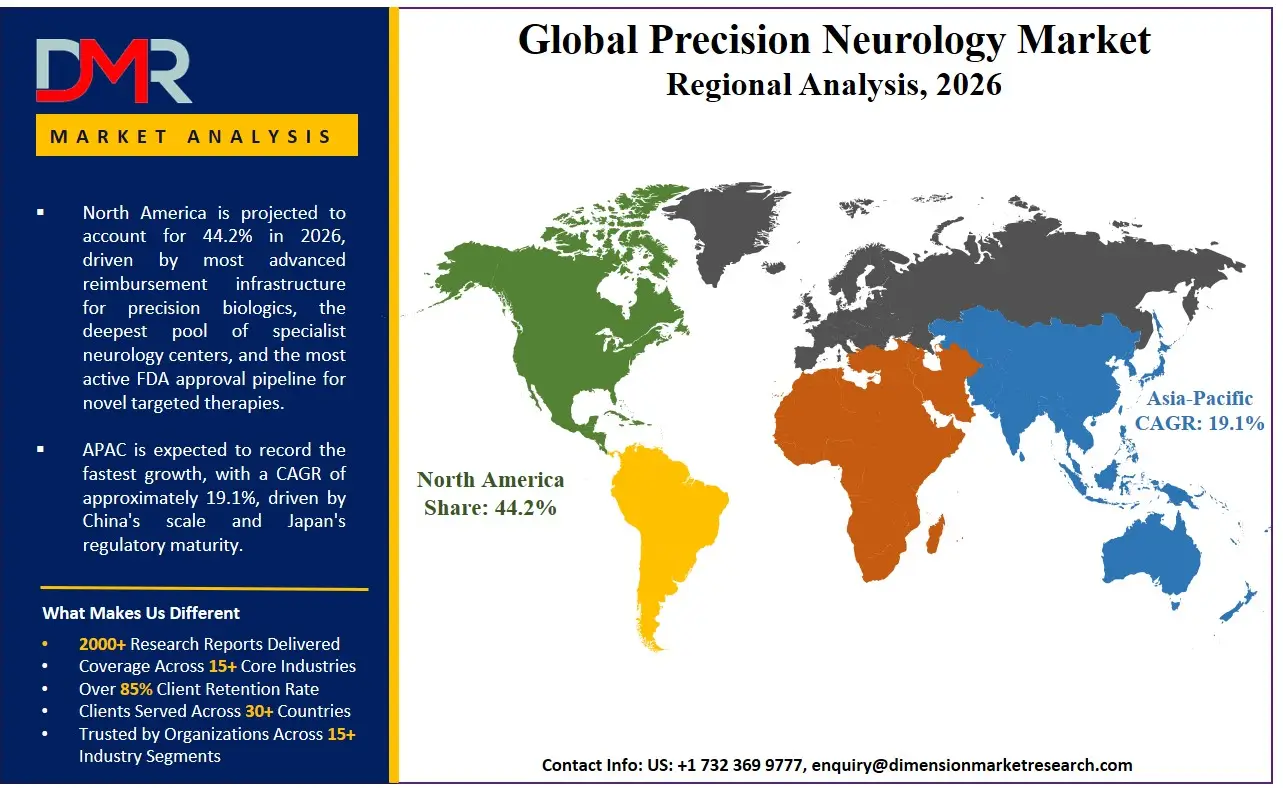
North America held a 44.2% share in 2026, valued at USD 8.54 Billion.
ℹ
To learn more about this report –
Download Your Free Sample Report Here
North America's lead is structural, not cyclical. The United States hosts the most advanced reimbursement infrastructure for precision biologics, the deepest pool of specialist neurology centers, and the most active FDA approval pipeline for novel targeted therapies. As reported by Eisai in April 2026, the U.S. generated JPY 44.6 billion in LEQEMBI revenues in fiscal year 2025, making it the single largest country market for a precision Alzheimer's therapy globally. That commercial concentration in one country reflects how far ahead U.S. payer and health system infrastructure sits relative to every other region.
Europe holds the second regional position, supported by established national health systems in Germany, France, and the UK, though reimbursement timelines for novel precision therapies remain longer than in the U.S. Asia Pacific is the fastest-growing region over the forecast period. Japan generated JPY 24.4 billion and China generated JPY 12.4 billion in LEQEMBI revenues in fiscal year 2025, per Eisai's April 2026 reporting. China's scale and Japan's regulatory maturity together position Asia Pacific as the region most likely to narrow the revenue gap with North America before 2035. Latin America and the Middle East and Africa remain early-stage markets where diagnostic infrastructure investment must precede any meaningful therapeutic adoption.
Key Regions and Countries
North America
Europe
- Germany
- France
- The UK
- Spain
- Italy
- Rest of Europe
Asia Pacific
- China
- Japan
- South Korea
- India
- Australia
- Rest of APAC
Latin America
- Brazil
- Mexico
- Rest of Latin America
Middle East & Africa
- GCC
- South Africa
- Rest of MEA
Market Dynamics
Biomarker Protocols and Registry Data Reshape Diagnostic Economics
Clinical integration of neurofilament light chain protocols is replacing invasive diagnostic procedures across global expert centers. Costs drop. Timelines shrink. A scalable commercial pathway opens for biomarker platform providers who can deliver validated assay services into routine clinical workflows rather than research-only settings. Separately, the U.S. FDA released open-access digital biomarker repositories for Parkinson's disease evaluation, which directly reduces data acquisition costs for companies building AI-powered diagnostic tools. Smaller biotechnology firms can now compete in clinical discovery without building proprietary patient registries from scratch, compressing time-to-insight and lowering early-stage capital requirements.
Genetics-enriched patient stratification is restructuring CNS clinical trial design in ways that create direct commercial demand for molecular services. A national registry cohort using 600 million individual patient records via the Norwegian Prescription Registry tracked 15,849 emergent Parkinson's disease cases to map pre-diagnostic drug interactions, per the Neurology journal's November 2023 publication. Biotechnology firms are now aligning pre-IND biomarker monitoring endpoints with major global research consortium standards. Earlier identification of non-responders reduces capital destroyed on failed Phase 2 endpoints. Every trial that uses this approach requires genomic sequencing, biomarker assays, and clinical data analytics before a single dose is administered.
Drug Pricing Structures Outpace Payer and Patient Tolerance
The American Academy of Neurology reported in February 2025 that eculizumab for myasthenia gravis carries a list price of approximately $678,000 per patient per year in the United States. Aggregate medication cost inflation of 1,993% was recorded across 441,099 migraine patients following launches of advanced targeted therapies, per the same February 2025 publication. These figures show that pricing for precision neurology products has moved beyond what payers and patients can absorb without structural negotiation. The commercial consequence is restricted patient access, slower uptake curves, and intensifying payer resistance to covering newer agents without long-term outcomes evidence.
Pipeline failures compound pricing pressure by stranding capital. Substrate reduction therapeutic formulations that missed motor progression endpoints in Phase 2 trials have forced pipeline realignment toward direct enzyme activation strategies. PTC Therapeutics recorded a revenue decline in Translarna from $321.1 million in full year 2024 to $235.3 million in full year 2025, per its February 2026 SEC filing, with $244.2 million in Evrysdi royalty revenues partly offsetting the loss. Companies with single-asset pipelines and no diversified molecular mechanisms carry disproportionate exposure when both a Phase 2 program fails and a regulatory framework narrows simultaneously.
AI Imaging Infrastructure and Orphan Pathways Create New Revenue Pools
National health agencies are allocating AI imaging infrastructure capital specifically for multiple sclerosis radiomic profiling. Once AI diagnostic tools appear inside national health system reimbursement frameworks, adoption curves compress from years into months rather than following standard technology diffusion patterns. NIH clinical research recorded an average microdystrophin tissue expression of 60% among 19 patients on post-treatment Day 90 in targeted gene transfer trials, per a May 2026 SEC filing, establishing a measurable biological benchmark that supports accelerated approval submissions in orphan neurological categories.
The FDA granted 510(k) clearance for Precision Neuroscience's Layer 7 Cortical Interface in April 2025, authorizing commercial use for brain surface mapping, recording, and stimulation. Regulatory agencies are processing novel neurotechnology applications at a pace that rewards first-mover positioning in hardware-enabled precision neurology. Accelerated approval decisions are anticipated for novel lysosomal enzyme regimens in orphan disease categories, which compresses time-to-revenue for companies with genetically defined patient populations and validated biomarker endpoints. Early-stage institutional capital is already targeting LRRK2 and G2019S mutant kinase pathways where genetic disease definition is precise enough to anchor trial enrollment from day one.
Market Trends
Passive Wearables and Multimodal AI Replace Episodic Clinical Scoring
Large language models are standardizing continuous behavioral and biometric data streams from smartphones and wearables, replacing intermittent clinical scoring in psychiatric and neurological care. Multimodal machine learning frameworks are simultaneously segregating major depressive disorder into distinct biotypes by fusing neuroimaging with large-scale genomics data. As confirmed by PubMed Central research in April 2026, multi-modal AI platforms predict conversion from mild cognitive impairment to full Alzheimer's disease with accuracy between 85% and 90%. Global medical developers are embedding continuous digital gait and tremor biomarkers directly into research protocols through technology alliances, creating commercial pipelines where software, diagnostics, and drug development intersect. For early movers in digital neuro-fingerprinting platforms, this convergence produces defensible data assets that later entrants cannot replicate without years of passive data collection.
Market Competition Overview
The Precision Neurology Market is fragmented across technology, therapeutic, and diagnostic layers. No single player holds dominant share across all sub-segments simultaneously. Large pharmaceutical companies control the highest-revenue therapeutic segments through approved biologics and small molecules. Diagnostics and genomics platforms belong to a separate group of specialized technology providers. AbbVie's $1.4 billion acquisition of Aliada Therapeutics in December 2024, integrating the MODEL blood-brain barrier platform and a Phase 1 Alzheimer's asset, confirms that large players are buying pipeline and platform access rather than building internally under current competitive conditions.
Companies gaining share combine molecular diagnostics with therapeutic positioning, particularly in Alzheimer's and rare neurogenetic conditions where companion diagnostic requirements create locked-in commercial relationships. Vendors losing ground are single-modality diagnostic players without AI integration and asset-light therapeutics companies whose Phase 2 programs have failed to meet motor progression endpoints. The next consolidation wave will target AI analytics platforms and genomic stratification companies as large pharma seeks to own the patient identification funnel upstream of drug administration, before competitors lock in multi-year data partnerships with health systems.
Company Profiles
Biogen Inc. holds a leading commercial position in the Alzheimer's precision therapy segment through LEQEMBI, co-promoted with Eisai. SKYCLARYS expanded its global active patient base by approximately 30% in full year 2025, confirming Biogen is not dependent on a single asset, per its February 2026 SEC filing. U.S. commercial insurance revenue for SKYCLARYS reached approximately $89 million in Q4 2025 alone. Biogen's strategic advantage is its ability to operate across both rare neurogenetic and common neurodegenerative categories simultaneously. The primary risk is pricing pressure. U.S. payer resistance to high-cost neurology agents is intensifying, and LEQEMBI's commercial trajectory depends on sustained reimbursement access beyond early-adopter health systems.
Alnylam Pharmaceuticals has built the most commercially validated RNA interference platform in precision neurology. AMVUTTRA achieved total global net product revenues of $2.314 billion in full year 2025, a 138% increase over 2024, per the company's February 2026 SEC filing. Patient transition to long-acting subcutaneous formats is accelerating faster than initial commercial models projected. Alnylam's RNAi delivery mechanism is proprietary, and its manufacturing process creates high barriers for biosimilar competition. Near-term risk centers on pipeline concentration. AMVUTTRA's dominance means Alnylam's growth profile carries heavy exposure to any future reimbursement renegotiation in its core TTR patient population.
Key Players
- F. Hoffmann-La Roche Ltd.
- Alector
- Quanterix Corporation
- Bio-Rad Laboratories
- Qiagen N.V.
- Biogen Inc.
- Novartis AG
- Siemens Healthineers
- Pfizer Inc.
- Eli Lilly and Company
- AbbVie Inc.
- Thermo Fisher Scientific
- Illumina Inc.
- GE HealthCare
- AC Immune SA
Supply Chain and Value Chain Analysis
The precision neurology value chain begins with raw biological sample collection, including cerebrospinal fluid, blood plasma, and tissue biopsies, feeding into genomic sequencing platforms and biomarker assay laboratories. Maximum value creation occurs at the molecular analysis and AI-driven interpretation layer, where raw data converts into clinically actionable patient stratification outputs. Diagnostic platform vendors and AI analytics companies hold pricing power at this layer. The primary bottleneck is not sequencing capacity. Clinical infrastructure required to collect, process, and transmit high-quality biological samples from point-of-care settings to centralized analysis platforms remains inadequate outside major metropolitan health systems.
A single multiple sclerosis specialist generating downstream clinical services, including infusions and specialized MRI tracking, brings in $8 million in annual downstream revenue to a U.S. healthcare center, per the American Academy of Neurology's August 2025 data. Health system economic incentives are directly aligned with precision neurology expansion at this scale. Supply chain risk concentrates at two points, dependence on a small number of certified genomic reference laboratories for variant interpretation, and cold-chain logistics requirements for biologic therapies that restrict distribution in regions without specialized pharmaceutical handling infrastructure.
Regulatory Landscape
The U.S. FDA is the most active regulatory body shaping Precision Neurology Market's commercial trajectory. The FDA granted 510(k) clearance for Precision Neuroscience's Layer 7 Cortical Interface in April 2025, establishing a regulatory precedent for hardware-enabled brain-computer interface products moving from investigational to commercial status. The FDA is separately evaluating selective D1-like receptor agonists for neurodegenerative conditions, signaling readiness to review mechanisms that move beyond dopaminergic replacement. Accelerated approval pathways for novel lysosomal enzyme regimens in orphan neurological categories are anticipated, compressing time-to-market for companies with genetically defined patient populations and validated biomarker endpoints.
Outside the United States, regulatory frameworks are creating commercial friction for established precision therapies. PTC Therapeutics reported a Translarna revenue decline from $321.1 million in 2024 to $235.3 million in 2025, with its February 2026 SEC filing citing evolving international regulatory frameworks as a contributing factor. European and other international regulatory bodies are reassessing reimbursement and market authorization conditions for some targeted neurology products, introducing access uncertainty for companies relying on multi-regional revenue streams. U.S. regulatory pathways currently offer the most predictable route to commercial launch. International access strategies require country-level reimbursement analysis rather than assumptions of broad geographic revenue.
Investment and White Space Analysis
Investment is flowing most actively into brain-computer interface hardware, neuropsychiatric drug platforms, and genetically defined CNS pathways. Precision Neuroscience raised $102 million in a December 2024 Series C round led by General Equity Holdings to expand cortical implant clinical studies. Seaport Therapeutics secured $225 million in an oversubscribed October 2024 Series B round led by General Atlantic to advance its Glyph neuropsychiatric medicine platform. Early-stage institutional capital is targeting LRRK2 and G2019S mutant kinase pathways where genetic disease definition is precise enough to support biomarker-driven trial enrollment from the pre-IND stage.
The clearest white space sits at the intersection of AI diagnostics and underserved therapeutic areas including Epilepsy, Autism Spectrum Disorders, and Stroke, where precision stratification tools are earlier in clinical adoption but patient populations are large. Specialty Neurology Clinics are the most under-penetrated end-use channel, representing a direct entry point for targeted oral and subcutaneous therapy providers who can reduce the hospital-dependency currently limiting patient access outside major metropolitan centers. National health agency investment in AI imaging infrastructure for multiple sclerosis radiomic profiling signals that public capital is preparing these pathways for commercial follow-on investment within the forecast period.
Recent Developments
- January 2026: Precision Neuroscience. Strategic Partnership. The company announced a co-development agreement with Medtronic to build an integrated surgical system pairing its Layer 7 cortical interface with Medtronic's StealthStation navigation platform.
- February 2026: Johnson & Johnson MedTech CERENOVUS. Product Launch. The CERENOVUS division launched its next-generation CEREGLIDE neurovascular catheter systems for acute ischemic stroke neuro-thrombectomy procedures.
- November 2025: Precision Neuroscience. Strategic Investment. SCI Ventures provided a strategic investment to support spinal cord injury research and paralysis reversal programs.
- December 2024: Precision Neuroscience. Funding Round. The company raised a $102 million Series C round led by General Equity Holdings to expand cortical implant clinical studies.
- October 2024: Seaport Therapeutics. Funding Round. The company secured an oversubscribed $225 million Series B round led by General Atlantic to advance its Glyph neuropsychiatric medicine platform.
- November 2024: Nihon Kohden. Acquisition. The company acquired Ad-Tech Medical Instrument Corporation to integrate specialized intracranial epilepsy electrodes and diagnostic brain monitoring devices into its neurology portfolio.
Report Details
| Report Characteristics |
| Market Value (2025) |
USD 19.3 Billion |
| Market Value (2026) |
USD 22.47 Billion |
| Forecast Revenue (2035) |
USD 96.19 Billion |
| CAGR (2026 to 2035) |
16.4% |
| Base Year for Estimation |
2025 |
| Historic Period |
2020 to 2024 |
| Forecast Period |
2026 to 2035 |
| Report Coverage |
Revenue Forecast, Market Dynamics, Competitive Landscape, Recent Developments |
| Segments Covered |
By Technology (Genomics, Biomarker-based Diagnostics, Neuroimaging Technologies, AI & Machine Learning Analytics, Proteomics), By Therapeutic Area (Alzheimer's Disease, ALS, Autism Spectrum Disorders, Multiple Sclerosis, Epilepsy, Parkinson's Disease, Stroke), By End-Use (Hospitals, Diagnostic Laboratories, Academic & Research Institutes, Pharmaceutical & Biotechnology Companies, Specialty Neurology Clinics), By Application (Personalized Diagnostics, Monitoring & Prognostics, Precision Therapeutics, Patient Stratification, Drug Discovery & Development, Disease Risk Prediction), By Patient Subgroup Stratification (Sex & Gender-Specific, Neurobehavioral & Behavioral Health, Neonatal Neurological), By Delivery Model (Hospital-based, Cloud-based, AI-assisted) |
| Regional Analysis |
North America – US and Canada; Europe – Germany, France, The UK, Spain, Italy, and Rest of Europe; Asia Pacific – China, Japan, South Korea, India, Australia, and Rest of APAC; Latin America – Brazil, Mexico, and Rest of Latin America; Middle East & Africa – GCC, South Africa, and Rest of MEA |
| Competitive Landscape |
F. Hoffmann-La Roche Ltd., Alector, Quanterix Corporation, Bio-Rad Laboratories, Qiagen N.V., Biogen Inc., Novartis AG, Siemens Healthineers, Pfizer Inc., Eli Lilly and Company, AbbVie Inc., Thermo Fisher Scientific, Illumina Inc., GE HealthCare, AC Immune SA |
| Customization Scope |
Customization for segments and region or country level will be provided. Additional customization can be done based on requirements. |
| Purchase Options |
Three license options: Single User License, Multi-User License (Up to 5 Users), Corporate Use License (Unlimited Users and Printable PDF). |
Frequently Asked Questions
What is the biggest investment opportunity in Precision Neurology Market?
▾ Brain-computer interface hardware, genetically defined CNS pathways, and AI diagnostics in underserved therapeutic areas including Epilepsy, Autism Spectrum Disorders, and Stroke represent the clearest entry points. Specialty Neurology Clinics are the most under-penetrated end-use channel, offering high per-patient revenue potential as subcutaneous therapies reduce hospital dependency. Public capital is already preparing AI imaging infrastructure in multiple sclerosis, signaling near-term commercial follow-on opportunity.
Who are the top companies in Precision Neurology Market?
▾ Biogen Inc. and Alnylam Pharmaceuticals lead the therapeutic layer, with LEQEMBI and AMVUTTRA generating combined revenues well above $2 billion in 2025. F. Hoffmann-La Roche Ltd., Eli Lilly and Company, AbbVie Inc., Novartis AG, and Pfizer Inc. anchor the broader competitive field. Diagnostics and platform technology is led by Thermo Fisher Scientific, Illumina Inc., Siemens Healthineers, and GE HealthCare.
Which segment is growing fastest in Precision Neurology Market and why?
▾ AI and Machine Learning Analytics is the fastest-shifting technology sub-segment. Its value compounds as genomics and neuroimaging data volumes grow, since AI platforms multiply diagnostic output without requiring proportional increases in specialist clinical staffing. Vendors integrating AI with upstream data capture hold a structural pricing advantage over point-solution providers.
Which region is growing fastest in Precision Neurology Market and why?
▾ Asia Pacific is the fastest-growing region over the 2026 to 2035 forecast period. Japan generated JPY 24.4 billion and China generated JPY 12.4 billion in LEQEMBI revenues in fiscal year 2025, per Eisai's April 2026 reporting, confirming that commercial infrastructure in the region is already scaling. China's patient scale and Japan's regulatory maturity together position Asia Pacific to narrow the gap with North America before 2035.
What is the biggest challenge holding Precision Neurology Market back?
▾ Drug pricing is the most immediate commercial constraint. The American Academy of Neurology confirmed in February 2025 that out-of-pocket costs for targeted neurological medications escalated by as much as 4,099% for some drug classes. Cost escalation at that magnitude restricts patient access, slows payer coverage expansion, and creates adoption gaps outside the United States where reimbursement frameworks cannot absorb current price levels.