Global Prostate Cancer Treatment Market Snapshot
- Global Prostate Cancer Treatment Market Size in 2026: USD 25.0 Billion
- Global Prostate Cancer Treatment Market Size in 2035: USD 53.0 Billion
- Global CAGR from 2026 to 2035: 8.7%
- Hormone Therapy / Androgen Deprivation Therapy (ADT) is the leading treatment modality segment in 2026: 38.5%
- Androgen Receptor Inhibitors is the leading drug class segment in 2026: 27.8%
- Metastatic Castration Resistant Prostate Cancer (mCRPC) is the leading disease stage segment in 2026: 34.2%
- Hospitals is the leading end user segment in 2026: 55.6%
- Asia Pacific is the leading region in 2026: 37.9%
What is the Global Prostate Cancer Treatment and its Market Size?
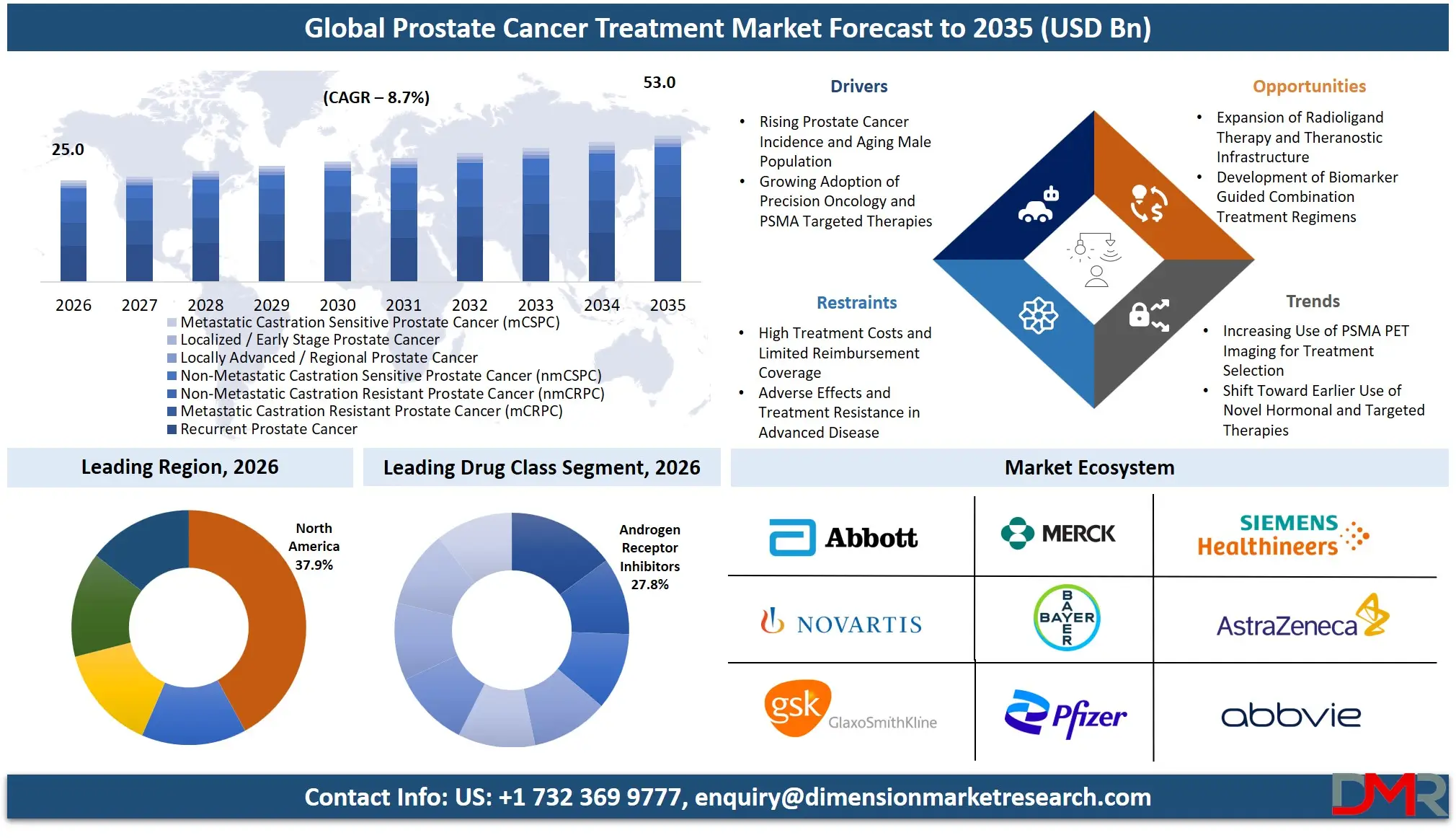
The Global Prostate Cancer Treatment Market is projected to be valued at USD 25.0 billion in 2026 and is projected to reach USD 53.0 billion by 2035, expanding at a CAGR of 8.7% during the forecast period. Growth is being propelled by the rising global incidence of prostate adenocarcinoma, driven by an aging male demographic and increased screening via prostate-specific antigen (PSA) testing and advanced PSMA-PET imaging.
ℹ
To learn more about this report –
Download Your Free Sample Report Here
The therapeutic landscape is undergoing a paradigm shift with the adoption of next-generation hormonal agents, poly(ADP-ribose) polymerase (PARP) inhibitors for homologous recombination repair (HRR)-mutated disease, and PSMA-targeted radioligand therapies that deliver cytotoxic radiation directly to metastatic lesions. Investment is accelerating as clinical practice moves from a linear sequence of androgen deprivation toward personalized, biomarker-driven combination regimens and theranostic approaches that integrate molecular imaging and targeted systemic radiotherapy.
Use Cases
- Intensified Systemic Therapy for Metastatic Castration-Sensitive Prostate Cancer (mCSPC): Medical oncologists initiate triplet regimens combining androgen deprivation therapy (ADT) with an androgen receptor pathway inhibitor (ARPI) and docetaxel chemotherapy for patients with high-volume, de novo metastatic disease. This approach, validated by landmark trials, maximally suppresses androgen receptor signaling and delays progression to castration resistance.
- PSMA-Targeted Radioligand Therapy in Advanced mCRPC: Nuclear medicine specialists and oncologists administer lutetium-177 (177Lu)-PSMA-617 to patients with progressive, PSMA-avid metastatic castration-resistant prostate cancer who have exhausted prior lines of ARPIs and taxane-based chemotherapy. Pre-treatment PSMA-PET/CT imaging serves as a companion diagnostic to confirm target expression, ensuring theranostic precision.
- Genomically-Guided PARP Inhibitor Maintenance: Following confirmation of deleterious germline or somatic mutations in BRCA1, BRCA2, or other HRR genes via next-generation sequencing, patients with mCRPC receive maintenance olaparib or niraparib in combination with an ARPI. This biomarker-selected strategy extends radiographic progression-free survival and leverages synthetic lethality.
- Multimodal Management of High-Risk Localized Disease: Urologists and radiation oncologists co-manage patients with high-risk localized or locally advanced prostate cancer using radical prostatectomy or external beam radiotherapy combined with neoadjuvant and adjuvant ADT. Multi-parametric MRI and genomic classifiers (e.g., Decipher, Prolaris) risk-stratify patients to guide therapeutic intensity and avoid overtreatment.
Key Takeaways
- Market Size: The Global Prostate Cancer Treatment Market is anticipated to be valued at USD 25.0 billion in 2026 and is forecast to reach USD 53.0 billion by 2035, expanding at a CAGR of 8.7%.
- Growth Outlook: Market expansion is sustained by the relentless rise in incident cases, the proven survival benefits of early treatment intensification in metastatic hormone-sensitive disease, the rapid clinical integration of theranostics, and the broadening label expansions for PARP inhibitors across molecularly defined patient subsets.
- Primary Growth Drivers: An expanding pool of men with advanced-stage disease eligible for systemic therapy, practice-changing clinical trial data supporting combination ARPI-based regimens, the commercialization of next-generation PSMA-directed imaging and therapeutic agents, and a deeper molecular characterization of castration resistance biology are accelerating investment across the prostate oncology continuum.
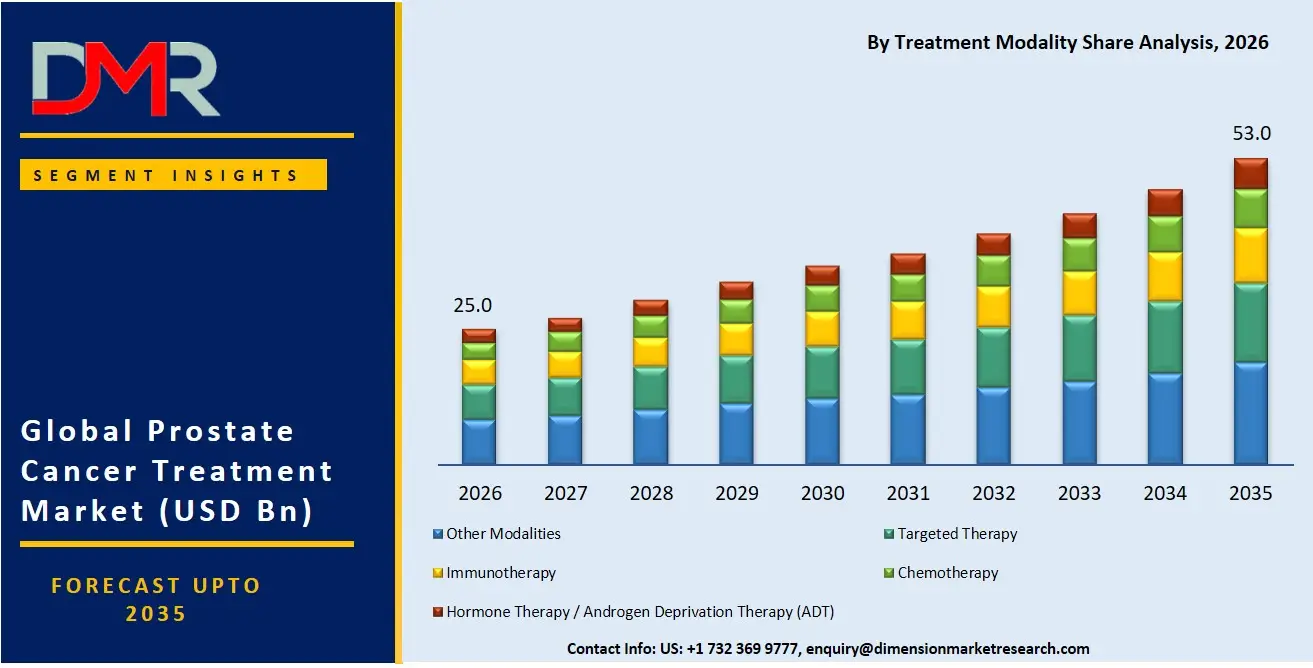
- By Treatment Modality Analysis: Hormone Therapy / Androgen Deprivation Therapy is projected to lead the treatment modality segment with a dominant 38.5% share in 2026, driven by its foundational role across all disease stages, from biochemical recurrence to mCRPC, and the sustained uptake of novel ARPIs that supersede first-generation antiandrogens.
- By Drug Class Analysis: Androgen Receptor Inhibitors is anticipated to hold a 27.8% share in 2026, reflecting their entrenchment as the standard-of-care backbone in both castration-sensitive and castration-resistant settings, while PSMA Targeted Radioligands are projected to exhibit the highest CAGR at 11.4% due to the global rollout of 177Lu-PSMA-617 and a robust pipeline of next-generation radioisotope conjugates.
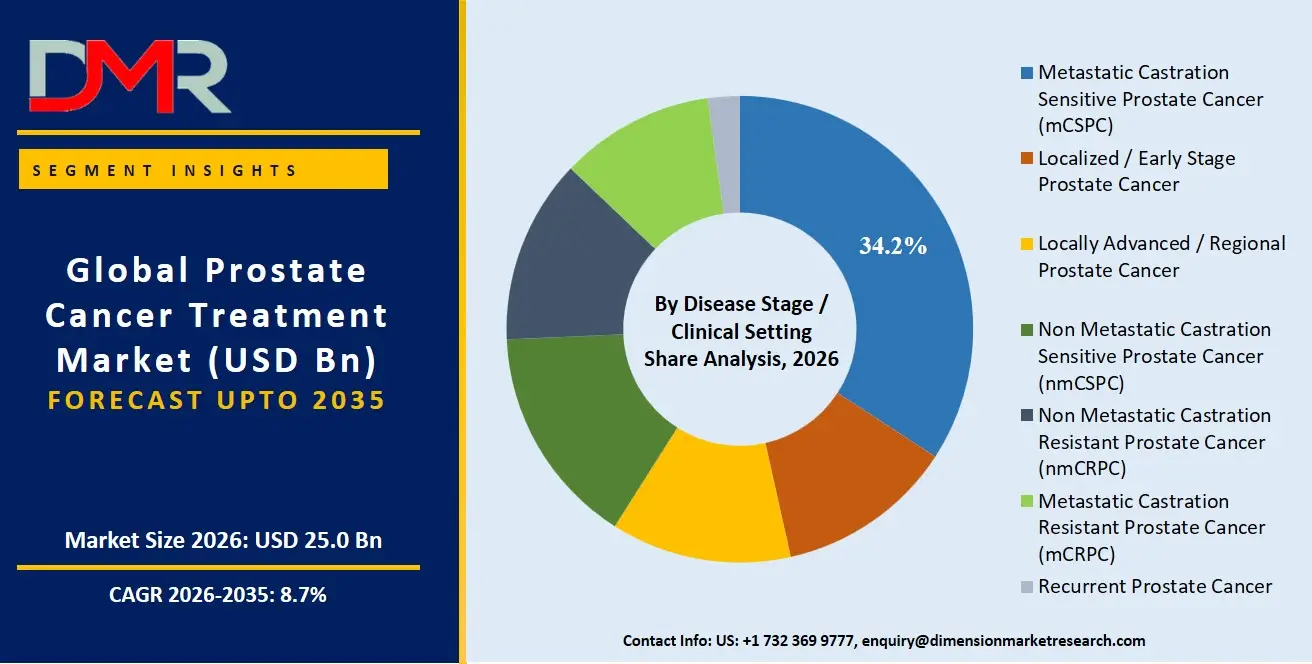
- By Disease Stage Analysis: Metastatic Castration Resistant Prostate Cancer is poised to lead with a 34.2% share in 2026, representing the most therapeutically intensive and commercially concentrated segment, where multiple lines of life-prolonging therapies including radioligands, chemotherapy, and PARP inhibitors create a high-value market. Metastatic Castration Sensitive Prostate Cancer is the fastest-growing stage at an 8.8% CAGR, fueled by the broad adoption of doublet and triplet systemic regimens.
- By End User Analysis: Hospitals is expected to command a 55.6% share in 2026, remaining the central hub for intravenous chemotherapy, radioligand administration, surgical prostatectomy, and complex multi-disciplinary tumor board-driven care. Cancer Treatment Centers / Specialty Clinics is the fastest-growing end user segment at a 7.9% CAGR, driven by the consolidation of community oncology practices, integrated infusion centers, and the expansion of outpatient theranostics suites.
How AI/Gen AI is Transforming the Prostate Cancer Treatment Market?
Artificial intelligence and digital health technologies are fundamentally reshaping prostate cancer care by enabling earlier detection, precise molecular phenotyping, and personalized therapeutic management. Deep learning algorithms trained on digitized histopathology slides now grade prostate biopsies with a Gleason score accuracy that rivals expert genitourinary pathologists, reducing inter-observer variability and identifying subtle morphological patterns predictive of aggressive biology. AI-powered analysis of multi-parametric MRI and PSMA-PET/CT images is automating the detection of index lesions, quantifying whole-body tumor burden, and predicting biochemical recurrence risk with high discriminative power. These imaging biomarkers are being incorporated into clinical decision-support tools that guide urologists toward active surveillance versus radical intervention.
Key Drivers in the Global Prostate Cancer Treatment Market
Rising Global Incidence and Therapeutic Intensity in Advanced Disease
Prostate cancer remains the second most common malignancy in men worldwide, with incidence rates closely tracking population aging and the expanding adoption of PSA-based opportunistic screening in developing nations. A significant proportion of patients present with or progress to metastatic disease, a stage universally requiring systemic pharmacotherapy. The decisive shift toward treating mCSPC with potent ARPIs plus ADT and in high-volume disease, adding docetaxel has multiplied the drug-eligible population and prolonged treatment duration, creating a sustained, high-volume demand for branded hormonal agents. As the prevalent pool of men living with castration-resistant disease expands, the downstream consumption of later-line targeted and radioligand therapies intensifies, generating a compounding revenue effect.
Practice-Changing Clinical Evidence for Precision Oncology Combinations
Landmark Phase III trials, including PROfound, TALAPRO-2, MAGNITUDE, and VISION, have irrevocably altered the standard of care by demonstrating the superiority of PARP inhibitor and PSMA-radioligand combinations. The validation of homologous recombination repair gene mutations as a predictive biomarker has carved out a distinct precision medicine segment within mCRPC, attracting premium pricing for both the companion diagnostic and the targeted agent. Concurrently, the theranostic success of 177Lu-PSMA-617 has ignited a race to develop novel radioisotopes, optimized peptide ligands, and alpha-particle-emitting conjugates, transforming nuclear medicine into a core pillar of systemic prostate cancer treatment.
Restraints in the Global Prostate Cancer Treatment Market
High Acquisition Costs and Reimbursement Heterogeneity for Novel Therapeutics
Despite demonstrable survival gains, the cumulative cost of sequential therapy with advanced ARPIs, PARP inhibitors, and PSMA radioligands imposes a severe financial strain on healthcare payers, particularly in systems that employ health technology assessment to restrict access. The requirement for PSMA-PET/CT as a companion imaging modality for radioligand eligibility creates an infrastructure barrier in regions lacking cyclotron and radiopharmacy networks. Reimbursement decisions for high-cost theranostics remain fragmented across Europe's national health systems and are nascent in many emerging markets, restricting commercial uptake. This pharmacoeconomic toxicity can lead to treatment rationing, sequential monotherapy instead of guideline-concordant combinations, and delayed adoption, thereby restraining the market's capacity to translate clinical evidence into real-world practice at scale.
Growth Opportunities in the Global Prostate Cancer Treatment Market
Expansion of the Theranostics Ecosystem and Alpha Emitter Pipeline
The clinical and commercial success of 177Lu-PSMA-617 has established a multi-billion-dollar theranostics market that is still in its infancy. A pipeline of next-generation PSMA-targeted ligands labeled with alpha-particle emitters, such as actinium-225, promises higher linear energy transfer and more profound DNA double-strand breaks, potentially overcoming radiation resistance. This creates a high-growth opportunity for radiopharmaceutical manufacturers, contract development organizations specializing in radioisotope production, and imaging platform companies that can integrate PSMA-PET screening into routine metastatic prostate cancer workup. Companies that build a vertically integrated theranostics network spanning isotope supply, ligand manufacturing, and dedicated outpatient infusion suites will capture disproportionate value as radioligand therapy moves into earlier disease stages.
Addressing the Early-Stage Window with Genomic Risk Stratification and Neoadjuvant Regimens
A largely untapped opportunity exists in preventing disease progression from high-risk localized prostate cancer to the incurable metastatic state. Genomic classifiers that identify men with a high Decipher score or aggressive basal-luminal molecular subtypes who will most benefit from treatment intensification are gaining reimbursement and guideline inclusion. This paves the way for neoadjuvant and adjuvant trials of potent ARPIs and even radioligands in the pre-metastatic space. Success in this setting would unlock a substantial adjuvant market for pharmaceutical and biotech firms, mirroring the paradigm shift seen in adjuvant melanoma and lung cancer therapy, and dramatically alter the global prostate cancer treatment landscape.
Trends in the Global Prostate Cancer Treatment Market
Emergence of Doublet and Triplet Regimens as Standard of Care Across the Disease Continuum
A defining trend is the systematic dismantling of therapeutic silos between disease states, as regimens proven in mCRPC migrate forward into mCSPC and even non-metastatic castration-resistant prostate cancer (nmCRPC). The combination of an ARPI with a PARP inhibitor is now a standard for mCRPC patients with HRR mutations, while triplet therapy (ADT + docetaxel + darolutamide) is the new benchmark for high-volume mCSPC. This intensification paradigm is driving polypharmacy, increasing per-patient annual drug expenditure, and fostering a clinical culture that prioritizes maximal upfront suppression of androgen receptor signaling and synchronous targeting of escape pathways.
Integration of PSMA-PET Imaging into Staging and Response Assessment Protocols
Conventional imaging with CT and bone scintigraphy is rapidly being supplanted by prostate-specific membrane antigen positron emission tomography, which exhibits vastly superior sensitivity for detecting occult nodal and visceral metastases. This trend is reclassifying disease stage for thousands of patients upstaging some with presumed localized disease to metastatic, and downstaging others by revealing oligometastatic states amenable to metastasis-directed therapy. The commercial implications include a surge in radiotracer sales, a recalibration of drug-eligible populations across stage-specific labels, and the emergence of the PSMA-PET scan as an indispensable gatekeeper for radioligand treatment, cementing its status as a co-dependent diagnostic.
Research Scope and Analysis
The Global Prostate Cancer Treatment Market is segmented by treatment modality, drug class, disease stage, and end user, covering therapies, targeted drugs, disease progression categories, and healthcare facilities involved in diagnosis, treatment, and research activities.
ℹ
To learn more about this report –
Download Your Free Sample Report Here
By Treatment Modality Analysis
Hormone Therapy / Androgen Deprivation Therapy (ADT) is expected to dominate the prostate cancer treatment market, accounting for the highest market share of 38.5% in 2026. Its leadership is driven by its role as the foundational treatment approach across localized, advanced, and metastatic prostate cancer settings.
ℹ
To learn more about this report –
Download Your Free Sample Report Here
GnRH agonists, GnRH antagonists, and androgen receptor inhibitors remain widely adopted due to their proven clinical efficacy in suppressing androgen signaling and delaying disease progression. Meanwhile, Targeted Therapy is projected to register the highest CAGR of 9.2% during 2026–2035, supported by increasing adoption of PARP inhibitors and PSMA targeted radioligand therapies.
By Drug Class Analysis
Androgen Receptor Inhibitors are anticipated to hold the largest market share of 27.8% in 2026 within the prostate cancer drug class segment. Their dominance is attributed to increasing utilization in both metastatic castration sensitive prostate cancer and metastatic castration resistant prostate cancer patients. Next generation androgen pathway inhibitors have transformed treatment protocols by improving survival outcomes and delaying disease progression. The segment continues to benefit from expanding clinical indications and combination therapy adoption. PSMA Targeted Radioligands are expected to record the highest CAGR of 11.4% during 2026–2035, driven by rapid uptake of precision radiopharmaceutical therapies.
By Disease Stage / Clinical Setting Analysis
Metastatic Castration Resistant Prostate Cancer (mCRPC) is projected to represent the largest share of the prostate cancer treatment market, accounting for 34.2% of revenue in 2026. The segment's dominance is supported by the requirement for multiple lines of advanced therapy, including androgen receptor inhibitors, chemotherapy, PARP inhibitors, and radioligand therapies. Patients with mCRPC typically require prolonged treatment duration and combination approaches, resulting in higher treatment costs. Meanwhile, Metastatic Castration Sensitive Prostate Cancer (mCSPC) is anticipated to exhibit the highest CAGR of 8.8% during 2026–2035, supported by early adoption of intensified systemic treatment strategies.
By End User Analysis
Hospitals are expected to dominate the prostate cancer treatment market by end user, accounting for the highest market share of 55.6% in 2026. Their leading position is driven by the availability of multidisciplinary oncology teams, advanced diagnostic infrastructure, chemotherapy administration facilities, surgical capabilities, and access to radiopharmaceutical treatments. Hospitals remain the primary treatment setting for complex and advanced prostate cancer cases requiring specialist supervision. Meanwhile, Cancer Treatment Centers / Specialty Clinics are projected to witness the highest CAGR of 7.9% during 2026–2035, supported by increasing preference for dedicated oncology care facilities and personalized treatment management.
The Global Prostate Cancer Treatment Market Report is segmented on the basis of the following:
By Treatment Modality
- Hormone Therapy / Androgen Deprivation Therapy (ADT)
- GnRH / LHRH Agonists
- GnRH / LHRH Antagonists
- Androgen Receptor Inhibitors
- Chemotherapy
- Taxanes
- Other Cytotoxic Agents
- Immunotherapy
- Therapeutic Vaccines
- Immune Checkpoint Inhibitors
- Targeted Therapy
- PARP Inhibitors
- PSMA Targeted Radioligand Therapy
- Kinase Inhibitors
- Other Modalities
By Drug Class
- Androgen Receptor Inhibitors
- GnRH / LHRH Agonists and Antagonists
- Anti Androgens
- Microtubule Inhibitors
- Bone Metastasis Agents
- Therapeutic Vaccines
- PARP Inhibitors
- Kinase Inhibitors
- PSMA Targeted Radioligands
By Disease Stage / Clinical Setting
- Metastatic Castration Sensitive Prostate Cancer (mCSPC)
- Localized / Early Stage Prostate Cancer
- Locally Advanced / Regional Prostate Cancer
- Non-Metastatic Castration Sensitive Prostate Cancer (nmCSPC)
- Non-Metastatic Castration Resistant Prostate Cancer (nmCRPC)
- Metastatic Castration Resistant Prostate Cancer (mCRPC)
- Recurrent Prostate Cancer
By End User
- Hospitals
- Cancer Treatment Centers / Specialty Clinics
- Research Institutes
Regional Analysis
Asia Pacific is the Leading Region in the Global Prostate Cancer Treatment Market
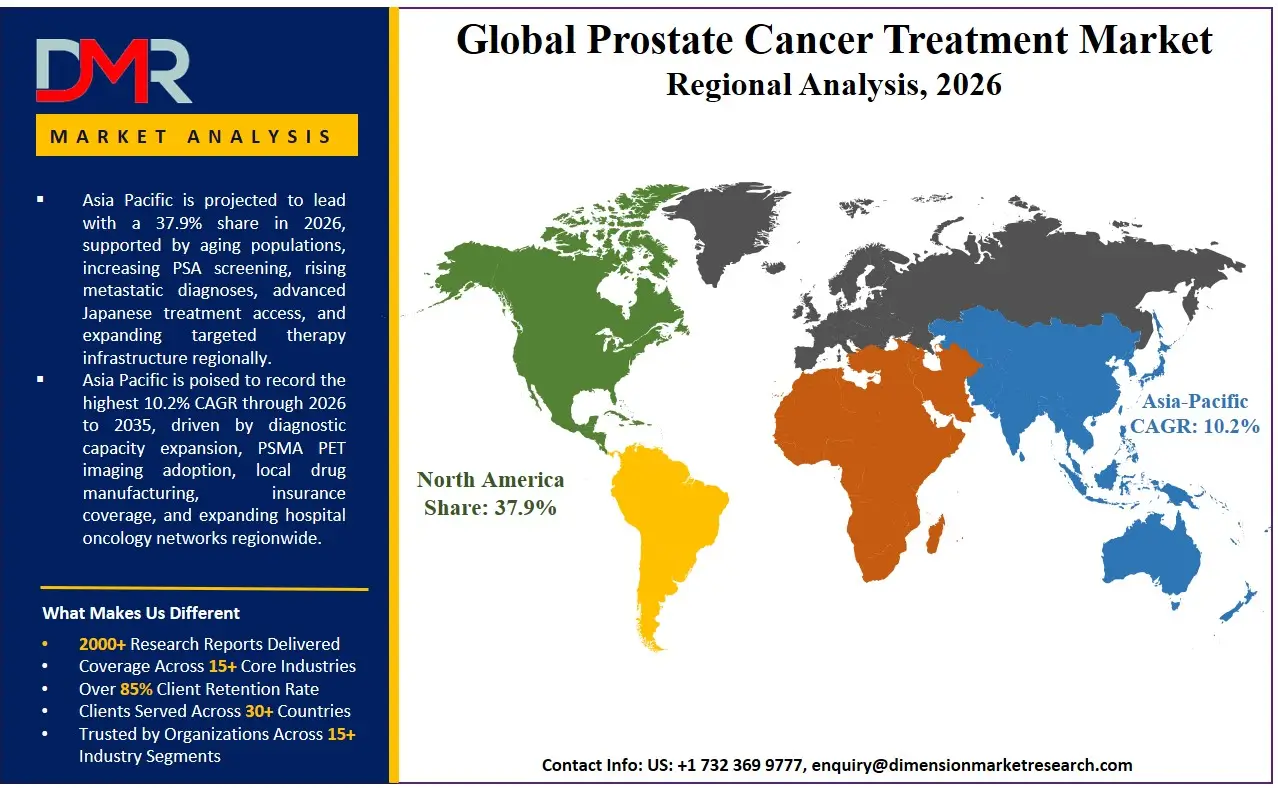
Asia Pacific is poised to lead the Global Prostate Cancer Treatment Market with an estimated 37.9% revenue share in 2026. The region's preeminence is anchored by the demographic weight of aging male populations in China and Japan, rising prostate-specific antigen (PSA) screening rates in urban centers, and a rapidly expanding therapeutic infrastructure that enables the delivery of cutting-edge radioligand and targeted therapies.
ℹ
To learn more about this report –
Download Your Free Sample Report Here
China, in particular, is witnessing an epidemiological transition toward Westernized prostate cancer incidence patterns, compounded by a high proportion of men presenting with de novo metastatic disease, which directly fuels demand for systemic intensification regimens. Japan's advanced healthcare system provides universal access to next-generation ARPIs and is an early adopter of PSMA-PET imaging and theranostics, creating a dense, high-value market.
North America is the Second Leading Region in the Global Prostate Cancer Treatment Market
North America is projected to account for a 28.2% revenue share in 2026. Despite not being the largest by volume, the region remains the epicenter of pharmaceutical innovation and premium pricing for prostate cancer therapeutics. The United States market is characterized by rapid regulatory approvals, broad commercial and Medicare Part D coverage for oral oncolytics, and a consolidated network of tertiary cancer centers that drive early adoption of novel triplet regimens, PARP inhibitor combinations, and 177Lu-PSMA-617. The FDA's accelerated approval and breakthrough therapy designation pathways have been extensively leveraged for prostate cancer indications, ensuring U.S. patients are the first globally to access emerging modalities. High per-capita expenditure on advanced androgen receptor pathway inhibitors and theranostics ensures North America's outsized revenue contribution relative to its patient pool.
Asia Pacific is the Fastest-Growing Region in the Global Prostate Cancer Treatment Market
Asia Pacific is projected to register the fastest CAGR of 10.2% through 2026 to 2035, outstripping the global average. Beyond the demographic tailwinds of China and India, growth is catalyzed by the rapid expansion of domestic diagnostic infrastructure, including the proliferation of PSMA-PET/CT scanners in private hospital chains, which unlocks the eligibility funnel for radioligand therapy. Multinational pharmaceutical firms are increasingly pursuing direct market access and local manufacturing partnerships for ARPIs and GnRH antagonists, reducing cost barriers. Government initiatives, such as China's Healthy China 2030 strategy, are prioritizing cancer treatment capacity, while India's growing private urology and oncology hospital sector is driving up treatment rates. This convergence of improved diagnosis, expanding commercial insurance, and therapeutic modernization is creating a hyper-growth corridor.
The Europe Prostate Cancer Treatment Market
Europe represents one of the largest regional markets, underpinned by universal healthcare systems that provide comprehensive coverage for advanced prostate cancer therapies, though with marked heterogeneity in the adoption of next-generation imaging and theranostics. Germany holds the largest European market share, driven by a high density of urology clinics, generous reimbursement for PSMA-PET and radioligand therapy, and strong patient access to all major branded ARPIs. The UK and France are key markets influenced by NICE and HAS evaluations, which increasingly favor cost-effective intensification strategies and biomarker-driven PARP inhibitor use. The European Association of Urology (EAU) guidelines are a powerful harmonizing force, mandating routine HRR testing and endorsing triplet therapy for high-volume mCSPC, which gradually lifts treatment standards in Southern and Eastern European markets.
Latin America Prostate Cancer Treatment Market
The Latin America market is expanding as an aging population and dietary risk factors drive a rising incidence of prostate adenocarcinoma. Brazil and Mexico are the primary national markets, with Brazil's public health system (SUS) and regulated private health plans increasingly incorporating novel antiandrogens and GnRH antagonists into formularies, though cost constraints often limit access to the newest PARP inhibitors and radioligands. Mexico's high proportion of locally advanced and metastatic presentations at diagnosis creates a significant addressable population for hormonal therapy intensification. Access disparities, physician concentration in major metropolitan areas, and fragmented radiopharmacy infrastructure temper the penetration of theranostics, but large private cancer center chains are investing in PSMA-PET and nuclear medicine suites, creating enclaves of highly advanced, full-continuum care.
Middle East and Africa Prostate Cancer Treatment Market
The Middle East and Africa market is developing unevenly, with the Gulf Cooperation Council (GCC) states representing pockets of therapeutic sophistication. Saudi Arabia and the United Arab Emirates are rapidly integrating PSMA-directed imaging and prostate-specific theranostics into their flagship oncology centers, supported by robust government healthcare budgets and a preference for medical tourism avoidance. South Africa leads the sub-Saharan African market, with a well-established private urology sector that prescribes modern GnRH antagonists and ARPIs, although the majority of the public sector relies on bilateral orchiectomy and older antiandrogens. Across the broader region, late-stage presentation and limited access to molecular diagnostics restrict the market largely to ADT, yet the high overall burden of de novo metastatic disease represents a latent and substantial future market opportunity as economic development progresses.
Major Countries Analysis
The US Prostate Cancer Treatment Market
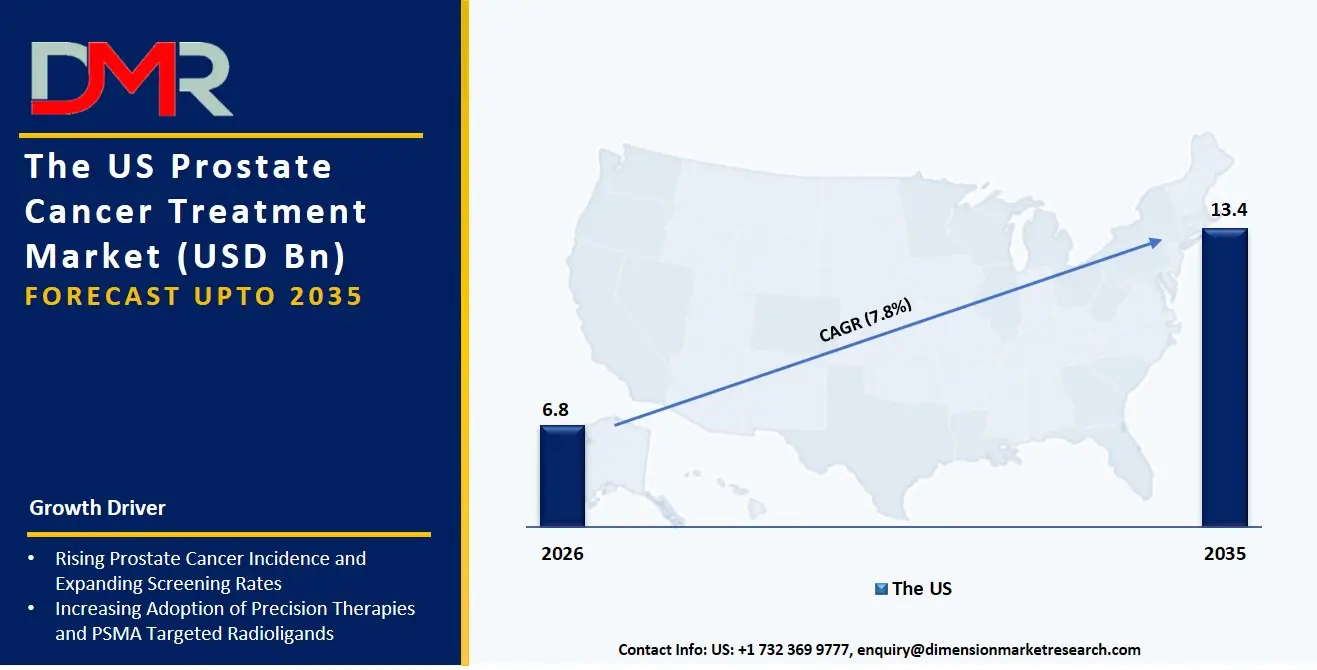
The United States Prostate Cancer Treatment Market is projected to be valued at USD 6.8 billion in 2026 and is expected to reach USD 13.4 billion by 2035, registering a CAGR of 7.8% from 2026 to 2035. This trajectory reflects the U.S.'s position as the highest-value single-country prostate cancer market, underpinned by an estimated 290,000 new diagnoses annually and a large prevalent pool of men with castration-resistant disease.
ℹ
To learn more about this report –
Download Your Free Sample Report Here
Growth is fueled by the rapid, simultaneous adoption of multiple high-cost therapeutic advances: doublet and triplet regimens in mCSPC, PARP inhibitor-ARPI combinations in HRR-mutated mCRPC, and the commercial launch of 177Lu-PSMA-617 radiopharmaceutical therapy, which has established a new multi-billion-dollar revenue stream within the oncology market. Medicare's coverage for oral oncolytics and fee-for-service reimbursement for hospital-based radioligand infusion create favorable economics for manufacturers and providers alike.
Japan Prostate Cancer Treatment Market
Japan possesses the highest prostate cancer incidence rate in Asia, a consequence of its super-aged society, and is a globally unique market due to the high-volume use of GnRH antagonists, extensive robotic-assisted radical prostatectomy, and rapid adoption of PSMA-PET imaging. The Japanese market is distinguished by near-universal insurance coverage for advanced therapies, early regulatory approvals for novel ARPIs and radioligands, and the integration of molecular pathology testing for HRR mutations into clinical routine. Domestic pharmaceutical and radiopharmaceutical manufacturers are actively investing in the local production of 177Lu-labeled compounds, positioning Japan as a leading hub for next-generation theranostics in the region. The preference for continuous androgen deprivation combined with potent ARPIs in the non-metastatic and castration-sensitive settings ensures a stable, high-value pharmaceutical base.
Regulatory Landscape
The regulatory landscape for advanced prostate cancer therapies is defined by agencies that have established clear expedited pathways for agents demonstrating transformative overall survival or radiographic progression-free survival benefits. In the United States, the FDA has granted Breakthrough Therapy Designation to multiple androgen receptor inhibitors and PSMA-radioligands, and has accepted metastatic-free survival in nmCRPC and radiographic progression-free survival in mCRPC as valid primary endpoints for full approval. The agency's Modernization Act 2.0 has reduced animal testing requirements, accelerating IND timelines for novel radioisotope conjugates. In Europe, the EMA's CHMP has demonstrated receptivity to stratified approvals based on biomarker status, as seen with PARP inhibitors for BRCA1/2-mutated mCRPC, and collaborates with the EANM for guidance on radiopharmaceutical clinical development. Japan's PMDA often grants Sakigake designation for innovative theranostics, facilitating near-simultaneous global approvals.
Epidemiology Analysis
The Prostate Cancer Epidemiology section assesses historical and forecast prostate cancer burden across the markets covered in the study. It evaluates incident cases, stage distribution at diagnosis, prevalent cases (including active surveillance, non-metastatic, and metastatic populations), and the treated populations segmented by treatment modality androgen deprivation therapy, ARPI-based regimens, chemotherapy, PARP inhibition, and PSMA-directed radioligand therapy.
- The International Agency for Research on Cancer reported that 1.5 million new cases of prostate cancer were diagnosed globally in 2022, with incidence rates expected to double by 2040 due to population aging.
- Asia accounts for the largest share of incident cases, with China and India collectively contributing over 300,000 new diagnoses annually, a number projected to rise sharply with increased PSA testing.
- In the United States, the National Cancer Institute estimates that 3.3 million men are living with a diagnosis of prostate cancer, the vast majority of whom are in the post-treatment surveillance or non-metastatic castration-sensitive state, representing a large reservoir for future progression to castration resistance.
- The prevalence of metastatic castration-resistant prostate cancer is expanding globally as men on modern, intensified regimens for mCSPC live longer and eventually develop resistance, driving sustained demand for late-line targeted and radioligand therapies.
- 20-25% of men with mCRPC harbor a clinically actionable HRR gene alteration, such as a BRCA2 or ATM mutation, defining the biomarker-eligible population for PARP inhibitor therapy.
By Region
North America
Europe
- Germany
- The U.K.
- France
- Italy
- Russia
- Spain
- Rest of Europe
Asia-Pacific
- China
- Japan
- India
- Australia
- South Korea
- Rest of Asia-Pacific
Latin America
- Mexico
- Brazil
- Argentina
- Colombia
- Rest of LATAM
Middle East & Africa
- Saudi Arabia
- The UAE
- South Africa
- Rest of MEA
Competitive Landscape
The Global Prostate Cancer Treatment Market features a dynamic competitive landscape spanning large-cap pharmaceutical companies with deep oncology portfolios, specialized radiopharmaceutical manufacturers, and emerging biotechnology firms pioneering next-generation modalities. Johnson & Johnson (through Janssen) has been a historic leader with its blockbuster androgen receptor inhibitor franchise, while Astellas/Pfizer's alliance around enzalutamide has shaped the ARPI market. Bayer's darolutamide, in combination with docetaxel and ADT, has captured the high-volume mCSPC segment, and the company also co-markets the alpha-emitting radiopharmaceutical Xofigo. In the PSMA-theranostic arena, Novartis has established a dominant position with 177Lu-PSMA-617 and a complementary PET diagnostic, while Lantheus, Telix Pharmaceuticals, and Curium compete fiercely in the PSMA-PET imaging agent market that serves as the gateway to treatment. AstraZeneca and Merck & Co. have driven the PARP inhibitor market in prostate cancer with olaparib and its combination strategies.
Some of the prominent players in the Global Prostate Cancer Treatment Market are:
- Johnson & Johnson
- Pfizer Inc.
- AstraZeneca PLC
- Merck & Co. Inc.
- Roche Holding AG
- Novartis AG
- Bayer AG
- Astellas Pharma Inc.
- Sanofi
- Bristol Myers Squibb Company
- AbbVie Inc.
- Eli Lilly and Company
- Amgen Inc.
- Gilead Sciences Inc.
- BeiGene Ltd.
- Ipsen Pharma
- Takeda Pharmaceutical Company Limited
- Daiichi Sankyo Company Limited
- Exelixis Inc.
- Regeneron Pharmaceuticals Inc.
- BioNTech SE
- Dendreon Pharmaceuticals LLC
- Telix Pharmaceuticals Limited
- POINT Biopharma Global Inc.
- Fusion Pharmaceuticals Inc.
- Myovant Sciences Inc.
- Orion Corporation
- Nuvation Bio Inc.
- Karyopharm Therapeutics Inc.
- Oncternal Therapeutics Inc.
- ESSA Pharma Inc.
- Veru Inc.
- MacroGenics Inc.
- Zenith Epigenetics Ltd.
- Genentech Inc.
- Bayer Radiology Pharmaceuticals
- Endocyte Inc.
- Lantheus Holdings Inc.
- Clovis Oncology Inc.
- Arvinas Inc.
- Other Key Players
Recent Developments
- March 2026: Telix Pharmaceuticals announced that Part 1 of its Phase III ProstACT GLOBAL trial for TLX591-Tx achieved its primary safety and dosimetry objectives in PSMA-positive metastatic castration-resistant prostate cancer. The randomized efficacy expansion, Part 2, remained ongoing; no positive efficacy top-line result or BLA submission was announced.
- April 2026: Novartis withdrew its European Medicines Agency application seeking to expand Pluvicto into an earlier PSMA-positive metastatic castration-resistant prostate-cancer setting. Therefore, a September 2026 European Commission label expansion is not verified.
- December 2025: Johnson & Johnson received U.S. FDA approval for Akeega, a fixed-dose combination of niraparib and abiraterone acetate with prednisone, for adults with deleterious or suspected deleterious BRCA2-mutated metastatic castration-sensitive prostate cancer.
- June 2025: A post hoc ARASENS analysis confirmed that darolutamide plus androgen-deprivation therapy and docetaxel improved overall survival and delayed disease progression versus androgen-deprivation therapy and docetaxel alone in metastatic hormone-sensitive prostate cancer.
Report Details
| Report Characteristics |
| Market Size (2026) |
USD 25.0 Bn |
| Forecast Value (2035) |
USD 53.0 Bn |
| CAGR (2026–2035) |
8.7% |
| The US Market Size (2026) |
USD 6.8 Bn |
| Historical Data |
2021 – 2025 |
| Forecast Data |
2027 – 2035 |
| Base Year |
2025 |
| Estimate Year |
2026 |
| Segments Covered |
By Treatment Modality, By Drug Class, By Disease Stage / Clinical Setting, and By End User |
| Regional Coverage |
North America – The U.S. and Canada; Europe – Germany, The U.K., France, Italy, Russia, Spain, and Rest of Europe; Asia Pacific – China, Japan, India, Australia, South Korea, and Rest of Asia Pacific; Latin America – Mexico, Brazil, Argentina, Colombia, and Rest of Latin America; Middle East and Africa – Saudi Arabia, The UAE, South Africa, and Rest of MEA |
Frequently Asked Questions
How big is the Global Prostate Cancer Treatment Market?
▾ The Global Prostate Cancer Treatment Market is valued at USD 25.0 billion in 2026 and is projected to reach USD 53.0 billion by 2035, reflecting strong global demand for novel hormonal therapies, precision oncology combinations, and theranostic radiopharmaceuticals.
What is the CAGR of the Global Prostate Cancer Treatment Market from 2026 to 2035?
▾ The market is projected to expand at a compound annual growth rate (CAGR) of 8.7% between 2026 and 2035, supported by sustained investment in PSMA-directed platforms, expanding PARP inhibitor indications, and deeper clinical integration of intensified systemic regimens.
What factors are driving the growth of the Global Prostate Cancer Treatment Market?
▾ Growth is driven by the rising global incidence of prostate adenocarcinoma, the decisive shift toward treatment intensification with androgen receptor pathway inhibitors in metastatic hormone-sensitive disease, the commercial expansion of PSMA-targeted theranostics, and the establishment of HRR mutation status as a predictive biomarker guiding PARP inhibitor therapy.
What are the major trends in the Global Prostate Cancer Treatment Market?
▾ Major trends include the transformation of mCSPC into a prolonged combination therapy phase, the integration of PSMA-PET imaging as a theranostic gatekeeper and staging modality, the development of alpha-particle-emitting radiopharmaceuticals, and the use of AI in digital pathology and genomic risk stratification to personalize treatment selection.
Which region held the largest share of the Global Prostate Cancer Treatment Market in 2026?
▾ Asia Pacific is expected to lead the global market with a 37.9% share in 2026, supported by a vast, aging male demographic, rising PSA screening rates, expanding oncology infrastructure, and increasing government focus on cancer care modernization.
Which region is expected to grow the fastest in the Global Prostate Cancer Treatment Market?
▾ Asia Pacific is expected to record the fastest growth at a 10.2% CAGR through 2035, driven by the rapid proliferation of PSMA-PET diagnostic capacity, expanding market access for branded ARPIs and GnRH antagonists, and a large pool of men with de novo metastatic disease.
Who are the key players in the Global Prostate Cancer Treatment Market?
▾ Key market participants include Johnson & Johnson, Astellas Pharma, Pfizer, Bayer, Novartis, AstraZeneca, Merck & Co., Lantheus Holdings, Telix Pharmaceuticals, Curium Pharma, and Sanofi, among other pharmaceutical, radiopharmaceutical, and diagnostic companies shaping the treatment landscape.
How is the Global Prostate Cancer Treatment Market segmented?
▾ The market is segmented by treatment modality, drug class, disease stage/clinical setting, and end user, with regional analysis covering North America, Europe, Asia Pacific, Latin America, and the Middle East and Africa.