What is the Proteomics-Based Diagnostic Market Size?
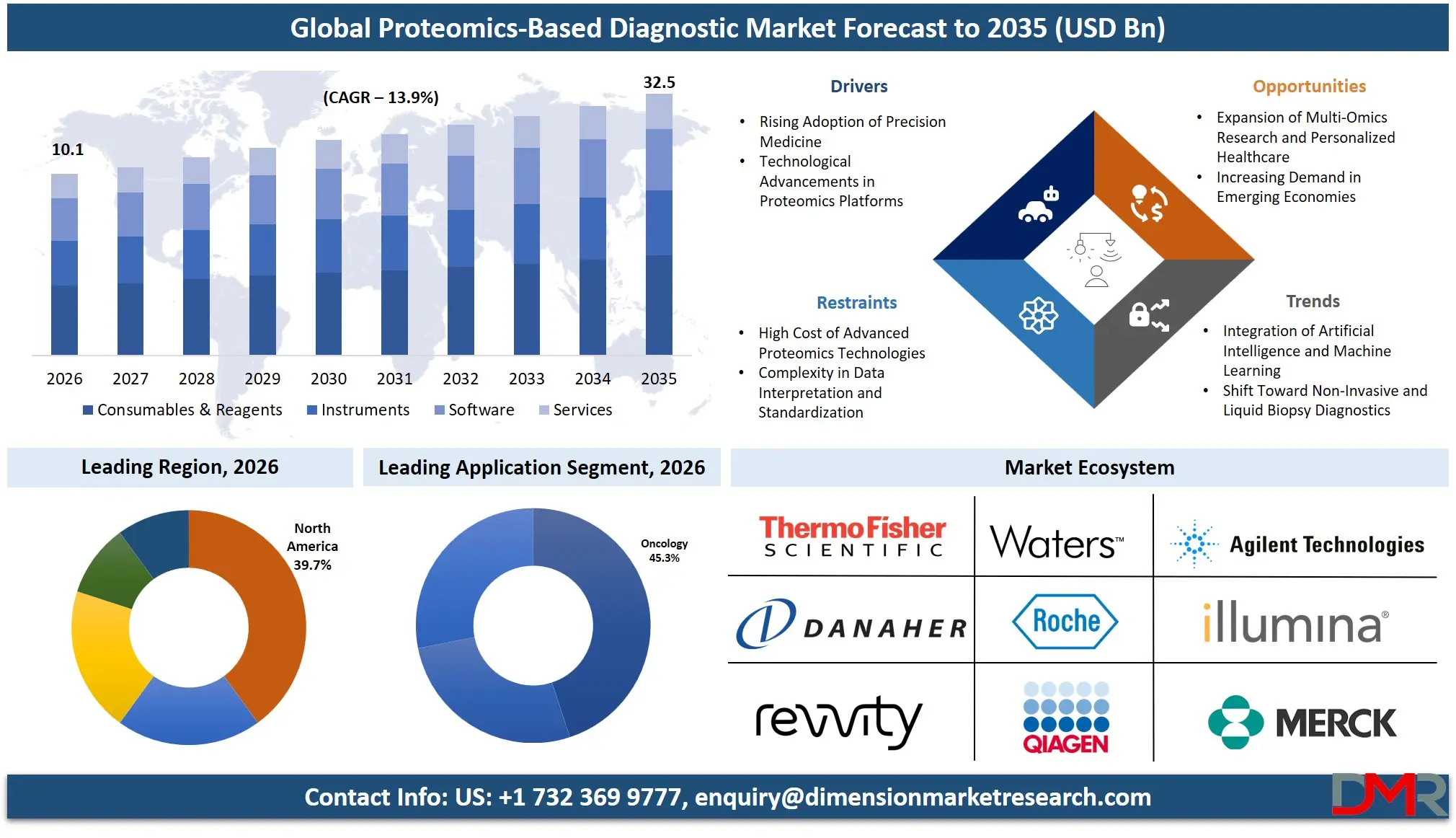
The Proteomics-Based Diagnostic Market size is expected to be USD 10.1 billion in 2026 and increase at a compound annual growth rate of 13.9% to USD 32.5 billion in 2035 due to medical professionals adopting protein biomarkers analysis to help them design individualized treatment strategies and enhance results.
ℹ
To learn more about this report –
Download Your Free Sample Report Here
Proteomics-Based Diagnostic Market represents the complete set of technologies, tools, devices, solutions, reagents, software products, and services involved in detecting, analyzing, and understanding protein markers with applications in diagnosis, treatment, and prognostics. Such an approach makes use of mass spectroscopy, proteomics arrays, immunoproteomics, electrophoresis, and bioinformatics assisted by artificial intelligence in order to achieve improved results from precision medicine practices. Prognostic capabilities of Proteomics-Based Diagnostic solutions are very significant for applications in oncology, neurology, cardiology, and other types of diagnostic processes related to infectious diseases. Increased usage of personal medicine approaches, biomarker-based research, omics integration, automation, and bioinformatics analysis is reshaping the market.
ℹ
To learn more about this report –
Download Your Free Sample Report Here
The US Proteomics-Based Diagnostic Market
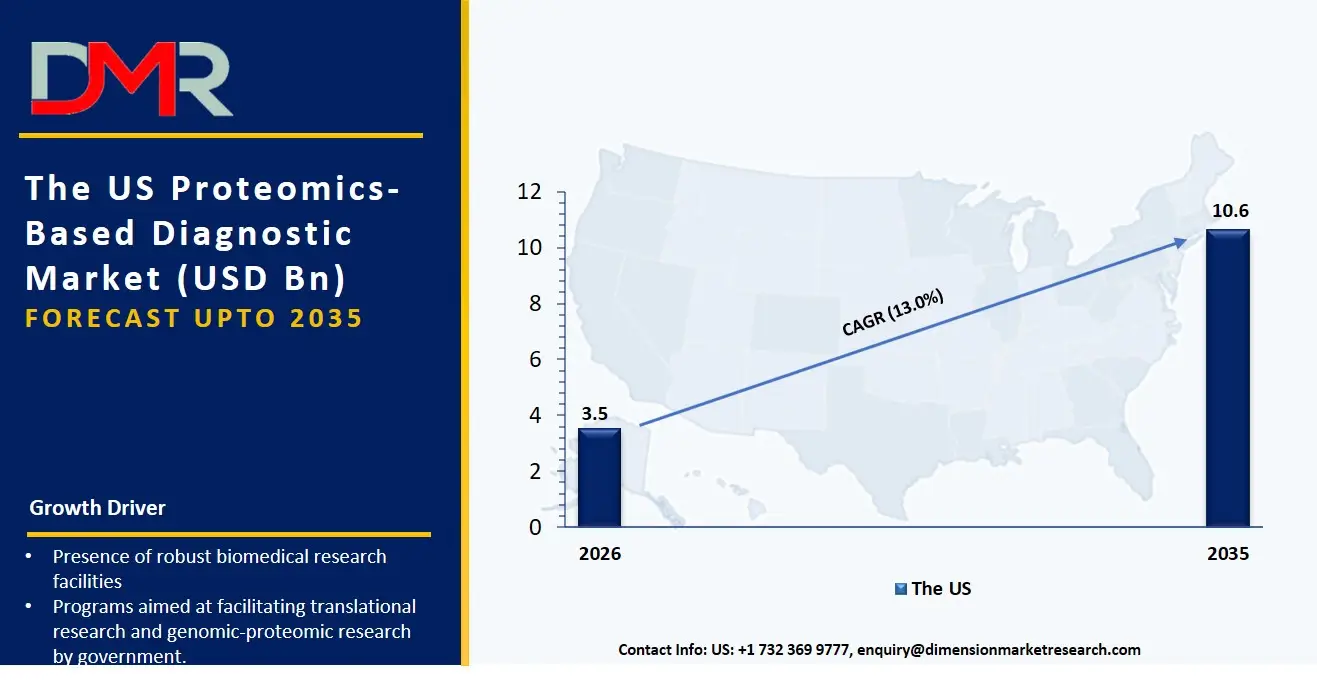
The US Proteomics-Based Diagnostic Market size is estimated to be USD 3.5 billion in 2026 and is expected to increase at a CAGR of 13.0% over the forecast period.
Proteomics-based diagnostics market in the US can be attributed to the presence of robust biomedical research facilities, higher healthcare spending, and the rising trend toward precision medicine. Significant investment in cancer biomarker discovery, clinical proteomics, and AI-driven diagnostic testing helps expand the market. Programs aimed at facilitating translational research and genomic-proteomic research by government is also encouraging innovations from diagnostic laboratories and organizations. Advanced healthcare ecosystem along with reimbursement policies and increasing partnerships between biotech companies and academic research centers make the country a leader in proteomics-based diagnostics adoption.
ℹ
To learn more about this report –
Download Your Free Sample Report Here
Europe Proteomics-Based Diagnostic Market
The Europe Proteomics-Based Diagnostic Market size is estimated to be USD 2.4 billion in 2026 and is expected to increase at a CAGR of 13.2% over the forecast period.
The European region offers a highly advanced market due to the existence of favorable health care regulations, efforts in promoting personalized medicine, and rising investment in biomarker-driven disease diagnosis. Policies promoting personalized medicine and transformation of health through technology are contributing to the adoption of proteomics within the clinical diagnosis process. Germany, the United Kingdom, France, and the Netherlands are currently experiencing high levels of demands for biomarkers associated with oncology and neurology. The region is also characterized by strong research collaborations between academic, health care, and biotechnology organizations.
Japan Proteomics-Based Diagnostic Market
The market size of Japan Proteomics-Based Diagnostic will be USD 404 million in 2026 and at a CAGR of 13.8% in the forecast period.
Japan's Proteomics-Based Diagnostic Market is growing owing to rapid developments in biomedical sciences, aging population, and rise in the number of patients with chronic conditions such as cancer and neuro-degenerative diseases. With increased government funding on personalized healthcare and next-generation diagnostic systems, Japan's Proteomics-Based Diagnostic market is expected to grow significantly. Japan's pharmaceutical and biotechnology companies have shown great interest in conducting researches in proteomics biomarkers, with the aim of advancing their drug discovery and companion diagnostics programs.
Key Takeaways
- Market Size & Forecast: The Proteomics-Based Diagnostic Market size is projected to reach USD 10.1 billion in 2026 and is anticipated to have a value of USD 32.5 billion in 2035.
- Growth Rate & Outlook: The Proteomics-Based Diagnostic Market size is set to grow at a compound annual growth rate of 13.9% during the forecast period of 2026 to 2035.
- Primary Growth Drivers: Some of the major growth drivers in the market include Growing Acceptance of Precision Medicine, and more.
- Key Market Trends: Some of the major trends in the market are Non-Invasive and Liquid Biopsy Diagnostics Trend, and more.
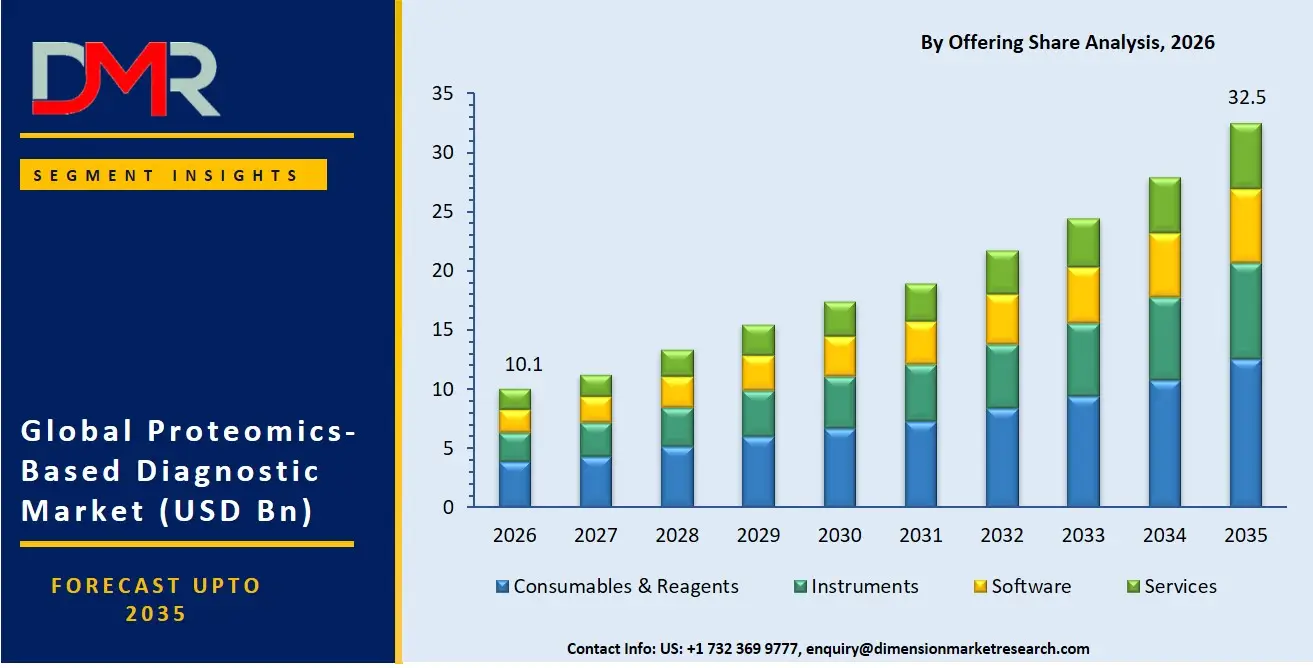
- By Offering: Consumables & Reagents segment is anticipated to get the majority share of the Proteomics-Based Diagnostic market in 2026.
- By End User: Hospitals are expected to get the largest revenue share in 2026 in the Proteomics-Based Diagnostic market.
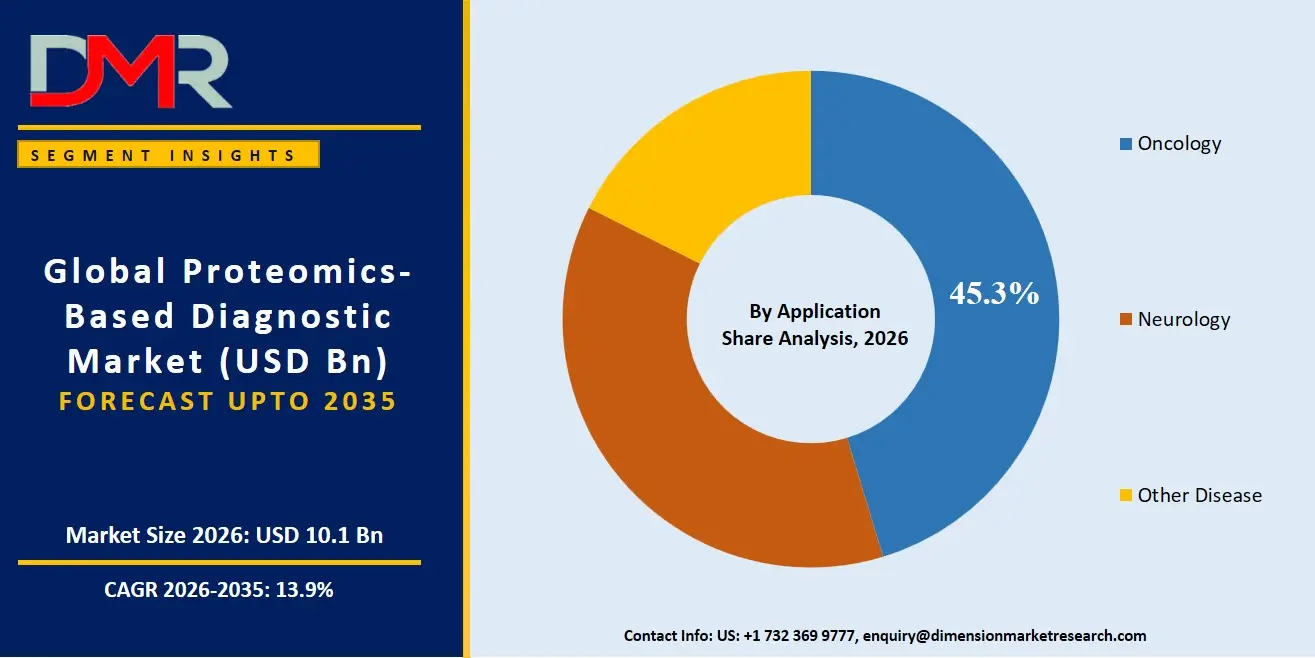
- By Application: Oncology segment is expected to get the largest revenue share in 2026 in the Proteomics-Based Diagnostic market.
- Regional Leadership: North America is set to lead the Proteomics-Based Diagnostic market with an estimated 39.7% share in 2026.
What is the Proteomics-Based Diagnostic?
Proteomics-based diagnostics is concerned with using the large scale protein analysis to detect protein biomarkers in order to detect disease, determine prognosis and monitor treatments. The technologies involved in proteomics include mass spectrometry, protein microarray, and immunological methods used in analyzing the expression pattern of the proteins in the sample. These tools contribute to precision medicine by allowing precise diagnosis of diseases through early and accurate identification.
Use Cases
- Oncology Diagnostics: The use of proteomics is very widespread in the area of oncology diagnostics and treatment. It relies on the use of protein biomarkers responsible for the growth and the development of tumors and cancerous conditions. It may be used for early cancer detection, patient stratification, and personalized therapy for various forms of cancer including breast cancer, lung cancer, colorectal cancer, and prostate cancer.
- Neurology Disease Diagnostics: Proteomics biomarkers are used in diagnosing neurologic disorders such as Alzheimer's disease, Parkinson's disease, and multiple sclerosis. Thanks to the new technology for the analysis of proteins, the process of prediction and disease progression becomes more efficient and effective when treating the disease.
- Pharmaceutical Industry and Companion Diagnostics: Pharmaceuticals use proteomics tests for identifying disease biomarkers, establishing target molecules, and developing companion diagnostics tools for more successful researches and therapies. These methods allow the companies to develop personalized medication that yields positive effects.
- Pathogen Detection and Infectious Diseases: Recently the use of proteomics in pathogen detection and detection of immune responses associated with infectious diseases became common practice. Due to mass spectrometry and multiplex immunoassay, faster diagnosis and detection of diseases in hospitals and laboratories become easier tasks to perform.
How AI Is Transforming the Proteomics-Based Diagnostic Market
Artificial intelligence has immensely contributed to increasing the effectiveness of diagnosing using proteomics by facilitating the efficient processing of highly complex protein datasets. The use of AI technologies allows for the identification of disease biomarkers and the prediction of patient response to therapy in the areas of oncology, neurology, and infections. The utilization of machine learning also cuts down on workload during analyses and speeds up biomarker discoveries.
The use of AI further contributes to automated lab work, improves consistency of interpreting samples, and aids in making clinical decisions through predictive analytics. By combining AI bioinformatics with cloud computing, real-time data sharing and collaboration become possible. This contribution is aiding healthcare providers in providing efficient diagnostic services, thus improving their operations and reducing costs.
Market Dynamic
Driving Factors in the Proteomics-Based Diagnostic Market
Growing Acceptance of Precision Medicine
Precision medicine is among the main trends driving the growth of the Proteomics Based Diagnostic market. Medical professionals are adopting protein biomarkers analysis to help them design individualized treatment strategies and enhance results. Proteomics helps in understanding diseases, measuring drug response and monitoring effectiveness. The increasing burden of diseases such as cancer and neurological conditions has fueled the use of biomarkers diagnostics. In addition, development in high-throughput proteomics and bioinformatics has improved efficiency and accuracy in conducting tests and diagnosis.
Restraints in the Proteomics-Based Diagnostic Market
Expensive Cost of Highly Developed Proteomics Technology
A significant factor limiting the use of proteomics is its expensive cost, both in terms of purchase and maintenance of technology used for proteomics research. Advanced technologies like mass spectroscopy equipment, automation systems, and bioinformatics systems are expensive to purchase and maintain, especially for small research labs or health care centers that have budget constraints. Further, other costs associated with the use of such technology like the cost of labor and procurement of reagents add up. Such costs limit access, especially in underdeveloped health care systems.
Opportunities in the Proteomics-Based Diagnostic Market
Growth of Multi-Omics Studies & Personalized Medicine
There are several ways in which the integration of genomics, transcriptomics, and proteomics studies into the field of multi-omics research provides substantial room for market growth. The rising need to understand the biology of personalized medicine is being experienced by healthcare service providers as well as pharmaceutical manufacturers. Through proteomics, the disease biology can be comprehended through studying protein expression, which is associated with disease development and therapy response. There will likely be many opportunities that arise out of collaborations and clinical studies.
Trends in the Proteomics-Based Diagnostic Market
Non-Invasive and Liquid Biopsy Diagnostics Trend
The growing inclination towards non-invasive diagnostics is promoting the growth in demand for liquid biopsy based on proteomics. Blood-based proteomics represents minimally invasive means of disease diagnosis and surveillance, especially in the fields of oncology and neurology diagnostics. Development of highly sensitive biomarkers is enabling clinical utility of liquid biopsy tests. Healthcare professionals are turning to this technology more often as a mean of disease screening, treatment and recurrence monitoring. The shift towards patient friendly diagnosis procedures will substantially shape the future of diagnostics based on proteomics.
Research Scope and Analysis
Research scope and analysis for the Proteomics-Based Diagnostic market involves evaluating market segments by offering, technology, biomarker type, application, and end user across major regions. The analysis examines growth drivers, competitive trends, innovation patterns, regulatory developments, and adoption rates. It also assesses emerging opportunities in precision medicine, biomarker discovery, AI-enabled diagnostics, and advanced proteomics technologies influencing future market expansion.
ℹ
To learn more about this report –
Download Your Free Sample Report Here
By Offering Analysis
The consumables & reagents segment is projected to lead in the Proteomics-Based Diagnostic Market and is predicted to capture a 38.6% market share by 2026 owing to their continuous use in the routine diagnostics process. The increasing number of biomarker validation studies coupled with high demand for throughput proteomics testing have contributed to the increased need for reagents in the hospitals and research labs. On the other hand, AI-based diagnostic software & bioinformatics platforms are predicted to grow rapidly as a result of rising demand for automated data analysis and predictive analytics.
By Technology Analysis
Mass Spectrometry-based Proteomics is expected to lead in terms of technology with a projected market share of around 42.9% by the year 2026. This includes the use of technologies such as LC-MS/MS and Tandem Mass Spectrometry, which are gaining popularity owing to their highly accurate and sensitive nature coupled with the capability to conduct analysis of complex proteins. These technologies are becoming popular among pharmaceutical companies and clinical laboratories for applications in biomarker discovery and profiling of diseases. One of the most rapidly growing areas of the technology segment involves the use of MALDI-TOF technology.
By Biomarker Type Analysis
The diagnostic biomarkers are expected to dominate the biomarker type market with about 34.8% market share in 2026. The widespread use of diagnostic biomarkers for disease diagnosis, cancer screening, and precise diagnostics drives the market growth. Diagnostic protein biomarkers find increased use in healthcare by organizations owing to their use in improving the treatment and results. The companion diagnostics biomarkers are set to grow at the highest rate because of growing developments in targeted drugs and personal medicines. There is heavy spending from pharmaceutical organizations in clinical trials with the use of biomarkers.
By Application Analysis
Proteomics-based oncology diagnostics is expected to remain the leading market segment with market share reaching up to 45.3% by 2026. Increasing prevalence of breast cancers, lung cancers, colorectal cancers, and blood cancers among others will drive the demand for proteomics-based diagnostic solutions. Protein profiling services will help in cancer detection, personalized therapy, and management of treatment, and hence contribute significantly to precise medicine. The rising incidences of neurological disorders and investments in biomarker research for Alzheimer's and Parkinson's diseases are the driving forces behind neurology diagnostics becoming the fastest growing market segment.
By End User Analysis
Based on forecasts, hospitals are predicted to take market leadership position with approximately 36.4 percent market share by 2026. Incorporation of advanced diagnostic technology in hospital laboratories, increased number of patients as well as the need for high levels of diagnostic precision are the factors responsible for segment dominance. Hospitals are adopting more and more technologies involving proteomics in diagnosis of cancers, infection detection and personalized treatment plans. Pharmaceuticals and Biotechnologies segments are predicted to grow at the fastest pace because of their efforts at developing biomarkers and diagnostics.
The Proteomics-Based Diagnostic Market Report is segmented on the basis of the following:
By Offering
- Instruments
- Mass Spectrometry Systems
- Protein Microarray Systems
- Chromatography Systems
- Electrophoresis Systems
- Automated Sample Preparation Systems
- Consumables & Reagents
- Protein Biomarker Panels
- Assay Kits
- Antibodies & Immunoassay Reagents
- Sample Preparation Reagents
- Protein Labeling & Detection Reagents
- Software
- Proteomics Data Analysis Software
- Bioinformatics Platforms
- AI-Based Diagnostic Analytics Tools
- Services
- Biomarker Discovery Services
- Clinical Validation Services
- Proteomics Testing Services
By Technology
- Mass Spectrometry-Based Proteomics
- LC-MS/MS
- MALDI-TOF
- Tandem Mass Spectrometry
- Protein Microarrays
- Analytical Protein Microarrays
- Functional Protein Microarrays
- Immunoproteomics
- Antibody-Based Assays
- Multiplex Immunoassays
- Electrophoresis Technologies
- 2D Gel Electrophoresis
- Capillary Electrophoresis
By Biomarker Type
- Diagnostic Biomarkers
- Predictive Biomarkers
- Prognostic Biomarkers
- Pharmacodynamic Biomarkers
- Companion Diagnostic Biomarkers
- Multi-Protein Signature Panels
By Application
- Oncology Diagnostics
- Breast Cancer
- Lung Cancer
- Colorectal Cancer
- Prostate Cancer
- Hematologic Cancers
- Neurology Diagnostics
- Alzheimer's Disease
- Parkinson's Disease
- Multiple Sclerosis
- Other Disease Diagnostics
- Cardiovascular Diseases
- Infectious Diseases
- Autoimmune Diseases
- Metabolic Disorders
- Rare Diseases
By End User
- Hospitals
- Clinical Diagnostic Laboratories
- Academic & Research Institutes
- Pharmaceutical & Biotechnology Companies
- Specialty Diagnostic Centers
Regional Analysis
Leading Region in the Proteomics-Based Diagnostic Market
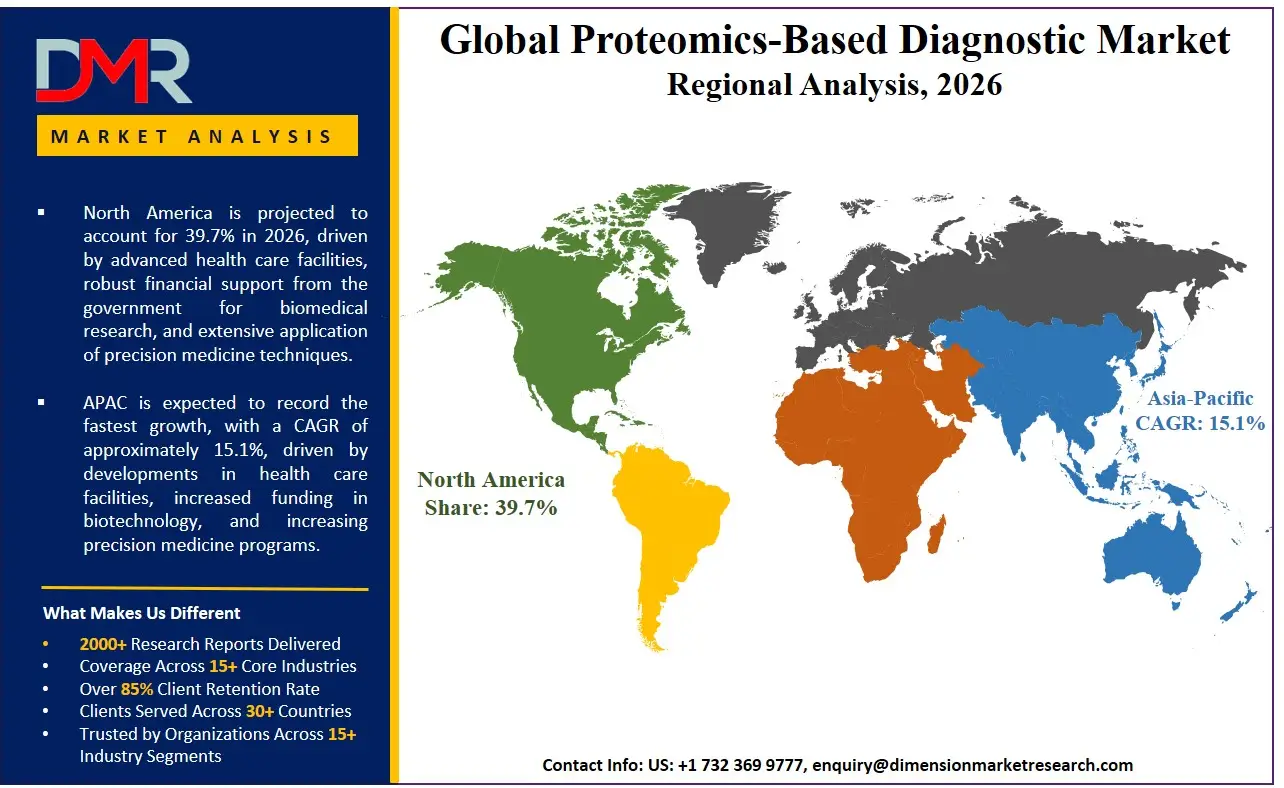
North America is likely to take dominance in the Proteomics-Based Diagnostic market, accounting for around 39.7% market share by 2026. This is due to advanced health care facilities, robust financial support from the government for biomedical research, and extensive application of precision medicine techniques. High incidence rates of chronic diseases such as cancer and neurodegenerative diseases have been boosting demand for protein marker diagnostics. Dominance of major biotech players, sophisticated laboratory networks, and positive reimbursement policies have been contributing to market dominance. Consistent investment in AI-based diagnostic tools and biomarkers is anticipated to support North America's dominance in the market.
ℹ
To learn more about this report –
Download Your Free Sample Report Here
Fastest Growing Region in the Proteomics-Based Diagnostic Market
The Asia-Pacific region will prove to be the most rapidly growing regional segment within the Proteomics-Based Diagnostic Market. This is attributed to developments in health care facilities, increased funding in biotechnology, and increasing precision medicine programs. China, Japan, India, and South Korea are registering robust performance in terms of biomedical research and diagnostic capabilities. The increased incidences of chronic diseases, increased awareness of disease prevention, and government initiatives in developing advanced technology in health care are contributing positively to the growth of this market.
By Region
North America
Europe
- Germany
- The U.K.
- France
- Italy
- Russia
- Spain
- Benelux
- Nordic
- Rest of Europe
Asia-Pacific
- China
- Japan
- South Korea
- India
- ANZ
- ASEAN
- Rest of Asia-Pacific
Latin America
- Brazil
- Mexico
- Argentina
- Colombia
- Rest of Latin America
Middle East & Africa
- Saudi Arabia
- UAE
- South Africa
- Israel
- Egypt
- Rest of MEA
Competitive Landscape
Diagnostic techniques that utilize proteomics technologies are fiercely competitive owing to innovations, collaboration, and investments made in the area of biomarker detection. Organizations within the industry are very keen on developing their proteomic tools in order to ensure accuracy as well as employing bioinformatics tools based on artificial intelligence. Collaborations with firms in the pharmaceutical industry, hospitals, and research institutions are key to innovating and commercializing products. The barriers to entry in the market segment include regulations and technological capabilities.
Some of the prominent players in the global Proteomics-Based Diagnostics are:
- Thermo Fisher Scientific
- Agilent Technologies
- Danaher Corporation
- Roche Diagnostics
- Bio-Rad Laboratories
- Bruker Corporation
- Waters Corporation
- Merck KGaA
- Shimadzu Corporation
- QIAGEN
- Standard BioTools
- Revvity
- Beckman Coulter Life Sciences
- Promega Corporation
- Illumina
- Horiba
- Bio-Techne
- Charles River Laboratories
- Meso Scale Diagnostics
- SomaLogic
- Other Key Players
Recent Developments
- In May 2026, Strand Life Sciences launched of the Olink Explore HT Proteomics Service in South Asia. This is the first time that such a high-throughput solution has been brought to South Asia which will be helpful for large-scale protein analysis studies. This new solution provides the possibility of studying more than 5,400 proteins in just one experiment by taking very small amounts of samples. The solution helps in multi-omics research, combining genomics and clinical data.
- In February 2026, Bruker Corporation has made some breakthroughs in enabling Functional Proteomics 2.0 workflows on the timsOmni™ mass spectrometer that would help disease researchers to advance from canonical protein lists to functional proteoforms and PTM-resolved peptides for biological and pathological functions. The latest software updates on Bruker ProteoScape™, OmniScape™ and GlycoScape™ software will support database independent PTM discovery and characterization of proteoform along with eXd Glycoproteomics research applications.
- In September 2025, Illumina Inc. unveiled the availability of its Illumina Protein Prep solution, which is based on NGS technology and used as a new proteomics assay for large-scale discovery applications. Available before under early access, the solution can be used now globally by scientists in order to combine their genomics research with proteomics analysis. This platform will allow studying various cancer, cardiometabolic, and immunological diseases.
Report Details
| Report Characteristics |
| Market Size (2026) |
USD 10.1 Bn |
| Forecast Value (2035) |
USD 32.5 Bn |
| CAGR (2026–2035) |
13.9% |
| Historical Period |
2021 – 2025 |
| Forecast Period |
2027 – 2035 |
| Base Year |
2025 |
| Estimate Year |
2026 |
| Segments Covered |
By Offering, By Technology, By Biomarker Type, By Application, By End User |
| Regional Coverage |
North America – The US and Canada; Europe – Germany, The UK, France, Russia, Spain, Italy, Benelux, Nordic, & Rest of Europe; Asia-Pacific – China, Japan, South Korea, India, ANZ, ASEAN, Rest of APAC; Latin America – Brazil, Mexico, Argentina, Colombia, Rest of Latin America; Middle East & Africa – Saudi Arabia, UAE, South Africa, Turkey, Egypt, Israel, & Rest of MEA |
Frequently Asked Questions
How big is the Proteomics-Based Diagnostic Market?
▾ The Proteomics-Based Diagnostic Market size is expected to reach USD 10.1 billion by 2026 and is projected to reach USD 32.5 billion by the end of 2035.
What is the CAGR of the Proteomics-Based Diagnostic Market from 2026 to 2035?
▾ The market is growing at a CAGR of 13.9 percent over the forecasted period.
What factors are driving the growth of the Proteomics-Based Diagnostic Market?
▾ Growing Acceptance of Precision Medicine, and more are the factors driving the growth of the Proteomics-Based Diagnostic Market.
What are the major trends in the Proteomics-Based Diagnostic Market?
▾ Non-Invasive and Liquid Biopsy Diagnostics Trend, and more are some of the major trends in the market.
Who are the key players in the Proteomics-Based Diagnostic Market?
▾ Some of the key players in the Proteomics-Based Diagnostic Market include Roche, Illumina, QIAGEN, and more
How is the Proteomics-Based Diagnostic Market segmented?
▾ The Proteomics-Based Diagnostic Market is segmented by offering, technology, biomarker type, application, end user.
Which region held the largest share of the Proteomics-Based Diagnostic Market in 2026?
▾ North America is set to lead the Proteomics-Based Diagnostic market with an estimated 39.7% share in 2026.
Which region is expected to grow the fastest in the Proteomics-Based Diagnostic Market?
▾ Asia Pacific is the fastest-growing region in the Proteomics-Based Diagnostic market during the forecast period.