Saudi Arabia Dietary Supplements Market Snapshot
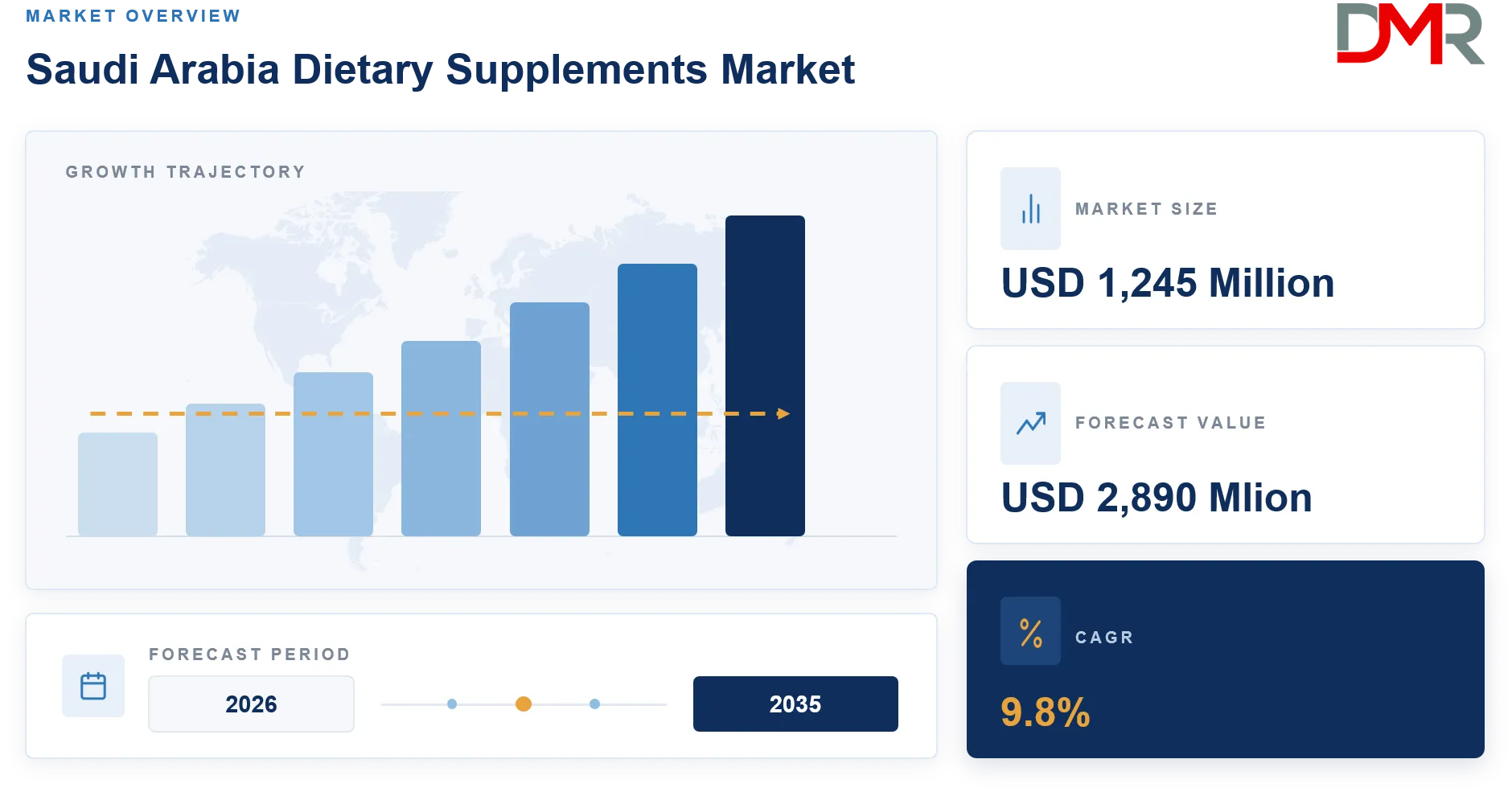
- Market Value: Saudi Arabia dietary supplements market size is valued at USD 1,245 million in 2026 and is projected to reach USD 2,890 million by 2035.
- CAGR: Saudi Arabia dietary supplements market is expected to grow at a CAGR of 9.8% from 2026 to 2035.
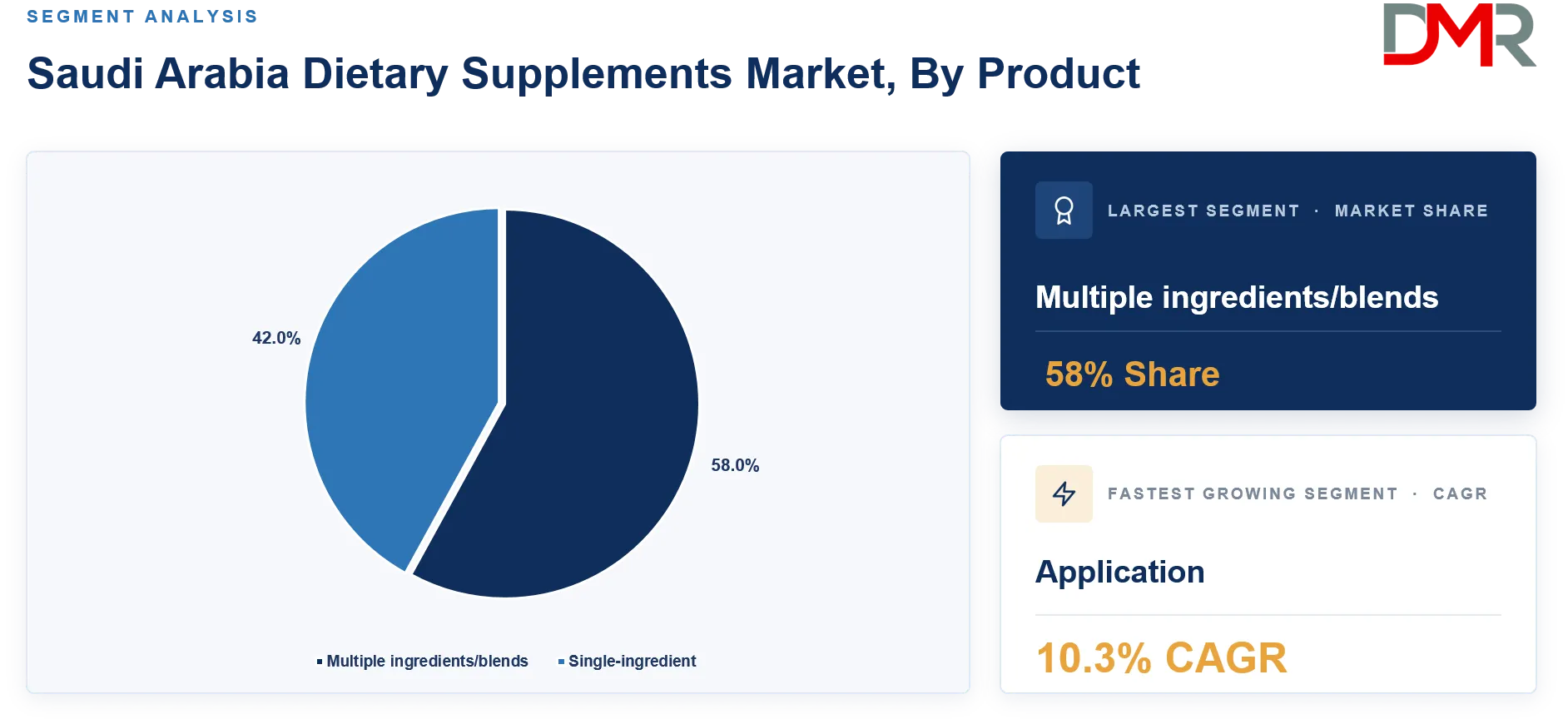
- By Product Segment Analysis: Multiple ingredients/blends led the product segment with a 58.0% share in 2026.
- By Ingredient Segment Analysis: Vitamins led ingredient types with a 27.0% share in 2026.
- By Form Segment Analysis: Capsules held the largest form share at 24.0% in 2026.
- By Application Segment Analysis: Immunity applications led with a 19.0% share in 2026.
- Major Players: Mega Lifesciences, Bayer AG, Herbalife International of America, Inc., H&H Group, and Abbott.
What is the Saudi Arabia Dietary Supplements Market and its Market Size?
The Saudi Arabia Dietary Supplements Market size is projected to be valued at USD 1,245 million in 2026 and is projected to reach USD 2,890 million by 2035, expanding at a CAGR of 9.8% during the forecast period. Growth is being supported by preventive healthcare awareness, expanding pharmacy and online retail networks, higher interest in immunity and nutritional wellness, and rising participation in fitness and active lifestyles.
ℹ
To learn more about this report –
Download Your Free Sample Report Here
Dietary supplements in Saudi Arabia include vitamin, mineral, amino acid, protein, botanical, omega fatty acid, probiotic and specialty nutrition products offered in capsules, tablets, powders, gummies, liquids and soft gels. The sector connects consumer healthcare, pharmaceuticals, sports nutrition and wellness retail. Products entering the Kingdom must operate within the Saudi Food and Drug Authority regulatory framework, making product classification, compliant ingredients, labeling, registration, importer arrangements and quality documentation important considerations for manufacturers and distributors.
Use Cases
- Preventive Nutrition: Adults use vitamins, minerals and blended products to close perceived nutritional gaps and support everyday wellness. Demand is reinforced by greater awareness of vitamin D, iron and micronutrient status and by easier access to supplements through pharmacies and digital commerce.
- Immunity Support: Immunity represented the leading application with 19.0% market share in 2026. Vitamin C, vitamin D, zinc, botanical and multi-ingredient combinations are positioned around immune maintenance, creating opportunities for scientifically supported formulations and convenient daily formats.
- Sports and Active Nutrition: Protein, amino acids, electrolytes and performance-oriented blends serve gym members, amateur athletes and consumers pursuing active lifestyles. Expanding fitness participation is widening demand beyond professional sports users and supporting powders, capsules and functional nutrition products.
- Healthy Aging: Older consumers create demand for bone, joint, cardiac, cognitive and general health supplements. Calcium, vitamin D, omega fatty acids and multi-nutrient formulations can address age-related wellness priorities, while pharmacy recommendations remain important for consumers managing medicines or chronic conditions.
- Beauty and Lifestyle Wellness: Supplements targeting skin, hair, nails, energy, weight management and mental wellness are gaining relevance among younger urban consumers. Gummies, capsules and personalized product bundles improve convenience and allow brands to connect nutrition with beauty, fitness and lifestyle routines.
How AI/Gen AI is Transforming the Saudi Arabia Dietary Supplements Market?
Artificial intelligence is becoming useful across formulation, consumer analytics, inventory planning and digital retail within Saudi Arabia's dietary supplements industry. Manufacturers can analyze product reviews, search behavior, sales histories and demographic patterns to identify demand for ingredients, dosage forms and wellness applications. Retailers and pharmacy platforms can use recommendation systems to organize products around immunity, sports nutrition, general wellness or life stage needs. Forecasting tools also help suppliers predict demand by location and reduce stock imbalances across major consumption centers such as Riyadh, Jeddah and Dammam. These capabilities are particularly relevant in a market with expanding online purchasing and a broad range of products, ingredients and formats.
Generative systems are also influencing customer service, product discovery and commercial operations. Companies can support Arabic and English product queries, summarize compliant product information and improve internal analysis of customer feedback. For business users, automated analytics can compare pricing, category performance, distribution channels and competitor portfolios more quickly. However, dietary supplements remain a regulated health-related category, so generated recommendations and marketing claims require strong human review. Companies that combine digital personalization with accurate labeling, verified product information, SFDA compliance and responsible health communication are better positioned to build trust while improving conversion and customer retention.
Key Drivers in the Saudi Arabia Dietary Supplements Market
Preventive Health Awareness and Lifestyle Management
Preventive wellness is expanding the addressable consumer base for supplements in Saudi Arabia. Health Sector Transformation Program priorities include prevention and improved population health, while consumers are increasingly attentive to nutrition, physical activity and chronic disease risks. Dietary supplements therefore extend beyond deficiency correction into immunity, energy, weight management, bone health and general wellness. This shift supports recurring purchases and creates demand for clearly positioned products backed by credible ingredient and usage information.
Expansion of Pharmacy and Digital Commerce Channels
Saudi consumers can access supplements through pharmacies, hypermarkets, specialty outlets, practitioner channels, direct selling and rapidly expanding online platforms. Digital channels improve assortment visibility and make it easier to compare ingredients, formulations, brands and prices. Large urban populations in Riyadh, Jeddah and Dammam provide dense delivery markets for pharmacy and e-commerce operators. Omnichannel availability also gives international and local brands additional routes to launch specialized products without relying on a single retail format.
Restraints in the Saudi Arabia Dietary Supplements Market
Regulatory Compliance and Product Registration Complexity
Saudi Arabia maintains structured requirements for food supplements through the Saudi Food and Drug Authority. Suppliers must address product classification, ingredient acceptability, labeling, manufacturing information and registration requirements before commercial distribution. Imported products also require capable local supply and compliance arrangements. These processes improve product oversight but can increase launch costs and extend market entry planning for companies managing large international portfolios, frequent formulation changes or products containing less familiar botanical and specialty ingredients.
Consumer Trust and Product Differentiation Challenges
A broad assortment of vitamins, herbal products, blends and sports supplements creates intense competition for consumer attention. Similar ingredient combinations can make brands difficult to distinguish, while exaggerated wellness claims can weaken category trust. Buyers increasingly compare dosage, formulation, price, reviews and brand reputation before purchase. Companies therefore need transparent labeling, credible scientific positioning and consistent quality. Weak differentiation can lead to price competition, higher customer acquisition costs and limited loyalty, particularly in online channels where alternatives are easy to compare.
Growth Opportunities in the Saudi Arabia Dietary Supplements Market
Personalized and Life Stage Nutrition
Segmentation by age, lifestyle and health objective provides a major opportunity for suppliers. Adults can be further addressed across Gen Z, Millennials, Gen X and Boomers, while children, infants and geriatric users have different nutritional requirements and purchase influences. Brands can create targeted combinations for prenatal health, healthy aging, active lifestyles, digestive wellness or beauty nutrition. Digital questionnaires, subscription models and pharmacist-supported recommendations can make these portfolios easier to navigate and may increase repeat purchasing.
Localized Premium and Science-Led Product Development
Companies have room to build products around Saudi consumer needs rather than relying only on globally standardized portfolios. Opportunities include vitamin D, minerals, probiotics, omega fatty acids, botanical blends and convenient multi-ingredient solutions designed for specific wellness applications. Local packaging, Arabic communication, halal-sensitive positioning and climate-appropriate storage strategies can strengthen relevance. Manufacturers that combine international quality standards with local regulatory knowledge and targeted formulation can compete in premium niches while supporting faster portfolio adaptation.
Trends in the Saudi Arabia Dietary Supplements Market
Shift Toward Multi-Ingredient Wellness Solutions
Multiple ingredients and blends accounted for 58.0% of product demand in 2026, indicating a strong preference for convenient formulations that combine several nutritional functions. Consumers can obtain vitamins, minerals, botanical ingredients and specialty nutrients through a single daily product rather than managing several individual supplements. This supports innovation around immunity, energy, beauty, healthy aging and general health. Manufacturers are responding with benefit-oriented combinations, differentiated dosages and premium formulas that simplify daily routines.
Format Diversification Beyond Traditional Tablets
Capsules remained the largest form with a 24.0% share in 2026, yet the competitive landscape is broadening across gummies, powders, liquids and soft gels. Format choice increasingly reflects convenience, taste, dosage requirements and consumer age. Gummies can improve appeal among younger users, powders remain important in sports nutrition, and liquids may support consumers seeking easier consumption. This diversification enables brands to extend successful ingredients across several formats and target distinct consumer groups without changing the core wellness proposition.
Research Scope and Analysis
The Saudi Arabia Dietary Supplements Market is segmented based on Product, Ingredient, Form, Type, Application, End User, Distribution Channel, and other relevant categories. The study provides an in-depth analysis of key segments and sub-segments, covering their applications, industry adoption, demand patterns, competitive position and contribution to overall market growth.
By Product
Multiple ingredients/blends dominated the Saudi Arabia dietary supplements market with a 58.0% share in 2026. The segment benefits from demand for convenient products capable of addressing several nutritional objectives within one formulation. Multivitamin and mineral combinations, immunity formulas, sports blends, beauty supplements and general wellness products reduce the need for consumers to purchase multiple single-ingredient products. These formulations also provide manufacturers with greater scope for differentiation through ingredient combinations, dosage levels and targeted benefit claims. As consumers become more familiar with preventive wellness, multi-ingredient formulations are expected to remain important across pharmacy, online and direct-to-consumer channels.
ℹ
To learn more about this report –
Download Your Free Sample Report Here
By Ingredient
Vitamins led ingredient categories with a 27.0% share in 2026. Their leading position reflects broad usage across general health, immunity, bone health, prenatal nutrition and age-specific supplementation. Vitamins D, C and B-complex products have wide consumer recognition, while multivitamin formulations extend vitamin exposure across several demographic groups. Vitamins are also available in capsules, tablets, gummies, liquids and combination products, improving accessibility. Future competition is likely to focus on differentiated dosage formats, ingredient combinations, age-specific products and improved consumer education. Minerals, probiotics, proteins, botanicals and omega fatty acids provide additional growth avenues as the market moves toward more specialized wellness goals.
By Form
Capsules held the largest market share at 24.0% in 2026. Capsules offer dosage precision, portability and compatibility with a wide range of vitamins, botanicals, minerals and blended formulations. They can also help manufacturers manage ingredients with undesirable taste or odor. Their familiarity within pharmacy and wellness environments supports consumer acceptance. At the same time, gummies, powders, liquids and soft gels are creating stronger competition as brands seek more convenient or lifestyle-oriented experiences. Product developers can use multiple formats to extend the same ingredient platform across children, active adults, beauty-oriented users and aging consumers.
By Application
Immunity was the largest application segment, accounting for 19.0% of the market in 2026. The category includes vitamins, minerals, botanical products and multi-ingredient formulas promoted for routine immune support. Strong consumer familiarity with vitamin C, vitamin D and zinc makes immunity an accessible entry point for new supplement users. Demand also overlaps with general health and seasonal wellness purchasing. Competition is increasingly moving from basic single-nutrient products toward combinations that address immunity alongside energy, digestive health or antioxidant support, creating opportunities for differentiated formulas and premium positioning.
The Saudi Arabia Dietary Supplements Market Report is Segmented on the Basis of the Following:
By Product
- Multiple ingredients/blends
- Single-ingredient
By Ingredient
-
Vitamins
- Minerals
- Proteins & Amino Acids
- Botanicals
- Omega Fatty Acids
- Fibers & Specialty Carbohydrates
- Probiotics
- Prebiotics & Postbiotics
- Others
By Form
- Capsules
- Tablets
- Powders
- Gummies
- Liquids
- Soft gels
- Others
By Type
By Application
- Immunity
- General Health
- Energy & Weight Management
- Bone & Joint Health
- Skin/Hair/Nails
- Brain/Mental Health
- Gastrointestinal Health
- Cardiac Health
- Anti-aging
- Diabetes
- Prenatal Health
- Others
By End User
- Adults
- Gen Z
- Millennials
- Gen X
- Boomers
- Geriatric
- Children
- Infants
By Distribution Channel
- Online
- Offline
- Pharmacies
- Hypermarkets/Supermarkets
- Specialty Stores
- Practitioner
- D2C
- Direct Sales/MLM
- Others
Competitive Landscape
The Saudi Arabia dietary supplements market features global consumer health companies, specialist nutrition manufacturers, direct-selling businesses and domestic pharmaceutical participants competing across pharmacies, digital platforms, modern retail and direct channels.
Some of the prominent players in the Saudi Arabia Dietary Supplements Industry are:
- Mega Lifesciences
- Bayer AG
- Herbalife International of America, Inc.
- H&H Group
- Abbott
- Glanbia PLC
- Pfizer Inc.
- Jamjoom Pharma
- Amway Corp
- NU Skin
- Others
Regulatory Landscape
The regulatory landscape of the Saudi Arabia dietary supplements market is shaped primarily by the Saudi Food and Drug Authority (SFDA), which oversees product classification, registration, safety, labeling and market compliance. Companies entering the Kingdom need to assess permitted ingredients, formulation specifications, dosage levels, health and nutrition claims, Arabic labeling requirements and supporting product documentation before commercialization. Imported supplements also require appropriate importer and distribution arrangements, making regulatory readiness an important part of market-entry planning. Requirements can vary according to product composition and classification, particularly for vitamins, minerals, botanicals and specialty formulations that may sit close to food or pharmaceutical categories. For manufacturers and investors, early regulatory assessment can reduce registration delays and reformulation risks. Strong quality control, traceability and compliant marketing are also becoming competitive advantages as Saudi consumers place greater emphasis on product authenticity, safety and scientifically credible wellness claims.
Investment and White Space Analysis
The Saudi Arabia dietary supplements market offers investment white space across localized manufacturing, specialized formulations, digital distribution and underserved consumer groups as the market advances from USD 1,245 million in 2026 toward USD 2,890 million by 2035. Multiple ingredients/blends already account for 58.0% of product demand, yet opportunities remain for differentiated products addressing healthy aging, women's nutrition, prenatal health, digestive wellness, sports nutrition, beauty, mental wellness and metabolic health. Investors can also examine probiotics, prebiotics and postbiotics, botanicals, omega fatty acids and convenient gummies or powders as alternatives to established vitamin and capsule categories. Riyadh, Jeddah and Dammam represent more than 85% of consumption, while secondary cities provide expansion potential through e-commerce and pharmacy networks. Additional white space exists in Saudi-focused formulations, contract manufacturing, private-label products, subscription models and clinically supported premium brands. Businesses combining SFDA compliance, localized consumer insight and omnichannel distribution can capture attractive gaps in this growing nutrition market.
Recent Developments
-
July 2026: Jamjoom Pharma entered a binding share subscription agreement with Lifera (a PIF company) to become a 49% shareholder in a new biologics joint venture, strengthening its manufacturing and commercialization capabilities for advanced therapeutics and supplements in the Kingdom.saudiexchange+1
- July 2026: Idorsia partnered with Jamjoom Pharma for the exclusive commercialization and distribution of its insomnia treatment QUVIVIQ in Saudi Arabia and the Levant, expanding Jamjoom's specialty pharmaceutical and wellness portfolio.
- March 2026: H&H Group reported robust growth in the Middle East, with its Swisse brand achieving over 50% year-on-year growth in Saudi Arabia's pharmacy channel, alongside regional expansion of Zesty Paws and Solid Gold across key markets including the Kingdom.
Report Details
| Report Characteristics |
| Market Size (2026) |
USD 1,245 Million |
| Forecast Value (2035) |
USD 2,890 Million |
| CAGR (2026–2035) |
9.8% |
| Historical Data |
2021 – 2025 |
| Forecast Data |
2027 – 2035 |
| Base Year |
2025 |
| Estimate Year |
2026 |
| Segments Covered |
By Product (Multiple ingredients/blends, Single-ingredient), By Ingredient (Vitamins, Minerals, Proteins & Amino Acids, Botanicals, Omega Fatty Acids, Fibers & Specialty Carbohydrates, Probiotics, Prebiotics & Postbiotics, Others), By Form (Capsules, Tablets, Powders, Gummies, Liquids, Soft gels, Others), By Type (OTC, Prescribed), By Application (Immunity, General Health, Energy & Weight Management, Bone & Joint Health, Skin/Hair/Nails, Brain/Mental Health, Gastrointestinal Health, Cardiac Health, Anti-aging, Diabetes, Prenatal Health, Others), By End User (Adults {Gen Z, Millennials, Gen X, Boomers}, Geriatric, Children, Infants), By Distribution Channel (Online, Offline {Pharmacies, Hypermarkets/Supermarkets, Specialty Stores, Practitioner, D2C, Direct Sales/MLM, Others}) |
| Regional Coverage |
Saudi Arabia |
Frequently Asked Questions
What is the current size of the Saudi Arabia Dietary Supplements Market?
▾ The Saudi Arabia Dietary Supplements Market is USD 1,245 million in 2026 and may reach USD 2,890 million by 2035.
What is the growth rate of the Saudi Arabia Dietary Supplements Market?
▾ The Saudi Arabia Dietary Supplements Market is expected to expand at a CAGR of 9.8% during the 2026-2035 period.
What factors are driving the growth of the Saudi Arabia Dietary Supplements Market?
▾ The Saudi Arabia Dietary Supplements Market is driven by preventive health, fitness, e-commerce and wellness demand.
What are the major challenges restraining the Saudi Arabia Dietary Supplements Market?
▾ The Saudi Arabia Dietary Supplements Market faces SFDA compliance, registration costs and consumer trust challenges.
Which segment holds the largest share of the Saudi Arabia Dietary Supplements Market?
▾ Multiple ingredients/blends lead the Saudi Arabia Dietary Supplements Market, accounting for a 58.0% share in 2026.
Who are the leading companies in the Saudi Arabia Dietary Supplements Market?
▾ Mega Lifesciences, Bayer AG, Herbalife International of America, Inc., H&H Group, Abbott, Glanbia PLC, Pfizer Inc., Jamjoom Pharma, Amway Corp and NU Skin are leading companies in the Saudi Arabia Dietary Supplements Market.
How is AI influencing the Saudi Arabia Dietary Supplements Market?
▾ AI supports the Saudi Arabia Dietary Supplements Market through demand forecasting and personalized nutrition.
What are the future opportunities and trends in the Saudi Arabia Dietary Supplements Market?
▾ The Saudi Arabia Dietary Supplements Market offers growth in personalized nutrition, gummies and digital channels.