Market Overview
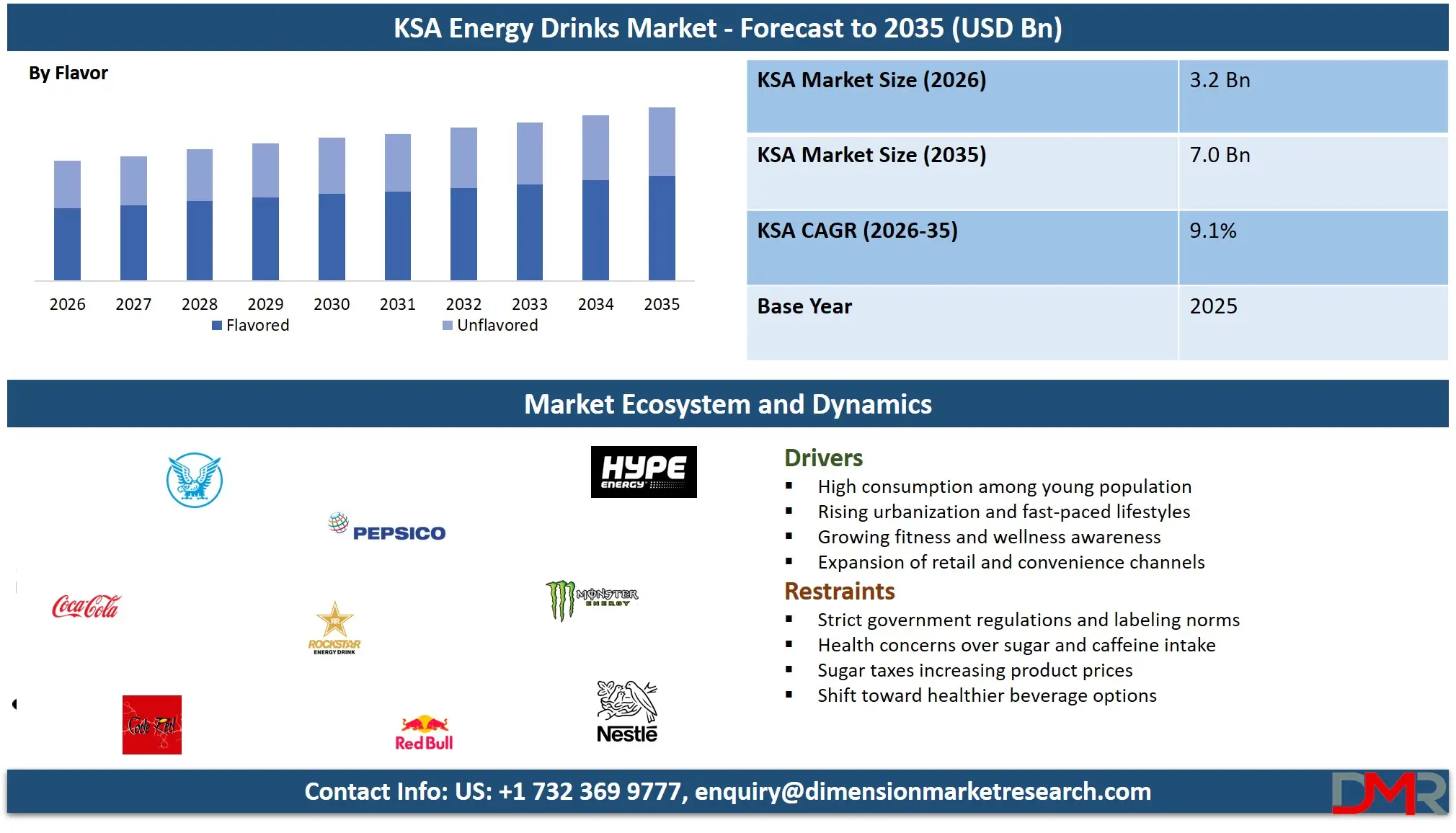
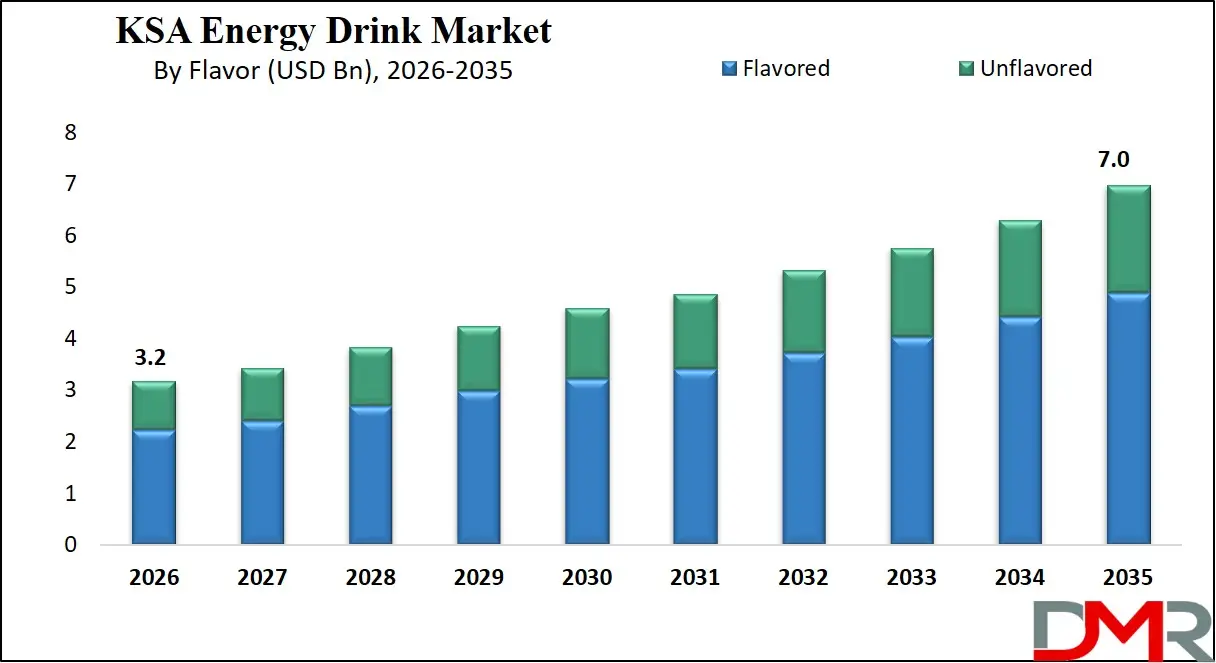
Saudi Arabia Energy Drinks Market size is projected to reach USD 3.2 billion in 2026 and grow at a compound annual growth rate of 9.1% to reach a value of USD 7.0 billion in 2035.
ℹ
To learn more about this report –
Download Your Free Sample Report Here
Energy drinks are beverages formulated to enhance energy, alertness, and physical performance, typically containing caffeine, taurine, vitamins, herbal extracts, and sugar or its substitutes. These products are widely consumed by young adults, athletes, and working professionals seeking quick stimulation and improved focus. Available in formats such as ready-to-drink cans, concentrated shots, and powdered mixes, they represent a dynamic segment within the broader non-alcoholic beverage industry, driven by convenience, portability, and immediate functional benefits. Continuous innovation in ingredients and formats is further expanding their appeal across diverse consumer groups.
The KSA energy drinks market has gained strong traction due to shifting consumer lifestyles, increasing urbanization, and a growing young population with rising disposable incomes. Consumption patterns are evolving as individuals integrate these beverages into daily routines for work, fitness, and social activities. The expansion of organized retail, convenience stores, and digital commerce platforms has significantly improved product accessibility and availability across the country. At the same time, rising participation in sports and fitness activities is reinforcing demand, positioning energy drinks as essential lifestyle products among younger demographics.
ℹ
To learn more about this report –
Download Your Free Sample Report Here
Product innovation and industry advancements are reshaping the KSA energy drinks market, with increasing focus on low-calorie, functional, and health-oriented beverages. Manufacturers are introducing variants enriched with vitamins, amino acids, and natural ingredients to align with changing consumer preferences. Strategic collaborations with sports organizations and the adoption of digital marketing strategies are enhancing brand visibility and engagement. Additionally, regulatory frameworks promoting healthier consumption and transparent labeling are encouraging reformulation efforts. Investments in local manufacturing and improvements in supply chain infrastructure are further supporting long-term growth and market expansion.
KSA Energy Drinks Market: Key Takeaways
- Market Growth: The KSA Energy Drinks Market size is expected to grow by USD 3.6 billion, at a CAGR of 9.1%, during the forecasted period of 2027 to 2035.
- By Flavor: Flavored energy drinks are anticipated to get the majority share of the KSA Energy Drinks market in 2026.
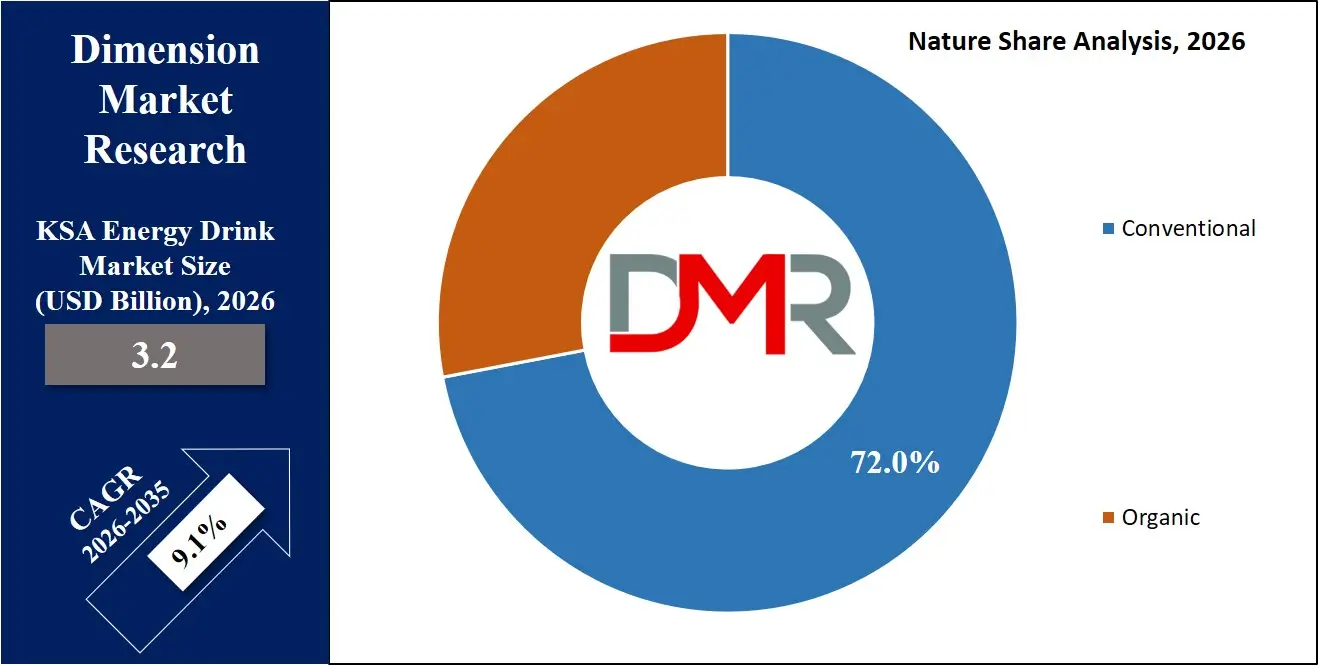
- By Nature: The conventional segment is expected to get the largest revenue share in 2026 in the KSA Energy Drinks market.
- Use Cases: Some of the use cases of Energy Drinks include travel & long distance driving, workplace productivity boost, and more.
KSA Energy Drinks Market: Use Cases
- Sports Performance Enhancement: Energy drinks are widely consumed by athletes and gym-goers to improve endurance, stamina, and recovery. They provide quick energy and hydration support during workouts and competitions.
- Workplace Productivity Boost: Professionals use energy drinks to maintain focus and reduce fatigue during long working hours or night shifts, particularly in demanding sectors.
- Academic Performance Support: Students rely on energy drinks for increased alertness and concentration during exams or study sessions, especially in high-pressure academic environments.
- Travel and Long-Distance Driving: Drivers and travelers consume energy drinks to combat fatigue and stay alert during extended journeys, enhancing safety and attentiveness.
- Gaming and E-sports Engagement: Energy drinks are popular among gamers for sustained focus and mental sharpness during prolonged gaming sessions.
- Social and Lifestyle Consumption: Energy drinks are often consumed in social settings or events, sometimes mixed with other beverages, reflecting lifestyle branding.
- Weight Management and Fitness Trends: Sugar-free and low-calorie variants are used by health-conscious consumers aiming to maintain energy levels without excess calorie intake.
Stats & Facts
- Saudi General Authority for Statistics reported that over 63% of the population is under the age of 35 in 2024, driving youth-centric beverage demand.
- Saudi Food and Drug Authority stated in 2025 that all energy drinks must comply with strict caffeine labeling regulations.
- World Health Organization estimated in 2024 that energy drink consumption among young adults in the Middle East increased by 12% annually.
- International Energy Agency noted in 2025 that urbanization in Saudi Arabia reached 85%, supporting retail beverage growth.
- Saudi Ministry of Health reported in 2024 a 9% increase in awareness campaigns regarding sugar intake.
- World Bank indicated in 2025 that Saudi Arabia's disposable income per capita grew by 6.8%, supporting premium beverage purchases.
- General Authority for Small and Medium Enterprises noted in 2024 a 15% rise in local beverage startups.
- Saudi Central Bank reported in 2025 that e-commerce transactions in food and beverages grew by 18%.
- Gulf Cooperation Council Statistical Center highlighted in 2024 a 10% increase in sports participation rates.
- United Nations reported in 2025 that Saudi Arabia's youth population continues to expand, influencing consumption trends.
- Saudi Ministry of Commerce recorded in 2024 a 14% increase in beverage imports diversification.
- International Trade Centre stated in 2025 that functional beverage exports in the region grew by 11%.
Market Dynamic
Driving Factors in the KSA Energy Drinks Market
Rising Youth Population and Active Lifestyle Adoption
Saudi Arabia's demographic profile, dominated by a young population, is a primary driver of the energy drinks market. With increasing urbanization and exposure to global fitness trends, young consumers are adopting active lifestyles that demand quick energy solutions. The rise in gym memberships, sports events, and outdoor recreational activities has fueled the demand for performance-enhancing beverages. Additionally, the influence of social media and fitness influencers is encouraging consumption among younger demographics. This shift is further supported by higher disposable incomes and evolving lifestyle aspirations, making energy drinks a convenient and popular choice.
Expansion of Retail and E-commerce Channels
The rapid development of retail infrastructure, including supermarkets, convenience stores, and online platforms, is significantly contributing to market growth. E-commerce and quick-commerce services have made energy drinks easily accessible, offering convenience and variety to consumers. Digital platforms also enable targeted marketing and personalized promotions, increasing product visibility. The integration of advanced supply chain technologies ensures efficient distribution and inventory management. These advancements are enhancing consumer reach, particularly in urban and semi-urban areas, thereby strengthening overall market penetration.
Restraints in the KSA Energy Drinks Market
Health Concerns and Regulatory Restrictions
Growing awareness about the health risks associated with excessive caffeine and sugar consumption is a major constraint. Consumers are becoming more cautious, leading to reduced intake of traditional high-sugar energy drinks. Regulatory bodies have implemented strict guidelines on labeling, caffeine limits, and marketing practices, particularly targeting younger audiences. These regulations increase compliance costs for manufacturers and limit aggressive promotional strategies. As a result, companies must invest heavily in reformulation and transparency, which can impact profit margins and slow market expansion.
Market Saturation and Brand Competition
The increasing number of brands entering the energy drinks segment has led to intense competition and market saturation. Established players dominate shelf space, making it difficult for new entrants to gain visibility. Price competition and promotional activities further compress margins. Additionally, consumer loyalty toward well-known brands creates barriers for smaller companies. This fragmentation requires continuous innovation and marketing investment, posing challenges for sustained growth, especially for emerging players.
Opportunities in the KSA Energy Drinks Market
Growth of Health-Oriented and Functional Beverages
The rising demand for healthier alternatives presents a significant opportunity for market players. Consumers are increasingly seeking sugar-free, organic, and natural energy drinks with added functional benefits such as vitamins, electrolytes, and herbal extracts. This shift encourages innovation in product development and opens new market segments. Companies investing in clean-label and plant-based formulations can attract health-conscious consumers, thereby expanding their customer base and enhancing brand loyalty.
Government Initiatives Supporting Local Manufacturing
Saudi Arabia's focus on economic diversification and local production under Vision initiatives is creating favorable conditions for beverage manufacturers. Incentives for domestic production, reduced reliance on imports, and improved industrial infrastructure are encouraging investments in local facilities. This reduces operational costs and enhances supply chain efficiency. Additionally, supportive policies for SMEs are fostering innovation and competition, creating opportunities for both established and emerging brands.
Trends in the KSA Energy Drinks Market
Shift Toward Sugar-Free and Natural Ingredients
Consumers are increasingly opting for sugar-free and naturally formulated energy drinks due to health concerns. This trend is driving the development of products with alternative sweeteners, plant-based caffeine, and organic ingredients. Brands are focusing on transparency and clean labeling to build trust. This shift aligns with global health trends and regulatory requirements, making it a key factor shaping the market's evolution.
Digital Marketing and Influencer-Driven Branding
The adoption of digital marketing strategies, including influencer collaborations and social media campaigns, is transforming brand engagement. Energy drink companies are leveraging online platforms to target younger audiences and create strong brand identities. Personalized advertising and interactive campaigns are enhancing consumer engagement and driving sales. This trend is particularly effective in Saudi Arabia, where digital penetration and social media usage are high.
Impact of Artificial Intelligence in KSA Energy Drinks Market
- Demand Forecasting Optimization: AI analyzes consumer behavior and sales data to predict demand patterns, improving inventory management and reducing wastage.
- Personalized Marketing Campaigns: AI-driven algorithms tailor advertisements based on user preferences, increasing engagement and conversion rates.
- Product Innovation Insights: AI identifies emerging ingredient trends and consumer preferences, enabling faster development of new formulations.
- Supply Chain Efficiency: AI optimizes logistics, route planning, and warehouse operations, reducing costs and improving delivery timelines.
- Quality Control Enhancement: AI-powered systems detect production defects and ensure consistent product quality.
- Customer Sentiment Analysis: AI monitors social media and reviews to understand consumer feedback and adjust strategies accordingly.
- Dynamic Pricing Strategies: AI enables real-time pricing adjustments based on demand, competition, and market conditions.
- Retail Analytics Improvement: AI helps retailers optimize shelf placement and promotions for better visibility and sales performance.
Impact of Iran War on KSA Energy Drinks Market
The Iran war is having a relatively direct impact on the Saudi Arabia energy drinks market due to regional proximity and economic sensitivity to geopolitical tensions. Fluctuations in oil production and prices are increasing fuel and transportation costs, which in turn raise distribution and logistics expenses for beverage companies. Additionally, higher costs of imported raw materials, packaging, and ingredients are putting pressure on manufacturers' margins. Supply chain disruptions within the region may also affect the timely availability of inputs. However, increased oil revenues can support government spending and consumer purchasing power, helping maintain demand stability. Overall, the market is experiencing cost and supply pressures, but consumption remains relatively steady due to strong domestic demand.
Research Scope and Analysis
By Format Analysis
The drinks segment dominates the KSA Energy Drinks market and is projected to hold approximately 68% share by 2026. This leadership is primarily driven by the convenience and ready-to-consume nature of these beverages, which align well with fast-paced urban lifestyles. Consumers prefer drinks due to their easy availability in supermarkets, convenience stores, gyms, and vending machines. Strong brand presence, extensive flavor portfolios, and continuous product innovation such as sugar-free, vitamin-enriched, and functional beverages further reinforce their dominance. Additionally, aggressive marketing campaigns and sponsorships in sports and entertainment sectors increase product visibility. The segment also benefits from impulse buying behavior and frequent consumption across workplaces, travel, and social settings, making it the most widely consumed format.
Energy shots represent the fastest-growing segment in the KSA Energy Drinks market, gaining popularity due to their compact size and high potency. These products are specifically designed for consumers seeking quick and concentrated energy boosts without consuming large volumes of liquid. Their portability makes them ideal for busy professionals, travelers, and fitness enthusiasts who require instant stimulation. Increasing awareness about their efficiency, coupled with targeted marketing strategies, is accelerating their adoption. Additionally, energy shots often contain functional ingredients such as vitamins, amino acids, and herbal extracts, appealing to health-conscious consumers. As lifestyles become more time-constrained and convenience-driven, this segment is expected to witness robust growth and expanding shelf presence.
By Nature Analysis
The conventional segment leads the KSA Energy Drinks market with an estimated 72% share by 2026, supported by its affordability, wide availability, and strong consumer familiarity. These products are extensively distributed across offline and online retail channels, ensuring easy access for a broad consumer base. Established brands dominate this category through strong marketing, brand loyalty, and consistent product offerings. Despite increasing health concerns related to sugar and caffeine intake, conventional energy drinks remain popular due to their proven effectiveness and recognizable taste profiles. Manufacturers are also reformulating products to reduce sugar content and improve ingredient transparency, helping maintain their relevance. The segment continues to benefit from mass-market appeal and high consumption frequency.
ℹ
To learn more about this report –
Download Your Free Sample Report Here
The organic segment is rapidly emerging as a key growth area within the KSA Energy Drinks market, driven by increasing consumer awareness of health, wellness, and sustainability. These products are formulated using natural ingredients, free from artificial additives, preservatives, and synthetic caffeine sources. Health-conscious consumers are increasingly shifting toward clean-label beverages, boosting demand for organic variants. Although higher pricing and limited availability have historically restricted growth, expanding distribution networks and rising disposable incomes are mitigating these challenges. Brands are also investing in certifications and transparent labeling to build consumer trust. As the preference for healthier alternatives strengthens, the organic segment is expected to witness accelerated growth and increased market penetration.
By Packaging Analysis
Cans dominate the packaging segment in the KSA Energy Drinks market, accounting for a projected 64% share by 2026. Their popularity stems from their durability, lightweight nature, and ability to preserve product quality effectively. Cans are highly convenient for on-the-go consumption and are widely available across retail outlets, vending machines, and entertainment venues. They also offer strong branding opportunities through visually appealing designs and innovative packaging formats. Additionally, the recyclability of aluminum cans aligns with growing sustainability concerns among consumers and regulators. Manufacturers prefer cans due to cost efficiency in large-scale production and distribution. These factors collectively contribute to the continued dominance of cans in the market.
Bottles are gaining traction in the KSA Energy Drinks market due to their practicality and versatility. Unlike cans, bottles offer resealability, allowing consumers to consume beverages over an extended period, which enhances convenience. They are particularly preferred for larger serving sizes and premium product offerings. Increasing demand for functional and health-oriented beverages is driving innovation in bottle packaging, including the use of eco-friendly materials. Bottles also provide better opportunities for product differentiation through unique shapes and designs. As consumer preferences shift toward value and sustainability, the bottle segment is expected to grow steadily, supported by advancements in packaging technology and evolving consumption habits.
By Product Type Analysis
Caffeinated energy drinks dominate the KSA Energy Drinks market, holding an estimated 81% share by 2026. These beverages are widely preferred due to their immediate and effective energy-boosting properties, primarily driven by caffeine content. Consumers rely on these drinks for enhanced alertness, improved focus, and increased physical performance. Continuous innovation in caffeine sources, including natural and plant-based alternatives, is further enhancing product appeal. Strong marketing strategies, including sponsorships and endorsements, contribute to high brand visibility and consumer loyalty. Despite regulatory scrutiny, caffeinated beverages remain the core of the market due to established consumption patterns and widespread acceptance among various demographic groups.
De-caffeinated energy drinks are emerging as a fast-growing segment, catering to consumers who are sensitive to caffeine or seeking healthier alternatives. These beverages focus on providing energy through alternative ingredients such as vitamins, minerals, and herbal extracts. Growing awareness of the potential side effects of excessive caffeine consumption is driving demand for such products. Manufacturers are innovating with functional formulations that offer sustained energy without stimulants. This segment is particularly appealing to health-conscious consumers and those with specific dietary preferences. As the market evolves toward wellness-oriented products, de-caffeinated beverages are expected to gain significant traction and expand their consumer base.
By Flavor Analysis
Flavored energy drinks dominate the KSA market, accounting for approximately 70% share by 2026. Consumer preference for diverse and appealing taste profiles is the primary driver behind this segment's leadership. Manufacturers continuously introduce new and exotic flavors to attract different demographic groups and maintain consumer interest. Flavored variants enhance the overall drinking experience, making them more appealing than traditional options. Marketing campaigns and limited-edition releases further boost demand. Additionally, flavor innovation allows brands to differentiate their products in a highly competitive market. The segment benefits from strong consumer engagement and repeat purchases, ensuring its sustained dominance.
Unflavored energy drinks are steadily gaining popularity among health-conscious consumers who prefer minimal additives and a more natural taste. These products are often associated with clean-label formulations and transparency, which resonate with modern consumer preferences. Although they represent a smaller share of the market, their demand is increasing due to rising awareness of artificial ingredients and their potential health impacts. Unflavored variants are particularly popular among fitness enthusiasts and individuals seeking functional benefits without added flavors. As the trend toward simplicity and health continues, this segment is expected to experience gradual but consistent growth.
By Categories Analysis
The functional beverages segment is expected to dominate the KSA Energy Drinks market, accounting for approximately 34% share by 2026. This segment includes energy drinks enriched with vitamins, amino acids, electrolytes, and other performance-enhancing ingredients that go beyond basic stimulation. The growing consumer focus on health, wellness, and preventive nutrition is a major driver behind its leadership. Consumers are increasingly seeking beverages that offer multiple benefits such as energy, hydration, cognitive support, and immunity enhancement. Manufacturers are responding with innovative formulations that combine natural ingredients with scientifically backed benefits. Additionally, strong marketing around fitness, productivity, and lifestyle improvement is further strengthening demand. As awareness increases, functional beverages are expected to maintain their leading position in the market.
Natural energy drinks are emerging as the fastest-growing segment within the KSA Energy Drinks market. These beverages are formulated using plant-based caffeine sources such as green tea, guarana, and yerba mate, along with natural sweeteners and organic ingredients. Rising concerns about artificial additives and synthetic stimulants are pushing consumers toward cleaner and more transparent product options. This segment particularly appeals to health-conscious individuals, fitness enthusiasts, and younger demographics who prioritize sustainability and clean-label products. Although currently smaller in market share, rapid innovation, increasing availability, and strong alignment with global health trends are driving its growth. As consumer preferences continue to shift toward natural and organic solutions, this segment is expected to expand significantly in the coming years.
By Distribution Channel Analysis
Offline distribution channels dominate the KSA Energy Drinks market, holding a projected 76% share by 2026. Supermarkets, hypermarkets, convenience stores, and specialty outlets play a crucial role in product accessibility and visibility. Consumers often make impulse purchases in physical stores, contributing significantly to sales volume. Retail outlets also provide opportunities for promotional displays and brand engagement. The widespread presence of offline channels across urban and semi-urban areas ensures consistent product availability. Additionally, partnerships with gyms, cafes, and entertainment venues further strengthen offline sales. Despite the growth of e-commerce, offline channels remain the backbone of the market.
Online distribution channels are rapidly expanding in the KSA Energy Drinks market, driven by increasing digital adoption and changing consumer behavior. E-commerce platforms offer convenience, wider product selection, and competitive pricing, attracting tech-savvy consumers. The rise of quick-commerce and delivery services has further enhanced accessibility and reduced delivery times. Digital marketing and personalized promotions play a significant role in driving online sales. Consumers also benefit from detailed product information and reviews, aiding purchase decisions. As internet penetration and smartphone usage continue to grow, the online segment is expected to witness strong growth and gradually increase its market share.
The KSA Energy Drinks Market Report is segmented on the basis of the following:
By Format
By Nature
By Packaging
By Product Type
- Caffeinated Beverage
- De-caffeinated Beverage
By Flavor
By Categories
- Natural Energy Drink
- Sports Drink
- Non-Alcoholic Beverage
- Functional beverages
- Non-carbonated packaged drinks
By Distribution Channel
Competitive Landscape
The KSA Energy Drinks market is highly competitive, characterized by strong brand presence and continuous innovation. Companies focus on product differentiation through unique flavors, functional benefits, and health-oriented formulations. Strategic investments in marketing, particularly digital and influencer campaigns, play a crucial role in maintaining market share.
ℹ
To learn more about this report –
Download Your Free Sample Report Here
Distribution network expansion and partnerships with retail chains enhance accessibility. High entry barriers exist due to established brand loyalty, regulatory compliance requirements, and significant marketing costs. Continuous R&D investment and adaptation to consumer preferences are essential for sustaining competitiveness in this dynamic market.
Some of the prominent players in the KSA Energy Drinks are:
- Red Bull GmbH
- Monster Beverage Corporation
- PepsiCo Inc.
- Coca-Cola Company
- Rockstar Energy
- Taisho Pharmaceutical Co., Ltd.
- Amway
- Nestlé S.A.
- Bison Energy
- Power Horse Energy Drink
- MenaBev
- Hype Energy Drinks
- Code Red Energy Drink
- Effect Energy Drink
- XL Energy Drink
- Boom Boom Energy
- Black Energy Drink
- Wild Tiger Energy Drink
- Double Horse Energy
- Bugzy Energy Drink
- Other Key Players
Recent Developments
- In June 2025, PepsiCo announced a strategic investment to expand its energy drink production capacity in the Middle East, including Saudi Arabia. The initiative involves upgrading manufacturing facilities and enhancing supply chain capabilities to meet rising demand. The company also plans to introduce new product variants with natural ingredients and functional benefits.
- In February 2025, Red Bull expanded its product portfolio in Saudi Arabia by launching a new sugar-free energy drink variant tailored to health-conscious consumers. The product features reduced calorie content and enhanced vitamin formulation, aligning with regulatory guidelines and consumer demand for healthier options. The company also initiated a large-scale digital marketing campaign targeting young adults and fitness enthusiasts.
Report Details
| Report Characteristics |
| Market Size (2026) |
USD 3.2 Bn |
| Forecast Value (2035) |
USD 7.0 Bn |
| CAGR (2026–2035) |
9.1% |
| Historical Data |
2021 – 2025 |
| Forecast Data |
2027 – 2035 |
| Base Year |
2025 |
| Estimate Year |
2026 |
| Report Coverage |
Market Revenue Estimation, Market Dynamics, Competitive Landscape, Growth Factors and etc. |
| Segments Covered |
By Format (Drinks, Shots, Mixer), By Nature (Conventional, Organic), By Packaging (Cans, Bottles, Others), By Product Type (Caffeinated Beverage, De-caffeinated Beverage), By Flavor (Unflavored, Flavored), By Categories (Natural Energy Drink, Sports Drink, Non-Alcoholic Beverage, Functional beverages, Non-carbonated packaged drinks), By Distribution Channel (Offline, Online) |
| Country Coverage |
Saudi Arabia |
| Prominent Players |
Red Bull GmbH, Monster Beverage Corporation, PepsiCo Inc., Coca-Cola Company (Burn), Rockstar Energy (PepsiCo), Taisho Pharmaceutical Co., Ltd., Amway (XS Energy), Nestlé S.A., Bison Energy, Power Horse Energy Drink, MenaBev (Pepsi bottler), Hype Energy Drinks, Code Red Energy Drink, Effect Energy Drink, XL Energy Drink, Boom Boom Energy, Black Energy Drink, Wild Tiger Energy Drink, Double Horse Energy, Bugzy Energy Drink, and Other Key Players |
| Purchase Options |
We have three licenses to opt for: Single User License (Limited to 1 user), Multi-User License (Up to 5 Users) and Corporate Use License (Unlimited User) along with free report customization equivalent to 0 analyst working days, 3 analysts working days and 5 analysts working days respectively. |
Frequently Asked Questions
How big is the KSA Energy Drinks Market?
▾ The KSA Energy Drinks Market size is expected to reach USD 3.2 billion by 2026 and is projected to reach USD 7.0 billion by the end of 2035.
Who are the key players in the KSA Energy Drinks Market?
▾ Some of the major key players in the KSA Energy Drinks Market include Red bull, Pepsico, Monster and others.
What is the growth rate in the KSA Energy Drinks Market?
▾ The market is growing at a CAGR of 9.1 percent over the forecasted period.