What is the Senior Living Technology Market Size?
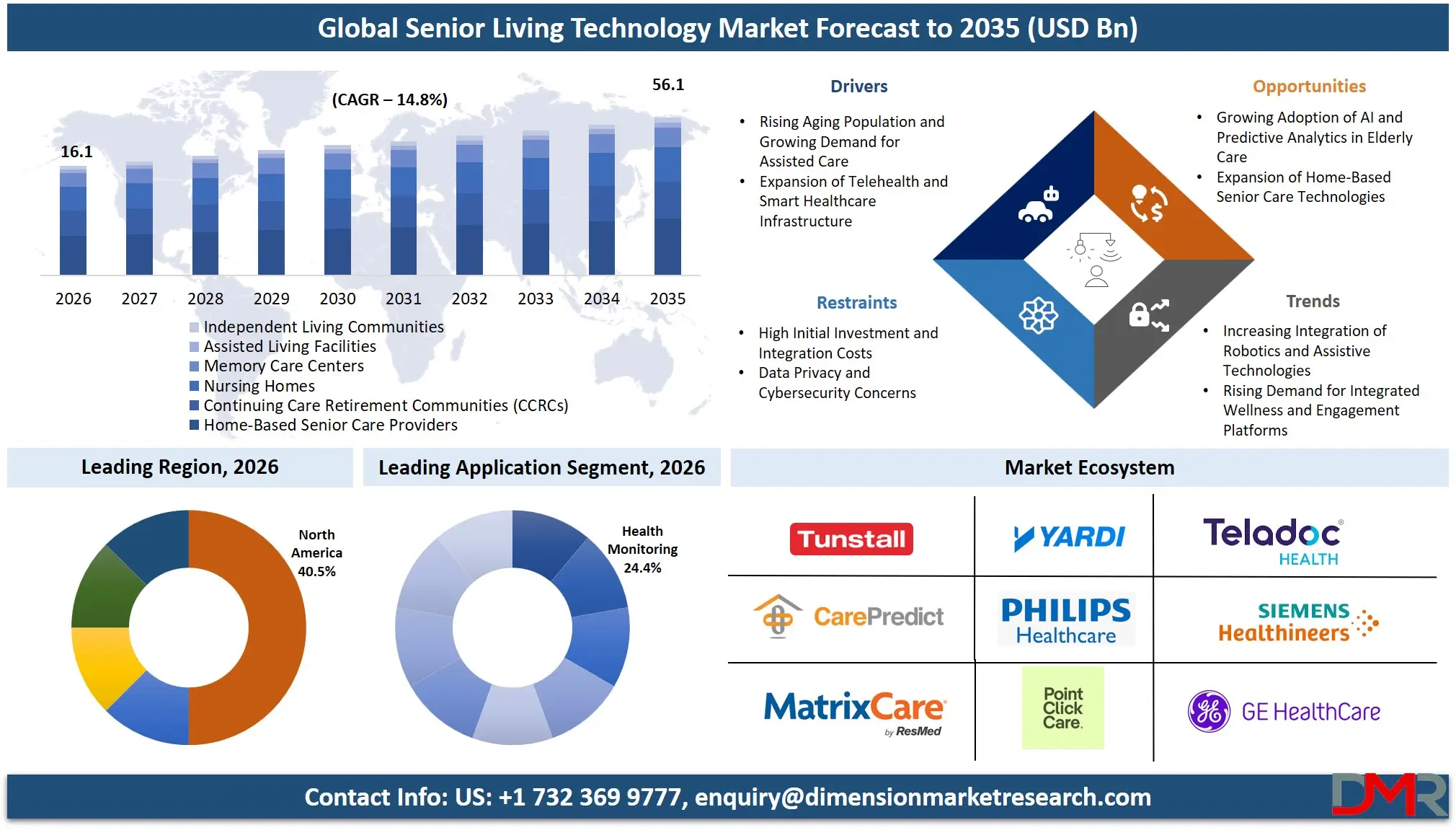
The Global Senior Living Technology Market is expected to reach a value of USD 16.1 billion in 2026, and it is further anticipated to reach USD 56.1 billion by 2035, growing at a CAGR of 14.8% during the forecast period.
ℹ
To learn more about this report –
Download Your Free Sample Report Here
This is a market that's been growing quickly, with senior care providers beginning to recognize the benefits of integrating digital technologies into their care delivery models to enhance the quality, efficiency and engagement of care for their residents. Smart home systems, telehealth platforms, remote patient monitoring solutions, wearable devices, AI-powered predictive analytics and emergency response technologies for aging populations are all part of the market. Independent living communities, nursing homes, assisted living communities, and home-based providers of care to the elderly are seeing technology adoption ramp up thanks to an aging population, a growing elderly population with chronic illnesses, and a shortage of staff.
There is a lot of investment going into connected healthcare ecosystems, which allow the continuous monitoring, medication adherence, fall detection, and personalized care delivery that healthcare providers and operators of senior living facilities seek. Additionally, there is growing demand for integrated wellness and engagement platforms with families wanting transparency, communication, and quality of life for their aging citizens. The application of AI, IoT, cloud computing, and predictive analytics is helping to enhance healthcare management in proactive ways and to lower hospitalizations and costs in senior living communities.
ℹ
To learn more about this report –
Download Your Free Sample Report Here
The US Senior Living Technology Market
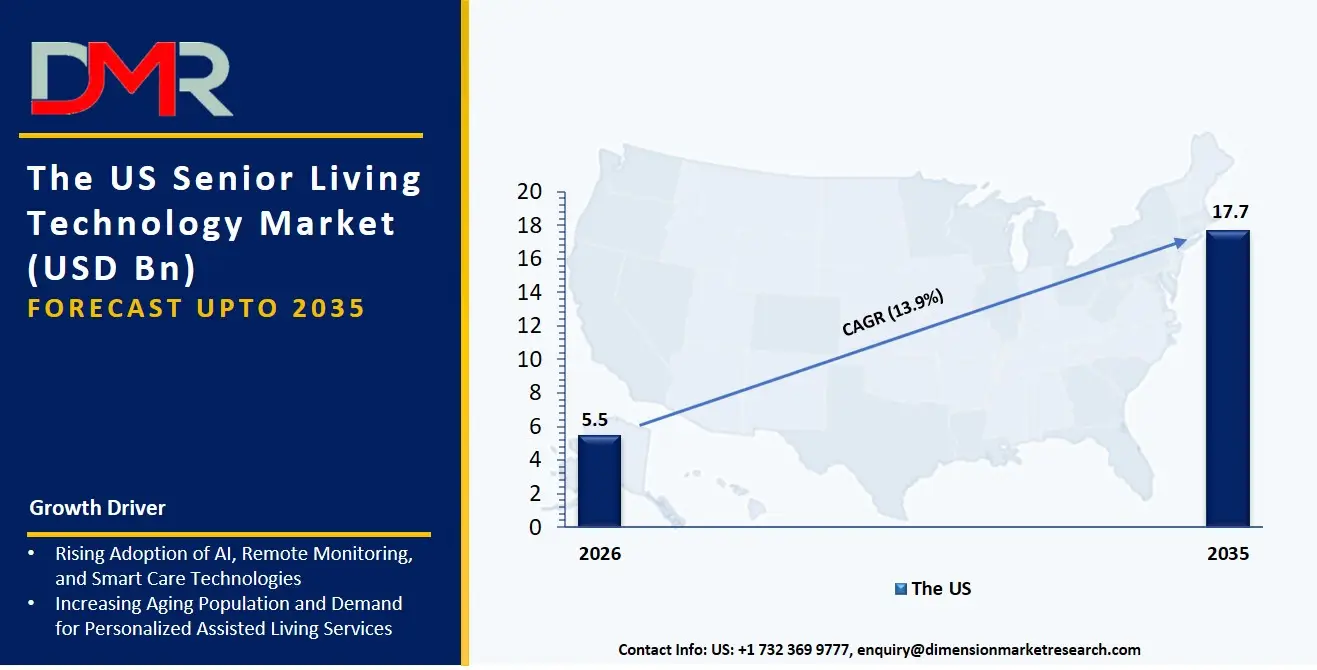
The US Senior Living Technology Market is projected to reach USD 5.5 billion in 2026 at a compound annual growth rate of 13.9% over its forecast period, culminating in a value of USD 17.7 billion by 2035. In the United States, digital healthcare investments are growing, telehealth solutions are being adopted, and there is a high demand for AI-powered elderly care.Rising investment in digital health infrastructure, adoption of telehealth platforms, and the demand for AI-powered elderly care solutions are all contributing to the United States being the largest and most technologically advanced market. Senior living operators are increasingly adopting remote patient monitoring, wearable health devices and predictive analytic tools to enhance resident safety and optimize staff efficiency.
ℹ
To learn more about this report –
Download Your Free Sample Report Here
The Europe Senior Living Technology Market
The Europe Senior Living Technology Market is estimated to be valued at USD 4.3 billion in 2026 and is further anticipated to reach USD 15.1 billion by 2035 at a CAGR of 14.7%. Senior living technologies are gaining traction in Europe, driven by the swift aging of the population and the growing emphasis on transforming healthcare in a digital environment by government bodies. Germany, the UK, and France are taking a pointed interest in the development of their telehealth capabilities, at-home AI health monitoring, and smart facility management systems for better elderly care delivery.
As residents' dementia and cognitive health issues grow in numbers, so too does the demand for memory care support technologies and platforms that enhance resident wellness in the region. Moreover, the rigorous healthcare privacy laws are driving investments in safe and secure cloud-based health management and cybersecurity solutions for senior care organizations.
The Japan Senior Living Technology Market
The Japan Senior Living Technology Market is projected to be valued at USD 1.8 billion in 2026. It is further expected to witness robust growth, holding USD 6.2 billion by 2035 at a CAGR of 14.3%. Senior living technologies are increasingly being adopted in Japan due to the country's rapidly aging population and shrinking workforce. The use of robotics, AI-driven monitoring solutions, and smart home technology is becoming common in the senior care space to assist seniors and decrease caregiver stress.
Investments in rehabilitation and mobility assistance technologies are also significant, with a focus on robotic exoskeletons, automated mobility solutions, and AI-powered cognitive support systems. Further, telehealth and tele-monitoring platforms are increasingly vital in supporting elderly people to receive ongoing care in their home and community-based settings.
Key Takeaways
- Market Size & Forecast: The global senior living technology market is anticipated to grow from USD 16.1 billion in 2026 to USD 56.1 billion in 2035, attributed to the surge in the elderly population, the adoption of healthcare digitization, the implementation of smart connected care solutions, and escalating smart living infrastructure investments.
- Growth Rate & Outlook: The Global Senior living technology market is projected to expand at a CAGR of 14.8%, driven by the surging demand for remote patient monitoring, telehealth services, AI-powered elderly care solutions, wearable health technologies, and integrated wellness management platforms around the world.
- Primary Growth Drivers: The Global Senior living technology market is projected to expand at a CAGR of 14.8%, driven by the surging demand for remote patient monitoring, telehealth services, AI-powered elderly care solutions, wearable health technologies, and integrated wellness management platforms around the world.
- Key Market Trends: Major trends in the market are integration of robotics and assistive technologies and rise of AI powered predictive analytics, rising adoption of wearable health monitoring devices and an increasing number of integrated resident wellness and engagement digital platforms deployed globally.
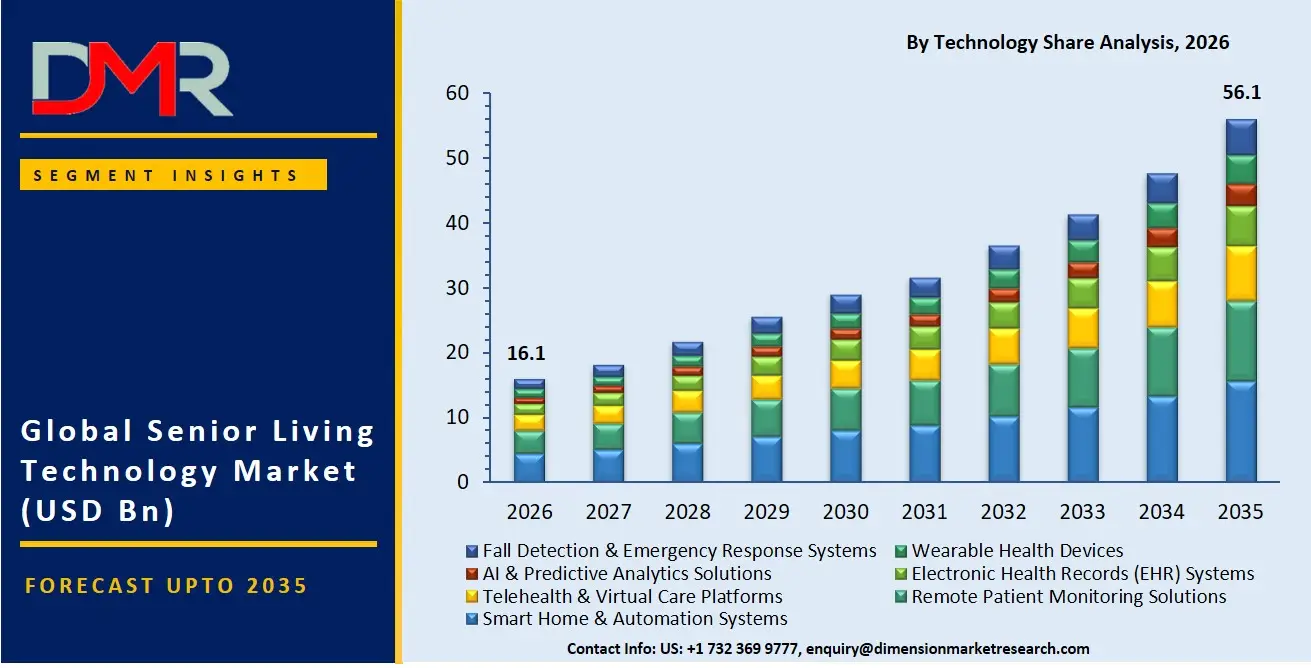
- By Technology Analysis: Remote Patient Monitoring Solutions and Telehealth & Virtual Care Platforms are expected to witness strong demand due to increasing need for continuous health tracking, virtual consultations, chronic disease management, and proactive healthcare delivery across elderly care environments.
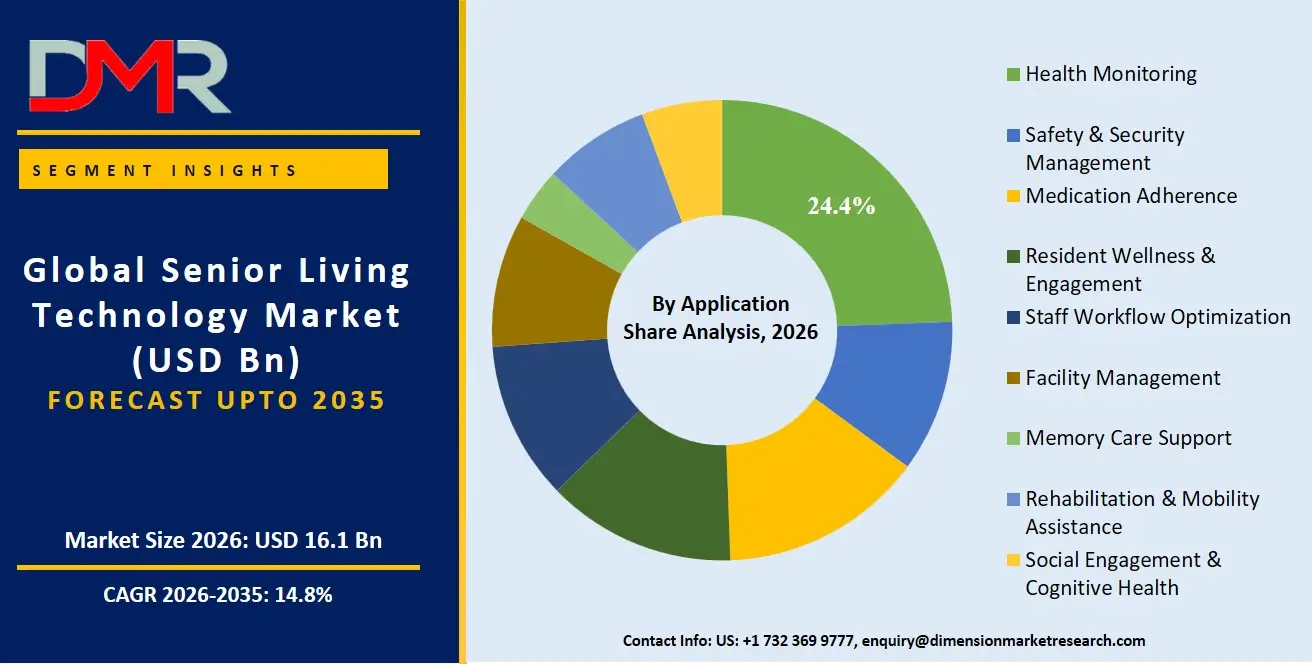
- By Application Analysis: Assisted Living Facilities and Nursing Homes are expected to continue being key adopters, given operators' continues investment in digital healthcare technologies, smart monitoring systems, telehealth platforms and workflow optimization technologies, to improve resident care and operational productivity.
- Regional Leadership: North America is projected to maintain its commanding position by 2026, accounting for 40.5% of the share, thus contributing to the growing senior population, robust investments in senior care technology innovation, excellent healthcare infrastructure, and high elderly care expenditure.
What is Senior Living Technology?
Senior Living Technology is the application of digital healthcare systems, connected devices and intelligent monitoring solutions to enhance the quality of life, healthcare provision and safety of older people in the context of senior care delivery. The technologies enable aging populations to monitor their health, manage medications, respond to emergencies, maintain cognitive health, engage with society and manage facilities.
Senior living technologies encompass smart home automation solutions, wearables for health tracking, telehealth services, AI for predictive analytics, Electronic Health Records (EHR) management and rehabilitation support technology. The solutions are routinely implemented in independent living communities, assisted living communities, nursing homes, memory care communities, and home-based senior care facilities to enhance care coordination, resident-focused independence and work productivity.
Use Cases
- Wearable Devices and Remote Monitoring: Senior living homes employ wearable devices and remote monitoring systems to ensure that the vital signs of residents are monitored on a regular basis, chronic illnesses are managed proactively, and health indicators are identified early in order to prevent hospitalization or decrease repeat travel to health centers and enhance care available to older adults in care communities.
- Falls Detection and Emergency Support: Smart sensors, monitoring devices, and emergency alert systems in assisted living can speed the detection of falls, alert the caregiver to provide immediate attention, enhance safety for residents, shorten the time for emergency response and seek medical help, and provide immediate medical support during emergencies for the elderly.
- Virtual Doctor Consultations: Telehealth and virtual care platforms facilitate regular remote interactions with healthcare professionals, enabling elderly individuals to receive consultations, guidance on medication, follow-up visits, and wellness checks without being compelled to travel to hospital facilities, thereby enhancing healthcare accessibility and convenience for older people.
- Wellness and Social Engagement Programs: These digital wellness platforms, cognitive health apps and social engagement tools help support mental wellness, resident participation, reduce loneliness, positively impact the emotional health of residents and elevate quality of life for seniors living in senior living communities.
How AI is Transforming the Senior Living Technology Market?
AI's impact on the senior living technology landscape is indeed a game-changer, offering capabilities that include predictive healthcare management, personalized elderly care, and intelligent operational automation. Predictive analytics powered by AI can leverage residents' health profiles to identify early signs of health issues and guide proactive clinical action to minimize hospitalizations and enhance health results. In senior living homes, AI systems can enhance medication adherence tracking, automate workflow management, and optimize staffing levels.
AI's contributions extend to improving resident engagement and cognitive wellness through voice assistants, smart companion systems, and personalized wellness apps. Moreover, fall detection, behavioral monitoring, and rehabilitation support platforms powered by AI are assisting caregivers in providing more proactive and data-driven care. With a focus on preventive care and operational efficiency, the integration of AI is anticipated to become a fundamental part of the future's senior living ecosystems.
Market Dynamics
Key Drivers in the Global Senior Living Technology Market
Rising Aging Population and Growing Demand for Assisted Care
The rapid growth of elderly population in the world is one of the key factors driving the global senior living technology market. The ageing population is now much larger due to the growth of life expectancy and the declining birth rate, particularly in more advanced economies like the United States, Japan, and Germany. Senior housing communities are facing challenges such as staffing, high operational expenses, and the need for both efficient and individualized and ongoing care. Remote monitoring, AI-based predictive analytics, smart sensors, and emergency response systems help to enhance resident safety and health and operational efficiency.
Expansion of Telehealth and Smart Healthcare Infrastructure
Smart healthcare infrastructure makes it possible for the delivery of healthcare around the clock, while cutting down on unwarranted visits to hospitals and healthcare expenses. Smart technology, such as wearables for health monitoring and cloud-based health management solutions, are increasingly vital to enhancing the quality and responsiveness of elderly care. The government and healthcare organizations are also encouraging digital healthcare transformation by supportive funding initiatives and healthcare modernization programs. AI's role in senior care is also driving more personalized treatment plans and better overall engagement for residents in independent and assisted living facilities, while also improving clinical decision making with the integration of AI, cloud computing, and data analytics.
Restraints in the Global Senior Living Technology Market
High Initial Investment and Integration Costs
The key factors hindering the growth of the Global Senior Living Technology Market are the initial capital investment for the deployment of smart digital infrastructure and internet of things (IoT) in healthcare systems. To implement the new software, hardware, cloud server platforms, cyber security systems and staff training required in senior living facilities, considerable expenditure must be made. Independent and smaller care providers may find themselves with less financial resources to implement more advanced technologies like AI-driven analytics, robotics and comprehensive remote monitoring. Moreover, the adoption of new technologies within existing healthcare infrastructures can lead to disruptions and complex implementations. On-going maintenance, software upgrades and compliance management add to the costs of operations over the long term.
Data Privacy and Cybersecurity Concerns
With the proliferation of connected healthcare devices and resident management systems in the cloud, there has been a growing focus on privacy and cyber security issues in senior living communities. Resident medical history and biometric data, medication records and financial information is often stored and shared electronically. A data breach, ransomware attack or unauthorized access to a healthcare database can put residents at risk and hurt an organization's reputation. The healthcare data protection laws governing senior living facilities are very rigorous and typically mandate around-the-clock monitoring, encryption, and the deployment of high-tech cybersecurity measures. But, not all facilities have the technical know-how and resources to establish strong cybersecurity protocols. There could also be concerns about data use and digital surveillance that decrease trust among residents and families.
Growth Opportunities in the Global Senior Living Technology Market
Growing Adoption of AI and Predictive Analytics in Elderly Care
AI and predictive analytics are expected to be major trends in the global senior living technology market in the near future. Using AI systems, the analysis of health patterns of residents can be used to identify early signs of medical complications and offer proactive health care suggestions, which can lead to better health outcomes and fewer hospitalizations in emergencies.AI-powered systems can analyze health patterns and provide proactive health care suggestions, which can lead to better health outcomes and fewer hospitalizations in emergencies. Predictive analytics can also help senior living providers to better staff their facilities, use resources wisely, and tailor wellness efforts based on resident activity and health status. Smart systems, like AI-powered voice assistants, cognitive support and intelligent automation, are emerging as valuable solutions to enhance resident independence and engagement.
Expansion of Home-Based Senior Care Technologies
As more people want to live in their own homes well into their senior years, home-based senior living technologies are providing significant opportunities. With a growing proportion of the population growing older, the demand for remote health monitoring, smart home automation, telecare, and wearable medical devices continues to grow, as the elderly population would rather stay at home than move into a care facility. Home based technologies allow health care workers and caregivers to access health data collection, medication adherence monitoring, and be immediately notified in an emergency and maintain independence in living. Home healthcare solutions have been made more accessible and affordable thanks to the use of IoT connectivity, AI-powered assistants, and mobile health apps.
Trends in the Global Senior Living Technology Market
Increasing Integration of Robotics and Assistive Technologies
In the global senior living technology market, the introduction of robotics and assistive technologies is emerging as a notable trend. The industry is increasingly turning to robots to support residents and to alleviate a shortage of caregivers. Senior care providers are turning to the use of robotic companions, mobility assistance devices and automated systems for better care for their residents to combat a workforce shortage. Social robots can help the elderly to be reminded, accompany, engage with their thoughts and provide emotional support, so as to alleviate their loneliness and enhance mental health. Robotic systems are also being used for lifting assistance, rehabilitation exercises, and for general facility maintenance tasks like cleaning and logistics. Assistive robots are becoming more responsive and personalized thanks to technological developments in AI, machine learning and sensor technologies.
Rising Demand for Integrated Wellness and Engagement Platforms
An integrated wellness and resident engagement platform has become a growing trend in senior living communities, with the primary aim of boosting the quality of life and coordination of care. These are online services that integrate health monitoring, social communication, entertainment, cognitive wellness activities and family interaction features into a single system. Easy-to-use apps and connected devices enable residents to access virtual fitness classes, telehealth consultations, medication reminders, and social engagement activities. Real-time notifications and communications further enhance transparency and trust in care provision, benefiting families. The trend is part of a larger shift in the industry from reactive health to more proactive and holistic types of senior living models.
Research Scope and Analysis
The Global Senior Living Technology Market Report is segmented by technology into smart home systems, telehealth platforms, wearable devices, AI solutions, EHR systems, and monitoring technologies, by application across health, safety, wellness, rehabilitation, and engagement, and by end-user including independent living communities, nursing homes, memory care centers, CCRCs, and home-based senior care providers.
ℹ
To learn more about this report –
Download Your Free Sample Report Here
By Technology Analysis
The Smart Home & Automation Systems segment is primarily projected to be dominated by large assisted living operators and continuing care retirement communities that focus on enhancing resident comfort, safety, and operational efficiency. The organizations are now implementing lighting systems, climate control systems, voice control systems, smart locks, occupancy sensors, and emergency alert systems that allow them to create smart living spaces for the elderly. North America is the market leader in this segment because of its investments in upgrading its senior housing and the presence of a strong adoption of technology like IoT in its infrastructure. Market expansion is facilitated by major technology providers like Honeywell, Schneider Electric and Google, offering integrated, smart building solutions. The need is high for premium senior living facilities seeking to enhance energy efficiency, resident independence, and care delivery in a personalized manner with the use of automation technologies.
By Application Analysis
The Health Monitoring segment is dominated by remote patient monitoring platforms, wearable health devices, and AI-enabled predictive care systems. This dominance is driven by the increasing prevalence of chronic diseases, rising demand for preventive elderly healthcare, and the need for continuous monitoring in senior living environments. Smartwatches, biosensors, ECG-enabled wearables, and cloud-connected monitoring systems are widely adopted across independent living communities and assisted care facilities. Companies such as Apple, CarePredict, and Samsung are leading innovation in this category through AI-powered health analytics and behavioral monitoring platforms. Health monitoring technologies dominate because they reduce hospital admissions, improve early disease detection, and support real-time caregiver intervention, making them the foundational technology layer in modern senior living ecosystems.
By End User Analysis
Independent Living Communities are expected to dominated by smart home automation, wearable health monitoring, and resident engagement technologies. The communities place a high value on the advantages of being independent, living in a convenient environment, monitoring one's health, and maintaining social integration over the more intensive clinical care solutions. There are many examples of smart voice assistants, connected safety sensors, fitness trackers and wellness apps being widely used to help aging in place lifestyles. Integrated smart living ecosystems and health technology wearables are the reasons for companies like K4Connect, Amazon, and Apple to dominate this segment. Independent living environments are more likely to adopt consumer-centred AgeTech solutions as residents are more technology-competent and looking for digital experiences that will enhance their life rather than intensive medical supervision. Assisted Living Facilities are the leader in adopting technologies and tools such as integrated resident monitoring, AI-driven analytics, staff communication systems and emergency response technology. The facilities need enterprise-scale solutions to enable the safety of the residents, the efficiency of the operations, and compliance with regulations.
The Global Senior Living Technology Market Report is segmented on the basis of the following:
By Technology
- Smart Home & Automation Systems
- Remote Patient Monitoring Solutions
- Telehealth & Virtual Care Platforms
- Electronic Health Records (EHR) Systems
- AI & Predictive Analytics Solutions
- Wearable Health Devices
- Fall Detection & Emergency Response Systems
By Application
- Health Monitoring
- Safety & Security Management
- Medication Adherence
- Resident Wellness & Engagement
- Staff Workflow Optimization
- Facility Management
- Memory Care Support
- Rehabilitation & Mobility Assistance
- Social Engagement & Cognitive Health
By End-User
- Independent Living Communities
- Assisted Living Facilities
- Memory Care Centers
- Nursing Homes
- Continuing Care Retirement Communities (CCRCs)
- Home-Based Senior Care Providers
Regional Analysis
Leading Region by Market Share
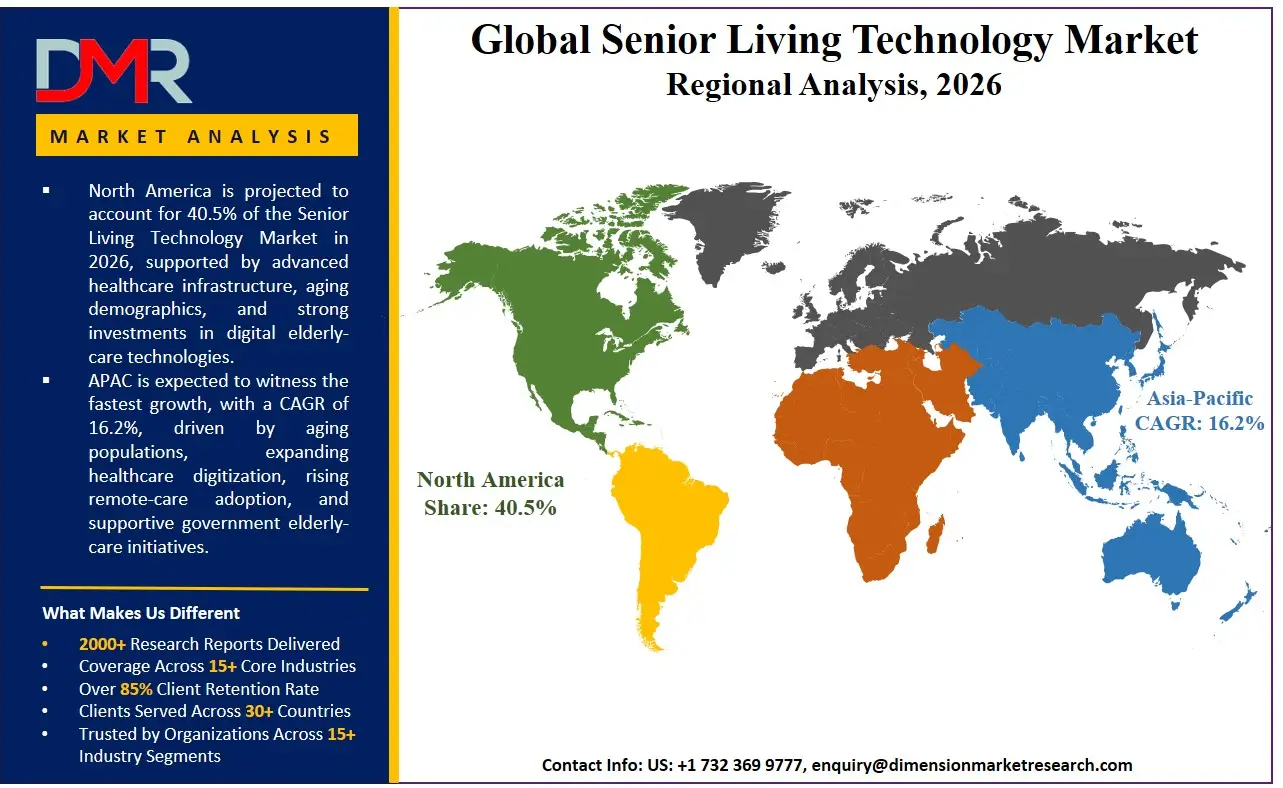
North America is expected to maintain its leadership in the global senior living technology market, accounting for 40.5% of total market revenue by the end of 2026. The region enjoys advanced healthcare facilities, high connectivity in terms of IT and digital infrastructure, as well as early exposure to advanced healthcare technologies in old age care homes. As increasingly more seniors living communities implement telehealth platforms, utilize remote patient monitoring systems, utilize AI-powered predictive healthcare tools, and use smart home technologies, the United States is still the leading revenue contributor. The increasing expenditure in healthcare, positive reimbursement policies, and the growing investments made by healthcare providers and technology companies are also contributing to market growth. Further, the rising health care needs of the elderly population and the need for customized elderly care solutions are expected to drive market growth in the region.
ℹ
To learn more about this report –
Download Your Free Sample Report Here
Fastest-Growing Regional Market
Asia-Pacific is expected to be the fastest-growing region in the senior living technology market in the forecast period. The area is also seeing high seniority, high health awareness, and profound digital transformation in health systems. As a result, Japan, China, South Korea, and India are investing heavily in the development of telehealth systems, AI-driven elderly care solutions, wearable health monitoring tools, and smart home automation systems to enhance the management of healthcare for seniors. Government measures relating to elderly welfare, healthcare modernization and the development of digital healthcare are supporting market growth throughout the region. Increasing disposable income, urbanization and consumer growth in connected healthcare solutions also are driving demand. In addition, there is also a greater emphasis on investing in private health care and technology partnerships, which are driving innovation in senior living and remote health care.
By Region
North America
Europe
- Germany
- The U.K.
- France
- Italy
- Russia
- Spain
- Benelux
- Nordic
- Rest of Europe
Asia-Pacific
- China
- Japan
- South Korea
- India
- ANZ
- ASEAN
- Rest of Asia-Pacific
Latin America
- Brazil
- Mexico
- Argentina
- Colombia
- Rest of Latin America
Middle East & Africa
- Saudi Arabia
- UAE
- South Africa
- Israel
- Egypt
- Rest of MEA
Competitive Landscape
The global senior living technology market is competitive, with healthcare technology providers, digital health firms, telecare providers, and elderly care solution vendors powered by artificial intelligence all having a stake in the market development. Market participants are increasingly focusing on product innovation, AI integration, remote monitoring capabilities, and strategic partnerships with healthcare providers and senior living communities. In addition, businesses are putting significant emphasis in the field of cloud-based health care platforms, wearable technologies, and predictive analytics systems to bolster their market standing and meet changing demands for aging care.
Some of the prominent players in the Global Senior Living Technology Market are:
- Philips Healthcare
- PointClickCare
- ResMed (MatrixCare)
- Tunstall Healthcare
- CarePredict
- Teladoc Health
- Yardi Systems
- Medtelligent
- Siemens Healthineers
- GE HealthCare
- Omron Healthcare
- VitalConnect
- GrandCare Systems
- LifeLoop
- Brookdale Senior Living
- Sunrise Senior Living
- K4Connect
- ADT Health
- Alarm.com
- Honeywell Connected Care
- Other Key Players
Recent Developments
- January 2026: Philips Healthcare extended its AI-driven, remote patient monitoring system for senior living homes for predictive health insights, fall detection, and ongoing chronic disease management for elderly care communities.
- November 2025: Teladoc Health enhanced its virtual senior care offerings with connected telehealth and medication adherence offerings tailored for assisted living communities and home-based elderly care providers.
- October 2025: CarePredict released an enhanced wearable health monitoring system with AI capabilities that analyze behavior and automatically trigger an emergency response to help ensure the safety and cognitive health of residents in memory care facilities.
Report Details
| Report Characteristics |
| Market Size (2026) |
USD 16.1 Bn |
| Forecast Value (2035) |
USD 56.1 Bn |
| CAGR (2026–2035) |
14.8% |
| The US Market Size (2026) |
USD 5.5 Bn |
| Historical Data |
2021 – 2025 |
| Forecast Data |
2027 – 2035 |
| Base Year |
2025 |
| Estimate Year |
2026 |
| Segments Covered |
By Technology, By Application, and By End User |
| Regional Coverage |
North America – The US and Canada; Europe – Germany, The UK, France, Russia, Spain, Italy, Benelux, Nordic, & Rest of Europe; Asia-Pacific – China, Japan, South Korea, India, ANZ, ASEAN, Rest of APAC; Latin America – Brazil, Mexico, Argentina, Colombia, Rest of Latin America; Middle East & Africa – Saudi Arabia, UAE, South Africa, Turkey, Egypt, Israel, & Rest of MEA |
Frequently Asked Questions
How big is the Global Senior Living Technology Market?
▾ The Global Senior Living Technology Market is expected to be valued at USD 16.1 billion in 2026 and is projected to reach USD 56.1 billion by 2035, driven by increasing elderly populations and rising adoption of connected healthcare technologies.
What is the CAGR of the Global Senior Living Technology Market from 2026 to 2035?
▾ The market is expected to grow at a CAGR of 14.8% from 2026 to 2035, supported by telehealth expansion, AI-powered healthcare systems, and increasing investments in elderly care digitization.
What factors are driving the growth of the Global Senior Living Technology Market?
▾ Key growth drivers include rising aging populations, increasing chronic disease prevalence, caregiver shortages, expanding telehealth adoption, smart healthcare infrastructure investments, and growing demand for remote patient monitoring technologies.
Which region held the largest share of the Senior Living Technology Market in 2026?
▾ North America is poised to hold the largest market share in 2026, accounting for 40.5% of the global market due to advanced healthcare infrastructure, strong technology adoption, and high investments in senior care innovation.
Which region is expected to grow the fastest in the Senior Living Technology Market?
▾ Asia-Pacific is expected to grow the fastest due to rapidly aging populations, rising healthcare digitization, increasing smart healthcare investments, and supportive government elderly care initiatives.
What are the major trends in the Global Senior Living Technology Market?
▾ Major trends include AI-powered predictive analytics, robotic caregiving systems, wearable health monitoring devices, integrated wellness platforms, telehealth expansion, and smart home automation technologies.
Who are the key players in the Global Senior Living Technology Market?
▾ Key players include Philips Healthcare, PointClickCare, Teladoc Health, CarePredict, and GE HealthCare.
How is the Global Senior Living Technology Market segmented?
▾ The market is segmented by Technology, Application, and End-User, covering smart healthcare systems, telehealth platforms, monitoring technologies, wellness solutions, and elderly care facilities.